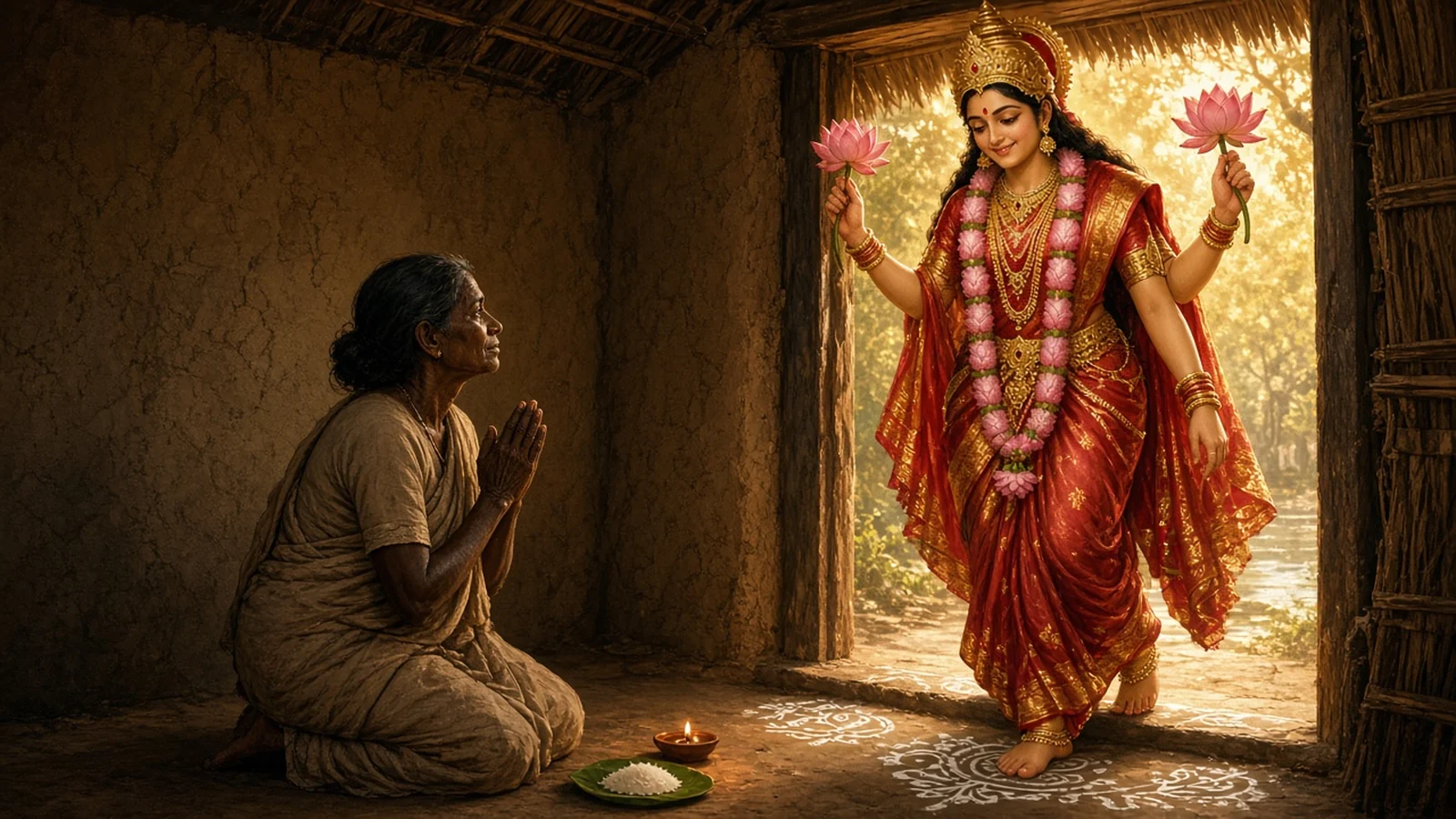
Festival · Andal's birthday in the Vishnu temples, and the Goddess's bangle day in the Amman temples
Aadi Pooram
Aadi Pooram is the day of the Pooram star in the Tamil month of Aadi, between mid-July and mid-August, and Tamil Nadu keeps it two ways at once. In the Vishnu temples it is the birthday of Andal, the girl found under the tulasi at Srivilliputhur who married the god, with ten days of festival, the car, and at Srirangam her wedding on the tenth day. In the Amman temples it is the Goddess's valaikappu, the bangle ceremony a Tamil family gives a daughter in her seventh month, with thousands of glass bangles offered to her and given back to the women who ask for a marriage, a safe birth or a child. Aadi is the month of the Goddess, and this is its great day for women.
When is Aadi Pooram in 2027? Aadi Pooram, Andal's birthday and the Goddess's bangle day, is Thursday 5 August 2027. In 2028: Tuesday 25 July 2028. The day the Pooram (Purva Phalguni) star rules at sunrise in the solar month of Aadi, mid-July to mid-August.
Also calledThiruvadipooramAndal JayantiAadi PuramGoda JayantiAadi Pooram Valaikappu
In short
What is Aadi Pooram?
The day of the Pooram star in the Tamil month of Aadi, between mid-July and mid-August. The Vishnu temples keep it as the birthday of Andal, the girl found under the tulasi at Srivilliputhur who married the god; the Amman temples keep it as the Goddess's valaikappu, the bangle ceremony given to a woman expecting a child.
When is Aadi Pooram in 2027?
Thursday 5 August 2027, when the Pooram star rules at sunrise in Chennai; the star begins late in the morning of 4 August and ends at about nine on the morning of the 5th. In 2028 it is Tuesday 25 July. In 2026 it fell on Friday 14 August.
Why are bangles given to the Goddess?
In a Tamil home a woman in her seventh month is given glass bangles by the women of her family, so that their sound keeps her and the child company. On Aadi Pooram the Amman is given the same rite, and the bangles that have touched her are given back to women who ask for a marriage, a safe birth or a child.
Who is Andal and why is her birthday on this day?
Andal is the only woman among the twelve Alvars, found as a baby under a tulasi plant in the temple garden at Srivilliputhur by the poet Periyalvar, held to be the earth goddess Bhudevi, an aspect of Lakshmi, come to earth. Tradition gives her birth to the Pooram star of Aadi, and Srivilliputhur keeps ten days of festival with its great car for it.
What is Varanam Ayiram?
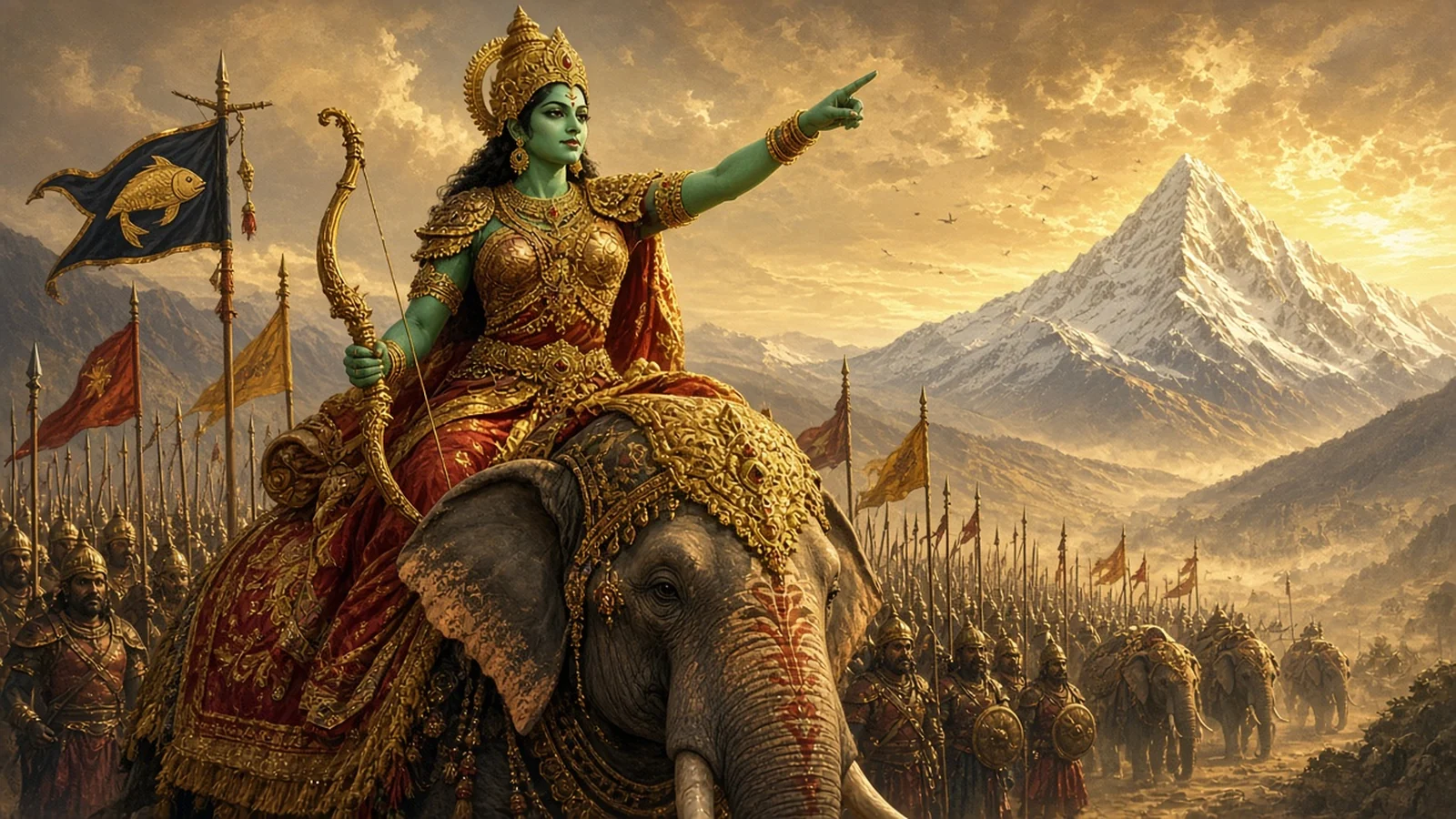
The sixth decad of Andal's Nachiyar Tirumozhi, in which she tells her friend the dream of her wedding to Vishnu step by step, from his arrival with a thousand elephants to the ride through the streets. It is sung at Srivaishnava weddings to this day, and Srirangam enacts the wedding on the tenth day of Aadi Pooram.
Next, in 2027Thursday 5 August 2027
Prime godsRanganatha and Vadapathrasayi and Amman
with 2 more
WhereTamil Nadu, with the Tamil temples of Mumbai, Chennai and the diaspora
How longOne day in the Amman temples; ten days ending on the star at Srivilliputhur and Srirangam
The day the Pooram (Purva Phalguni) star rules at sunrise in the solar month of Aadi, mid-July to mid-August
Why it is kept
Aadi Pooram is one star with two festivals on it. When the Pooram star comes round in the month of Aadi, between the middle of July and the middle of August, the Vishnu temples of Tamil Nadu are keeping the birthday of Andal, the girl who wore the god's garland before he did and then married him, and the Amman temples are giving the Goddess a bangle ceremony. The two have nothing to do with each other, and the same women go to both.
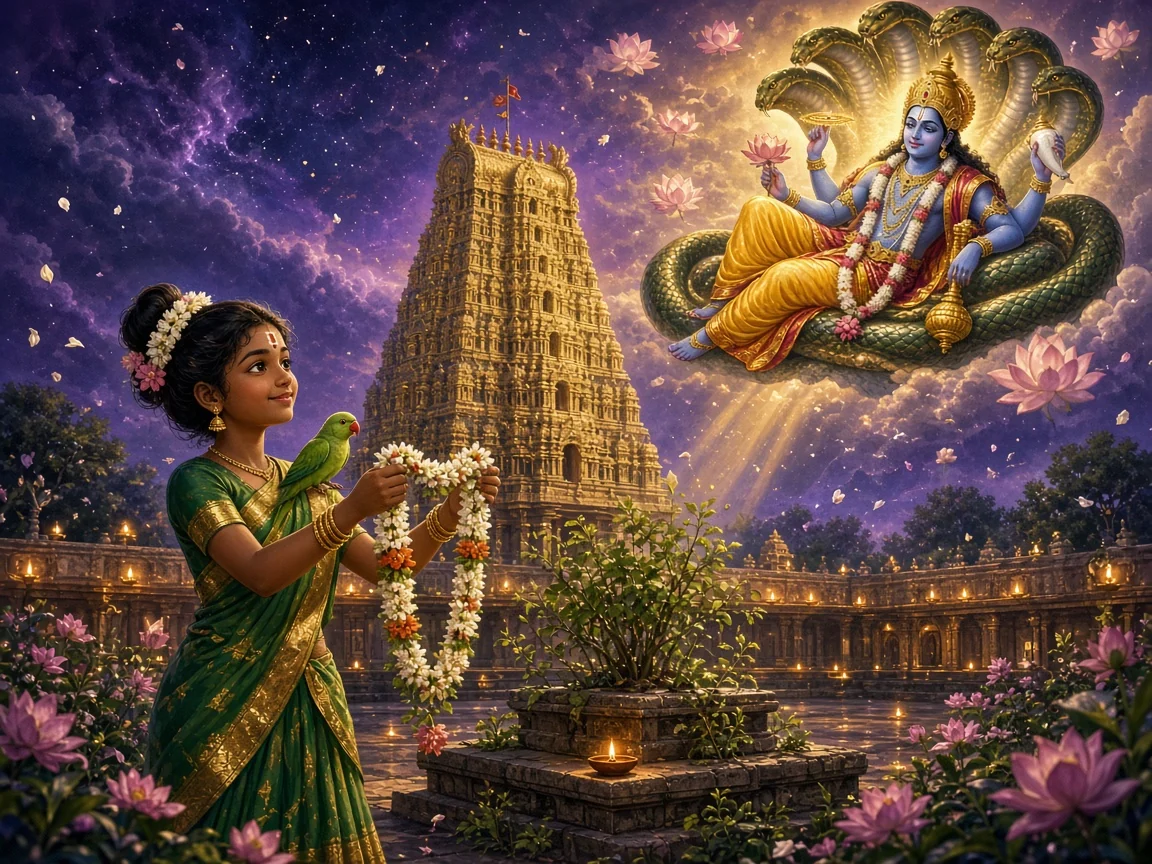
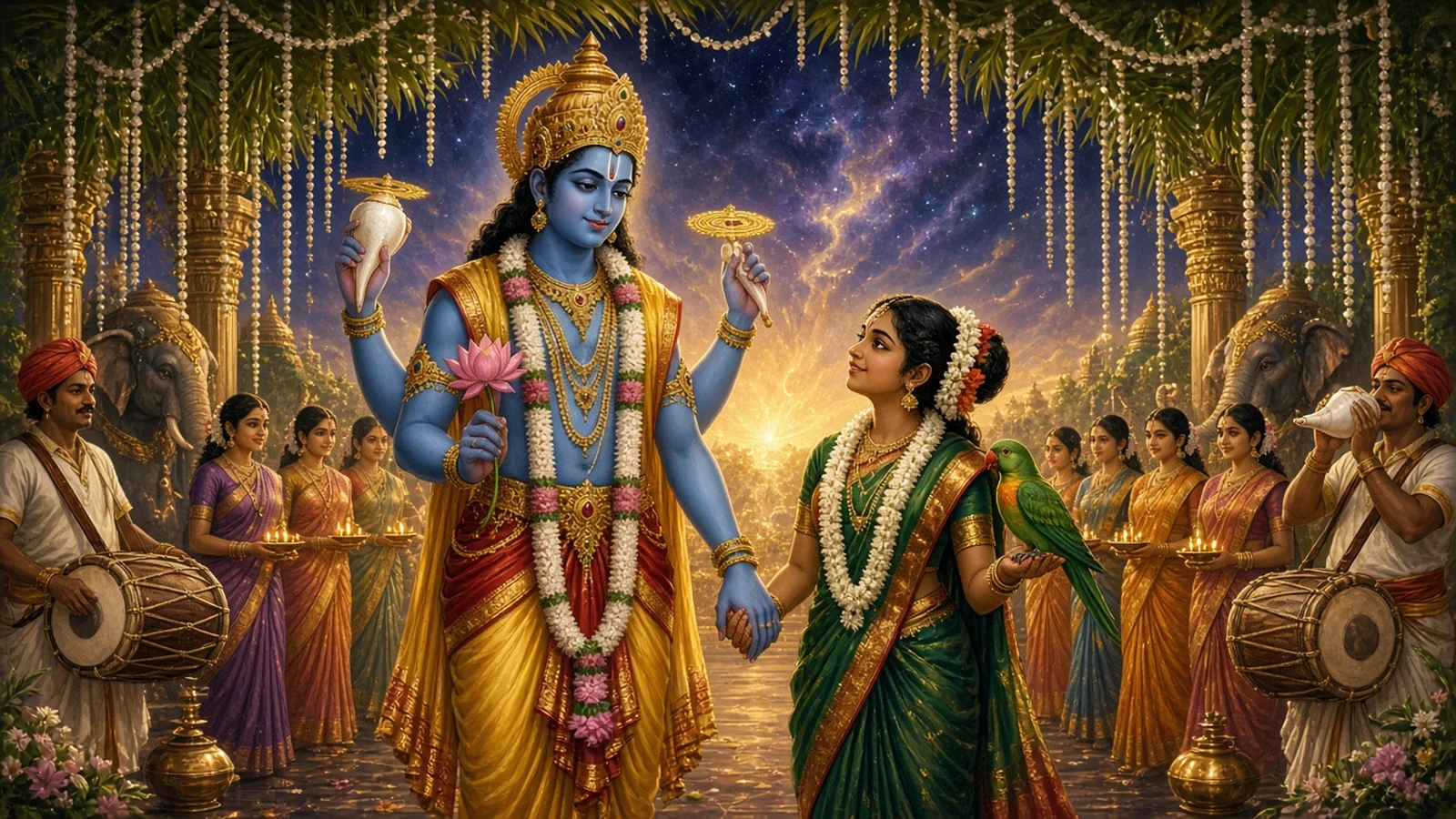
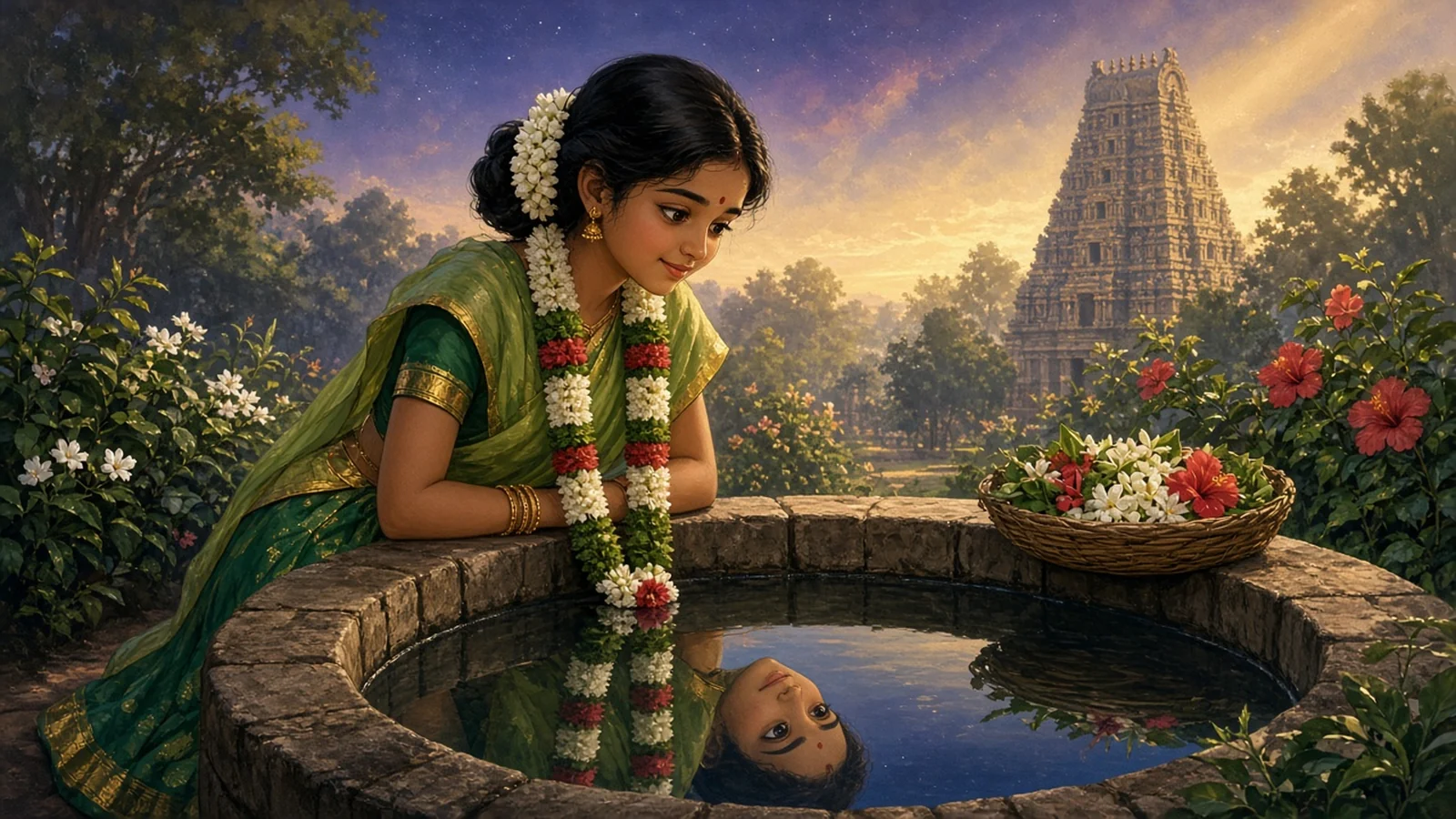
The Srivaishnavas keep it for Andal. In the eighth century a garland-maker of Srivilliputhur called Vishnuchitta, Periyalvar, found a baby girl under a tulasi plant in the temple garden, and tradition says the day was the Pooram star of Aadi. The girl grew up to sing the Thiruppavai and the Nachiyar Tirumozhi, refused every mortal husband, and was carried to Srirangam as Ranganatha's bride; the Lore tells that in The Garland She Wore First. For her followers she is Bhudevi, the earth, an aspect of Lakshmi, come down into a garden, and Manavala Mamunigal wrote that she left Vaikuntha the way a mother jumps into a well after her child. Her birthday is therefore a wedding too: Srirangam marries her to Ranganatha on the tenth day, enacting the dream she sang in the sixth decad of the Nachiyar Tirumozhi, the thousand elephants and the town with pots on its heads, the hand taken under a canopy of pearls, the fire, the stone, the puffed rice. The Wedding She Dreamed tells the decad and the day.
The wedding Andal dreamed: she takes Ranganatha's hand under a canopy of pearls before the fire
The Amman temples keep it for the Goddess. Aadi is her month. On its first day the sun turns south and the elders say the gods go to sleep, so there are no weddings; but the rains come, the fields are sown, the Fridays belong to Amman and koozh is cooked at her door. On the Pooram star the women give her what a Tamil family gives a daughter in her seventh month, a valaikappu, the bangles whose sound keeps a mother and her child company. No text says the Goddess is expecting. The women say it, or do not say it and bring the bangles anyway. The Bangles for the Goddess follows one family through the day.
A valaikappu at home: the women slip glass bangles onto the wrists of a daughter expecting a child
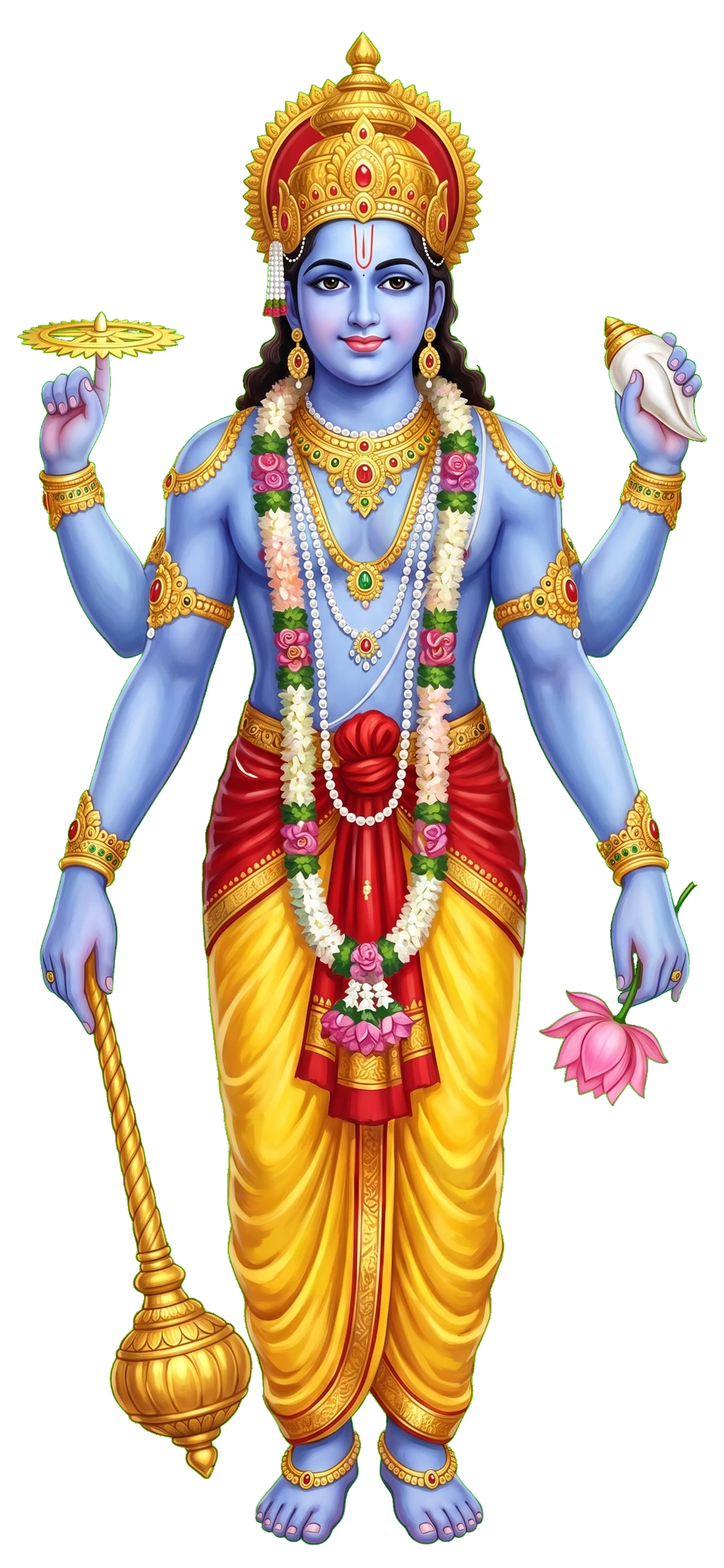
Andal's bridegroom. At Srivilliputhur he sleeps on a banyan leaf as Vadapathrasayi and stands beside her as Rangamannar, the king who came for his bride; at Srirangam he lies on the serpent as Ranganatha and marries her on the tenth day of the festival. The sixth decad of her Nachiyar Tirumozhi is her dream of that wedding.
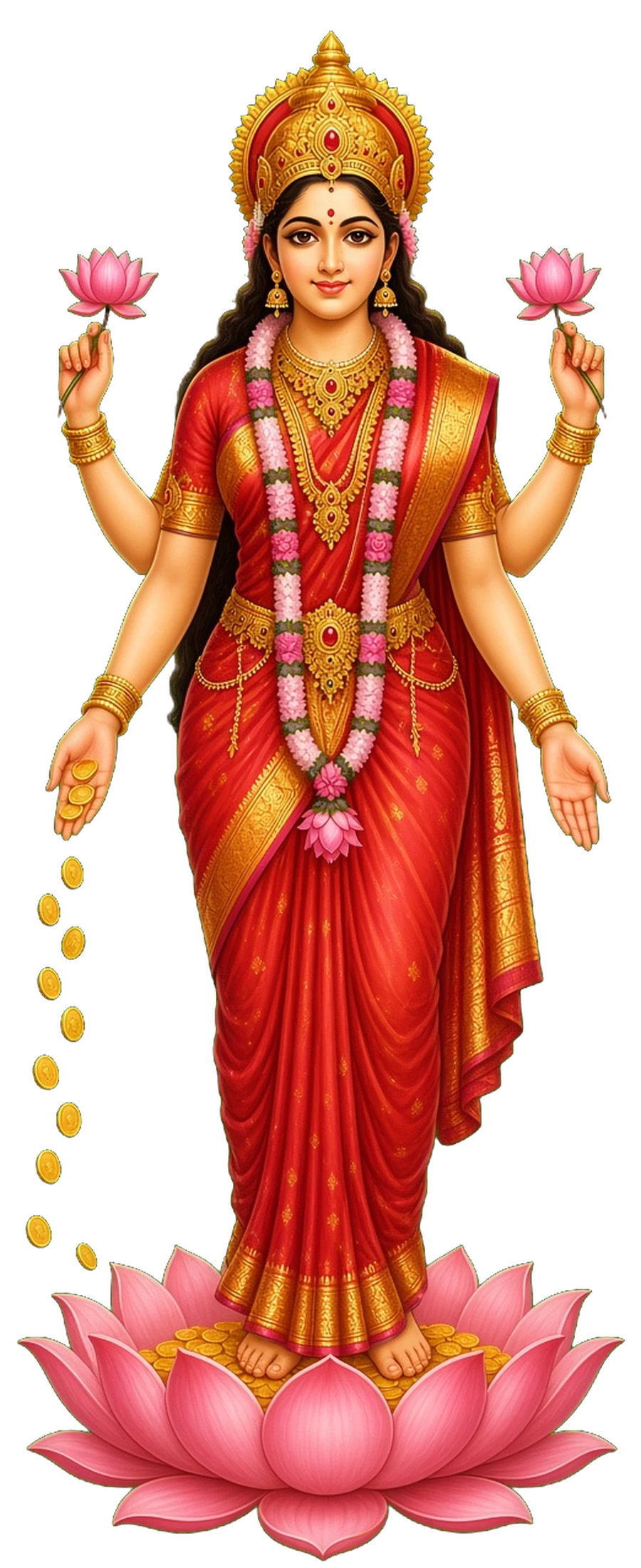
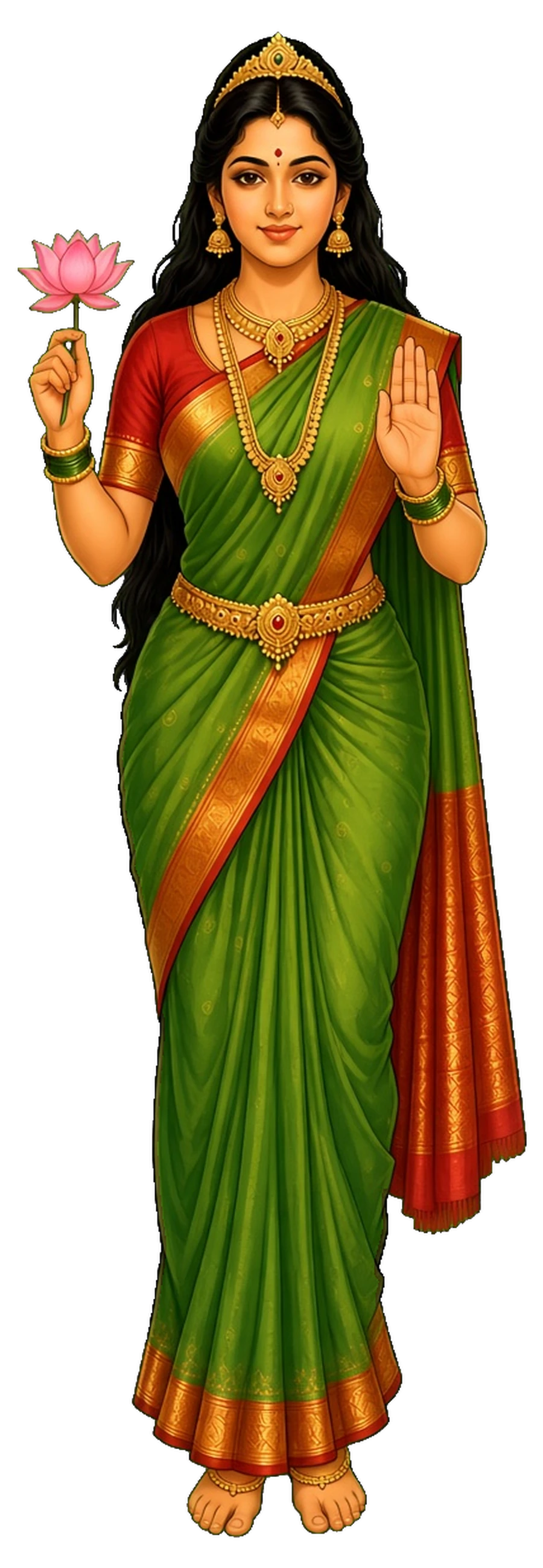
The Srivaishnavas hold Andal to be Bhumi, the earth goddess, an aspect of Lakshmi, come down in Periyalvar's garden on the Pooram star of Aadi. Manavala Mamunigal says she left Vaikuntha the way a mother jumps into a well after her child. Her birthday is Lakshmi's day in the Vishnu temples.
The Goddess of the valaikappu. In every Amman temple of Tamil Nadu she is bathed, rubbed with sandal and turmeric, dressed in rows of glass bangles and seated in a bangle pavilion, as a woman in her seventh month is, and the bangles go back to the women. Aadi is her month, from its first Friday to the koozh at her door.
M
Meenakshi and Kamakshi
The great goddesses of Madurai and Kanchi keep the day in their own temples, Meenakshi with bangles and the wedding thread by day and a flower chariot at night, Kamakshi with the Fridays of Aadi and the Pooram among her festivals. Both are the same Goddess; Meenakshi's story is told under Chithirai.
The day of the Pooram star
1
Srivilliputhur, the birthday
The Pooram star in Aadi, the tenth day of the festival · Thursday 5 August 2027
Andal JayantiThiruvadipooramthe Andal car festival
The Srivaishnavas begin with Manavala Mamunigal's question, is today Thiruvadipooram, and answer it with ten days. At Srivilliputhur the garden where Periyalvar found the child is inside the temple wall, her parrot is made fresh from green leaves every morning, and silk and garlands arrive for her from Ranganatha at Srirangam and from Kallazhagar at Madurai before Andal and Rangamannar are carried in palanquins to the car, once forty metres tall and six hundred and fifty tonnes, now on hydraulic wheels and still drawn by a crowd past counting. At Srirangam she is dressed differently on each of the ten days and married to Ranganatha on the tenth. In every Vishnu temple her two works are recited, and in Srivaishnava homes the kolam is drawn at dawn, the Thiruppavai and the Nachiyar Tirumozhi are sung, and sakkarai pongal and akkaravadisal, the milk-and-jaggery rice she loved, are offered to her picture.
Andal and Rangamannar ride the great temple car at Srivilliputhur, drawn by a crowd on long ropes
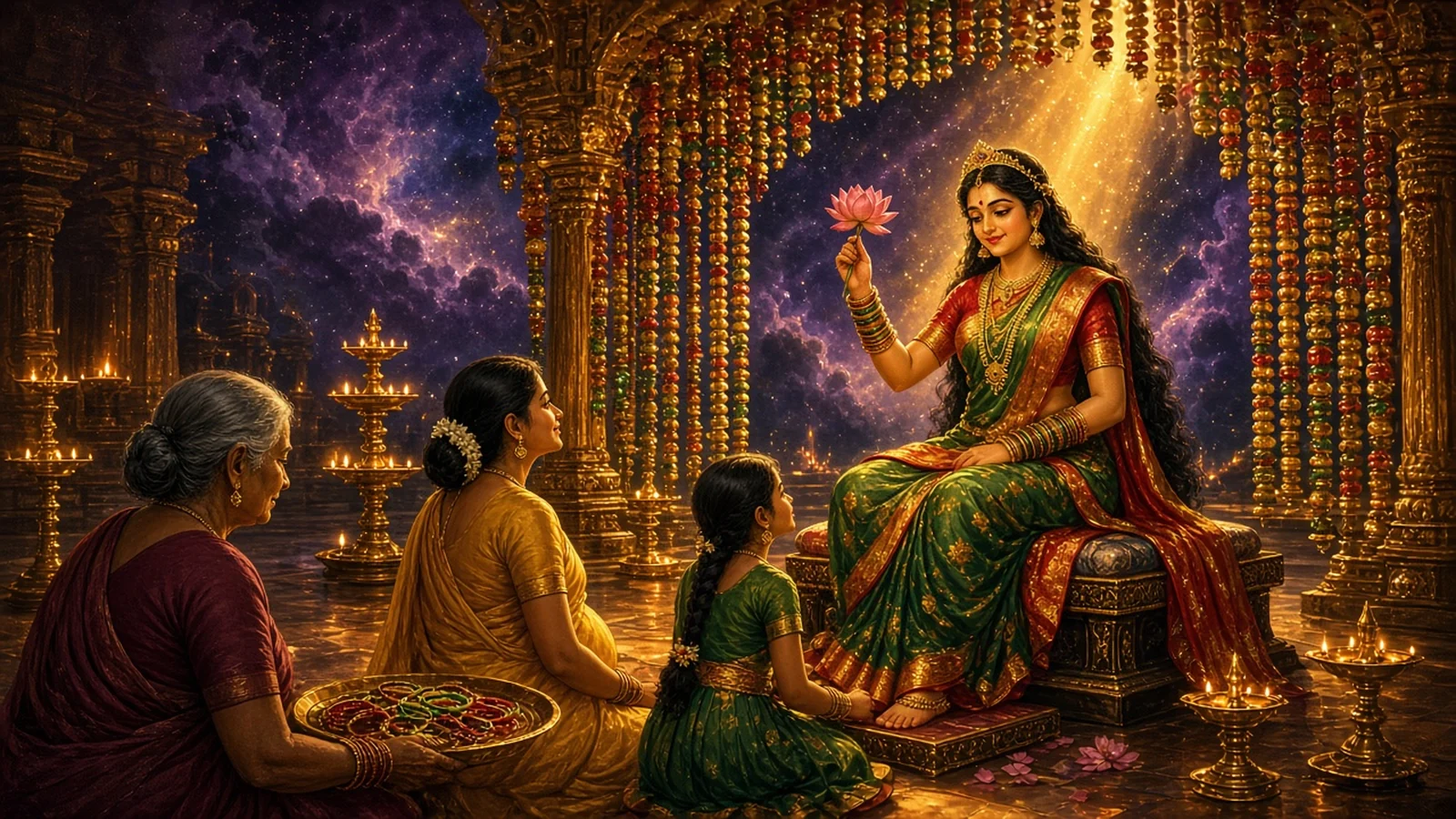
In the morning the Goddess is bathed, at Mylapore on the eastern steps of the temple tank for the best part of an hour, and carried back dressed in glass bangles under a canopy of hundreds more. All day the women come with bangles of their own, red and green, yellow and gold, and leave them at her feet; at Madurai Meenakshi is given bangles and the yellow wedding thread; at Tirunelveli Kanthimathi is set on a copper shield in white silk and asks Nellaiappar's leave before she puts hers on. Towards evening the Goddess is rubbed with sandal paste and seated in the valaiyal pandal, the pavilion of bangles, and after dark she goes round the streets, in Madurai in a chariot of flowers. Every bangle that has touched her is given back: to a girl for a husband, to a wife for her marriage, to a woman expecting for the child's safety, to a couple for a child.
Women lay glass bangles at the feet of the Goddess, who sits dressed in bangles under a canopy
The Pooram star is the peak of a month that belongs to the Goddess. Dakshinayana begins on the first of Aadi, when the sun turns south; the elders call the half-year that follows the night of the gods, so there are no weddings, no house-warmings and no thread ceremonies, and in the old days a new bride was sent back to her mother's house for the month. But every Friday and Tuesday the Amman temples are full, koozh of ragi is cooked in clay pots at the temple door and served hot to everyone who comes, and the Mariamman temples hold their Aadi Thiruvizha, at Salem for twenty-two days. On Aadi 18, Aadi Perukku, the Kaveri country takes rice, turmeric and flowers to the rising river, changes the thali thread and hangs swings; Aadi Krithigai is Murugan's, Aadi Amavasai is for the dead, and on the Friday before the full moon of Shravana the women keep Varalakshmi's vow with a turmeric thread on the wrist.
Ragi koozh cooked in clay pots at the Amman temple door and served hot to everyone who comes
The town eighty kilometres from Madurai where Periyalvar found the child, one of the 108 Divya Desams. Vishnu sleeps on a banyan leaf in the north-east of the temple and Andal stands with Rangamannar in the south-west, the garden between them inside the wall, under a tower of a hundred and ninety-two feet that the state takes for its emblem. Aadi Pooram is its festival of the year, ten days with the car, two florist families weaving the garlands she wears, and the parrot in her left hand made new from leaves every morning. Her own wedding festival, the Thirukkalyana utsavam, is in Panguni.
SrirangamThe ten days and the wedding
Ranganatha's island temple in the Kaveri, where Andal was carried as a bride, keeps ten days of Aadi Pooram with a different dress for her each day, Ranganatha's gift of silk, and on the tenth day her wedding to him. Her shrine in the great temple is one of the places the Thiruppavai is sung every Margazhi morning.
TirumalaThe garland on Garuda
In Purattasi, for the Brahmotsavam on the hill, the Andal garland and the Sikhamani garland of tulasi, chrysanthemum and tuberose that Andal has worn are carried six hundred and fifty kilometres from Srivilliputhur, blessed at the Pedda Jeeyar mutt, taken round the four mada streets with nadaswaram, and worn by Malayappa, Venkateswara's festival image, on the Garuda Vahanam on the fifth night. Tirupati's own garland is sent back to Srivilliputhur for her wedding. Her garland goes to Madurai too, where Kallazhagar wears it into the Vaigai on Chitra Pournami.
Madurai and TirunelveliMeenakshi's bangles, Kanthimathi's permission
At the Meenakshi temple bangles and the sacred wedding thread are offered to the Goddess by day and she goes round the streets at night in a chariot of flowers; in 2026, when the Pooram star fell twice within Aadi, Madurai kept the earlier day and the rest of the state the later. At Tirunelveli Kanthimathi, on the fourth day of her Aadi Pooram festival, is set on a copper shield in white silk, asks Nellaiappar's leave to wear bangles, and is carried with drums to the swing mandapam for her valaikappu.
Kanchi and ChennaiKamakshi's Fridays, Karpagambal's bangle pavilion
The Kamakshi Amman temple at Kanchi, one of the great Shakta pithas, lists Aadi Pooram among its festivals and keeps every Friday of Aadi specially. In Chennai the Kapaleeswarar temple at Mylapore calls the day the Festival of Valaikappu. Karpagambal is bathed on the steps of the tank at seven, dressed in bangles, seated in sandal paste in the valaiyal pandal at half past five and taken round the mada streets after half past seven, with more than five thousand people inside at a time and a bangle for everyone who comes. Mylapore's Madhava Perumal temple keeps ten days for Andal across the road, with all a hundred and seventy-three of her verses recited on the last night.
The village Amman templesMariamman, the koozh and the Aadi Thiruvizha
Aadi is Mariamman's month across Tamil Nadu. The village and street temples of the rain goddess hang their Amman in glass bangles on the Pooram star, hold their Aadi Thiruvizha through the month, Salem's for twenty-two days, and on the Fridays the women cook koozh of ragi and broken rice in clay pots at the temple door and serve it hot with pickle to everyone who comes, whoever they are. The old tellers say a king whose thirst nothing could quench was told in a dream to offer her koozh and drink it.
The Kaveri delta and Kongu NaduAadi Perukku
On the eighteenth of Aadi, when the monsoon has brought the Kaveri up between its banks, the families of the delta carry several kinds of rice to the river, bathe, float lamps and set rice, turmeric and flowers on the current, and the farmers begin to sow. Unmarried girls ask the river for a husband, married women change the turmeric thread of the thali and hold a baby shower for the Goddess on the bank, and swings are hung from the trees. The one Tamil festival fixed by date, with a line in the Silappadikaram; it has its own place on the roadmap.
Mumbai and the diasporaThe Tamil temples abroad
The Tamil temples of Chembur in Mumbai keep the day as at home. At the Durga Amman temple the bangles are strung on silk thread and laid on the Goddess and given out the next morning, and at the Adi Sakthi Mariamman temple women bring their bangles the day before and the Goddess is dressed in red, green, lacquer and yellow glass. Wherever Tamil women have a Goddess within reach, she is given bangles on this star.
SrivaishnavasAndal's day
For the Srivaishnavas Aadi Pooram is the appearance day of the only woman among the twelve Alvars, Bhudevi come to earth, and Manavala Mamunigal's verse on the day is sung in every temple. Her two works are recited whole, and the sixth decad of the Nachiyar Tirumozhi, her dream of the wedding, is the song the women of the house sing at every Srivaishnava wedding when the bridegroom arrives, with the bride dressed as Andal. The day is kept in the Vishnu temples alone and has nothing to do with bangles.
Shaivas and ShaktasThe Goddess's month
For the Amman temples, Shaiva and Shakta alike, Aadi is the Goddess's month and the Pooram star her day. The valaikappu is kept for Meenakshi, Kamakshi, Karpagambal, Kanthimathi and every village Mariamman, and the reading that she is honoured as a mother-to-be, the year growing in her as the paddy grows in the rain, is the women's own and is said in no text. A popular story has Parvati come as a midwife to a woman in labour after a festival, and the woman promise her a day of bangles every year.
Tamil women of every sectThe bangle on the wrist
The valaikappu belongs to the household before it belongs to any temple. It is the rite for a daughter in her seventh month, at her mother's house, with sandal and turmeric on her hands and face, red and green glass bangles slid on in odd numbers, songs, flowers and seven kinds of rice, and the belief that the child, who can hear by then, is kept company by the sound. On Aadi Pooram women of every community give the same to the Goddess and carry a bangle home from her, and the Vaishnava and the Shaiva women stand in the same queue for it.
How it is kept
At Srivilliputhur the ten days end at the car. Silk and garlands come for Andal from Srirangam and from Kallazhagar's temple at Madurai, Andal and Rangamannar are carried in palanquins to the chariot, and it goes round the streets on its hydraulic wheels with the ropes in thousands of hands. Srirangam dresses her anew each day and marries her on the tenth. In the homes the kolam is drawn before light, the two hymns are sung, and sakkarai pongal and akkaravadisal are offered. The garland she has worn travels in Purattasi to Tirumala, where Venkateswara's festival image wears it on Garuda, and the hill's garland comes back for her wedding in Panguni.
Before light at home: the kolam at the door, the Thiruppavai sung and pongal offered to Andal
In the Amman temples the Goddess is bathed in the morning, in Mylapore on the steps of the tank before a crowd that is nearly all women, and carried back dressed in glass bangles with hundreds more hung round her. All day the women offer bangles and all day the bangles that have touched her are given back. Towards evening she is rubbed with sandal paste and seated in the valaiyal pandal, and after dark she goes round the streets, at Madurai in a chariot of flowers. The bangle comes home on a wrist: a girl's for a husband, a wife's for her marriage, a mother-to-be's for the child.
After dark the Goddess in sandal and glass bangles goes round the streets in a chariot of flowers
The month round it is kept too: Aadi Perukku on the eighteenth, when the Kaveri country takes rice to the river; Aadi Krithigai for Murugan; Aadi Amavasai for the dead; the Varalakshmi Friday; and the Fridays and Tuesdays at every Amman temple, with the koozh pot on the fire outside.
In the old texts
Andal's own words are the texts of the day. The Thiruppavai, thirty verses of the Margazhi vow, is hers and is sung on her birthday as in the cold month; the Nachiyar Tirumozhi, a hundred and forty-three verses in fourteen decads, gives her prayer to Kamadeva, the sand castle, the cuckoo, the dream of the wedding, the clouds sent north as messengers to the god at Tirupati, and at the end her marriage as Lakshmi come to earth. The sixth decad, Varanam Ayiram, is sung at every Srivaishnava wedding, and its last verse promises good children to those who sing it. Andal's life, the tulasi, the garland and the bride at Srirangam, is in the Guruparampara accounts of the Alvars and the Divya Suri Charitam, which the temple festivals follow; scholars put her in the eighth century, tradition much earlier. Manavala Mamunigal's Upadesa Ratnamalai of the fifteenth century gives the day its verse.
The Goddess's side has no scripture. The valaikappu is a household rite that the anthropologists trace to the seemantham of the Kalpa Sutras; the Amman's valaikappu is temple custom, and its reading is oral. Aadi itself is older than both: the Silappadikaram and the Sangam poems know the eighteenth of Aadi and the river in flood, and a historian of the Tamil calendar reads the month as the sowing month that became, over centuries, the month of Mariamman.
Where this page comes from. Written by Devalok from Andal's Nachiyar Tirumozhi and Thiruppavai, Manavala Mamunigal's Upadesa Ratnamalai, the Srivaishnava Guruparampara accounts of Andal, the Aadi Pooram of Srivilliputhur, Srirangam, Tirumala, Madurai, Tirunelveli, Kanchi and Mylapore as the temples and the press record it, the valaikappu of Tamil homes, the Aadi month customs as the Tamil almanacs and the historians describe them, and the Drik Panchang nakshatra tables for 2027 and 2028, as recorded in the Devalok Lore. Our own words throughout.