Festival · The fire on the longest cold night, and the songs for Dulla Bhatti
Lohri
Lohri is the bonfire night of the Punjab, kept on 13 January, the evening before Maghi, when the sugarcane is cut and the winter sowing is done. Children sing from door to door all day for til, gur and coins, and after dark the family lights a fire in the courtyard, walks round it, throws in sesame, jaggery, rewri, peanuts and popcorn, and sings the songs of Dulla Bhatti, the outlaw who married off two poor girls with a ser of sugar. A house with a new baby or a new bride keeps the biggest fire. The next morning is Maghi, with a bath and kheer, and for Sikhs the fair at Muktsar.
When is Lohri in 2027? Lohri night is Wednesday 13 January 2027. In 2028: Thursday 13 January 2028. The night of 13 January, the evening before the sun enters Makara; a few almanacs move it to the 14th when the Sankranti falls on the 15th.
Also calledLohri nightLal LoiMasantthe eve of Maghi
Next, in 2027Wednesday 13 January 2027
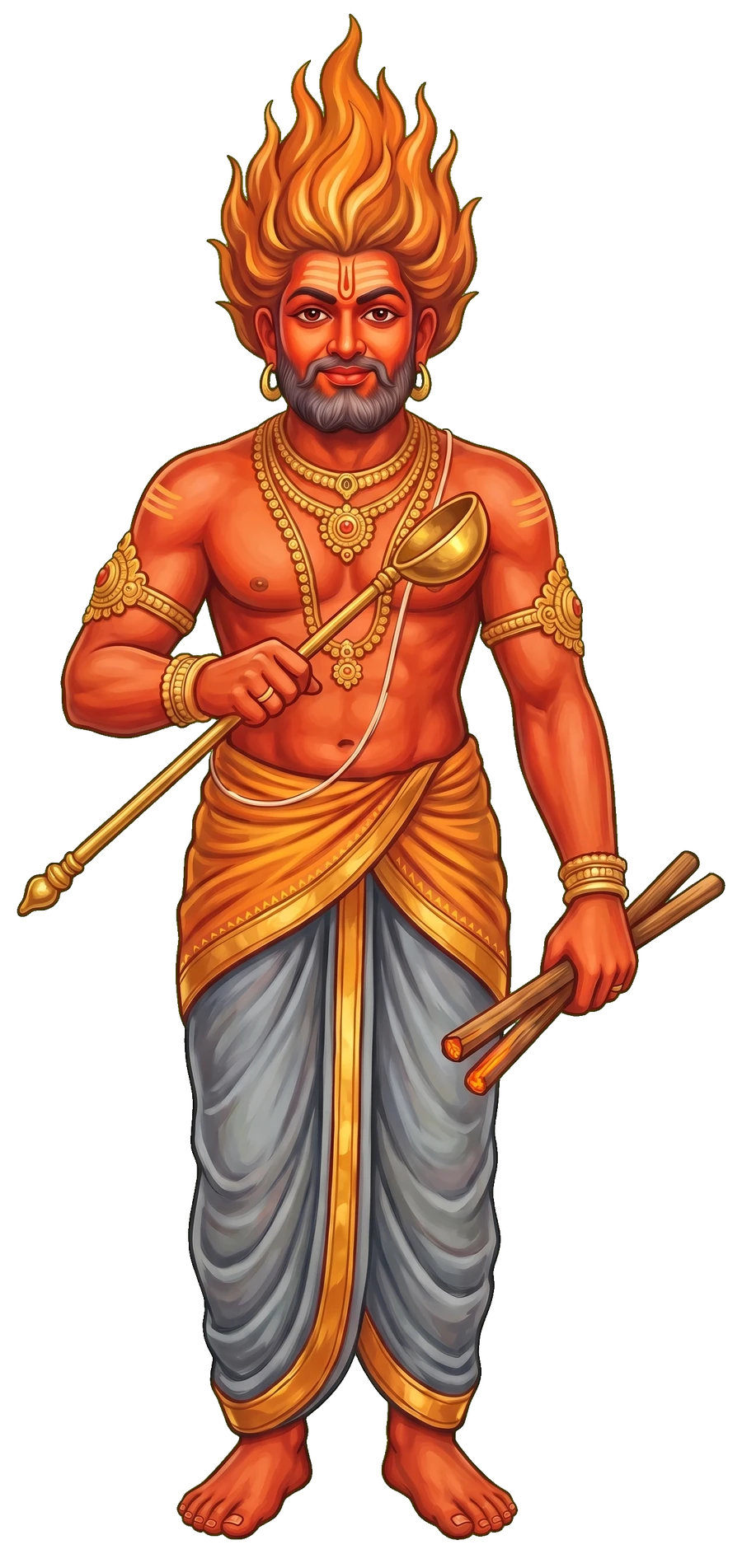
Prime godAgni
with 2 more
WherePunjab, Haryana, Himachal Pradesh, Jammu and Delhi, the Pakistani Punjab, and Punjabis across the world
How longOne night, with the children's rounds by day and Maghi the next morning
The night of 13 January, the evening before the sun enters Makara; a few almanacs move it to the 14th when the Sankranti falls on the 15th
Why it is kept
Lohri is a fire. On the night of 13 January, in every courtyard of the Punjab, a heap of logs is lit after dark and the family walks round it throwing in the first of the winter harvest, sesame, jaggery, peanuts and popcorn, while the children who have sung at every door since morning sing once more for Dulla Bhatti. It is the cold's last night. From the next morning, Maghi, the sun turns north.
The reasons are the farmer's. By mid January the sugarcane is being cut, the wheat and mustard of the winter sowing are up, and the worst of the cold is behind. The fire is thanks for that, and everything thrown into it is the land's: til, gur from the new cane, roasted corn, peanuts, the popcorn of the new maize. In the nineteenth century the winter revenue fell due on Lohri or Maghi, and many farmers still count the night as the turn of their year.
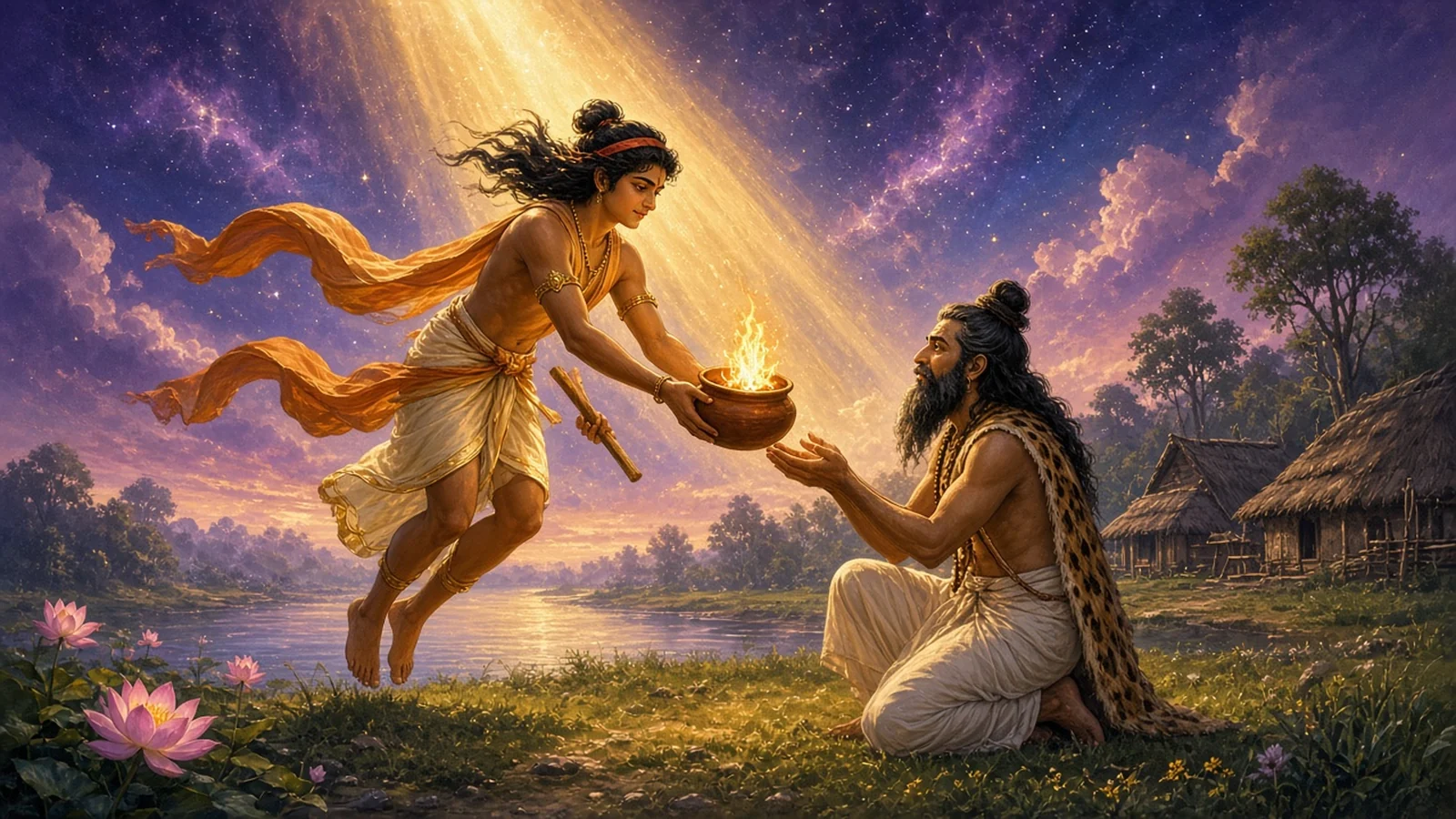
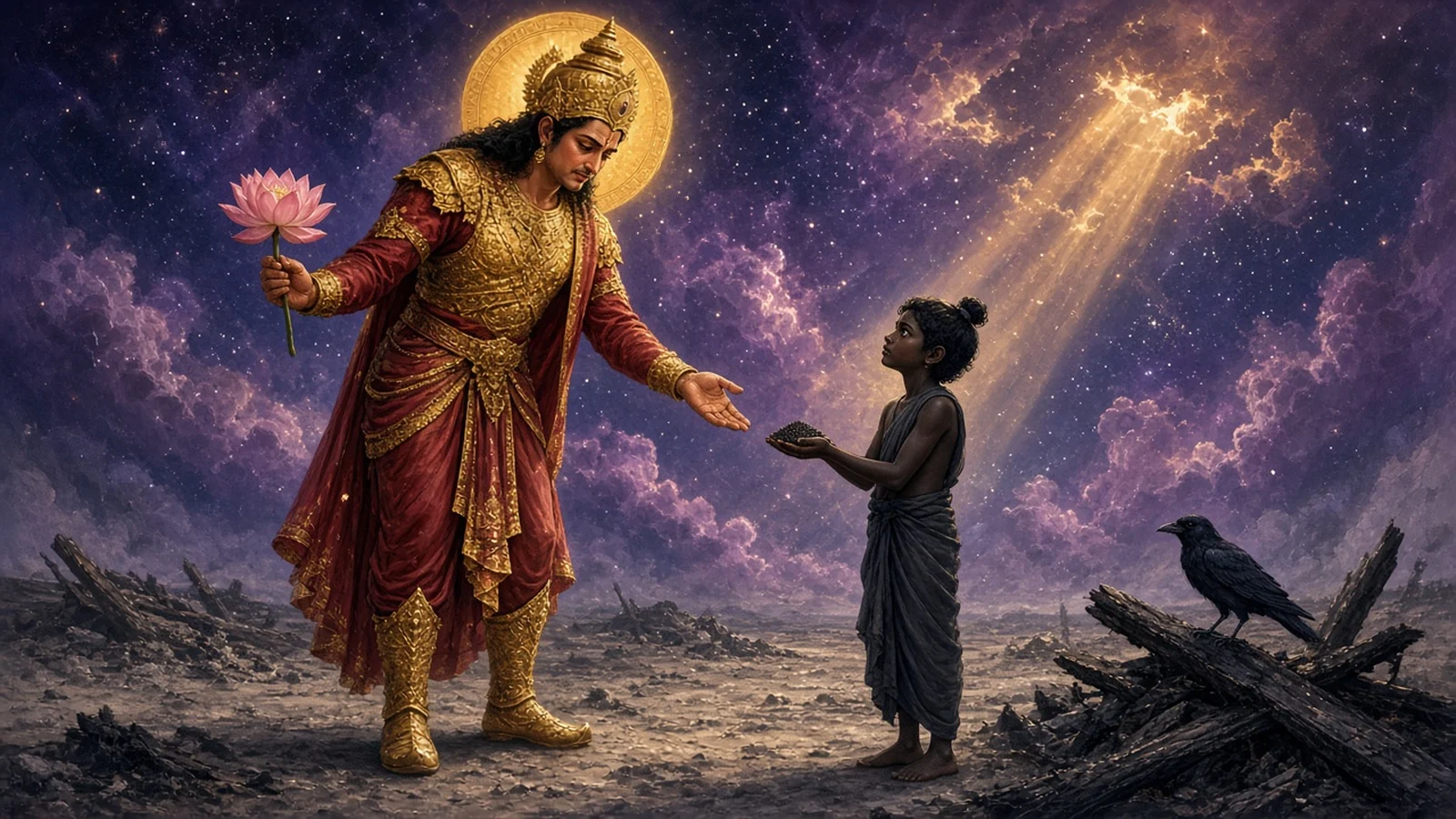
The fire has a god, and the night has a hero. The god is Agni, the household fire of the Rigveda, who carries what is given him up to the rest of the gods and who, in the Himachal hills, owns the whole month of Magh. The hero is Dulla Bhatti, a Muslim Rajput landholder of Pindi Bhattian near Lahore in the days of Akbar, whose grandfather and father were executed for refusing the emperor's new land tax and who took to the forest, robbed the imperial caravans for the poor, and rescued two Brahmin girls from a man who meant to carry them off. He gave them away in marriage himself, as their father would have, with a ser of sugar for their dowry. He was hanged in Lahore in 1599. The children's song is about the wedding, not the hanging, and it asks every house for its lohri in his name.
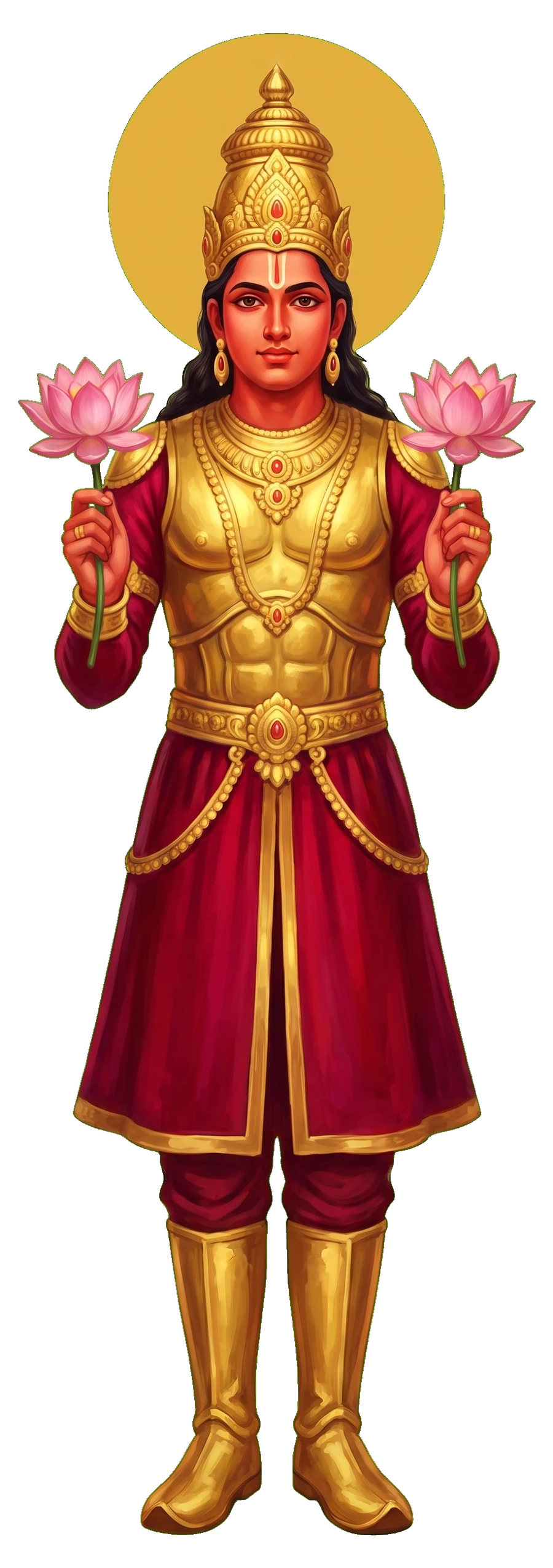
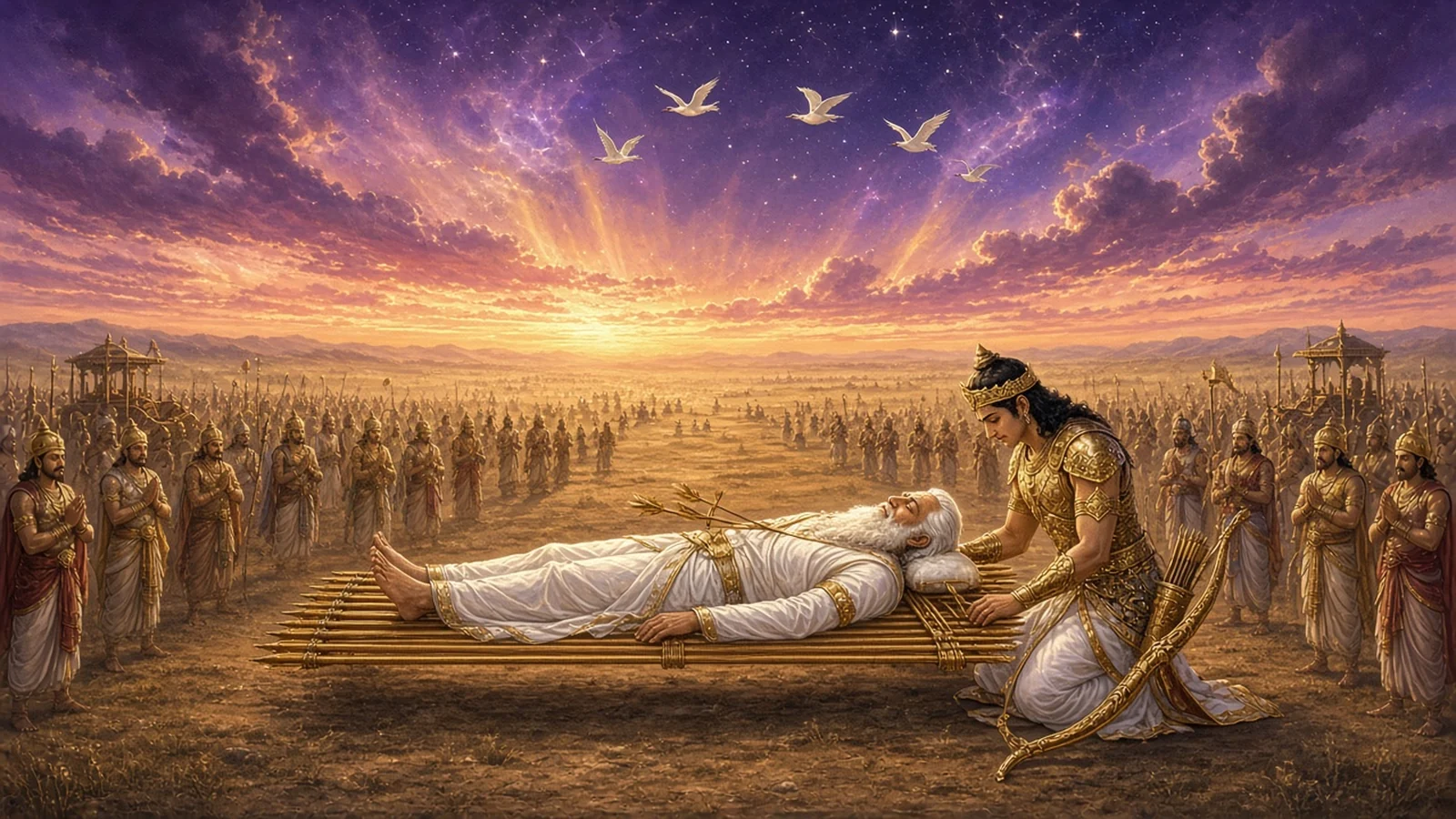
The night also waits for the sun. Maghi is the Sankranti, the day the sun enters Makara and begins its half year in the north, the time Bhishma lay on his arrows for and the day the whole country bathes and eats sesame; that day has its own page, Makar Sankranti. Lohri is its eve, and in the Punjab the eve is the bigger night.
The fire itself. The harvest's first sesame, jaggery and popcorn are given to him, the family walks round him, and the songs are sung into him. In the Himachal hills the whole cold month of Magh is given to his worship.
The sun, who turns north from the next morning. Hindus pour milk and water round the fire for him, and Maghi, the morning after, is his Sankranti, which has its own page, Makar Sankranti.
D
Dulla Bhatti
Not a god but the hero of the night, the Muslim Rajput outlaw of Pindi Bhattian who fought Akbar's revenue men and gave two poor Brahmin girls away in marriage. Every Lohri song names him.
The night of Lohri
1
The day, the loot
13 January, by daylight · Wednesday 13 January 2027
The children's rounds
For a week or two before, the boys and girls of the street have been collecting logs for the fire. On the day itself they go from house to house in bands, one singing and the rest shouting "Ho" at the end of each line, and are given til, gajak, gur, rewri, peanuts, popcorn and coins, which they call their lohri. Nobody sends them away empty; in some villages a boy with an ash-smeared face and a rope round his waist comes along to shame the stingy. Houses with a newborn or a new bride are visited first and asked for more.
13 January, after dark · Wednesday 13 January 2027
The first Lohri
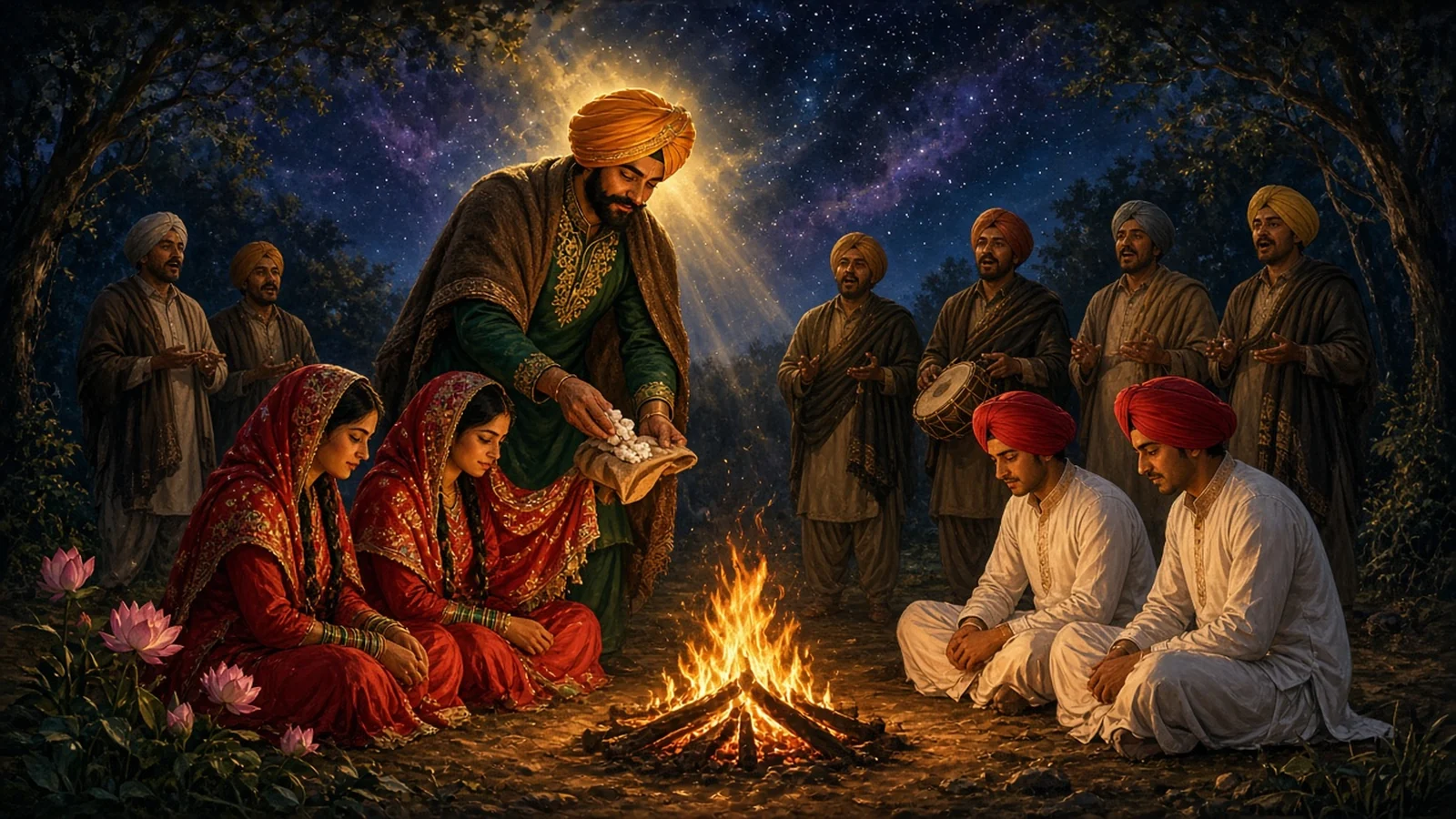
At sunset the fire is lit in the courtyard or the village square. The family walks round it and throws in sesame, jaggery, sugar candy, rewri, peanuts and popcorn, and the words said over it ask for honour to come in and want to go out. Hindus pour milk and water round it for the sun. Then the dhol, the bhangra and the giddha, and the songs of Dulla Bhatti sung by everyone, old and young. A family's first Lohri after a wedding or a birth is kept with the whole village invited, gifts for the bride or the baby, and once with copper coins and cowries given to the poor. Dinner is sarson da saag and makki di roti, with gur and the children's loot handed round.
The first of Magh, when the sun enters Makara · Thursday 14 January 2027
Makar SankrantiMaghi SangrandSakratMagha Saaji
Before dawn people bathe in a river, a canal or the gurdwara's tank, and eat rauh di kheer, rice cooked the evening before in sugarcane juice and eaten cold with curd, or khichdi. The sun has turned north, the day Bhishma waited for. At Sri Muktsar Sahib the Sikhs keep the Mela Maghi for the forty who fell at Khidrana in 1705, with a dip in the sarovar and langar for thousands. Fairs are held across the Punjab, and in the old days the winter revenue was paid on this day.
The whole street comes. The logs are stacked days ahead, the fire is lit at dusk, and the family with the year's new baby or new bride hosts it, sends sweets round and takes the gifts. Roasted corn from the new harvest, radishes, gur and peanuts are eaten by the fire, and the dhol plays until it burns down. The sugarcane is being cut and the rabi fields are sown, so the farmers count the night as the end of the hard work and, in many villages, as the start of the financial year.
Delhi and the cities
Lohri came to Delhi and Haryana with the Punjabis displaced in 1947 and is kept in every colony with a fire in the park or on the roof, a tray of rewri and gajak and the bhangra; it is not a gazetted holiday there, but the President's house has lit a Lohri fire. It is a holiday in Punjab, Jammu and Himachal.
Haryana and Himachal PradeshSakrat, Masant and Magha Saaji
Haryana keeps the next day as Sakrat. In the Himachal hills Lohri night is called Masant and the next day Magha Saaji or Magha Ra Saza; Magh is the coldest month, when the fields stand still, and the hill villages give it to the worship of Agni, with houses cleaned and decorated for the Madraison Puja.
JammuChajja and the Hiran dance
In the Dogra towns and villages the children build a chajja, a peacock of coloured paper, and carry it from house to house singing for their Lohri, wearing garlands of groundnuts, dry fruit and sweets. Young men dance the Hiran, the deer dance, in the lanes, and houses with a wedding or a birth to celebrate feed everyone who comes. The Dogras of London now run a chajja workshop for their children before the festival.
The Pakistani PunjabLahore, Faisalabad and Pindi Bhattian
Before 1947 the fires burned at Bhati Chowk, Lohari Chowk, Shah Alami and the bazaars of Lahore, with rewri and gachak from the sweetmakers and children collecting coins, and boys would fetch a brand from another neighbourhood's fire. The festival faded after Partition. Since 2013, when Faisalabad held the first city Lohri, it has been lit again in Lahore, Multan and Kasur with Dulla Bhatti as its theme, and at Pindi Bhattian, his home, the var of Dulla is still sung at the fairs.
Canada, Australia and Britain
Lohri is the Punjabi diaspora's second festival after Diwali. In Surrey, British Columbia, one Lohri began with a bonfire outdoors and moved into a banquet hall with nine hundred guests, kept for daughters as well as sons; in Brampton and Melbourne the shops stock til, peanuts, gachak and the makings of a fire, and neighbours bring cardboard. In London the Dogras teach their children the chajja.
The same night elsewhereBhogi and Uruka
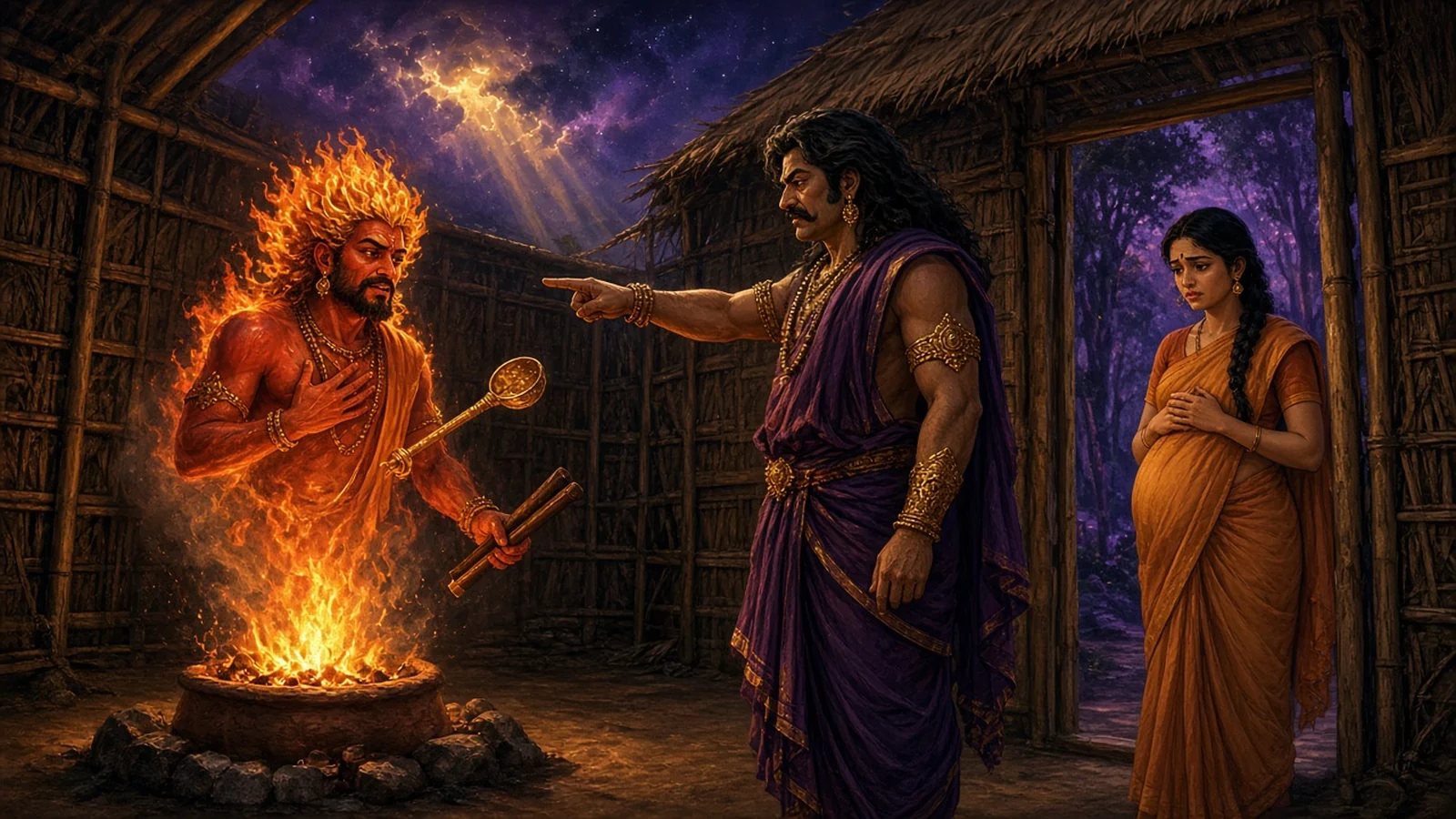
The south burns its old things at dawn in the Bhogi fire the same morning Punjab's embers go cold, and Assam feasts all night in a straw hut on Uruka and burns it at daybreak; both have their own pages, Makar Sankranti and Pongal. Sindhis keep the night as Lal Loi, with children fetching sticks from their grandparents for the fire.
SikhsLohri at home, Maghi at Muktsar
Lohri is kept in Sikh homes as a harvest night, with the fire, the dhol and the songs, and Maghi, the morning after, is a day of the Sikh calendar that Guru Amar Das already names. At Sri Muktsar Sahib the Mela Maghi remembers the Chali Mukte, the forty who had left Guru Gobind Singh at Anandpur, were turned back by Mai Bhago, and fell at the pool of Khidrana on 29 December 1705; the Guru tore up their letter of desertion and the pool became Muktsar, the pool of liberation. Pilgrims bathe at Gurdwara Tutti Gandi Sahib, the kirtan runs all day and the fairground fills the town.
HindusThe fire and the sun
Hindus walk round the fire with a prayer and pour milk and water round it for the Sun, who turns north the next morning. The til thrown in is the sesame of the Sankranti story, and the morning bath and the gifts of Maghi are the Sankranti's. For the Dogras of Jammu the next day is Uttarain, the sun's northern turn.
Punjabi MuslimsDulla Bhatti's own people
The hero of the night is a Muslim. Before Partition Hindus, Sikhs and Muslims sang the Lohri songs together in Lahore, and Punjabi Muslims in the villages and now in the city revivals keep the fire still. Dulla's grave at Miani Sahib in Lahore is a plain platform under a tree, and a Pakistani foundation has asked for a proper tomb and a postage stamp for him. Christians of the Punjab keep the night too, as a Punjabi festival rather than a religious one.
How it is kept
The children begin. From the first light of 13 January they go round the street in bands, one singing and the rest shouting "Ho", and every house gives them something, til and gajak, gur, rewri, peanuts, popcorn and a coin or two. A house with a new baby or a new bride is asked for more and gives more.
At dusk the fire is lit. Where there has been a birth or a wedding in the year, that family hosts it, and the whole street comes in. The eldest goes round first with the baby, or the bride goes round with her husband, and the til and gur go into the flames with the words that ask honour in and want out. Everyone follows. The dhol starts, the men dance the bhangra and the women the giddha, and the songs go round: "Sundar mundriye ho", "Dulla Bhatti wala ho", "Ser shakkar payi ho", every line answered. Dinner by the fire is sarson da saag and makki di roti with gur, and the children's loot is shared out.
Maghi follows. People bathe before dawn, eat the kheer cooked the night before in sugarcane juice, and go to the fairs; at Muktsar the Sikhs keep their great mela for the forty martyrs of 1705.
In the old texts
No scripture names Lohri. Its texts are songs. The children's song of Sundri and Mundri, sung in the vaar form of the old Punjabi war ballads, is the one every Punjabi knows, and the longer var of Dulla Bhatti, which tells his family's death, his revolt and his hanging, is still sung at Pindi Bhattian; a Haryanvi version of it was set down in Ibbetson and Maclagan's Glossary in the nineteenth century, and Kishan Singh Arif wrote his Qissa Dulla Bhatti in the same century. Shah Hussain, the Sufi poet of Lahore who died in 1599, is held by Punjab to have stood at Dulla's execution and to have left a line on it: thrones are not got by asking. A Persian life of Hussain commissioned by Jahangir records that the two men met.
The fire is older than any of them. The Rigveda's twelfth hymn calls Agni "Lord of the House" and the bearer of oblations, and its first hymn has him approached day by day with prayer, like a father by his son. The sun's turn is the Mahabharata's: Bhishma, on his bed of arrows, waits for the Uttarayana before he lets himself die, and the Punjab places that death on Maghi.
The festival itself enters the written record at Maharaja Ranjit Singh's court. Wade saw it there in 1832, Mackeson described the Maharaja giving away suits of clothes and sums of money on Lohri day in 1836, and a great bonfire at the court is recorded in 1844. H. A. Rose noted in 1907 that the first Lohri after a birth was kept by giving copper coins and cowries to the poor.
Where this page comes from. Written by Devalok from the Lohri songs of Punjab, the var of Dulla Bhatti and the accounts of Ishwar Dayal Gaur and the Lahore writers, the Rigveda's hymns to Agni, the Mahabharata's Uttarayana, the records of Maharaja Ranjit Singh's court and of the Chali Mukte, and accounts of the festival across the Punjab, the hills, Jammu, Pakistan and the diaspora, as recorded in the Devalok Lore. Our own words throughout.