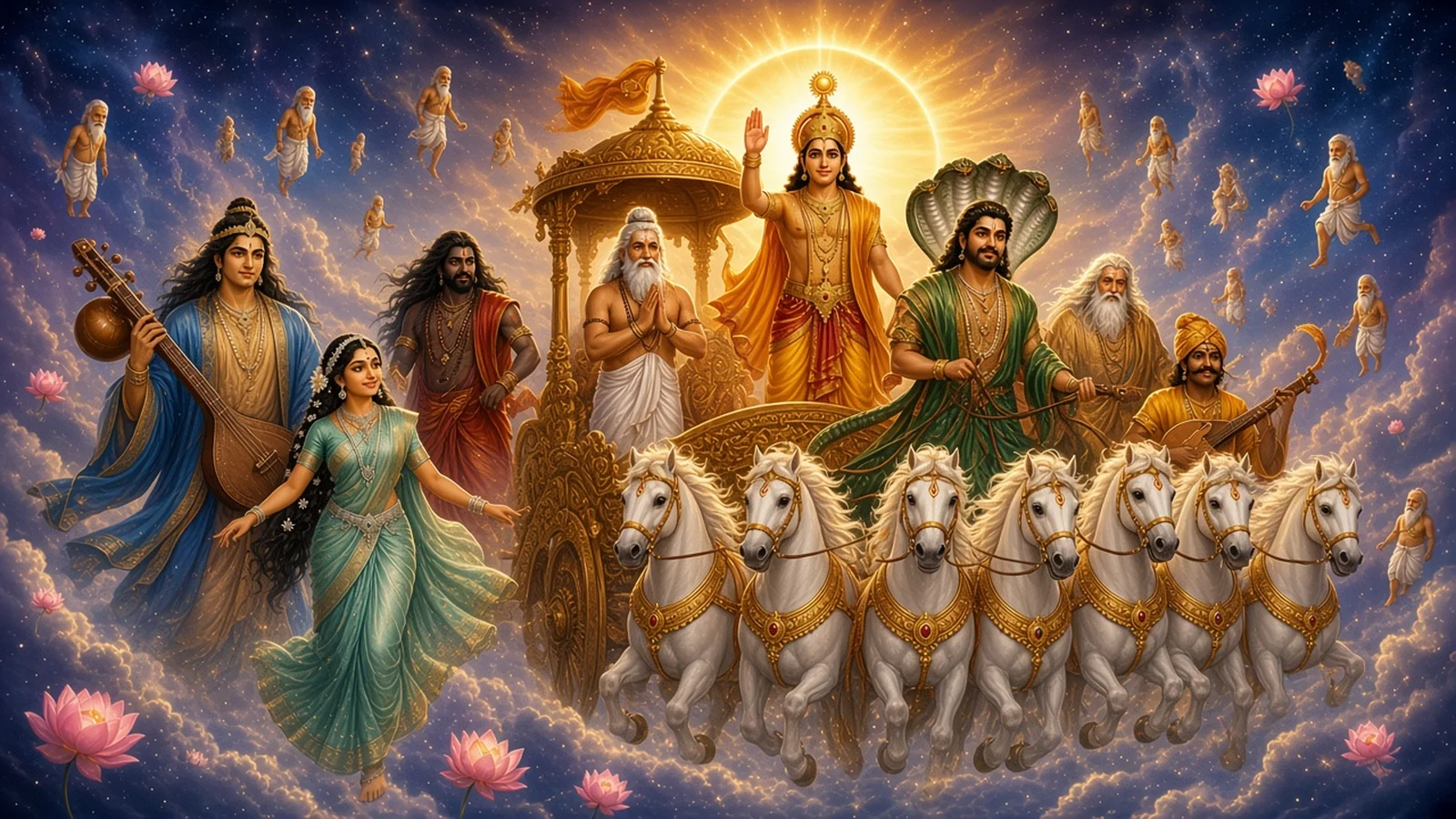
Festival · The seventh day of bright Magha, the Sun's birthday, kept with a dawn bath under seven arka leaves and a chariot drawn at the door
Ratha Saptami
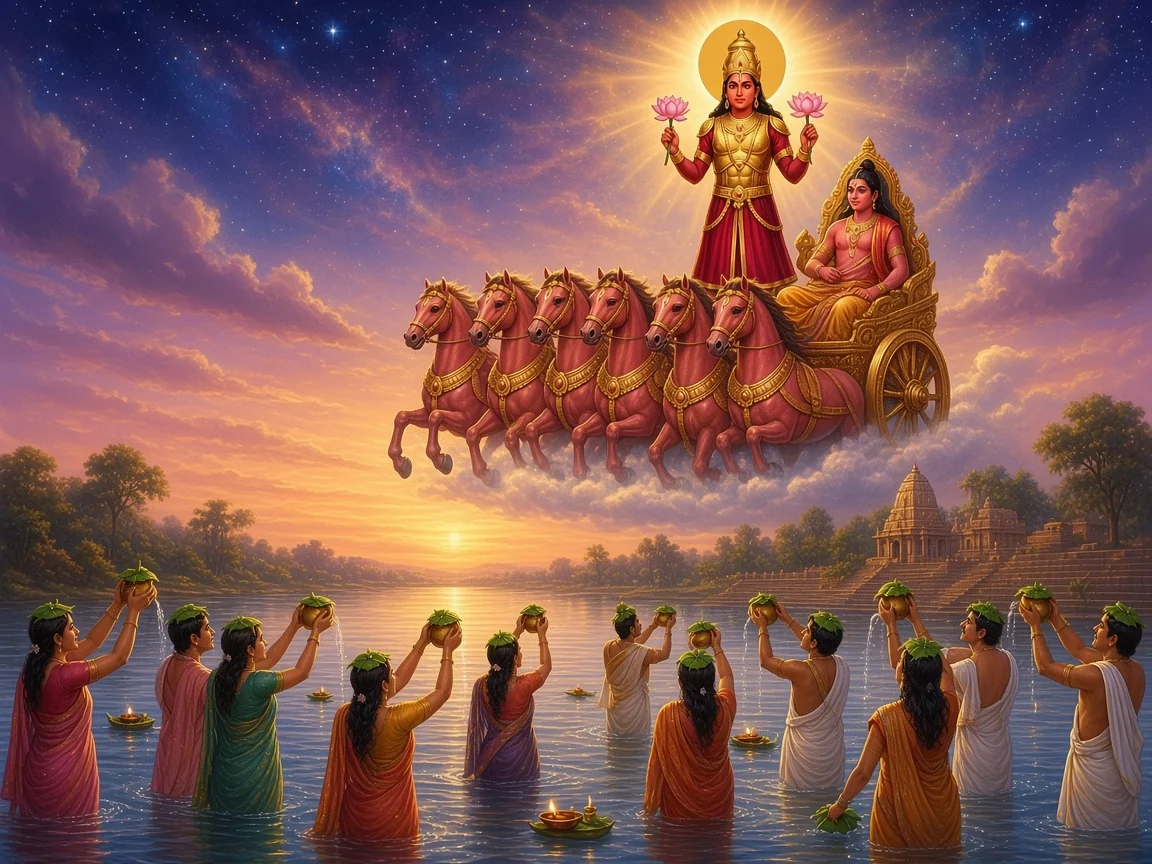
Ratha Saptami, the chariot seventh, falls on the seventh day of the bright half of Magha and is kept as the birthday of the Sun. Before sunrise people bathe with seven leaves of the arka plant on their heads and bodies, offer water to the rising sun, and in the south draw his seven-horsed chariot at the door and boil milk in it. At Tirumala the Lord rides seven vehicles from dawn to night, at Arasavalli the Sun is seen without his ornaments, and at Konark pilgrims bathe where the Chandrabhaga once met the sea.
When is Ratha Saptami in 2027? Ratha Saptami, the Sun's birthday, is Saturday 13 February 2027. In 2028: Thursday 3 February 2028. The seventh tithi of the bright half of Magha (Magha shukla saptami), usually late January or February; the bath is taken at arunodaya, the hour and a half before sunrise.
Also calledRatha SaptamiRathasaptamiRatha SapthamiRath SaptamiMagha SaptamiSurya JayantiAchala SaptamiArogya SaptamiMaha Saptami
In short
What is Ratha Saptami?
The seventh day of the bright half of Magha, kept as the Sun's birthday and as the day he received his chariot. People bathe before dawn with seven arka leaves, offer water to the rising sun, and in the south draw his chariot at the door.
When is Ratha Saptami in 2027?
Saturday 13 February 2027. In 2028 it falls on Thursday 3 February. The bath is taken at arunodaya, before sunrise; in Hyderabad on 13 February 2027 that is between 5:04 am and sunrise at 6:44.
Why are arka leaves used in the bath?
The arka, Calotropis gigantea, carries one of the Sun's names and is said to hold his heat. In the southern telling, Vyasa laid seven of its leaves on Bhishma to burn away the sin of his silence when Draupadi was shamed.
What happens at Tirumala on Ratha Saptami?
Malayappa Swamy rides seven vahanas round the temple streets in one day, beginning with the Surya Prabha at sunrise and ending with the Chandra Prabha at night, with the Chakra Snanam in the afternoon.
Is Bhishma Ashtami the next day?
Usually. In 2027 Bhishma Ashtami is Sunday 14 February, the day after Ratha Saptami; in 2028 the eighth tithi begins at midday on 3 February, so both fall on the same date.
Next, in 2027Saturday 13 February 2027
Prime godSurya
with 3 more
WhereAll of India, kept most closely in Andhra Pradesh, Tamil Nadu, Karnataka and Odisha; Tirumala, Arasavalli near Srikakulam, Mangaluru, Melkote and Konark
How longOne day, from the bath before dawn to the last procession at night; Bhishma Ashtami follows
The seventh tithi of the bright half of Magha (Magha shukla saptami), usually late January or February; the bath is taken at arunodaya, the hour and a half before sunrise
Why it is kept
Ratha Saptami comes a few weeks after the winter sun has turned north, on the seventh day of the bright half of Magha, and it is kept as his birthday. In the south people are up in the dark to bathe with seven leaves of the arka plant on their heads, a chariot of seven horses is drawn at the door, and milk is set to boil in it as the sun comes up. At Tirumala the Lord rides out to meet the first rays.
The name means the chariot seventh. The Skanda Purana says that the seventh of bright Magha is the tithi on which the Sun first received his chariot, and the medieval writer Hemadri quotes the Matsya Purana for the same thing: the Sun took his chariot on this day at the start of the present age of the world. The Bhavishya Purana gives the Sun every seventh day of the month, because it was on a seventh that he was born, the egg that became Martanda, told in The Eighth Son. So the day is called Surya Jayanti, the Sun's birthday.
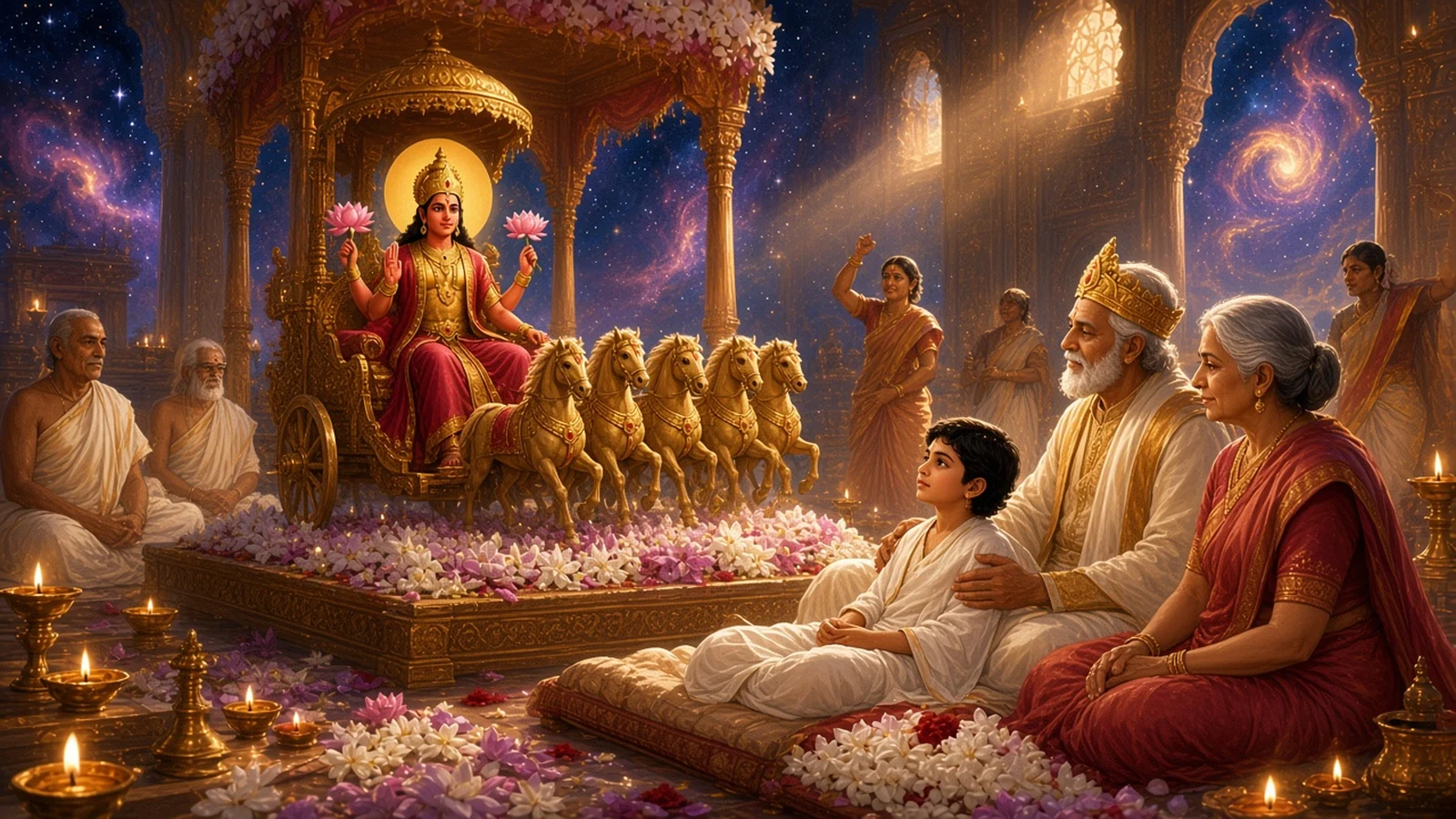
Surya takes his golden chariot of seven horses, with Aruna the Dawn at the reins
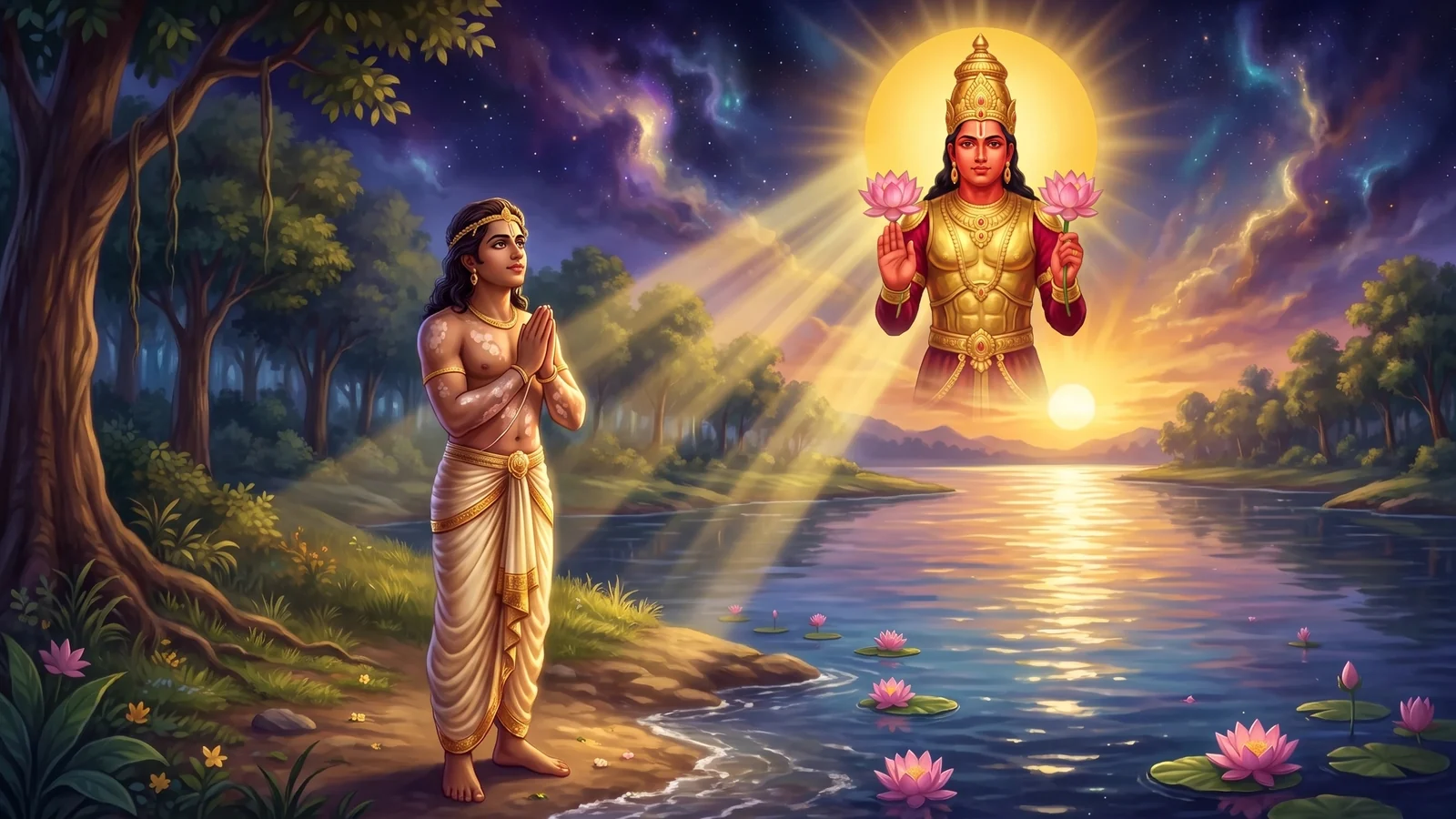
It is also a day of healing. Its other name is Arogya Saptami, the seventh of health. The vow's own story, The Prince Who Was Never Well, has an old king cure his son by keeping it, and at Konark the bath at Chandrabhaga recalls Samba, cured of leprosy by the Sun, as told in Samba and the Sun. In the south the bath is tied to Bhishma, whose day, Bhishma Ashtami, follows; his long wait is in The Bed of Arrows.
The old king and queen sit by their pale son's bed as the morning sun comes through the window
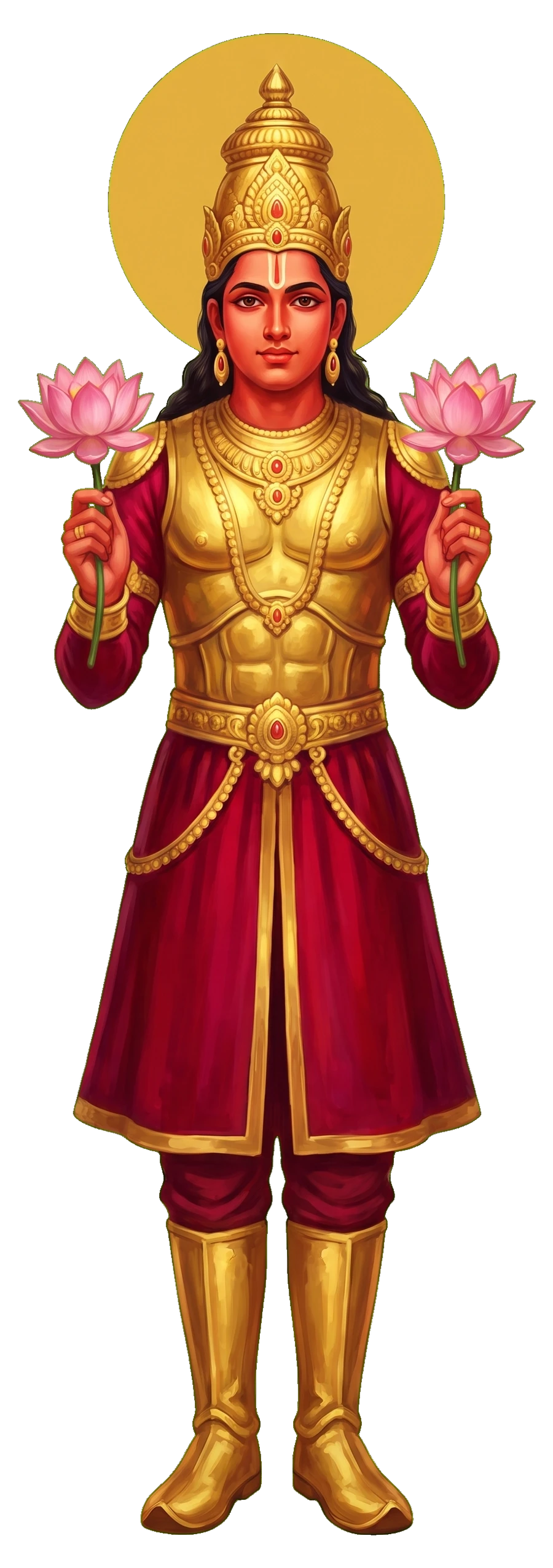
The Sun, whose birthday it is and whose chariot gives the day its name. The Skanda Purana makes this the tithi on which he first received his chariot, and the Bhavishya Purana gives him every seventh day, this one above all. He is worshipped at dawn with water, red flowers and arka leaves, and drawn on the ground in his chariot of seven horses.
A
Aruna, the charioteer
The red Dawn, who drives the Sun's chariot of seven horses and sits before the god in his images; at Arasavalli he is carved on the same stone as the Sun. The bath is taken at his hour, arunodaya, the rising of Aruna, before the Sun himself is up.
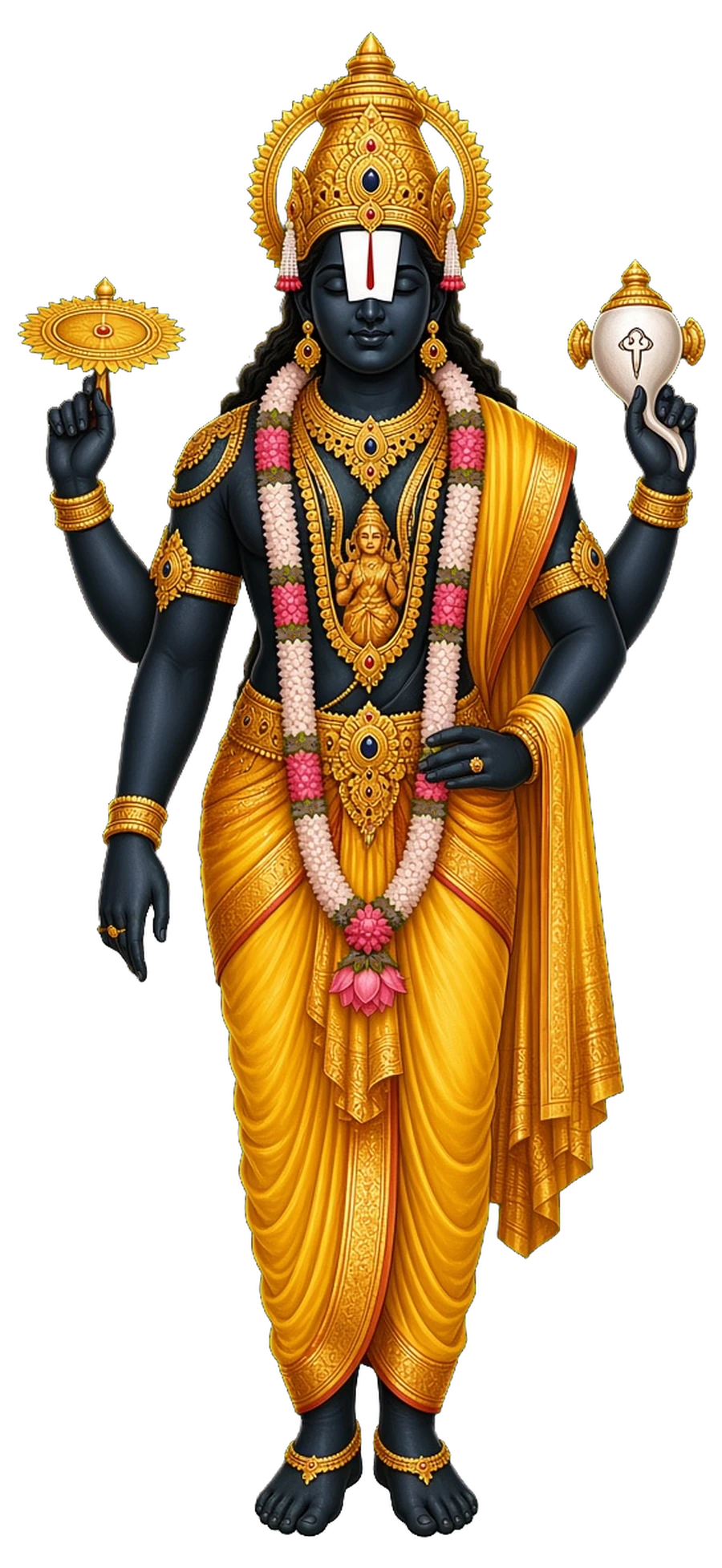
The Lord of Tirumala, who on this one day goes round his temple's streets seven times. His processional form, Malayappa Swamy, rides the Surya Prabha, the Sun's own radiance, at sunrise, and six more vehicles through the day, ending on the Chandra Prabha of the moon at night.
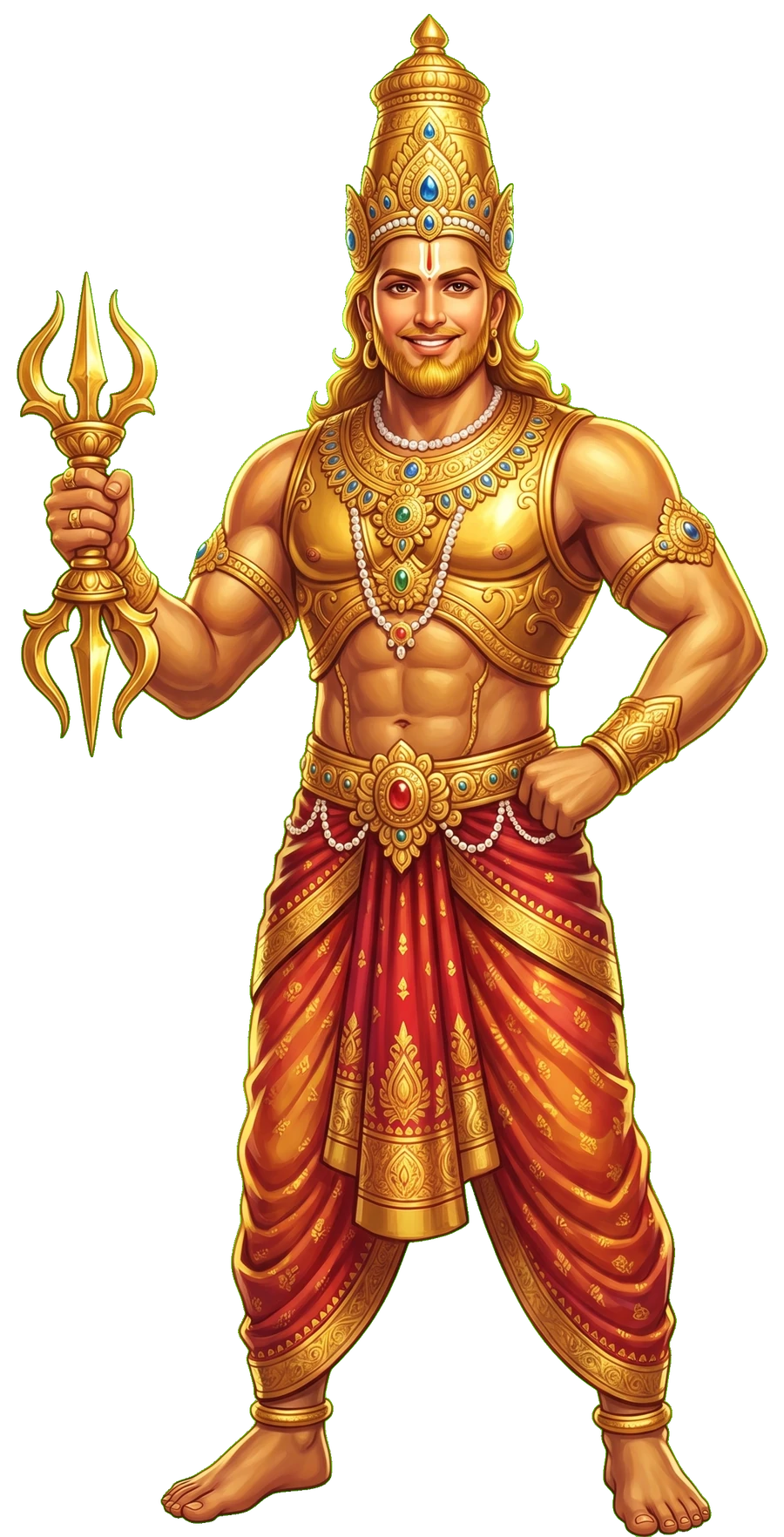
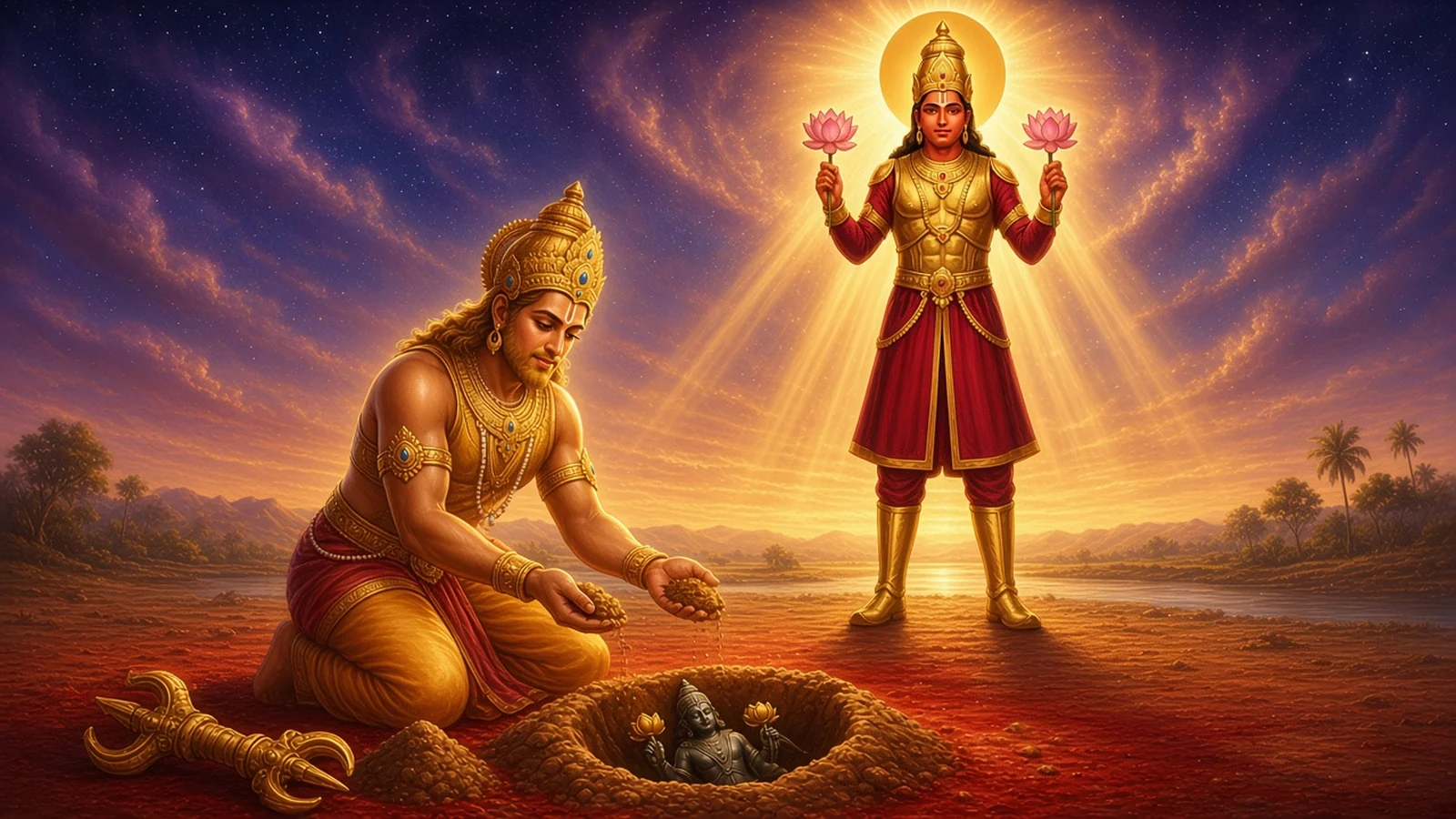
The king of the gods, who in Arasavalli's own legend was healed by the Sun after Nandi kicked him from Shiva's door, and set up the Sun's image there. Pilgrims bathe in the tank he is said to have dug, the Indra Pushkarini, on Ratha Saptami morning.
The Sun's birthday
1
The dawn bath
Magha shukla saptami, before sunrise · Saturday 13 February 2027
arunodaya snanaseven arka leavesno oil
The bath is taken in the dark, at arunodaya, before the sun is up: in a river or a temple tank where that is possible, otherwise at home. Seven leaves of the arka plant, the erukku of Tamil Nadu, jilledu of Andhra, ekka of Karnataka and aak of the north, are laid on the body, one on the head, two on the shoulders, two on the knees and two on the feet, or all seven on the head, with a little uncooked rice on them; women add turmeric. The Kanchi matha's order adds cow dung, a jujube leaf and durva. No oil touches the head that day. As the water is poured the bather says the verse that counts sevens: the seventh, the seventh, the great seventh; the earth of seven islands; with seven arka leaves I bathe on the seventh. In 2027 Drik Panchang gives the bathing time in Hyderabad as 5:04 to 6:44 am and in Delhi as 5:18 to 7:01 am.
The dawn bath in a temple tank, seven arka leaves on each head, in the dark before sunrise
In many south Indian homes the threshold carries a kolam of a chariot with seven horses. A cake of dried cow dung is set alight at its centre, a pot of milk is boiled over it, and the milk is offered to the Sun.
A seven-horsed chariot kolam at the door, milk boiling over a cow-dung fire at its centre
As the sun clears the horizon, water is poured to it from a small pot held in both hands, and the hymns are said: the Gayatri, the Suryashtakam, and the Aditya Hridayam that Agastya taught Rama. Many fast for the day. The old vow, kept by few now, has a small chariot of gold or silver with the Sun seated in it worshipped through the day, a night awake with songs, and the chariot given to a teacher the next morning.
Water poured to the rising sun, beside a little silver chariot of the Sun on a stool
At Tirumala the day is a Brahmotsavam in small: Malayappa Swamy rides the Surya Prabha from 5:30 am to meet the sunrise, then Chinna Sesha, Garuda and Hanumantha, comes to the tank for the Chakra Snanam in the afternoon, and rides the Kalpavriksha, Sarvabhoopala and Chandra Prabha into the night. At Arasavalli milk is poured over the Sun after midnight and he is shown bare all day. At Konark pilgrims wait on Chandrabhaga beach for the sun, then bathe in a pond that stands for the vanished river. In Mangaluru the Venkatramana temple's car festival, the Kodial Teru, draws its great chariot on this day.
Malayappa Swamy rides the golden Surya Prabha round the temple streets of Tirumala at sunrise
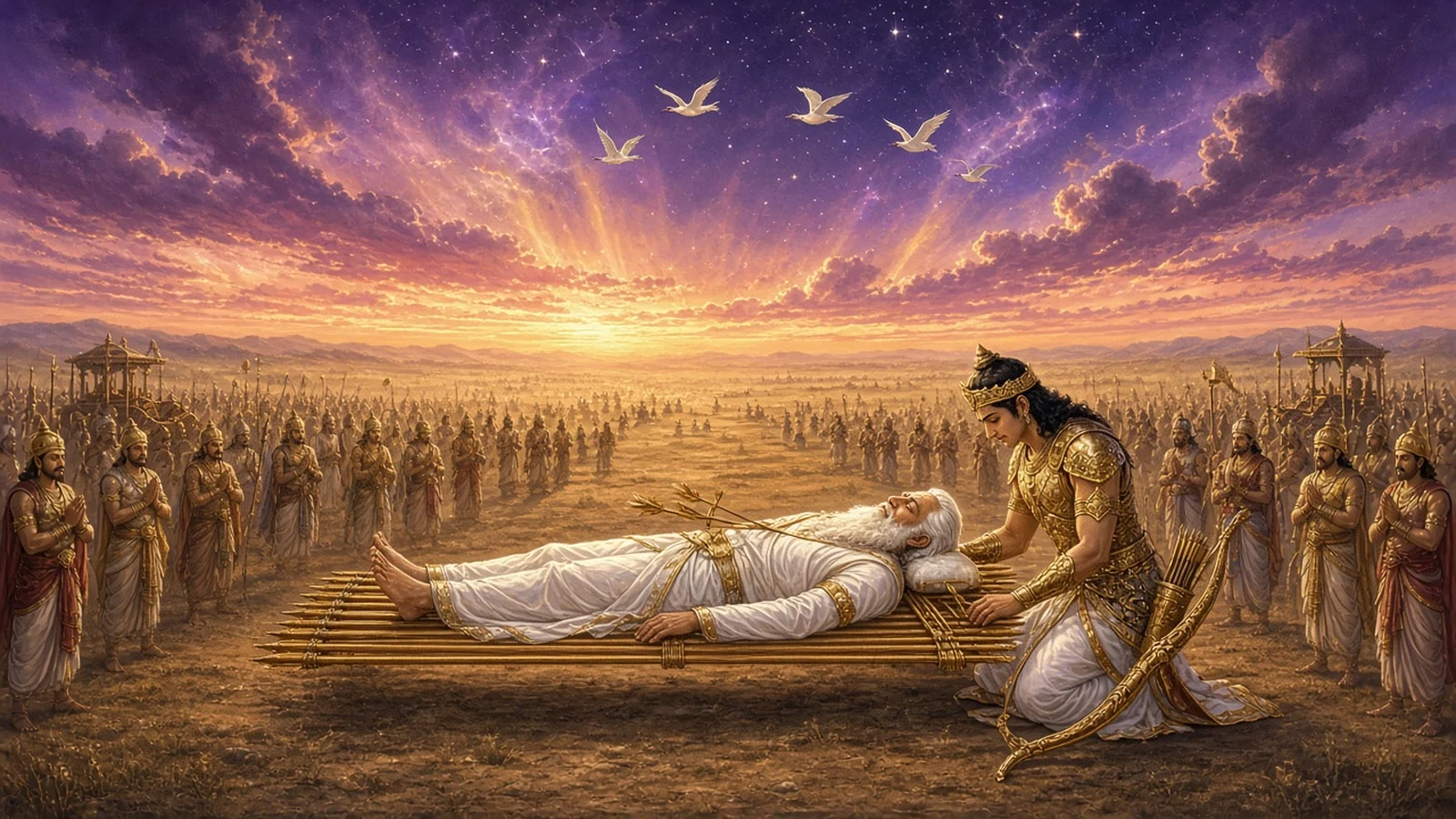
The day after, the eighth, is Bhishma Ashtami, when water is offered in the name of Bhishma, who died on the bed of arrows; in 2027 that is 14 February, but in 2028 the eighth begins at noon on Ratha Saptami itself, so the almanac puts both on 3 February.
Bhishma Ashtami: men stand in the river at morning and offer water in Bhishma's name
Tirumala keeps Ratha Saptami as a one-day Brahmotsavam, the "mini Brahmotsavam". Malayappa Swamy rides seven vahanas round the Mada streets between dawn and night, beginning on the Surya Prabha so that the first rays strike the Lord, and the children of the temple's school chant the Aditya Hridayam. The paid sevas are cancelled for the day.
Arasavalli, SrikakulamThe Sun seen bare
The Suryanarayana Swamy temple, a kilometre east of Srikakulam, is Andhra's great Sun temple. On Ratha Saptami the god receives silk robes from the state, is bathed in milk after midnight, and is shown all day in his nijarupa, his own form without ornaments, the one day of the year he is seen so. Pilgrims from the Telugu states, Odisha and beyond bathe in the Indra Pushkarini and cook milk rice by it. Andhra Pradesh made the day a state festival in December 2024.
Mangaluru, Melkote and KarnatakaThe Kodial Teru and the processions
In Mangaluru the Gowd Saraswat Brahmin temple of Sri Venkatramana on Car Street holds its car festival from the third to the eighth of bright Magha, and on Ratha Saptami Veera Venkatesha and Srinivasa are drawn in the Brahma Ratha before the swami of the Kashi Math. Mangaluru has kept this Kodial Teru since 1821. Melkote, Srirangapatna and the temples of Mysore take their gods out in procession, and Karnataka's homes bathe with ekka leaves.
Tamil NaduErukku leaves and the chariot kolam
The Tamil name of the day is Ratha Sapthami, seven days after the new moon of Thai. The family bathes before dawn with erukku leaves, rice and, for the women, turmeric, draws the seven-horsed chariot at the door and boils milk in it for the sun. Temples hold a daylong Brahmotsavam that begins with the Surya Prabha vahanam, Srirangam among them, and the bath is remembered with the story of Bhishma.
Konark, OdishaMagha Saptami at Chandrabhaga
In Odisha the day is Magha Saptami, and the faithful gather before dawn on Chandrabhaga beach near Konark, where Samba is said to have been cured. They wait for the sun, then bathe in a pond that stands for the river that no longer flows, sadhus first. Food cooked for the demon Arkasura, rice and dried fish dalma, is offered and the pots are smashed. A week-long mela is held at Khandagiri in Bhubaneswar.
Hindu householdsThe bath, the kolam and the arghya
For most families Ratha Saptami is kept at home, before anyone has eaten, with the arka bath, the water to the sun and the milk boiled in the chariot drawn at the door. It is also Arogya Saptami, the seventh of health, and the old belief is that the bath washes away the sins of seven births.
Vaishnava templesThe Lord rides out for the Sun
In the south the day belongs as much to Vishnu's temples as to the Sun's. Tirumala, Srirangam, Melkote and Mangaluru's Venkatramana take their gods out in chariots and on the Surya Prabha, honouring the Sun as a form of Narayana, Surya Narayana, as his own temples also name him.
The Sun's own templesThe old worship of the Sun
The day comes down from the Saura tradition, the worship of the Sun as the highest god, whose Puranas, above all the Bhavishya, give the Sun every seventh day. Today all Hindus keep it, and it is kept most grandly at the Sun's surviving temples, Arasavalli and Konark among them.
How it is kept
Everything happens early. The bath comes first, before sunrise and without oil, with the seven leaves and the verse of sevens. Then the arghya to the rising sun, and in many homes the chariot kolam and the milk boiled in it, which is offered once it rises. The Aditya Hridayam is recited, and many fast until evening.
The temples keep it on a grand scale. Tirumala gives the day seven processions. At Arasavalli the god is bathed in milk at midnight and shown without his ornaments, and at Konark the crowds wait on the beach for the sun. Mangaluru draws its great chariot, and Melkote and the temples around Mysore take their gods out. Arasavalli's own story is told in The Sun at Arasavalli.
At Arasavalli at dawn, Indra lies resting on the earth in the Sun's healing golden light
In the old texts
The bath is praised in the Padma Purana, which makes the dawn bath on this seventh as meritorious as one taken at a solar eclipse, and the verses said in the water are given in the Kashi Khanda of the Skanda Purana. The Bhavishya Purana's long Saptami Kalpa sets out the seventh-day vows and tells of King Kuru keeping them at Kurukshetra.
The full Ratha Saptami vow, with the gold chariot, the night awake and the katha of the king of Kamboja, is quoted by Hemadri and by Madhava's Kalanirnaya from the Bhavishyottara Purana. The scholar R. C. Hazra found no such chapter in the Bhavishyottara as it now stands, though some of these vows turn up in separate manuscripts. The day itself is old: a grant of the Rashtrakuta king Dantidurga, dated Shaka 675, 753 or 754 CE, is cited as naming the Ratha Saptami of Magha.
Where this page comes from. Written by Devalok from the Bhavishya, Skanda and Padma Puranas and the Matsya Purana as Hemadri quotes it, R. C. Hazra's Studies in the Upapuranas, the Kanchi Kamakoti matha's leaflet for the day, Bharatkosh, Hindupedia, Wikipedia, TTD News, the Arasavalli temple and the Srikakulam district, The Hindu, the New Indian Express, the Deccan Chronicle, PTI, the Times of India, the Canara Post and The Hindu Portal, with Drik Panchang's almanac for the dates, as recorded in the Devalok Lore. Our own words throughout.