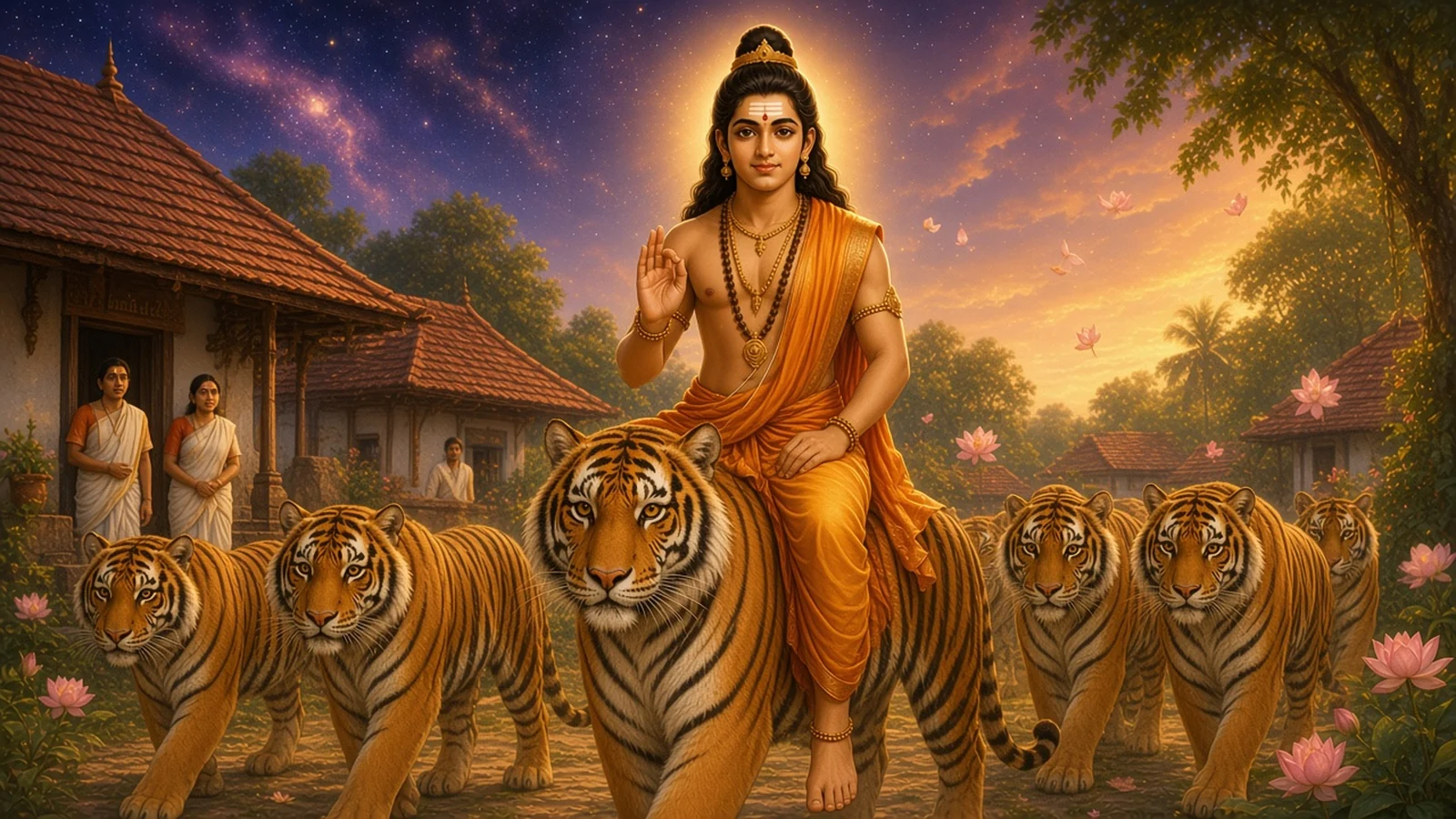
Festival · Ten goddesses on elephants come to a god who stays at home
Thrissur Pooram
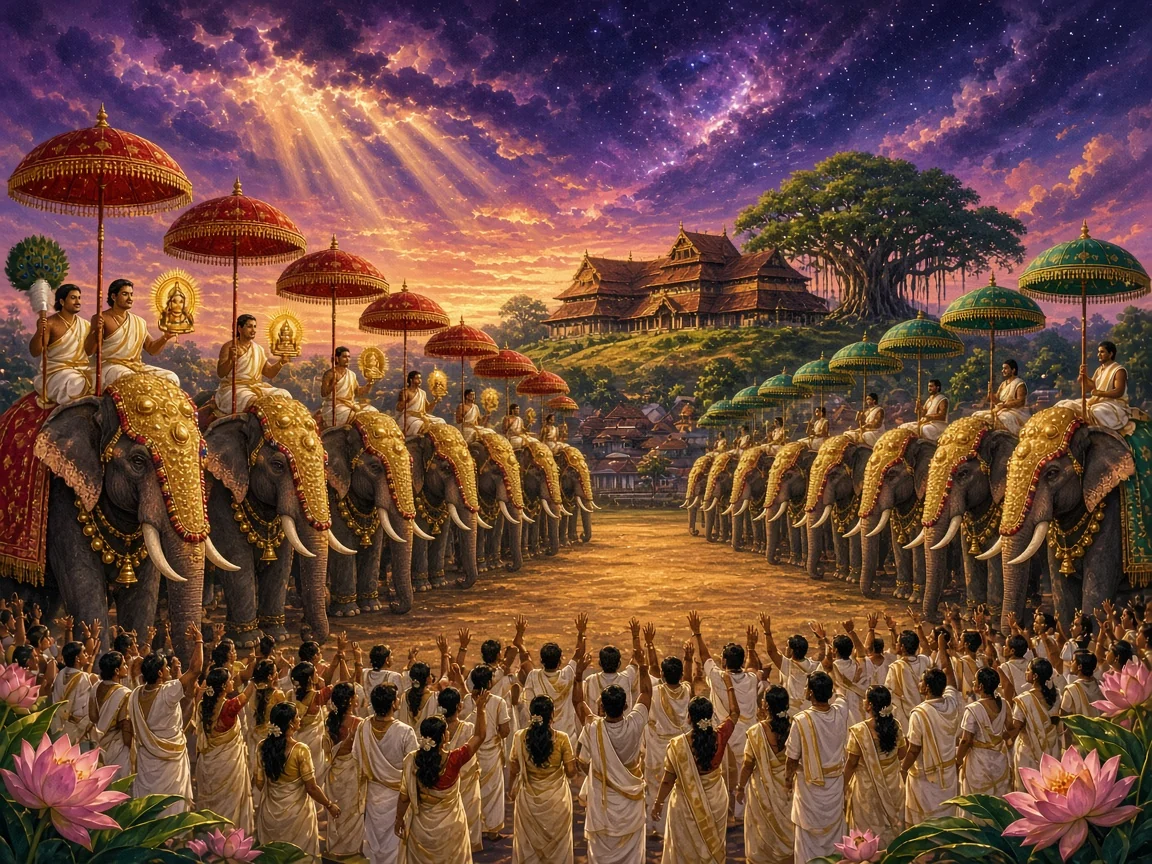
Thrissur Pooram is the great temple festival of Thrissur in central Kerala, kept on the day the moon is in the Pooram star in the Malayalam month of Medam, in April or May. Ten temples of the town bring their goddesses and Sasthas on caparisoned elephants to Shiva at Vadakkunnathan, in two rival sides led by Paramekkavu and Thiruvambadi, with the Madathil Varavu, the Ilanjithara Melam of some two hundred and fifty players, the Kudamattam of parasols on thirty elephants, and fireworks before dawn. Sakthan Thampuran, the king of Cochin, began it in the 1790s for temples shut out of the older Pooram at Arattupuzha.
When is Thrissur Pooram in 2027? Thrissur Pooram, is Saturday 17 April 2027; it runs 16 to 18 April 2027. In 2028: Thursday 4 May 2028. The day the moon is in the Pooram star in the Malayalam month of Medam, between mid April and mid May.
Also calledPooramTrichur PooramPooram of PooramsMother of all Poorams
In short
What is Thrissur Pooram?
The great temple festival of Thrissur in Kerala, in which ten temples of the town bring their goddesses and Sasthas on caparisoned elephants to Shiva at the Vadakkunnathan temple, in two competing sides led by Paramekkavu and Thiruvambadi, with drumming, the exchange of parasols on the elephants and fireworks.
When is Thrissur Pooram in 2027?
Saturday 17 April 2027, the day of the Pooram star in Medam, with the south gate opened on the 16th and the farewell at noon on the 18th. In 2028 it falls on Thursday 4 May. In 2026 it was kept on 26 April.
Who started Thrissur Pooram?
Raja Rama Varma, Sakthan Thampuran, Maharaja of Cochin from 1790 to 1805, after the Thrissur temples, late in the rain, were refused a place at the Arattupuzha Pooram. The year is given as 1796 or 1798.
What is the Kudamattam?
The exchange of parasols on Pooram evening. Fifteen elephants of each side face each other by the south gate of Vadakkunnathan, and the men on their backs raise set after set of silk parasols, each side answering the other, for about an hour.
What is the Ilanjithara Melam?
Paramekkavu's pandi melam, played for about four hours on Pooram afternoon under the ilanji tree inside the Vadakkunnathan temple by more than two hundred and fifty players of chenda, cymbals, horn and pipe.
Next, in 2027Saturday 17 April 2027
16 to 18 April 2027
Prime godVadakkunnathan, Shiva of the banyan hill
with 4 more
WhereThrissur, Kerala, on the Thekkinkadu Maidanam round the Vadakkunnathan temple, at the heart of the Pooram season of central Kerala
How longAbout thirty-six hours, from the first arrival on Pooram morning to the farewell at noon the next day, with the flags hoisted a week before and the south gate opened the day before
The day the moon is in the Pooram star in the Malayalam month of Medam, between mid April and mid May
Why it is kept
Thrissur Pooram is a day when a whole town goes to visit one god. On the Pooram star of Medam, in the hottest weeks of the Kerala year, the goddesses and Sasthas of ten temples in and around Thrissur ride out on elephants hung with gold, behind hundreds of drummers, to the temple of Vadakkunnathan on its hill in the middle of the town. The god they visit does not come out. He sits under his ghee and lets them come, all day and all night, and the town fills the open ground round him to watch.
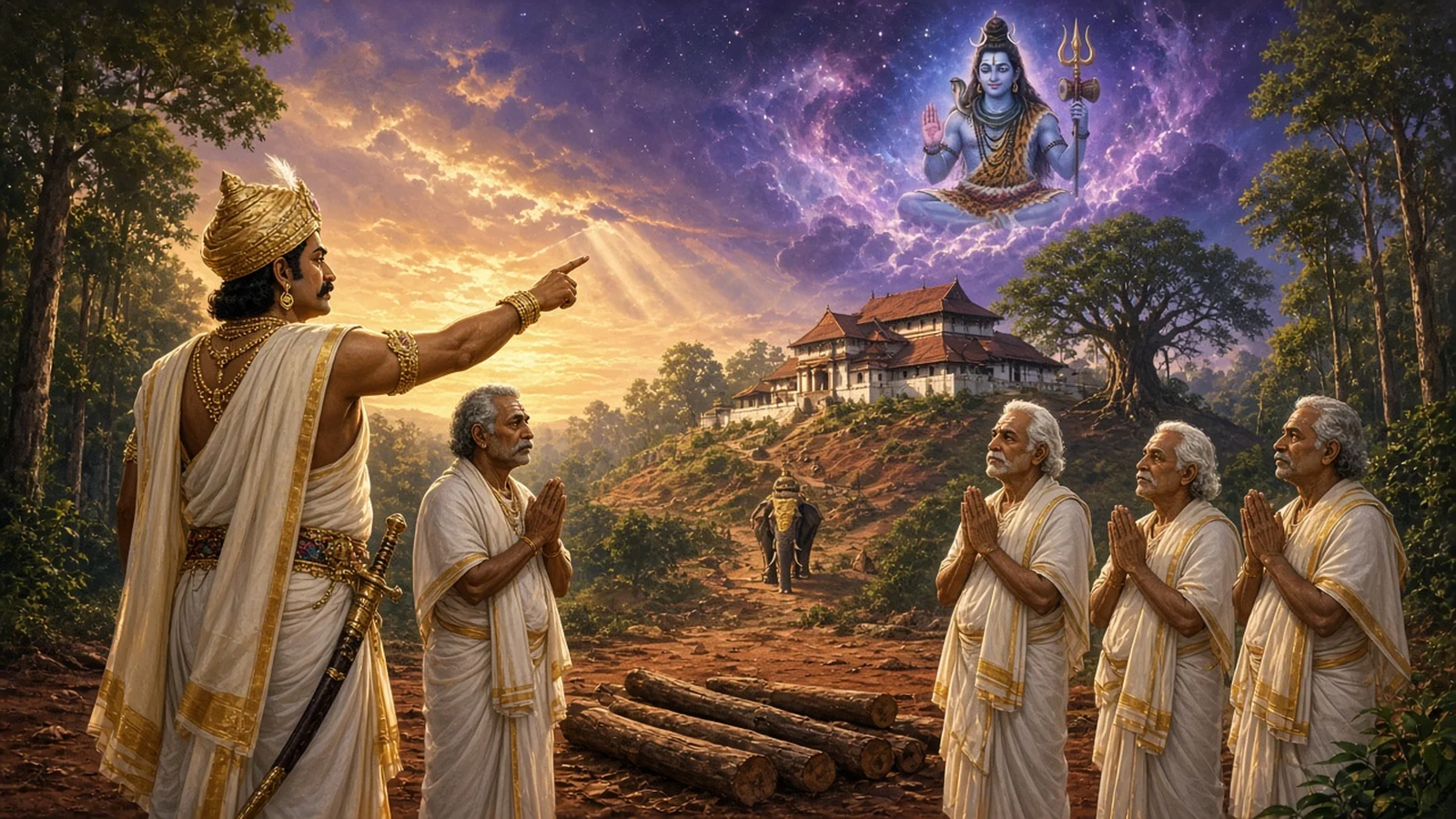
The Pooram is younger than most festivals in the Lore, and it has a founder. In the 1790s, as Thrissur tells it, the town's temples were late in the rain for the great Pooram at Arattupuzha and were refused a place in the line of the gods. They took the insult to the king of Cochin, Rama Varma, called Sakthan Thampuran, the strong, who had made Thrissur his capital and was clearing the teak forest round Shiva's hill. He told them to bring their goddesses to Vadakkunnathan instead, ten temples in two sides, and is said to have fixed the order of the day himself. The King Who Gathered the Temples tells it.
Sakthan Thampuran tells the temples shut out of Arattupuzha to go to Vadakkunnathan
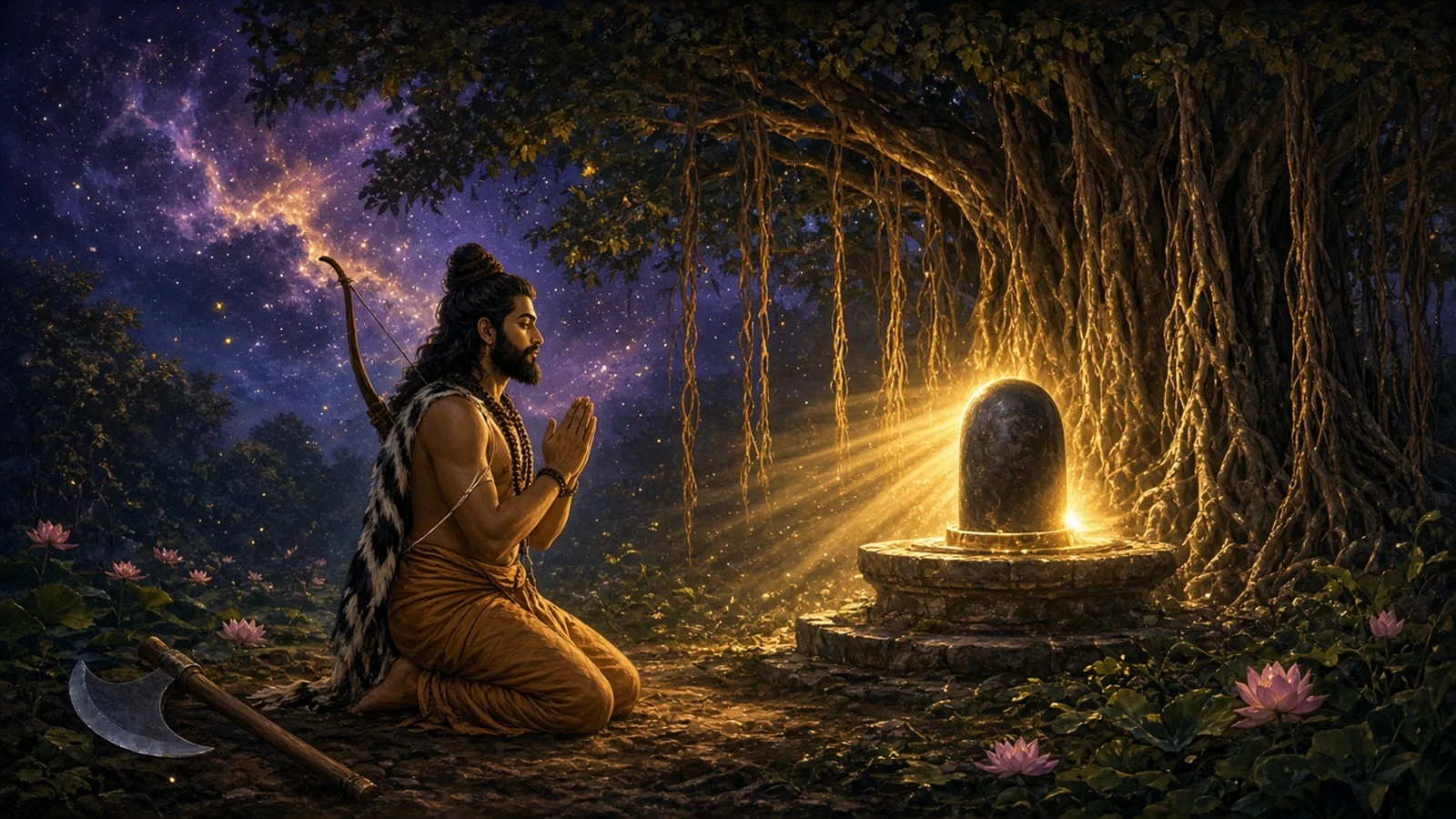
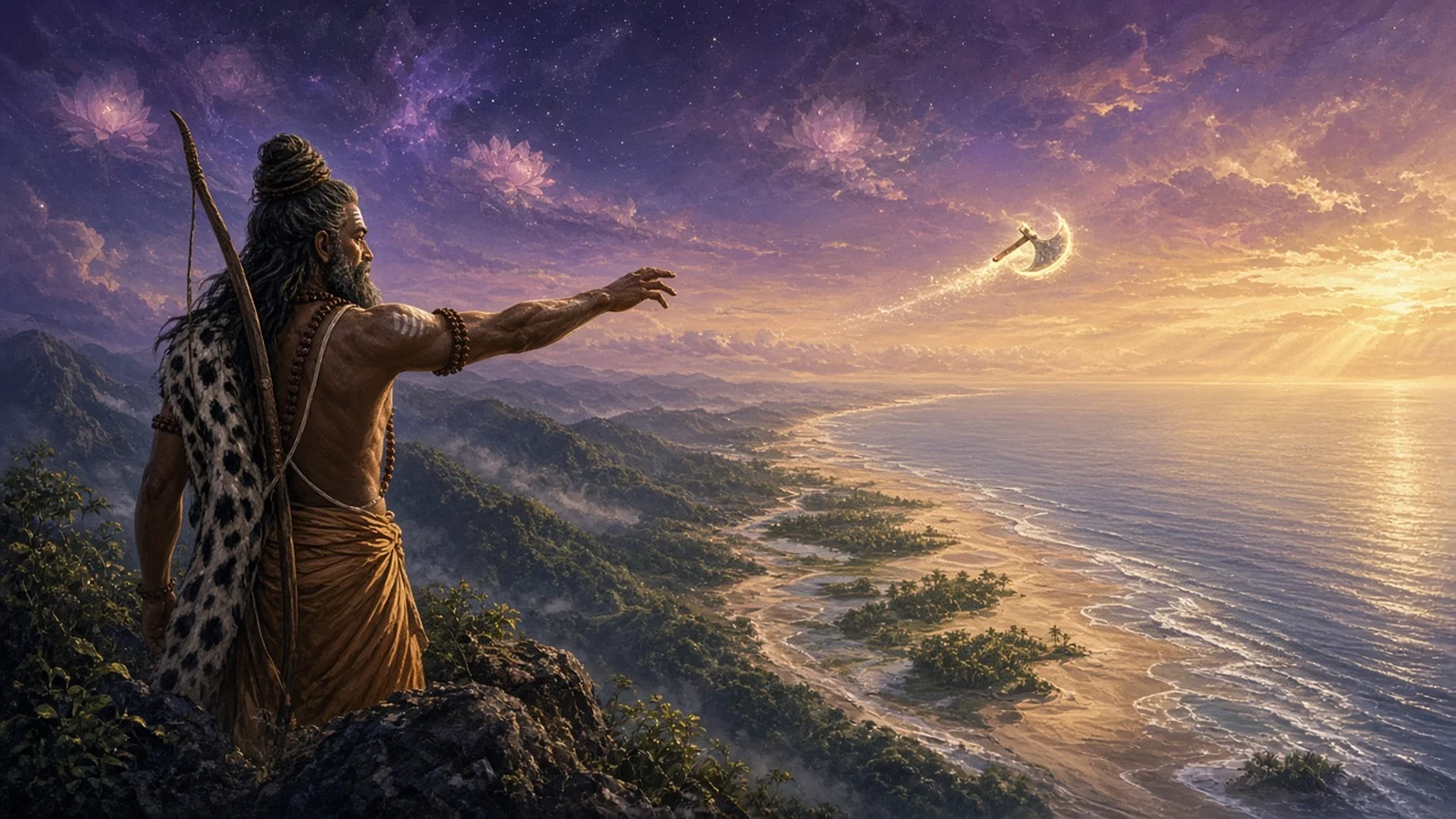
The god they come to is older. The temple's tradition says Parashurama, having raised Kerala from the sea, went to Kailash to ask his teacher to live in the new land, and that Shiva came south with his family and vanished at the foot of a banyan, leaving a shining linga there. The Linga Under the Ghee tells that story, and how the linga came to be buried under a hill of ghee; the making of the land itself is in The Land the Sea Gave Back.
Parashurama worships the shining linga Shiva left at the foot of the banyan
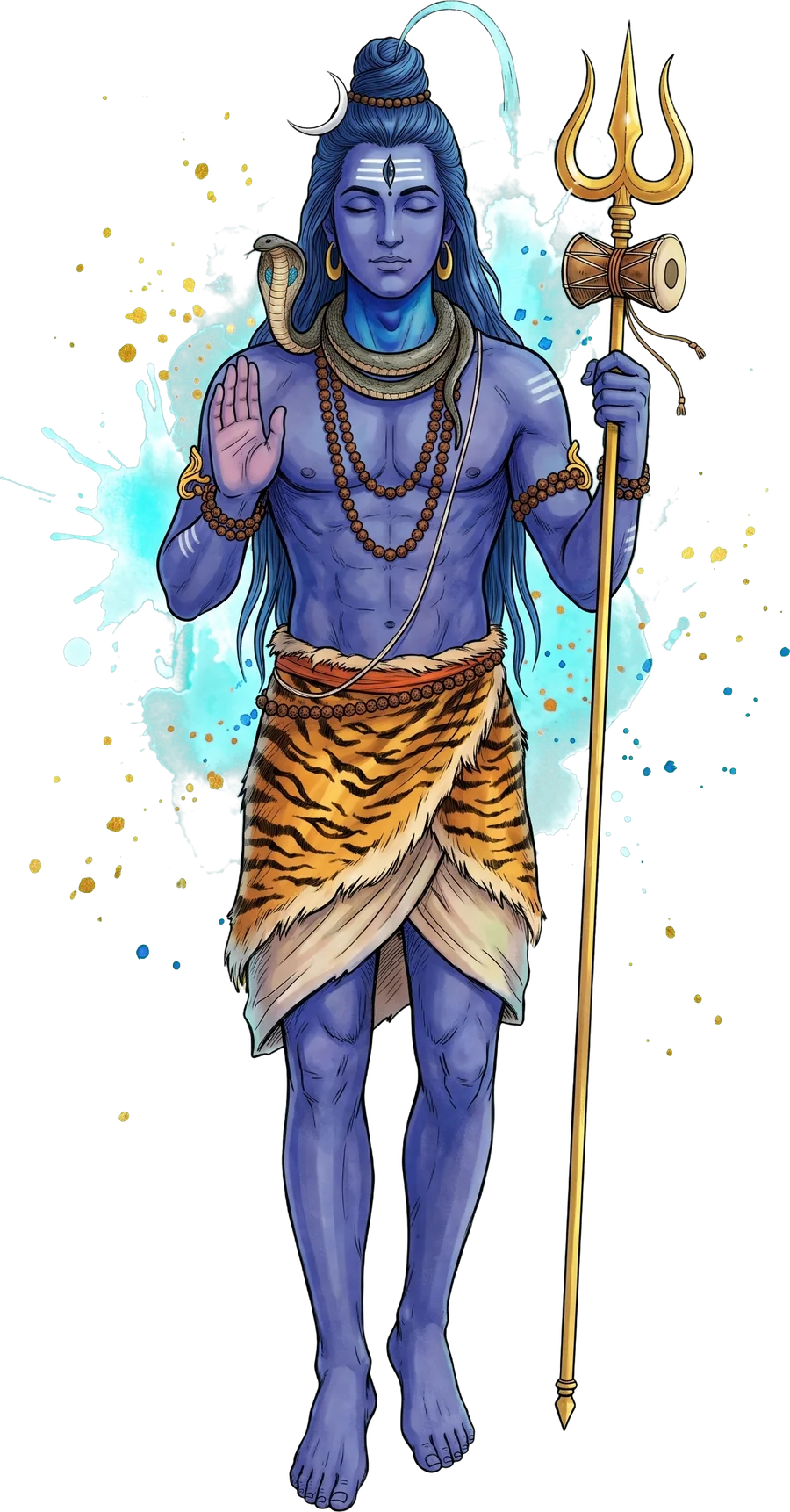
The host. Shiva sits as a linga buried under centuries of ghee in the temple on the hill in the middle of the town, and on Pooram day he does not go out; the goddesses and the Sasthas of ten temples come to him at his gates. His temple tells that he came to Kerala at Parashurama's asking and was found at the foot of a banyan.
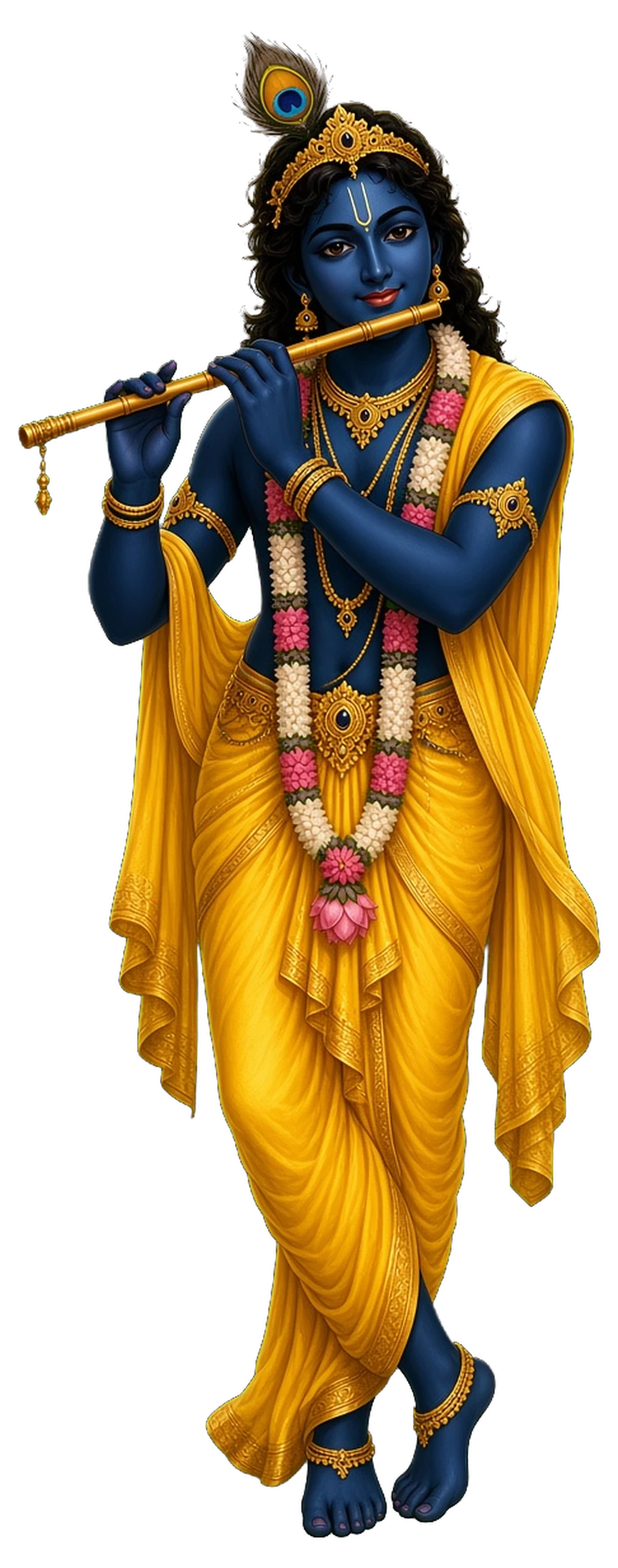
Unnikrishna, Krishna as a child with butter in his hand, the god of the temple that leads the western side. His temple says the image came from Edakkalathur four centuries ago and was kept by a childless Namboodiri couple as their own son; the Pooram goes out in the name of the Bhagavathi who shares his temple, and comes to the Brahmaswam Madham with the Madathil Varavu.
P
Paramekkavu Bhagavathi
The goddess of the temple by Swaraj Round that leads the eastern side, the elder sister, the tellers say, of Thiruvambadi's Bhagavathi. Her pandi melam is the Ilanjithara Melam, and she meets her sister for the Kudamattam and again to take leave of her the next noon.
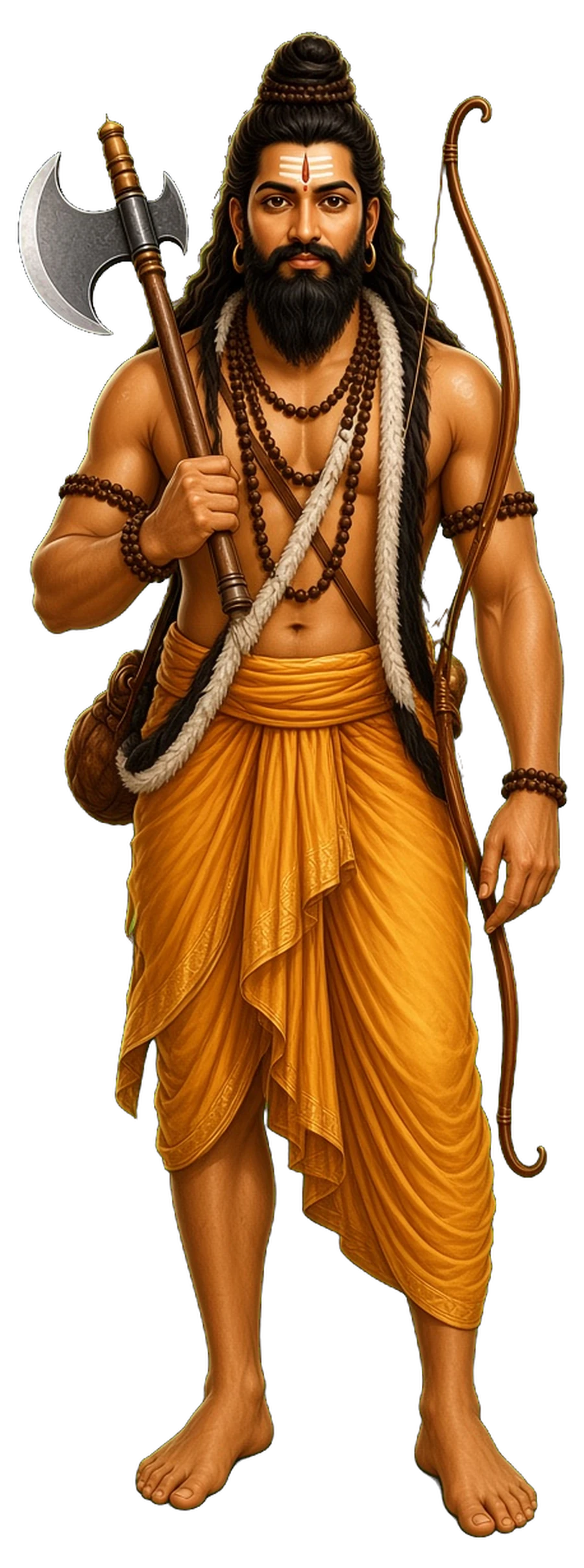
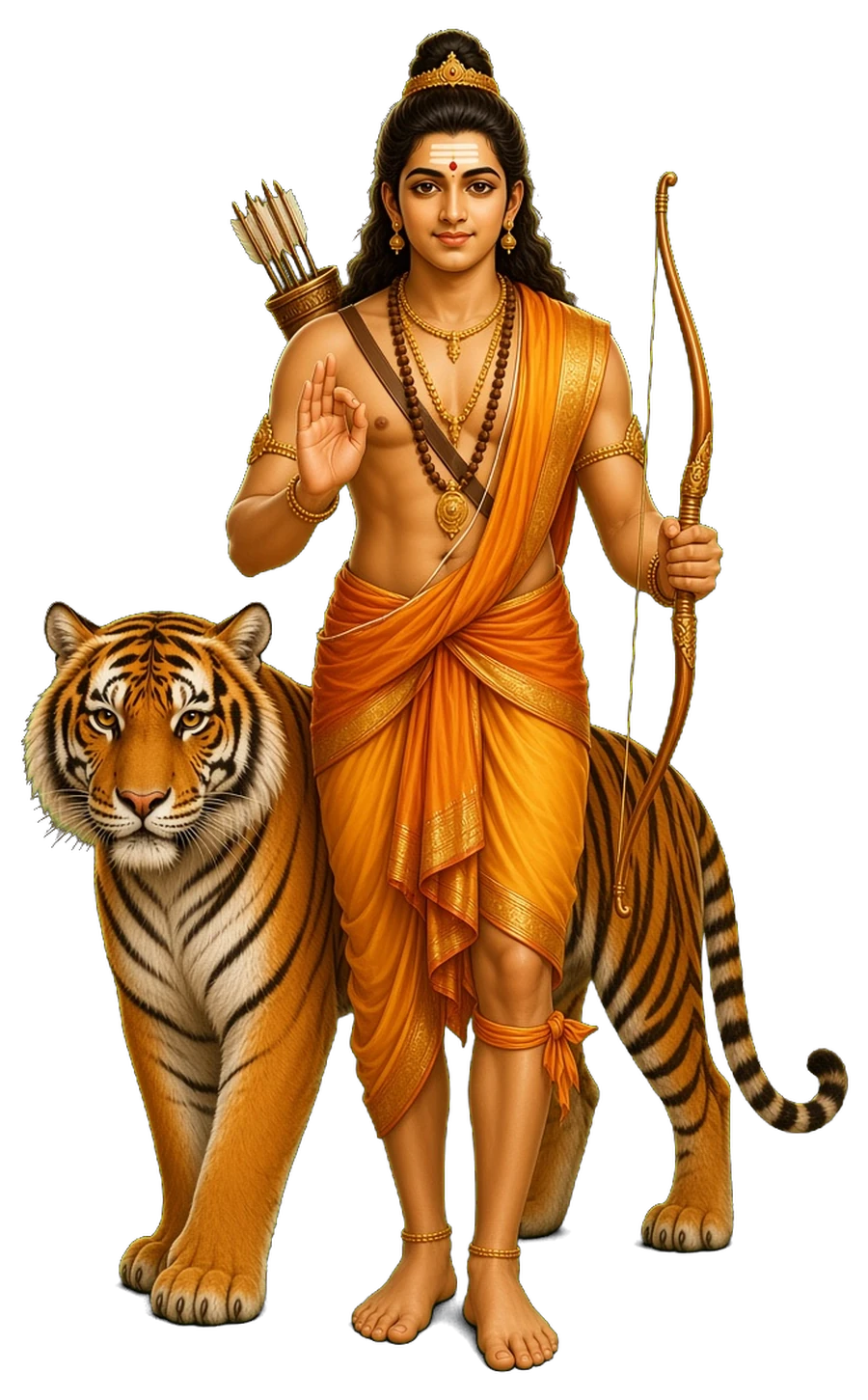
Founder of Vadakkunnathan in the temple's tradition. Having raised Kerala from the sea, he went to Kailash and asked Shiva to dwell in the new land, and he made the first worship at the linga he found under the banyan.
The Sastha of Kanimangalam, listed as Ayyappan and worshipped also as Brihaspati, guardian of the goddesses. He is the first god to reach Vadakkunnathan on Pooram morning and sees that all is ready for the rest.
Thirty-six hours at Thekkinkadu
1
Kodiyettam, the flags
A week before the Pooram
the flag hoisting
Each of the ten temples hoists its festival flag, and from that day the town is on the Pooram's clock. The two devaswoms show their caparisons in the Chamaya Pradarsanam, the nettipattams of gold, the peacock-feather fans and white whisks, the bells and the umbrellas, all of it made new each year; the parasols for the Kudamattam take months to make.
2
The sample fireworks
Two or three evenings before
sample vedikkettu
Thiruvambadi and Paramekkavu each fire a trial display over the Maidanam in the evening, a small promise of the big one. In 2026 it was set for the 24th of April and called off.
3
Pooram vilambaram
The eve, at noon · Friday 16 April 2027
the announcementthe opening of the south gate
An elephant carrying Neythilakkavu Bhagavathi climbs to Vadakkunnathan's southern gopuram, which stays shut the rest of the year, and pushes the great door open with its head. The crowd that has waited in the sun cheers, and the Pooram is declared. The tusker Ernakulam Sivakumar did it every year from 2021 to 2025.
An elephant carrying Neythilakkavu Bhagavathi pushes open the south gate of Vadakkunnathan at noon
The Pooram star of Medam, from before sunrise · Saturday 17 April 2027
the cherupooramsthe eight smaller pooramsPooram ezhunnellippu
Kanimangalam Sastha comes first, before the sun is up, and enters by the south gate. After him come the smaller poorams of Laloor, Ayyanthole, Neythilakkavu, Choorakkottukavu, Karamukku, Chembukkavu and Panamukkampilly, each with its elephants and its drummers. In the late morning Thiruvambadi's goddess reaches the Brahmaswam Madham and sets out for the temple behind the Madathil Varavu, a panchavadyam of more than two hundred players, while Paramekkavu's comes out with pandi melam.
The Madathil Varavu: Thiruvambadi's elephant behind rows of drummers and horn players
Inside the temple wall, under the ilanji, the bullet-wood tree, Paramekkavu's pandi melam plays for some four hours: about a hundred chendas, seventy-five pairs of cymbals, twenty-one horns and twenty-one pipes, more than two hundred and fifty players in all, with the crowd packed round them waving their arms to the beat. Peruvanam Kuttan Marar led it for many years; Kizhakkoottu Aniyan Marar has led it since 2023.
The Ilanjithara Melam: chenda drummers under the ilanji tree inside the temple wall
6
The Kudamattam
Pooram evening
Kudamattomthe exchange of parasols
The two sides go into the temple by the west gate and come out by the south, and line up on the open ground facing each other, fifteen elephants a side in their gold nettipattams. Then the men on the elephants' backs raise silk parasols, change them for another set, and the other side answers, colour against colour and design against design, sequins, pictures, once a footballer, for about an hour.
The Kudamattam: the men on the elephants raise silk parasols, side facing side
The processions go out again late at night, and at about three in the morning the fireworks go up over the Maidanam, Paramekkavu's watched from the Round South and Thiruvambadi's from Naikanal, each side trying to outdo the other.
Fireworks burst high over the Maidanam and the temple roofs in the small hours
8
Pakal Pooram and the farewell
The next morning to noon · Sunday 18 April 2027
the day pooramupacharam cholli piriyalpakal vedikkettu
In the morning the two goddesses come out once more, fifteen elephants each, with a last melam. Towards noon they meet at the Srimoolasthanam by the west gate and take leave of each other, the upacharam cholli piriyal, the saying of courtesies and the parting, and go home, and a last round of fireworks at midday ends the Pooram until next year.
At noon the two goddesses on their elephants take leave of each other by the west gate
The Pooram belongs to the town. Paramekkavu leads the eastern side with Karamukku, Choorakkottukavu, Chembukkavu and Panamukkampilly Sastha; Thiruvambadi leads the western side with Laloor, Ayyanthole, Neythilakkavu and Kanimangalam Sastha. Every procession ends at Vadakkunnathan on its hill in the Thekkinkadu Maidanam, the sixty-five acres of open ground Sakthan Thampuran cleared from a teak forest, ringed by Swaraj Round. More than fifty elephants walk in it, and in 2025 the district expected eighteen to twenty lakh people and put four thousand police on the streets.
Central KeralaThe Pooram season
Thrissur's is the largest of a season of temple festivals with elephants, drums and fireworks in the hot months before the monsoon. Uthralikavu at Wadakkanchery keeps its Pooram in Kumbham, three villages competing. In Meenam come the Nenmara-Vallangi Vela in Palakkad, two villages and the biggest fireworks in the state; the Peruvanam Pooram at Cherpu, where Shiva too is the host who only watches; and the Arattupuzha Pooram, the old gathering of the gods, once a hundred and eight of them and now about two dozen, which shut Thrissur's temples out in the story.
The ten temples and their devaswomsTwo sides, one host
The festival is run by the Paramekkavu and Thiruvambadi devaswoms, each with its own elephants, drummers, parasols and fireworks, and kept as a contest. The goddesses and Sasthas pay their respects to Shiva, and Vadakkunnathan, whose own great days are Shivaratri and the elephant feeding of Aanayoottu, receives them.
Thrissur's Christians and MuslimsThe whole town's Pooram
The Vadakkunnathan temple records that Muslim artisans build most of the pandals and that the churches and their people supply materials for the Kudamattam parasols, and the crowd at the melam is the whole town. Sakthan Thampuran, who gave the town its Pooram, also settled Syrian Christian families in Thrissur to make it a trading capital.
The elephants and their keepersThe tuskers
The famous tuskers of the Pooram are known by name across Kerala, Thechikottukavu Ramachandran and Ernakulam Sivakumar among them, and carry the goddesses' gold images. In 2024 the Kerala High Court set distances and rest days for festival elephants, and the Supreme Court stayed those rules that December on the two devaswoms' appeal; the argument over elephants and fireworks at Kerala's festivals goes on.
How it is kept
A week before, the ten temples hoist their flags. On the eve, at noon, Neythilakkavu's goddess on her elephant pushes open the south gate, and the Pooram is announced. On the day Kanimangalam Sastha comes first in the dark, then the smaller poorams one after another; at midmorning Thiruvambadi's Madathil Varavu and Paramekkavu's pandi melam set out, and in the afternoon the Ilanjithara Melam fills the courtyard under the ilanji tree. In the evening the two sides face each other with fifteen elephants each for the Kudamattam, and the parasols go up and change. The fireworks come in the small hours, the goddesses come out once more in the morning, and at noon they take leave of each other by the west gate.
A week before: a temple's festival flag goes up and the gold nettipattams are shown
In April 2026 a fireworks unit at Mundathikode preparing the Pooram's display exploded and killed at least fourteen people; that year the fireworks were cancelled, the Kudamattam was cut to about fifteen minutes, and the melams and processions were kept. In 2020 it had been called off altogether for the pandemic, the first time in fifty-nine years.
In the old texts
There is no scripture for the Pooram. Its texts are the order of the day the king is said to have laid down, the temples' own customs, and the accounts of Sakthan Thampuran in the Cochin State Manual and Kottarathil Sankunni's Aithihyamala, which the encyclopaedias cite. Its founding year is given three ways: 1796 in the encyclopaedias, 1798 by the Vadakkunnathan temple, and 1797 by the reckoning of the Malayalam press, which called the 2026 festival the 230th.
The host's legend has more. The temple says the Brahmanda Purana tells it briefly, and Parashurama's raising of Kerala is told in the Keralolpathi, Kerala's own chronicle of its origin. The Madhaviya Shankara Digvijaya, the life of Adi Shankara, begins its second canto with Shiva living as a self-made linga on Vrishadri, the bull's hill in Kerala, where Shankara's parents prayed for a son; its translators, and Kerala, take that hill to be Vadakkunnathan's.
Where this page comes from. Written by Devalok from Thrissur Pooram as the Vadakkunnathan temple, the Thiruvambadi temple and the Paramekkavu and Thiruvambadi devaswoms keep it, Kerala Tourism and DTPC Thrissur, the Malayalam and English press of Kerala (Madhyamam, Onmanorama, Kerala Kaumudi, The News Minute, The South First, ETV Bharat), the encyclopaedias on the Pooram, its temples and Sakthan Thampuran, the legend of Vadakkunnathan, the Madhaviya Shankara Digvijaya (canto 2) and the Drik Panchang calendar for 2027 and 2028, as recorded in the Devalok Lore. Our own words throughout.