As the monks' rule tells it
The Mulasarvastivada Vinaya, as I-tsing summarised it · Rajagriha · 2 min read
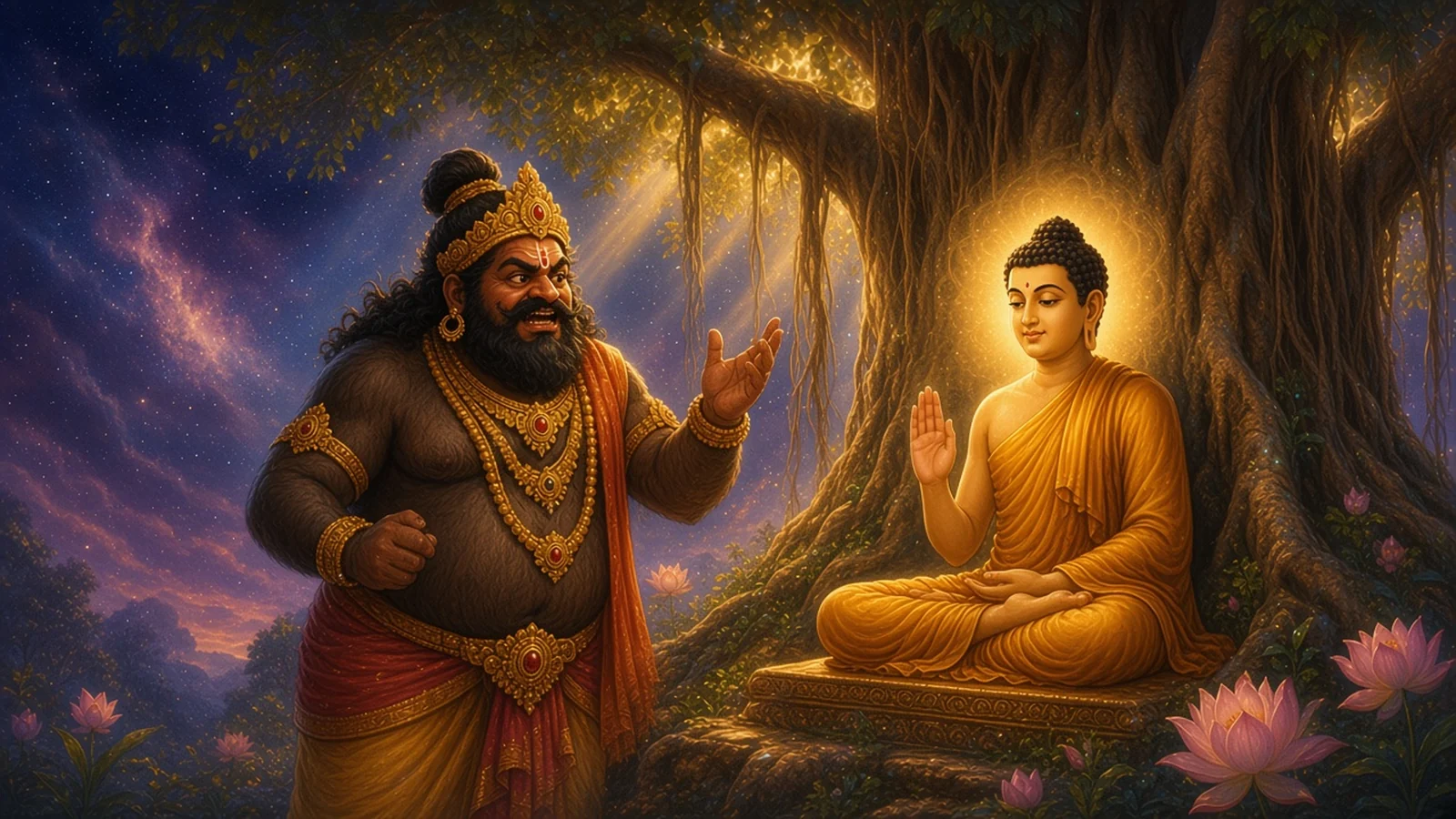
In a life before this one, a woman of Rajagriha made a terrible vow. The story does not say why, only what the vow was: that she would devour the babies of that city. She died with the vow still in her, and was born again as a yakshini, one of the spirits who live beside men. Her name was Hariti.
As a yakshini she bore five hundred children, and she loved every one of them. And every day, to keep her vow and to feed her brood, she came into Rajagriha and carried off a child.
The city had no defence against her. Mothers watched their doorways, and still babies were gone in the morning. At last the people went to the Buddha, who was staying near the city.
"Something takes our children," they said. "Every day another. We cannot stop her."
The Buddha listened, and did not go out to fight her. Instead he took one of her five hundred and hid him: the youngest, the one she loved most of all, the child she called her darling. Some tell that the boy's name was Pingala, and that the Buddha hid him under his upturned begging bowl.
When Hariti found her darling gone, she searched for him.
She searched her own haunts first. Then she went from place to place, calling the child's name, and nobody had seen him. At last, worn out with fear, she came to the place where the Buddha sat, and there, close beside him, was her son.
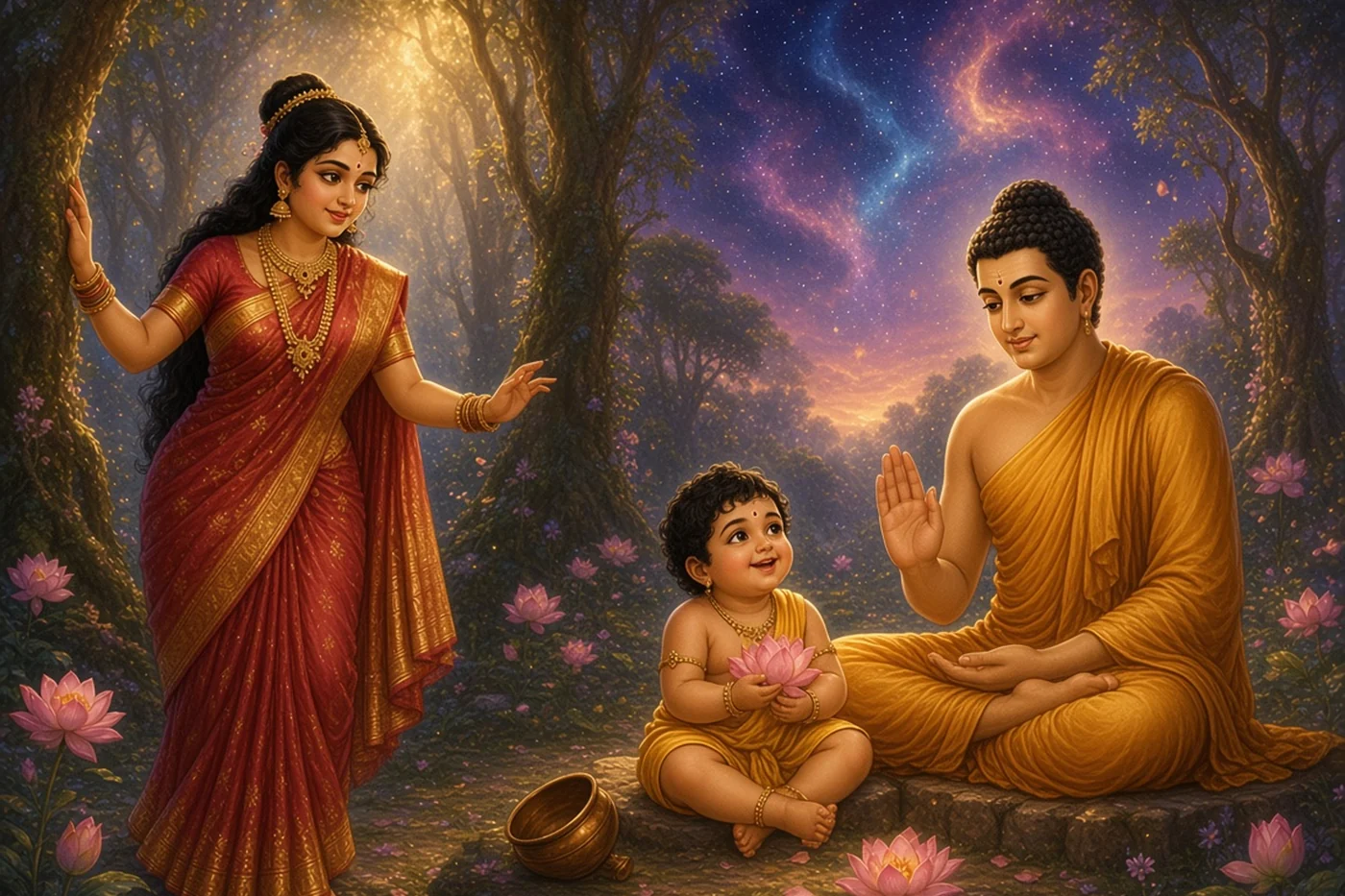
"He is mine," she cried. "Give him back to me."
"You grieve this much for one child," said the Buddha, "when you have five hundred. What do the mothers of Rajagriha feel, who had only one child, or two, and you took them?"
Hariti stood still a long time. Then she bowed down.
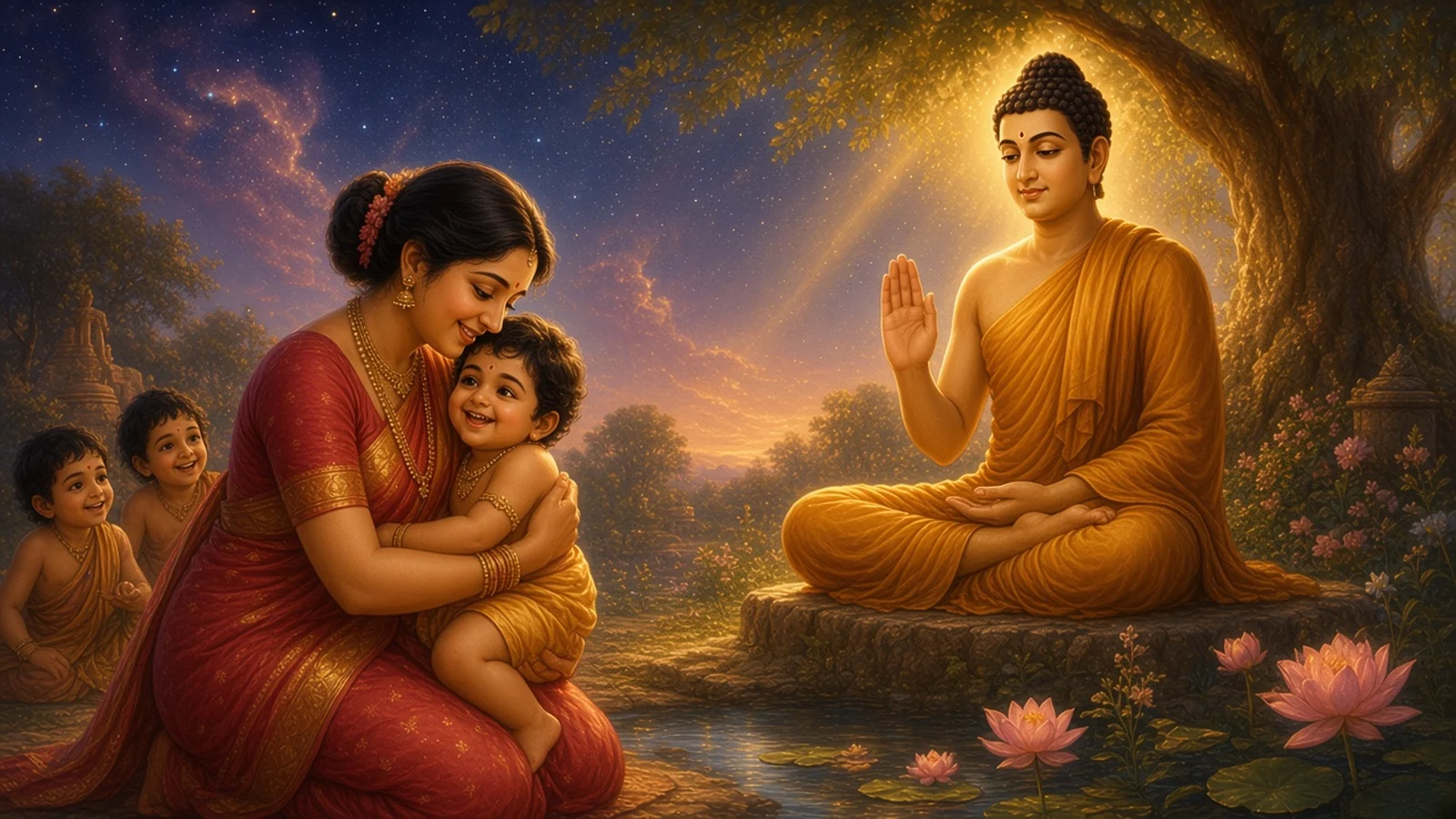
"I did not know," she said. "I will never take a child again. I will guard them."
She took the five precepts of a lay follower, and the first of them is never to take a life. The Buddha gave her son back to her. But she had one more question, and it was a mother's question.
"Lord, how will my five hundred live now? What will they eat?"
"In every monastery where my monks live," said the Buddha, "they will set food aside for you and your children every day. Your family will not go hungry."
So it was done. When the monks of India sat down to eat, the food went first to the images of the saints at the head of the row, and a portion went to Hariti at the foot of it.
As the pilgrims found her
Gandhara and the monasteries of India, in the records of Xuanzang and I-tsing · 2 min read
Two Chinese monks crossed into India in the seventh century and wrote down what they saw, and both of them met Hariti.
Xuanzang came over the passes into Gandhara, the country around Peshawar. Near the old city of Pushkalavati he was shown a stupa, some way north-west of two great stone stupas, and told that this was the very place where the Buddha had changed the Mother of Demons and made her stop harming people. The local people still came there with offerings, he wrote, to ask her for children. Many centuries later the French scholar Alfred Foucher found a mound in that country still held to work wonders, even by the Muslim villagers, under a name that meant what hers meant.
I-tsing spent years in the monasteries of the Ganga plain. In every one, he wrote, Hariti sat either in the porch or in a corner of the dining hall: a woman with a baby in her arms and three or five small children round her knees. Every day, at the end of the line of monks, a plate of food was set before her. Childless couples brought her food too, and asked her for a child, and he says their wish was always granted. She could give wealth as well, and she served the four kings who guard the world.
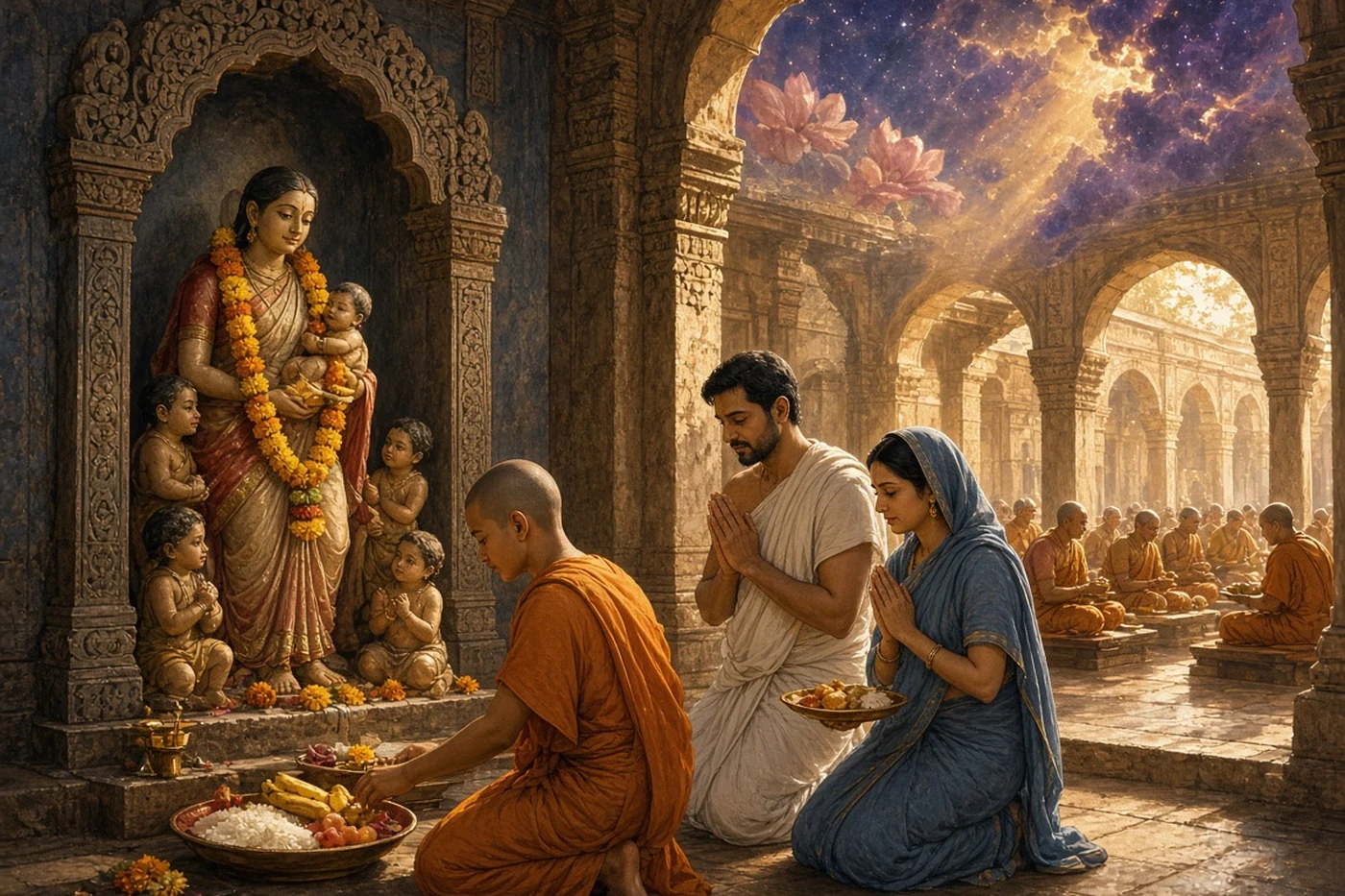
The sculptors of Gandhara had already made her a matron. In their statues she sits with her youngest at her breast or on her hip while his brothers climb her shoulders, and beside her sits her husband Panchika, a yaksha general with a lance and a purse of gold. Her images are found at Mathura and in the caves of Ajanta too, and they travelled the roads to Central Asia, China and Java.
The mother who took children had become the mother who gives them, and she kept her place at the monastery door.