Festival · The first moon of Chet, the tray carried to the water, and the hem held out to Jhulelal
Cheti Chand
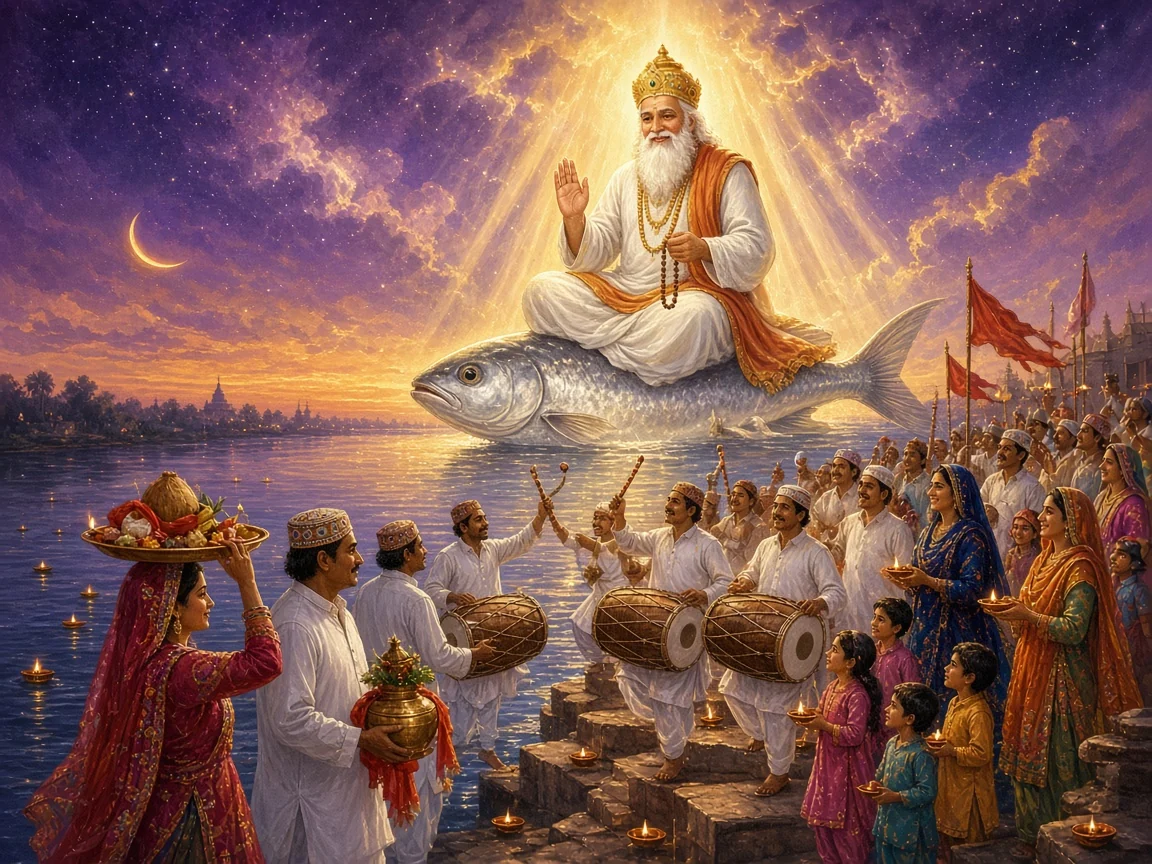
Cheti Chand is the Sindhi New Year and the day of Jhulelal, the boy of the Indus whom Sindhis worship as Varuna, the god of the waters. It falls on the day the first thin moon of Chet is seen, one day after Gudi Padwa and Ugadi. Families pray at the tikana, lay the Bahrana Sahib, a tray of lamp, sugar, fruit and a kalash with a coconut, and carry it in procession with dhol and the chhej to a river, a lake or the sea. At the water they give rice to the river, hold out the hems of their clothes for the palav, and come home to sweet rice.
When is Cheti Chand in 2027? Cheti Chand, is Thursday 8 April 2027. In 2028: Monday 27 March 2028. The second day of the bright half of Chaitra, Chet in Sindhi, the day the new moon is first seen after the month begins, in March or April.
Also calledJhulelal Jayantithe Sindhi New YearChet ji ChandChetichandCheti Chand Mela at Odero Lal
In short
What is Cheti Chand?
The Sindhi New Year and the day of Jhulelal, the water god's form, kept on the day the first moon of Chet is seen.
When is Cheti Chand in 2027 and 2028?
Drik Panchang gives Thursday 8 April 2027 and Monday 27 March 2028 for New Delhi. Gujarat's public holiday in 2027 is on 7 April, and some Sindhi calendars give 28 March for 2028, so check the local samaj's programme.
What is the Bahrana Sahib?
The tray of offerings carried to the water, with a lamp, misri, cardamom and cloves, fruit, dough lamps, akho and a kalash with a coconut.
What is the palav?
The Sindhi prayer said holding out the hem of a garment, asking Jhulelal for the good of others first and then for oneself.
Is Cheti Chand the same as Chaliho?
No. Chaliho Sahib is a separate forty days of thanks to Jhulelal in July and August, ending with its own procession to the water.
Next, in 2027Thursday 8 April 2027
Prime godVaruna, the god of the waters
with 2 more
WhereSindh, where the shrine of Odero Lal near Tando Adam still holds the fair, and the Sindhi towns of India built after 1947, from Ulhasnagar, Pune and Mumbai to Ahmedabad, Adipur and Gandhidham, Jaipur and Ajmer, Bairagarh in Bhopal and Delhi, and the Sindhi diaspora abroad
How longOne day, from the morning prayer to the moon seen at dusk; the fair at Odero Lal and the town processions run into the night
The second day of the bright half of Chaitra, Chet in Sindhi, the day the new moon is first seen after the month begins, in March or April
Why it is kept
Cheti Chand means the moon of Chet. On the evening the first sliver of the new moon is seen after the month of Chaitra begins, Sindhis everywhere wish each other a new year and carry a tray of lamps, sugar and rice to the nearest water, for Jhulelal, the river's own god.
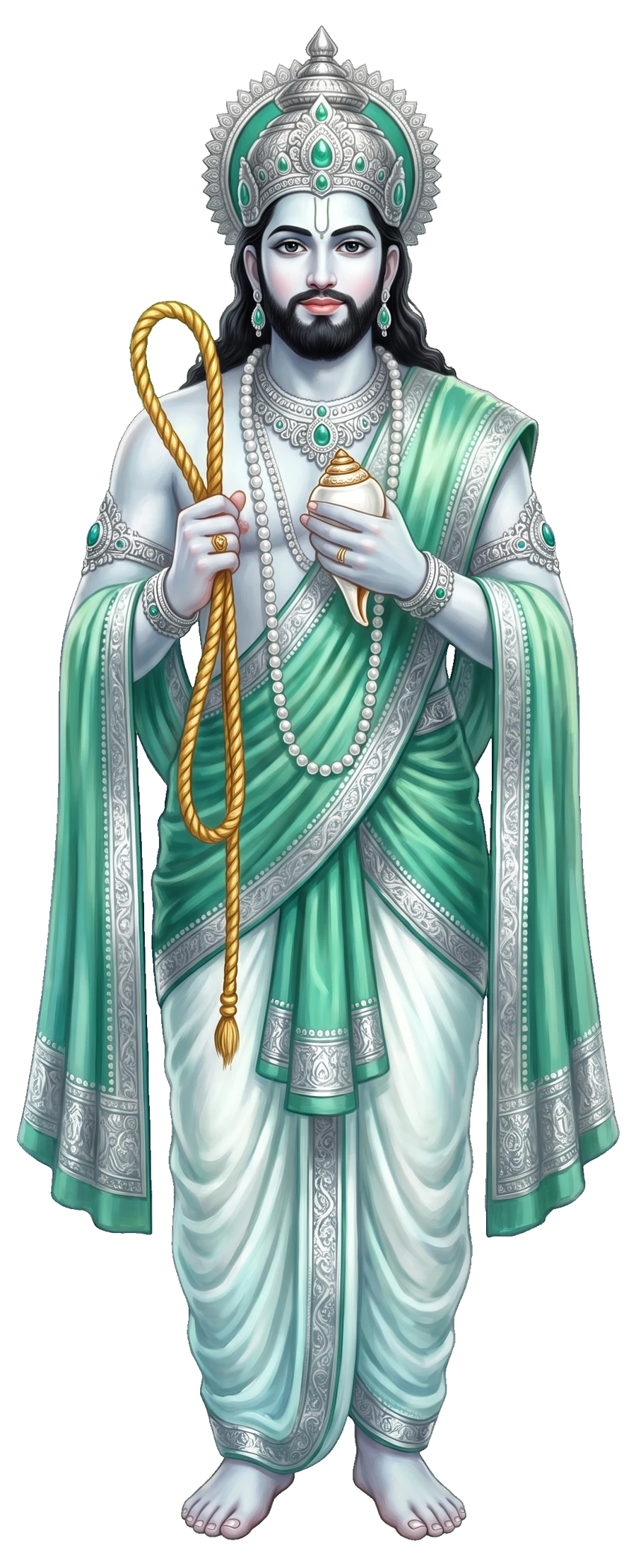
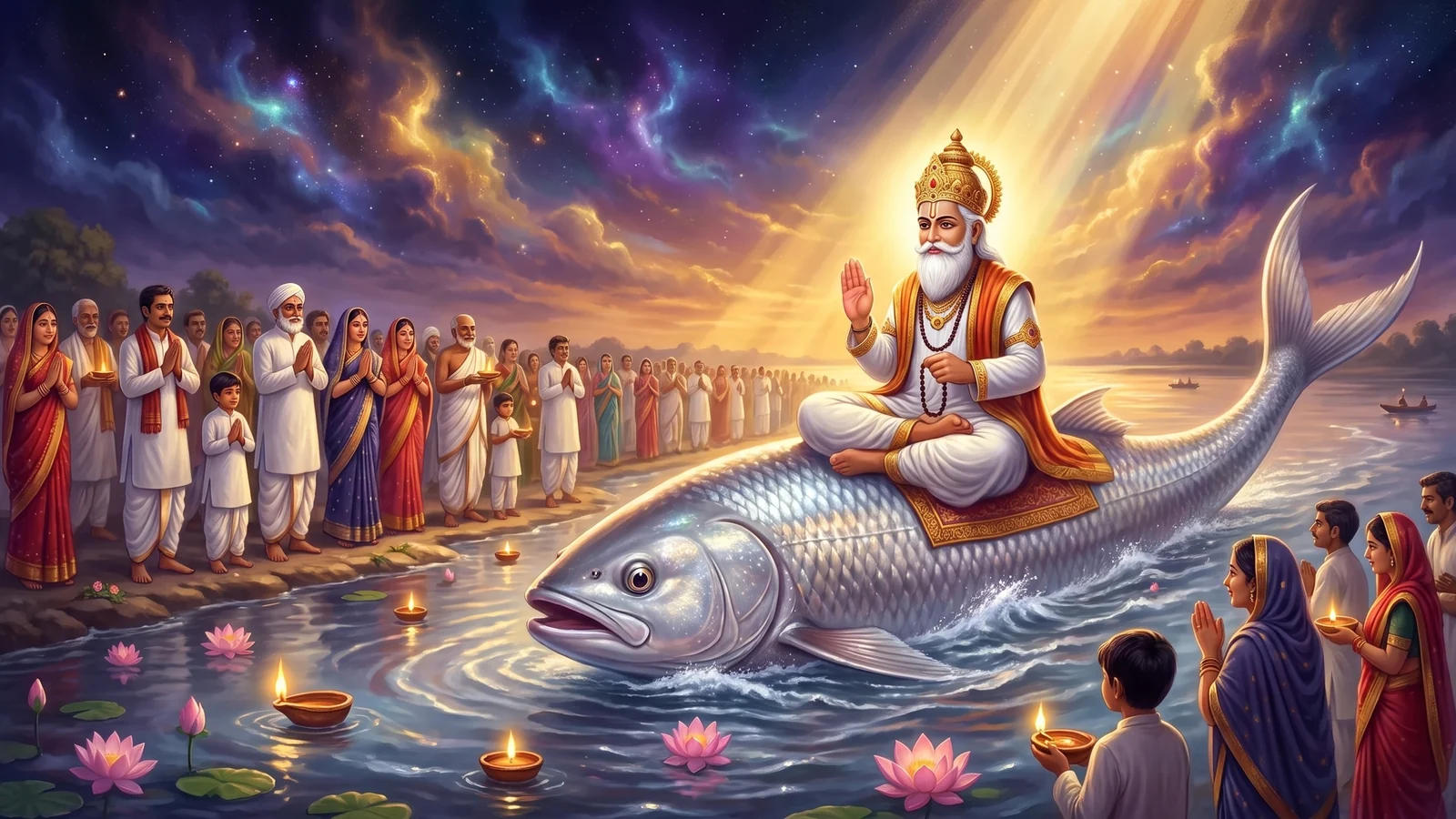
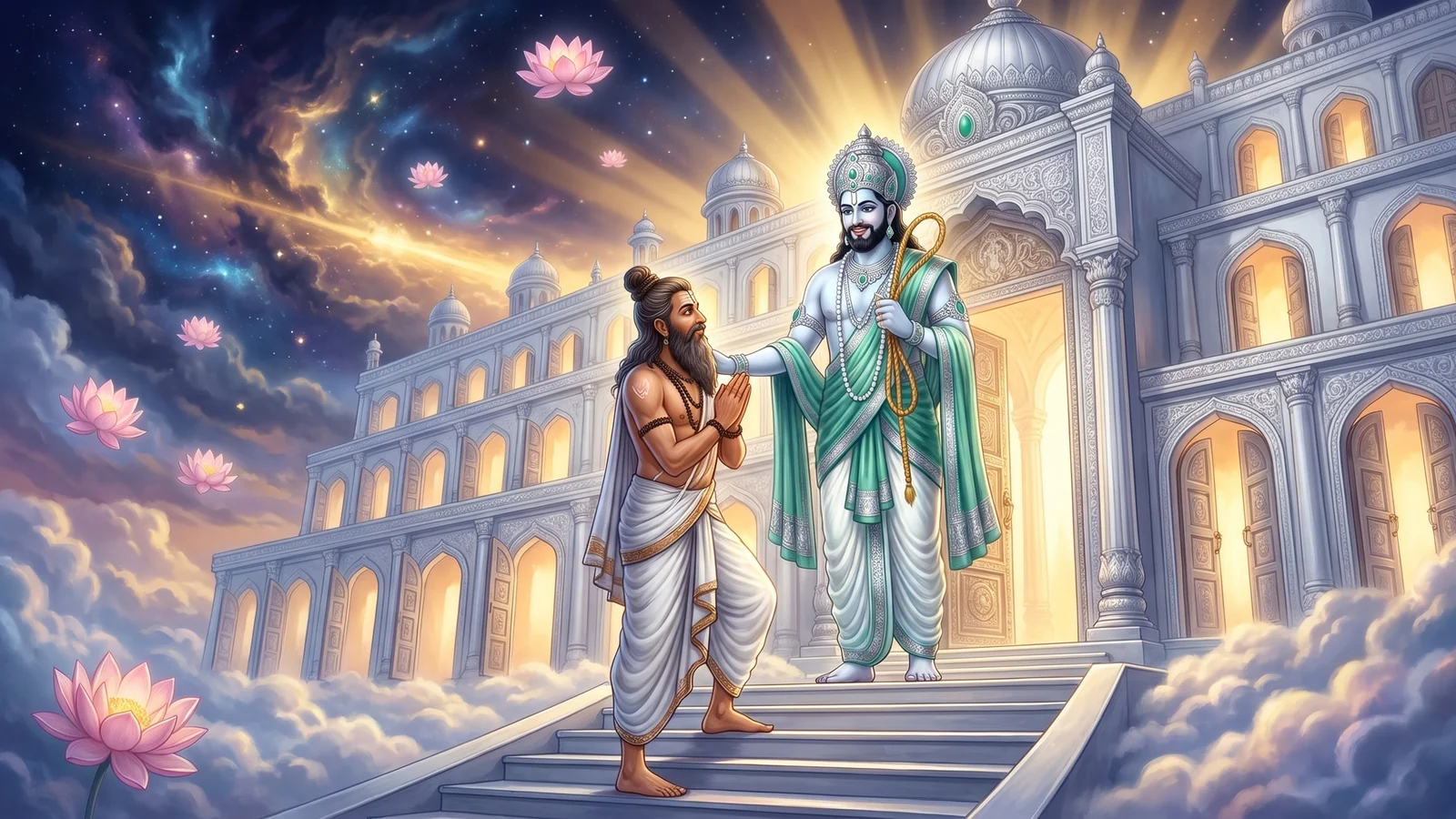
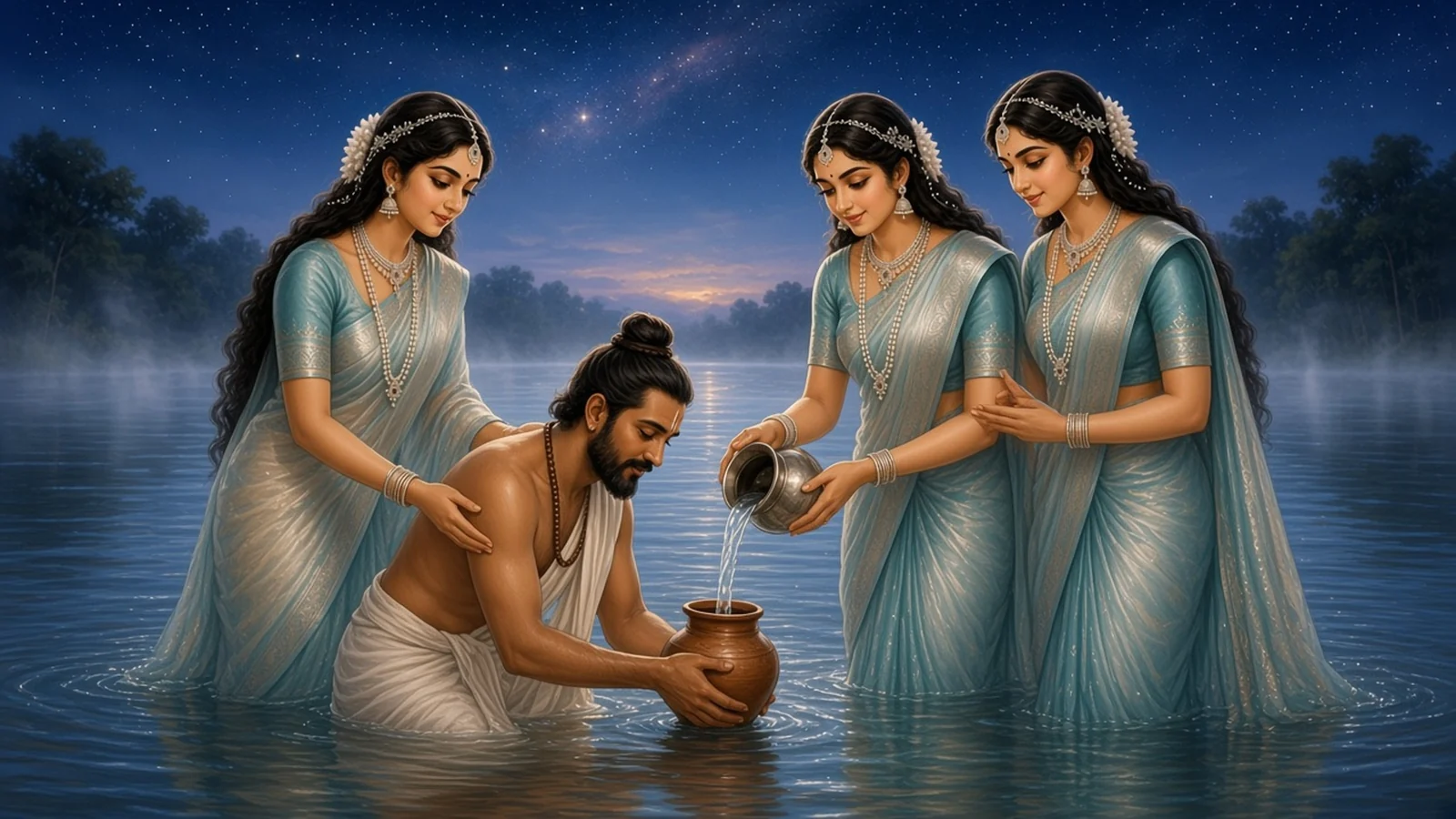
Sindhis keep it as the birthday of Jhulelal, also called Uderolal and Darya Shah, the child their tellings say was born at Nasarpur after the Hindus of Thatta had prayed forty days by the Indus. He is worshipped as Varuna, lord of the waters, which is why the day's worship goes to a river, a lake or the sea. His birth, his rocking cradle and his stand before the ruler Mirkhshah are told in The Child from the River. How he left the world, and why his shrine is half temple and half tomb, is The Shrine with Two Faces. The Vedic Varuna and his waters have their own stories in The House of a Thousand Doors and The Waters Who Are Mothers.
Jhulelal rides his silver palla fish up the Indus while Varuna watches from the sky
The day is also the turn of the year. It falls on the second day of Chaitra's bright half, one day after Gudi Padwa and Ugadi, when the moon is first visible; Drik Panchang calls it the day the new moon becomes visible. Many Jhulelal temples mark every month's new moon in a smaller way, and this is the greatest of them.
After 1947 most of Sindh's Hindus left for India, many by ship to Bombay and into army barracks and camps. Sindhi historians say that it was in those years, through the songs and the teaching of writers such as Ram Panjwani, that Jhulelal became the god of the whole community, and Cheti Chand its one shared festival. Chaliho Sahib, the forty days of thanks in July and August, is a separate observance.
Sindhi families come ashore at Bombay in 1947, carrying their lamp and a picture of Jhulelal
Sindhis worship Jhulelal as Varuna born among them, and on Cheti Chand they worship the water itself, carrying the Bahrana Sahib to a river, lake, canal or the sea and giving it rice and lamps. In Ajmer the lake of Foy Sagar has been renamed Varun Sagar.
J
Jhulelal (Uderolal, Darya Shah)
The child of the Indus born at Nasarpur on this day, whose cradle rocked by itself, who faced the ruler Mirkhshah and who left his worship to his cousin Pugar. Sindhis call him Lal Sai, Uderolal and Darya Shah, and greet each other with "Ayo Lal, Jhulelal".
K
Khwaja Khizr / Zinda Pir
The green saint of the waters, with whom Jhulelal is joined in Sindh. The gatha tells how Uderolal as Khwaja Khizr swam against the river near Zinda Pir at Rohri, and the Muslims of Odero Lal honour the saint of the shrine as Zinda Pir.
The new moon of Chet
1
The morning at the tikana
Chaitra Shukla Dwitiya, the day the new moon is seen · Thursday 8 April 2027
the morning kirtansatsang
The day begins with prayer. Many families go to the tikana, the Sindhi temple that keeps the Guru Granth Sahib beside images of Jhulelal and the gods, or to a Jhulelal temple, for satsang, bhajans and kirtan; in Delhi in 2026 the Sindhu Samaj began at a thikana mandir in Old Rajendra Nagar. In the temples Jhulelal is bathed, dressed in new clothes and decked with the season's flowers, and red flags go up on the spires.
Morning kirtan at the tikana, where Jhulelal in new clothes and flowers sits beside the holy book
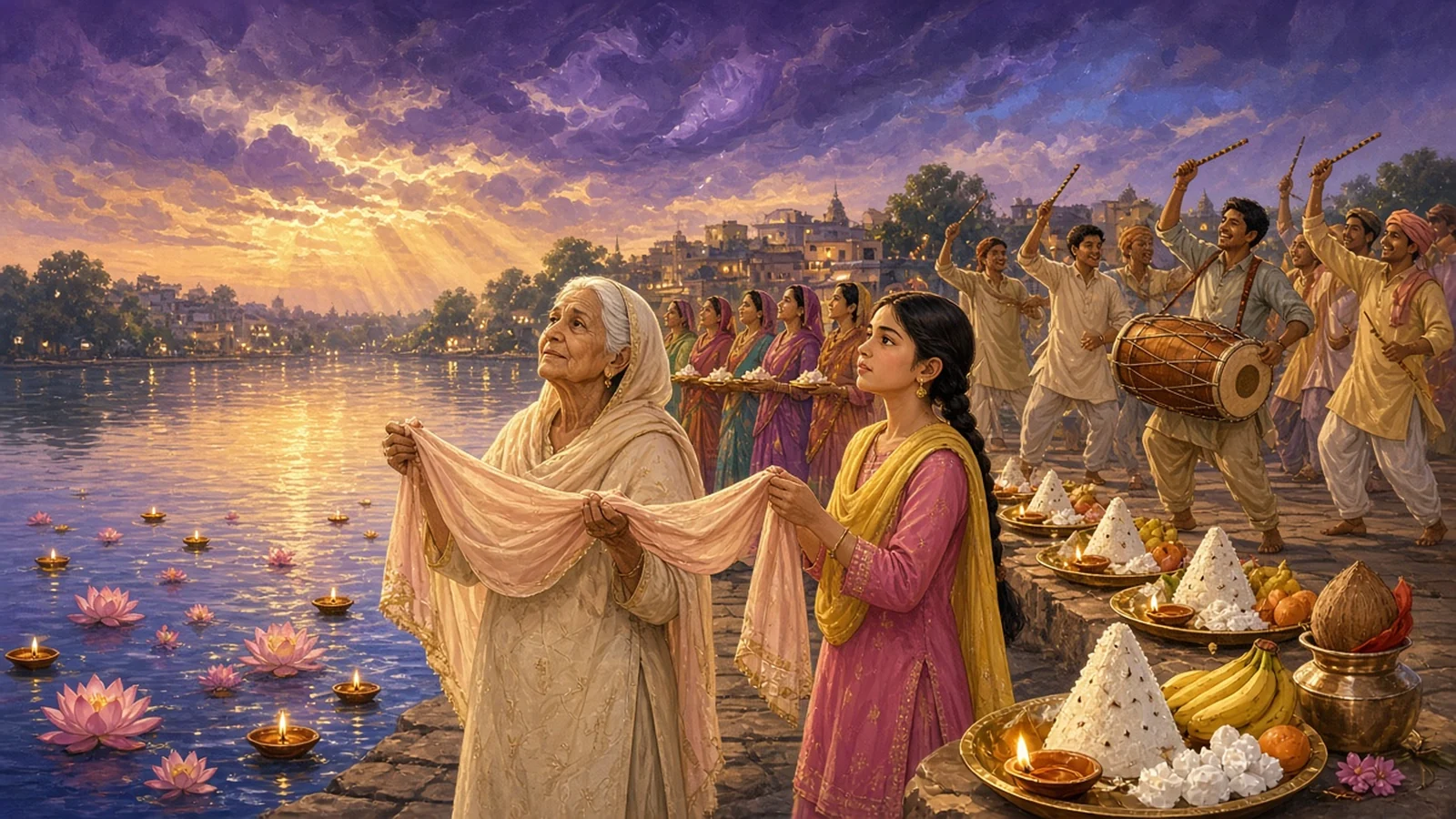
The tray is laid at home or in the temple. Its heart is the jyot, the lamp, with misri, the crystal sugar, cloves and cardamom set into a cone of dough, fruit, little lamps of dough, and akho, rice with sugar, kept for the water. Beside it goes a kalash of water with a coconut in its mouth, wrapped in cloth, flowers and leaves, and an image of Jhulelal on his fish.
The Bahrana Sahib: the lamp, a cone of sugar and cloves, fruit, and the kalash with its coconut
The Bahrana Sahib is carried out on the head or on a cart, with dhol and shehnai, and jhankis, tableaux of Jhulelal on a lotus, in his palace and on his white horse. The young men dance the chhej, the stick dance, round it. In Ulhasnagar the yatra runs from the Jhulelal temple in Ulhasnagar-1 to the Chaliha temple in Ulhasnagar-5; in Jaipur it leaves Chaugan Stadium for the Jhulelal temple at Kanwar Nagar.
The tray carried through the street with dhol and shehnai, young men dancing the chhej around it
At the river, lake or sea the lamps are lit, the akho is poured into the water and flowers and little lamps go after it, and sesa, a pinch of the blessed offering, is given out to everyone. Then comes the palav: each holds out the hem of a garment or a dupatta and asks Jhulelal first for the good of others. At Odero Lal in Sindh, where the Indus no longer passes, the tray is floated on a canal.
At the lake the lamps float out and a family holds out their hems and dupattas for the palav
Chaitra Shukla Dwitiya, at moonrise · Thursday 8 April 2027
chandra darshanthe first moontahiri and langar
At dusk people look for the thin new moon that gives the day its name; Drik Panchang gives the Cheti Chand muhurat on 8 April 2027 as 6:43 to 8:13 in the evening at New Delhi. Temples serve langar and bhandara, and at home the meal is tahiri, the sweet rice with fennel and cardamom, with chhole; in Jaipur sweet rice, chhole and halwa are offered to Jhulelal first.
On the roof at dusk a family points out the thin new moon, sweet rice and chhole beside them
At the shrine of Odero Lal near Tando Adam the Cheti Chand fair still opens with the lighting of the lamp, puja at the Balanbho well and the tray floated on a canal, with families from Mirpurkhas, Shahdadpur, Sanghar, Nawabshah and Sakrand. It is run by the Hindus of Tando Adam together with the Muslim Shaikhs who keep the tomb, and the pujari falls silent at the call to prayer.
MaharashtraUlhasnagar, Mumbai and Pune
Ulhasnagar was the wartime Kalyan Military Camp, whose barracks took in Sindhi refugees arriving by sea in 1947 and 1948 and became a township in August 1949. Its Cheti Chand yatra, with a chariot and tableaux from the Jhulelal temple to the Chaliha temple, is reckoned one of the largest in India, and processions there gather at a lake before going to the temple.
GujaratAhmedabad, Adipur and Gandhidham
Gujarat has India's largest share of Sindhi speakers. In Ahmedabad the refugees were given the barracks of Kubernagar, and in Kutch the twin towns of Adipur and Gandhidham were built for them on 15,000 acres given by the Maharao of Kutch at Gandhi's request. Cheti Chand is a state public holiday, on 7 April in 2027.
RajasthanJaipur and Ajmer
Jaipur's shobhayatra runs from Chaugan Stadium through the old bazaars to the Jhulelal temple at Kanwar Nagar, with a Bahirana Sahab tableau and the chhej danced to shehnai and dhol. Ajmer's procession leaves the old Jhulelal temple at Delhi Gate, whose lamp, its devotees say, was brought from Sindh at Partition and still burns.
Madhya PradeshBairagarh
In Bhopal the Sindhi samaj's procession sets out in the evening from Sindhu Bhawan in Sant Hirdaram Nagar, the old Bairagarh, and the road from Lalghati is closed to let it pass.
DelhiRajendra Nagar and the Yamuna
Delhi's Sindhis begin at their temples and tikanas, go in procession to Sindhu Bhawan for aarti, palav and a bhandara, and give the Bahrana Sahib to the Yamuna at a ghat; a Cheti Chand mela is also held at the Punjabi Bagh stadium.
The diasporaNew Jersey and beyond
Sindhi families abroad keep the day in their temples. A writer who grew up in New Jersey remembers the chhej danced at a small temple there, holding the end of her mother's sari for the palav, and the tahri served at the langar afterwards.
Sindhi HindusJhulelal, the tikana and the Guru Granth Sahib
For Sindhi Hindus Cheti Chand is the most important day of the year, kept for Jhulelal as Varuna. Many keep Nanakpanthi practice as well, praying at a tikana where the Guru Granth Sahib sits beside images of the gods, so that the Cheti Chand morning can begin with kirtan from the Granth before the tray goes to the water.
The Muslims of SindhZinda Pir and Shaikh Tahir
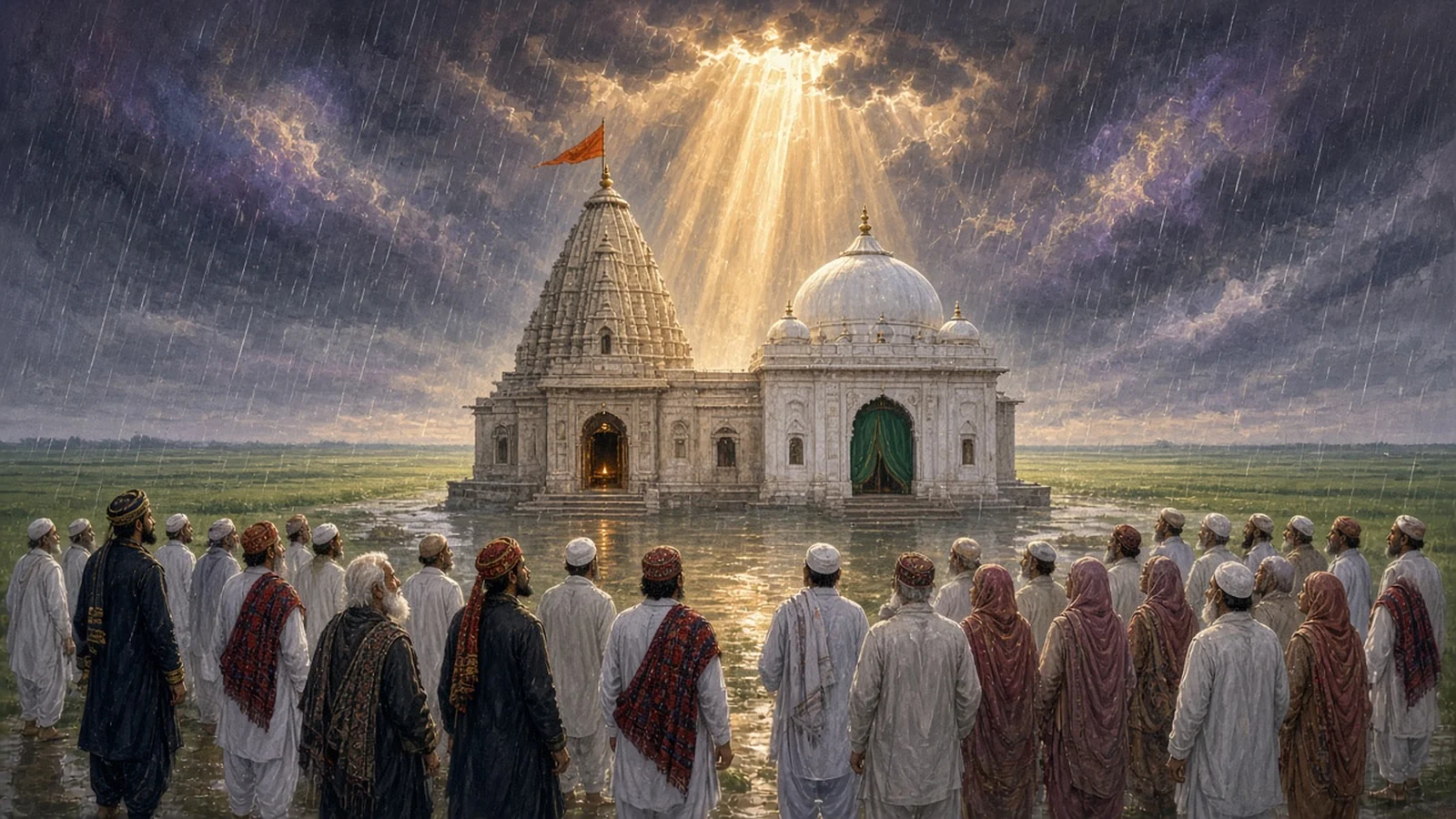
At Odero Lal the Muslim keepers honour the saint of the shrine as Shaikh Tahir, a Sufi, and the river saint as Zinda Pir and Khwaja Khizr. The tomb and the temple stand in one compound, Muslims pray in its mosque, and the Shaikhs run the Cheti Chand fair together with the Hindus of Tando Adam.
How it is kept
The morning is for prayer at the tikana or the Jhulelal temple, and for laying the Bahrana Sahib: the lamp, misri, cloves and cardamom on a cone of dough, fruit, dough lamps, akho for the water, and a kalash with a coconut. In the afternoon the tray goes out in procession with dhol and shehnai, tableaux of Jhulelal on a lotus and on his horse, and the chhej, the stick dance that starts slow and ends at a frantic pace. The cries are "Ayo Lal, Jhulelal" and "Jeko chawando Jhulelal, tahinja thinda bera paar", whoever calls on Jhulelal, his boat will reach the shore.
At the water the akho is given to the river, the sesa shared, and the palav prayed with hems held out. Evening brings the big town yatras, the moon looked for at dusk, langar at the temples, and tahiri and chhole at home. The Tray Taken to the Water follows a composite Ulhasnagar family through the day, and the fair at Odero Lal in Sindh, where the tray is floated on a canal and the Hindu and Muslim keepers of the shrine run the day together.
Odero Lal in the rain: a temple and a domed tomb side by side, Hindu and Muslim men together
Dates differ by a day. Drik Panchang puts Cheti Chand on 8 April 2027 and 27 March 2028 for New Delhi, and on 7 April 2027 for London; Gujarat's holiday in 2027 is 7 April, and some Sindhi calendars give 28 March 2028. Calendars give these days; each samaj announces its own.
In the old texts
Cheti Chand has no old scripture. Jhulelal appears in no Purana, and scholars find no trace of his legend in the written histories of Sindh before the twentieth century. His texts are sung ones: the panjras, five-line songs of praise sung each evening before the palav, and the verse Janam Sakhi of Uderolal, which G. E. L. Carter summarised in The Indian Antiquary in 1918, when it was still, with poems in his praise, the only scripture of the Daryapanthis, the followers of the river. In it the fair at Jhai-jo-Goth, the village now called Odero Lal, is already held on the first of Chaitra, with followers from Sindh, the Punjab and Kutch.
The rest is the community's own writing: the gatha of Jhulelal set down by Gobind Malhi for Sindhis born after Partition, and the histories of the camps and towns, Ulhasnagar, Adipur and Gandhidham, Kubernagar and Bairagarh, where the festival was carried in 1947 and kept.
Where this page comes from. Written by Devalok from the Cheti Chand customs and histories as Wikipedia, the gatha of Jhulelal on jhulelal.com, Harish Gopalji Thakkar's study, G. E. L. Carter's Religion in Sind in The Indian Antiquary (1918), Dawn, the Times of India, the Mumbai Mirror, DNA, ETV Bharat, Naidunia, Scroll, NPR, a Delhi community paper and the Khudabadi Sonara community's history of Ulhasnagar record them, and Drik Panchang and Gujarat's 2027 holiday list for the dates, as recorded in the Devalok Lore. Our own words throughout.