As the Sindhi gatha tells it: the quarrel in the rain
Sindh · Nasarpur, and a place near the village of Jhijhan · 3 min read
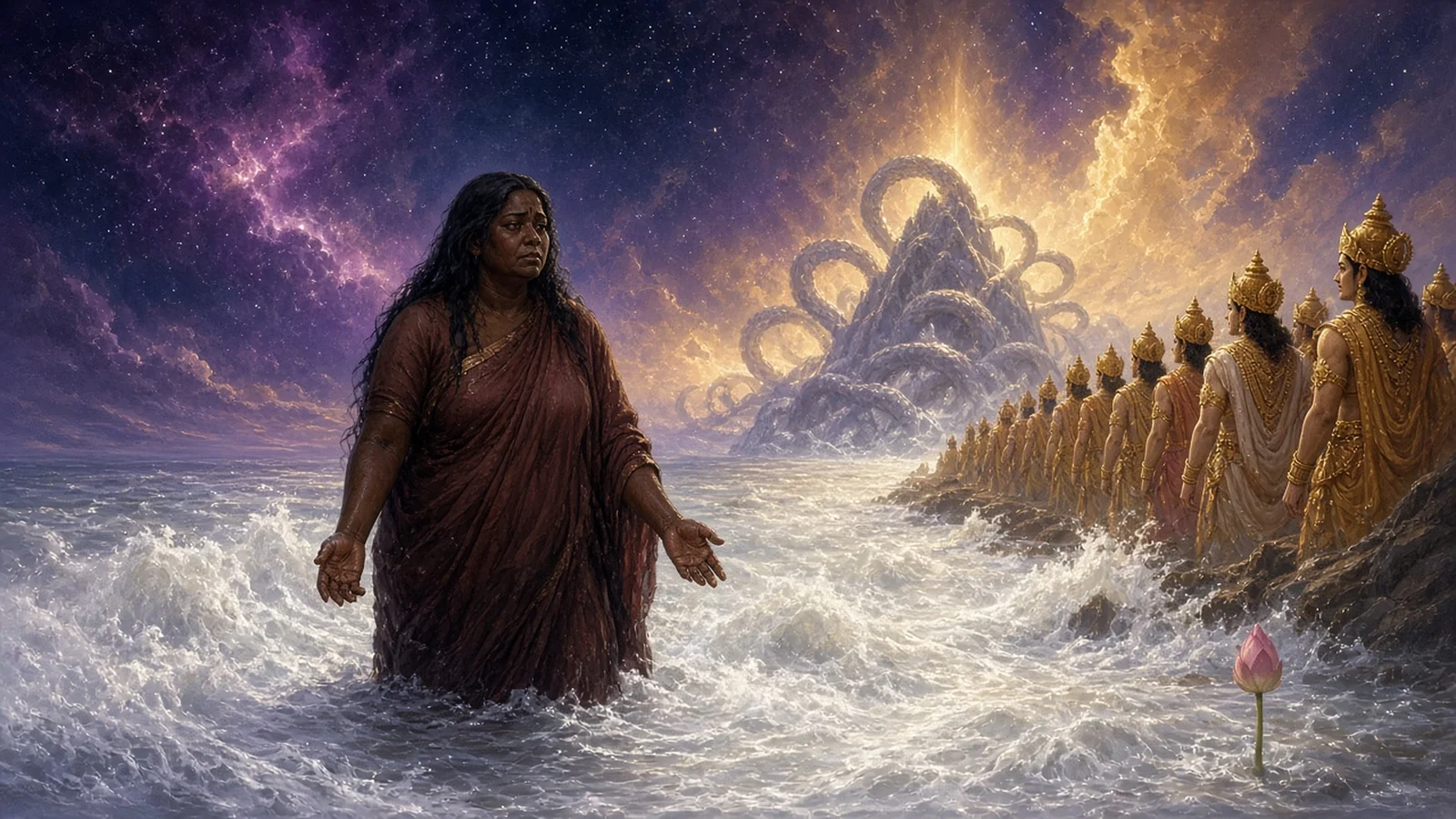
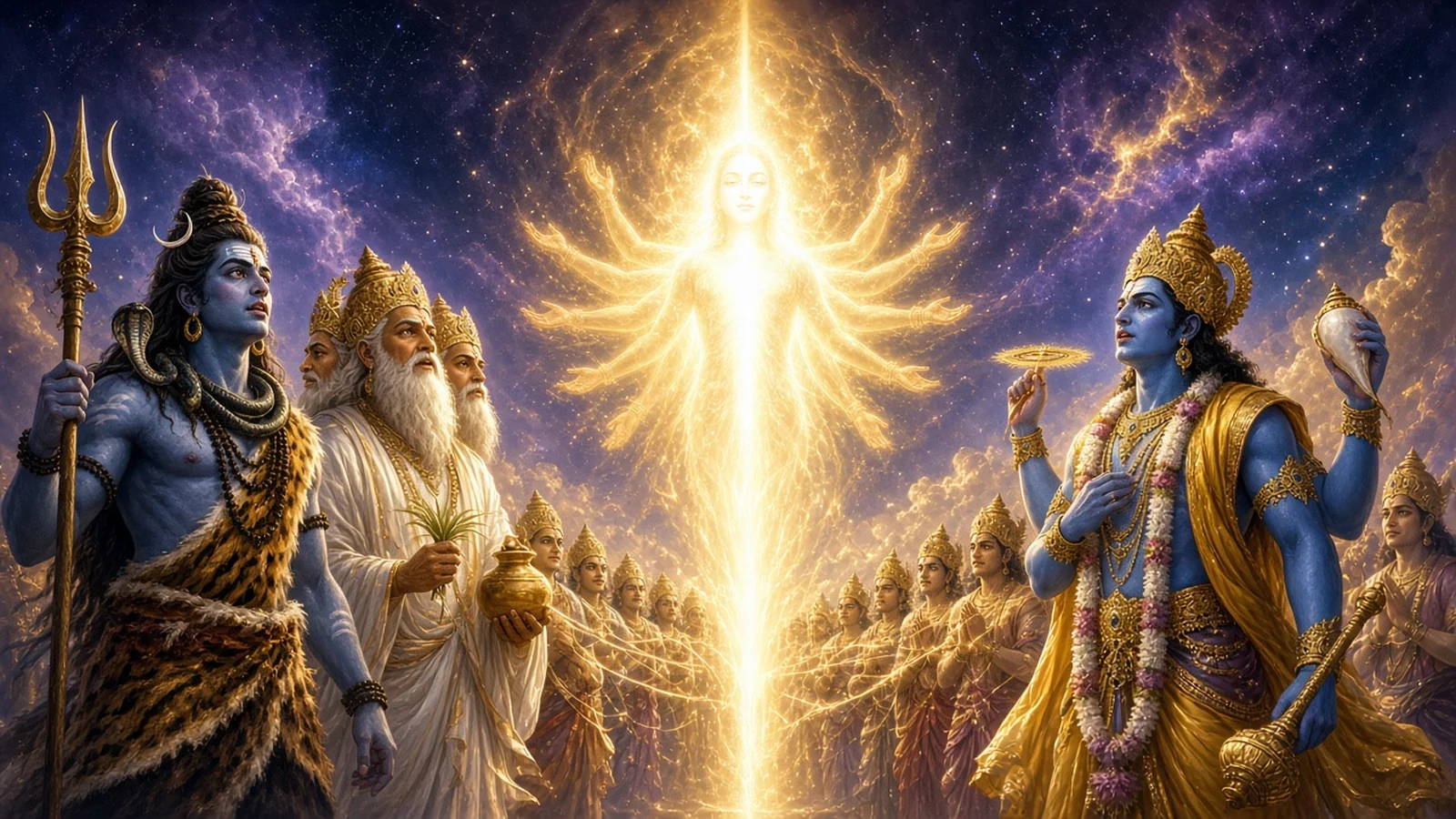
After the day the river and the fire came into Mirkhshah's palace, the Hindus of Sindh were left in peace, and Uderolal went home to Nasarpur. He was still a boy.
His two older brothers, Sonaram and Bhedoram, had seen all of it and been moved by none of it. They kept to their trade and kept away from him.
"Come with me," Uderolal said to them one evening. "Leave the counting for a while. There is other work to do."
"Your work feeds nobody," Sonaram said. "Ours does."
He asked them again, and they refused again, more rudely the second time. So he turned to his cousin Pagad, who had been listening from the doorway.
"Will you carry it, then?"
"Carry what?"
"The worship of the water and the light. You will be its first Thakur, its first priest."
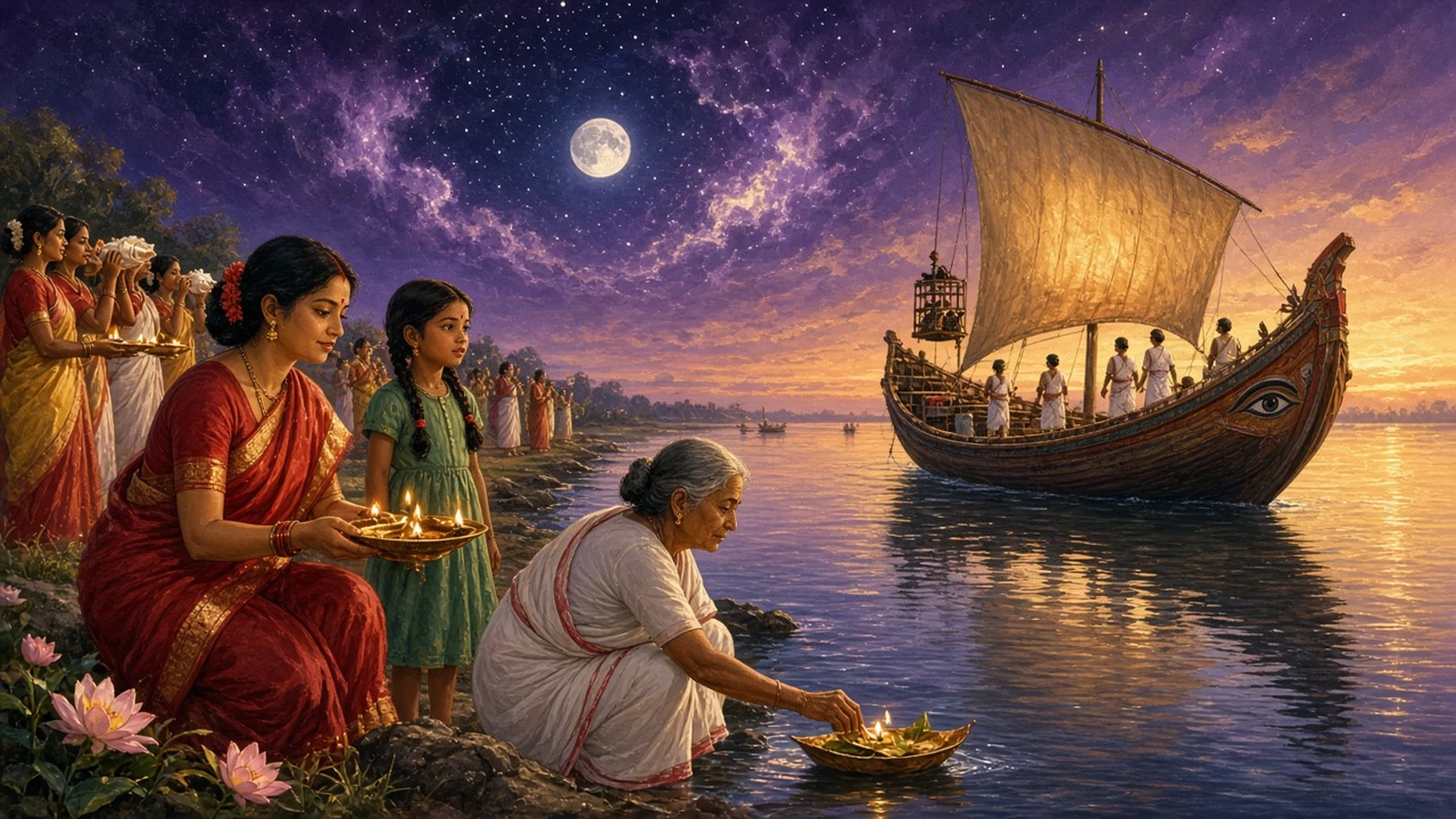
From then on Pagad went wherever Uderolal went. They went up the river to Rohri, where a ghat was built, and down to Thatta, where Mirkhshah now came out to welcome them. They went as far as Hinglaj, and to the island of Manora off the shore where Karachi stands today.
Back in Nasarpur, Uderolal gave Pagad seven things to keep. A ring. A lamp that was never to go out. A cloth to cover him like a shield. A great pot for cooking rice at a feast, which would never empty however many came to eat. A sword. A little drum. A jar for water.
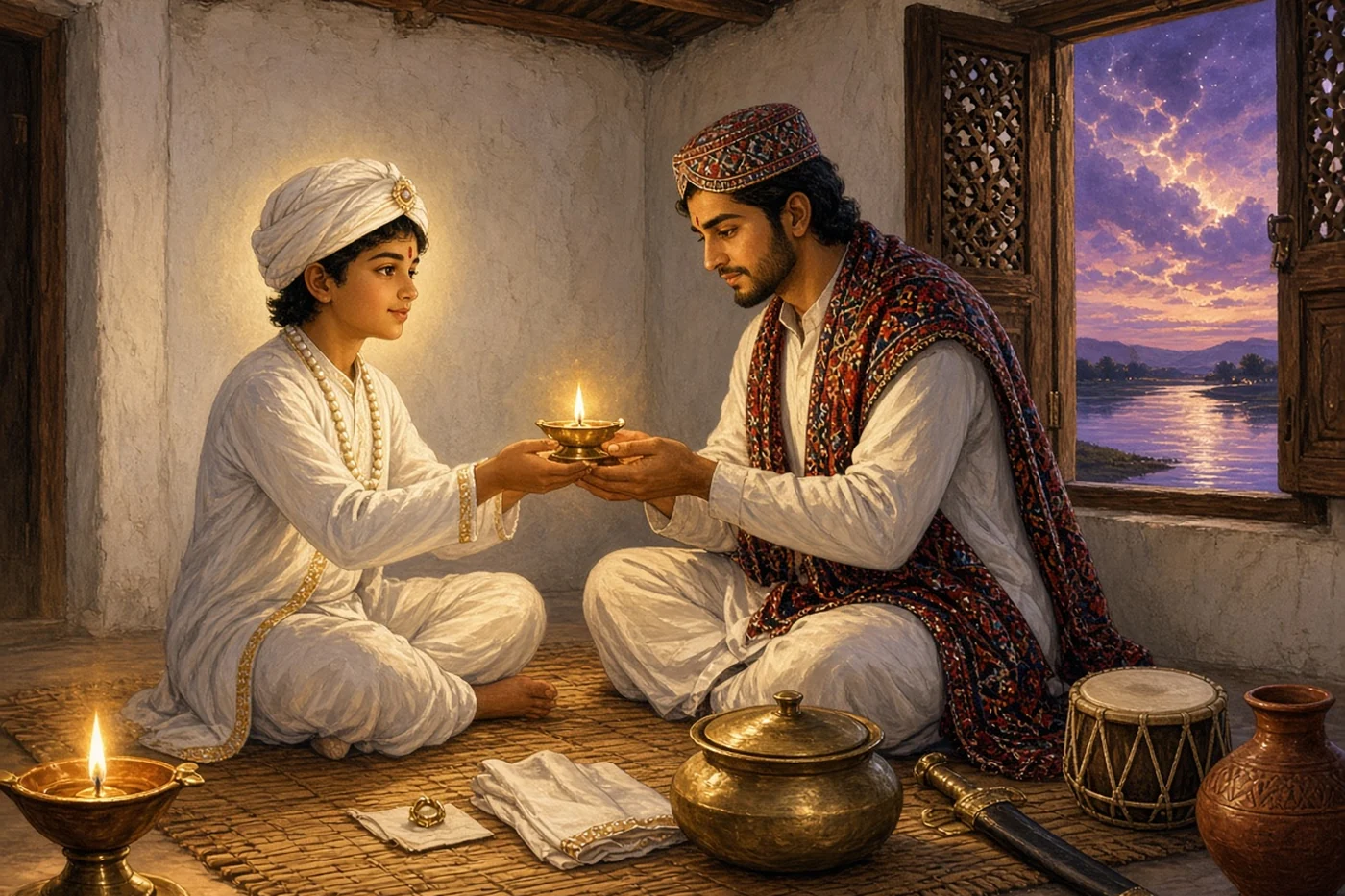
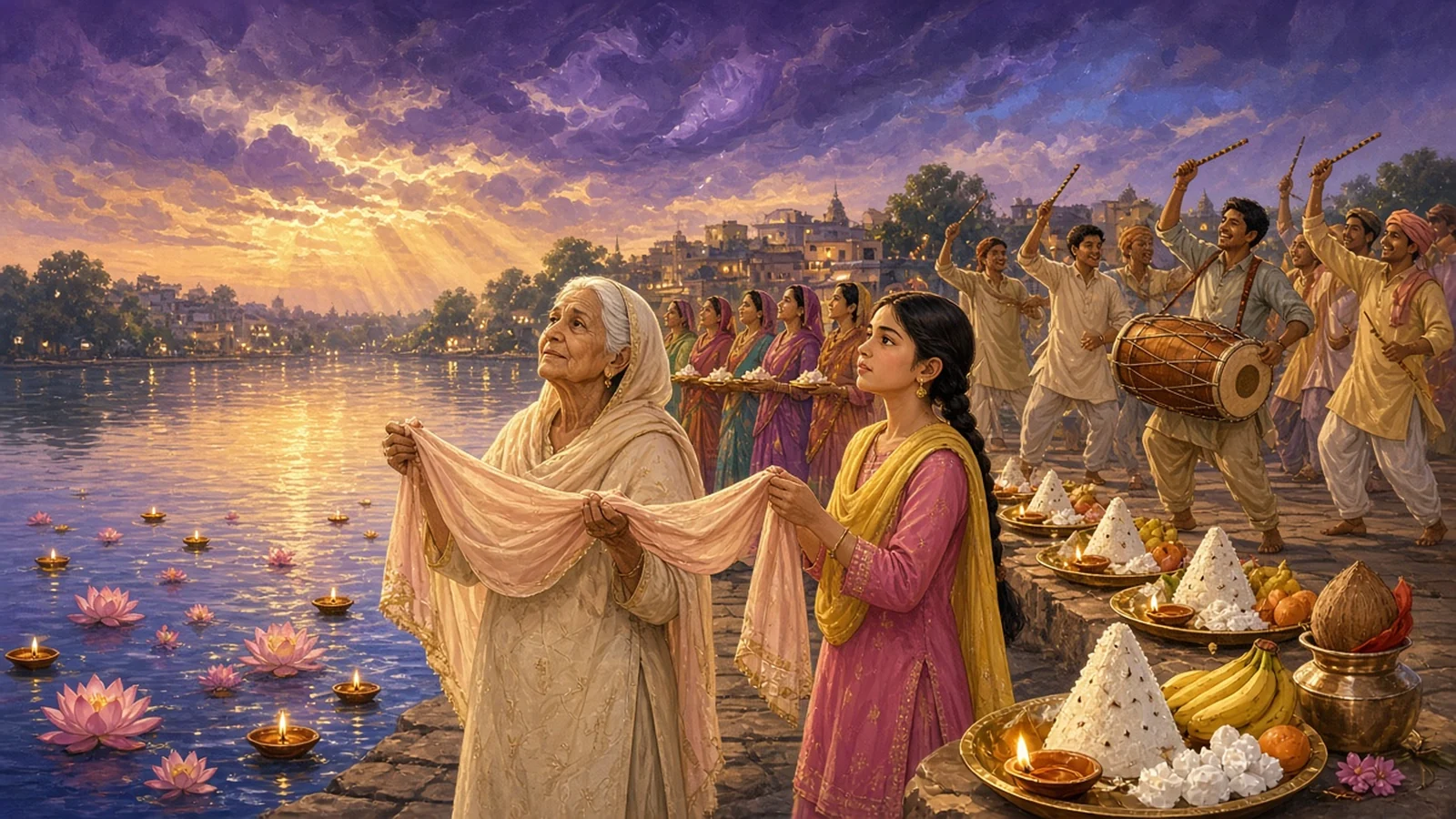
"When the songs have been sung in the evening," he told him, "hold out the hem of your cloth, like this, and ask. Ask for the good of everyone else first, and for yourself last."
That was the palav, and Pagad taught it in the temple he built at Nasarpur.
Uderolal was thirteen when he called Pagad to sit beside him.
"What I came to do is done," he said.
Pagad did not understand at first, and then he did. "Not yet. You are still a child."
"Your sons will be Thakurs after you, and those who follow me will be called sevaks. Every temple will have its babo to sing and pray each day. Build the temples. Keep the lamp."
Pagad wept, and the others who heard it wept with him, but nobody could talk him out of it.
He chose a place near a village called Jhijhan. The news went round, and people came from near and far to see what would happen, Hindus and Muslims both. Mirkhshah's men came too.
There, in front of all of them, Uderolal left his body.
Before the Hindus had done weeping, the ruler's men stepped forward. "Our master has given his orders," one of them said. "We will build a tomb over him, as Islam requires."
"He was born among us," an old man from Nasarpur answered. "He will have a samadhi, as our custom requires."
Voices rose on both sides. Nobody stepped back from the body.
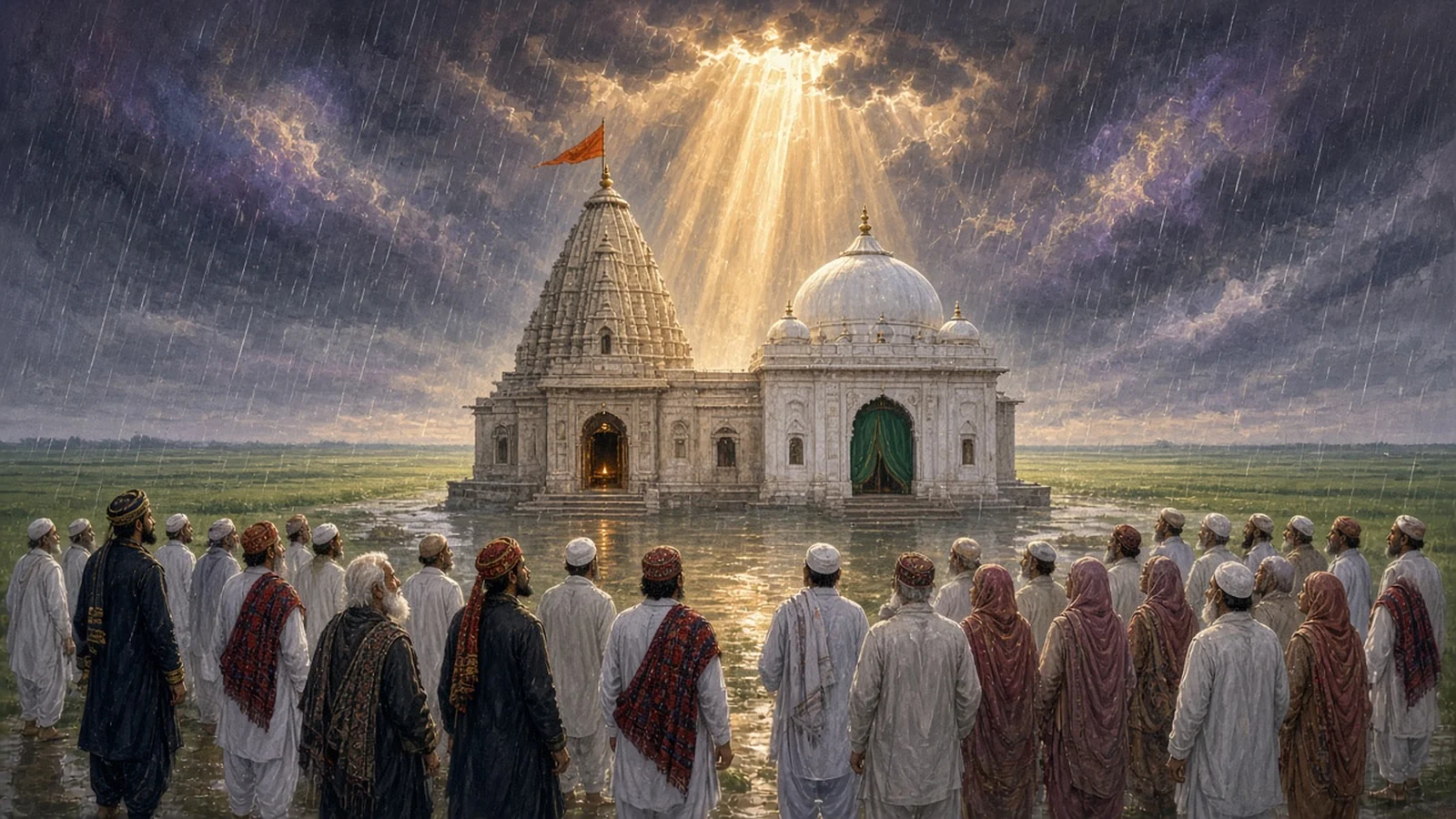
Then the sky opened. Rain came down so hard that the argument was drowned in it, and through the rain a voice was heard.
"Listen to me. Make my shrine one that both of you can accept, Hindus and Muslims. Let one face of it be a temple and the other a dargah. I belong to all of you."
The rain went on a while longer. When it stopped, the two crowds were standing much closer together than they had been.
As the Janam Sakhi tells it: the voice under the ground
Sindh · Jhai-jo-Goth, eight miles from Nasarpur, the village now called Odero Lal · 2 min read
The verse life of Uderolal, the Janam Sakhi, was still the chief book of his followers, the Daryapanthis, when an English officer, G. E. L. Carter, set its story down in prose in 1918. It ends another way.
When his brothers Somo and Bhandar would not join him, Uderolal led his cousin Pugar down to the river. While Pugar bathed, he saw Uderolal's true form and many other wonders, and he came up out of the water a disciple.
Some time later Uderolal rode out on horseback, spear in hand, to an open stretch of ground at Jhai-jo-Goth. A Muslim was there.
"Whose land is this?" Uderolal asked.
"Mine."
"I would like to buy it."
The man hesitated. "I must ask my wife."
He went home and came back, and stopped short. He had left the rider standing in the full glare of the sun. Now he stood in the shade of a great tree that had not been there an hour before.
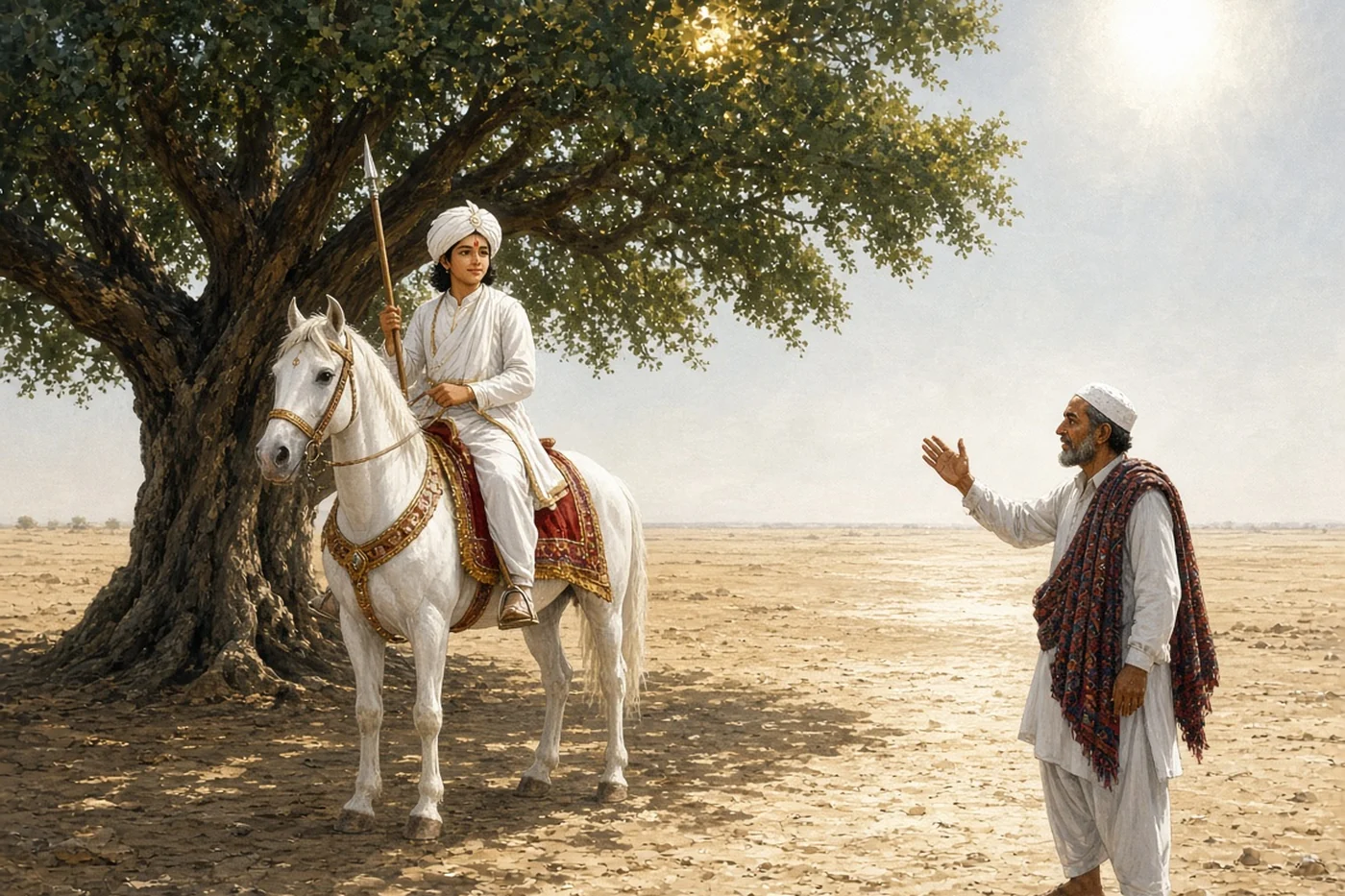
"Take the land for nothing," the man said. "Only let me have whatever the temple on it brings in."
Uderolal agreed, and drove his spear into the earth. When he drew it out, the ground was full of diamonds and rubies. "All this is yours for the gathering."
"I want only what I asked for."
Uderolal confirmed the gift. At once the ground opened and took him, with his horse and his spear, and he was never seen again.
When the news reached the king, Marakh, he sent his vazir to find out if it was true and, if it was, to raise a fine tomb on the spot. Pugar came too. The vazir and the Thakur could not agree how it should be built, so they settled to sit up through one whole night and do whatever a voice from under the ground might tell them.
In the dark the voice came. The king was rich, it said, so let him build the tomb, and build it well. Let the Hindus build a house beside it to keep the lamps.
The two buildings went up side by side. In Carter's day the Hindus still lit five lamps in the tomb at nightfall, swept it and laid flowers on it, while a Muslim sat by to take the offerings, and in the lamp house next door the lights burned day and night. The tree was still standing, and women who wanted a son swallowed its seeds. Every year on Cheti Chand his followers came to Jhai-jo-Goth for the fair, from all over Sindh, from the Punjab and from Kutch.