As the Bhagavata Purana tells it
Bhagavata Purana 3.17 to 3.19 · 3 min read
Diti carried her twin sons for a hundred years, and when they were born the world seemed to come apart.
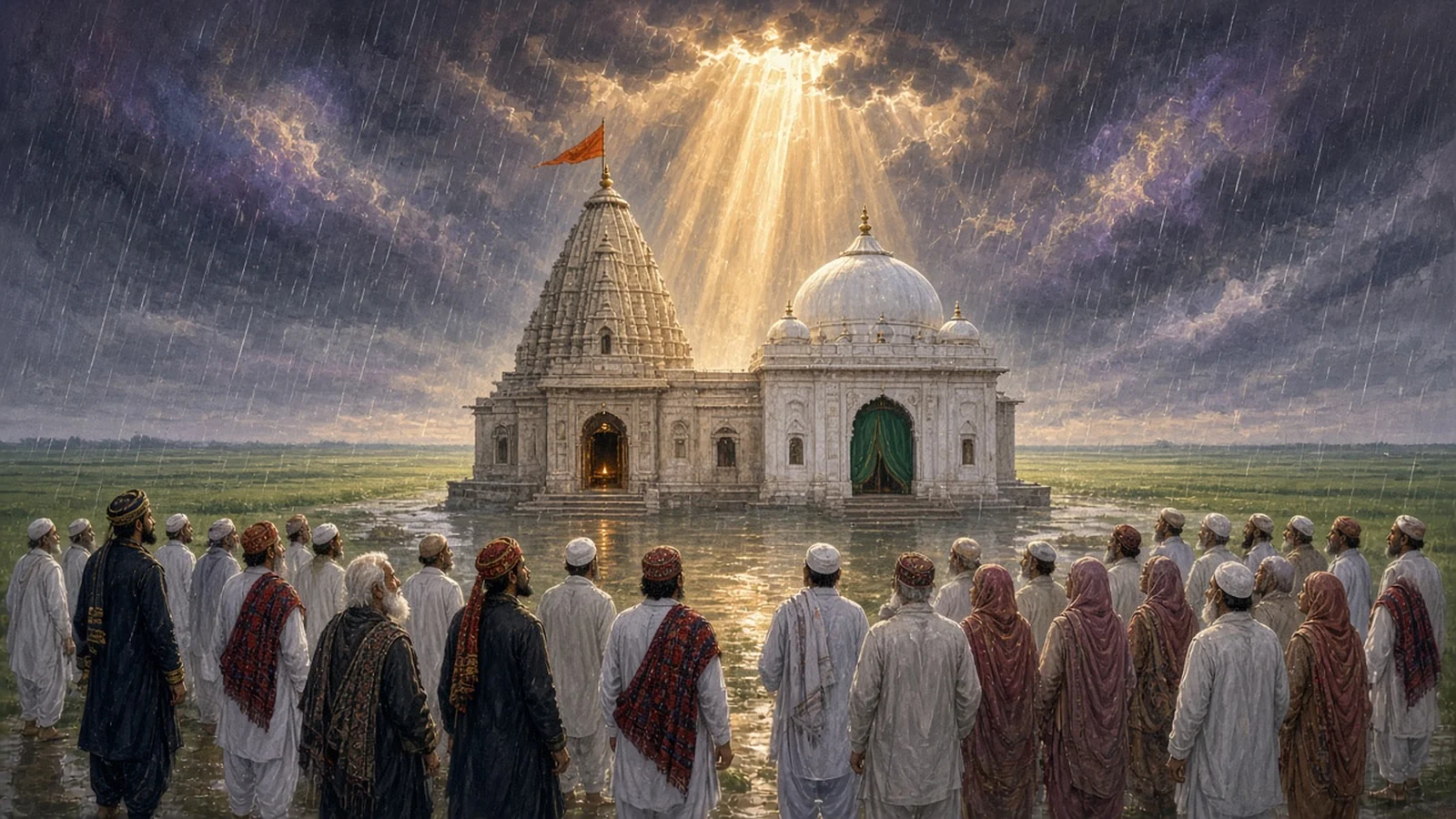
The mountains shook, comets crossed the sky, cows gave blood instead of milk, and in the temples the images of the gods wept. Only the four boy-sages, the sons of Brahma, stayed calm, because they knew who had just been born.
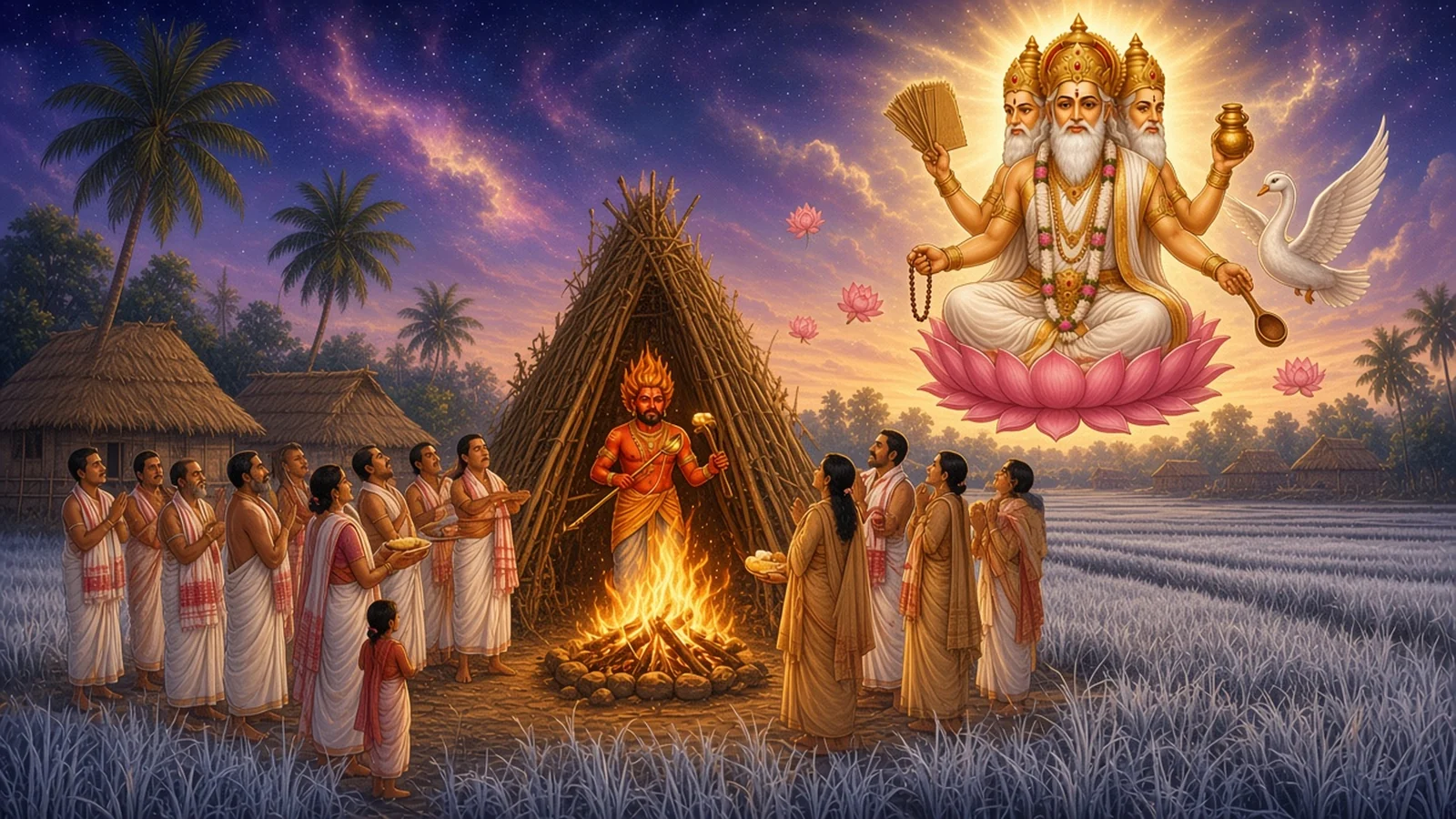
The twins grew as hills grow, until their golden crowns seemed to scrape the sky. Their father Kashyapa named them. The one born first he called Hiranyaksha, the golden-eyed. The other was Hiranyakashipu.
The elder won a boon from Brahma and made himself master of the three worlds. Hiranyaksha was happy to serve him. What he wanted for himself was an enemy.
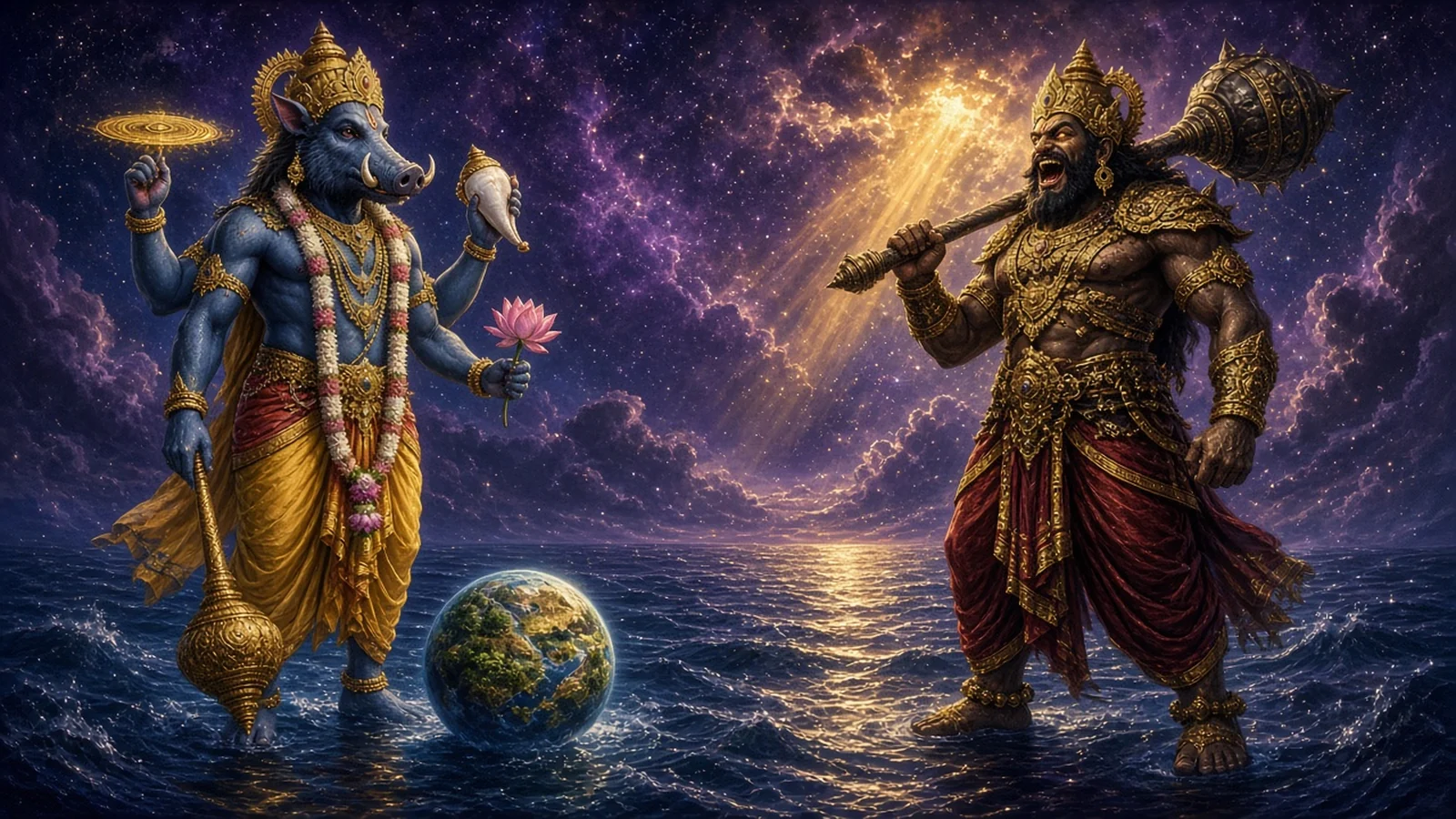
He went about with a mace on his shoulder and golden bells on his ankles, and the gods hid from him the way snakes hide from Garuda. He found heaven empty and roared with disappointment.
So he went into the ocean for sport. For years he walked the sea floor beating the waves with his iron mace, until he came to Vibhavari, the city of Varuna, lord of the waters, and bowed to him very low, which was itself an insult.
"Great king," he said, "they say you have beaten many demons in your day. Beat me."
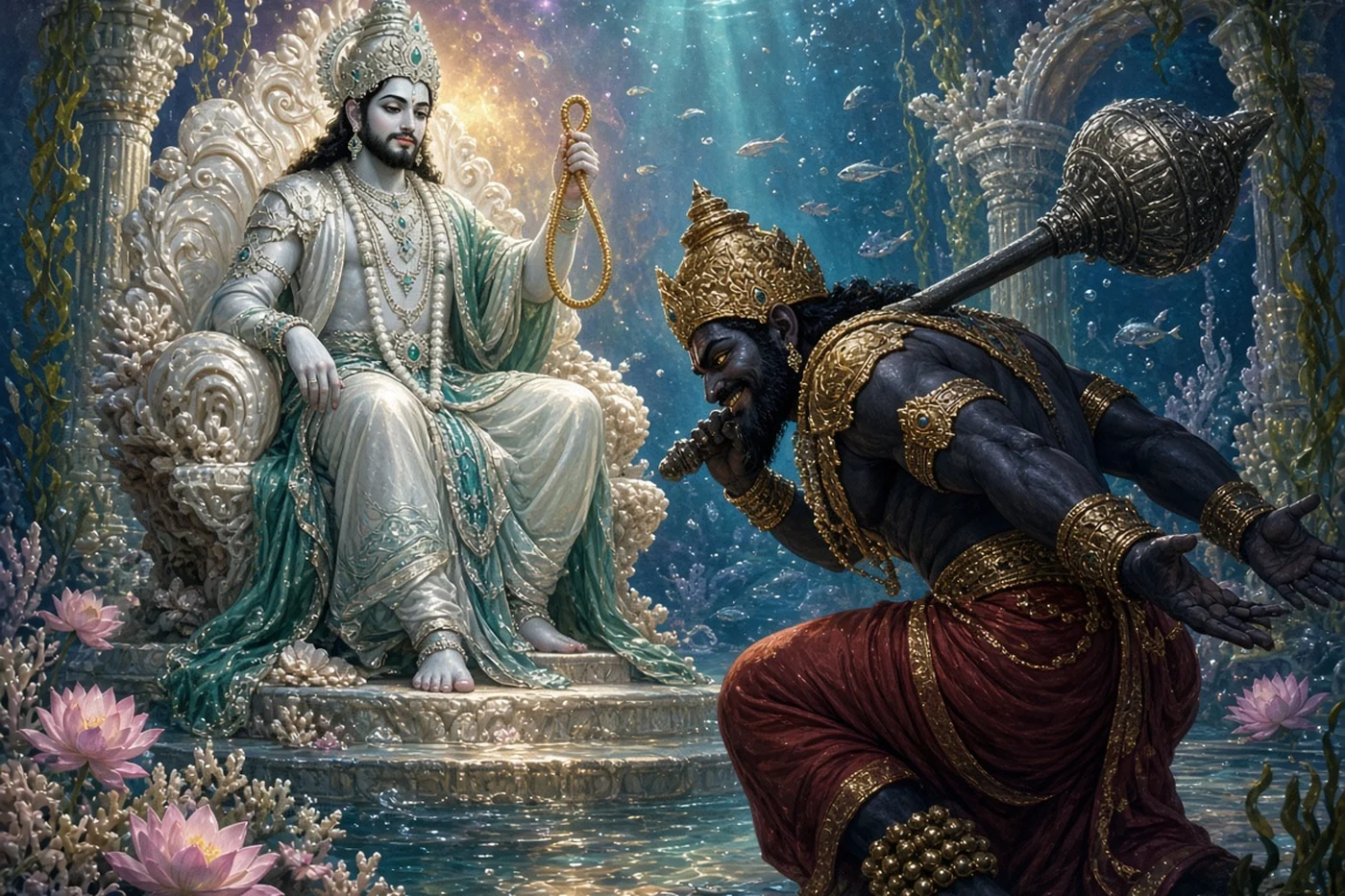
Varuna kept his temper. "I have given up fighting," he said. "There is one who is your match, the oldest of all. Look for Vishnu. When you find him your boasting will end, and you will lie down for good."
Hiranyaksha heard only the name. The wandering sage Narada told him where to look: Vishnu had gone down into the deep as a boar.
He found the boar coming up out of the deep with the Earth balanced on his tusks, and laughed.
"A pig that lives in the water! That Earth was given to us who live down here, and you will not carry her off while I watch. The gods fattened you to kill my people. Today I kill you."
The boar said nothing. The Earth was trembling on his tusks, and he rose with her.
"Running away?" the demon shouted. "Have you no shame?"
At the surface the boar set the Earth on the water and gave her the power to float. Only then did he turn.
"Yes, I am a beast of the forest," he said, "and I hunt dogs like you. You made a promise. Keep it."
They fought mace on mace until both were bleeding, and Brahma came with the sages to watch. "Do not play with him," he called to the boar. "Noon is passing, and the evening belongs to the demons."
The boar laughed and swung at the demon's chin, but Hiranyaksha struck first, and the boar's mace flew from his hand, spinning and blazing.
The boar stood empty-handed, and the demon did not strike him. That was the rule of single combat, and he kept it. The gods cried out. The boar honoured him for it and called his discus.
"You are dead!" the demon screamed, and hurled his mace. The boar kicked it aside with his left foot. "Pick it up," he said. "Try again." The second throw he caught in the air and held out to its owner, and Hiranyaksha, ashamed, would not take it back.
He threw a blazing trident, and the discus cut it to pieces. He sent all his magic, winds full of dust, hail and stones, armies of ghosts howling on every side. The discus went through it all, and it was gone. Far away his mother Diti shuddered, remembering what her husband had once foretold about these sons.
The demon came back and flung out his arms to crush the boar, but the boar was not inside them. He struck Hiranyaksha once with his forefoot, at the root of the ear, and the demon crashed down like a tree a gale has pulled up by the roots.
Brahma came close. The dead face was still shining.
"Who would not ask for a death like this?" he said. "He died with his eyes on the Lord's face."
As the Linga Purana tells it: the tusk Shiva wears
Linga Purana 1.94 · 2 min read
The Linga Purana tells it in a few strokes, and in its telling the demon is the thief.
Hiranyaksha, brother of Hiranyakashipu and father of the blind demon Andhaka, was as terrible as Time at the end of the world. He beat the gods in battle. Then he tied up the Earth like a captive and dragged her down to the regions under the world.
Brahma and the gods, beaten and bound themselves, went to Vishnu.
"The Earth is a prisoner below," they told him. "Hiranyaksha has her."
Vishnu took the form of the sacrifice-boar, Yajnavaraha, and went down after her, as he had in other ages of the world. He needed no mace. With the tips of his curved tusks he killed Hiranyaksha and every demon who stood with him, and the Purana says that a tiny part of one tusk's point was enough for all of them, their sons and their servants together.
Then he lifted the Earth out of the water and held her on his lap.
Brahma, Indra and the gods sang his praises, and as they sang they saw the whole world on the boar's body. The gods sat in his bristles. The sun and moon were his eyes. The stars ran along his back. The gods took the rescued Earth, set her on their heads and bowed to him.
The Earth spoke a blessing of her own. "Whoever carries on his head a crumb of the soil these tusks have broken," she said, "will be free of his sins, will live long, will see his sons' sons, and will go to heaven."
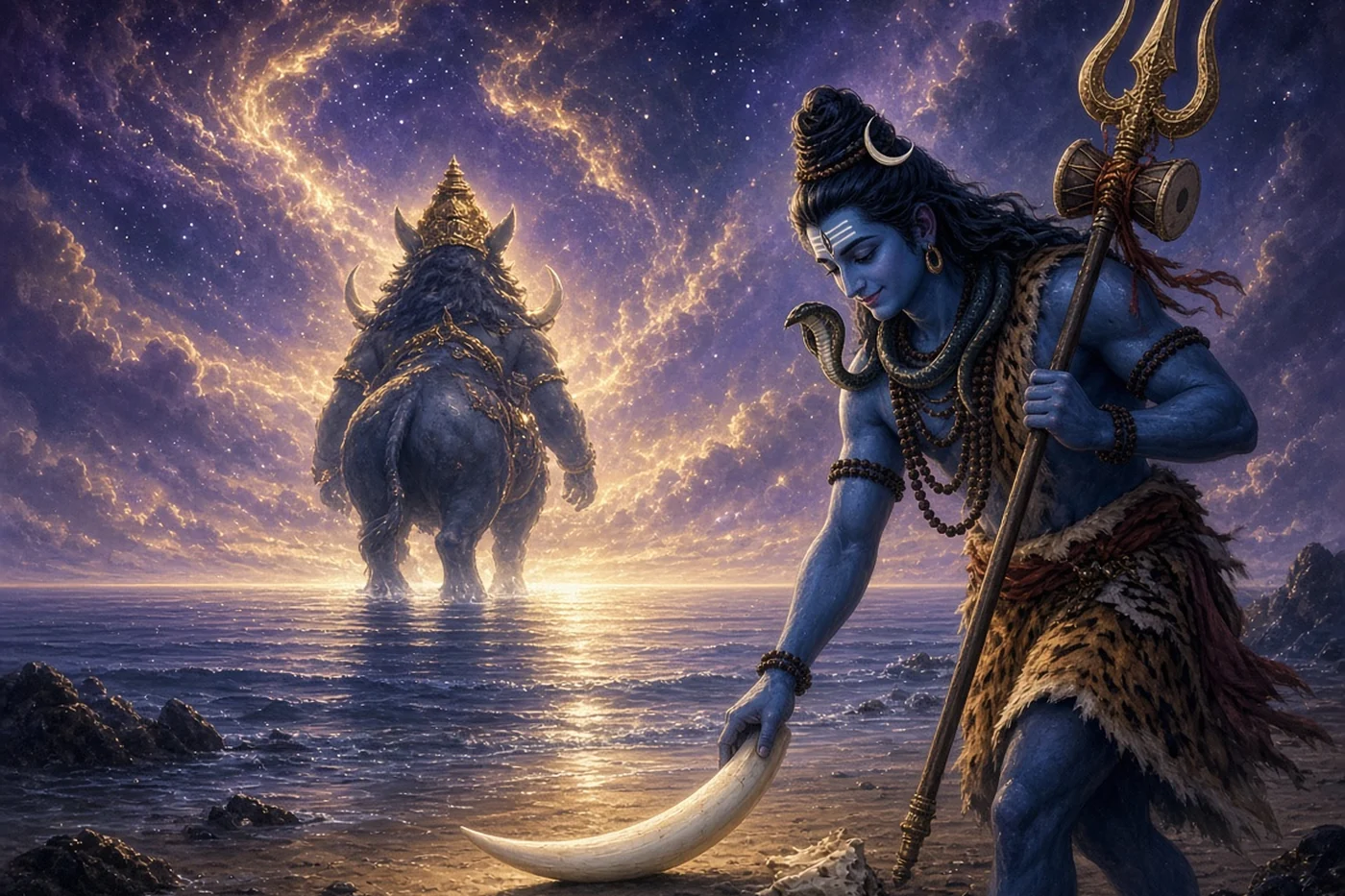
The boar went home to the ocean of milk. As he went the Earth shook again, and one of his curved tusks, worn down by her weight, broke away and fell.
Shiva happened to be passing. He saw the tusk lying there, picked it up and put it on, on his head and on his chest, and Indra and the gods praised him for it. That, the Purana says, is how the great lord came to wear a boar's tusk among his ornaments.