As an Ulhasnagar family keeps it: the bahrana and the lake
Maharashtra · Ulhasnagar, the old Kalyan Camp, on the new moon of Chet · 3 min read
Dadi was up before anyone, as she was every Cheti Chand, and by the time Riya came into the kitchen the big brass thaal was already on the table.
"Wash your hands first," Dadi said. "Then you can make the cone."
She showed her how. A lump of kneaded flour, pressed into a cone and studded all over with cloves and green cardamoms. Around it went betel nuts and pieces of misri, the crystal sugar, and fruit. Then the little lamps, shaped from the same dough, each with a twist of cotton for a wick. In the middle sat the small brass Jhulelal on his fish. Behind him went the kalash of water with a coconut in its mouth, wrapped in red cloth and leaves, and a bowl of akho, rice and sugar for the water.
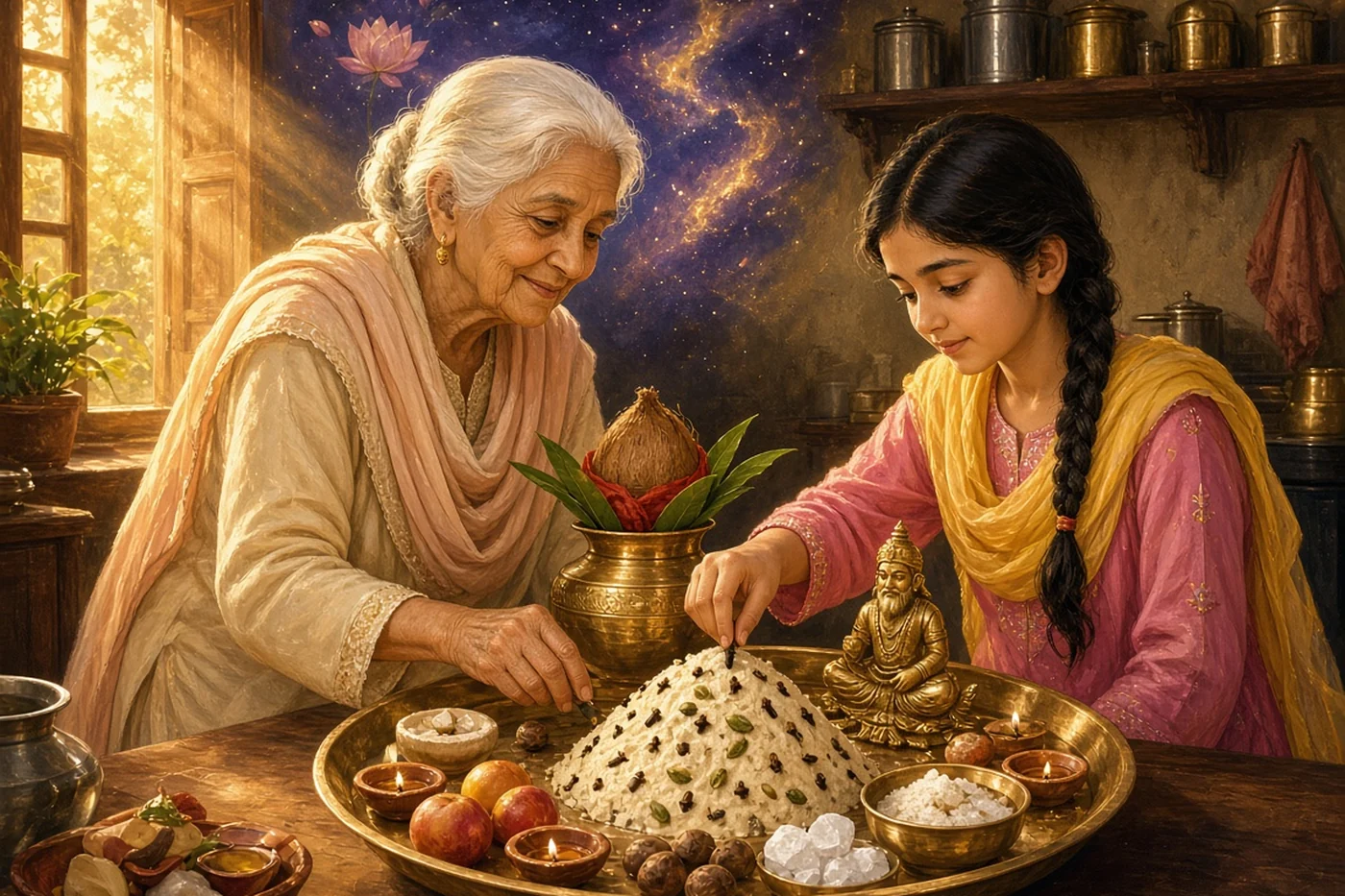
"That is the Bahrana Sahib," Dadi said, standing back. "Now it is ready to go to him."
"To the lake?"
"To the water. Any water. In Hyderabad we took it to the Sindhu. You could hear the dhol from our roof when the procession went down to the river."
Riya had heard about Hyderabad all her life, the house with the carved door, the river, the ship. She asked anyway. "And when you came here?"
"Forty-eight. A ship to Bombay, a week in tents at the docks, then a lorry, and then this camp. It was army barracks, built for soldiers in the war. One long hall, fourteen families in it, and saris hung on ropes for walls." Dadi laughed. "Your grandfather said we had come to the biggest house in India."
"Was there water here?"
"There is always water somewhere. We found a pond and took the tray to that."
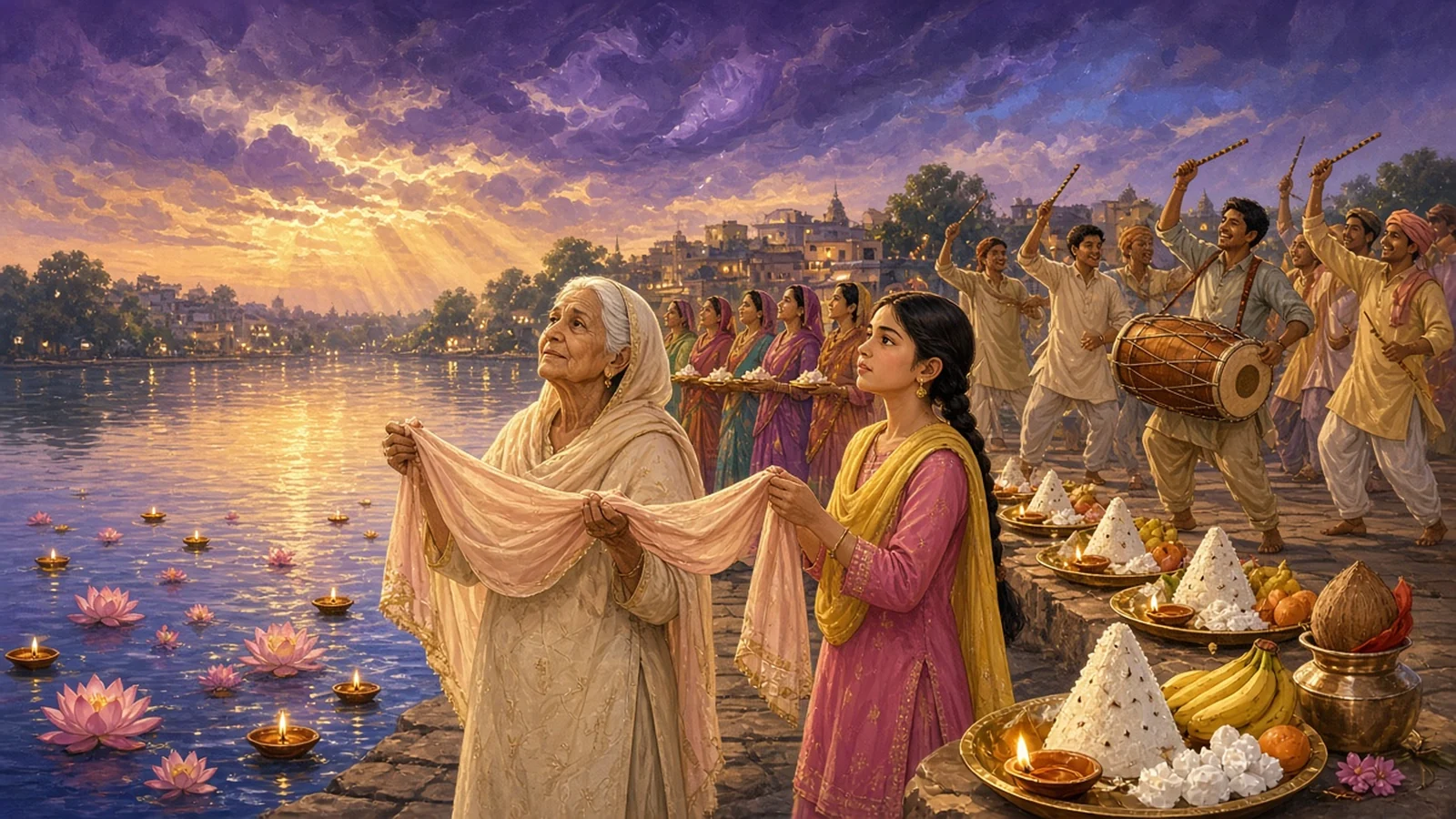
In the afternoon the lane filled up. Somebody had a dhol and somebody a shehnai, and the young men of the building had their sticks out for the chhej, wheeling in a circle and knocking stick against stick, slow at first and then faster and faster until the little ones shrieked and ran out of the way. Riya carried the bahrana on her head for the last stretch, Dadi's hand at her back.
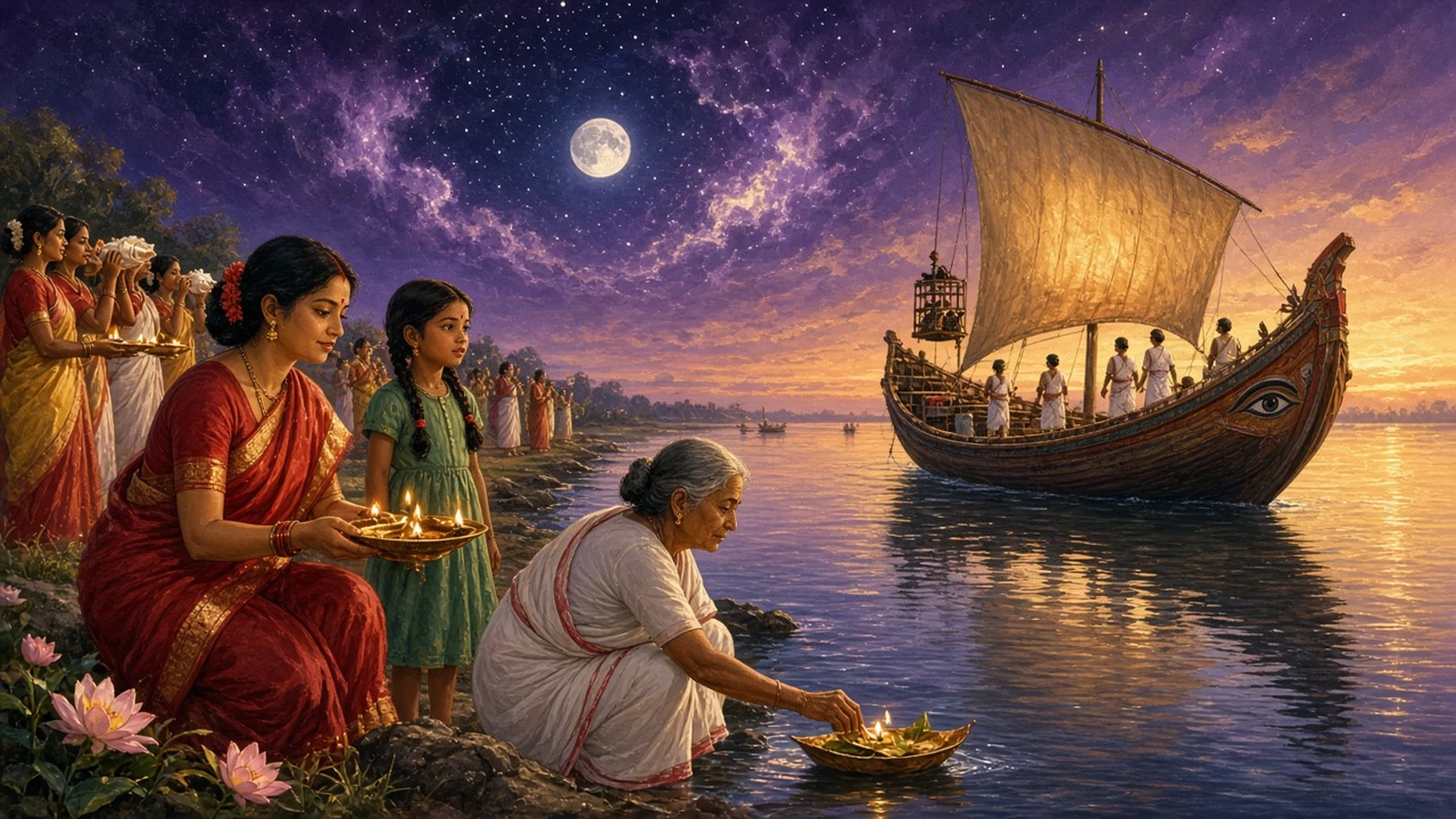
At the lakeside the women set their trays down in a row. The lamps were lit. The akho was poured into the water, and flowers after it, and a few of the little lamps were set floating. The priest gave out sesa, a pinch of the blessed rice, into every cupped hand.
Then came the palav. Dadi held out the end of her dupatta with both hands, and Riya, without being told, took hold of the end of Dadi's.
"Others first," Dadi whispered. "Then us."
The prayer went up, and after it the cry, from every throat on the bank at once. "Ayo Lal!" "Jhulelal!" And then the old line, the one Dadi said her own mother had sung on the Sindhu: "Jeko chawando Jhulelal, tahinja thinda bera paar." Whoever calls on Jhulelal, his boat will reach the shore.
At dusk they went to watch the big procession, the chariot with Jhulelal on it moving from the Jhulelal temple towards the Chaliha temple in Camp 5, with tableaux behind it and the whole of Ulhasnagar lining the road.
At home there was tahiri, the sweet rice with fennel and cardamom and a thread or two of saffron, and chhole beside it. Dadi set the first plate in front of the brass Jhulelal before anyone else could eat.
"Happy new year," she said to him. Then she turned to Riya. "And to you."
As Odero Lal keeps it: the behrano on the canal
Sindh · the shrine at Odero Lal, near Tando Adam, about thirty kilometres from Hyderabad · 2 min read
Most of Sindh's Hindus left in 1947 and after, but not all of them, and at the shrine of Odero Lal the new moon of Chait is still the night of the year.
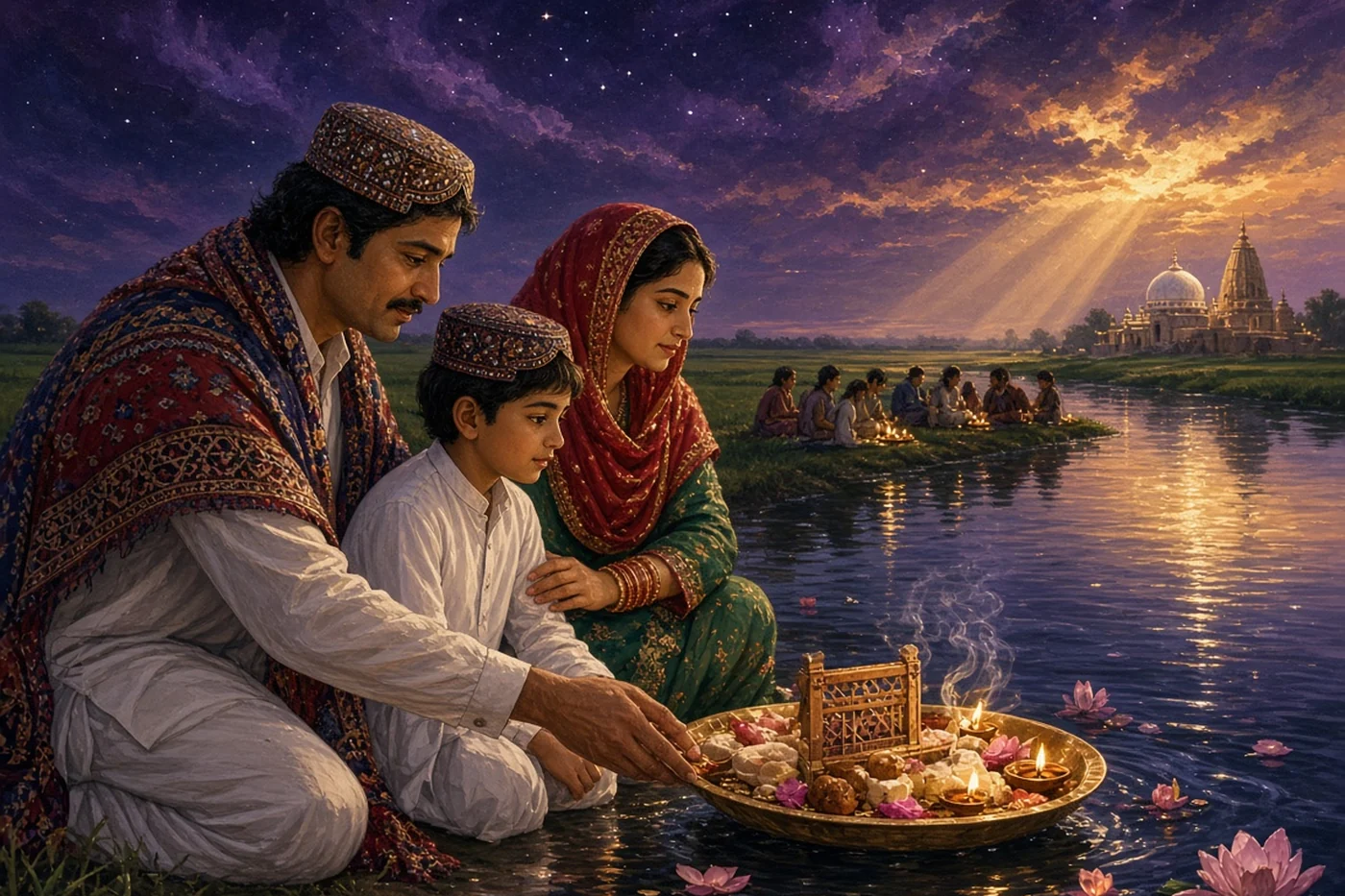
A family from Mirpurkhas comes in the afternoon, like others from Shahdadpur, Sanghar, Nawabshah and Sakrand, with their behrano wrapped in a cloth on the back seat. It is a wide brass plate laid with flour, sweets, dried fruit and rose petals, and a tiny cot set in the middle with lamps of dough, incense and rock candy around it.
The fair begins in the evening with the jyot jagayan, the lighting of the sacred lamp. Before sunset there is a puja at the well of Balanbho Sahib, whose water is said to heal, and the father dips his fingers in it and sprinkles it on his son's face, the chhando.
"Why on the face?" the boy asks.
"To wake you up inside," his father says.
The Indus no longer runs by Odero Lal, so the behrano is taken to a canal instead; every water in Sindh, people say, comes from the Indus in the end. The plate is set down on the current and drifts away with its lamps burning. The Daryapanthis, the followers of the river, say the fish will eat what is on it and bless the ones who gave it.
Back in the courtyard the devotees hold out the hems of their shirts and dupattas for the pallao, and ask Uderolal to carry them through their troubles. The men begin the chhej with their dandiya sticks, swaying like the river's waves, and the beat climbs until it is frantic. "Ayo ayo Jhulay Lal," they chant, and the crowd answers, "Jiay Jhulay Lal!"
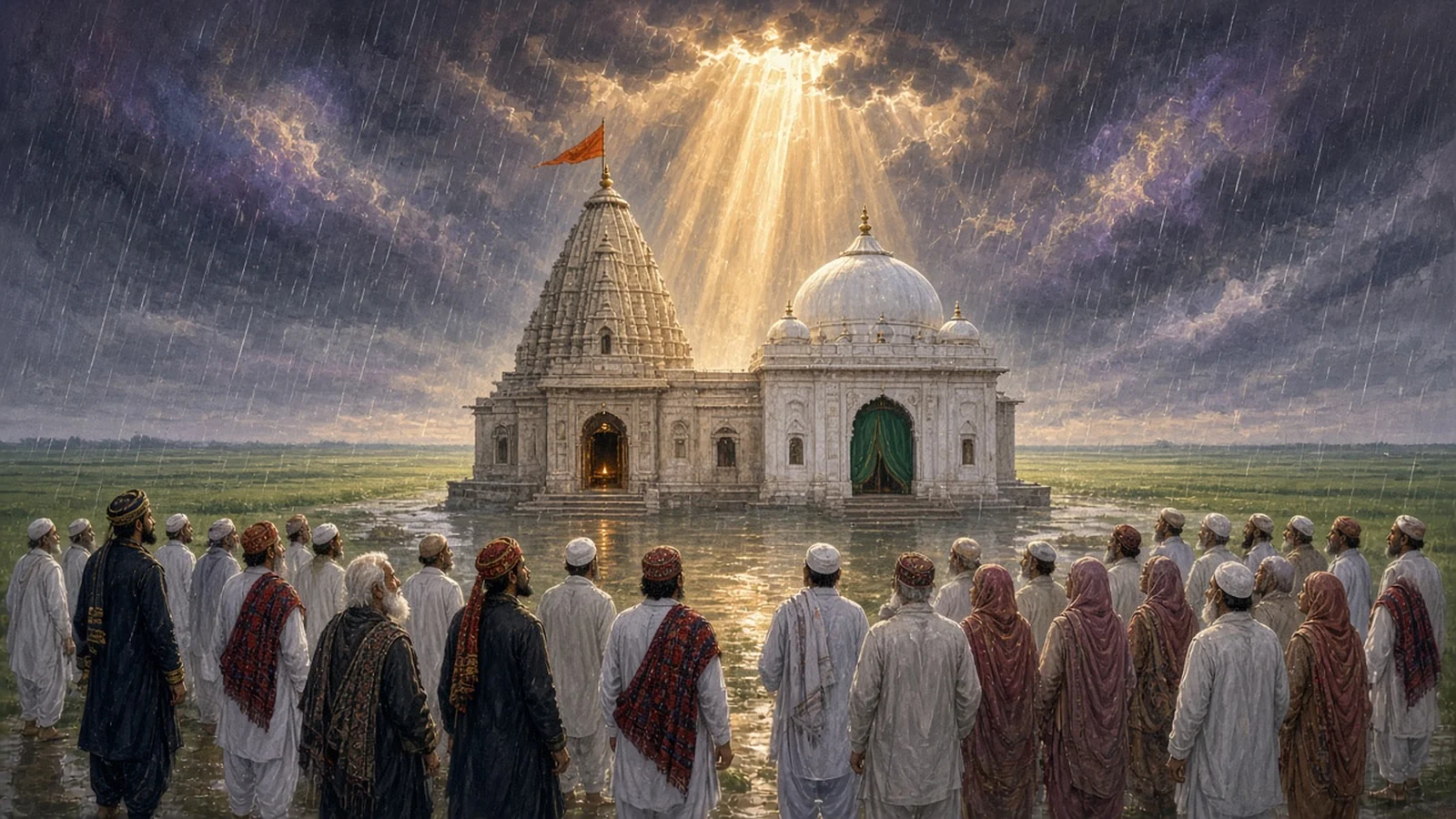
The fair is run by the Hindus of Tando Adam together with the Shaikhs, the Muslim keepers of the tomb. When the call to prayer sounds from the mosque inside the same walls, the Hindu pujari falls silent until it is done, and then the singing starts again.