Festival · The twilight of the thirteenth day, twice a month, when Shiva is said to dance and Nandi is bathed first
Pradosha
Pradosha is the twilight of the thirteenth day of every lunar fortnight, about twenty-four evenings a year, kept for Shiva with a fast through the day and worship in the hour and a half around sunset. In the Tamil temples it is Pradosham, when the great Nandis are bathed, the god is seen between the bull's horns and devotees walk the crescent-shaped Somasutra round. A Pradosha on a Monday is Soma Pradosha, on a Saturday Shani Pradosha, on a Tuesday Bhauma Pradosha.
When is Pradosha in 2026? Pradosha, is Sunday 22 November 2026. In 2026: Sunday 6 December 2026. The trayodashi, the thirteenth, of both the waxing and the waning half of every lunar month, on the day the thirteenth is current at twilight; named by the weekday it falls on.
The twilight of the thirteenth day of each lunar fortnight, twice a month, kept for Shiva with a fast through the day and worship in the hour and a half around sunset. In Tamil Nadu it is Pradosham, a temple evening with Nandi bathed first.
When is the next Pradosha?
Sunday 22 November 2026, then Sunday 6 December and Monday 21 December 2026, a Soma Pradosha. In 2027 there are twenty-four, from Tuesday 5 January to Saturday 25 December.
What are Soma, Shani and Bhauma Pradosha?
A Pradosha named for the weekday it falls on. Soma Pradosha is a Monday, the most kept in the north, Kerala and Nepal; Shani Pradosha is a Saturday, kept against Saturn's troubles and the biggest in Tamil Nadu; Bhauma Pradosha is a Tuesday, kept against debts.
Why is Shiva seen between Nandi's horns?
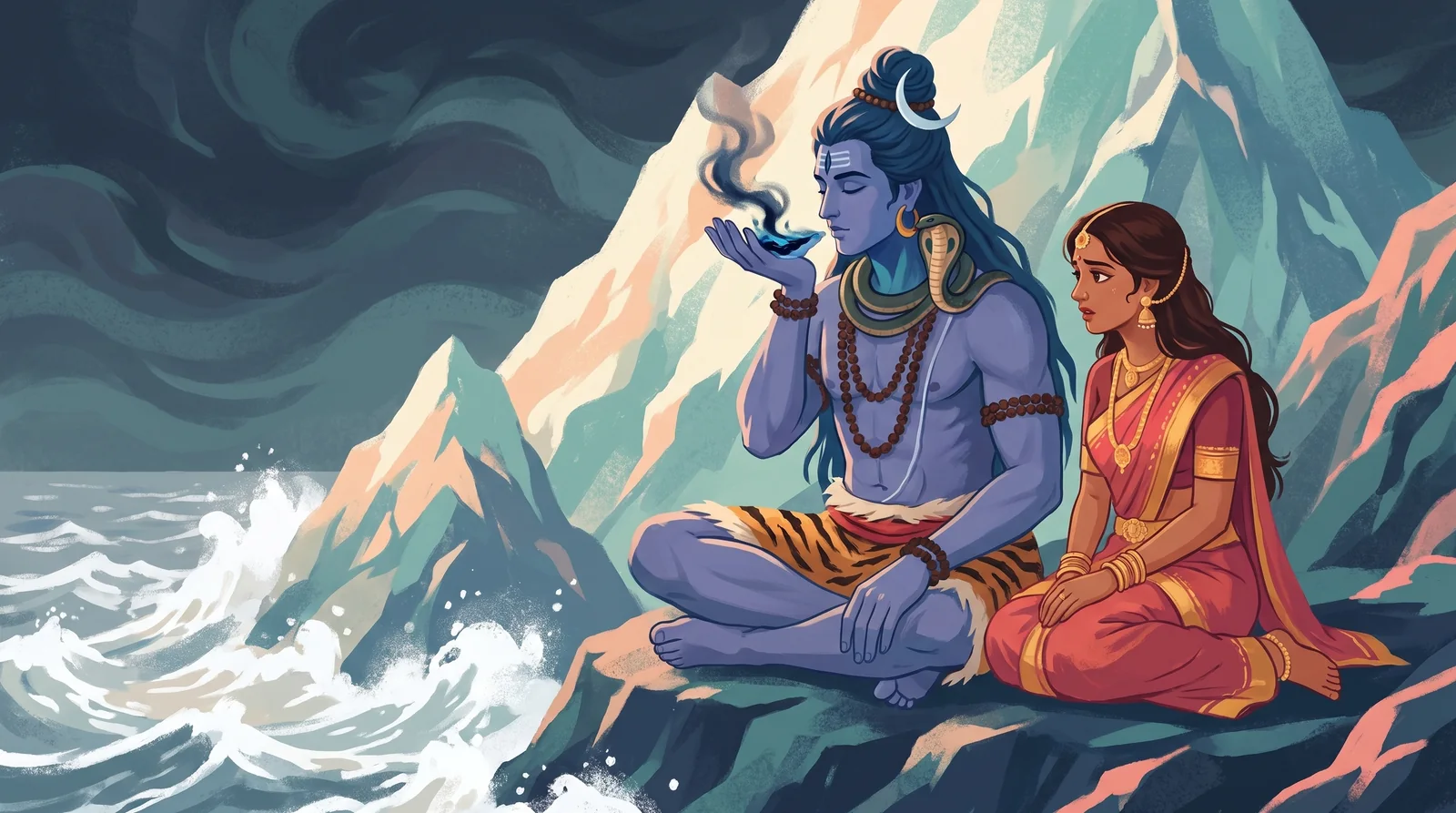
Because the Tamil temples say that on this evening, when the gods came late to thank him for drinking the poison, he forgave them and danced between Nandi's horns. The Skanda Purana puts the twilight dance on Kailasa, before Gauri.
What is the Somasutra round?
The Pradosham circumambulation, which goes from Nandi the other way to Chandikeshvara, back past Nandi to the spout of the god's bath water without crossing it, three times, tracing a crescent moon.
Next, in 2026Sunday 22 November 2026
Prime godShiva
with 2 more
WhereAll of Shiva's India; Tamil Nadu above all, with the Pradosham of its temples; Karnataka, Andhra Pradesh and Kerala; the north at home; Nepal at Pashupatinath
How longOne day, the fast from morning and the worship in the twilight; the fast is broken after the evening puja
The trayodashi, the thirteenth, of both the waxing and the waning half of every lunar month, on the day the thirteenth is current at twilight; named by the weekday it falls on
Why it is kept
Twice a month, at dusk on the thirteenth day of the moon, the day hands over to the night, and the Shaiva tradition holds that this hour, Pradosha, the first part of the night, belongs to Shiva more than any other. Those who keep it fast through the day and worship him as the light goes. In Tamil Nadu the evening is Pradosham, when the great stone bulls are bathed in milk and the god is seen between their horns. It comes about twenty-four times a year.
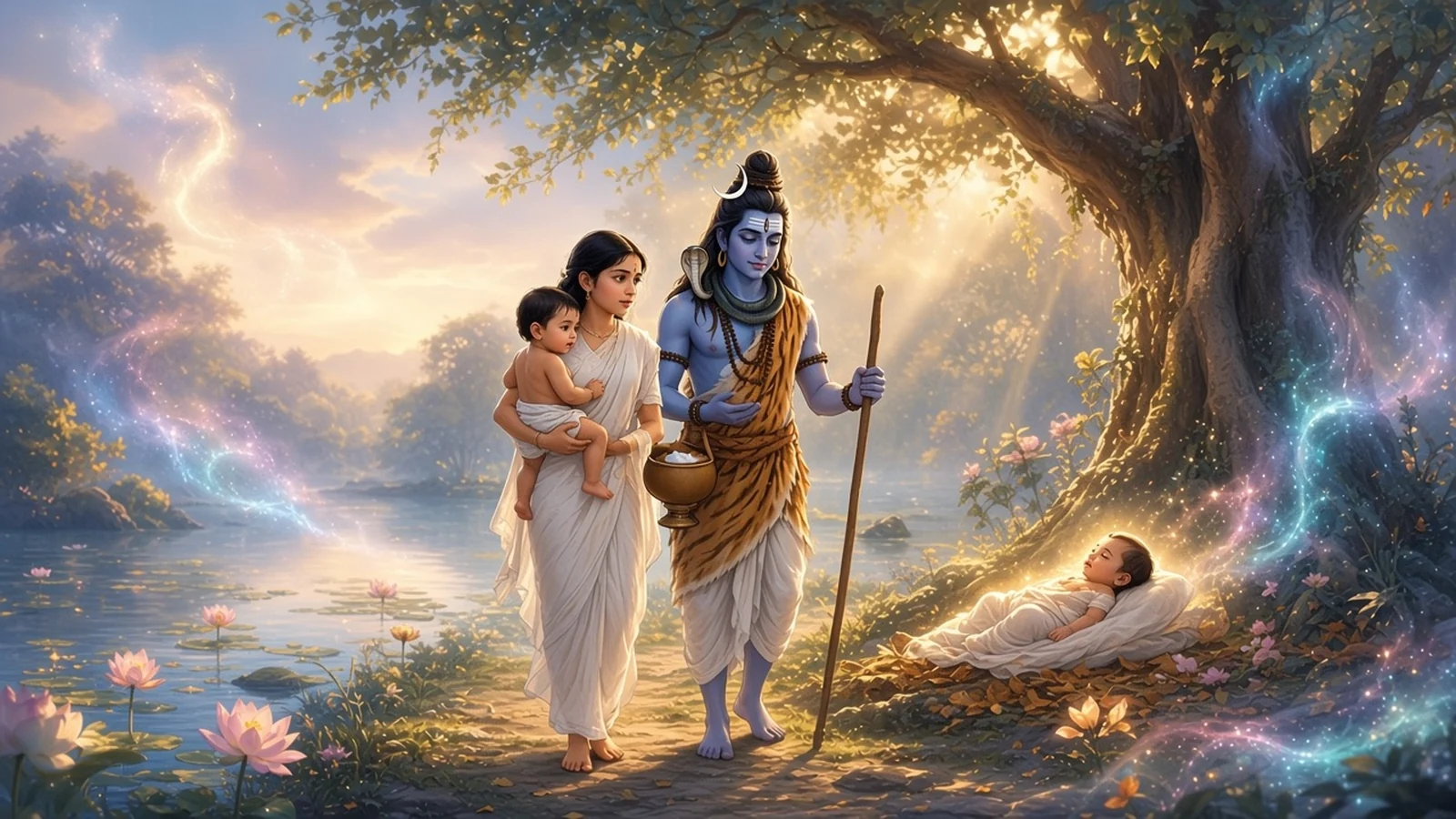
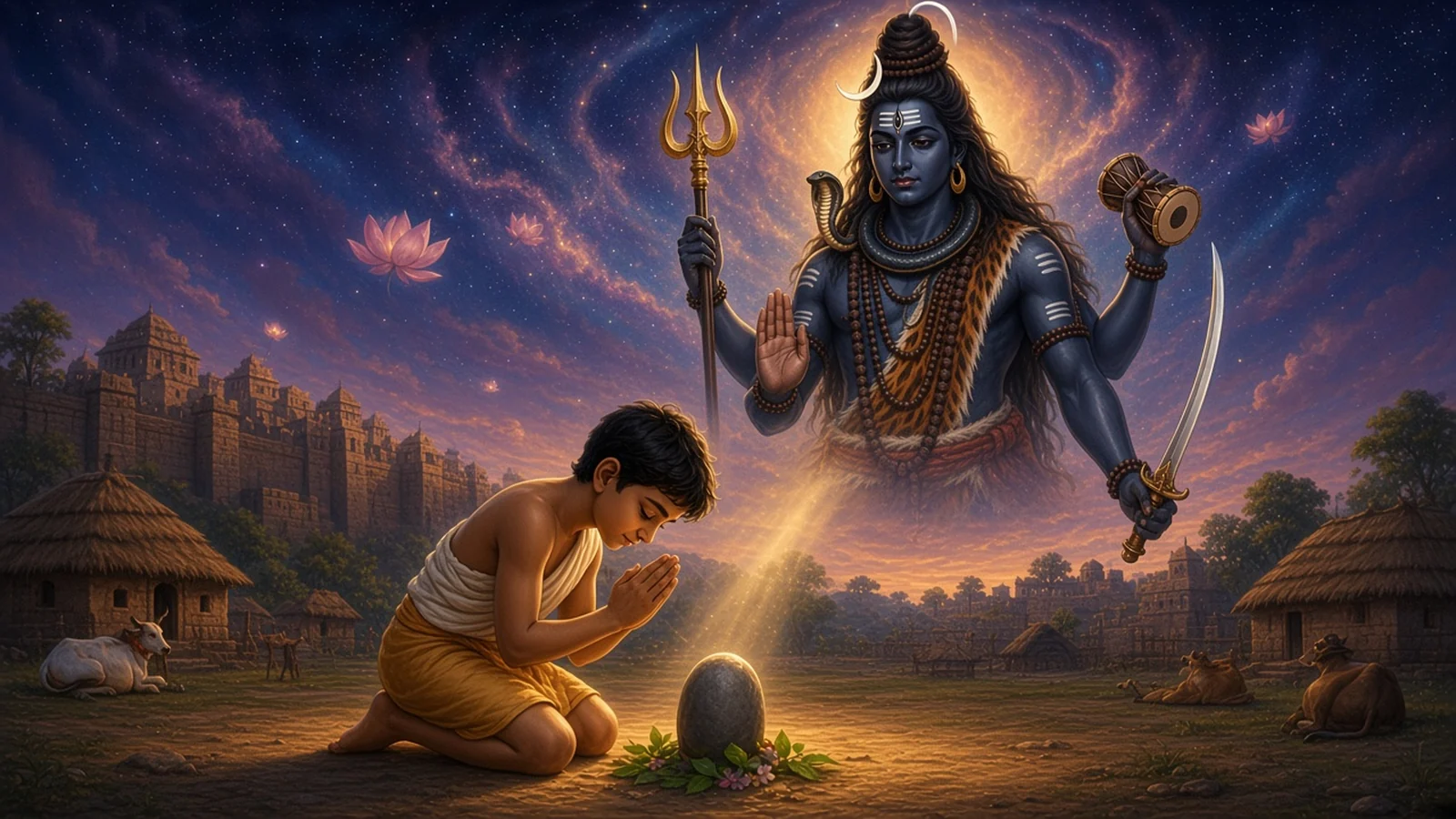
The Skanda Purana gives the reason as a picture. At the dusk of the thirteenth, it says, Shiva seats Gauri on a jewelled throne on Kailasa and dances before her, with Saraswati on the vina, Indra on the flute, Brahma on the cymbals and Vishnu on the drum, so that whoever worships Shiva at that hour worships every god at once. It proves the vow with two stories. One is the cowherd boy of Ujjain told in The Cowherd Boy's Pebble. The other is a prince of Vidarbha, orphaned at birth and raised on alms by a Brahmin widow, who keeps the twilight on a sage's word and within a year has won a Gandharva bride, an army and his throne, as The Prince Who Kept the Twilight tells.
A Brahmin widow and her son find the baby prince by a lake, and a wandering mendicant speaks to her
The Tamil temples tell it from the churning of the ocean. After Shiva had drunk the poison, the story of The Blue Throat, the gods got their nectar on the twelfth day and went off to celebrate without thanking him. At dusk on the thirteenth they remembered and came back to ask his forgiveness, and he forgave them and danced between Nandi's horns. That is why, as the sources say, the bull is bathed first and the god is seen through his horns. No source we read puts the drinking of the poison itself on the thirteenth.
On Kailasa at dusk Shiva dances between Nandi's horns as the gods come late to thank him
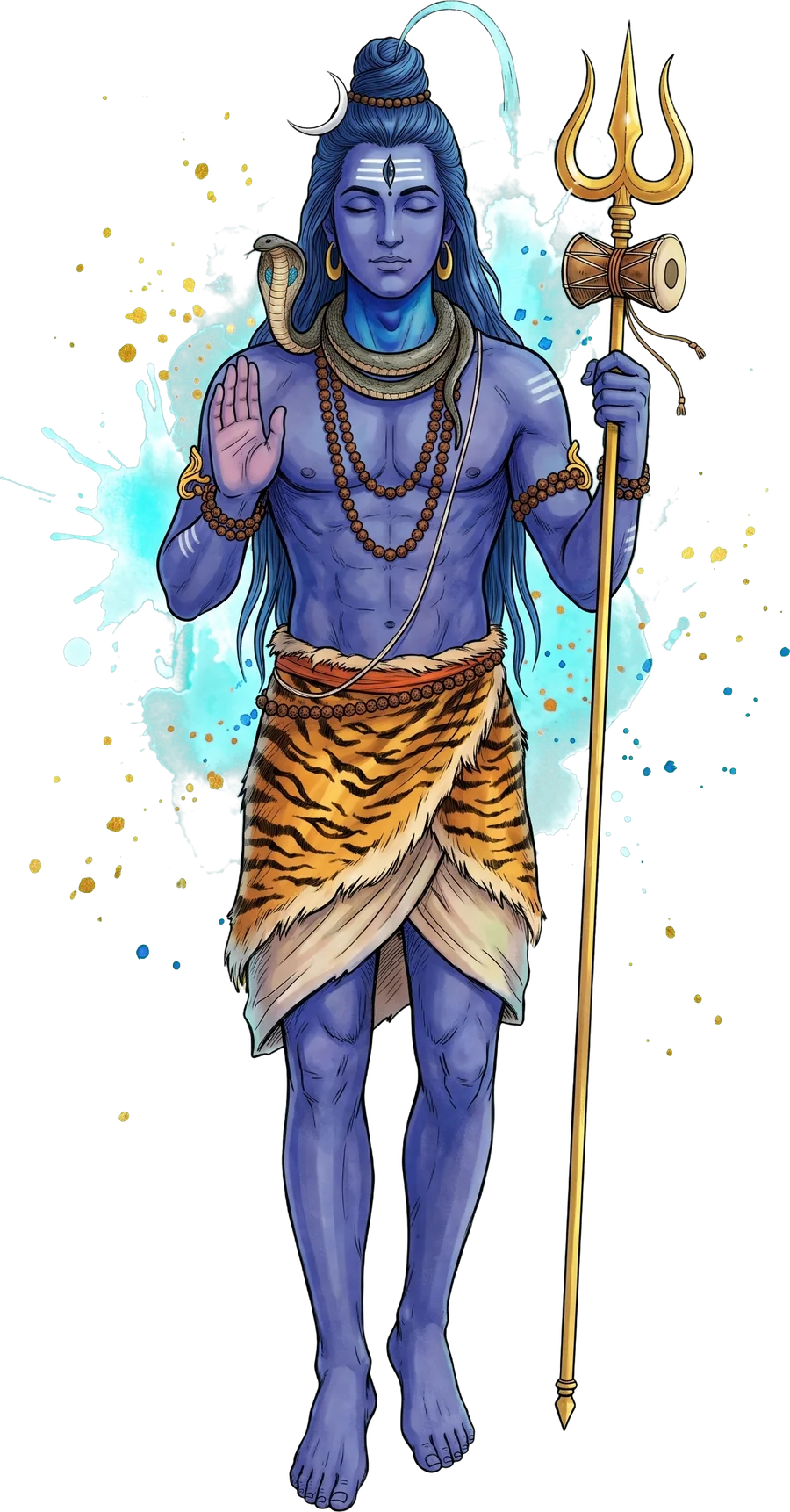
The god of the twilight. The Skanda Purana says that at the dusk of the thirteenth he seats Gauri on a jewelled throne on Kailasa and dances while every god plays for him, so that whoever worships him then worships them all; the Tamil temples say that on this evening, when the gods came late to thank him for drinking the poison, he forgave them and danced between Nandi's horns.
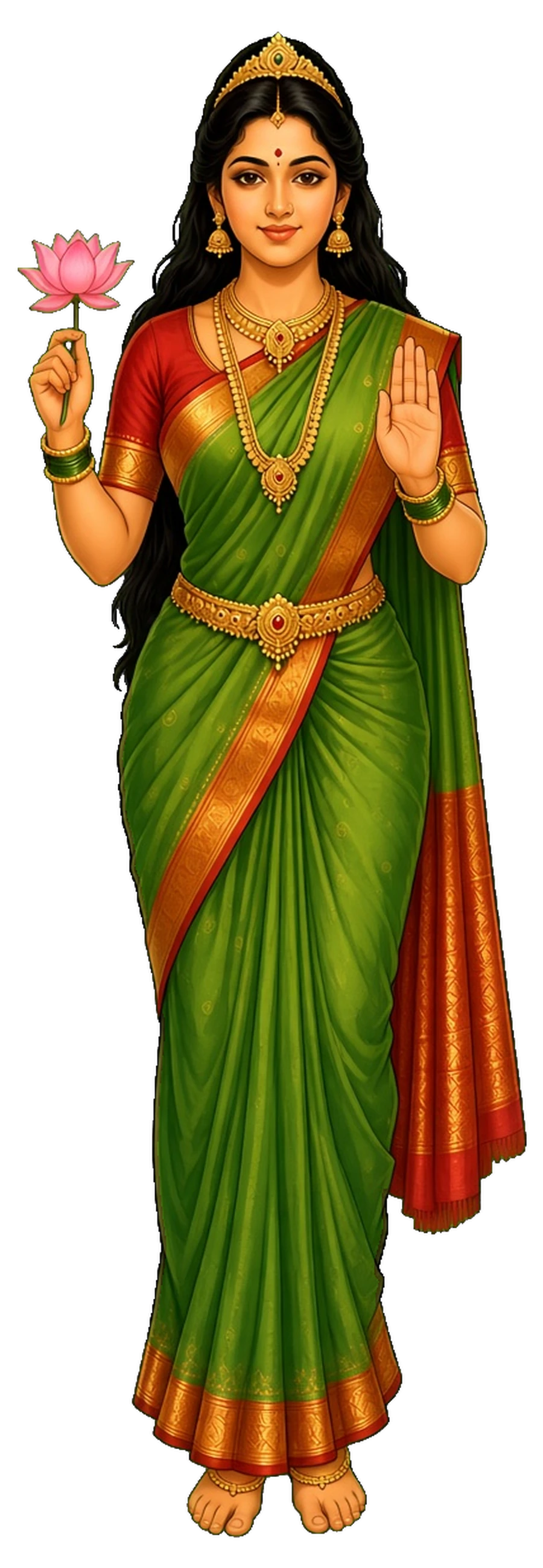
Gauri, before whom Shiva dances at twilight in the Skanda Purana, worshipped beside him in every Pradosha puja. In the Tamil temples she rides out with him on Nandi as the Pradosha Nayakar, and at Surutapalli in Andhra Pradesh Shiva lies with his head in her lap after the poison.
N
Nandi
The bull at the door, whose horns frame the god. In the Tamil temples he is bathed before Shiva at every Pradosham, at Tiruvannamalai and Thanjavur with a dozen offerings and litres of milk; devotees look at the linga between his horns and whisper their wishes into his ear.
At twilight
1
The fast
Trayodashi, from morning
the vowupavasa
The keeper makes the vow in the morning and goes without a full meal through the day; the Skanda Purana asks for a fast on the thirteenth of both fortnights. Many take only fruit and milk, as the Kerala guides advise, some only water. The weekday gives the evening its name and its hope: a Soma Pradosha on a Monday for peace of mind and a good marriage, a Shani Pradosha on a Saturday against Saturn's troubles, a Bhauma Pradosha on a Tuesday against debts.
Morning of the fast in a Kerala home: a brass lamp lit, and only fruit and milk on the plate
Trayodashi, about an hour and a half either side of sunset
pradosha kalathe twilight pujathe katha
The keeper bathes again a little before sunset, as the Purana says, puts on clean clothes, ash and rudraksha, and worships Shiva with Parvati in the twilight window the almanac gives, from 6:29 to 8:48 pm in Delhi on the Soma Pradosha of 13 September 2027. At home in the north the order is Ganesha, Nandi, then the linga bathed with water, milk, curd, honey, ghee and Ganga water, bilva leaves, Om Namah Shivaya a hundred and eight times, and the weekday's katha read aloud.
A Pradosh at home in the north: the linga bathed in milk and heaped with bilva leaves at twilight
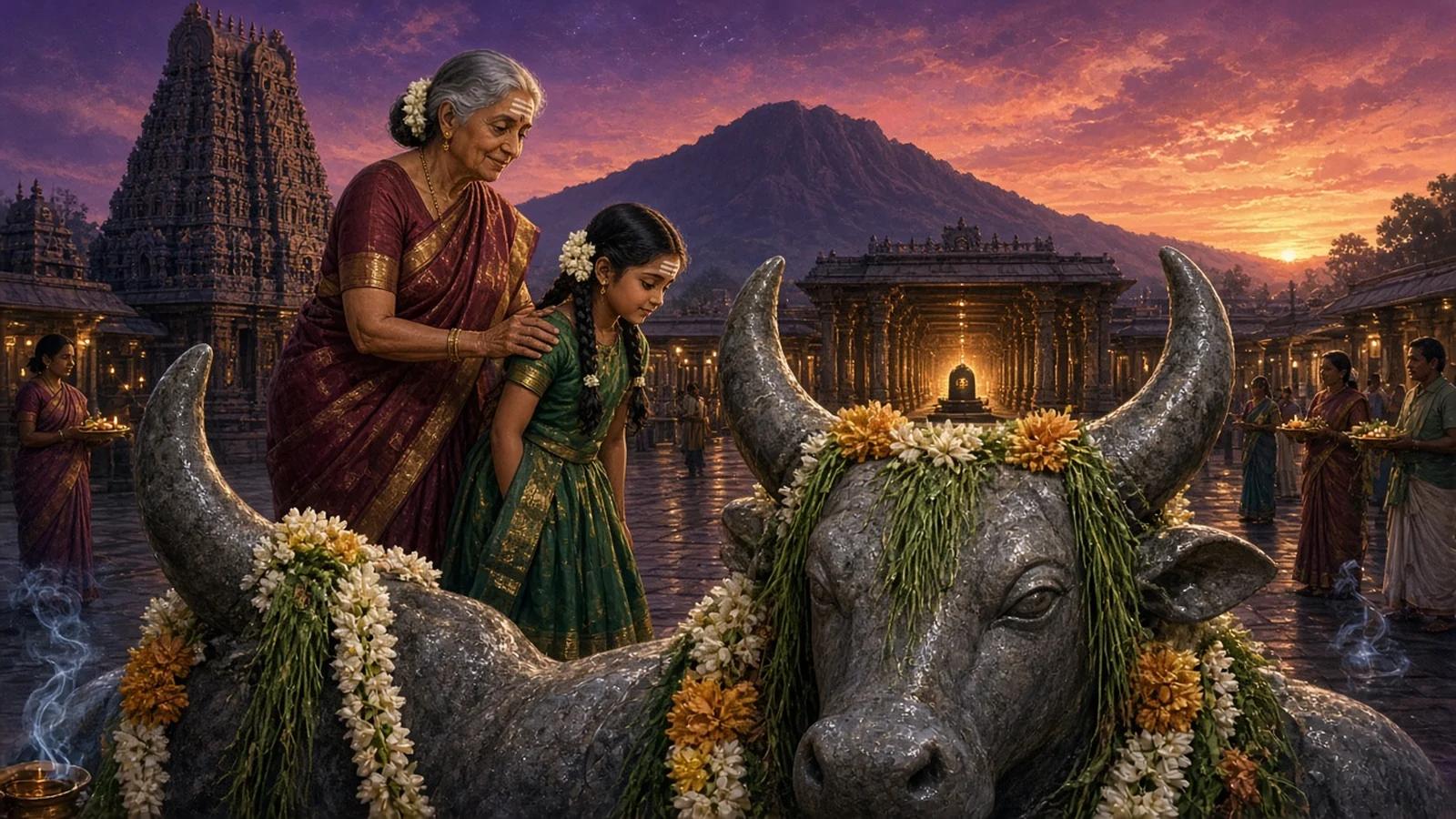
In the Tamil temples the bull is bathed before the god. At Tiruvannamalai the great Nandi in the outer court is bathed with rice flour, turmeric, panchamritam, curd, honey, rosewater, tender coconut, sandal, kilos of ash and litres of milk and garlanded with arugampul and jasmine while the crowd cries "Annamalaiyarukku arohara"; at the Big Temple of Thanjavur the Maha Nandi gets twelve offerings. Then devotees look between his horns to the linga in the sanctum.
The great Nandi at Tiruvannamalai bathed with milk and turmeric at dusk, Arunachala behind
At Pradosham the round of the inner court is not a circle. From Nandi the keeper walks the other way to Chandikeshvara, back past Nandi to the spout that carries the god's bath water, never stepping over it, and back again, three times, so that the path traces a crescent moon. Then the Pradosha Nayakar, Shiva with Parvati on Nandi, comes out of the sanctum, at Tiruvannamalai on a golden bull round the third court.
The Pradosha Nayakar, Shiva and Parvati on a golden bull, carried round the temple court
After the lamp is waved and the prasad is shared, the keeper eats; some keep the fast until the next morning. In the Tamil temples a dish of rice, sugar and ghee offered to Nandi is later fed to the temple cow.
After the lamp is waved: prasad shared, and the rice offered to Nandi fed to the temple cow
Here Pradosha is a temple evening, twice a month at every Shiva temple. At the Annamalaiyar temple of Tiruvannamalai the Periya Nandi in the fifth court, by the thousand-pillared hall and the Vallala Maharaja tower, is bathed with a dozen offerings while thousands cry to Annamalaiyar with conches, and the Nandi at the sanctum door and the one facing the Kili tower are bathed with it; the Pradosha Nayakar goes round the third court on a golden bull. At the Big Temple of Thanjavur the Nayak-period Maha Nandi in its own pavilion is bathed with twelve substances. The Saturday one, Sani Pradosham, is called the Maha Pradosham at Tiruvannamalai, and the bathing of the great Nandi is believed to bring marriages and children.
KarnatakaShiva and Nandi together
In Bengaluru families near the Bull Temple of Basavanagudi begin the evening there before the puja at home; Tamil, Kannada and Telugu households all keep it, and the Saturday and Monday Pradoshas are the ones most kept. At home the order is Ganesha, then Nandi, then Shiva.
Andhra PradeshSurutapalli
At Surutapalli in Chittoor, Shiva lies as Palli Kondeswarar with his head in Parvati's lap, resting after the poison. The temple tells that the gods came here in the Pradosha time to ask his forgiveness, and that Nandi is worshipped first because he guarded Shiva's rest; on a Shani Pradosha the crowds come against Saturn's troubles.
KeralaPradosha vratam
The Kerala guides give a fruit fast, a bath at dusk, koovalam leaves, ash, rudraksha and the brass kuthuvilakku lamp, the Rudra Suktam or the Rudrashtakam, and a round of the temple that goes only half way and turns back at the water channel. The Monday Pradosham is held the best of all.
The northPradosh vrat at home
In Delhi, Uttar Pradesh, Madhya Pradesh and Rajasthan the Pradosh is mostly a household vow, with the fast through the day, the puja in the twilight window, and the weekday's katha read from a thin vow book; the Monday story is the widow and the prince of Vidarbha.
NepalSom Pradosh at Pashupatinath
A Monday Pradosha, Som Pradosh, brings crowds to Pashupatinath in Kathmandu. On 10 August 2026 it fell on the last Monday of Shrawan, and all four doors of the temple were opened from three in the morning while pilgrims who had walked from Sundarijal poured water from the north door.
Shaiva devotees of every traditionThe twilight vow
Anyone may keep it, and many keep every Pradosha for years; the Skanda Purana makes the twilight of the thirteenth the hour when worship of Shiva counts as worship of every god. Some keep only the Monday or the Saturday ones.
The Tamil Shaiva templesPradosham
In the Shiva temples of Tamil Nadu Pradosham is a fixed temple festival twice a month, with Nandi's abhishekam, darshan between the horns, the Somasutra round and the procession of the Pradosha Nayakar. The Tamil Shaiva guides give the reason the temple keeps, the gods' late thanks on the thirteenth and the dance.
How it is kept
The keeper fasts from the morning, on fruit and milk or less, bathes again a little before sunset, and worships Shiva with Parvati in the twilight window the almanac gives, roughly an hour and a half either side of sunset. Because the day is the one on which the thirteenth is current at twilight, a Pradosha can fall a day apart in different cities: in May 2027 Delhi keeps it on Monday the 3rd and Chennai on Tuesday the 4th.
At home, chiefly in the north, the puja runs from Ganesha to Nandi to the linga, bathed with milk, curd, honey and Ganga water and covered in bilva leaves, with Om Namah Shivaya a hundred and eight times and the weekday's katha. In the Tamil temples the evening is public. Nandi is bathed with a dozen offerings while the crowd calls out the god's name, the linga is seen between the bull's horns, and the devotees walk the Somasutra round, which turns back at the god's bath water so that its path makes a crescent. Then the Pradosha Nayakar, Shiva with Parvati on the bull, comes out in procession. It is the same frame the Kirnotsav page describes at Gavi Gangadhareshwara near Bengaluru, where once a year the sun passes between Nandi's horns to reach the god.
The weekday matters. A Monday Pradosha, Soma Pradosha, is the one most kept in the north, Kerala and Nepal; a Saturday Pradosha, Shani Pradosha, fills the Tamil temples and is kept against Saturn's troubles; a Tuesday is Bhauma Pradosha. The Pradosha before Maha Shivaratri is called Maha Pradosha in some almanacs, though Tiruvannamalai gives that name to the Saturday one.
A Monday Pradosha at Pashupatinath in Kathmandu, pilgrims at the temple in the twilight
In the old texts
The Skanda Purana is the main source: its Brahma Khanda, in the Brahmottara section, gives three chapters to the hour, chapter 5 for the cowherd of Ujjain, chapters 6 and 7 for the prince of Vidarbha, the rule of the fast on the thirteenth of both fortnights, the bath before sunset and the worship that ends with a round of the bull. Its verses on the dance before Gauri are the hymn printed as the Pradosha stotram, which many collections label as from the Shiva Purana; we found the verses in the Skanda Purana and no Pradosha chapter in the Shiva Purana. The weekday kathas belong to the vow books, and the dance between Nandi's horns and the Somasutra round to the Tamil temple tradition.
Where this page comes from. Written by Devalok from the Skanda Purana (Brahma Khanda, Brahmottara Khanda 5 to 7, in G. V. Tagare's translation), the Pradosha stotram, the Pradosha vrat kathas and calendars of Drik Panchang for 2026 and 2027, Shaivam.org, Pradosham.com and the Kerala and Karnataka guides, and the reports of the Pradoshams of 2026 from Tiruvannamalai, Thanjavur, Surutapalli and Pashupatinath, as recorded in the Devalok Lore. Our own words throughout.