Festival · Three days when Odisha leaves the Earth alone, the girls of the house rest with her, and the swings go up in the trees
Raja Parba
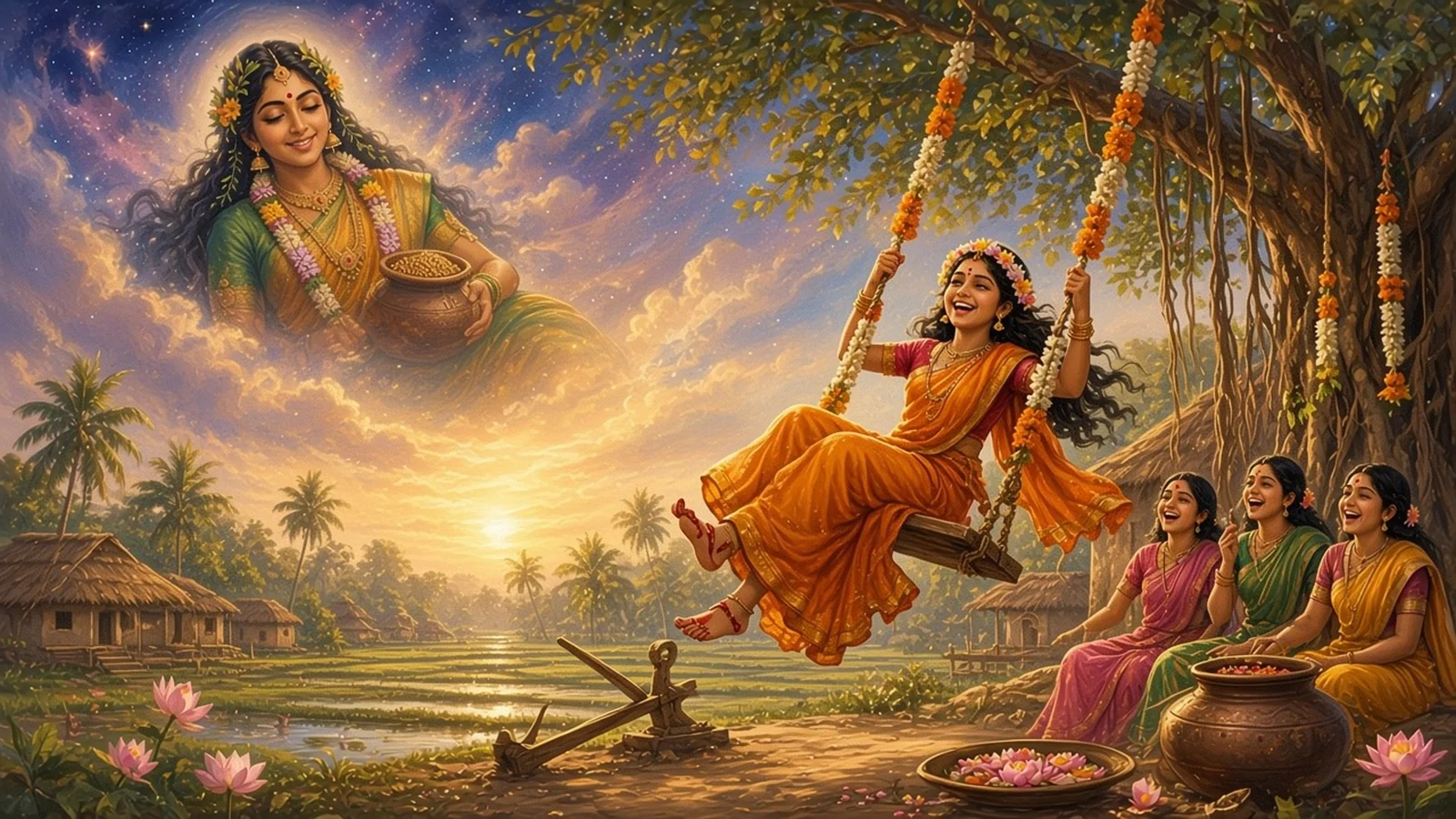
Raja Parba is Odisha's festival of the Earth's rest, kept in mid June as the Sun enters Mithuna and the monsoon is due. Bhudevi, the Earth, is believed to have her monthly days, so for three days nobody ploughs or digs, and the girls of the house rest as she does, dressed in new clothes, playing and singing on swings. On the fourth morning the Earth is bathed in the form of the kitchen's grinding stone, and the sowing season can begin.
When is Raja Parba in 2027? Raja Sankranti, the second day, is Tuesday 15 June 2027; it runs 14 to 17 June 2027. In 2028: Thursday 15 June 2028. At Mithuna Sankranti, the first of Asadha in the Odia solar calendar, about 14 to 17 June.
Also calledRajaRajoRajo ParbaRaja SankrantiMithuna SankrantiRaja Mahotsavathe Earth's three days
In short
What is Raja Parba?
Odisha's festival of the Earth's rest in mid June. The Earth, Bhudevi, is believed to have her monthly days, so for three days nobody ploughs or digs, girls and women rest and play on swings, and on the fourth morning the Earth is bathed as the grinding stone.
When is Raja Parba in 2027?
Pahili Raja is Monday 14 June, Raja Sankranti Tuesday 15 June, Bhudaha Wednesday 16 June and Basumati Snana Thursday 17 June 2027, with Sajabaja on Sunday 13 June. Calendars give the same days, 14 to 17 June, in 2028, with Raja Sankranti on Thursday 15 June.
Why does nobody plough during Raja?
Because the Earth is believed to be in her course, and in Odisha a woman in her days is not asked to work. The rest falls just before the monsoon and the sowing, and the ground is taken up again after her bath.
What is eaten at Raja?
Poda pitha, a cake of rice and black gram batter with coconut and jaggery, baked slowly in a leaf-lined earthen pot with coals beneath and on the lid, along with other pithas and raja pana, a sweet betel leaf.
Next, in 2027Tuesday 15 June 2027
14 to 17 June 2027
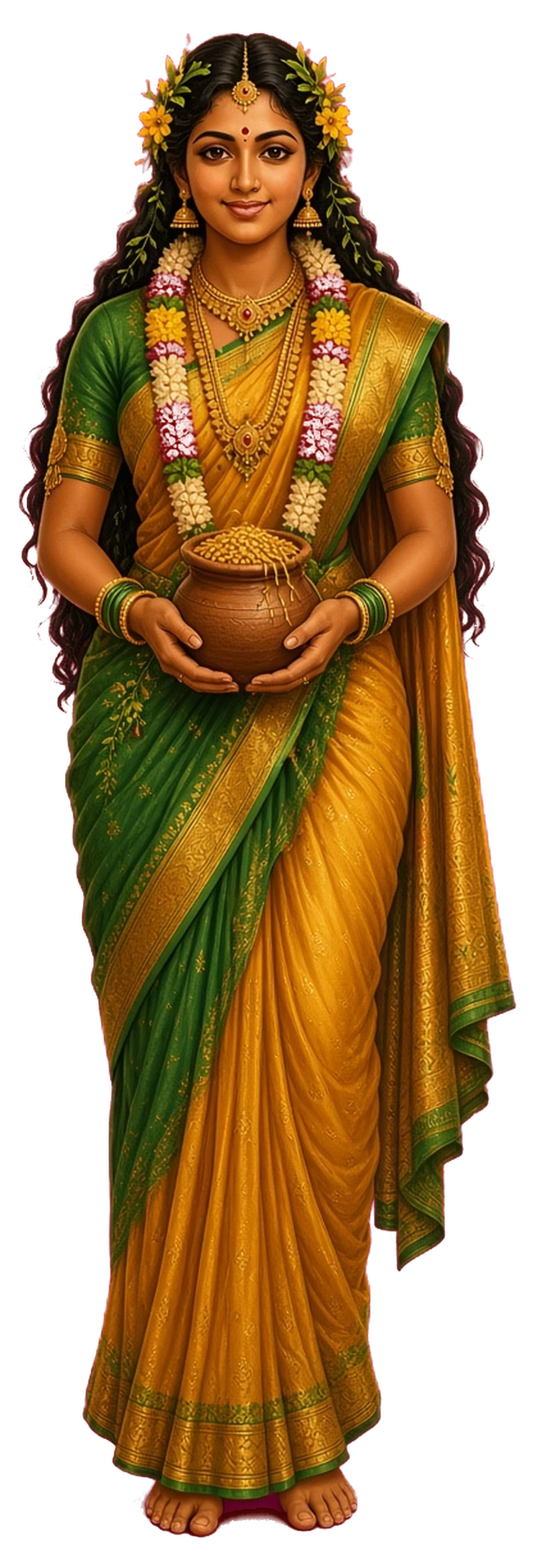
Prime godBhudevi, the Earth, called Basumati
with 3 more
WhereOdisha, above all the coastal districts of Cuttack, Puri, Khordha, Kendrapara and Jajpur; Bhubaneswar and the other cities; Odia families across India and abroad
How longThree days of rest, Pahili Raja, Raja Sankranti and Bhudaha, with Basumati Snana on the fourth morning and Sajabaja, the day of getting ready, before them
At Mithuna Sankranti, the first of Asadha in the Odia solar calendar, about 14 to 17 June
Why it is kept
Raja Parba is the one time in the Odia year when the Earth is left entirely alone. In mid June, as the Sun enters Mithuna and the first rain is awaited, Bhudevi is believed to be in her monthly course. For three days the fields are not ploughed, the ground is not dug, and the girls of the house, who are of her kind, rest with her: no sweeping, no grinding, no combing, only new clothes, games and swings in the trees. On the fourth morning the Earth is bathed in the form of the kitchen's grinding stone, and the year's sowing can begin.
The name comes from rajas, the blood of the monthly course; a woman in her days is rajasvala. Raja is the Earth's course, and the rules for her are the rules an Odia household keeps for a woman in hers: she is not asked to work, she is not touched by tools, and she is bathed when the days are over. The festival falls at the end of the hot, fallow months, just before the monsoon, so the bath leaves the Earth ready to take seed when the rain comes. How the same rest is kept in Odisha, Assam and Tulu Nadu is told in Three Days of Rest for the Earth.
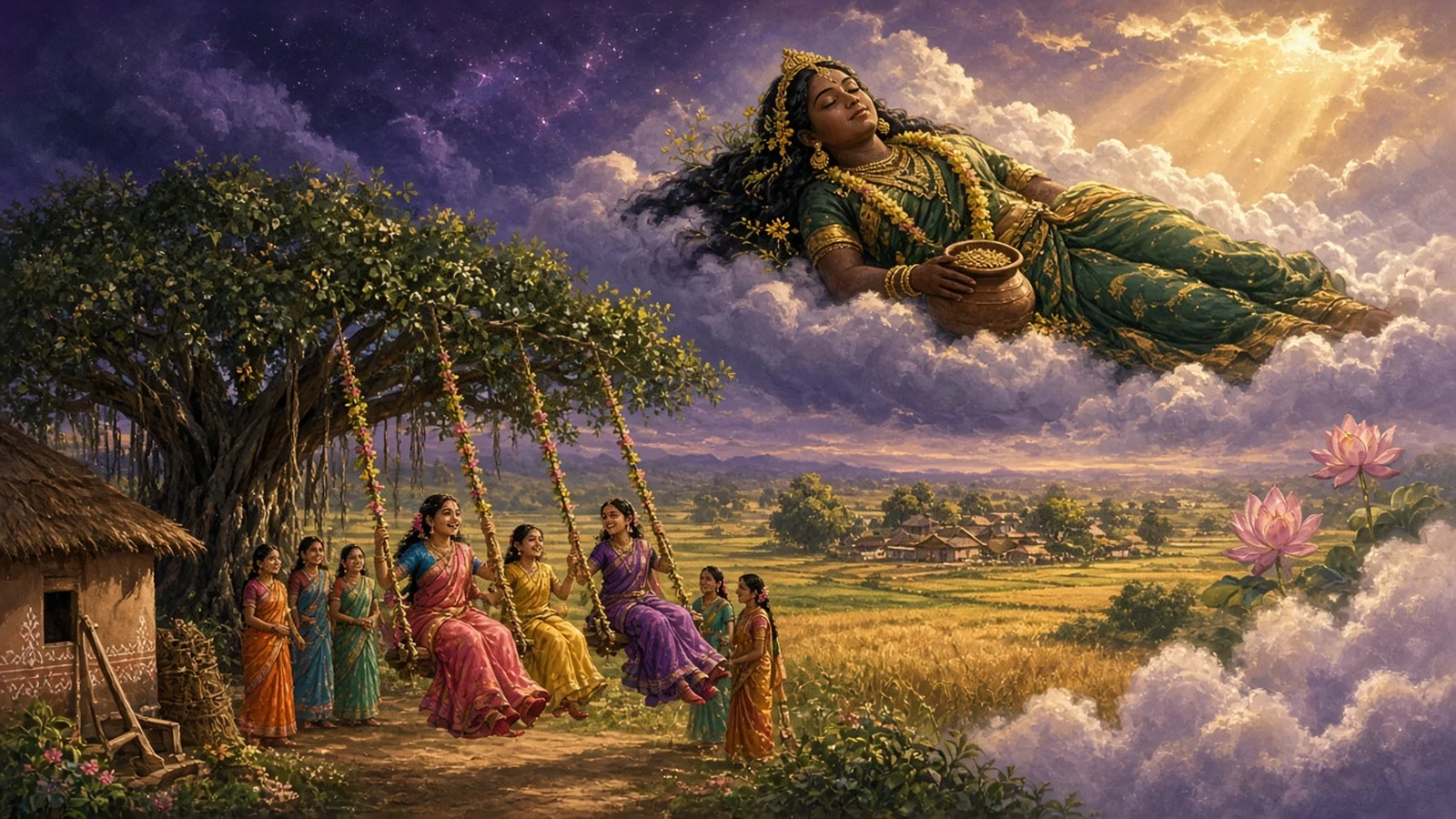
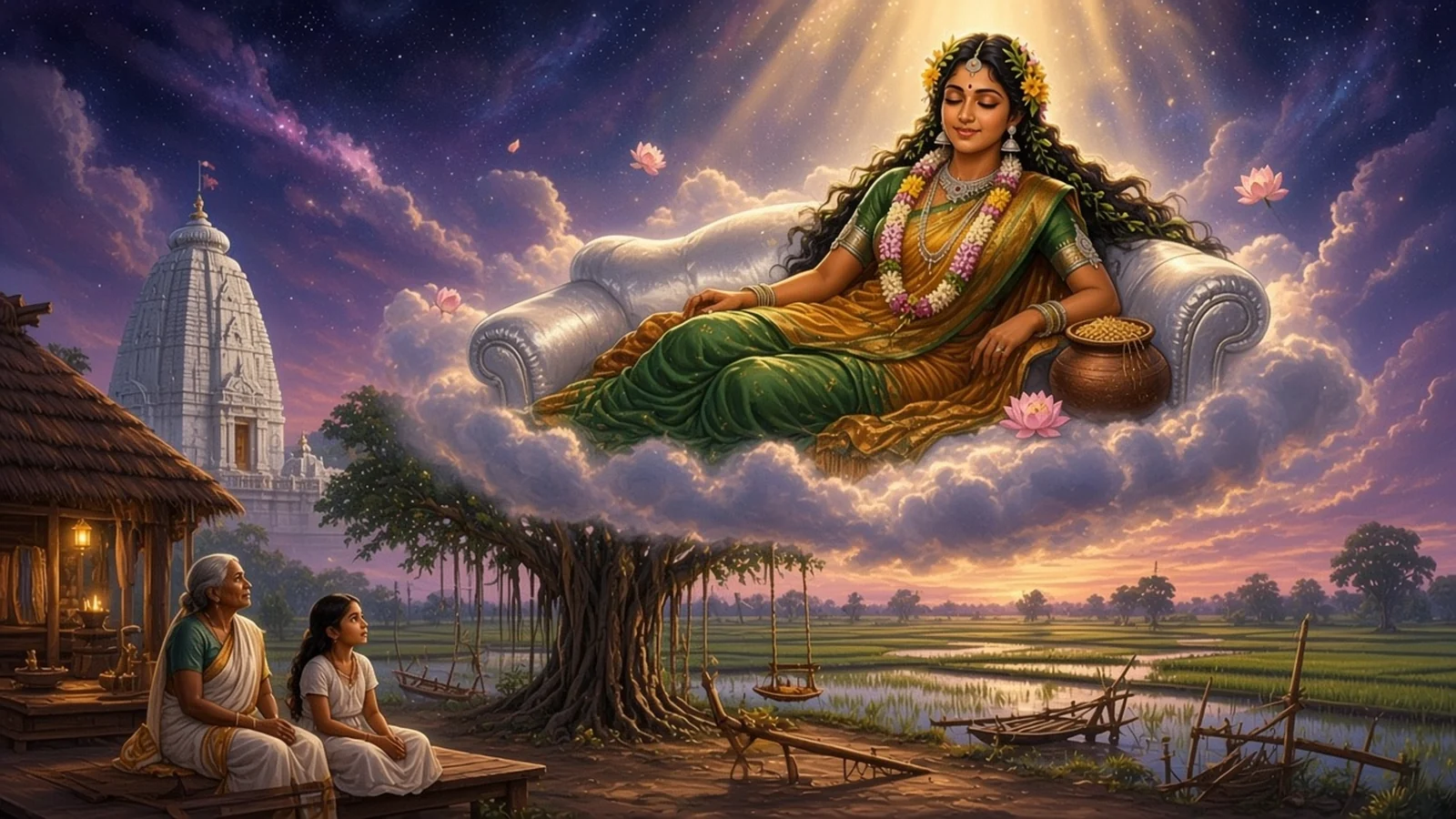
Bhudevi rests above the fallow fields while the ploughs lie idle before the rains
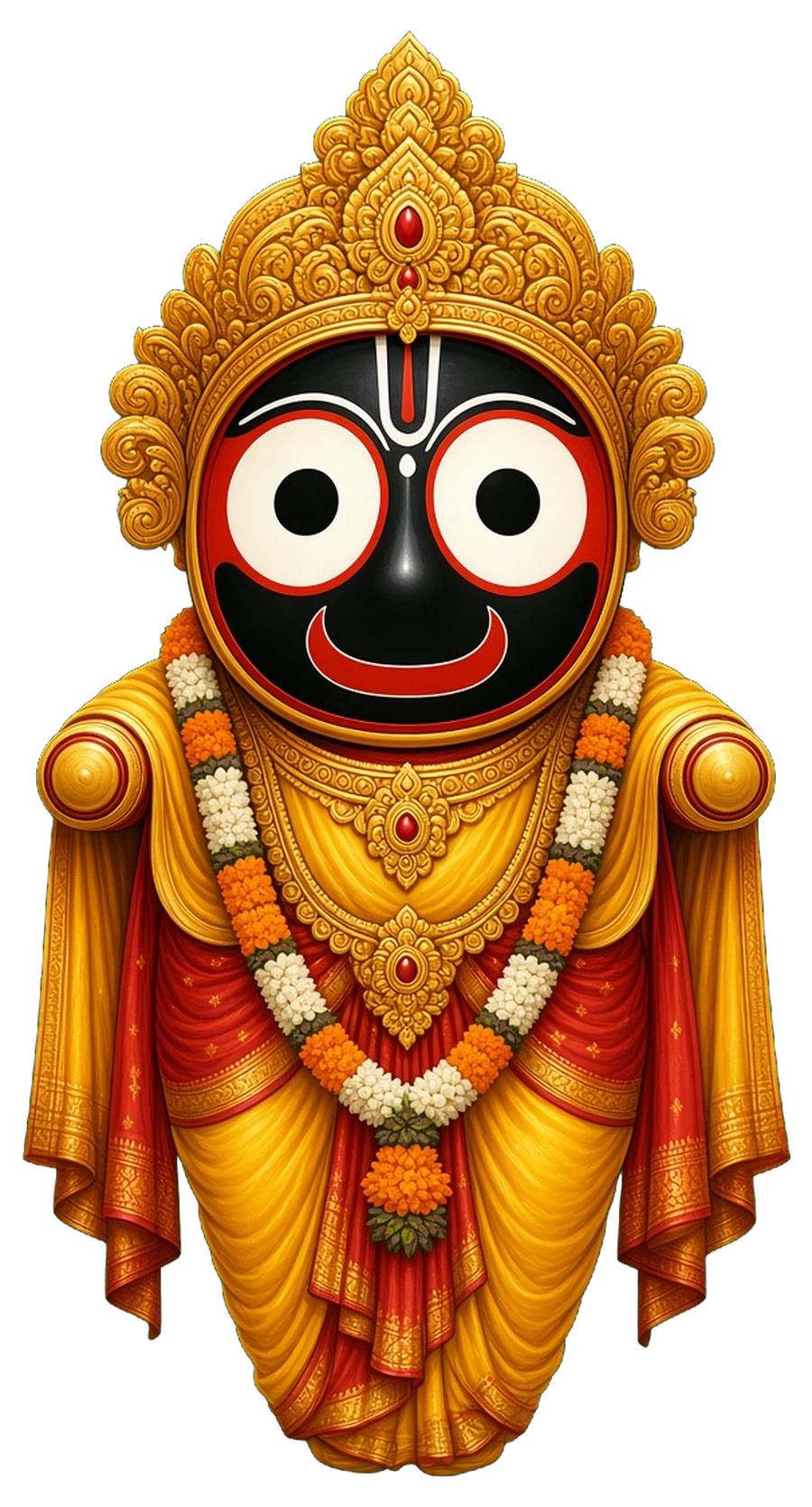
In Puri the Earth has a husband. A silver Bhudevi stands beside Jagannath on the jewelled platform with a gold Sridevi, and one legend says Bhudevi has her days while the Lord lies ill in his sick room after the great bath. That legend, and the grinding stone that the women also call Shasthi, the shaper of every creature, are told in The Silver Wife of Jagannath.
Jagannath on the jewelled platform with his silver Bhudevi and golden Sridevi
The Earth is the one who rests. She is believed to be in her monthly course for the three days, so she is not cut, dug or ploughed, and the women and girls of the house keep her rules with her. On the fourth day she is bathed, in the form of the grinding stone, as Basumati, and in many homes the bath is done in Mahalakshmi's name.
In the Puri temple a silver Bhudevi stands beside Jagannath with a gold Sridevi, his two wives. One Puri legend says Bhudevi has her three days while the Lord lies ill in his sick room after the great bath, and that this is Raja.
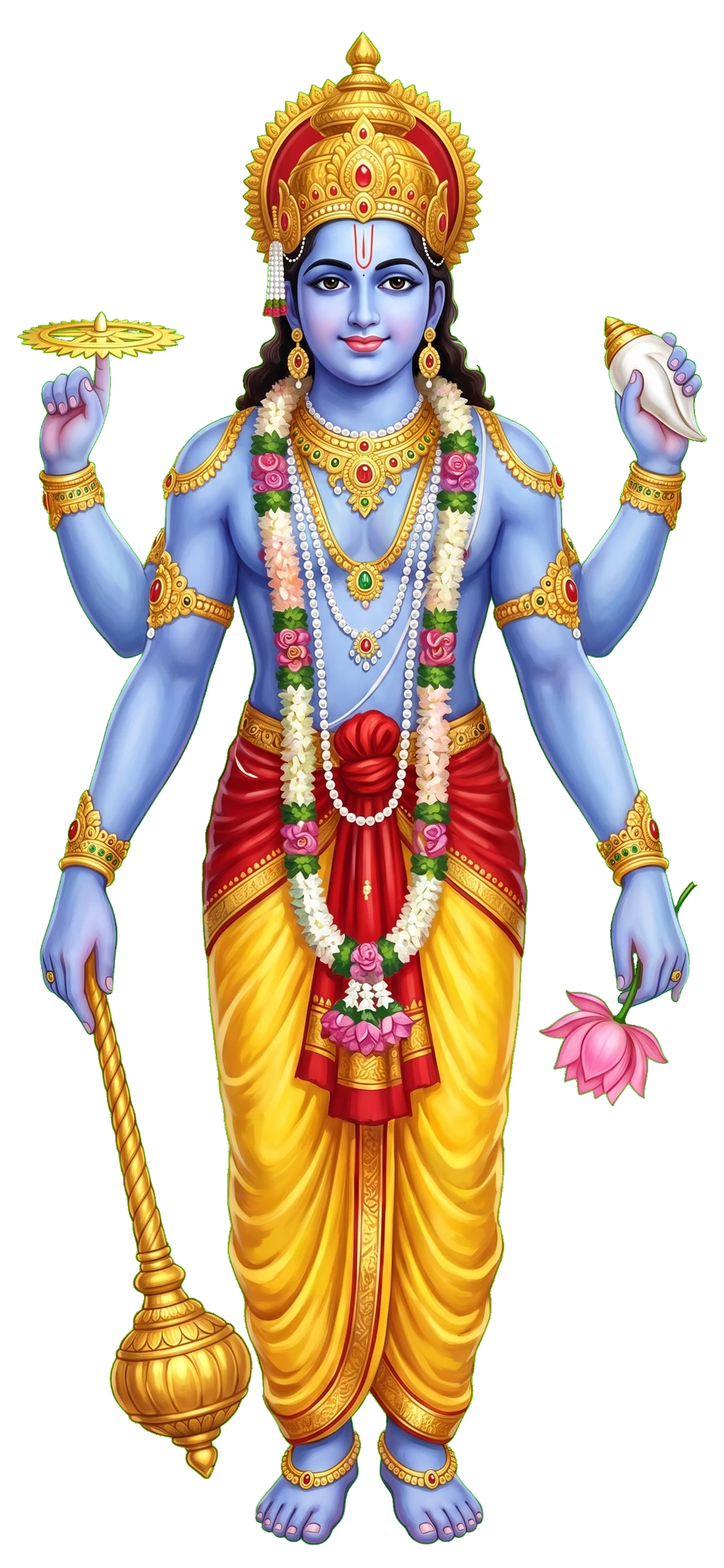
In the Puranas Bhumi is Vishnu's wife, the one he lifts from the ocean as the boar; Jagannath is his form in Odisha, which is why Bhudevi stands beside him there.
H
Harachandi, the goddess of the grove
Some twenty kilometres south of Puri the eight-armed goddess on the sand hill at Bali Harachandi keeps a four-day Raja of her own, and the men of the surrounding villages camp in her grove for the four days.
Four days the Earth rests
1
Sajabaja
The day before Pahili Raja, the last but one of Jyeshtha · Sunday 13 June 2027
the day of getting ready
The house is cleaned from end to end, the kitchen most of all, and whatever must be ground or cut for the next three days is ground and cut now. The batter for poda pitha is set to rest and the new clothes are laid out. In 2027 Sajabaja falls on Sunday 13 June.
Sajabaja: the kitchen scrubbed, the pitha batter ground and new clothes laid out
The last day of Jyeshtha, the eve of Mithuna Sankranti · Monday 14 June 2027
the first Raja
Before dawn the girls and young women rub themselves with turmeric and oil and bathe, the only bath they take until the fourth day. Then they dress in new clothes, with alata on their feet and sandal and kumkum on their foreheads, and go out to the swings. In 2027 Pahili Raja is Monday 14 June, a state holiday in Odisha.
Pahili Raja: girls in new saris paint alata on their feet and kumkum on their foreheads
The day the Sun enters Mithuna, the first of Asadha · Tuesday 15 June 2027
Mithuna SankrantiRajathe first of Asadha
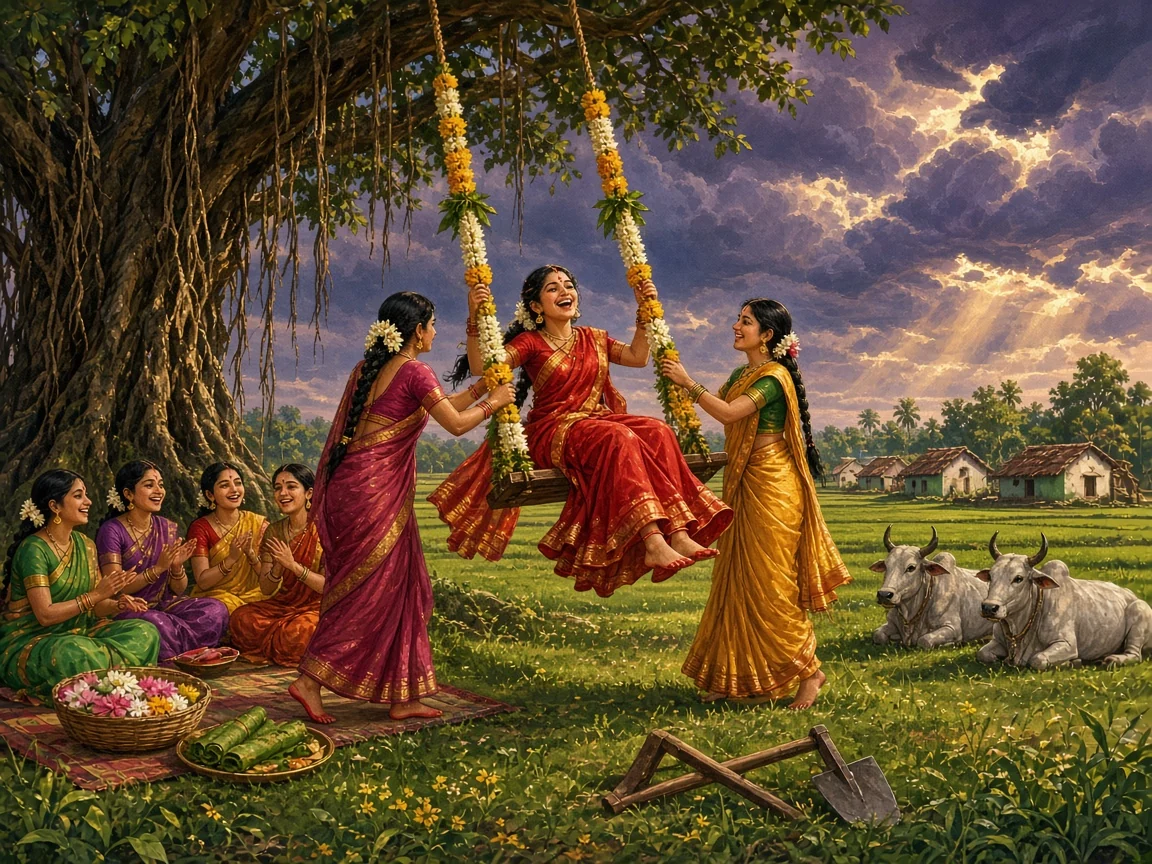
The heart of the festival and the start of the rainy month. Nobody ploughs, digs or sows. The girls do not bathe, comb their hair, sweep, sew or cut, take no rice at night, and many leave off their slippers for soles of banana sheath so as not to hurt the ground; the men take over the kitchen. Raja pana, the sweet betel leaf, and poda pitha go round, and the afternoon is for swings, Puchi, cards and kabaddi. Odisha's 2027 list gives it as a holiday on Tuesday 15 June; calendars give Thursday 15 June in 2028.
A father bakes poda pitha in a leaf-lined pot while the girls play cards on the veranda
The third day of rest, kept as the two before it. In the grove of Harachandi south of Puri the men are still in their tents. Some villages close the days of play with baateibaa, a seeing-off, before the turn back to work. In 2027 Bhudaha falls on Wednesday 16 June.
Bhudaha: the men's tents in the grove of Harachandi on the sand hills by the sea
The Earth's bath. The women wash their hair, draw a chita by the tulsi plant or in the yard, and set out a water pot under mango leaves. The grinding stone, the Earth in the house, is wrapped in turmeric cloth, given sindoor and kajal, bathed and offered flowers, durba grass and the season's fruit, and the lamp is waved in Mahalakshmi's name. After it, the stone may be used again and the fields may be sown. In 2027 it falls on Thursday 17 June.
Basumati Snana: the grinding stone wrapped in turmeric cloth and given flowers and fruit
Raja began with the farming families of the coastal districts and is still strongest there, in Cuttack, Puri, Khordha, Kendrapara and parts of Jajpur. Here it is a household festival, with the girls dressing together in a Raja Ghara, swings in the mango and banyan trees, a Dolirani chosen for each swing, and married daughters sent a basket of new clothes, alata and sindoor from their mothers' homes.
Bali Harachandi, south of PuriThe men's camp in the grove
On the sand hills by the sea, men from dozens of villages, one from each house, pitch long tents in the goddess Harachandi's grove for the four days and keep a mela, while the women stay in the villages and visit the temple by day. The goddess is dressed as Kumari, Mahalakshmi, Saraswati and Mahakali on the four days.
Bhubaneswar and the citiesSwings on the balcony
In the towns a swing is hung on a veranda or balcony instead of a tree. In Bhubaneswar the neighbourhoods of Mancheswar and Nayapalli put up swings, and Odisha Tourism holds a Raja Mahotsava at the Exhibition Ground with swings, folk shows, pitha stalls and alata painting. Volleyball and cricket stand in for some of the old games, and Odia films are released for Raja.
The Odia diasporaRaja away from home
Odia associations keep Raja wherever they live. Delhi NCR had its first large Raja Parba at the Noida Stadium in June 2025, with pitha stalls and Odissi and Sambalpuri dance; Odia families in Houston, in Melbourne and in Saudi Arabia have held days of swings, Puchi, kabaddi, cards and poda pitha.
Odia Hindu householdsThe Earth's rest at home
For most families Raja is a household rite of the Earth, kept by the women of the house through rules of rest and closed by the bath of the grinding stone. The festival is also called a celebration of womanhood, and girls are indulged for the three days.
Jagannath's devoteesThe silver wife at Puri
Among those who follow the Lord of Puri, the Earth who rests is Bhudevi, his silver wife on the jewelled platform, and her days are told against his illness in the weeks after the great bath.
Adivasi communities and Odia MuslimsThe neighbours who keep it too
Some writers think Raja began among Odisha's Adivasi communities, who keep it, one media scholar says, for fertility, the seasons and the common good rather than for purity and pollution. Around Puri, Muslim farmers stop their ploughs for the days and make pithas, and Muslim girls swing in new clothes, as neighbours of the Hindu households beside their fields; a pamphlet of Raja swing songs sold at the Harachandi fair was written by a Muslim poet.
The state and the publicThe holiday and the debate
Raja is an Odisha state holiday and a season for Odia film releases and tourism fairs. Writers now use it to open a conversation about menstruation, because the same days that honour the Earth's course still keep many women apart in their own.
How it is kept
Sajabaja, the day before, is for cleaning and for doing three days' grinding and cutting in one. Before dawn on Pahili Raja the girls bathe with turmeric and oil and dress together, alata on their feet and sandal and kumkum on their foreheads. Swings go up in the mango and banyan trees, from the simple plank swing to the turning ones, and one girl is made Dolirani, queen of the swing. The songs are three-line verses about friendship, the coming rain and marriage, many of them made up on the spot.
The Dolirani, queen of the swing, crowned with flowers in the banyan tree
For the three days the girls do not bathe or comb their hair, and take no rice at night. Men take over the kitchen. Boys play kabaddi and bagudi, girls play Puchi and cowrie games, and everyone eats poda pitha, a rice and black gram cake that comes out of its leaf-lined pot with a near-black crust, along with raja pana. A married daughter is sent a basket of new clothes, alata and sindoor by her mother's house, usually by the hand of a brother. One family's four days are told in The Swing in the Banyan, with the men's camp at the grove of Harachandi south of Puri.
A brother brings his married sister the Raja basket of new clothes, alata and sindoor
On the fourth morning, Basumati Snana, the woman of the house washes her hair, wraps the grinding stone in turmeric cloth, marks it with sindoor and kajal, bathes it, and offers it flowers and mangoes, jackfruit and bananas. In the cities the swing hangs on a balcony, and Bhubaneswar holds a Raja Mahotsava with pitha stalls and swings.
In the old texts
No scripture prescribes Raja. Its days, its rules and its songs come down by custom, and what is known about it in writing comes from Odia writers and from folklorists: Bikram Maharana's account in the Orissa Review, Deeti Ray's collection of the swing songs, Kartikeya Patel's study of the festival as a celebration of women's bodies, and Frédérique Apffel-Marglin's fieldwork in the villages around Puri in 1987 and 1990. The songs themselves have long been sold as cheap printed pamphlets; one of them, Raja Doli Gita, was written by the poet S. A. Hamid and printed in Cuttack by the press that also prints the Puri almanac.
The Earth who rests is old in the texts. The Vedic hymns call her mother, the Puranas make her Vishnu's wife, raised from the ocean by the boar in What the Earth Saw When the Boar Laughed, and tell of King Prithu milking her as a cow for the crops in The King Who Milked the Earth. None of these books describes a festival of her course. The encyclopedia says Raja grew popular in the medieval period, but no record dates its beginning.
Where this page comes from. Written by Devalok from the encyclopedia articles on Raja and on Bhumi, Bikram Maharana in the Orissa Review (2011), Deeti Ray in Live History India (2020), Shalini Mahapatra in Indic Today (2020), Frédérique Apffel-Marglin's essays in Manushi (1994 and 1995), the KNews Odisha accounts of Basumati Snana, Aniruddha Jena and Sriyanka Sahoo in Scroll (2025), Shruti Chakraborty on Sahapedia, Puriwaves on the Bali Harachandi temple, the Times of India and Jansamwad TV on the 2025 celebrations, Kalinga TV and Argus News on Raja abroad, Indulge Express on poda pitha, Drik Panchang and the Odiya Calendar for the Sun's entry into Mithuna, the CSR Journal on the bath of 2025, and NDTV Profit on Odisha's holiday list for 2027, as recorded in the Devalok Lore. Our own words throughout.