Festival · Two days when Gujarat lives on its roofs and fights for the sky with paper and string
Uttarayan
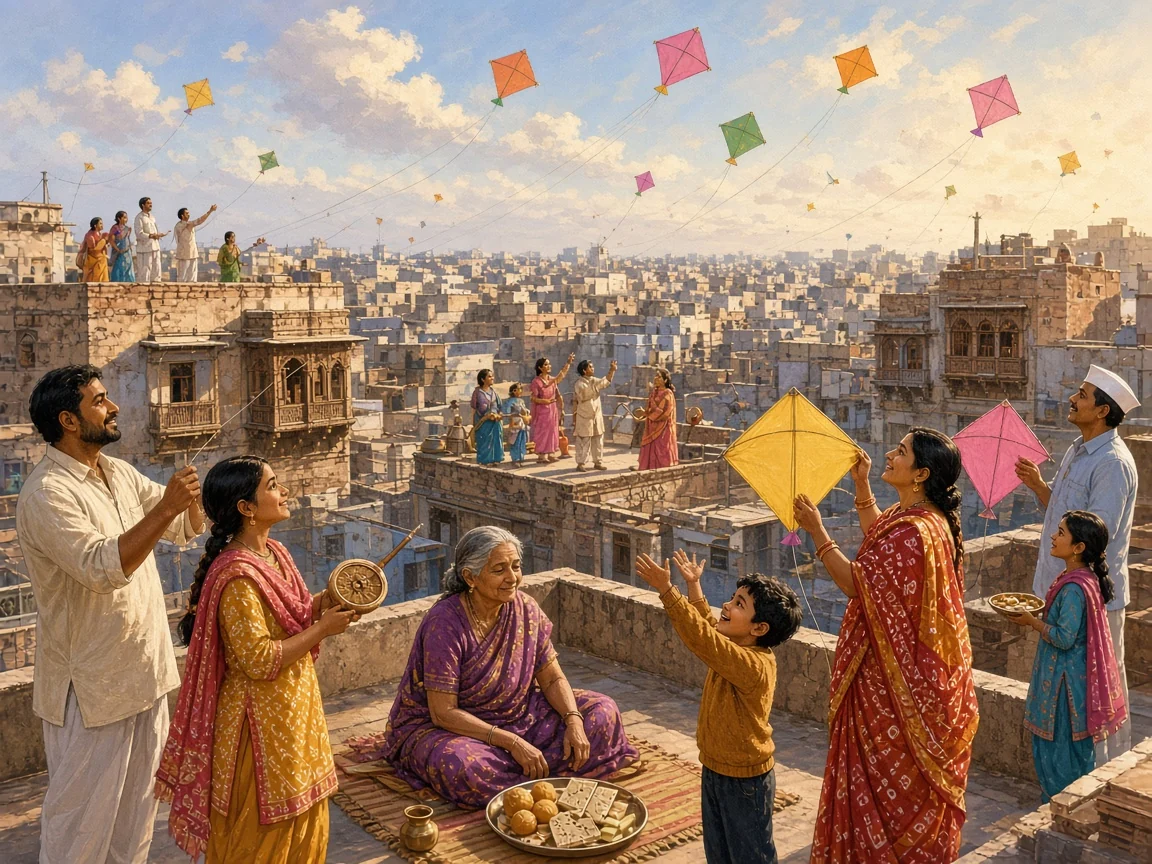
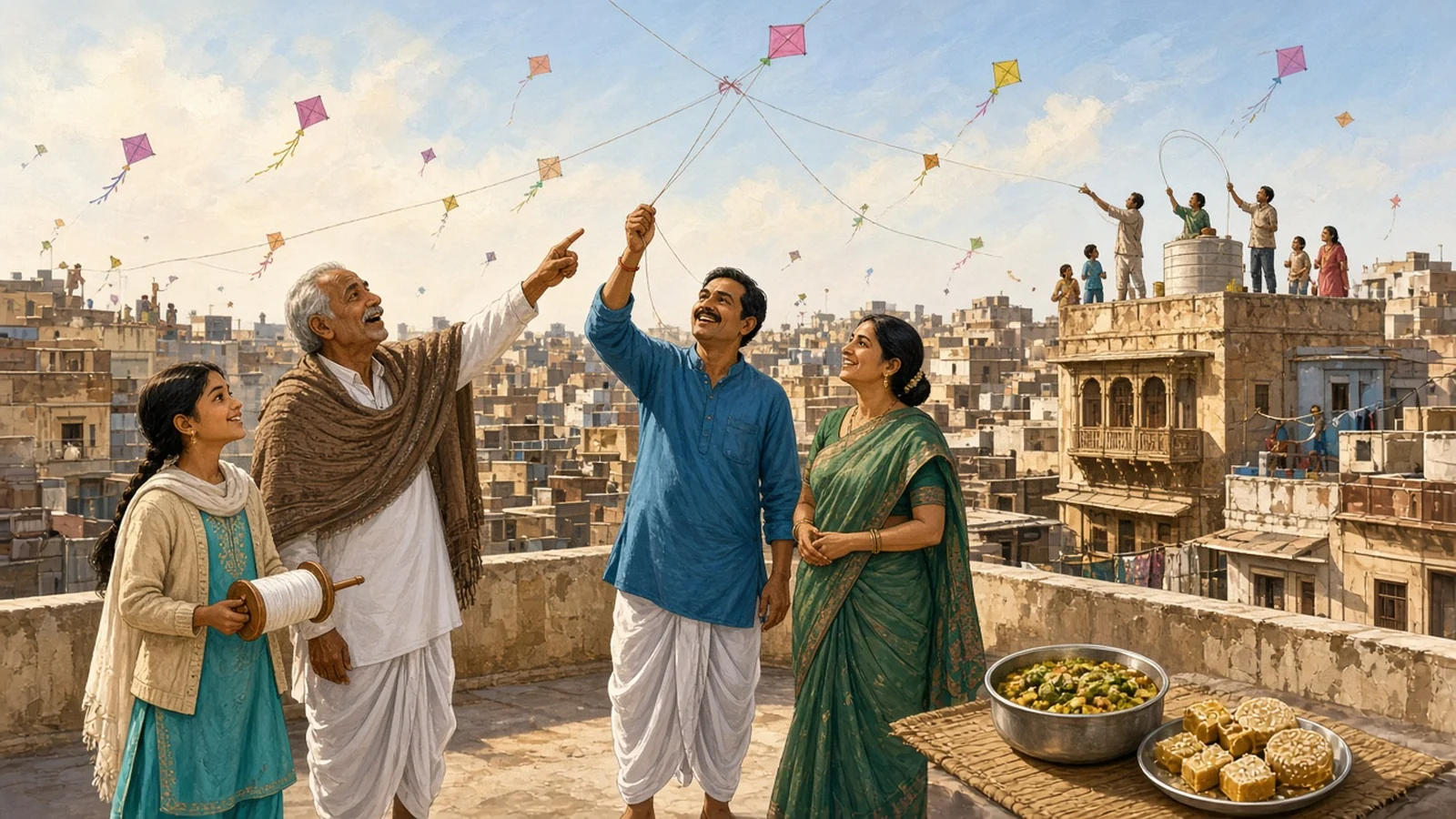
Uttarayan is the name Gujarat gives to Makar Sankranti, the day the sun begins its northward course, and the state keeps it with kites. On 14 January and Vasi Uttarayan, the day after, families bathe early, give water to the rising sun, give til, grain and clothes away and feed the cows, then climb to their flat roofs and fly paper kites until dark, cutting each other's strings to shouts of kapyo chhe. Undhiyu and jalebi are eaten on the roof, and at night the sky fills with white kites and paper lanterns.
When is Uttarayan in 2027? Uttarayan, the kite day, is Thursday 14 January 2027; it runs 14 to 15 January 2027. In 2028: Friday 14 January 2028. 14 January, Makar Sankranti as Gujarat keeps it, and 15 January, Vasi Uttarayan, whatever hour the almanac gives for the Sun's entry into Makara.
Also calledUttarayanaUtranthe kite festivalMakar Sankranti in GujaratVasi Uttarayan for the second daySakraat in Rajasthan
In short
What is Uttarayan?
The name Gujarat gives Makar Sankranti, the day the sun begins its northward course. It is kept with two days of kite flying from the flat roofs, along with a morning bath, gifts of til and grain, and food for the cows.
When is Uttarayan in 2027?
Thursday 14 January 2027, with Vasi Uttarayan on Friday 15 January. The almanac puts the Sun's entry into Makara at 9:14 pm on the 14th, after sunset, so its Sankranti observance falls on the 15th, but Gujarat flies on the 14th. In 2028 the kites fly on Friday 14 and Saturday 15 January.
What does kai po che mean?
It is the English spelling of the Gujarati kapyo chhe, "cut it", which a roof shouts when its kite cuts a rival's string. It is followed by lapet, "wind it in".
What is Vasi Uttarayan?
The second day of flying, 15 January. Vasi means stale, like food kept over from the day before. It began in Ahmedabad and is now kept in most of Gujarat.
Is glass-coated manja allowed?
Nylon and synthetic Chinese string and free-flying Chinese sky lanterns are banned, and Gujarat's High Court has told the state to act against glass-coated string too. Plain cotton thread is allowed. The bird rescue campaign treated 16,380 birds in 2026.
Next, in 2027Thursday 14 January 2027
14 to 15 January 2027
Prime godSurya, the Sun on his northward course
WhereGujarat above all, Ahmedabad first, with Surat, Vadodara, Rajkot and Khambhat, and Jaipur and the kite towns of Rajasthan
How longTwo days of kite flying, after weeks of kite and string making; Khambhat flies on the 15th or the following Sunday
14 January, Makar Sankranti as Gujarat keeps it, and 15 January, Vasi Uttarayan, whatever hour the almanac gives for the Sun's entry into Makara
Why it is kept
Gujarat spends Makar Sankranti on its roofs. In the old city of Ahmedabad the roofs of the pols run into one another, and on 14 January whole families go up before sunrise and stay until after dark. Strings cross and cut, a shout goes up from one roof, a kite drifts loose over the lanes, and boys run to catch it. The next day, Vasi Uttarayan, they do it all again.
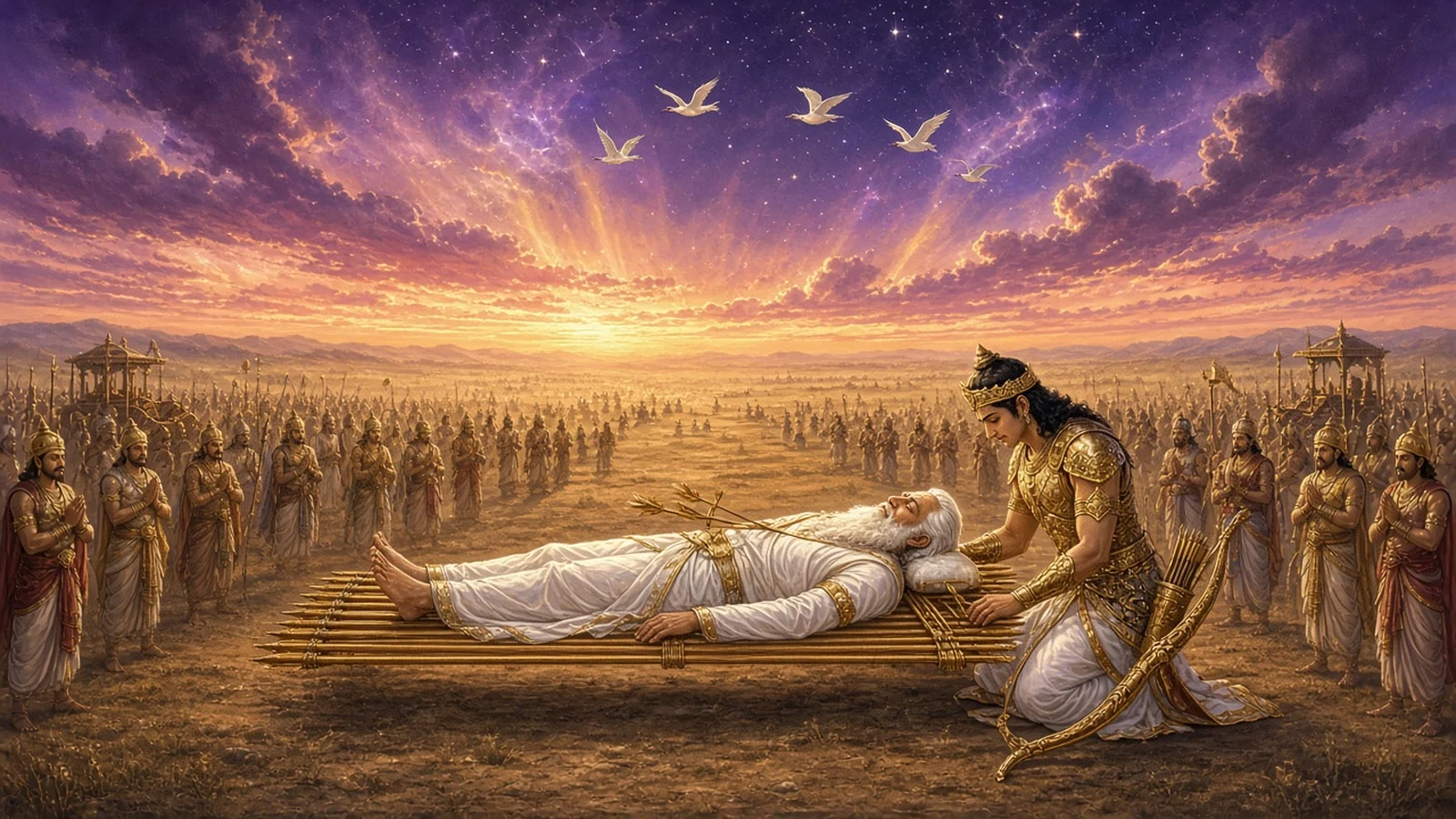
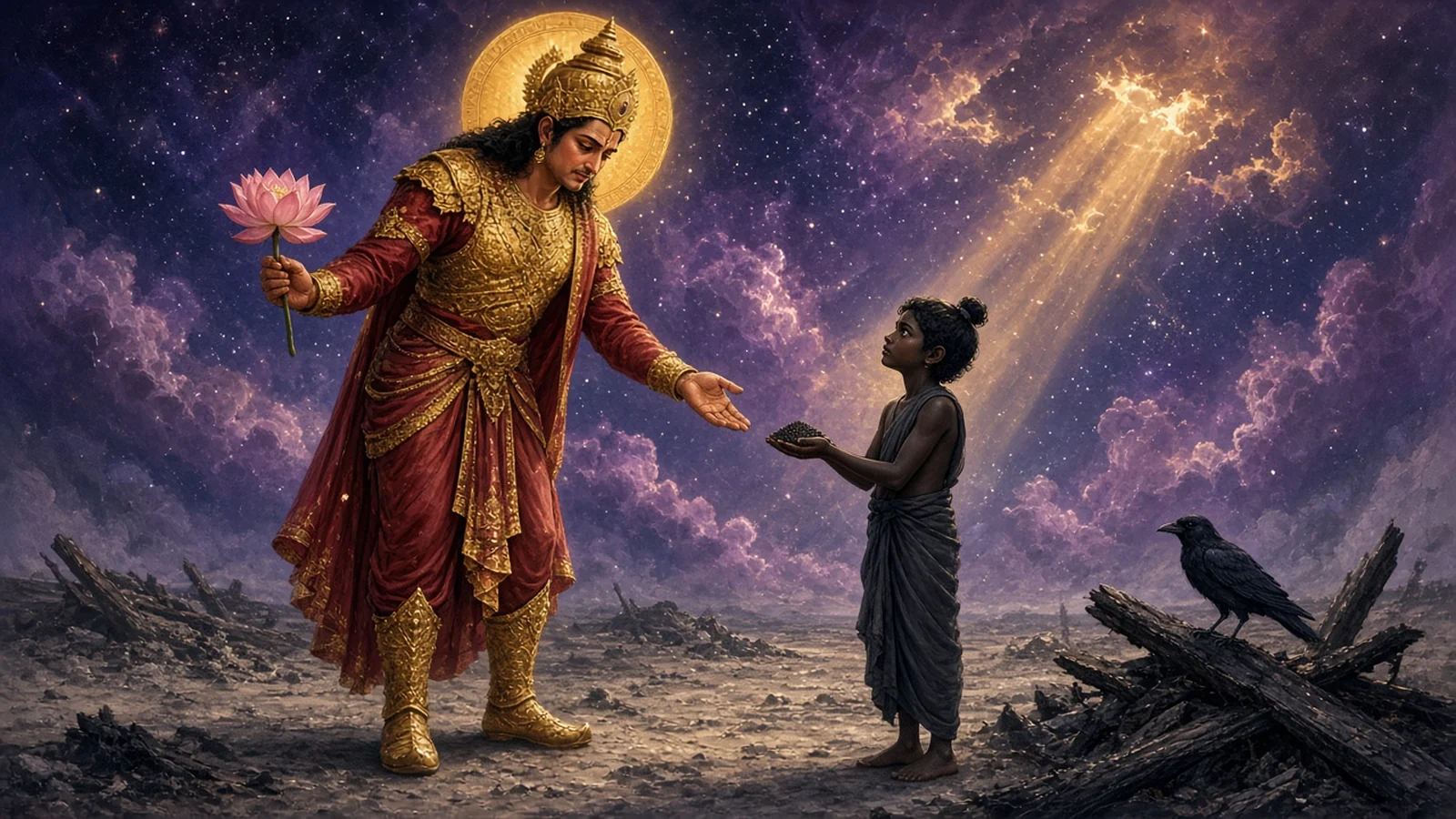
Uttarayan means the northern course. From this day the sun, which has spent half the year moving south, moves north again, and the old texts call these six months the daytime of the gods. In the Mahabharata Bhishma, lying wounded on the battlefield, chose to wait for this turn before he would die, which is told in The Bed of Arrows. On the same day the Sun enters Makara, the house of his son Shani, and the til that Gujarat gives away remembers the sesame Shani offered him in The Sesame in Shani's House.
The Sun visits his son Shani, who offers him a handful of black sesame
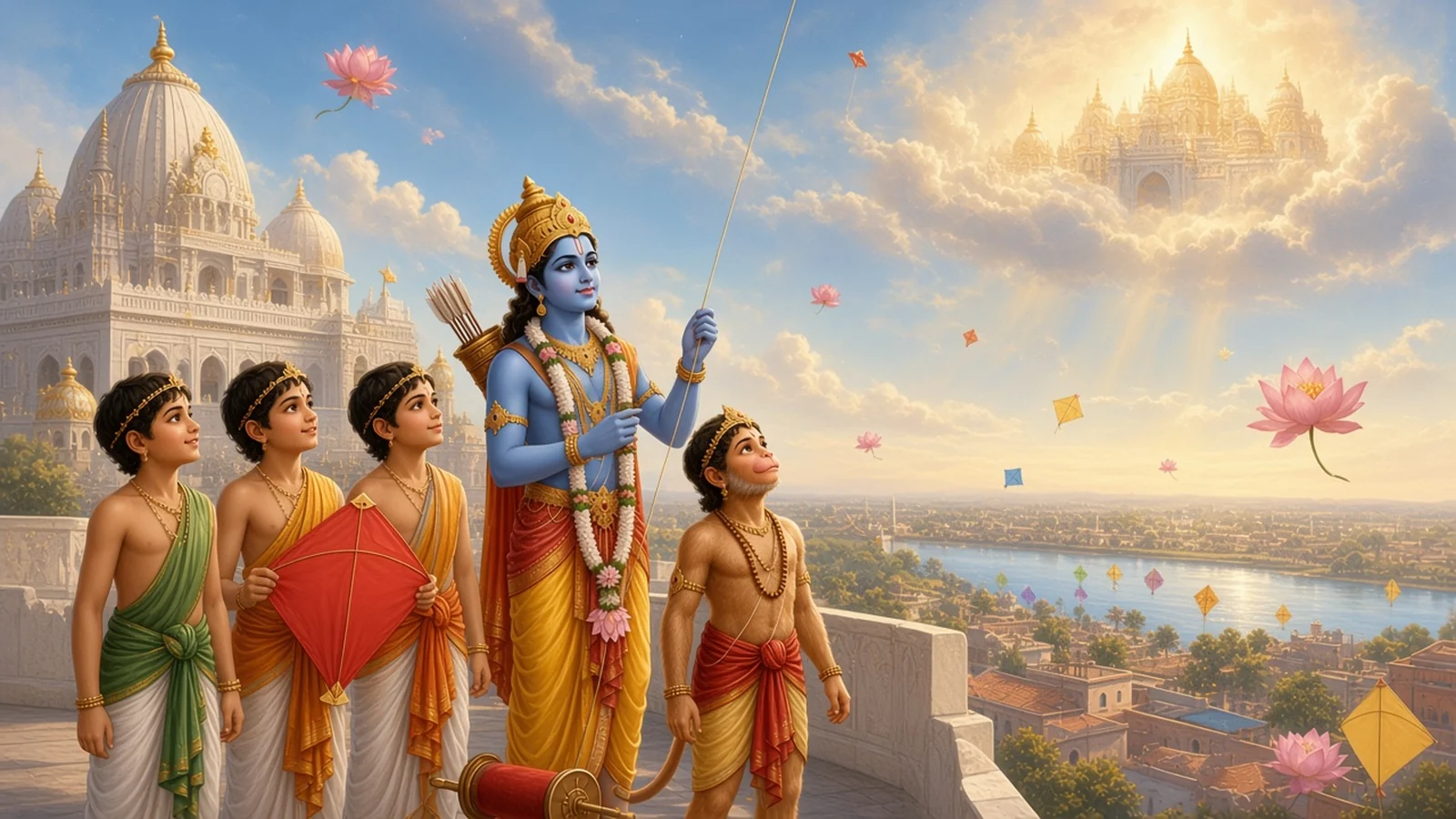
The kites have no such reason. No scripture connects kites to the day. A popular Hindi telling, printed each year for the festival, says the boy Rama flew the first kite on Sankranti and that it reached Indra's city. The story and the doubts about where it comes from are in The Kite That Reached Indra's City. What the record does show is that kites came to India late, and that Gujarat made them the centre of its Sankranti.
The boy Rama and his brothers fly a kite from the palace roof in Ayodhya
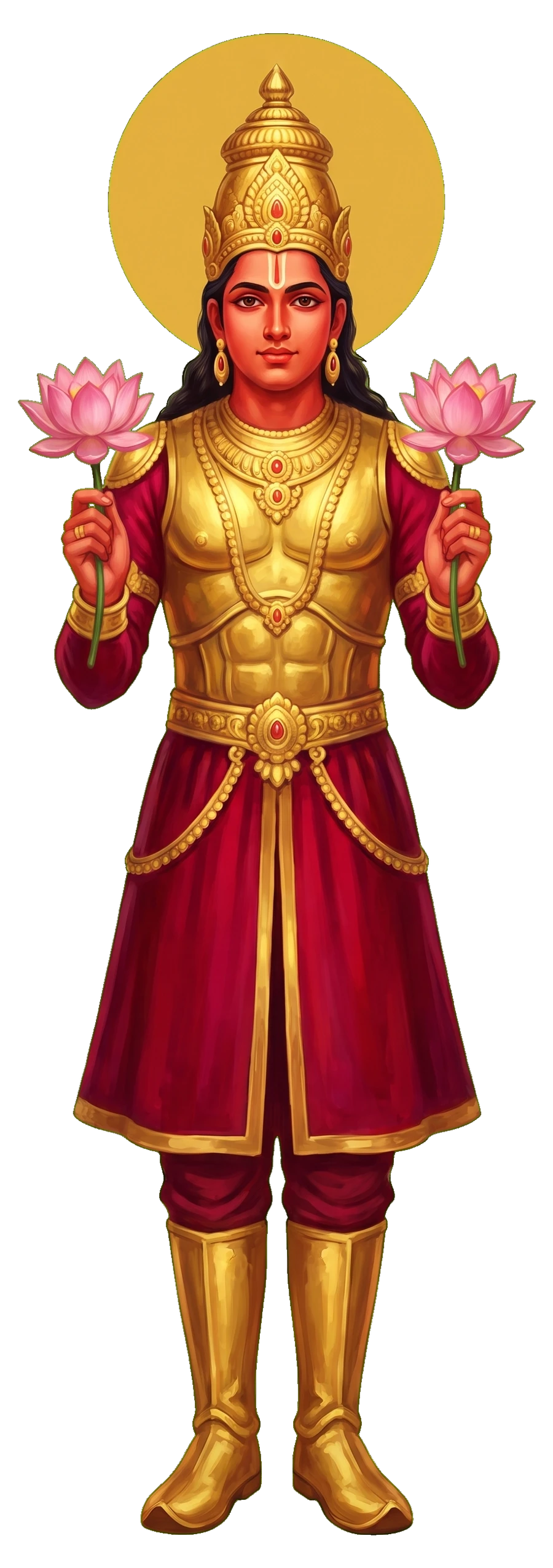
The day is his. Uttarayan is the Sun's turn to the north and his entry into Makara, the start of the six months the old texts call the daytime of the gods. Families give him water from the roof as he rises, and give til and jaggery away in his name, before the first kite goes up.
Two days on the rooftops
1
The eve
The day before Makar Sankranti, 13 January · Wednesday 13 January 2027
the Patang Bazaar nightthe string and the knots
Kite makers have been at work in Ahmedabad's old city since November, and in the last week the Patang Bazaar near Raipur Gate stays open day and night. On the eve whole families go shopping there late into the night, and Khambhat's kite bazaar holds auctions on the spot late into the night. String is bought from the makers who set up by the road in Jamalpur and Kalupur, many of them from Lucknow and Rajasthan, and at home the elders tie the kinya, the bridle knot, on every kite.
The Patang Bazaar on the eve: stalls of paper kites and reels of string under the lamps at night
14 January, kept in Gujarat as Makar Sankranti; in 2027 the Sun enters Makara at 9:14 pm and in 2028 at 3:26 am on the 15th · Thursday 14 January 2027
Makar Sankrantithe kite daykai po che
The day starts before sunrise with a bath in a river, the sea, a tank or at home, and then a visit to a Mahadev temple. Water is offered to the rising sun, grain, til and jaggery sweets and clothes are given away, cows get grass, jaggery and boiled grain, and married daughters and sisters receive gifts. Then everyone goes up to the dhabu, the flat roof, and stays there until dark. Strings cross and saw at each other, the winning roof shouts kapyo chhe, cut it, and someone winds in the line to cries of lapet. Lunch is undhiyu and jalebi, with chikki, tal na ladu and sugarcane through the day. After dark white kites go up with tukkal, small paper lanterns, hanging from their strings.
Uttarayan morning: water for the rising sun from a pol rooftop before the first kite goes up
15 January, the day after; in 2027 and 2028 the almanac's own Sankranti day · Friday 15 January 2027
stale Uttarayanthe second kite day
Vasi means stale, like food kept over from the day before. The custom of a second day began in Ahmedabad and has spread to most towns of Gujarat, and the state lists it as an optional holiday. The kites go up again, the tukkal lanterns are flown that night to say goodbye to the kites until next year, and Khambhat may hold its seaside Dariyai Uttarayan. The bird rescue camps work their busiest hours on these two days.
Vasi Uttarayan night: white kites carry glowing paper tukkal lanterns over the old city roofs
In the pols of the walled city the houses share walls and the roofs run into one another, so a whole lane flies as one. Jamalpur, Kalupur and Khanpur are full of kite and string makers for weeks, and the Patang Bazaar near Raipur Gate never closes in the last week. The International Kite Festival is held on the Sabarmati Riverfront the week before, and Vasi Uttarayan began here. In the newer western suburbs, Sahapedia notes, the flying happens on more private roofs.
SuratThe string city
Surat is known for its manja and has its own kite contests, which All India Radio was already covering in the 1961 census year. The International Kite Festival holds events here in the days before Uttarayan. In 2026 the bird camps treated 4,800 birds in Surat, the most after Ahmedabad.
Vadodara, Rajkot and SaurashtraRooftops across the state
Every town in Gujarat flies on the 14th. In 2026 the kite festival began on 10 January in Rajkot, Surat and Dholavira in Kutch, and reached Vadodara on the 13th. The bird camps treated 722 birds in Vadodara and 676 in Rajkot that year.
KhambhatThe kite makers' town and Dariyai Uttarayan
The old port of Cambay has some seven to eight thousand kite makers, more than half of them women working at home. The cheel, the best-loved fighter kite, is credited to them, and kite flying here is said to have begun with the nawabs. Khambhat does not fly on the 14th. It holds Dariyai Uttarayan by the sea on the 15th or the first Sunday after. Siddhpur in the north flies on Dussehra instead, because its founder Siddharaj Jaysinh is believed to have died on Uttarayan.
Jaipur and RajasthanKites over the Pink City
Jaipur traces its kites to Sawai Ram Singh II, who brought kite makers from Lucknow and flew great cloth kites with bells from the City Palace roof. Handipura is the kite market. On the 14th Rajasthan Tourism holds a kite festival at Jal Mahal, and in the evening paper lanterns, kandeel, are sent up. In Rajasthan the day is called Sakraat, and the kites also fly over Hadoti in the south-east.
Hindu householdsBath, sun and gifts
For Hindus the day is Makar Sankranti. They bathe early, offer water to the Sun, go to a Mahadev temple, give grain, til and clothes to those who ask, feed cows, and send gifts to daughters and sisters. The month of kamurta, when no weddings are held, ends with the day.
The Muslim kite makersThe hands behind the kites
A SEWA study found that about seven in ten kite makers in Gujarat's main kite centres are Muslim. Many of their families came from north India in Sultanate and Mughal times, and in Ahmedabad's Jamalpur and Kalupur and in Khambhat women do most of the work, much of it at home from November on. Many of the string makers come from Lucknow, and the 1961 census already records kite makers from Ajmer and Uttar Pradesh.
Every community on the roofOne sky for all of Gujarat
The rest of the kite makers are Scheduled Caste and Christian families, and the traders who sell the kites are mostly Hindu. On the day itself Gujaratis of every faith are up on the roofs, and Gujarat Tourism describes the festival as a meeting of Hindu and Muslim cultures.
How it is kept
The festival starts weeks before the day. From November the kite-making families of Jamalpur, Kalupur and Khambhat fill their front rooms with paper and split bamboo, and string makers set up by the road to coat cotton thread. On the eve, families shop for kites and string late into the night in the Patang Bazaar near Raipur Gate.
Kite makers at home in Jamalpur, with coloured paper, split bamboo and finished kites
On the morning itself people bathe, offer water to the rising sun and give til, grain and clothes away, and then everyone goes up to the roof. There are many fights, and each one ends when a string is cut. The cutting roof shouts kapyo chhe, cut it, and someone winds the line in to cries of lapet. Undhiyu and jalebi are eaten on the roof at noon, and after dark the lighted tukkal lanterns climb on the kite strings. A family's two days, from the bazaar to the bird camp, are told in The String and the Roof, along with the International Kite Festival that comes the week before.
The festival has a cost for the birds. Glass-coated string cuts pigeons and black kites out of the air, and in January the state's Karuna Abhiyan sets up rescue camps across Gujarat; in 2026 they treated 16,380 birds. Nylon and synthetic string and the loose Chinese sky lanterns are now banned; the state's notification of December 2024 covers glass-coated thread too, and the High Court has told the state to act against its making, sale and use. The rescuers ask people to rest their kites in the early morning and late afternoon, when most birds are flying.
A bird rescue camp: a vet in a blue apron tends a pigeon wrapped in a soft cloth
In the old texts
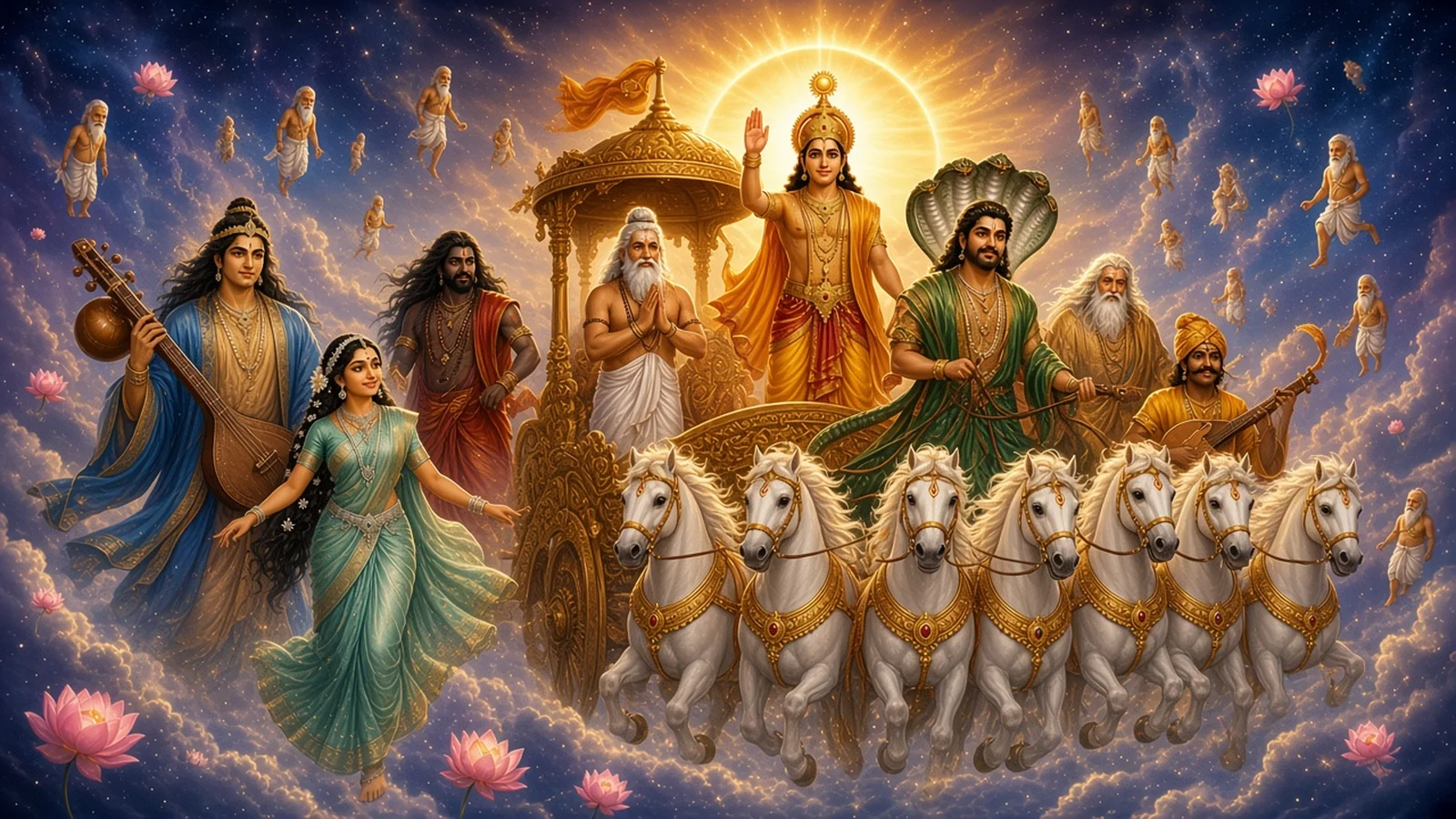
The sun's turn is old astronomy. The Surya Siddhanta defines Uttarayana as the half-year from the Sun's entry into Makara to its entry into Karka, and the Puranas follow the sun's chariot along its northern and southern paths; the Vishnu Purana's twelve suns, one for each month, are in The Twelve Suns. The Bhagavad Gita counts the bright half of the year, the northern course, as the path of those who do not return. Makar Sankranti and the winter solstice fell together about seventeen hundred years ago. The solstice has since drifted about three weeks earlier, but the festival still keeps the old reckoning.
There is no scripture for the kite. Its first Indian mention is in the songs of the Marathi saint Namdev, it appears in Bihari's Hindi couplets at Amer, and its first Gujarati mention is in the poet Shamal's work of 1750. The Rama story is folk tradition. Popular papers credit it to Tulsidas, but it is not found in the standard text of his Ramcharitmanas.
Where this page comes from. Written by Devalok from All About Gujarat (citing the 1961 Census of Gujarat), Gujarat Tourism, Rajasthan Tourism, Wikipedia, Sahapedia, The Statesman, the Times of India, DNA, the Indian Express, DeshGujarat, DD News, Patrika and Gujarati Jagran's print of the state holiday list, with Drik Panchang's almanac for the hour of the Sankranti, as recorded in the Devalok Lore. Our own words throughout.