Festival · The Friday of the pot, when Lakshmi is dressed in a sari and asked to stay
Varalakshmi Vratam
Varalakshmi Vratam is the Friday before the full moon of Shravana, kept by married women across Karnataka, Andhra, Telangana and Tamil Nadu, and in many Marathi homes. Lakshmi is called into a pot of rice set on a bed of rice, with a coconut for a head, a silver or painted face, a sari and jewels, and worshipped as Varalakshmi, the giver of boons. A turmeric thread with nine knots is tied on every woman's right wrist, the story of Charumati is read, and the neighbourhood's married women are sent home with betel, turmeric and a blouse piece. The vrata books say that to worship her once in this pot is to worship all eight Lakshmis.
When is Varalakshmi Vratam in 2027? Varalakshmi Vratam, the Friday before the full moon, is Friday 13 August 2027. In 2028: Friday 4 August 2028. The Friday before the full moon of Shravana, in late July or August; by the Tamil solar calendar a Friday of Aadi or Avani.
Also calledVaramahalakshmi HabbaVaralakshmi NombuVaralakshmi PujaVaralakshmi VrathamVara Mahalakshmi VrataVaramahalakshmi Vratha
In short
What is Varalakshmi Vratam?
A vow kept by married women of the south on the Friday before the Shravana full moon. Lakshmi is called into a pot of rice dressed as a married woman, with a coconut head, a silver face, a sari and jewels, and worshipped as Varalakshmi, the giver of boons.
When is Varalakshmi Vratam in 2027 and 2028?
Friday 13 August 2027, four days before the Shravana full moon of 17 August, and Friday 4 August 2028, when the Purnima tithi begins that morning and the full moon day is Saturday 5 August. The almanacs take the Friday on or before the Purnima tithi.
What is the thread tied on the wrist?
The thoram or nombu saradu, a turmeric thread with nine knots and a flower at its middle, laid at the goddess's feet through the puja and tied on the right wrist of every woman and girl afterwards. Karnataka's dora has twelve knots in Kannada accounts.
Why do people say one Varalakshmi puja equals eight Lakshmis?
The vrata books and almanacs say that in the pot she is worshipped in all eight of her forms at once. Which eight depends on the list; the Ashtalakshmi Stotram's Adi, Dhanya, Dhairya, Gaja, Santana, Vijaya, Vidya and Dhana is the one most houses name.
What stories are read on the day?
Charumati's dream, in which Lakshmi names the Friday and the town keeps it with a pot and a thread, and in Telugu and Kannada homes the story of the queen Surachandrika, who drove Lakshmi from her gate while her daughter Shyamabala took her in.
Next, in 2027Friday 13 August 2027
Prime godVaralakshmi, the giver of boons
with 2 more
WhereKarnataka, Andhra Pradesh, Telangana and Tamil Nadu, with Maharashtra and the Telugu, Kannada and Tamil diaspora
How longOne Friday, with the goddess kept overnight and sent off on the Saturday morning
The Friday before the full moon of Shravana, in late July or August; by the Tamil solar calendar a Friday of Aadi or Avani
Why it is kept
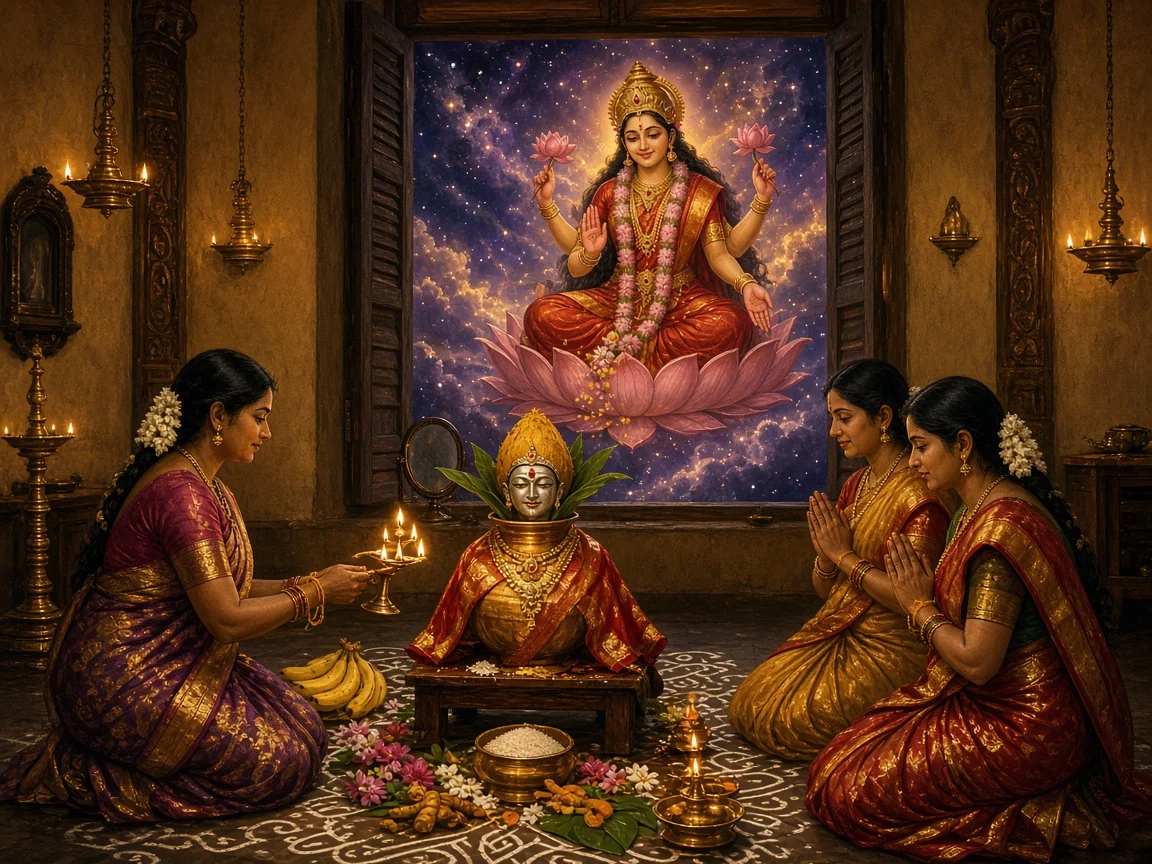
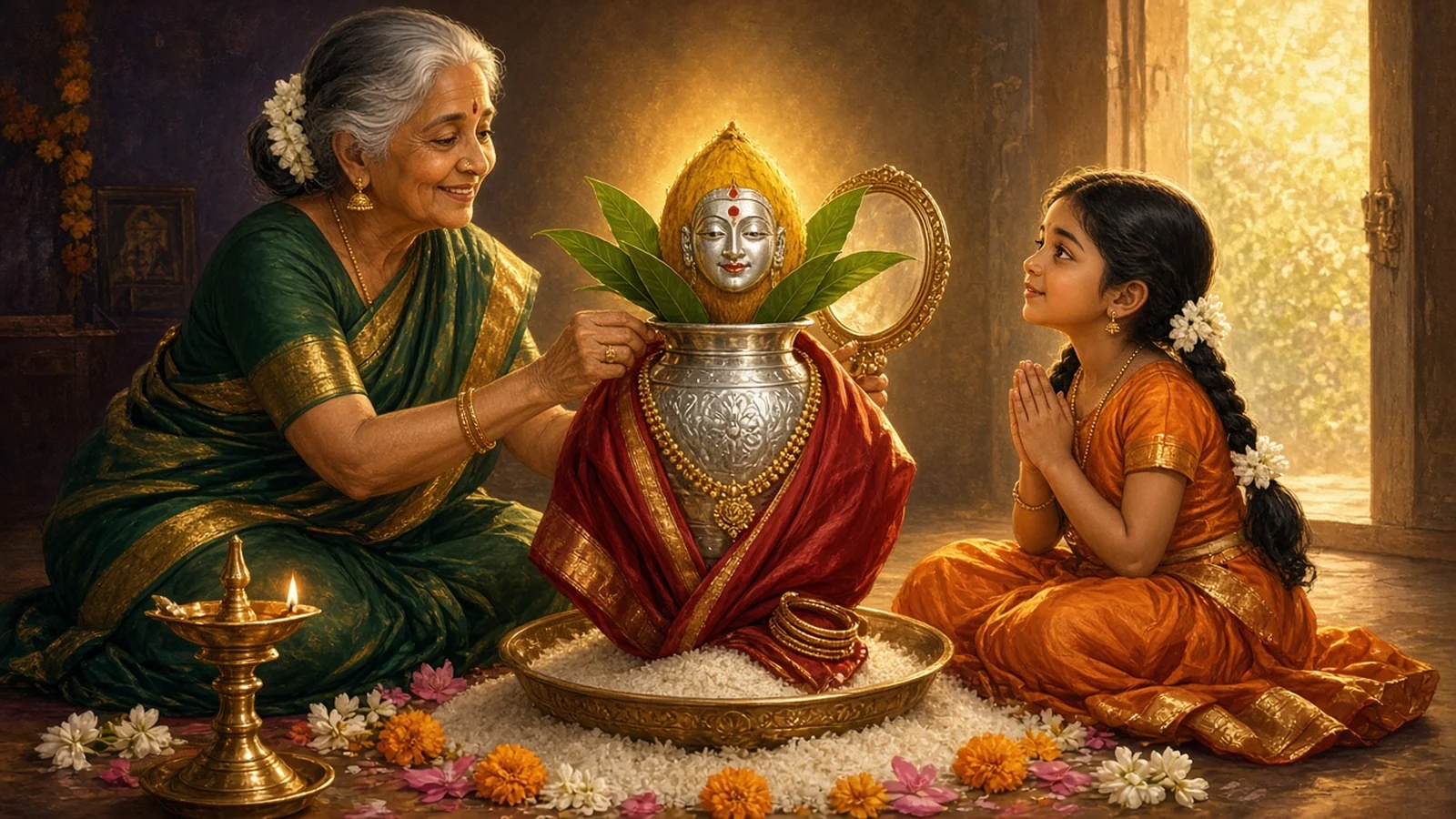
Varalakshmi Vratam is the day the goddess is dressed. On the Friday before the full moon of Shravana, in homes from Mangaluru to Chennai and Hyderabad, a pot of rice stands on a tray of rice with a coconut on its mouth and a silver face on the coconut, wrapped in a silk sari, and the women of the house call Lakshmi into it as Varalakshmi, the one who gives what is asked. A yellow thread with nine knots lies at her feet. By evening it is on every wrist in the house, the neighbours have come and gone home with betel and turmeric, and the goddess sleeps in the puja room until the Saturday morning, when she is nudged a little to the north and asked to go back to her place.
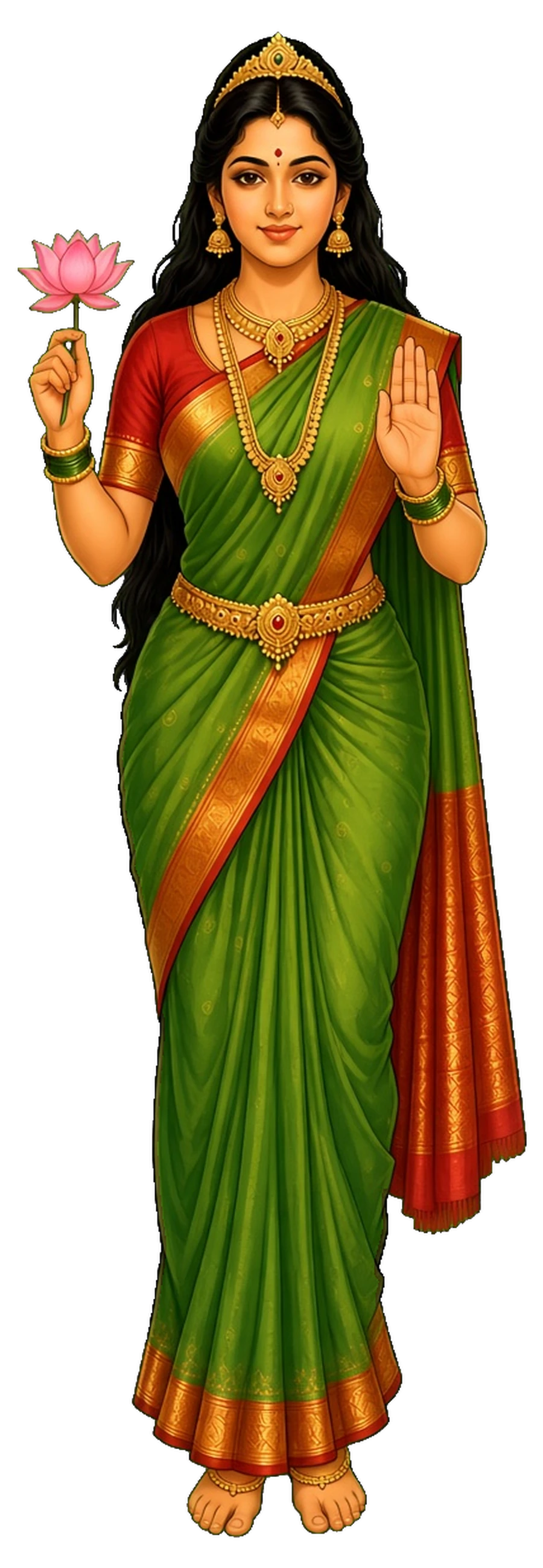
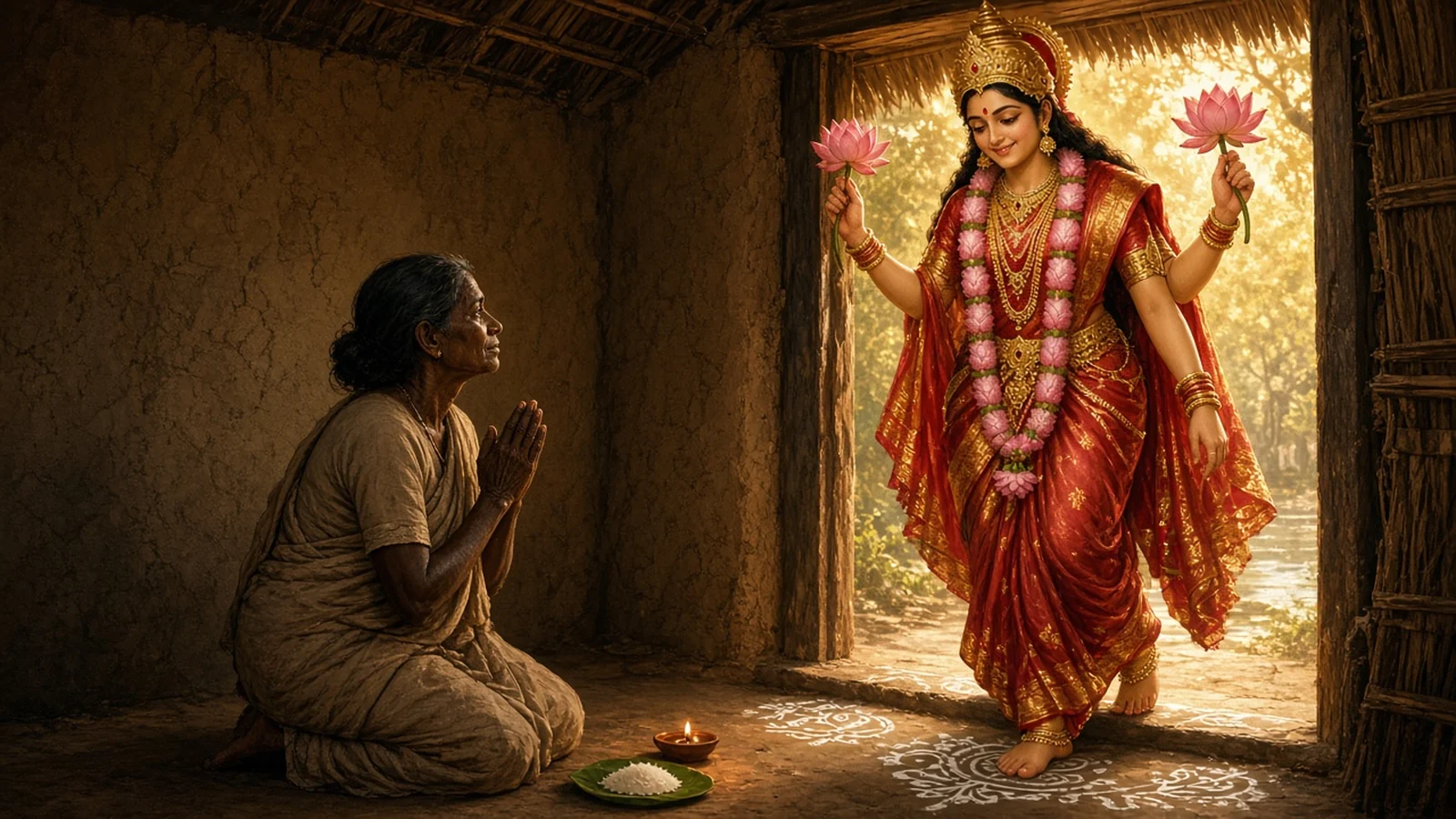
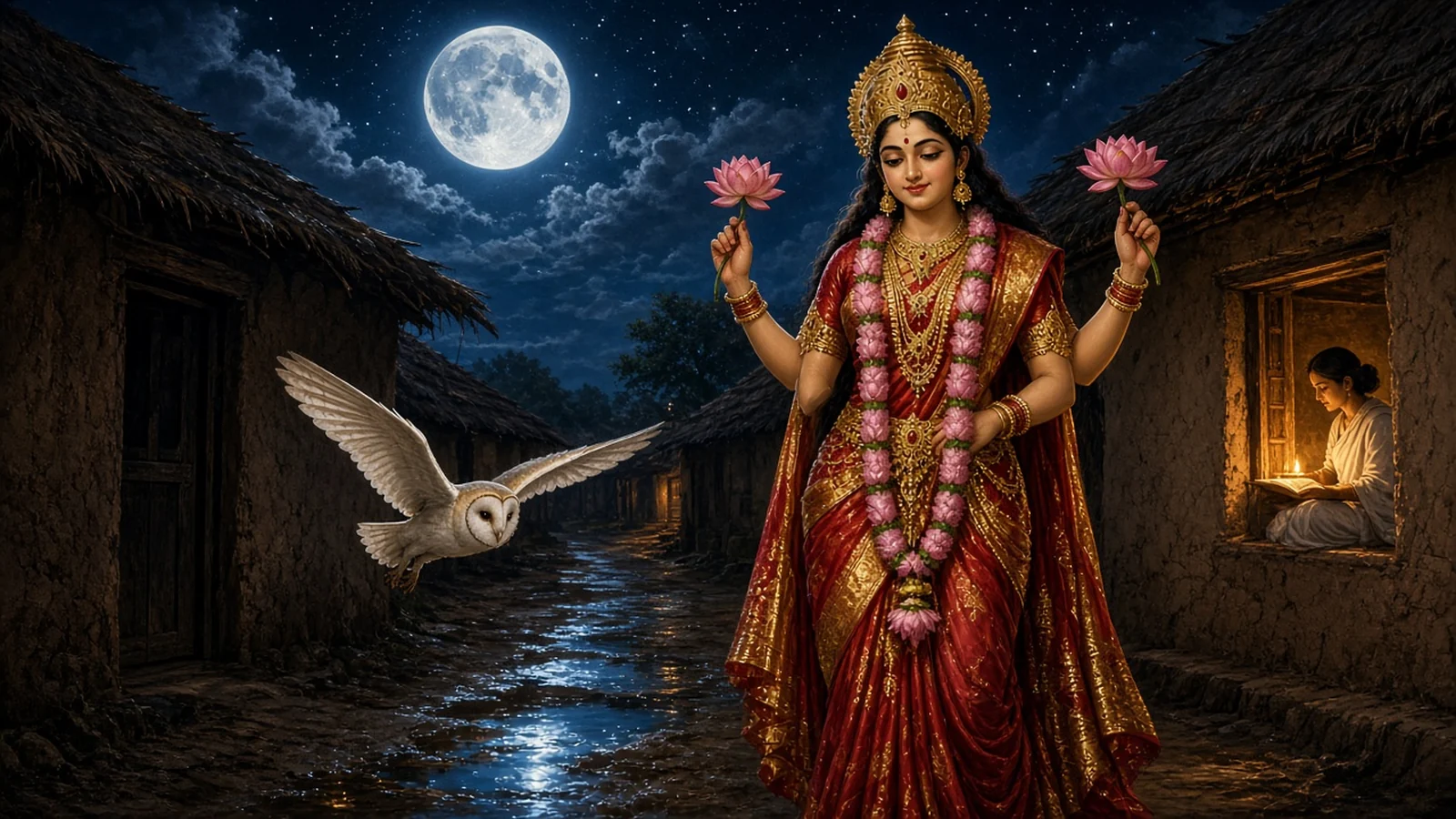
The books give a woman's dream. Parvati asked Shiva which vow a wife should keep for the good of her house, and Shiva named this one and told her how it began: Lakshmi came in a dream to Charumati of Kundina and named the Friday, and Charumati went from door to door until the whole town was sitting in front of a pot. The Lore tells it in The Woman Lakshmi Visited, which this page does not retell. What matters for the Friday is the shape of it. The vow was given to one house and handed to all of them, and that is still how it works: a woman keeps it because her mother-in-law did, and the women of the street are called in because Charumati called hers.
Lakshmi comes to Charumati in a dream and names the Friday
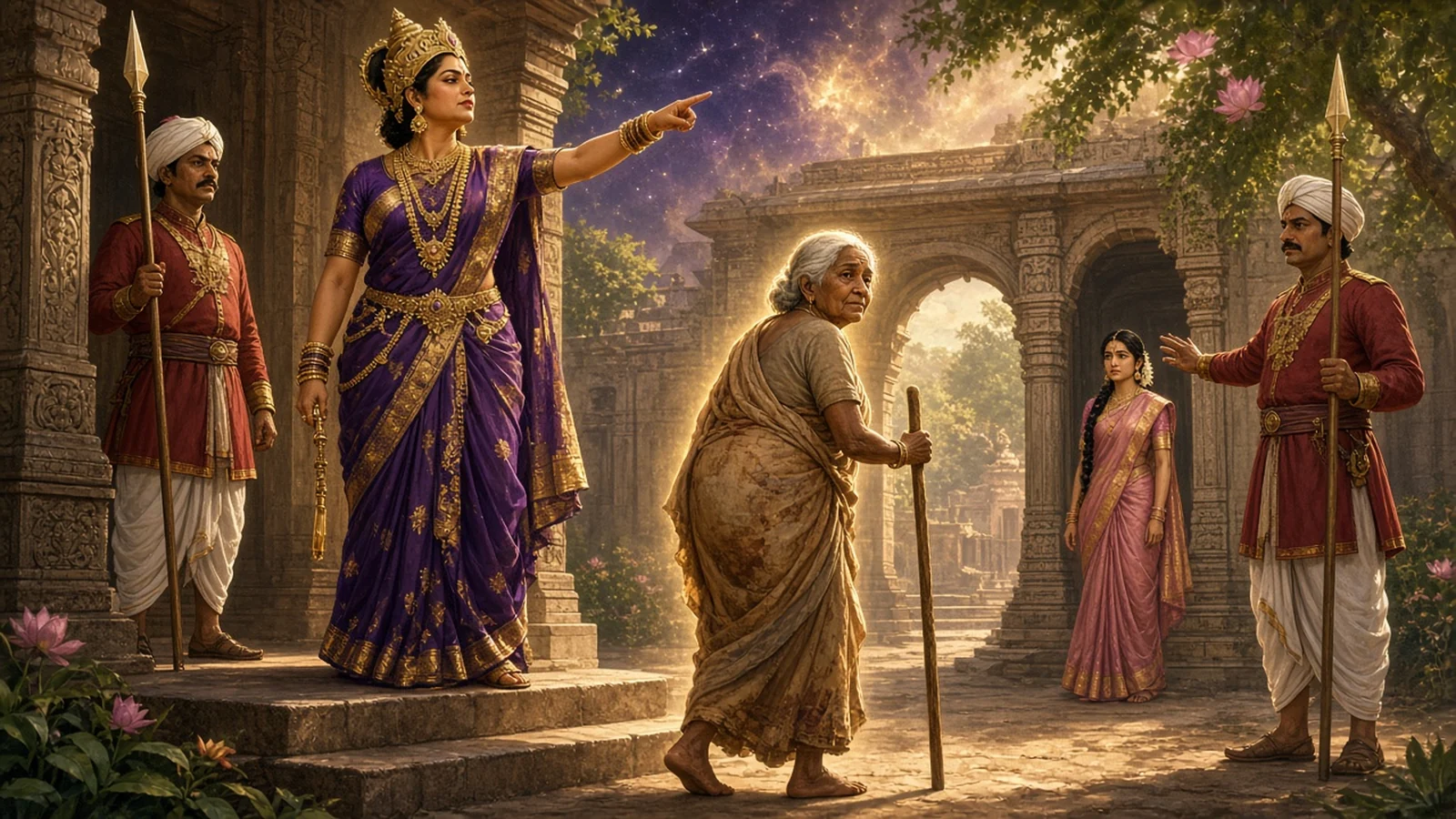
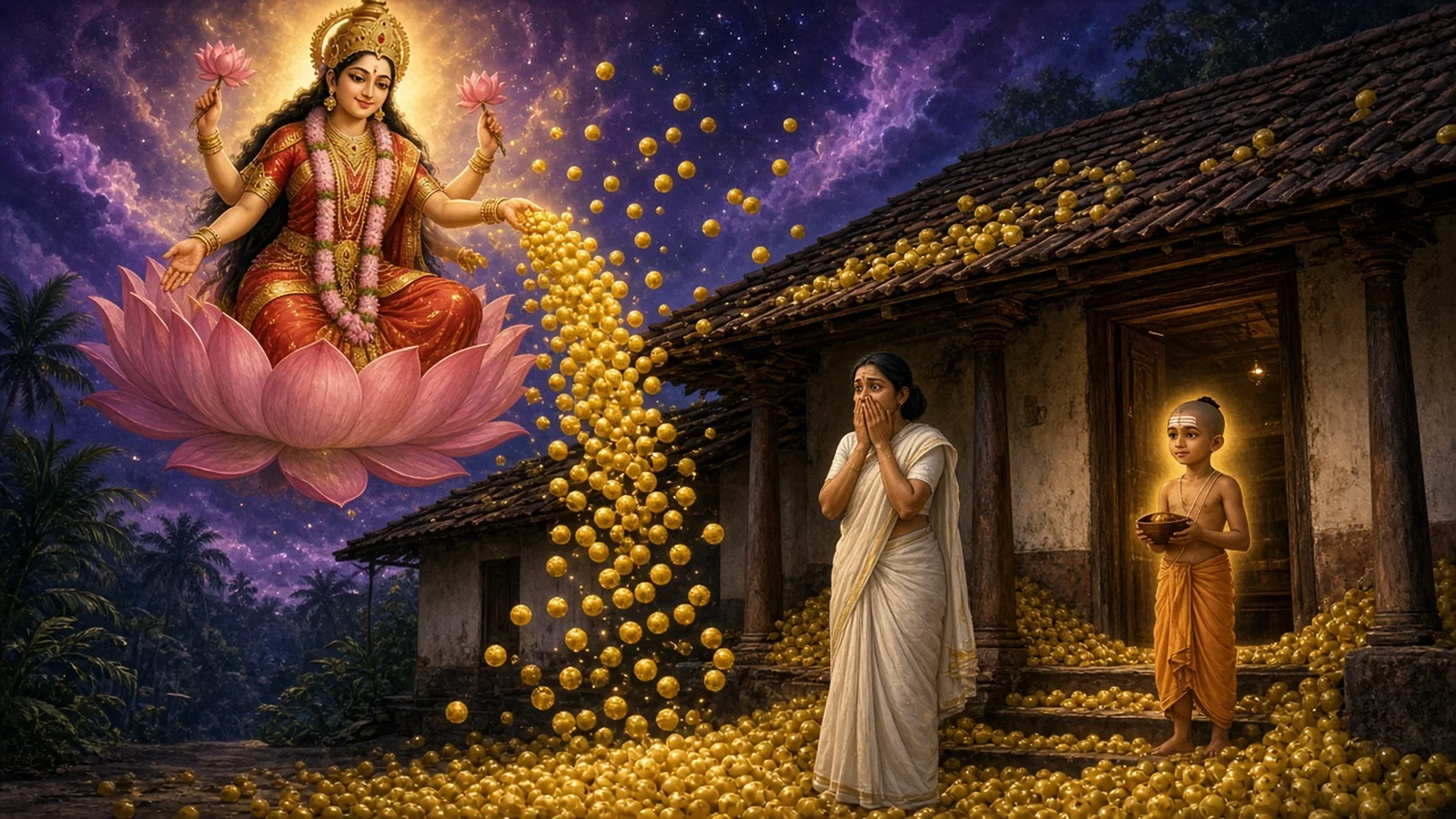
The second story the Telugu and Kannada books read is its mirror. In The Queen Who Turned Lakshmi Away the goddess comes to a palace gate as an old woman to offer the same vow, and the queen has her driven off. The daughter who calls her back prospers; the gold she sends home turns to ash in her mother's hands.
An old woman is turned away at the palace gate while the princess runs to call her back
And the Friday is kept for a claim the books make about the pot: that to worship Varalakshmi once in it is to worship all eight Lakshmis. The Eight Forms of Fortune follows a grandmother naming the eight over the pot, and then the oldest of them, Gaja Lakshmi of the elephants, from the Sri Sukta to the temple gateways.
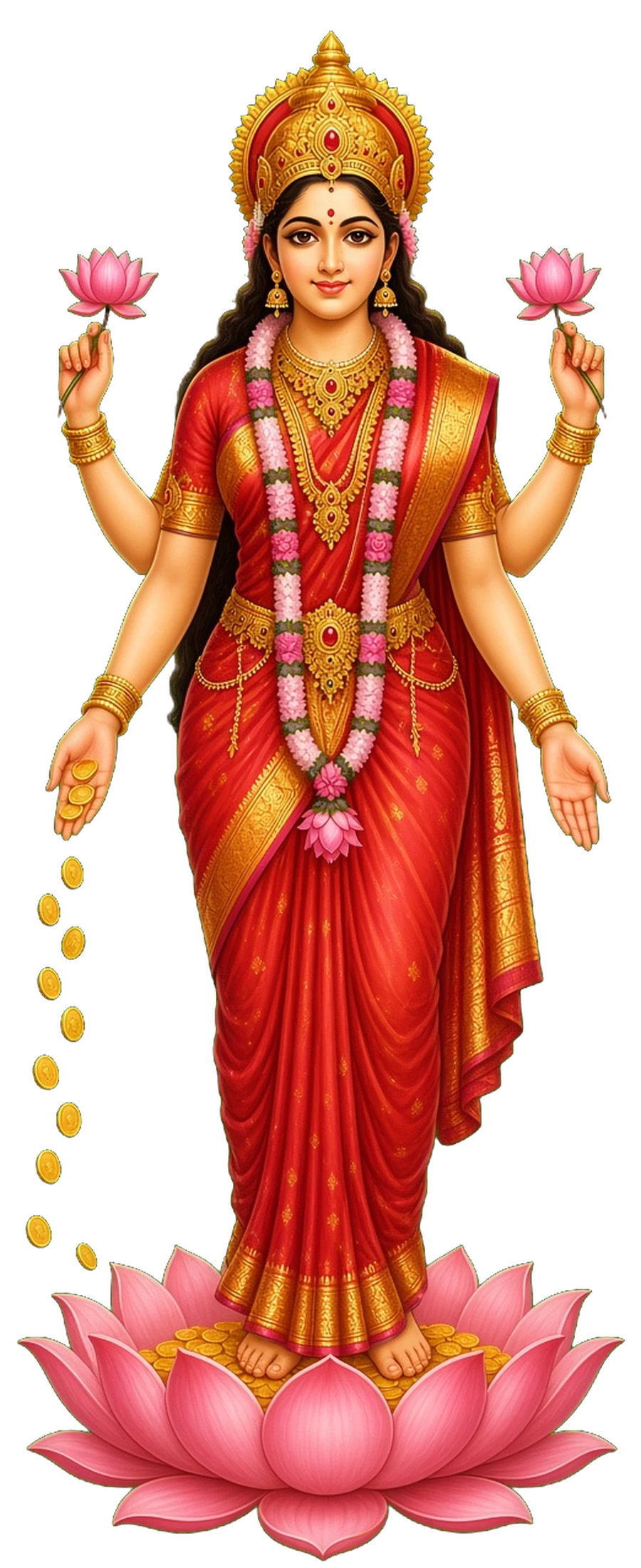
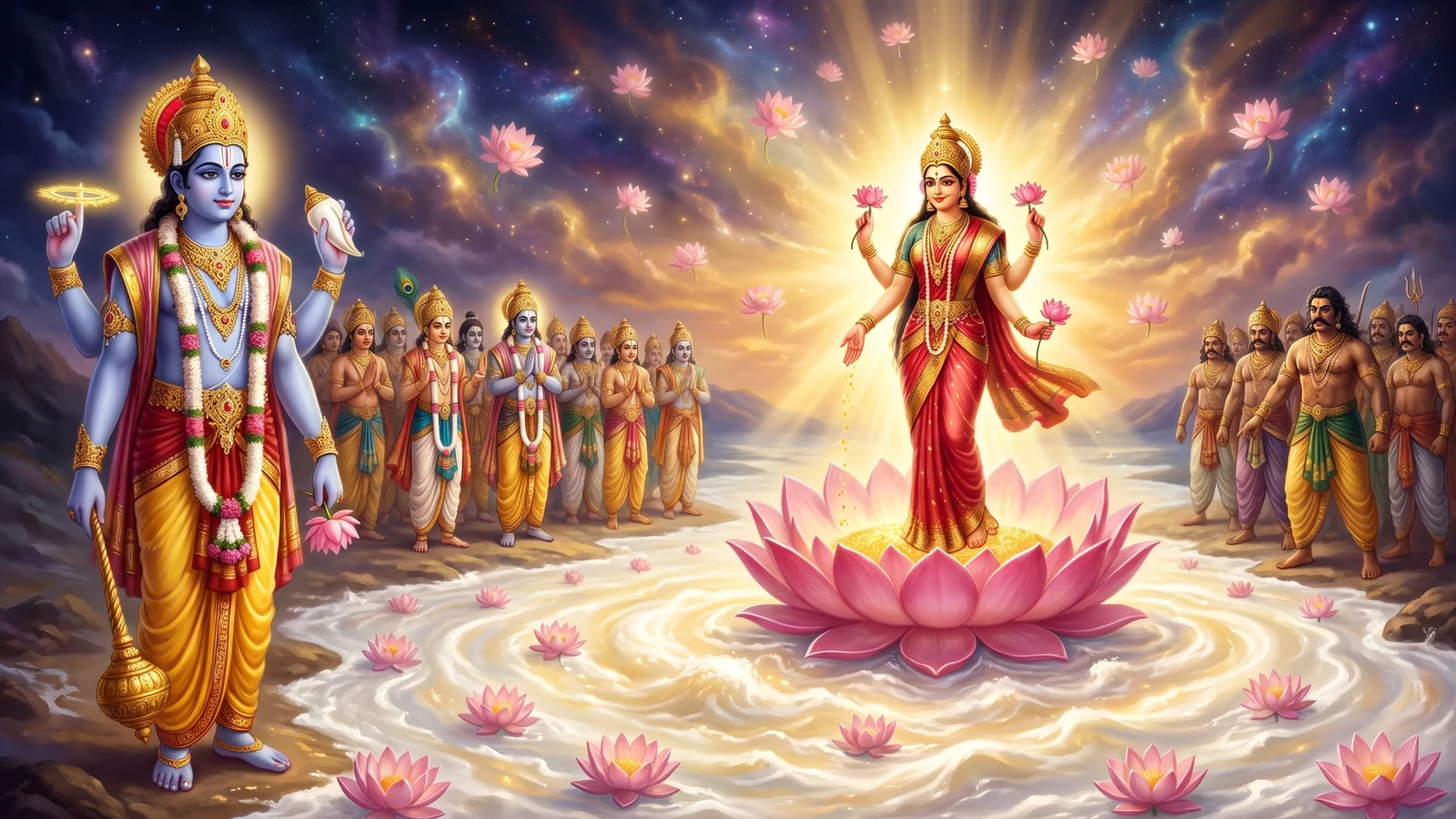
The goddess of the day, called into a pot of rice and dressed as a married woman. Vara is a boon, and this is the Lakshmi who grants what is asked. The vrata books say she holds all eight Lakshmis at once, and at Tiruchanur Padmavati is dressed as Varalakshmi that morning and taken through the town in a golden chariot.
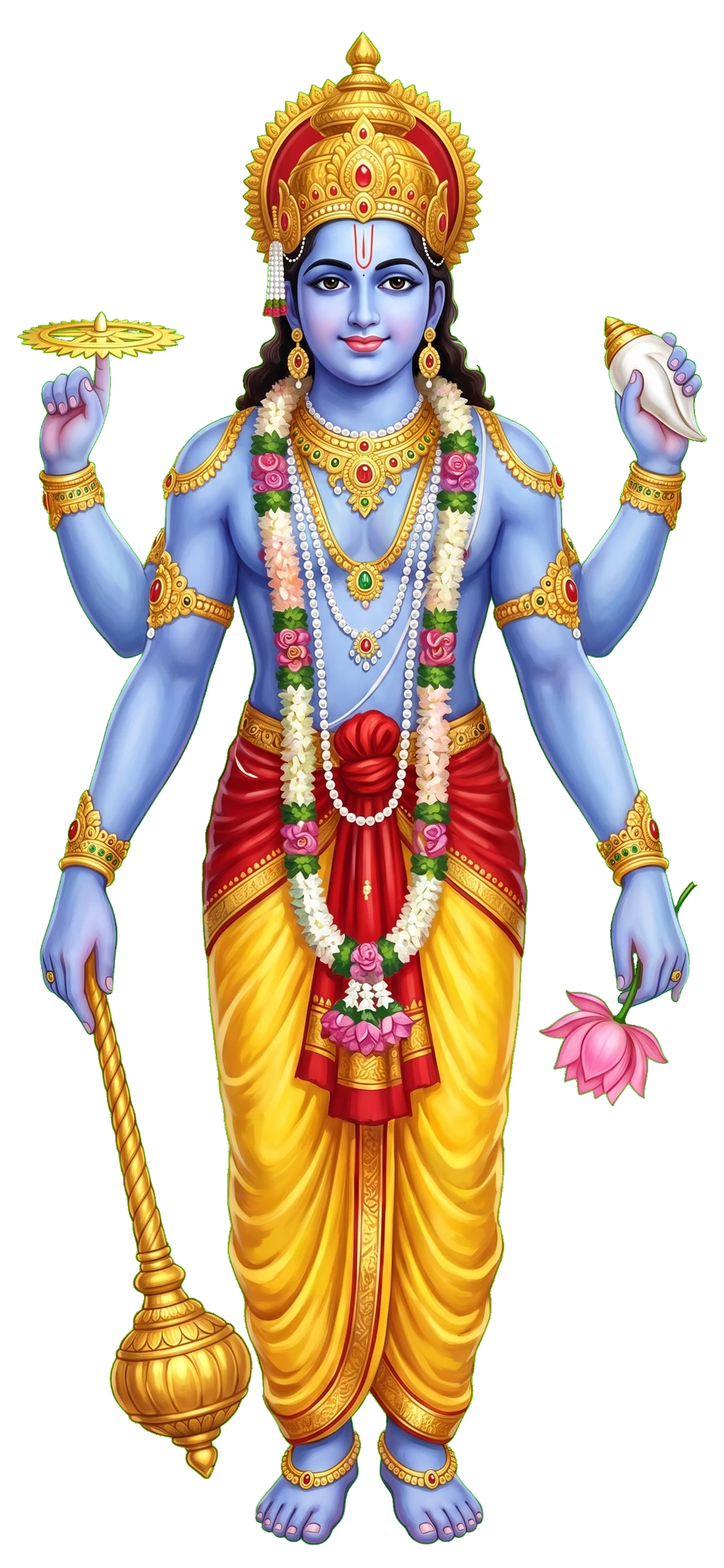
Her husband, in whose name the Sri Vaishnavas read the Friday. The Sri Sukta that is recited over the pot is sung every Friday at Venkateswara's bath on Tirumala, and the eight-verse Ashtalakshmi Stotram hails her in every verse as the beloved of Madhusudana.
The one who asked. The vrata books begin with Parvati asking Shiva which vow a woman should keep for the good of her house, and Shiva naming Varalakshmi's Friday and telling her of Charumati; the second katha the books carry, Chitranemi's, begins with the two of them at dice.
The Friday of the pot
1
Friday morning, the pot is dressed
Shravana shukla, the Friday before Purnima · Friday 13 August 2027
The house has been washed since before light, the kolam is at the door and a line of small footprints in rice paste leads from the threshold to the puja room. Raw rice is spread on a tray and a brass or silver pot set on it, filled with rice or water and coins, betel leaves, turmeric roots, bananas and dates, with mango leaves tucked into its mouth and a coconut rubbed yellow with turmeric set on top. The face goes over the coconut, silver or brass in most homes, drawn in turmeric in others, and is marked with kumkum and sandal; then a silk sari is pinned round the pot until it has shoulders and a lap, and the jewels go on, a necklace, bangles, a nose ring. In some houses a small mirror stands behind her. Karnataka tops its rice with dates, cashews, raisins and rock sugar; Telugu homes set the pot on a betel leaf in the north-east corner. She is carried in from the doorway with a song, and the women say that in this one pot all eight Lakshmis are sitting.
The pot dressed as the goddess: a coconut in mango leaves, a silver face, a silk sari and jewels
Shravana shukla, the Friday before Purnima · Friday 13 August 2027
Varalakshmi Nombuthe thoram tiedthe tamboolam given
A turmeric Ganesha is worshipped first. Then the goddess in the pot is given the sixteen services and her hundred and eight names, the Sri Sukta is recited, and the thread lies at her feet through all of it: nine strands yellow with turmeric, nine knots in a row, a flower at the middle. When the lamp has been waved the eldest married woman ties it on her own right wrist, with her husband's help if he is there, and then on every woman's and girl's. The katha is read, Charumati's dream and the Friday she handed to the whole town, and in Telugu and Kannada homes the second story follows it, the queen who had Lakshmi driven from her gate. The fast is broken on what was offered: kolukattai, payasam and vadai in Tamil Nadu, paramannam and panakam in Telugu homes, sajjappa and avalakki in Karnataka. In the evening the married women of the street come in silk, sing, and are sent home with tamboolam, betel and areca, turmeric and kumkum, fruit and a blouse piece, and in Hyderabad the singing afterwards has become a thing in itself.
The eldest woman ties the yellow thread of nine knots on a younger woman's right wrist
The morning after the Friday · Friday 13 August 2027
Punar pujathe kalasha moved
The goddess stays the night in the house. On Saturday morning, after a bath, a short puja is done with fruit and the hundred and eight names, and a prayer asks her to go back to her place. Then the pot is nudged a little towards the north, which is the whole of the send-off. In Telugu homes the pot is moved before bed on the Friday itself and everything taken down in the morning. Its water is sprinkled through the house; its rice goes into the rice bin, so that the family eats her all year; the coconut goes into the next Friday's payasam. In Tamil Nadu the face is turned to the west and the pot kept inside the rice drum until the next occasion. The thread stays on the wrist.
Saturday morning: the pot is nudged a little to the north and the goddess asked to go home
The habba is one of the big days of the Kannada year, kept in homes and temples across the state and most of all in Bengaluru, Mysuru and Mangaluru, with the flower markets of Bengaluru full the night before. The kalasha of rice is topped with dates, cashews, raisins, almonds and rock sugar, and the face is a gold or silver mask or a coconut with features drawn in turmeric flour, dressed in a sari and jewellery. The thread here is the dora, twelve threads with twelve knots in Kannada accounts, soaked in turmeric and tied on the right wrist by the elders, who are given dakshina in return; twelve names of the goddess are recited and the Sri Sukta recommended. Sajjappa is the offering, avalakki goes round as prasada, and group prayers and bhajans fill the afternoon. A woman who misses the Friday keeps it on a Friday of Navaratri, and Madhva homes sing the Dasara padagalu over the pot.
Andhra Pradesh and TelanganaVaralakshmi Vratam
The Telugu Friday keeps the katha closest to the books. The pot stands on a betel leaf on rice in the north-east corner of the room, filled with water, turmeric, kumkum, coins and flowers, the coconut and the blouse piece folded over it. The toram is nine turmeric strings with nine flowers and betel leaves between the knots, three of the knots named Kamala, Rama and Lokamatre, tied on the right wrist with its own mantra. Charumati's story is read with its Telugu detail, Kundina in Magadha and the ornaments that appeared on the women as they circled the pot, and the queen Surachandrika's story after it. Vayanam, betel and a sari or blouse piece, is given to at least five married women as to the goddess herself, and paramannam, panakam, chalimidi and vadapappu are the offerings. In Hyderabad the women gather after the puja to sing, Telugu songs and Hindi ones, and the gathering has a name now, the urban baithak. At Tiruchanur, Padmavati is dressed as Varalakshmi and goes through the town on a golden chariot.
Tamil NaduVaralakshmi Nombu
Nombu is the Tamil word for the fast, and the thread is the nombu saradu, a yellow thread with a flower tied at its middle, laid at the goddess's feet through the puja and tied by the eldest sumangali on her own right hand and then on the others', the unmarried girls included. The kalasam is a silver sombu on raw rice on a banana leaf, the coconut dressed with bangles and a blouse piece, the Amman face fixed over it, the whole set in a small mantap of mango leaves and carried in from the doorway with a song. The day before, four kinds of kolukattai, payasam and vadai are made; the next day the Lakshmi puja is done again, the face is turned west and the pot goes into the rice drum. The vow passes from mother-in-law to daughter-in-law, and is kept most in the old North Arcot and Tirunelveli country. The Sri Vaishnavas of Chennai gave the eight Lakshmis their first temple together, on the shore at Besant Nagar.
MaharashtraVaralakshmi Puja in Marathi homes
The almanacs and the vrata books list Maharashtra with the four southern states, and the day is kept by married women in many Marathi homes, with the brass kalasha filled with rice, betel, coins and turmeric root and the goddess invited in with song. It is a smaller day here than in the south, and some communities keep it rather than the whole state.
Odisha, PuriGaja Lakshmi on the doorway
Odisha does not keep the Friday, but it carved the Lakshmi of the pot's picture over every temple door. Gaja Lakshmi on her lotus with two elephants emptying their jars over her is the lalatabimba of the Kalinga temples, and inside the Jagannath enclosure at Puri she sits on the lintel of the Vimala shrine among the apsaras. Dhenkanal's eleven days of Gaja Lakshmi have their own page, Sharad Purnima.
The diasporaVaralakshmi Vratam abroad
The Friday travels with the pot. Telugu, Tamil and Kannada associations hold local celebrations in the United States, and temples list group pujas, the Hindu Temple Society of North America in New York, Shri Krishna Vrundavana in Edison and the Hindu Temple and Cultural Center outside Seattle among them; the guides name Telugu associations and Lakshmi temples in Britain, Canada, Australia, the Emirates and Germany too. Families keep the same Friday by the Gregorian date wherever they are and dress the kalash at home.
Married women across the south's Hindu communitiesThe sumangali's vow
The vrata books speak of sumangalis, married women, keeping the Friday for the well-being of their husbands and houses, and the day is theirs, the thread, the sari on the pot, the tamboolam given to other married women as to the goddess. Girls take part and are given the thread, and Telugu guides say unmarried women may keep it for those they love; a woman who is ill or menstruating keeps it on a Navaratri Friday instead. Hindu Blog calls it a major festival of the Vaishya community, and the Drik Panchang notes it is suggested for men too. It is a vow of the house, not of a temple, and crosses every caste that keeps a pot.
Sri VaishnavasVaralakshmi as Vishnu's consort
For the Sri Vaishnavas she is Vishnu's Lakshmi granting boons in her own right, and the Friday's texts are theirs, the Sri Sukta sung at Venkateswara's Friday bath on Tirumala, the Ashtalakshmi Stotram composed in Chennai in the 1970s by the scholar Mukkur Srinivasa Varadachariar, whose refrain calls her the beloved of Madhusudana, and the Ashtalakshmi temple he raised at Besant Nagar at the wish of the Kanchi acharya, consecrated in 1976. The commentaries read Gaja Lakshmi's elephants as the eight elephants of the directions bathing her at her coronation, from Vedanta Desika's Sri Stuti.
Shaiva and Smarta homesThe vow Shiva taught
The frame of the katha is Shaiva. Parvati asks Shiva which vow a woman should keep, and he names this one and tells her of Charumati. The other old story the books carry is Chitranemi's, Shiva's attendant who judged the dice game in his master's favour, was cursed with leprosy by Parvati and cured by watching women keep the Varalakshmi vow by a lake; Drik Panchang's katha adds that Parvati herself kept it for a son, Kartikeya. So the Friday is read in Shiva's house as well as Vishnu's, and the pot does not ask which.
How it is kept
The day is a fast until the puja is done and a feast after it. The house is washed before light, the kolam drawn, and footprints in rice paste lead the goddess in from the door. The kalasha is a brass or silver pot on a bed of raw rice: inside it rice or water, coins, betel, turmeric roots, bananas, dates; mango leaves at its mouth; the turmeric coconut; the face, silver, brass or painted; the sari; the jewels; in some homes a mirror behind. She is carried in from the doorway to a song.
The goddess carried in from the doorway with a song, along a trail of rice-paste footprints
Ganesha in turmeric is worshipped first, then the goddess in the pot with the sixteen services, the hundred and eight names and the Sri Sukta, the thread at her feet all the while. Then the thread is tied, nine knots on the right wrist, by the eldest married woman on herself first and then on the others, girls included. The katha is read, the offerings go round, and towards evening the married women of the neighbourhood come, sing, and leave with tamboolam. On Saturday the pot is moved a hand's breadth to the north, its water is sprinkled through the rooms, its rice goes into the rice bin and the coconut into next Friday's payasam. Tiruchanur dresses Padmavati as Varalakshmi and takes her through the town in a golden chariot.
Evening: the married women of the street sing and go home with betel, turmeric and a blouse piece
In the old texts
The frame rests on thinner ground than the pot. Every vrata book gives the Skanda Purana for Parvati's question and Charumati's dream, and no chapter has been found; Wikipedia alone gives the dream to Vishnu. The second katha has an older cousin: the Puranic Encyclopaedia summarises a Padma Purana story (cited as Bhaga 2, chapter 11, not opened by us) of Bhadrashrava of Saurashtra and his daughter Shyamabala, in which the old woman at the gate is named Kamala, the queen has her beaten, and the gold the king carries home is charcoal when he unwraps it; the Purana calls the vow a Punyavrata of Lakshmi, not Varalakshmi. The Chitranemi story, Shiva's attendant cursed at the dice game and cured by watching the vow, is Drik Panchang's katha, given to the Bhavishya Purana.
The hymn is older than any of them. The Sri Sukta, fifteen verses in the Rigveda's appendix kept by the Bashkala school, asks Agni to bring the golden Lakshmi who does not go away, has her come among horses and chariots and the trumpeting of elephants, and sends away her elder sister, hunger; it is recited over the pot and at Venkateswara's Friday bath on Tirumala. The Ashtalakshmi Stotram, whose eight the houses name, is modern: composed and published in Chennai in the early 1970s by Mukkur Srinivasa Varadachariar and spread on cassette in the next decade, and Vasudha Narayanan says the attributes are old but the eight in this combination are new. The almanacs' eight are different again, Sri, Bhu, Saraswati, Priti, Kirti, Shanti, Tushti and Pushti. The Gaja Lakshmi coronation the Sri Vaishnavas read into the elephants is Vedanta Desika's Sri Stuti, verse thirteen.
Where this page comes from. Written by Devalok from the Varalakshmi vrata kathas as Telugu, Kannada and Tamil homes read them, the Padma Purana story of Bhadrashravas as the Puranic Encyclopaedia summarises it, the Telugu, Kannada and English Wikipedia articles, the Sri Sukta, the Ashtalakshmi Stotram and its Sri Vaishnava commentary, Rekha Rao on Gaja Lakshmi, Hinduism Today, the household puja guides, the Deccan Chronicle, Karnataka Tourism, and the Drik Panchang and Dekho Panchang calendars for 2027 and 2028, as recorded in the Devalok Lore. Our own words throughout.