The Friday morning, as the houses keep it
Andhra, Telangana, Karnataka, Tamil Nadu · the Varalakshmi kalasha · 4 min read
The house had been awake since before light. The floor was washed, the kolam drawn at the door, and a line of small footprints in rice paste led from the threshold to the puja room, so the goddess would know the way in. The grandmother had bathed and put on her silk, and the pot stood empty on the tray.
"Come here," she said to the girl. "You are old enough to learn this. One day it will be your pot."
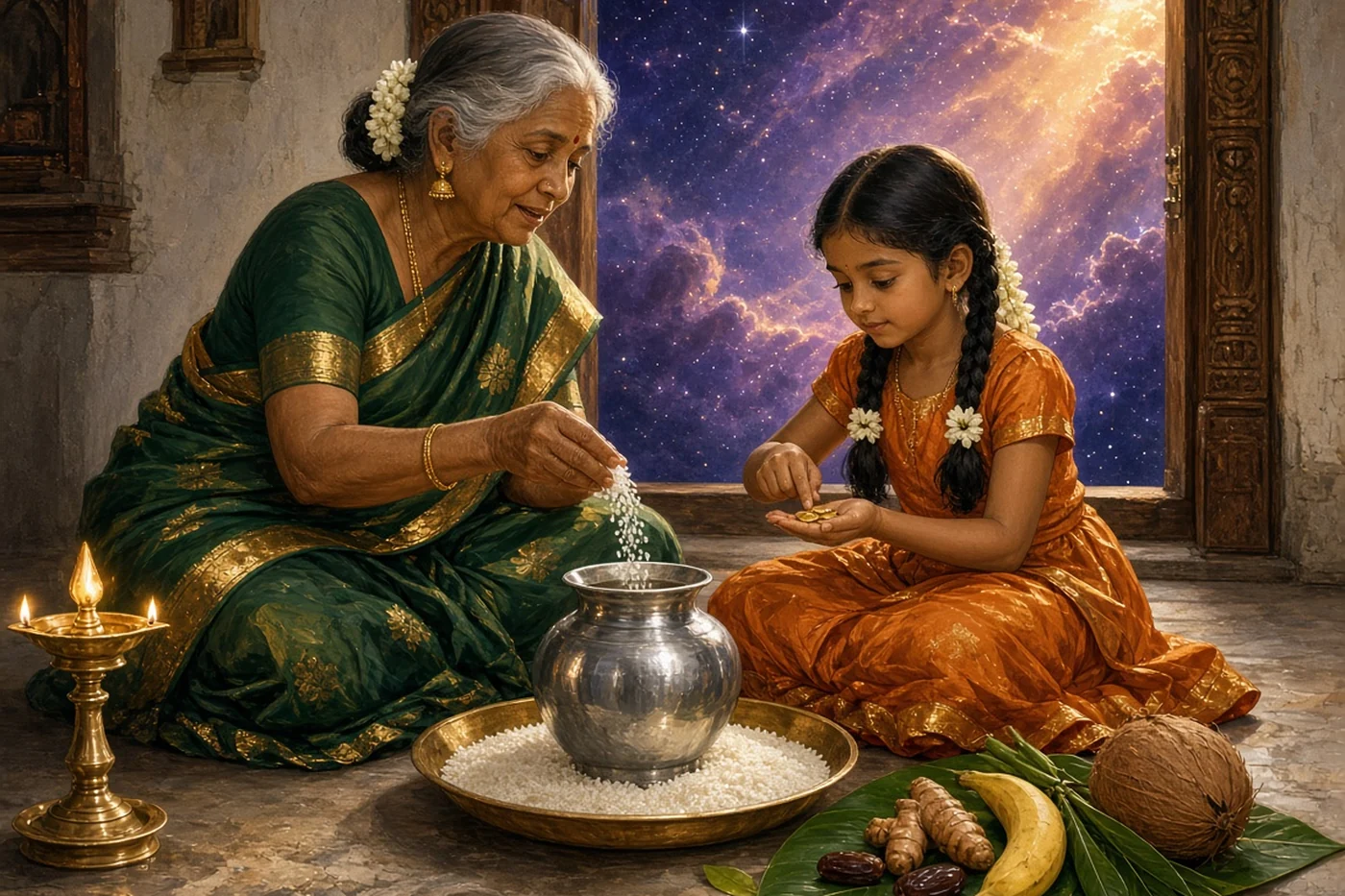
She spread raw rice on the tray and set the silver pot on it. Then she began to fill it, and she talked as she filled.
"Rice first." She poured it in by the handful. "That is Dhanya Lakshmi, the one who keeps the granary. Without her there is nothing to cook and nothing to offer."
She dropped coins in among the rice, then betel leaves, two turmeric roots, a banana, a few dates.
"Dhana Lakshmi. Gold and coin. People think she is the only one, and she is the one they ask for most, but see how small a place she takes in the pot."
The girl counted the coins. "Why are there eight of them, ammamma?"
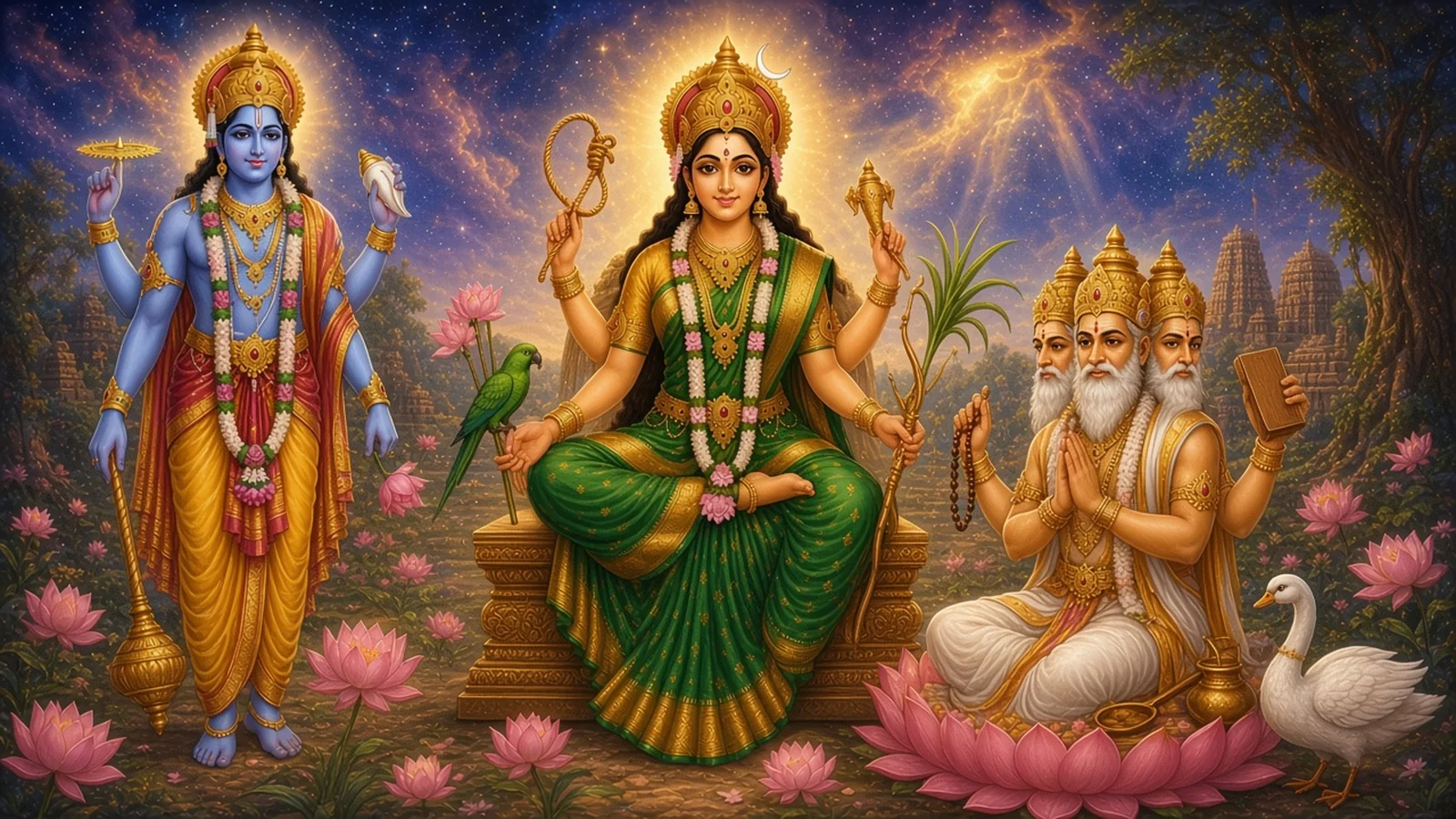
"Because the goddess is eight. One Lakshmi, eight faces, and on this one Friday we call all eight into one pot. That is the whole point of today. Hand me the mango leaves."
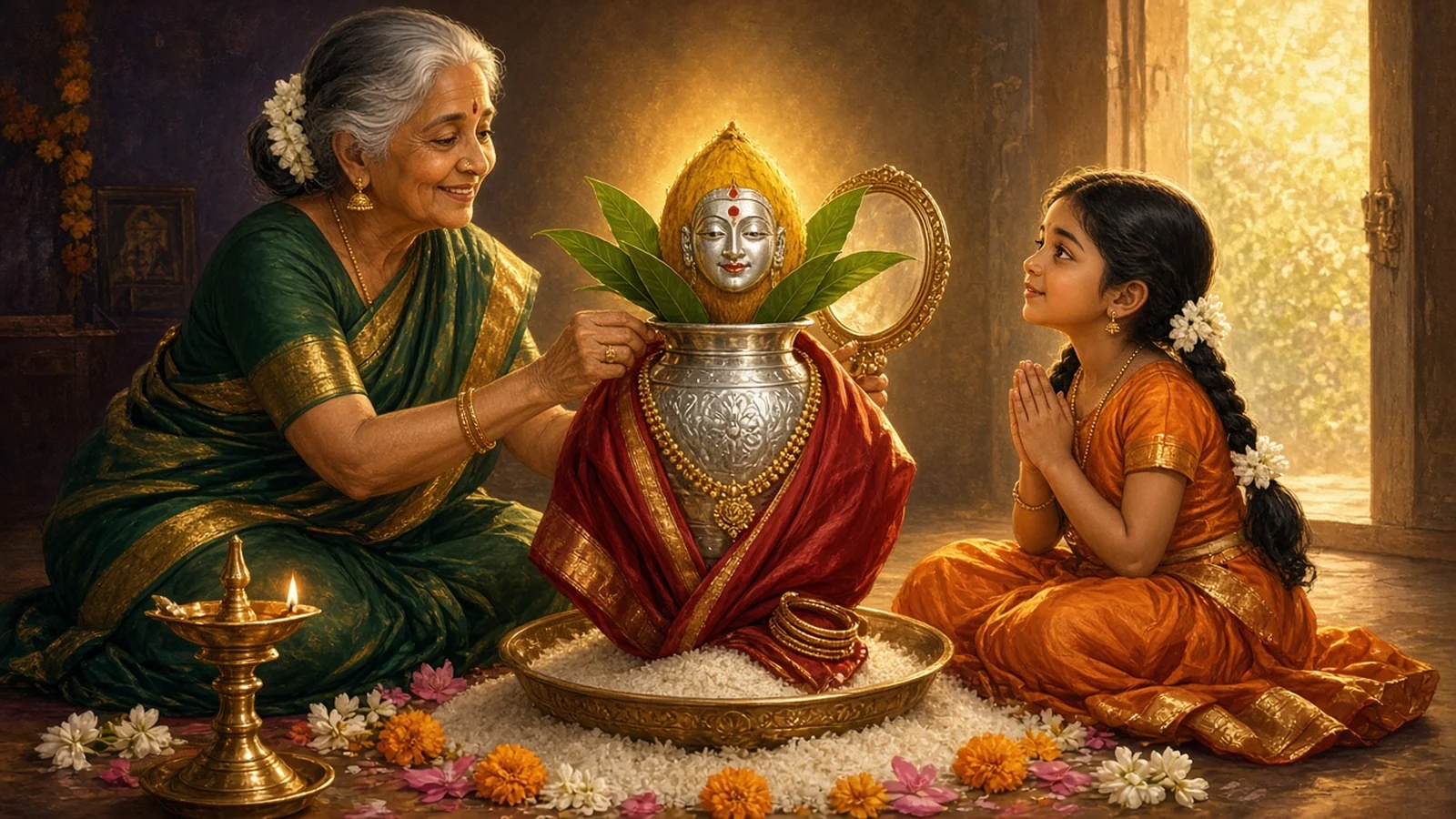
She tucked the leaves into the pot's mouth and set the coconut on top, rubbed yellow with turmeric. Over the coconut she fixed the small silver face, and painted it: the dot between the brows, the kumkum, a line of sandal.
"Now she can see us. Give me the sari."
The sari was folded and pinned round the pot until the pot had shoulders and a lap. Then the jewels went on, the necklace, the bangles over the coconut, the nose ring on the silver face. A small mirror went up behind her, as it did in some houses, so that the goddess could see herself dressed.
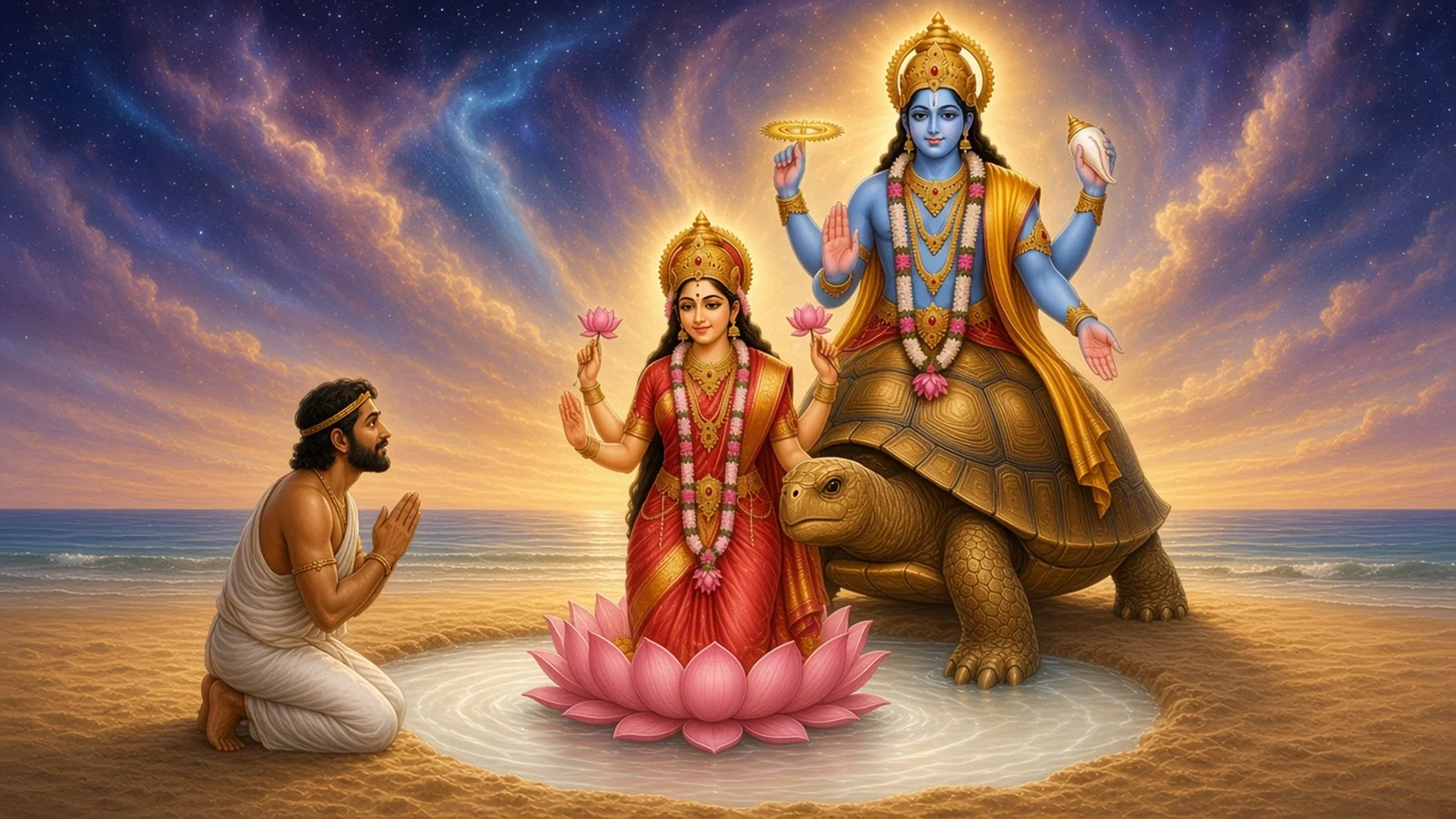
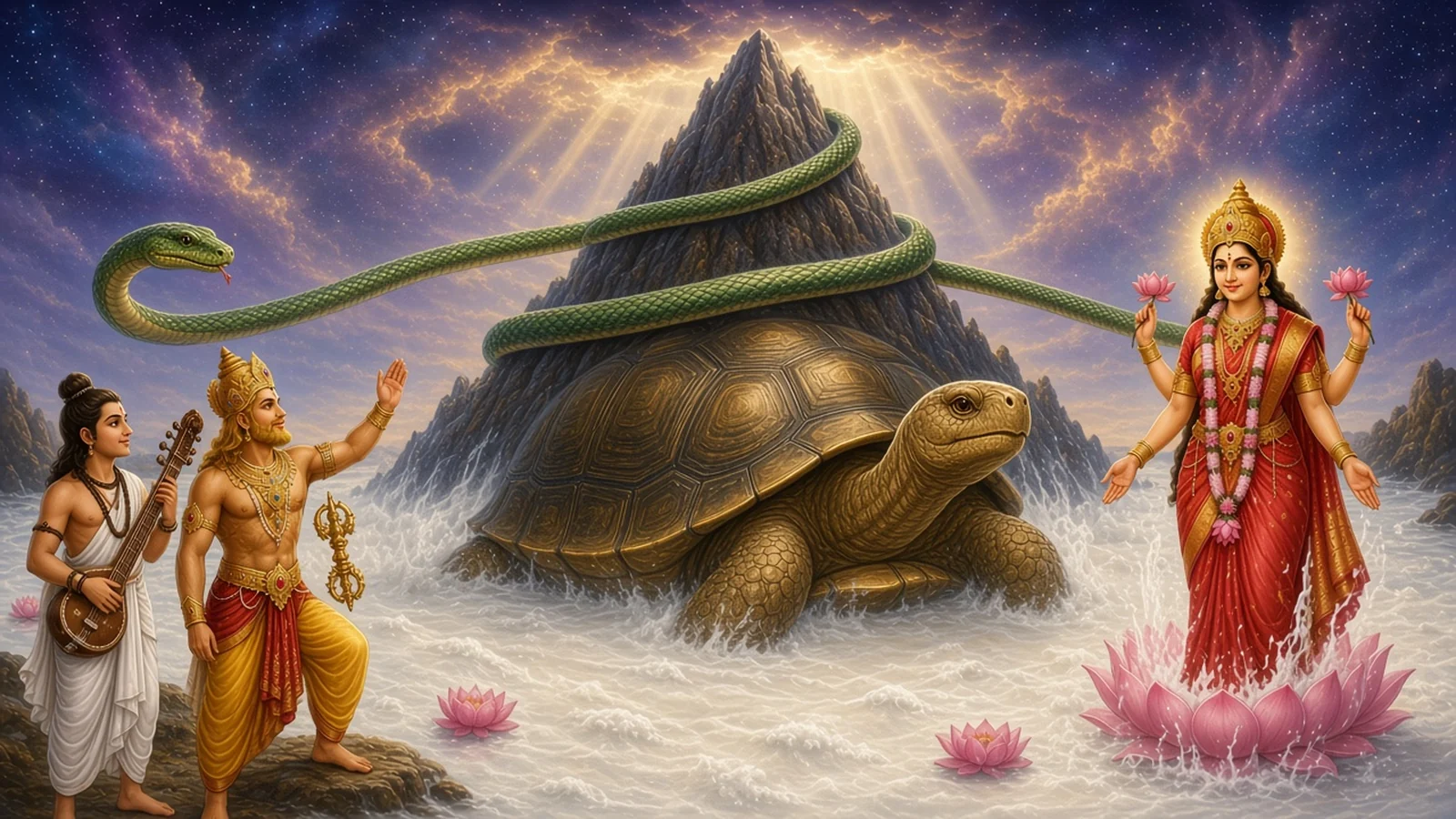
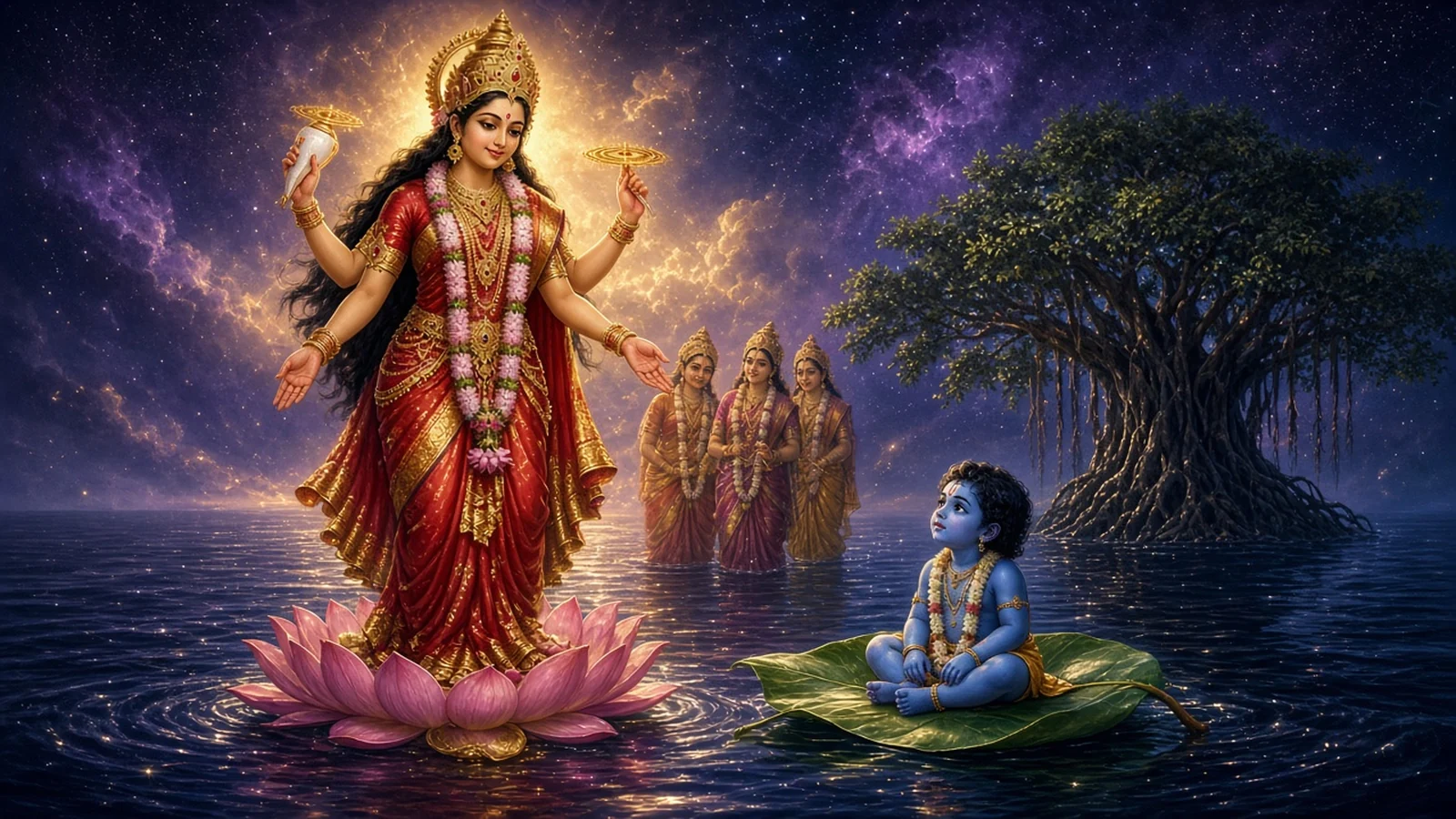
"That is Adi Lakshmi," said the grandmother, stepping back. "The first one. The one who was already there before any of the others, who rose out of the sea of milk after the moon did, so they call her the moon's sister. Everything else is her, wearing something."
She pointed at the picture on the wall behind the pot, the goddess on her lotus with two white elephants lifting water over her.
"Gaja Lakshmi. The elephants are the rain. When the king's elephants bathe her, the clouds bathe the fields. Your great-grandfather, who was a farmer, never prayed to any other."
"And you," she said, and put her hand on the girl's head, "are Santana Lakshmi. Children. A house with no child in it is a rich house with the lamps off."
The girl looked at the school book she had left on the floor by the door.
"Pick it up. Yes, that one is in the pot too. Vidya Lakshmi, learning. The Stotram calls her Bharati and says she has a smiling face. Keep that book where she can see it today."
"That is six."
"Veera Lakshmi and Vijaya Lakshmi. Courage and victory. People forget those two, because they do not look like money. But ask any woman who has brought a house through a bad year which Lakshmi she wanted."
The thread lay ready on a leaf, yellow with turmeric, nine knots in a row with a flower at its middle. The grandmother set it at the goddess's feet.
"After the puja this goes on your right wrist, and one on mine, and one for every woman who comes this evening. Then the betel and the blouse piece for each of them, and tomorrow I will move the pot a little to the north and ask her to go back to her place, and the rice goes into the rice bin so that we eat her all year."
"Does she really come into the pot?"
The grandmother lit the lamp.
"Charumati's story says she came to one woman in a dream and asked for this. The other story says a queen had her thrown out of the gate for suggesting it. Between those two women is every house on this street. Now call your mother. It is time."
The Lakshmi of the elephants
The Sri Sukta, the Sri Vaishnava teachers, and the gateways from Bharhut to Puri · 3 min read
Of the eight, one is far older than the list. Long before anyone counted Lakshmis, the carvers were cutting a woman on a lotus with an elephant on either side of her, and the hymn behind the carving is the oldest prayer to her there is.
The Sri Sukta is a hymn of fifteen verses added to the Rigveda, in the appendix the Bashkala school kept. It asks Agni to bring the golden goddess who does not go away, and in its third verse it describes her arrival. Horses go before her. She sits in the midst of chariots. And she is woken by the trumpeting of elephants. The hymn asks for gold and cattle and sons, and sends away her elder sister, hunger. It has no churned ocean in it and no husband. It has elephants.
The Puranas gave the elephants a story. When Indra threw the sage's garland onto his elephant Airavata and the elephant threw it in the dust, Lakshmi left the three worlds, and the gods churned the sea to get her back. Rekha Rao, writing on the Gaja Lakshmi of the stupas, tells how the tradition finishes the scene. When the goddess rose on her lotus, Indra offered her a seat, and Airavata lifted golden pots in his trunk and poured the water of the sea over her. The Pancharatra texts say it in a line. Gaja Lakshmi gave Indra back what he had lost.
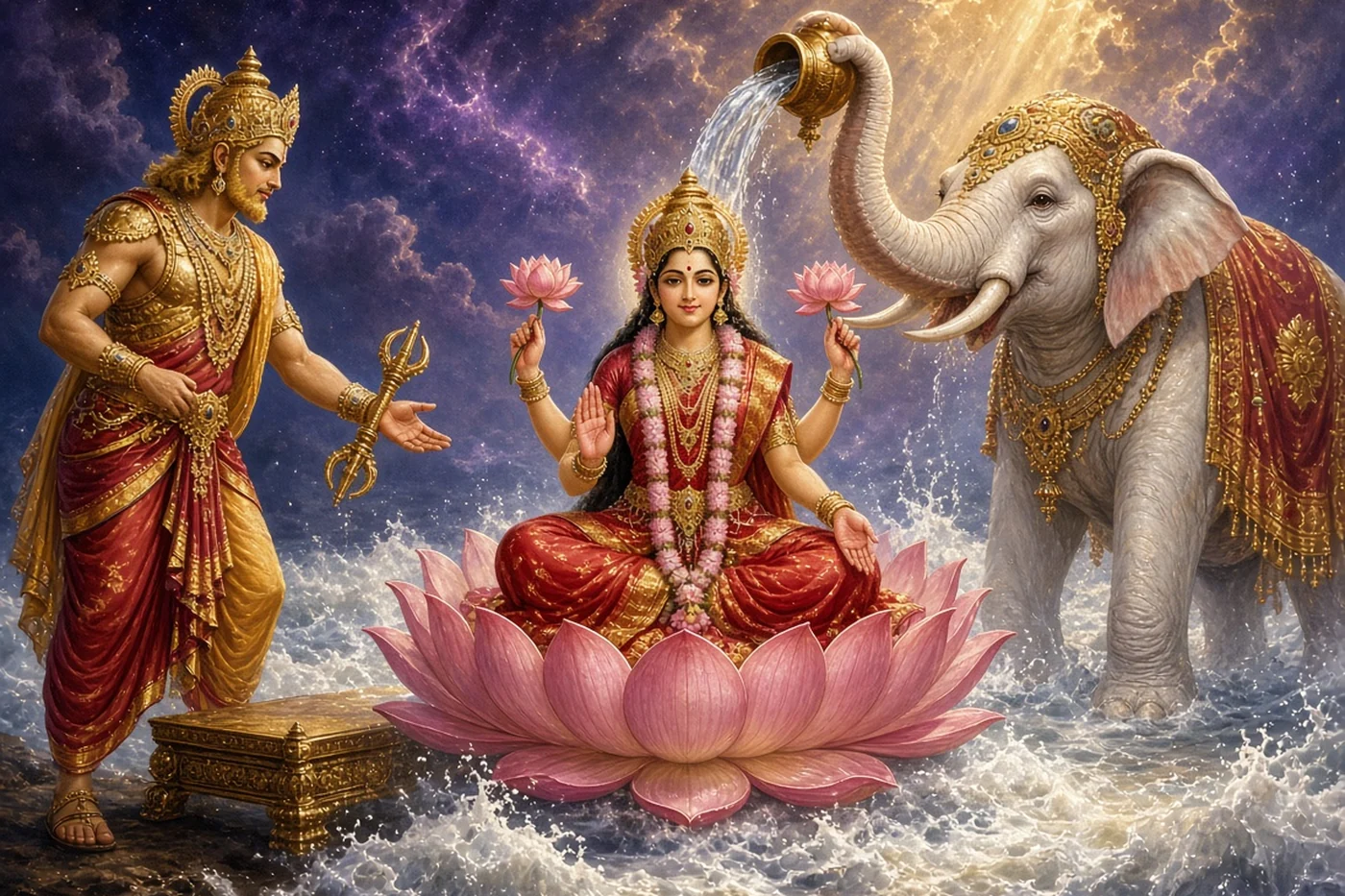
The Sri Vaishnava teachers read it as a coronation. In the thirteenth verse of his Sri Stuti, Vedanta Desika has the eight elephants of the eight directions bathe her from gold kalashas as she is crowned empress of everything that is, and the commentary on the Ashtalakshmi Stotram points to that verse to explain her name. She is the royal Lakshmi, with chariots and elephants and horses and foot soldiers for a retinue, and Hari, Hara and Brahma bow to her.
The stones agree with the hymn and the teachers, and they are older than most of the texts. On the railings of the Buddhist stupa at Bharhut, cut in the second century before the common era, she already sits on her lotus with the elephants pouring water on her. She is on a gateway pillar at Sanchi and on a coin from Kausambi. Buddhists and Jains carved her over their doors as gladly as anyone; a goddess who brings rain and kingship is nobody's private property.
In Odisha the carvers put her where everyone would pass under her. In temple after temple of the Kalinga style the centre of the doorway lintel is Gaja Lakshmi on her lotus, the two elephants emptying their jars over her head. At Puri, inside the enclosure of Jagannath, the shrine of Vimala has her on its lintel among the apsaras. Dhenkanal's eleven days of Gaja Lakshmi have their own page, Sharad Purnima.
So when the grandmother says the elephants are the rain, she is saying what the carvers of Bharhut said, and what the hymn said before them. Of the eight, this is the one the whole country drew.