As a hill town hears it: a Deusi night
Nepal, the fourth night of Tihar · 3 min read
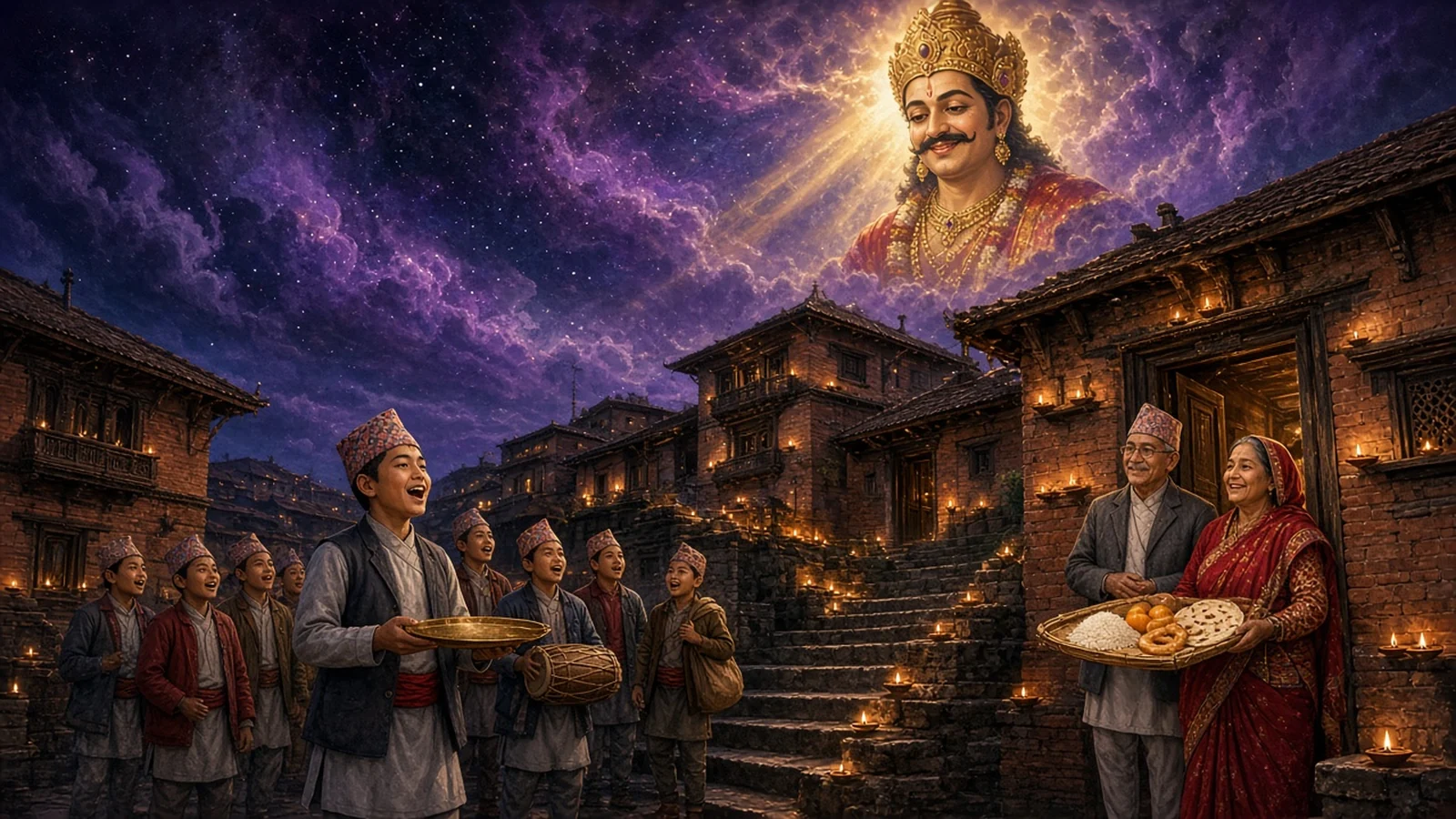
The lamps from the night before were still in their rows along the window ledges when the boys gathered at the tea shop at dusk. There were nine of them, with a madal drum, a tray and a sack for the takings, and a plan to reach forty houses before midnight. Suman, who was fifteen and had the loudest voice, had been made the leader, which meant he sang the lines and the rest only had to answer.
At the first house the door was already open and the owner, an old schoolmaster, stood in it with his arms folded.
Suman began. The others came in after every line with the two words that make the song what it is.
"Deusi re!"
He sang that they had come a long way in the dark. Deusi re. That the path was steep and full of thorns. Deusi re. That the house they had reached was a fine one, with a fine man at the door. Deusi re. That the man should come out with his tray and not keep them waiting, because there were other houses. Deusi re. Then the line that is in every Deusi and every Bhailo in Nepal, sung by the whole band together, so that the schoolmaster's wife heard it in the kitchen and came out with the nanglo tray.
"We did not come of our own accord. King Bali sent us."
On the tray were a heap of rice, a few sel roti, two oranges and a folded note. Suman took it all with both hands and the band sang the blessing: may the house fill with grain, may the cows give milk, may the family live long, and may the master's beard grow down to his knees, which made his grandchildren laugh. Then they were off down the steps.
At the sixth house the owner was a young man home from Qatar, and he wanted to argue.
"Who is this Bali who sent you? Did he give you my address?"
"Bali Raja," said Suman. "The king."
"Which king?"
The boys looked at each other, and the youngest, who went to the Sanskrit school, answered.
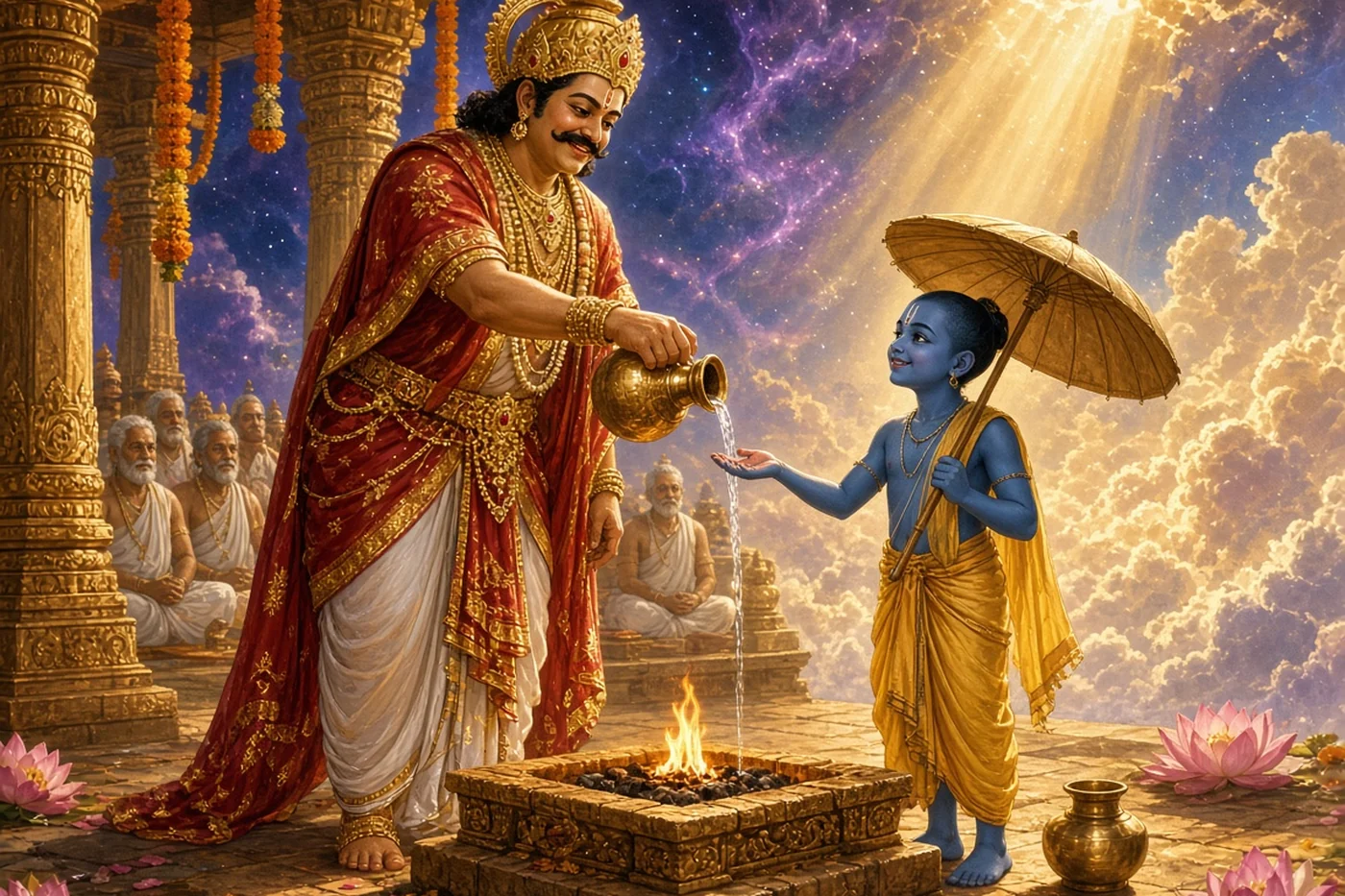
"The one in the Puranas, dai. Bali was king of the three worlds and never refused a guest. Vishnu came to his sacrifice as a dwarf and asked for three steps of land, and two steps covered everything, and for the third Bali bowed down and gave his own head. So he was sent below the earth. But Vishnu was pleased with him and gave him leave to come up once a year, and these are his days. Our fathers say he comes for the five days of Yamapanchak, and he sends his people round to the houses to collect his due and leave his blessing. That is us."
"And deu-sire?"
"Some say it means give your head. That is what Bali did."
The man from Qatar laughed and gave them a hundred rupees, and said that in Doha the Nepalis hired a hotel hall for Tihar every year, and nobody there asked questions either.
The night before, Suman's sister had gone round with the girls of the lane singing Bhailo, which is slower and sung all together without a leader, and which asks the lady of the house for a skirt and a blouse and tells her it is the new-moon night, the night of the cows. The girls had come home with a bag of rice, four hundred rupees and a sel roti each.
The boys did better. By midnight the tray had been emptied into the sack three times, and at the tea shop they counted: rice enough for a feast, a basket of fruit, and more money than any of them had held. Some would pay for the Bhai Tika sweets the next day. The rest, Suman announced, would go to the school, as the Deusi money does in that town, and the schoolmaster at the first house would receive it.
"Then he paid us to pay him," said the youngest.
"King Bali paid us," said Suman. "We only came where we were sent."
As the Newars tell it: the sand that turned to gold
Kathmandu valley, Mha Puja and the new year of Nepal Sambat · 2 min read
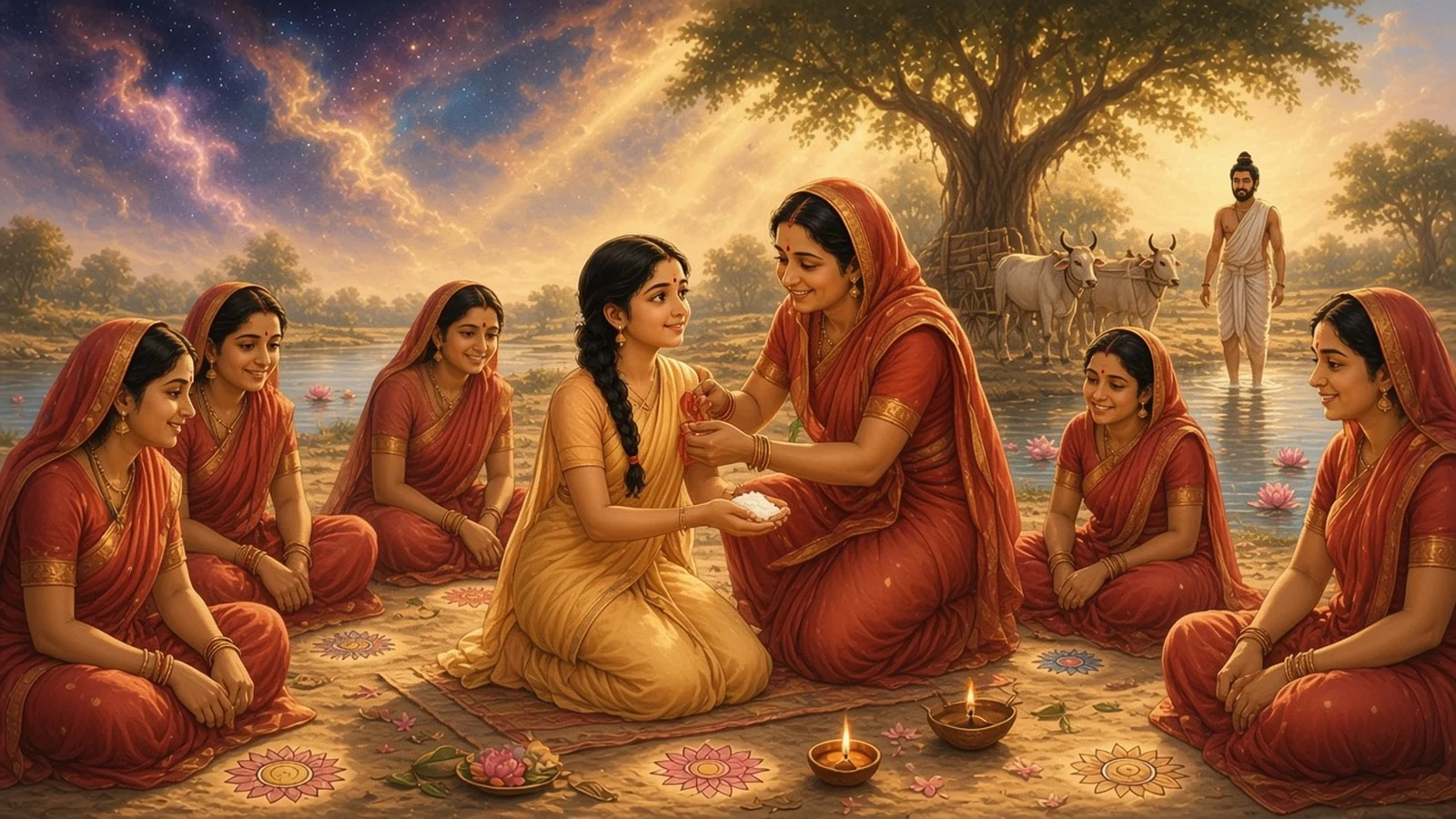
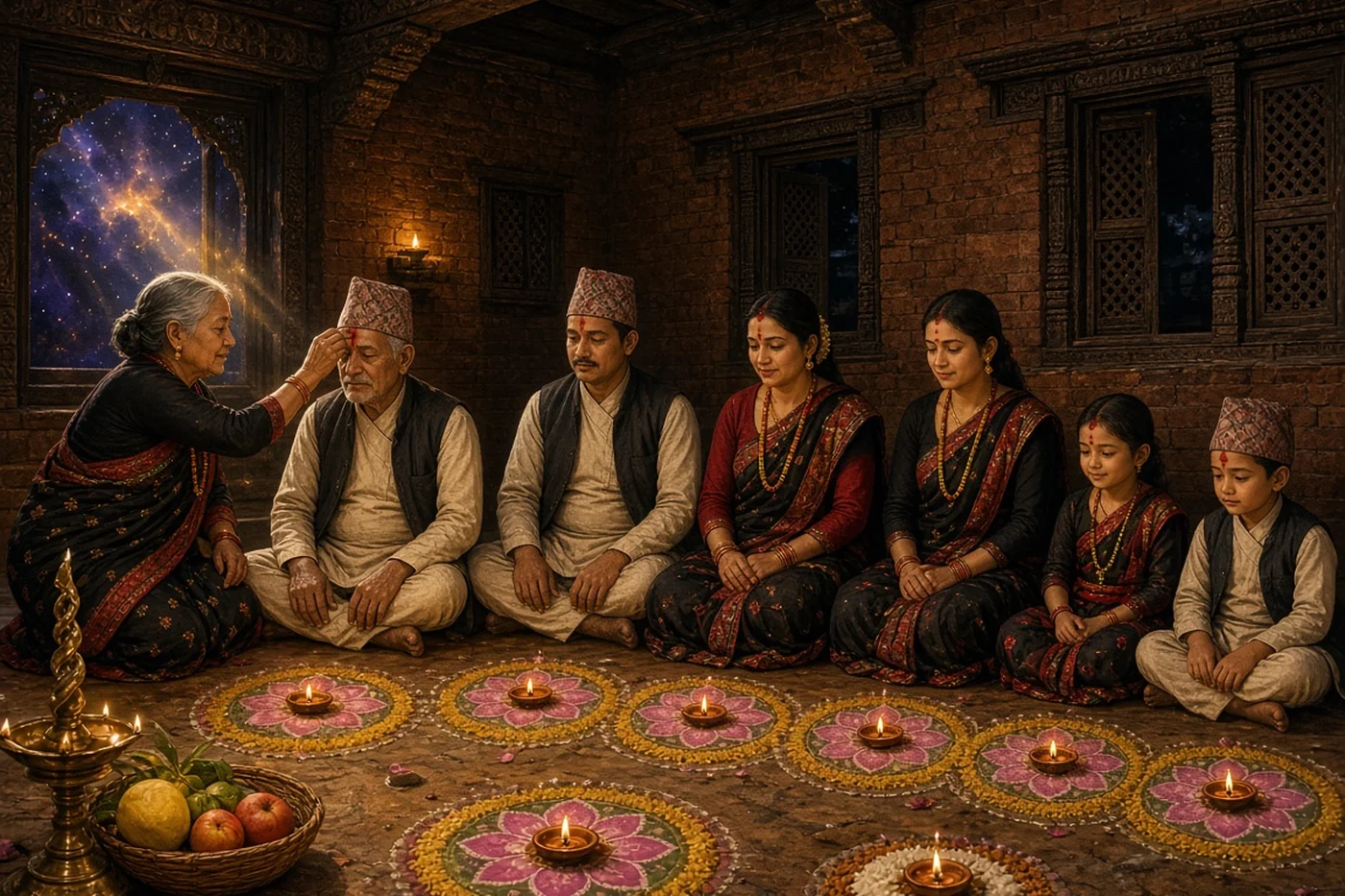
On the night the Deusi bands are out, the Newars of the Kathmandu valley are indoors, sitting in a row on the floor of the main room before a row of mandalas. The night is Mha Puja, the worship of one's own self, and it is New Year's Eve as well, because the next day begins a year of Nepal Sambat, the valley's own era. In 2026 the year that begins is 1147.
The era has a founder, and his story is in the valley's chronicles, the Bhasa Vamsavali among them. In the reign of Raghavadeva, more than eleven hundred years ago, an astrologer at the court of the king of Bhaktapur worked out that on a certain day, at a certain hour, the sand where the Bhadramati stream meets the Bishnumati river in Kathmandu would turn to gold. The king sent porters to dig it up. On their way home they rested at a shelter at Maru, near the palace square, and a merchant of the town named Shankhadhar Sakhwa came out to them.
"That is heavy, and it is only sand. Sell it to me and go home with your hands free."
They sold it. In the morning the porters' loads were sand and the merchant's heap was gold. Shankhadhar did not keep it. He went through the town and paid off every debt that every household owed the king, gave the king what was left, and the people of the valley, free of their debts all at once, began to count their years from that day. The chroniclers set it in the autumn of 879. In 1999 the government of Nepal named him a national hero; historians add that nobody can show that he lived.
Mha Puja itself is older and simpler, say the Newars. Each person in the house has a mandala drawn before them on the floor, a lotus of eight petals in a ring of water, with rings of rice, lentils and puffed rice and mustard oil at the centre. Two more are drawn for the messengers of death, so that they are not left out, and others for the water pot, the winnowing tray and the broom.
The eldest woman of the house goes down the row with a tika for each forehead, a long twisted wick that is lit and held, a thread, a basket of fruit with a citron in it for long life, and the sagan: a boiled egg, a piece of smoked fish and a cup of rice wine, filled three times. Then the plates of food are set on the mandalas and the mandalas are spoiled, because nothing drawn is meant to last, and the floor is swept only in the morning.
By then the Bhintuna rallies are in the streets of Kathmandu, Patan and Bhaktapur, the women in black and red hakupatasi, the men with dhime drums, and the greeting of the day is called from the squares: a happy new year.