As the katha books tell it
Told across the north · the Devshayani katha, Krishna to Yudhishthira · 3 min read
The rains were late that year, and Yudhishthira had been counting the days.
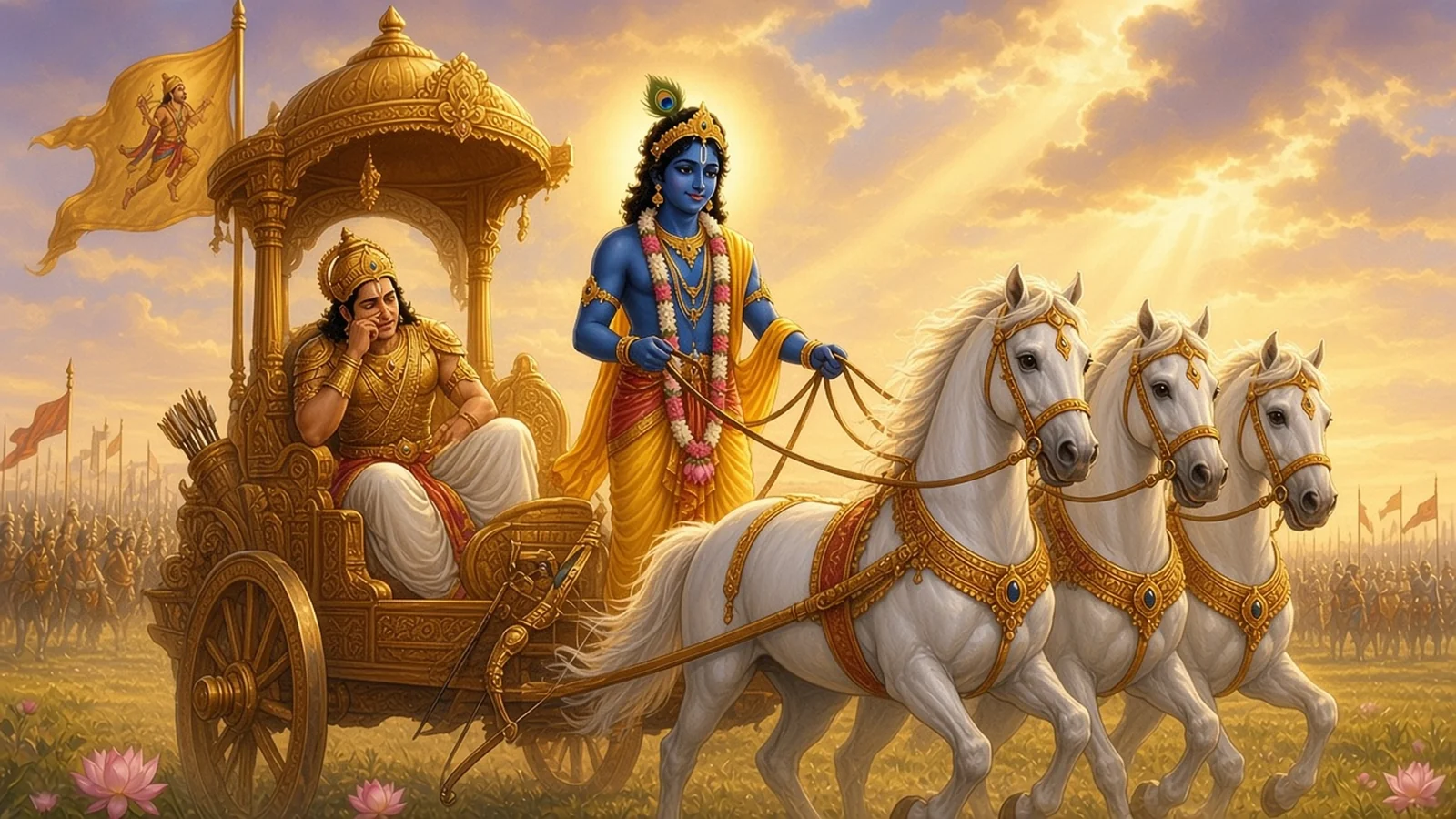
"Krishna," he said, "there is an Ekadashi in the bright half of Ashadha. What is its name, whose day is it, and what does a man gain who keeps it?"
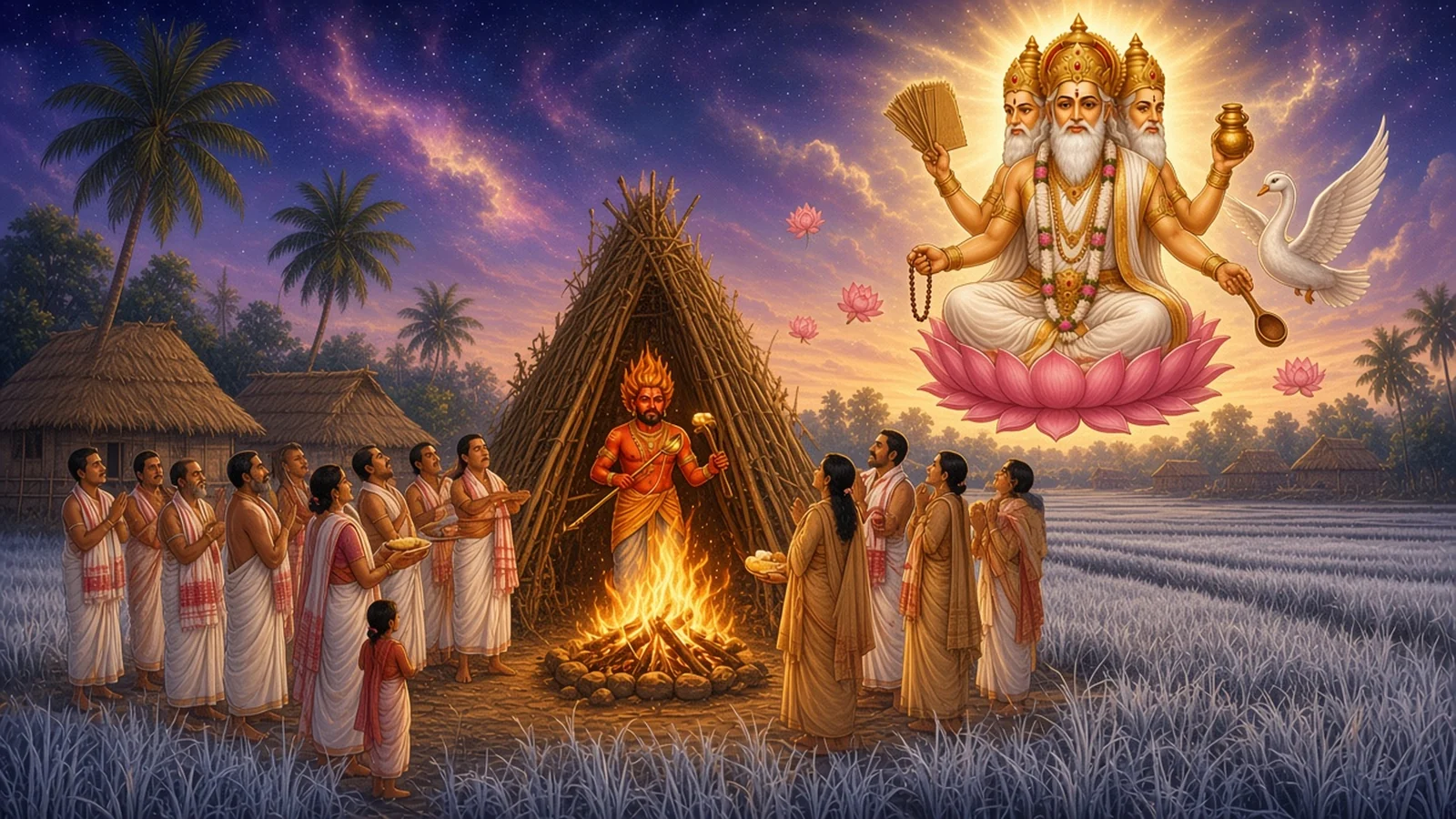
"Narada asked Brahma the same thing once," said Krishna, "and Brahma said it was the best question anyone had put to him. The day is called Padma, and Devshayani, the day the god lies down. Listen to what Brahma told him."
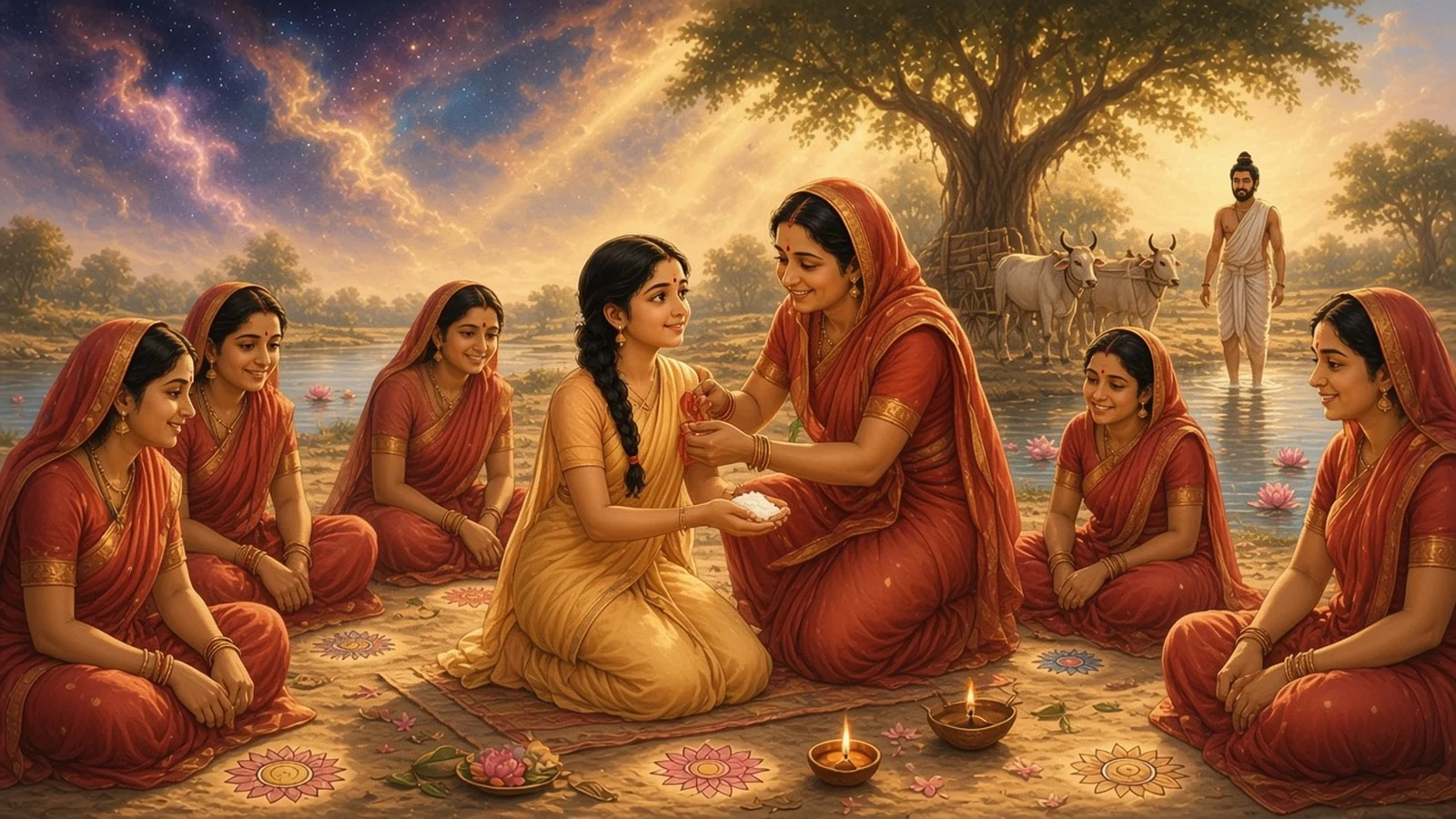
In the line of the Sun there was a king named Mandhata, and his kingdom was the kind that appears in stories because it is so rare. The treasury held nothing taken unjustly. The granaries were full. The people were fed, the fires were lit, and the king, who had been born as no one else ever was, out of his father's side, with Indra's own finger in his mouth, ruled with his hand open.
Then the rain stopped.
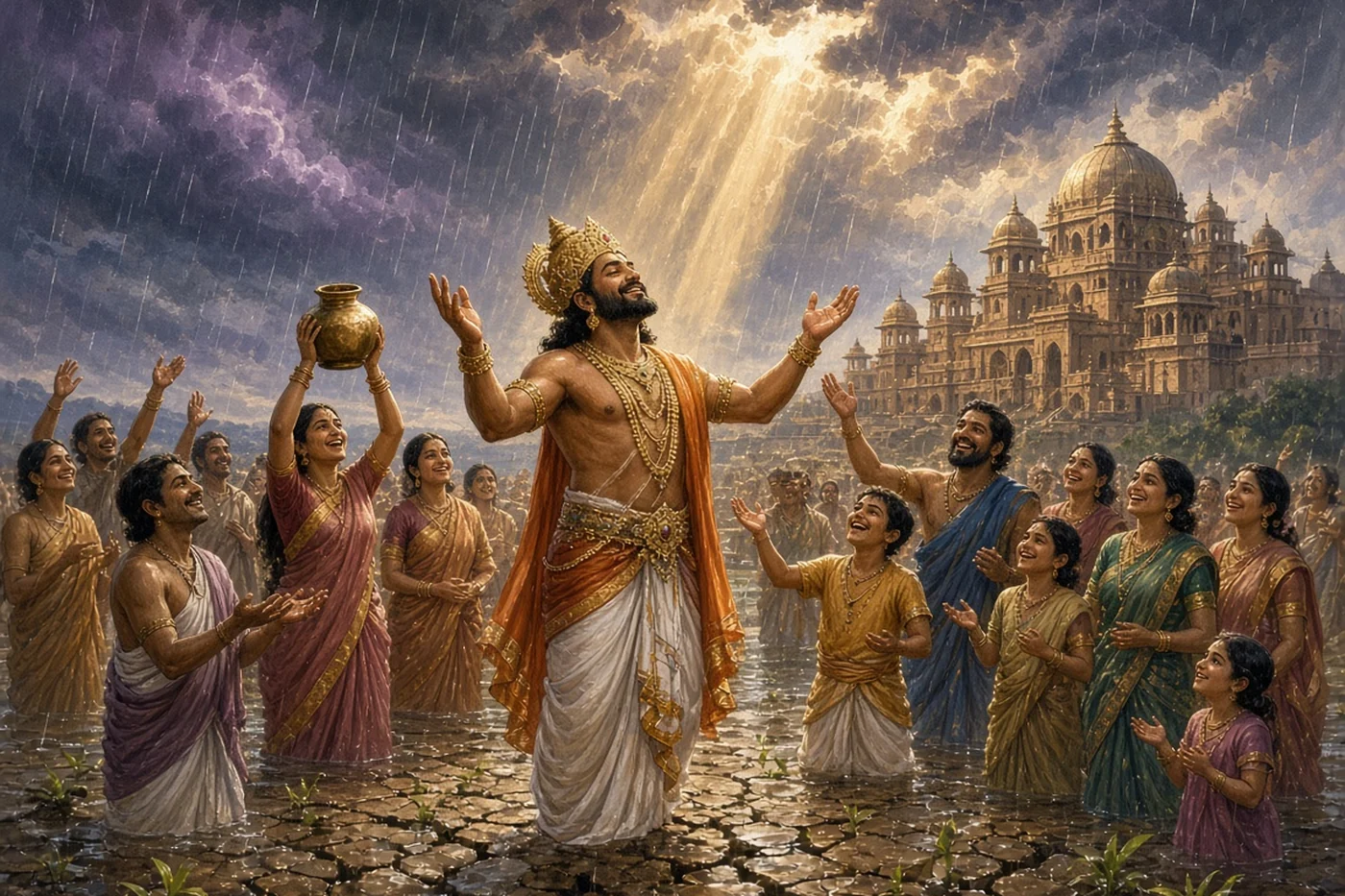
It did not come the next year either, or the year after that. The rivers went down to their beds and the beds cracked. There was no grain, so there was no offering; no offering, so no fire; no fire, so the Veda was not taught, because the teachers had gone to look for food. People died, and people left, and in the third year the ones who were left came to the palace.
"Water is life," their spokesman said. "Grain comes from water and water from the clouds, and the god comes as the clouds. He has not come. We do not say it is your fault, lord. We say we will have to go to another country."
Mandhata had already asked himself the question they were too polite to ask. "I have gone over everything I have done since I took the throne," he said. "I cannot find the sin. But a king answers for his kingdom's weather, and I will find out what is wrong with it. Stay."
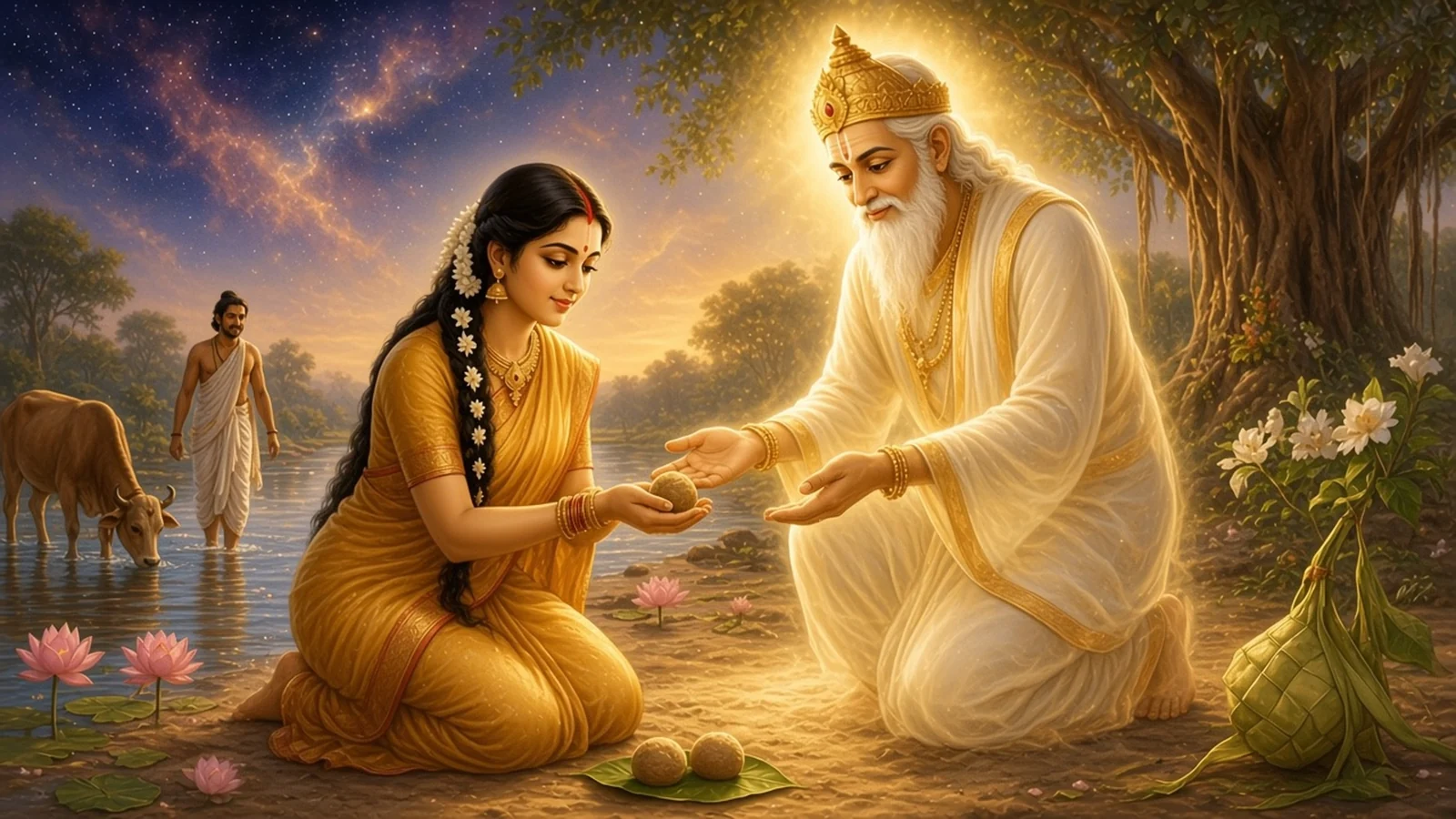
He went into the forest with a few companions, from hermitage to hermitage, until he came to the ashram of Angiras, a son born of Brahma's mind, and bowed, and asked after the sage's health and the sage's fire, as a king is taught to, before he asked anything else.
"Three years without rain," he said at last. "Tell me why."
Angiras looked at him for a while. "You rule in the first age," he said, "when the law is whole and each kind of man has his own work. Somewhere in your country a man of low birth is doing the austerities that belong, in this age, to Brahmins. That is the crack the rain is leaking out of. Find him and put him to death, and the clouds will come back."
The king did not move. "He has done nothing but pray," he said. "I cannot kill a man for praying. I came to you for a way out that I could live with. Give me another."
The sage was silent longer this time, and then, the katha says, he smiled.
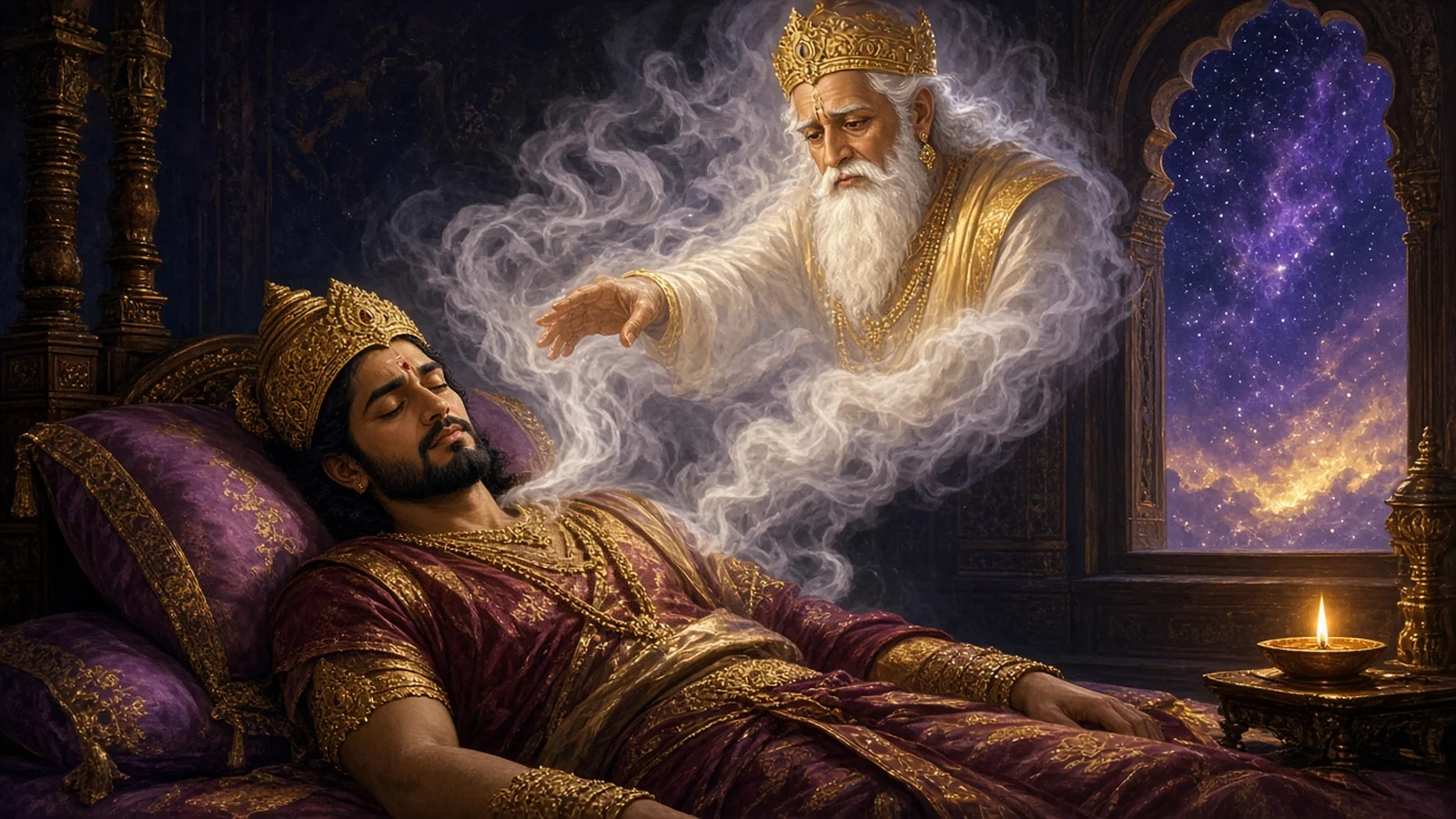
"There is one. In the bright half of Ashadha there is an eleventh day, Padma, the god's own. Go home. Keep it with a fast, you and your queens and your ministers and every one of your people, the four kinds of them together. Worship Vishnu that day with the conch and the discus and the mace, and stay awake that night. The rain will come."
Mandhata went home and did exactly that, and the whole country fasted with him, and the katha gives the ending in one line, because one line is all it needs: the clouds came, the rain fell, and the land was green.
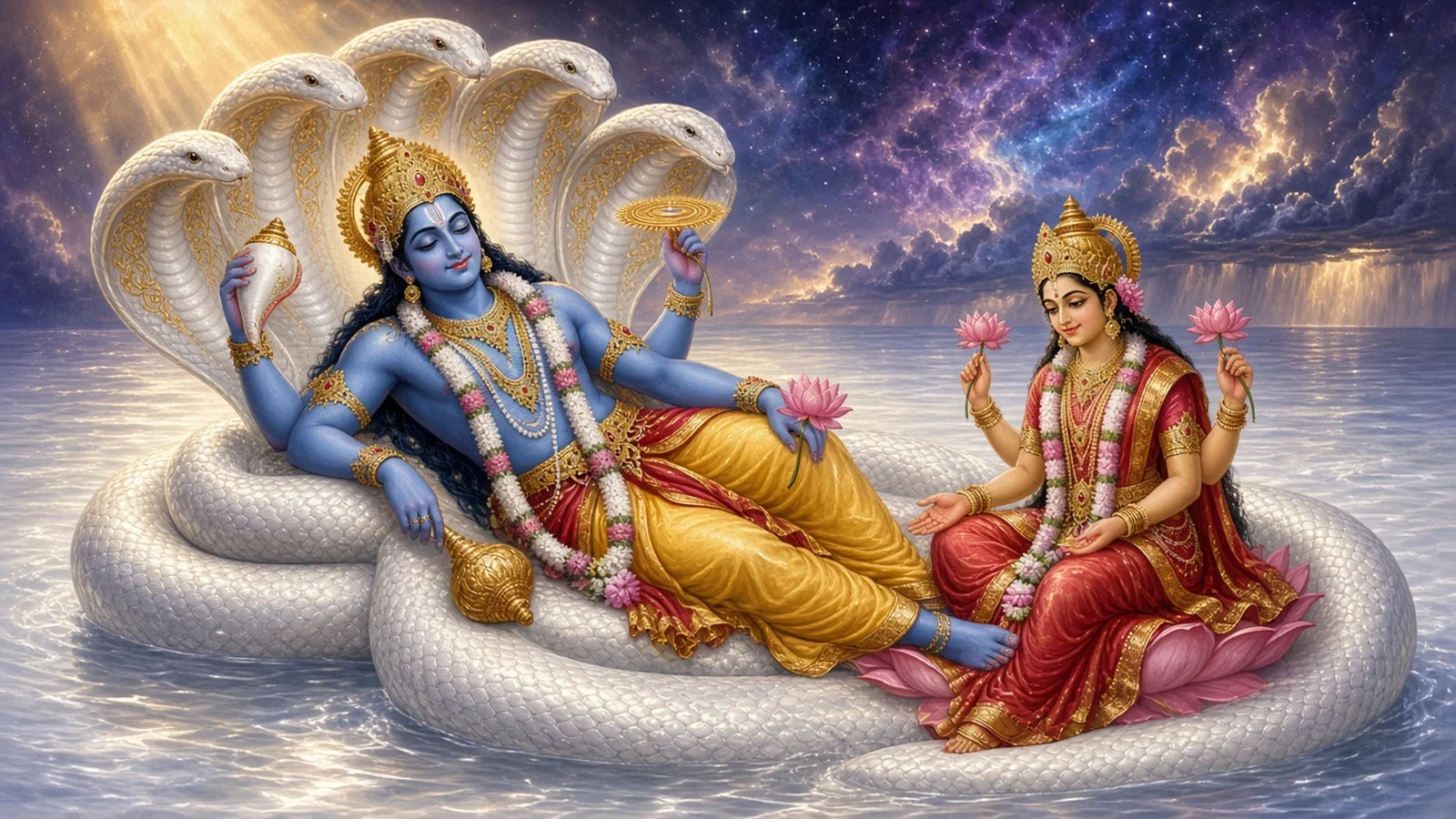
"That is the day," said Krishna. "Keep it, and the four months after it, and you will not be born again. And know this too: from that eleventh day Vishnu lies down on the serpent in the ocean of milk and sleeps, and does not wake until the eleventh day of bright Kartik. The world is in his dream until then. Walk softly in it."
As the Puranas and the almanacs explain the four months
Maharashtra, Gujarat, Odisha, Nepal and the north · the Chaturmas · 2 min read
The Padma Purana's own chapter for this Ekadashi, the fifty-third of its Uttara Khanda, does not mention Mandhata. Krishna gives Yudhishthira a different story. In the Treta age the demon king Bali worshipped Vishnu with sacrifice after sacrifice until the god came to him as a dwarf and asked for three steps of ground, and grew, and covered the worlds, and set the last step on the king's head, and sent him down to Sutala.
Then, pleased with the king's humility, Vishnu divided himself. One form of him went down to stand at Bali's door, where he had promised to stay, as the Bhagavata also tells it; the other lay down on Shesha in the ocean and slept until the bright Ekadashi of Kartik. That is why the god is asleep for four months, the Purana says: he is keeping a promise somewhere else. The Three Strides, The Three Nights Bali Asked For and The Thread on Bali's Wrist tell the rest of that bargain, including how Lakshmi went down to Sutala herself to get her husband back.
The same chapter gives the rules. Whoever keeps the four months should sleep on the ground while the god lies down; give up green vegetables in Shravana, curd in Bhadrapada, milk in Ashvina and pulses in Kartik, or else keep celibate; light lamps and eat from a palasha leaf; and every householder should keep the Ekadashis that fall between Shayani and Prabodhini. The almanacs add what the Purana leaves out: no weddings, no thread ceremonies, no new house entered, no head shaved for a first time, until the god wakes.
In the popular telling the care of the world passes meanwhile to Shiva, which is why the first month of the four, Shravana, is his. Nepal calls the day Harishayani and sows tulsi seeds on it; Gujarat calls it Devpodhi, the god gone to bed; at Puri the three gods of the Jagannath temple sit in gold on their chariots that same evening, the Suna Besha, with the Rath Yatra just over.
On the bright Ekadashi of Kartik, Prabodhini, he is woken with song under a canopy of sugarcane, and over the next four nights the courtyard marries the tulsi plant to him, which is Vrinda's Curse in the Lore, and the weddings begin.
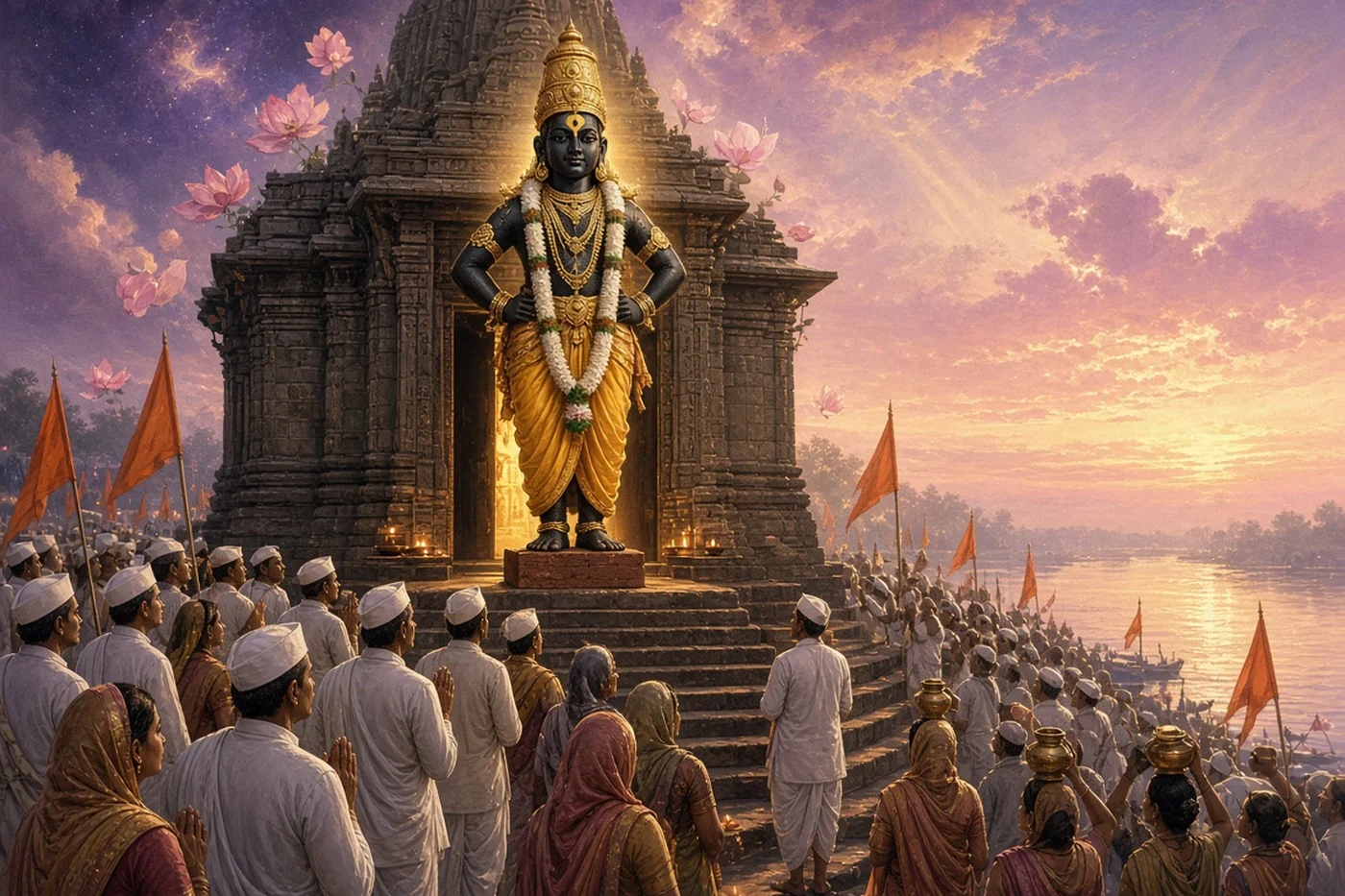
Pandharpur has its own reading of all this. On the very Ekadashi the rest of India puts Vishnu to bed, a million Varkaris arrive at the Bhima to look at a god who is standing up, hands on his hips, on a brick, exactly where he was told to wait. The walkers say it plainly: Vitthal does not sleep. Whatever Vishnu does in the ocean of milk for four months, the one at Pandharpur is awake and waiting for whoever comes, and the Wari arrives on this day so that he is not kept waiting alone.