As a lower Assam village keeps it: the dheki, the beel and the dawn fire
Lower Assam · a village near Nalbari, from the last days of Puh to the first of Magh · 3 min read
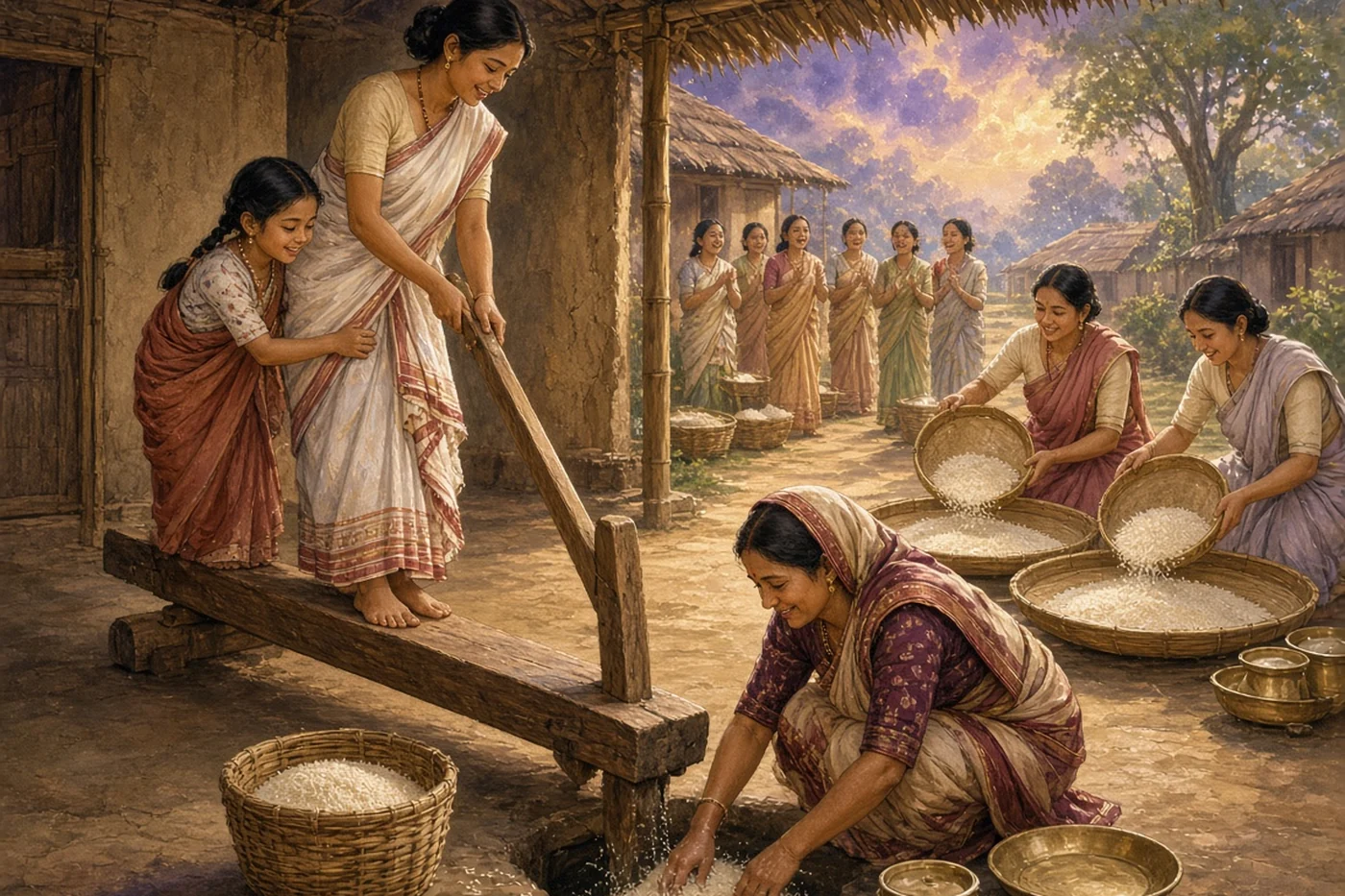
Three days before Uruka the thudding started at Jonali's aunt's house and did not stop. Every woman in the lane brought her own basket of soaked rice, and they took turns at the dheki, one treading the long beam at the back, another crouched at the pit to turn the grain each time the pestle lifted. The ones waiting sang. The ones sifting sang louder.
"Your turn," her aunt said, and Jonali climbed on behind her mother and leaned her weight into the beam until her legs ached.
By evening the flour sat in tins, white and fine, and the house smelled of roasting sesame. Her mother heated the flat iron pan dry, spread a round of damp flour across it and laid a line of sesame and jaggery down the middle, then rolled the whole thing up quick as a mat before it cracked. Til pitha. After that came the coconut ones, and the ghila pitha that hissed in the oil, and the laru of puffed rice and molasses pressed in wet palms.
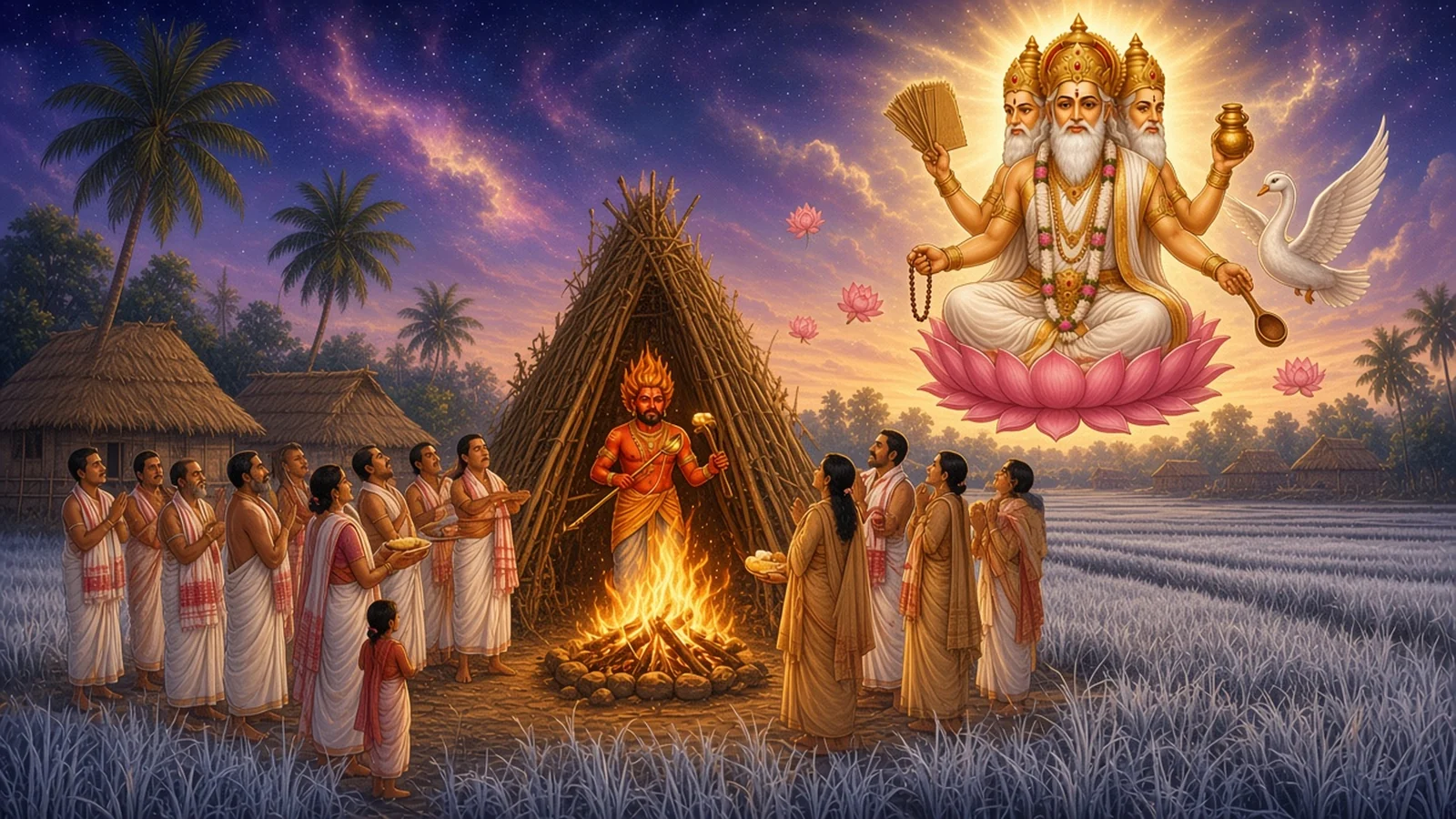
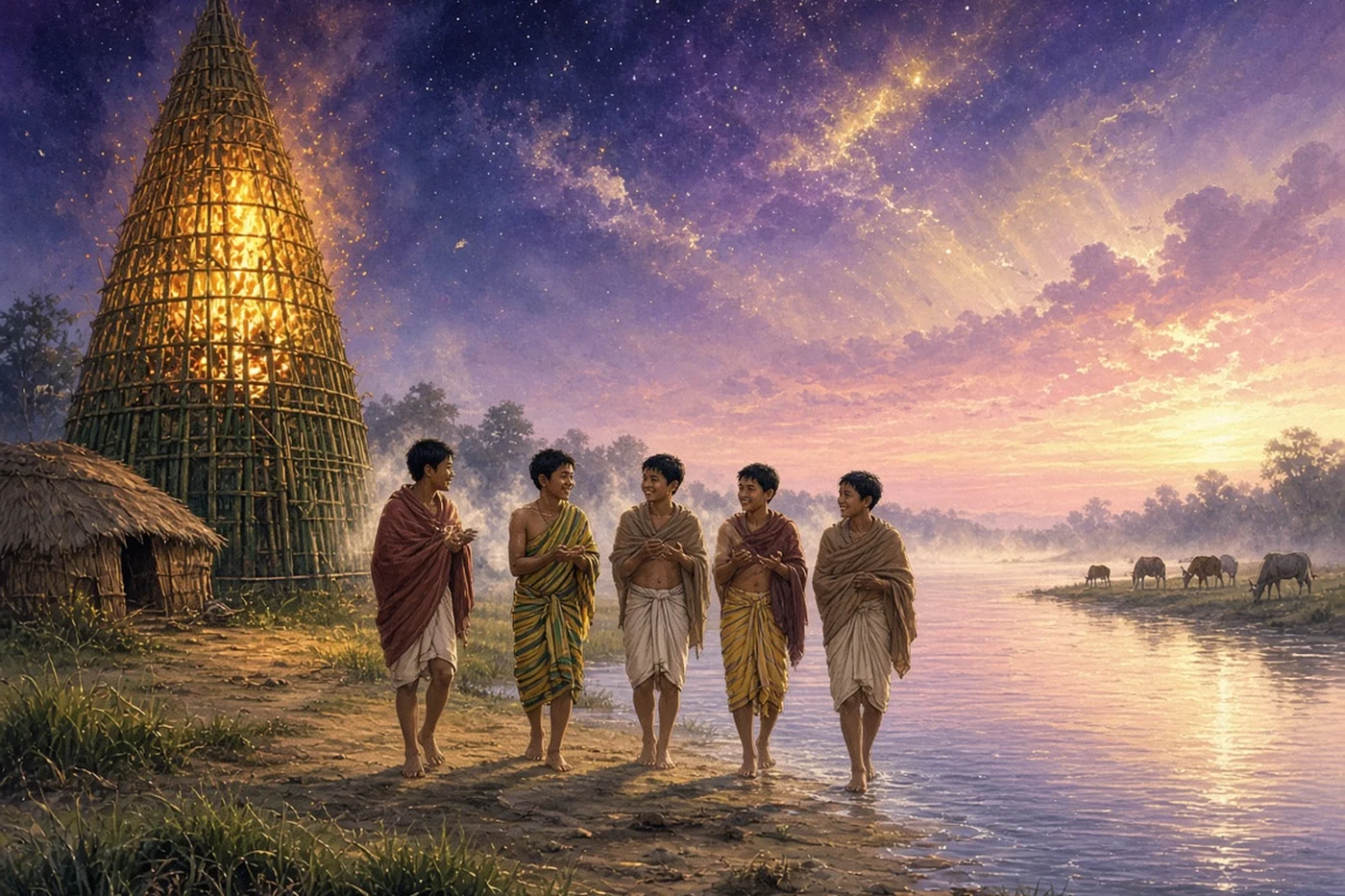
Out in the harvested field her brother Ranjit and his friends were building. They had cut green bamboo from the clump behind the school, and they stood the poles in a cone, packed the gaps with paddy straw and dried banana leaves, and kept going until the meji was taller than two men. Beside it, lower and squarer, went up the bhelaghar, a hut of the same straw with a doorway you had to stoop through.
"Don't touch the meji," Ranjit told her. "If it falls over before morning, it's your fault."
On Uruka the whole village went to the beel before it was properly light. Men waded in with bamboo traps and pushed them down into the mud, women worked the shallows with hand nets, children shrieked whenever anything silver moved. By early afternoon the water had been churned brown and every family had a basket.
That night the bhelaghar was full. Ranjit's group had cooked fish in mustard and a duck between them, and someone's uncle had brought mutton, and Jonali was allowed to sit at the edge for an hour before her mother called her home. The boys would sleep out there by the fire.
In the morning Mrs Bora from the end of the lane stood at her gate complaining loudly that her pumpkins had walked away in the night, and that half her firewood had gone with them. Nobody looked sorry, least of all Mrs Bora, who was smiling.
Before sunrise on the first of Magh, Jonali's father was already out in the garden with a bundle of straw ropes, tying one round each of the coconut palms and the guava and the old jackfruit. Then everybody bathed, gasping in the cold, and went down to the field in their clean clothes.
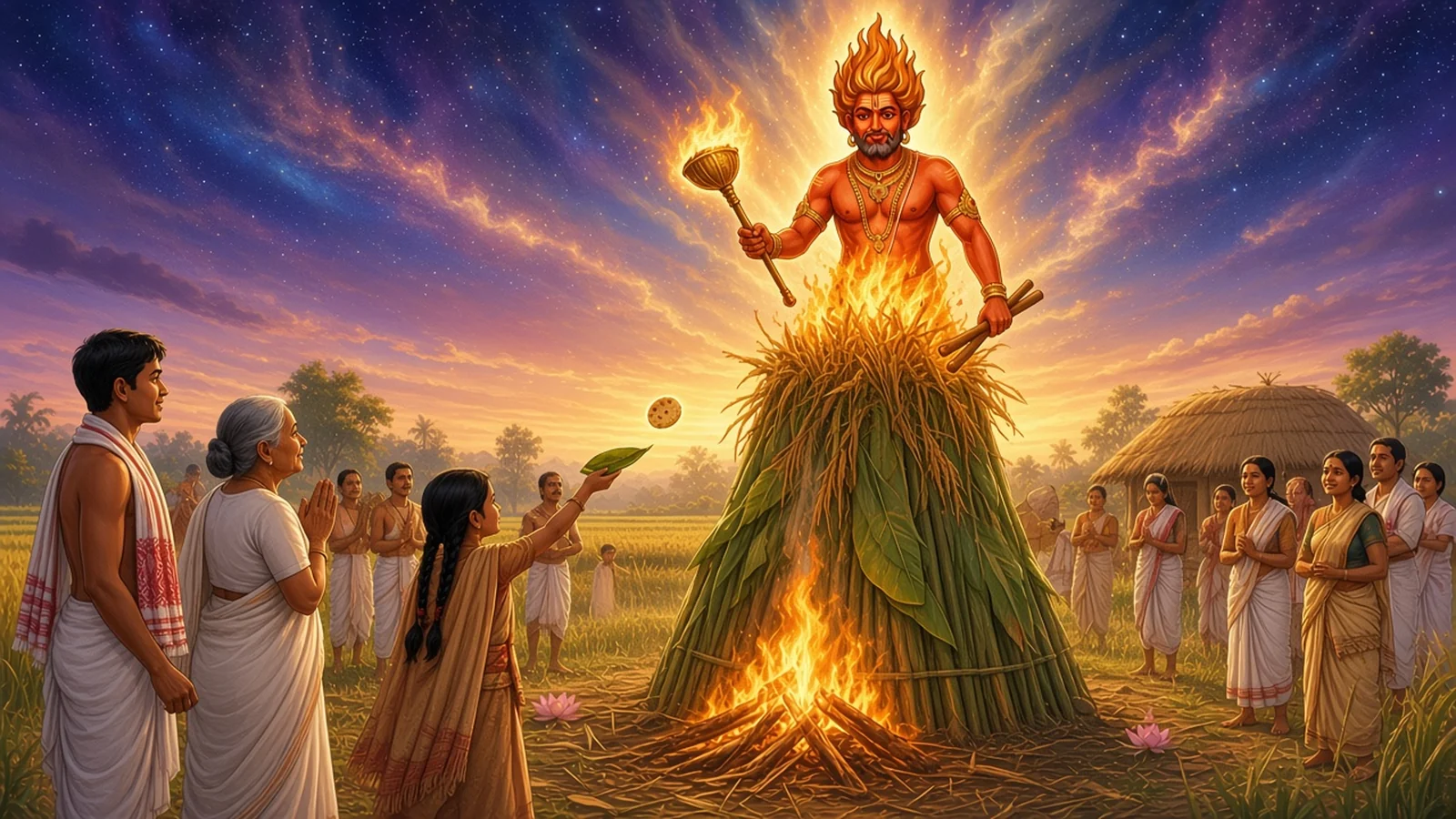
Her grandmother handed her a leaf with two pitha on it and a piece of betel nut. "When it catches, give these to Agni. Throw them in, don't drop them."
Ranjit lit the straw at the bottom of the meji. The flame climbed fast through the dry banana leaves, and then the green bamboo began to burst with sharp loud cracks. Jonali jumped.
"That's the evil spirits running," her grandmother said, pressing her palms together. "Throw, now."
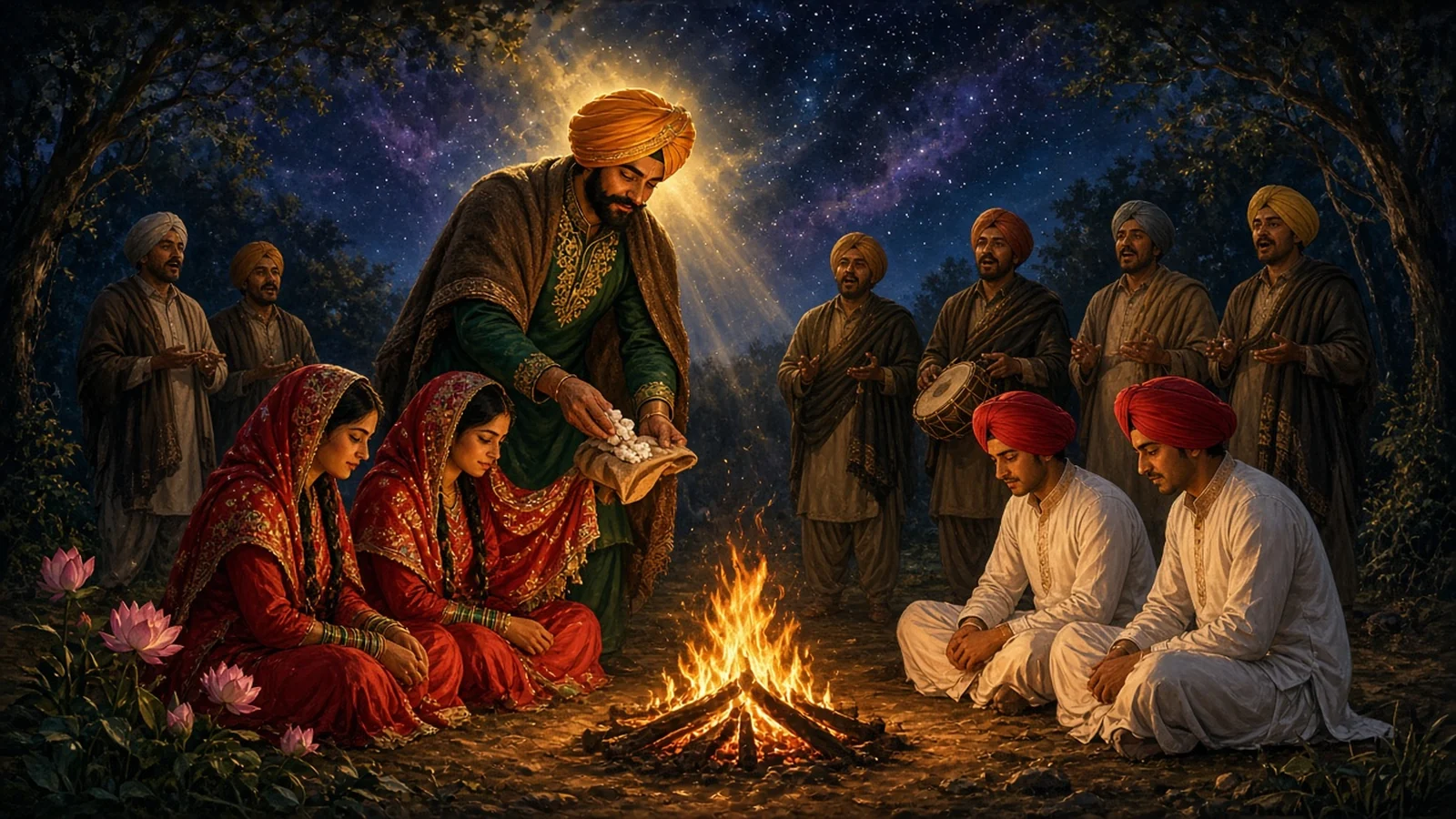
She threw. Rice and sesame went in after her pitha from a dozen other hands. When the fire had dropped, the men raked out the half-burnt bamboo, still smoking, and every family carried a few lengths home to push into the earth among the fruit trees, with a handful of ash for the vegetable beds.
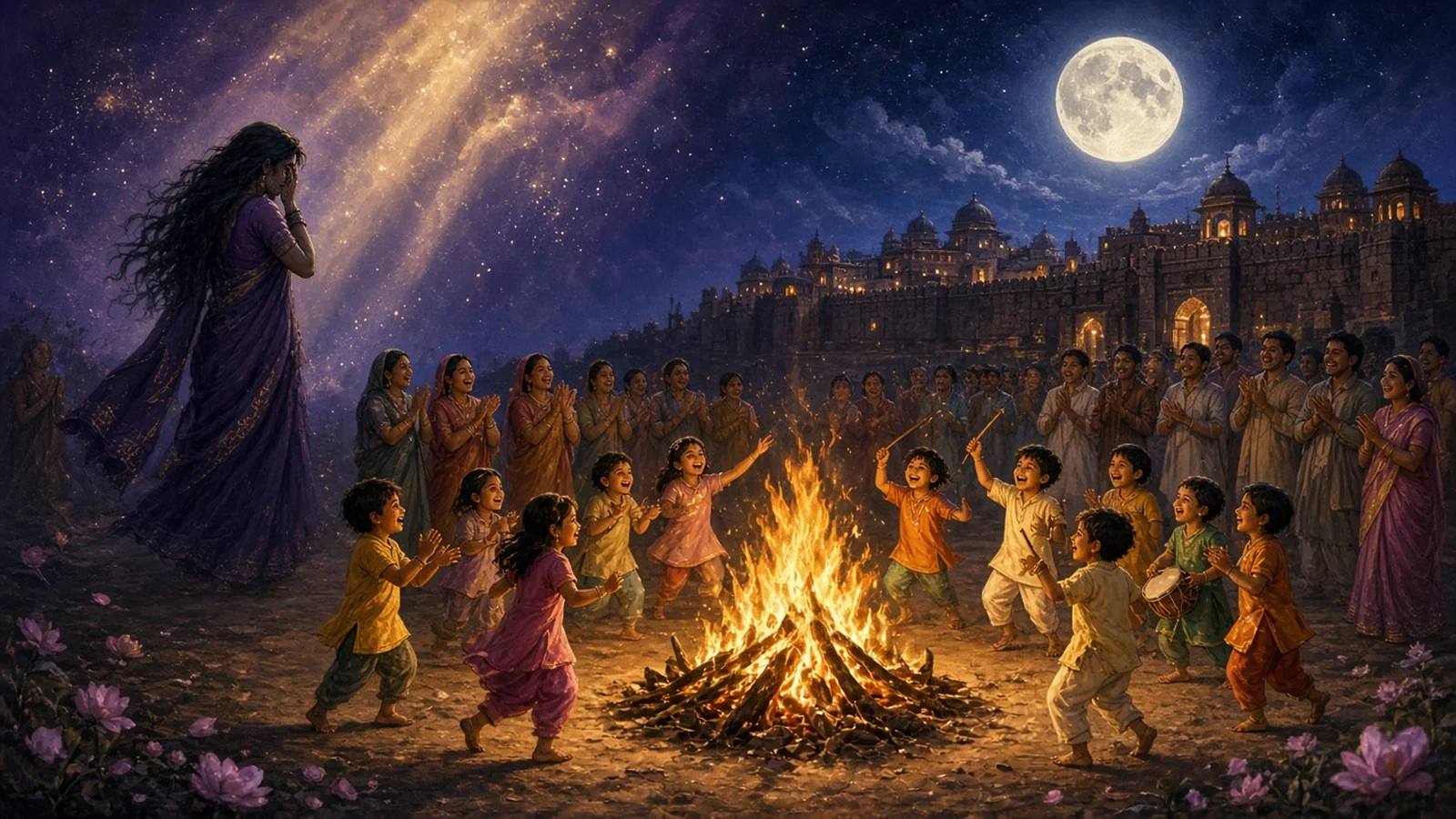
Nobody lit the kitchen stove that day. They ate last night's fish cold with the pitha. In the afternoon there were drums from the namghar, and then the egg fights in the school field, and at last a blindfolded Ranjit swinging a stick at a hanging clay pot full of puffed rice while the whole village shouted the wrong directions at him.
As the Bodos keep it: Magw Domasi
The Bodo country · a Bodo village of lower Assam, from the last day of Push · 1 min read
In a Bodo house the festival is Magw, or Domasi, and it begins once the sali paddy is home. A fortnight before, the scented and sticky rice is set aside, some to ferment into rice beer, some to be ground in the big wooden mortar for the cakes: homnai, enthab, sithao, and laru.
The fire belongs to the boys who herd the cattle. A week or two ahead they go down near the river and raise the belagur, a tower of green bamboo and straw, with a small hut beside it. On the last night of Push they cook and eat together there and dance until the sky turns pale. Then they wade into the river to bathe, set the belagur alight and stand close, steaming.
At home the household has been up since the dark. Everyone must bathe before the crow calls; the old people say that one who sleeps through it may be born an animal. The women sprinkle the courtyard with cow-dung water and draw lines of dung on the granary walls, going against the sun, and once the granary is sealed this way no one goes into it again until Magw is over. Straw cords are tied round the areca, the mango, the jackfruit and the coconut; in some villages a woman ties them with a child on her back. A dab of vermilion mixed in mustard oil goes on the loom.
Then the household turns to Bathou Bwrai, the elder god of the courtyard, and to the dead. At the south side of the yard the family lays out food for its ancestors, and with it a dokhona and a gamsa, the woman's wrap and the man's cloth, as if the old ones might still want dressing for the day.