Festival · A mother's fast for her children, broken at the first stars
Ahoi Ashtami
Ahoi Ashtami is the mothers' fast of the north, kept on the eighth day of the dark fortnight of Kartika, four days after Karva Chauth and eight before Diwali. A mother takes nothing, not even water, from dawn until the first stars come out, draws Ahoi Mata on the wall with the syahu and her cubs beside her, hears the katha of the woman whose spade killed a syahu's child, and offers water to the stars from the karva. The same night, at Radha Kund below Govardhan, couples who have no child bathe at midnight, the hour the kund is said to have appeared.
When is Ahoi Ashtami in 2027? Ahoi Ashtami, the mothers' fast, is Friday 22 October 2027. The eighth day of the dark fortnight of Kartika by the northern calendar (the same day is Ashvin in the Amanta reckoning), four days after Karva Chauth and eight before Diwali, in October or November.
Also calledAhoi AatheAhoi AthenHoiKarak AshtamiAvahi AatheinChakriBahulashtamiRadha Kund Snan
In short
What is Ahoi Ashtami?
The mothers' fast of North India, kept on the eighth day of the dark fortnight of Kartika, four days after Karva Chauth and eight before Diwali. A mother fasts from dawn for her children's long life and breaks the fast when the first stars appear.
Who is Ahoi Mata?
The Goddess the mothers draw on the wall, with eight corners and the syahu and her cubs beside her. The katha calls her only Ahoi Mata; most almanacs read her as a form of Parvati.
What is the story read on Ahoi Ashtami?
A moneylender's wife digging clay before Diwali kills a syahu's cub with her spade, and her seven sons die within the year. She fasts on the ashtami, draws the Goddess and the syahu's family on her wall, confesses, and gets her sons back.
Why do people bathe in Radha Kund on Ahoi Ashtami?
Braj says Radha Kund and Shyam Kund appeared at midnight on this night, after Krishna killed the bull demon Arishta. Couples who have no child stand in Radha Kund at midnight with a white pumpkin in red cloth and ask Radha for one.
When is Ahoi Ashtami in 2026?
Sunday 1 November 2026, with the stars seen around six in the evening and the Radha Kund bath from midnight. In 2027 it falls on Friday 22 October.
Next, in 2027Friday 22 October 2027
Prime godAhoi Mata
with 2 more
WhereNorth India, above all Uttar Pradesh, Delhi, Haryana, Rajasthan, Punjab and Madhya Pradesh, and Braj for the midnight bath
How longOne day, from before dawn until the stars are seen; the bath at Radha Kund from midnight until nearly dawn
The eighth day of the dark fortnight of Kartika by the northern calendar (the same day is Ashvin in the Amanta reckoning), four days after Karva Chauth and eight before Diwali, in October or November
Why it is kept
Four days after the wives of the north have fasted for their husbands, the mothers fast for their children. Ahoi Ashtami falls on the eighth day of the dark fortnight of Kartika, eight days before Diwali, and from dawn until the first star a mother takes nothing at all. The Goddess she keeps it for is drawn on the wall of her own house, and the day's story is about a spade, a burrow and seven sons.
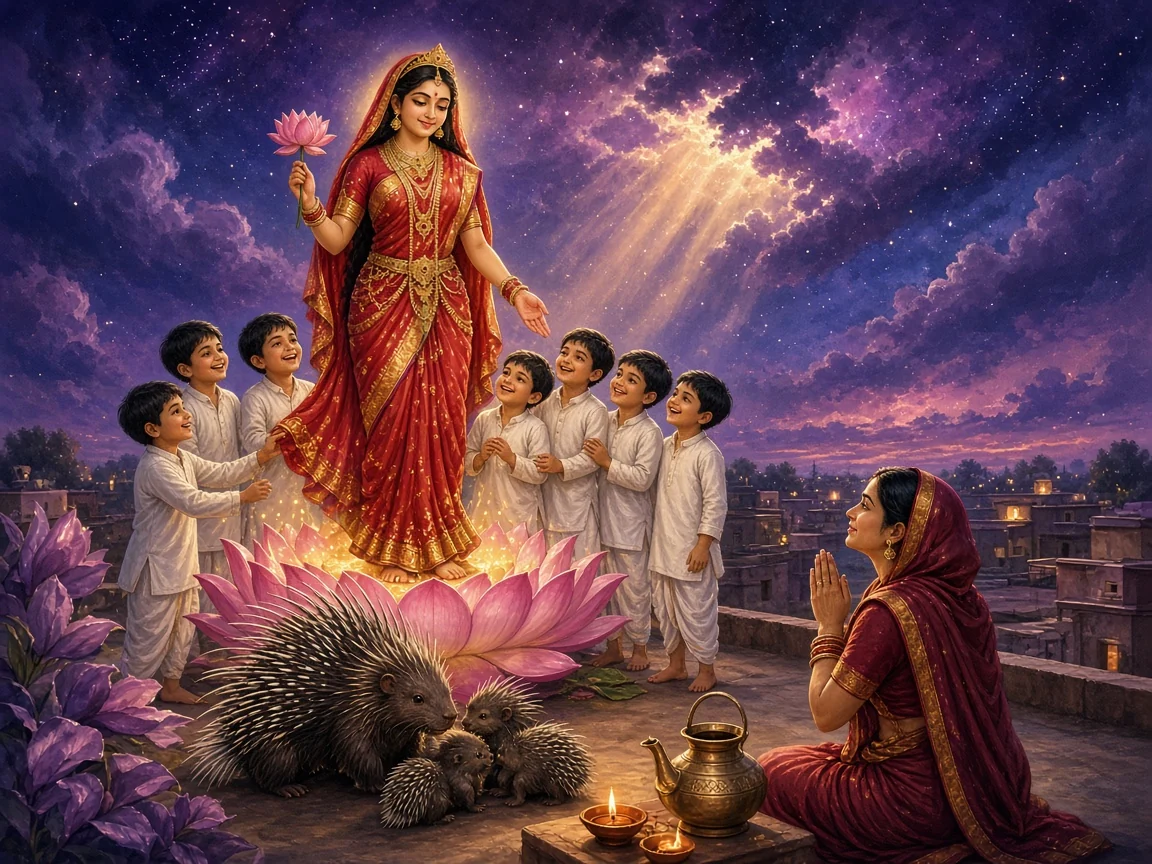
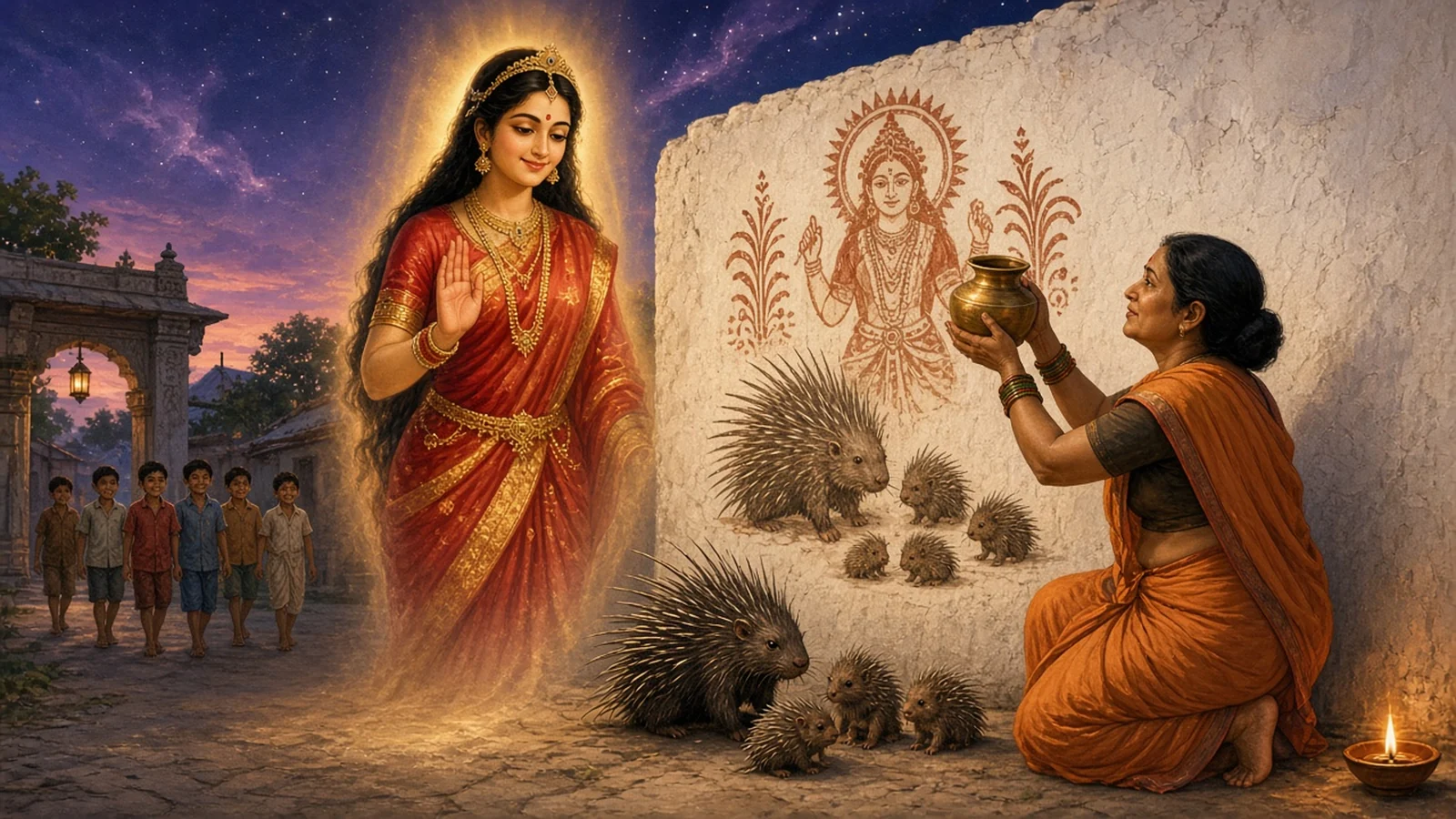
The fast is kept for the children's lives. The katha read at dusk says how it began: a moneylender's wife went to dig clay to plaster her house before Diwali, her spade killed the cub of a syahu, a porcupine, in its burrow, and within the year her seven sons were dead. The old women of her lane told her to confess it before the Mother on the ashtami, to fast, and to draw the Goddess on her wall with the syahu and her young beside her. She did, and her sons were given back. So the picture on every wall shows the harm and the forgiveness together, and so the fast is a mother's apology on behalf of all mothers, as well as her prayer.
The moneylender's wife digs clay beside a burrow where the syahu's cubs sit safe inside
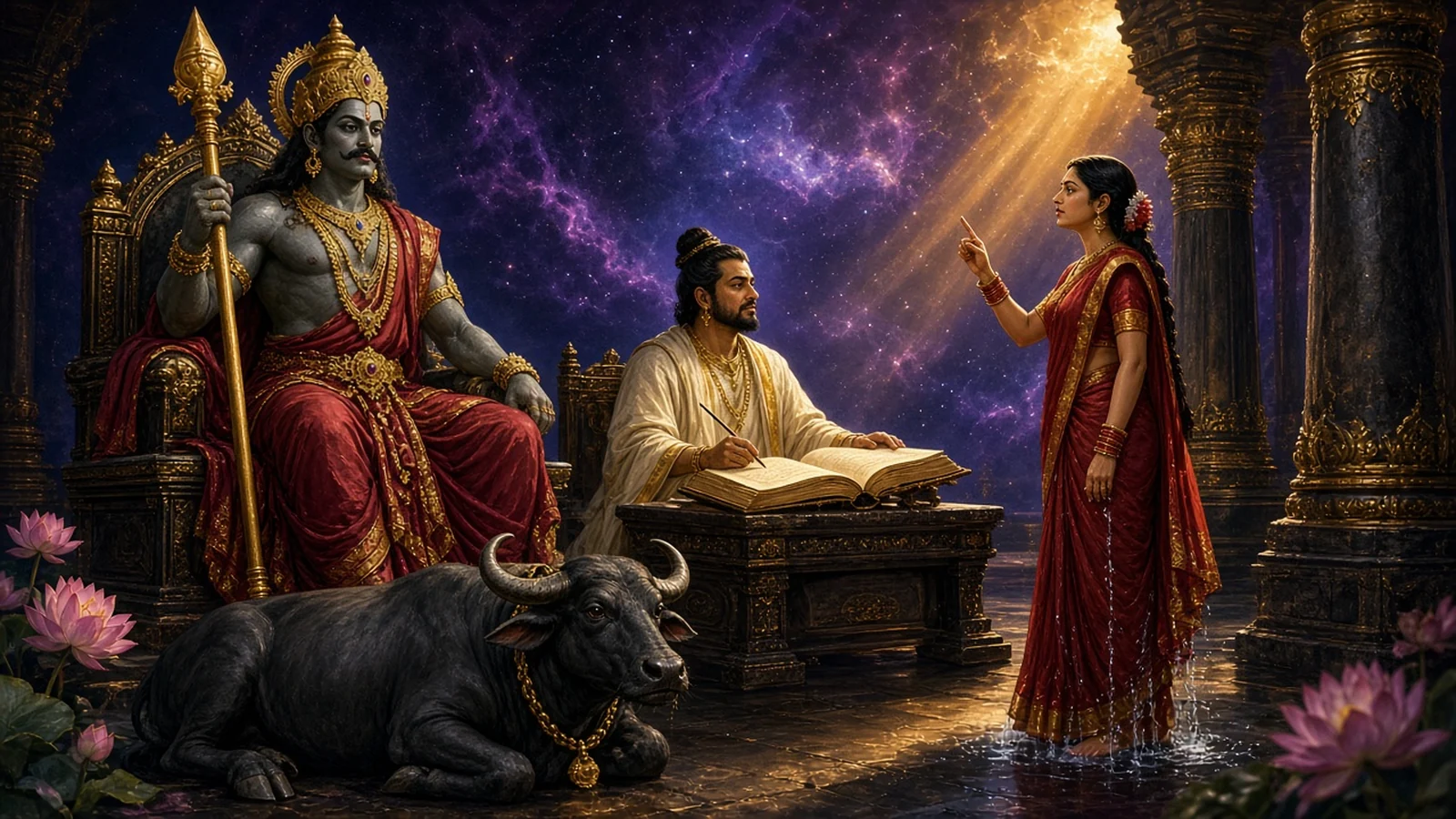
The name is explained in the longer katha, which has the moneylender's daughter kill the cub and her youngest sister-in-law take the curse: Ahoi is the Mother who turns anhoni, what cannot happen, into honi, what does. In that telling the goddess who forgives is the syahu herself, and the Goddess on the wall and the creature beside her are hard to tell apart. The katha names her only Ahoi Mata. Who she is beyond that is for each house to say; most say Parvati.
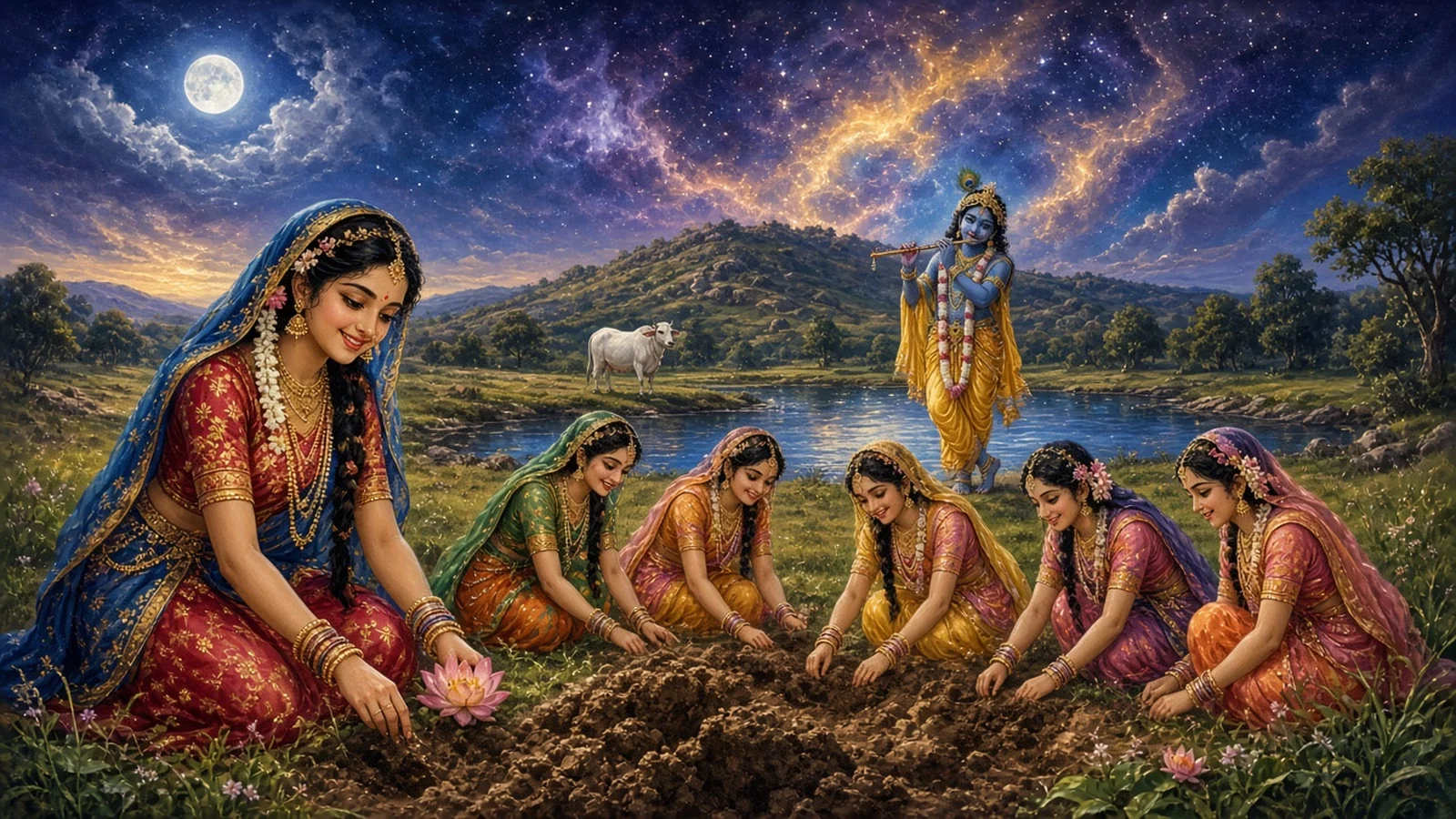
The night has a second reason in Braj. On the same ashtami, at midnight, Radha Kund is said to have appeared below Govardhan, and a kund that is Radha's own is where the childless go to ask for a child. The two have grown into one night: a woman keeps the Ahoi fast for the children she has, and a couple stands in Radha Kund at midnight for the child they do not.
Radha and her friends dig the pond with their bangles while Krishna watches from the other bank
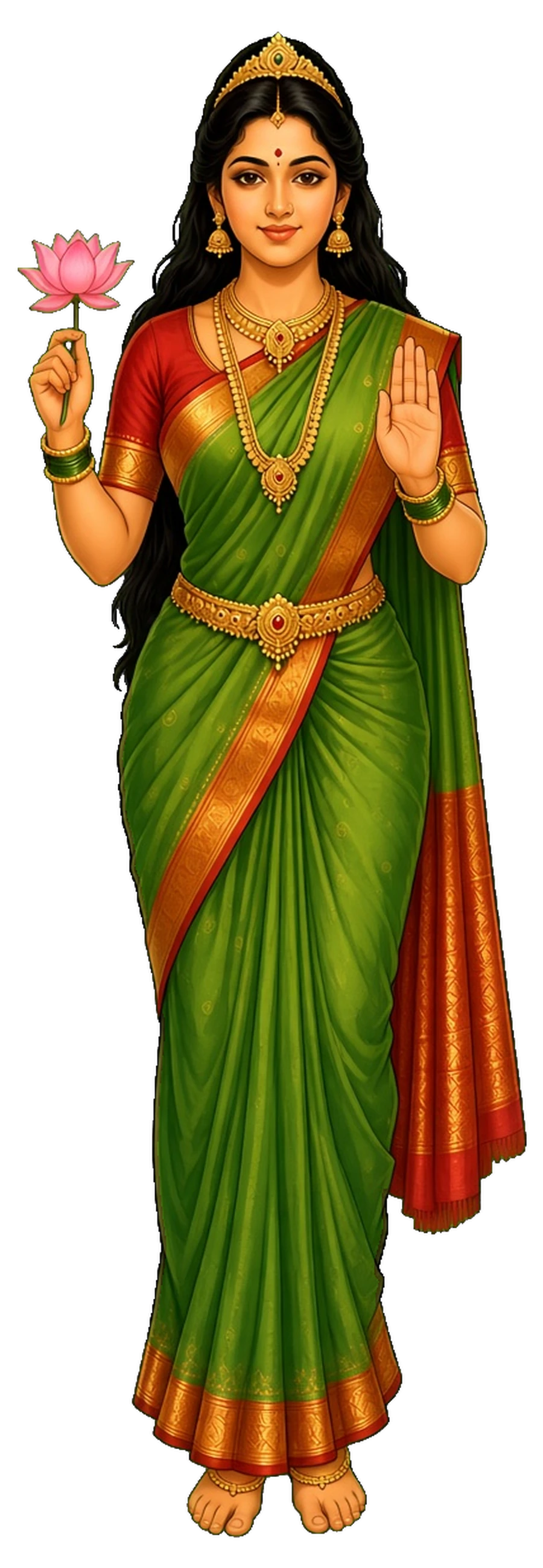
The Goddess the mothers draw on the wall, with eight corners for the eighth day and the syahu with her cubs beside her. The katha calls her only Ahoi Mata, the one who keeps the young of every living thing; the almanacs and the Hindi papers read her as Parvati, and that is how she is placed here.
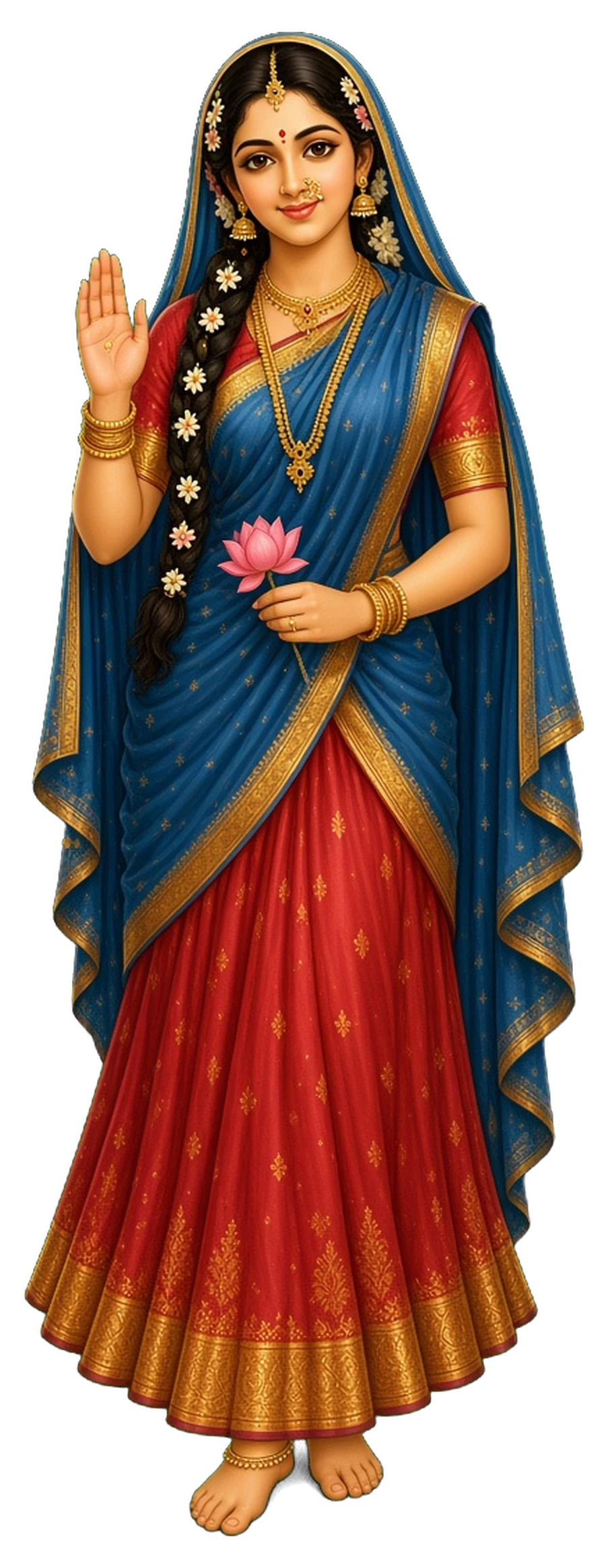
The lady of Radha Kund. Braj says the kund she and the gopis dug with their bangles appeared at midnight on this night, and couples who want a child stand in her water at that hour and ask her for one.
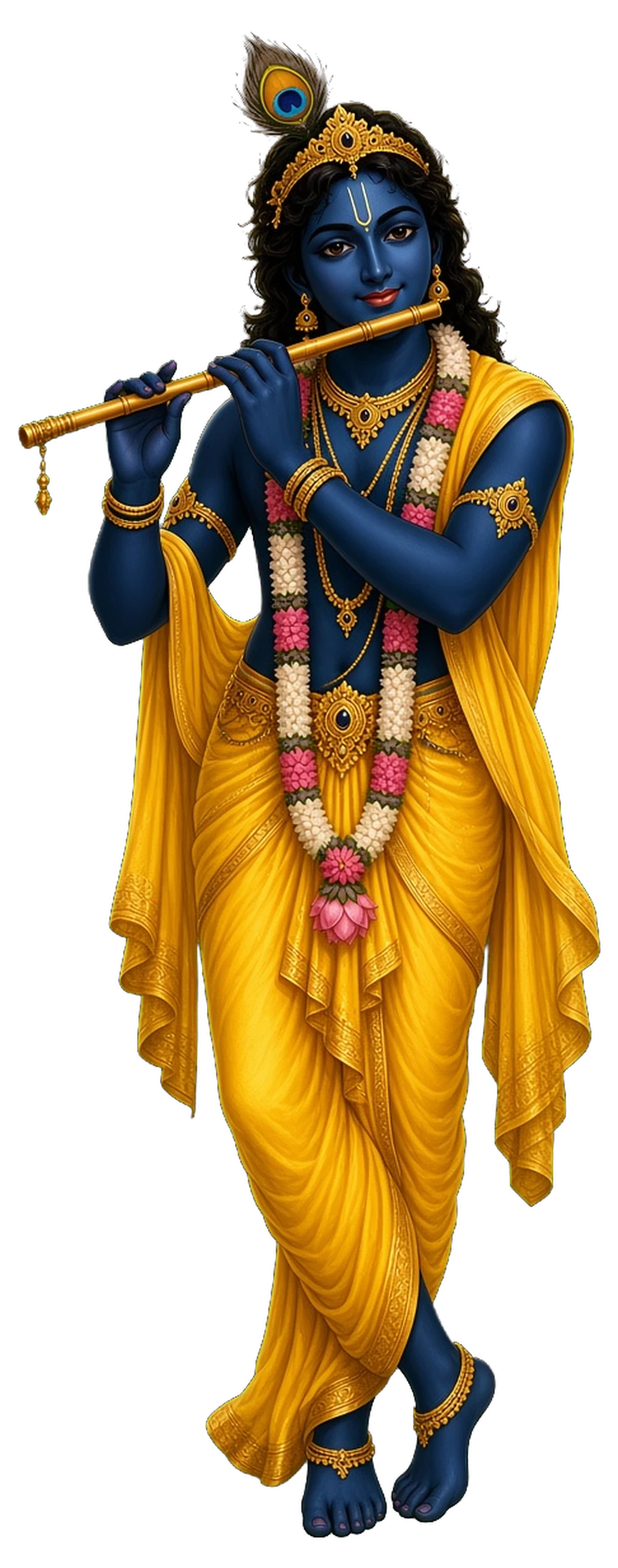
Who killed the bull demon Arishta at Arita and struck his heel into the ground to make Shyam Kund, the pond beside hers, the same night.
The mothers' day
1
The morning, the fast begins
Ashtami of dark Kartika, from before sunrise · Sunday 1 November 2026
Sankalpthe wall painting
A mother bathes before dawn and takes the vow for her children, no food and no water until the stars. Through the day the wall is made ready. With red ochre she draws Ahoi Mata in a figure of eight corners, and beside her the syahu, the porcupine of the katha, with her cubs; the printed calendars sold in the bazaar show the Goddess with the seven sons and the seven daughters-in-law of the story as well, and many homes hang one of those instead. Wheat is spread below the picture, a pot of water is set on it, and the karva, the little spouted pot kept from Karva Chauth, goes on top with grass stalks in its mouth.
A mother draws Ahoi Mata on the wall in red ochre, the syahu and her cubs beside her
The evening of the same day, after sunset · Sunday 1 November 2026
Ahoi pujaTara darshan
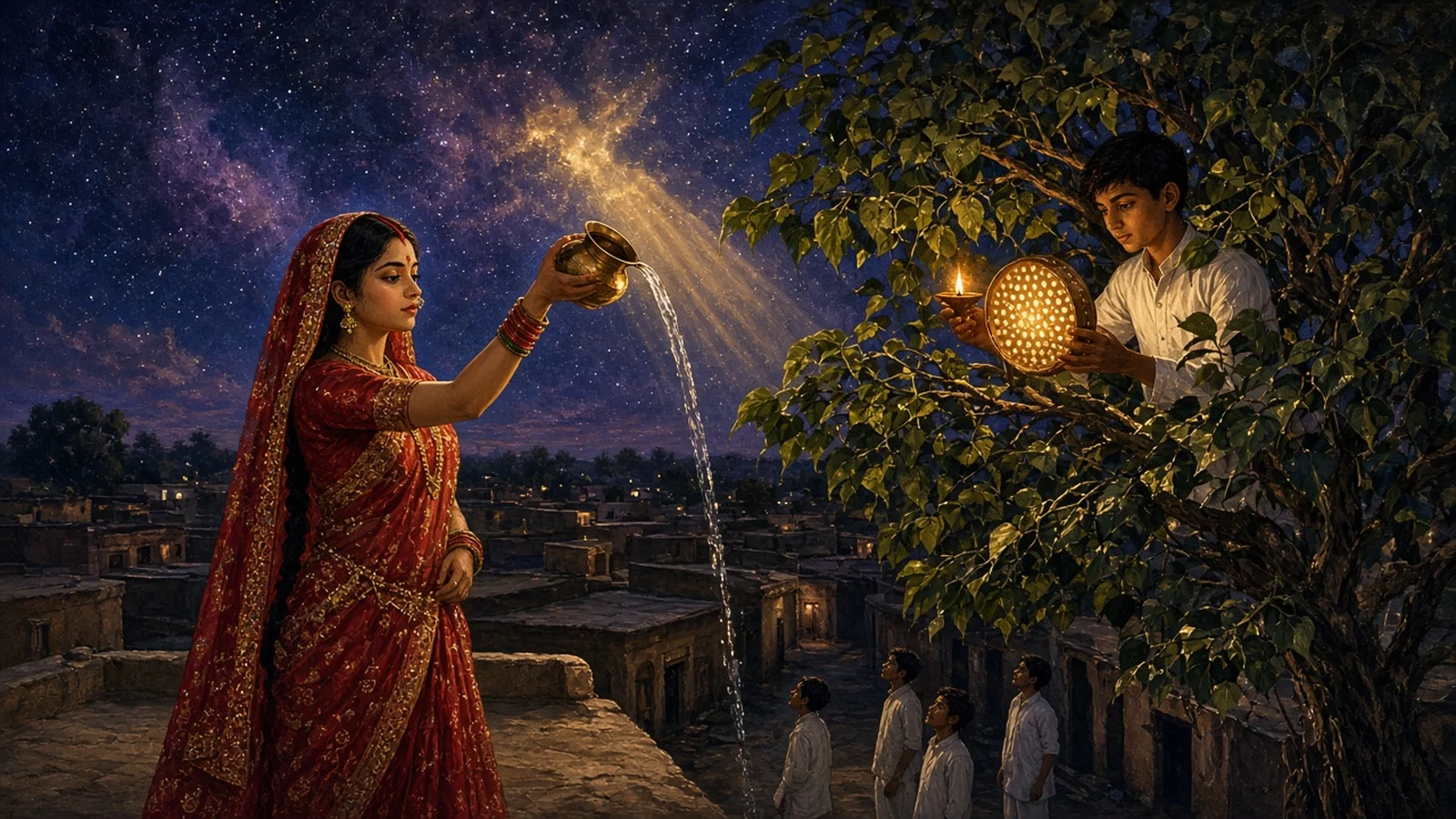
The women of the house sit before the picture after sunset. The eldest reads the Ahoi katha, the woman whose spade killed a syahu's cub and lost her seven sons, and the aarti is sung. Eight puris, eight puas and halwa are set before the Goddess, and seven grass stalks and a little halwa before the syahu; the food goes afterwards to the oldest woman of the family or to a brahmin. In some homes a small silver syahu is worshipped with roli, rice and milk, threaded on red thread with a silver bead and worn until Diwali; in western Uttar Pradesh two beads go on the thread each year, so the thread tells the children's ages. When the first stars show, the mother offers them water from the karva and the pot, and takes her first sip from her child's hand. A few families wait for the moon instead, which on this night rises near midnight.
At the first star the mother offers water from the karva, and her child gives her the first sip
Nishita, the midnight hour of the same night · Sunday 1 November 2026
Radha Kund SnanBahulashtamithe Ahoi fair at Govardhan
At Radha Kund, the village of Arita below Govardhan, the same night is the appearance day of the kund, and the great bath begins at midnight and runs until nearly dawn. Couples who have no child stand in the water together holding a white pumpkin wrapped in red cloth and ask Radha for one; lamps are floated before the bath, and the couples whose wish was granted come back to say so. The crowd runs to more than a lakh, and Mathura district runs it as a fair with police, lights and drones.
Midnight at Radha Kund: couples stand in the water holding white pumpkins wrapped in red cloth
Uttar Pradesh, Delhi, Haryana and RajasthanAhoi Aathe
The heart of the fast. The Goddess is drawn on the wall with red ochre or bought as a printed calendar from the Diwali stalls, the katha is read by the eldest woman, and the whole lane goes out at dusk to look for the first star. In western Uttar Pradesh the silver syahu on its thread gains two beads a year. A house where a child was born in the year sets out a fuller offering, and a new daughter-in-law hangs her own Ahoi calendar.
PunjabAhoi, Hoi
Kept by Punjabi mothers with the same dawn-to-stars fast, four days after the Karva Chauth the region is famous for. The Punjabi telling of the katha has the moneylender's wife kill a porcupine's baby, where some English retellings make it a lion cub.
Mathura and BrajRadha Kund Snan, Bahulashtami
The night belongs to Radha Kund. Gaudiya Vaishnavas keep it as the day the kund appeared, with lamps on both ponds, and the north's childless couples come for the midnight bath, standing in the water with a white pumpkin in red cloth. Braj has its own Ahoi katha too, of a childless couple, Chandrabhan and Chandrika, told by a voice from the sky to keep the fast and bathe in the kund.
Gujarat, Maharashtra and the south
The fast is a northern one; where the Amanta calendar is followed the same day falls in Ashvin, and the Marathi almanacs know it as Karashtami, but it is not a day most households there keep.
Abroad
North Indian mothers in Britain, North America and the Gulf keep the fast on the same tithi and break it at their own dusk, with the almanac sites giving the star-sighting hour for every city.
Hindu mothers of the northA vrat across communities
Ahoi Ashtami is kept across the Hindu castes and communities of the Hindi belt and Punjab as a mother's vow rather than a temple festival. It was once a fast for sons; today most mothers keep it for all their children, and women hoping for a child keep it too.
Gaudiya VaishnavasBahulashtami
For the followers of Chaitanya the eighth of dark Kartika is the appearance day of Radha Kund, the place Rupa Goswami ranked above Mathura, Vrindavan and Govardhan. They bathe at midnight in both kunds and light lamps on the banks; in 2021 Prabhupada's followers set out five thousand one hundred lamps there.
How it is kept
The mother bathes before sunrise and takes the vow. Nothing passes her lips all day, not water. The wall is prepared in the afternoon: Ahoi Mata in red ochre in a figure of eight corners, the syahu and her cubs beside her, or a printed calendar from the bazaar that adds the seven sons and seven daughters-in-law of the story. Below it wheat is spread, a pot of water set on the wheat, and on the pot the karva from Karva Chauth, its spout stopped with grass.
Before sunrise the mother bathes and takes the vow for her children
After sunset the women sit before the picture. The eldest reads the katha; eight puris, eight puas and halwa are offered, and seven grass stalks with a little halwa to the syahu. Some families worship a small silver syahu with roli, rice and milk and hang it on red thread round the mother's neck until Diwali; in western Uttar Pradesh two silver beads join the thread each year, one for each child. Then everyone goes out to watch for the first star. When it shows, the mother offers it water from the karva and the pot, and her child gives her the first sip and the first bite. A few families wait for the moon instead, which on this night does not rise until nearly midnight. The food is given to the oldest woman in the family or a brahmin, and the pot's water is kept for the Diwali bath.
The eldest woman reads the katha before the wall, with puris, puas and halwa set out
Radha Kund keeps its own hours. Lamps go onto the water at dusk, and at midnight the couples go in together, each pair with a white pumpkin wrapped in red cloth, and the bathing goes on until nearly dawn.
In the old texts
There is no Purana for Ahoi. The story is a household katha, printed in the small Hindi vow books and read from memory, and it differs from house to house in whether the sons die or vanish, whether the creature is a syahu or, in the English retellings, a lion cub, and who the Goddess is. A line of the Narada Purana is sometimes cited for an eighth-day vow of dark Kartika with Shiva and Uma worshipped and water offered to the moon, but the syahu, the wall and the stars are the north's own, and the almanacs' rules for the day are the only rule book.
Radha Kund has texts. The Bhagavata Purana (10.36) gives the bull demon Arishta and his death at Krishna's hands, but no pond and no Radha. The kunds and the bangles are the Braj tradition as the Gaudiya Goswamis carried it; Rupa Goswami's Upadeshamrita ranks Radha Kund above Mathura, Vrindavan and Govardhan, and the Chaitanya Charitamrita (Madhya 18) tells how Chaitanya found the two ponds in a paddy field around 1515 and bathed in them. Karva Chauth, four days before, has its own page.
Where this page comes from. Written by Devalok from the Ahoi Ashtami vrat katha as read in North Indian homes and printed in the Hindi vow books, the almanacs' rules for the fast, the Bhagavata Purana and the Gaudiya tradition of Radha Kund, and newspaper accounts of the midnight bath at Govardhan, as recorded in the Devalok Lore. Our own words throughout.