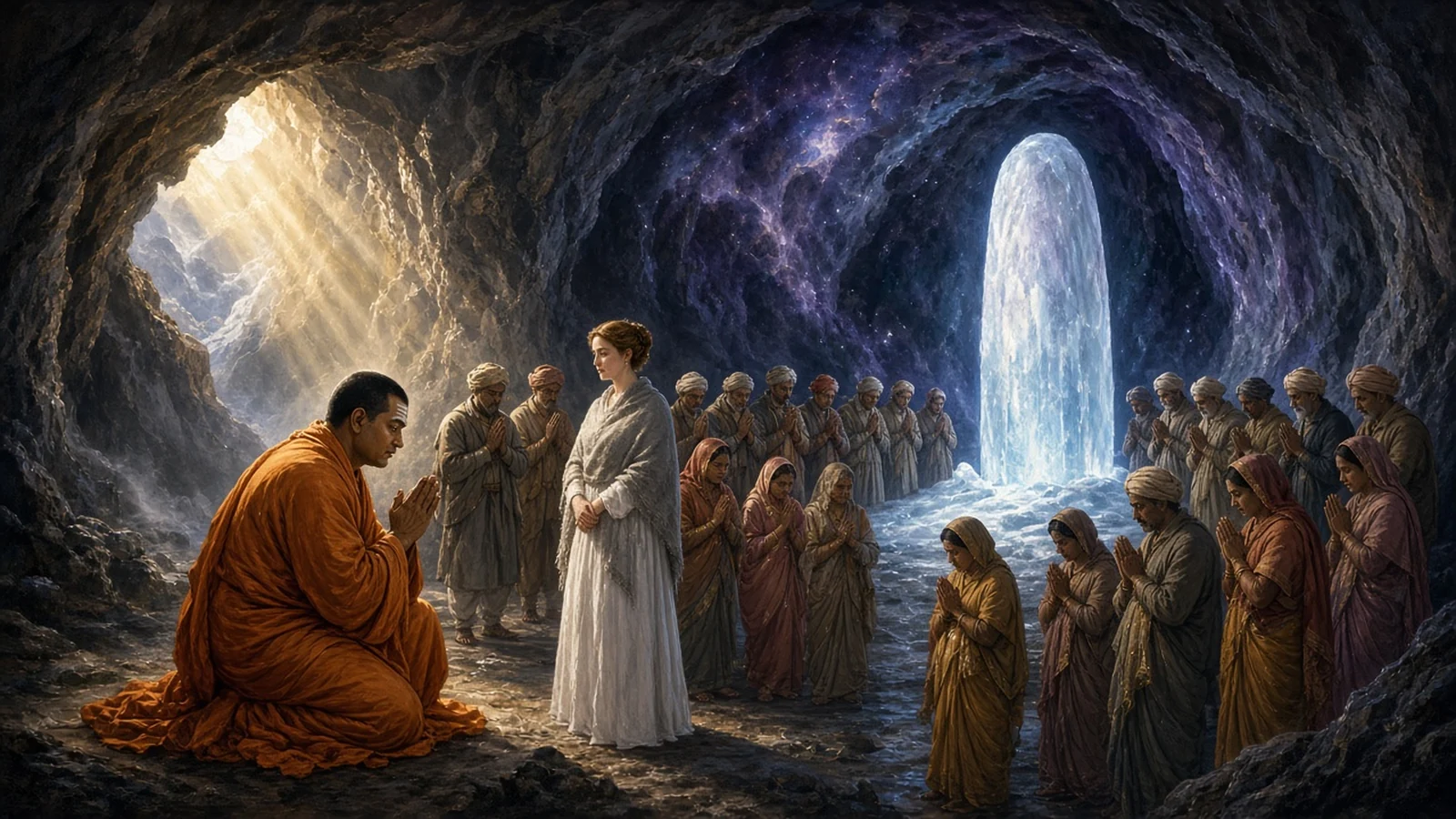
The Amarnath Yatra is the summer pilgrimage to a cave at 3,888 metres in the mountains above Pahalgam in Kashmir, where a pillar of ice rises from the floor each year and is worshipped as Shiva, Amareshwara, the lord of the immortals, with two smaller forms beside it for Parvati and Ganesha. The Shri Amarnathji Shrine Board opens the route in late June or early July, and the yatra closes on Shravan Purnima, the day of Raksha Bandhan, when the Chhari Mubarak, the holy mace of Srinagar's Dashnami Akhara, reaches the cave. Pilgrims walk or ride up from Pahalgam over four or five days, or from Baltal in one, fed by Punjab's langars and carried by the ponywallas of Kashmir.
When is Amarnath Yatra in 2027? Shravan Purnima, when the holy mace reaches the cave, is Tuesday 17 August 2027. In 2028: Saturday 5 August 2028. Opens in late June or early July on the Shrine Board's date for the year, and closes on Shravan Purnima, the full moon of Shravan, in late July or August.
Also calledShri Amarnathji YatraAmareshvara yatraAmarnath pilgrimage
Next, in 2027Tuesday 17 August 2027
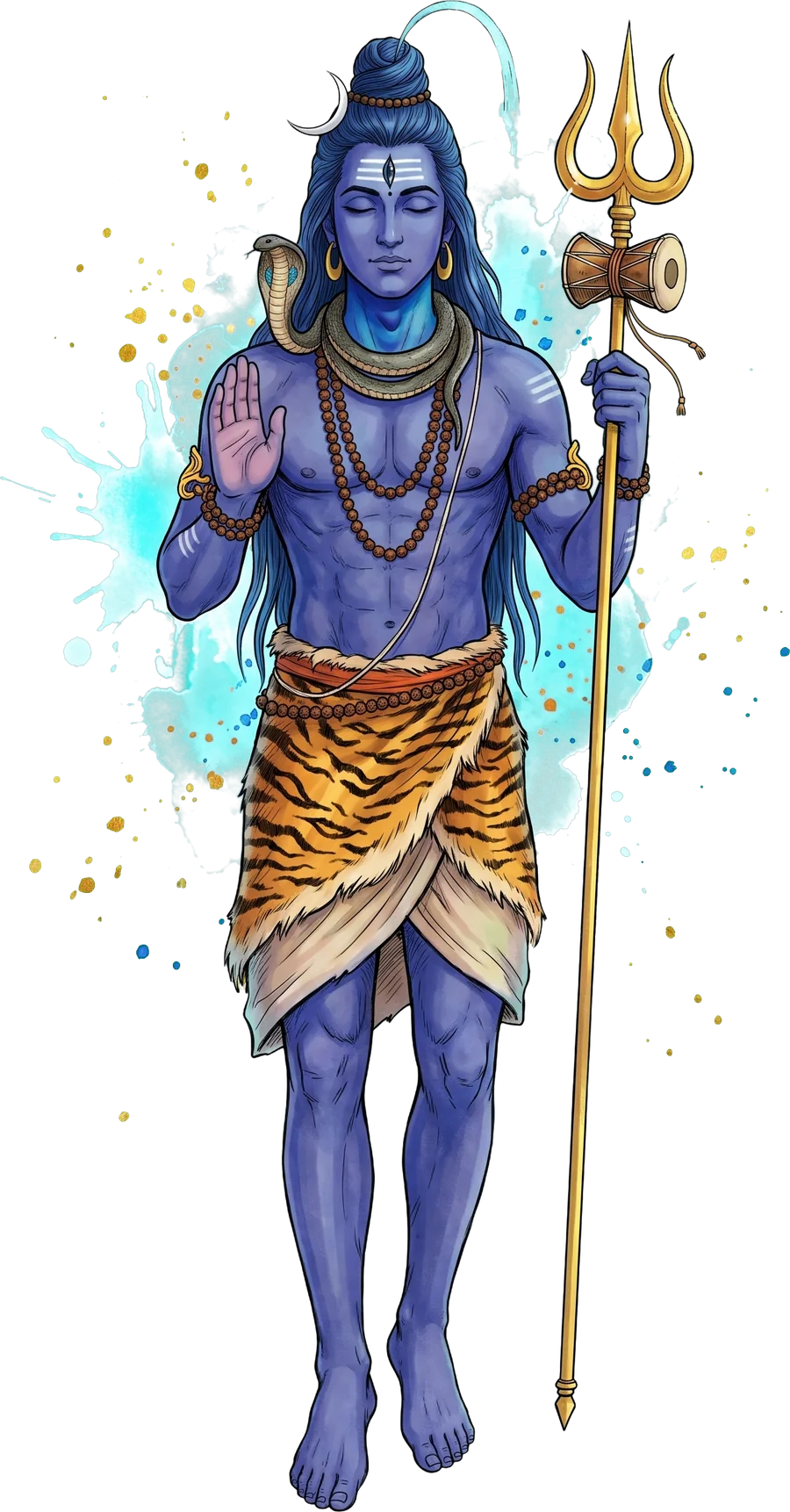
Prime godShiva as Amareshwara
with 2 more
WhereKashmir, the Lidder valley above Pahalgam and the Sind valley at Baltal; pilgrims from every state, with Jammu and Srinagar as the gates
How longBetween five and eight weeks, set each year by the Board; 57 days in 2026, 38 in 2025
Opens in late June or early July on the Shrine Board's date for the year, and closes on Shravan Purnima, the full moon of Shravan, in late July or August
Why it is kept
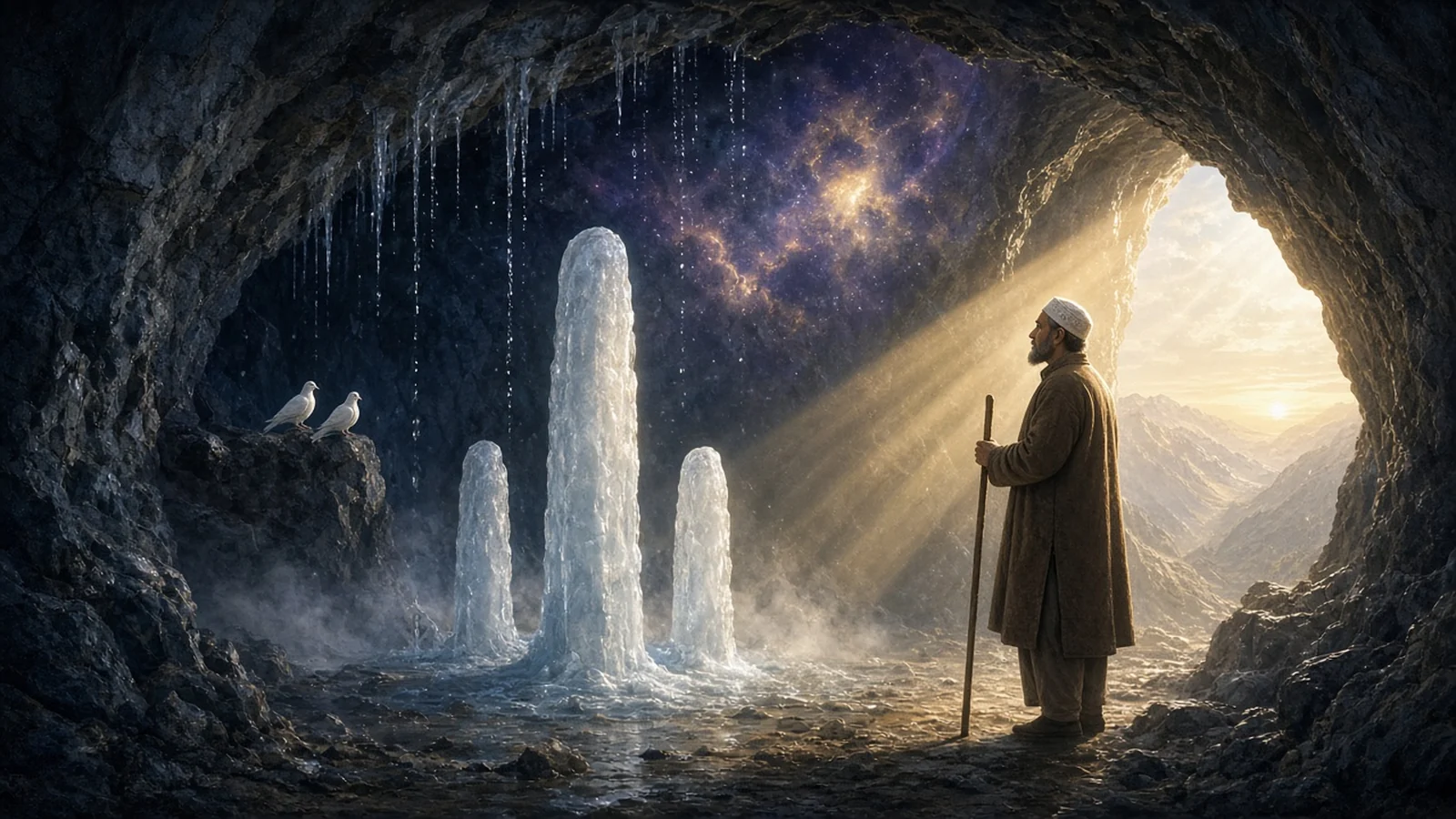
Most pilgrimages go to a temple. This one goes to a piece of weather. High in the mountains above Pahalgam, in a cave the glaciers feed, water drips from the roof every spring and freezes where it lands, and by July a pillar of ice stands on the floor as tall as a man. The people of Kashmir have called it Amareshwara, the lord of the immortals, for some thirteen hundred years, and every summer a few hundred thousand people walk up to see it before it melts.
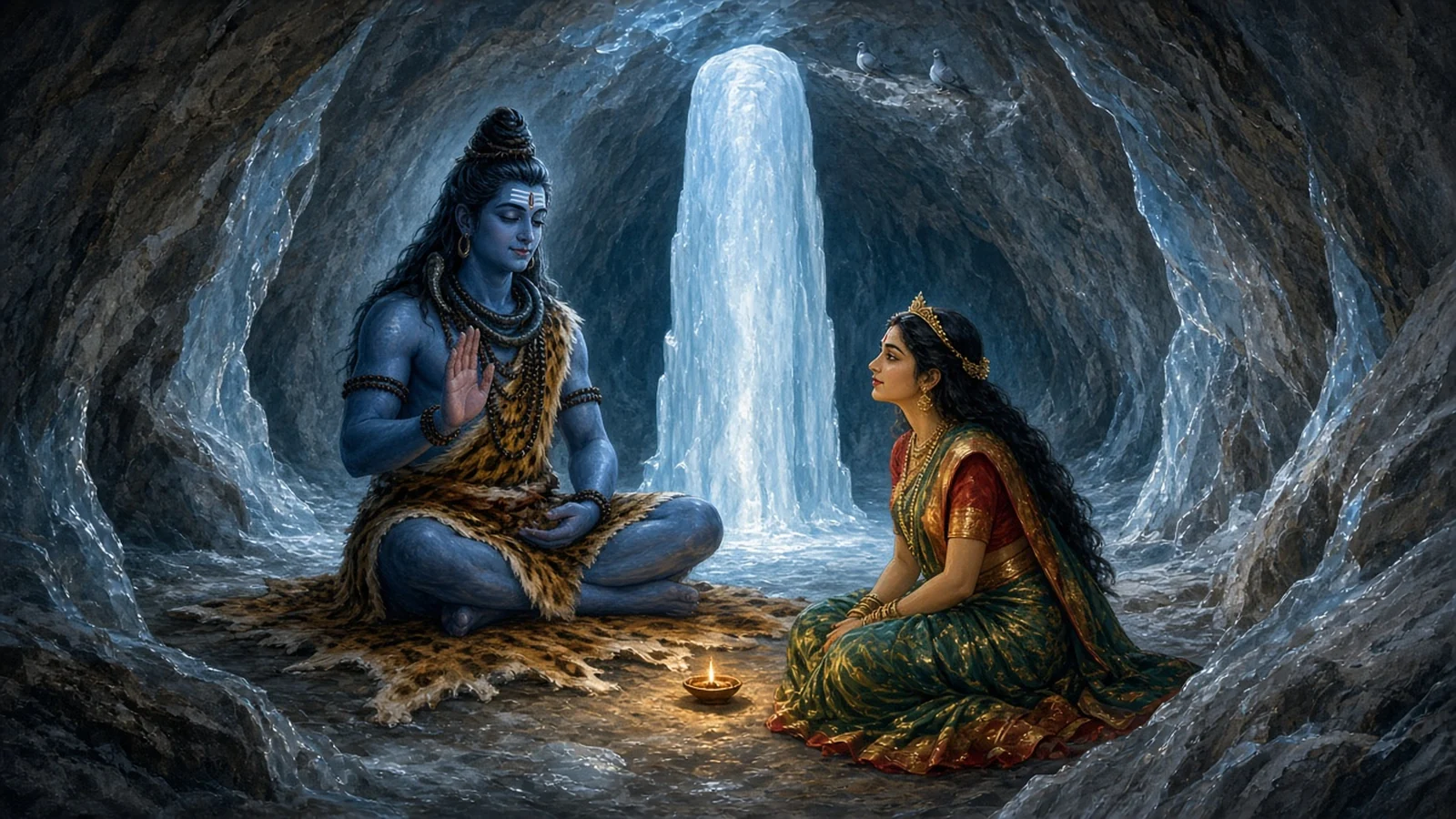
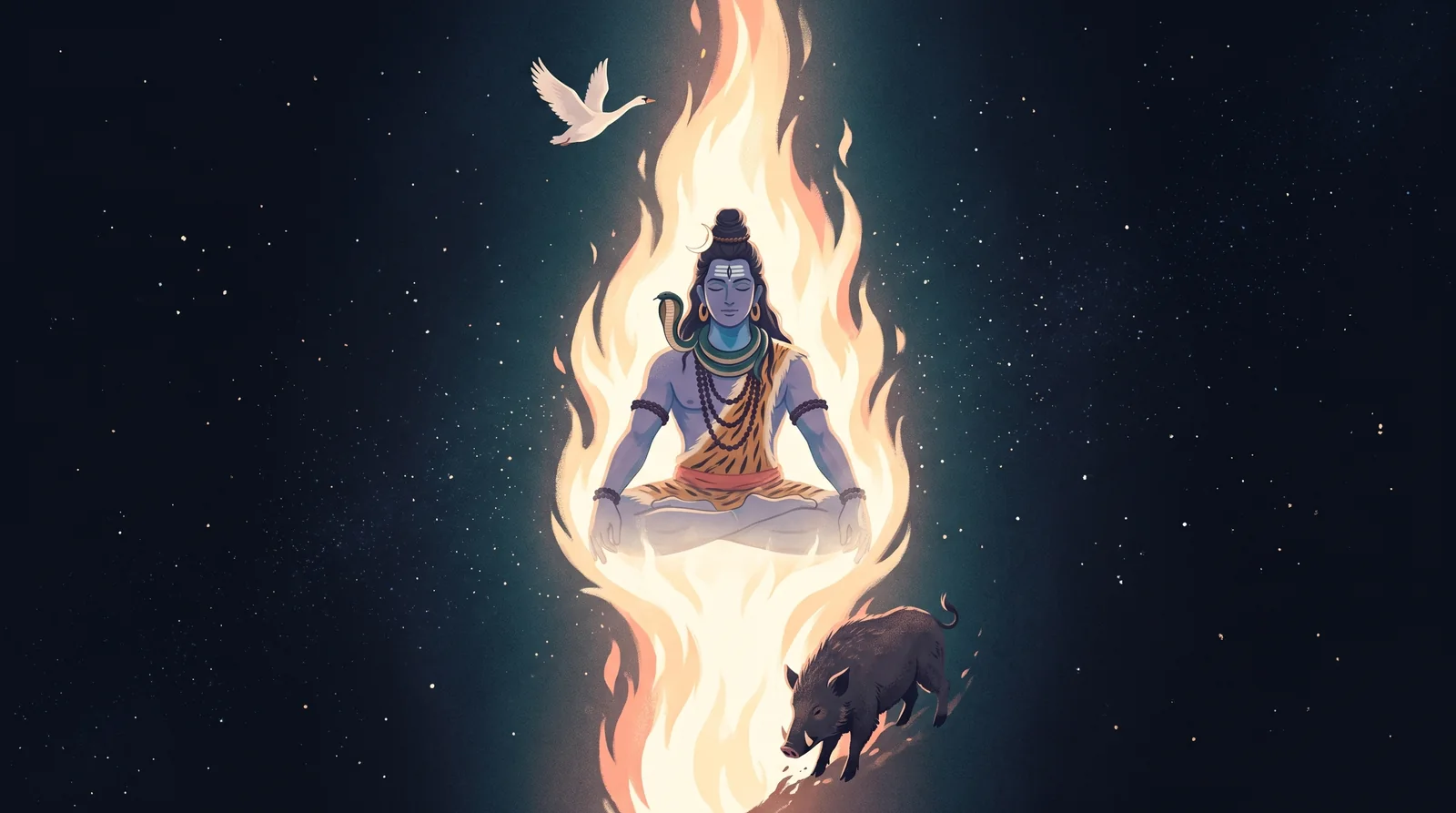
The pilgrims' reason is the Amar Katha, which has its own story in the Lore, The Secret at Amarnath. Shiva had a secret to tell Parvati, the secret of not dying, and he wanted no living thing to hear it. So he walked up this valley, leaving behind him at each halt one of the things that went with him, the bull at Pahalgam, the moon at Chandanwari, the serpents at Sheshnag, his son on the pass at Mahagunas, the five elements at Panjtarni, until nothing was left but the two of them and the cave. The road to the cave is the road he took, and the ice in the cave is where he sat.
The Kashmiri Pandits add a second reason. In their books, the Bringesha Samhita among them, the gods themselves were once told by Time that they would die, and Shiva gave them the water of immortality and then hid; when they found him again he was a pillar of ice in this cave. The sage Bhringesha sent his disciples up each summer to see it, and when demons troubled them on the road Shiva gave the sage a mace to lead them safely. The mace still leads.
And there is the ice itself. It comes and it goes. The yatris hold that it waxes with the moon and is fullest on the full moon of Shravan, and Akbar's historian heard the same thing in the sixteenth century. A god who appears each summer out of nothing and vanishes again is a reason to climb.
The lord of the immortals, worshipped in the ice linga that rises from the cave floor each summer, and in the Amar Katha the teller of the secret of not dying. The yatris believe the ice is fullest at the full moon of Shravan, when the mace arrives.
The second ice form beside the linga is hers, and she is the listener of the Amar Katha, the one for whom Shiva climbed into the mountains to speak where nothing living could hear.
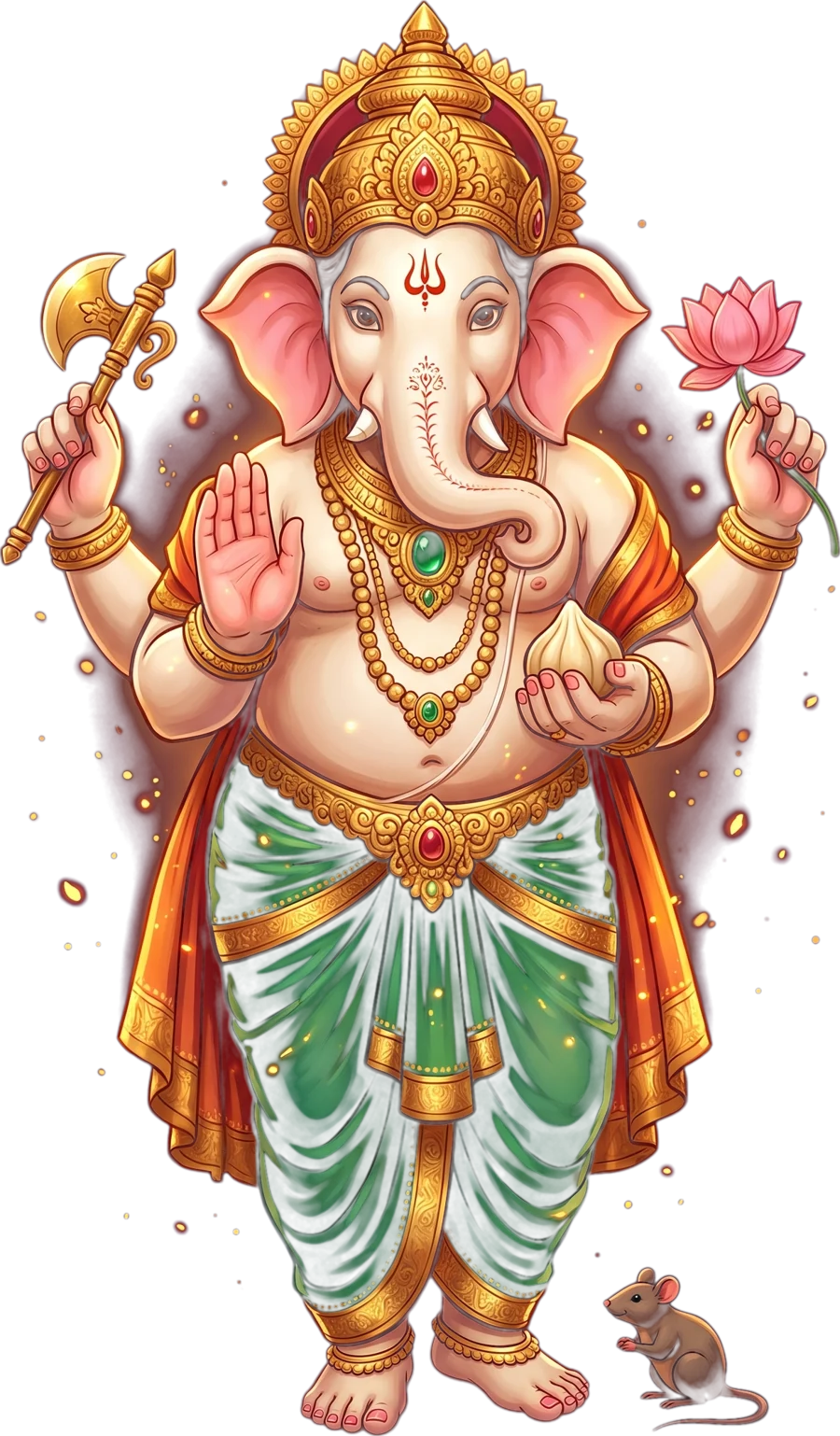
The third and smallest ice form. On the road the legend leaves him at Mahagunas, the pass of 14,500 feet that every pilgrim on the Pahalgam route crosses, and pilgrims call it Ganesh Top.
The road to the cave
1
Pahalgam and Chandanwari
Any day of the open season
Nunwan base campBail Gaonthe first halt
The traditional road begins at the Nunwan camp in Pahalgam, where the legend says Shiva left Nandi, and runs sixteen kilometres up the Lidder to Chandanwari at 9,500 feet, where he set the moon down from his hair. Pilgrims arrive by bus from Jammu's Bhagwati Nagar camp with their registration slips and health certificates, are given their tags, and sleep at Chandanwari or ride on. The whole road from here to the cave is about forty-eight kilometres and takes three to five days.
A steep climb out of Chandanwari to Pissu Top, and on to the lake of Sheshnag at 11,730 feet, milky green under the peaks, where Shiva let his serpents go. It is the first night halt of the route, in tents pitched by Kashmiri tent-wallas, with langars serving at the camp. Kalhana wrote in 1148 that the pilgrims to Amareshvara still see this lake, white as a sea of milk.
The highest point of the road is the Mahagunas pass at 14,500 feet, where Ganesha was left to wait, and the air is thin enough that the ponies go slowly and the pithoos carry the children. Beyond it the track drops to Panjtarni, where five streams run through gravel and the pilgrims bathe in each in turn, as Vivekananda did in 1898. The second night is spent here; helicopters, in the years they fly, land here too. From Panjtarni it is six kilometres to Sangam, where the Baltal path joins, and three more to the cave.
The cave is a wide low mouth in the mountain at 3,888 metres, about forty metres deep. At the back, where the sun never reaches, the ice linga stands on a natural pedestal, with the smaller forms for Parvati and Ganesha beside it. Pilgrims queue up the last slope, go in a few at a time, bow, and come out. Those from Baltal walk fourteen kilometres up and back in a day. In recent hot summers the ice has melted within days of the opening, and many have bowed to the empty niche.
The yatra closes on the full moon. In the days before, the Chhari Mubarak, the silver mace kept at the Dashnami Akhara in Srinagar, is carried by its mahant to the Shankaracharya temple and to Sharika Bhawani on Hari Parbat, set up and worshipped at the Akhara on Nag Panchami, and then walked up the Pahalgam road with the sadhus, two nights at Pahalgam, one each at Chandanwari and Sheshnag, two at Panjtarni. On Shravan Purnima it reaches the cave for its puja, and the day after it is immersed in the Lidder at Pahalgam. The pilgrims who reach the cave that day have rakhis on their wrists, as they did in 1898.
The Pahalgam routeChandanwari, Sheshnag, Mahagunas, Panjtarni
The old road, forty-eight kilometres from the Nunwan camp with two night halts, and the one the legend and the mace both follow. Every halt has a name from the Amar Katha, a camp of tents, a langar and a medical post, and the ponies and palkis of the Lidder villages wait at each. The views are the reason many choose it over Baltal.
The Baltal route and the helicoptersDomel, Barari, Sangam
From the Baltal camp in the Sind valley near Sonamarg the cave is fourteen kilometres away, steep enough to do up and back in one long day. Most pilgrims now take it. In most years private helicopters fly from Baltal and from Chandanwari to Panjtarni, six kilometres short of the cave; a ropeway from Baltal has been planned since 2025. In 2026 no helicopters flew.
SrinagarThe Chhari Mubarak's own road
The mace lives at the Dashnami Akhara near Lal Chowk. On the new moon of Shravan it is carried to the Shankaracharya temple on the hill above the Dal, the next day to Sharika Bhawani on Hari Parbat, then installed at the Akhara's Amareshwar temple and worshipped on Nag Panchami before it sets out for Pahalgam. Under the Sikhs it used to start from Amritsar; under the Dogras it started from Srinagar.
JammuBhagwati Nagar and the registration
The yatra begins for most pilgrims at the Yatri Niwas in Bhagwati Nagar, the base camp in Jammu, from where convoys of buses leave before dawn for Pahalgam and Baltal under escort. Registration opens in April, online and at hundreds of bank branches across India, and no one goes up without a permit for a named day and route and a health certificate from a listed doctor.
The langarsPunjab's sewa on the mountain
About 125 free kitchens are set up from Lakhanpur on the Punjab border to the cave itself, run by organisations from Punjab, Haryana, Delhi, Himachal, Rajasthan and Uttar Pradesh. In 2025 there were twenty-five at Baltal and Domel, thirteen at the cave, twelve at Panjtarni, eight at Sheshnag, and five at the Jammu base camp. They feed everyone who comes, pilgrim, ponywalla or policeman, and the Board asks them to keep the food light and low in oil for the altitude.
The Lidder and Sind valleysThe ponywallas, pithoos and palkiwallas
The pilgrims are carried by Kashmiri Muslims. In 2013 some twenty-one thousand pony owners, nearly thirteen thousand palanquin bearers and more than three thousand pithoos, who carry children and luggage on their backs, were registered with the labour department, and the tents at Baltal and Pahalgam are theirs too. For the villages of Pahalgam, Batakote and Sonamarg the two months of the yatra are the year's income, and the helicopter years hurt them.
The keepers of the yatra across faithsThe Maliks, the ponywallas and the sadhus
For a century and a half the shrine's offerings were shared three ways, between the Muslim Malik family of Batakote, who kept the track and sat at the cave, the mahant of the Dashnami Akhara who carries the mace, and the Brahmin purohits of Mattan. The Shrine Act of 2000 ended the shares and put a Board under the governor in charge. The men who carry the pilgrims today are still the Muslims of the Lidder and Sind valleys, and the sadhus who walk with the mace are the Dashnami order's.
The Shrine Board and the stateRules, limits and the escort
The Shri Amarnathji Shrine Board, set up on 12 February 2001 under the Act after 243 pilgrims died in the snowstorm of 1996, fixes each year's dates, issues the permits and the RFID tags, and admits only pilgrims between thirteen and seventy with a compulsory health certificate. Thousands of police and paramilitary line the route. Eight pilgrims were killed in an attack on a bus in 2017, and the yatra was cancelled in 2020 and 2021 for the pandemic, with the mace taken to the cave alone.
How it is kept
The season opens with the Pratham Puja, the first worship, held in 2026 on the full moon of Jyeshtha, and the pilgrims begin to move a few days later on the Board's date. They have registered months before, online or at a bank, each for a named day and a named route, with a health certificate, and they are between thirteen and seventy years old. They gather at Bhagwati Nagar in Jammu and go up the highway in convoys to Pahalgam or to Baltal.
From Pahalgam the walk is three to five days, by Chandanwari, Pissu Top, the lake of Sheshnag, the Mahagunas pass and the five streams of Panjtarni, with nights in tents at Sheshnag and Panjtarni. From Baltal it is fourteen kilometres each way and most do it in a day. Those who cannot walk ride ponies, sit in palanquins, or, when the weather and the Board allow, fly to Panjtarni by helicopter. The langars feed everyone. At the cave the pilgrims go in a few at a time, bow to the ice, and come out into the light.
The yatra ends with the mace. Through the last fortnight the Chhari Mubarak is worshipped in Srinagar, at the Shankaracharya temple, at Sharika Bhawani on Hari Parbat, which has its own page in the Lore under Gudi Padwa, and at the Dashnami Akhara on Nag Panchami. Then the mahant and his sadhus carry it up the Pahalgam road over six days, and on Shravan Purnima, which the rest of India keeps as Raksha Bandhan with its own page, it reaches the cave. The next day it is immersed in the Lidder at Pahalgam, and the season is over.
In the old texts
No Purana of the plains knows Amarnath. The texts are Kashmir's own. The Nilamata Purana, of the sixth or seventh century, lists Amaresha among the bathing places of the valley and gives a bath there the merit of a hundred cows. Kalhana's Rajatarangini, finished in 1149, treats the pilgrimage to Amareshvara as an institution of his own day: the pilgrims still see the Naga's milk-white lake on the way, which is Sheshnag; a king of old spent his summers worshipping lingas of snow above the forests; and Queen Suryamati, in the eleventh century, endowed Amareshvara with monasteries, land, tridents and stone lingas. Jonaraja, continuing the chronicle, has Sultan Zain-ul-Abidin visit the shrine in the fifteenth century.
The Kashmiri Pandits keep two more books, known to us only in summary: the Bringesha Samhita, with the gods' fear of Time, the sage Bhringesha and the mace, and the Amarnath Mahatmya, which lists the halts of the old road and the merit of each bath on it. Abul Fazl's Ain-i-Akbari, in the 1590s, is the first description of the ice: a bubble that grows for fifteen days with the moon and shrinks with it, which the people take for Mahadeva. Bernier heard of the grotto in 1663, Vigne saw the pilgrims climb for the fifteenth of Sawan in 1840, Lawrence described the Maliks managing the route in 1895, and Sister Nivedita wrote down Vivekananda's darshan of 2 August 1898 twice. Those accounts, and what the ice has done since, are the story The Linga of Ice.
Where this page comes from. Written by Devalok from the Nilamata Purana, Kalhana's Rajatarangini, the Bringesha Samhita tradition of the Kashmiri Pandits, Abul Fazl's Ain-i-Akbari, Sister Nivedita's two accounts of 1898, the Malik family's tradition of Batakote, and the Shrine Board's and the press's record of the modern yatra, as recorded in the Devalok Lore. Our own words throughout.