As the travellers tell it: the full moon of 1898
Kashmir · from Pahalgam to the cave with Swami Vivekananda and Sister Nivedita · 4 min read
The first European to write of the cave did not go into it. Francois Bernier, a French doctor travelling with Aurangzeb's court in 1663, heard in Kashmir of a grotto full of wonderful frozen shapes, and put it in his book. Two centuries later the Englishman Vigne watched Hindus of every caste go up the Lidder valley for the ceremony on the fifteenth of Sawan, and wrote that down too. Neither saw the ice.
The traveller who did was a monk.
In the last week of July 1898 Swami Vivekananda was resting at Achabal, in the south of the valley, with a small party of Western disciples. On the twenty-fifth he told them he meant to make the Amarnath pilgrimage, and that Nivedita, the Irishwoman who had taken his vows that spring, could come. The others would wait.
They set out on the twenty-seventh and joined the stream of pilgrims at Pahalgam. There was trouble at once. Some of the pilgrims did not want a foreign woman in the camp, and said so. The Swami's temper rose. One of the naked sadhus came to him and spoke quietly.
"It is true that you have the strength, Swamiji. But you must not use it here."
He went still, and then he yielded. He had the tents moved to a knoll above the camp, and that afternoon he took Nivedita round the pilgrims' fires so that she could give alms and be blessed, and the matter was closed.
From Pahalgam the road climbed. They camped at Chandanwari under the glacier, passed the sulky green water of Sheshnag five hundred feet below the path, and came down to Panjtarni, where five streams run through a bed of gravel. The pilgrims bathed in each of the five in turn, walking from one to the next in their wet clothes, and the Swami, who did not like to be watched, did everything the rule asked of him, to the letter.
They left Panjtarni in the dark on the second of August, by the light of the full moon. It was Raksha Bandhan, and the pilgrims had red and yellow threads tied on their wrists. Three thousand of them went up the glacier that morning, mile after mile of ice, the boulders of the gorge rising on either side.
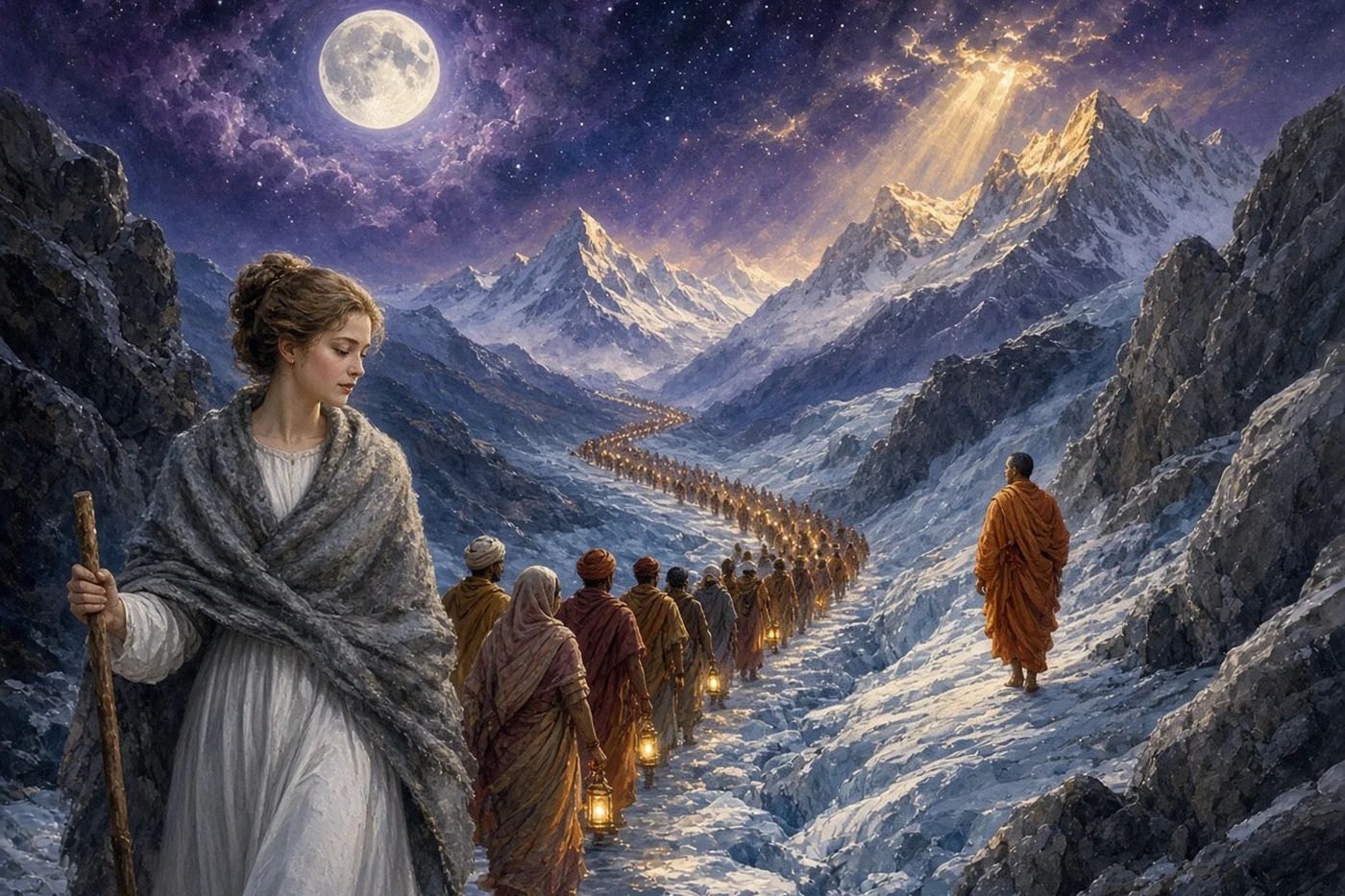
The Swami fell behind. He was not well, and the climb was long, and at last he stopped and told her to go on without him.
"Go. I will come."
She went. Half an hour later he came, having bathed in the icy stream below the cave, and walked in behind her.
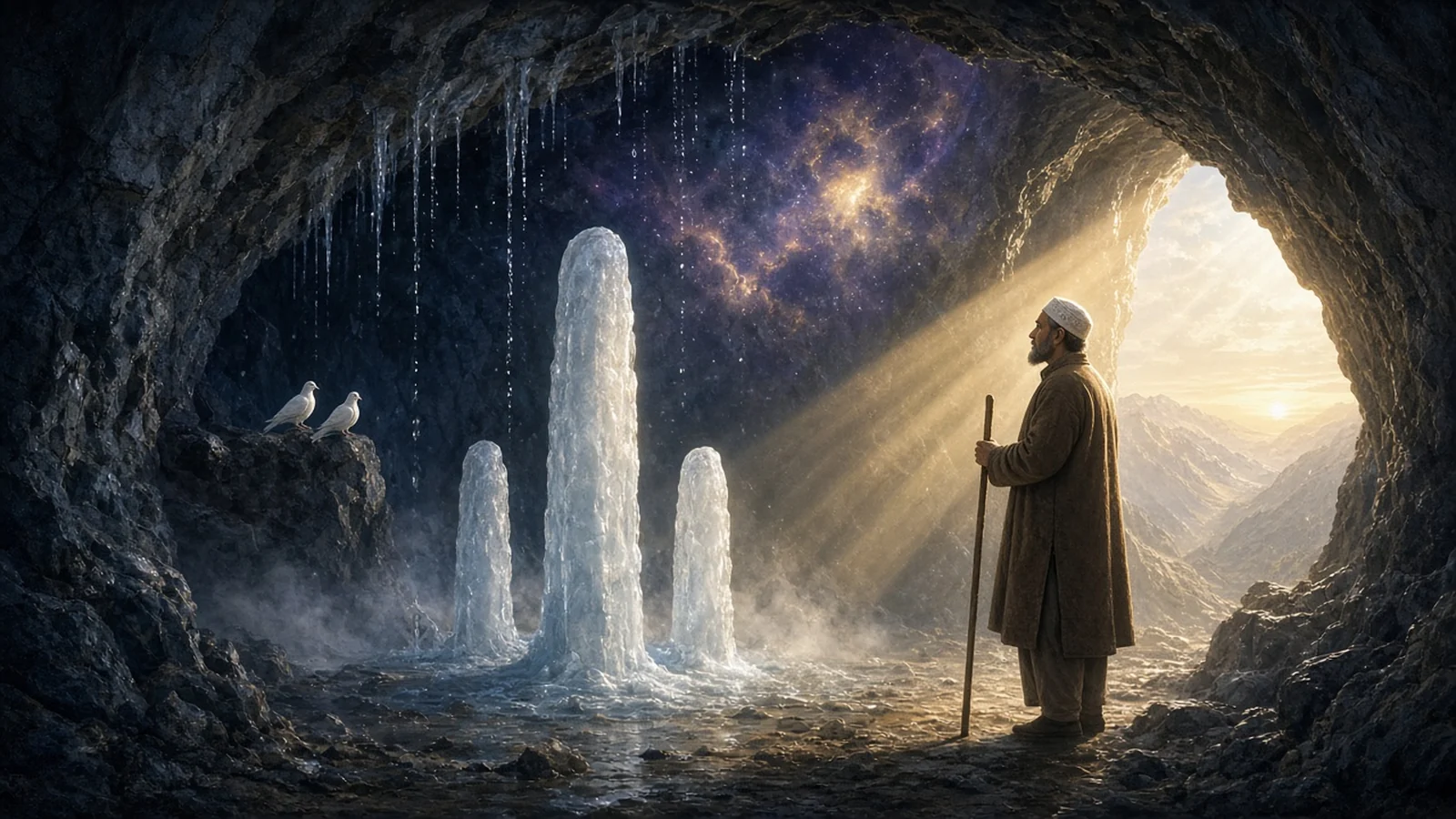
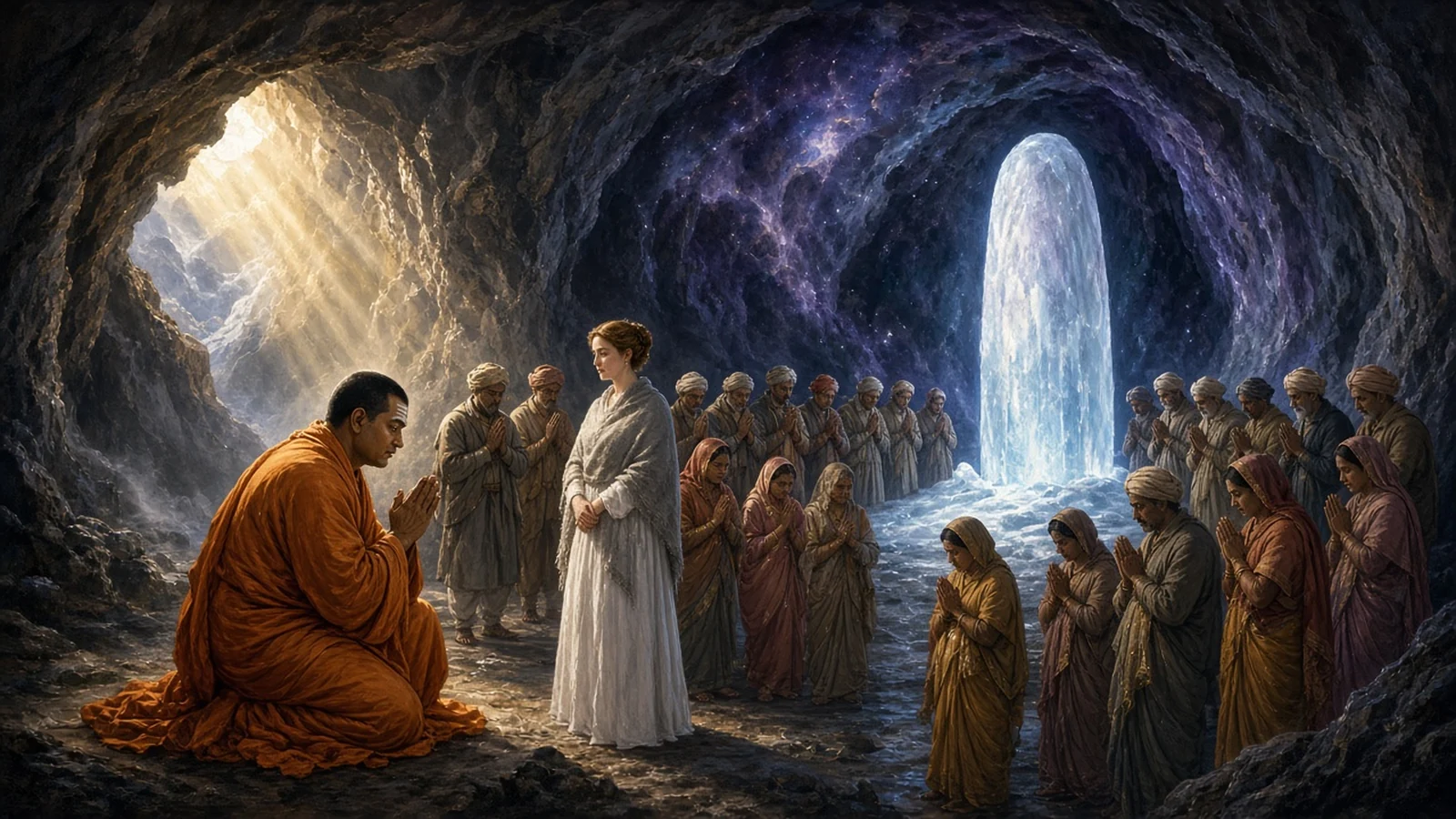
The cave was vast, she wrote afterwards, large enough to hold a cathedral. At the back, in a niche the sun never reached, stood the great linga of ice. He knelt at one end of the curve of pilgrims and prostrated himself, then at the other, two or three times, and nobody in the crowd paid him any attention. Then he turned and went out, because, he told her later, he had been afraid his feelings would overwhelm him. He had held himself tight, he said, so as not to faint.
At the stream below, over their meal, he said what he had seen.
"I thought the ice was Shiva himself."
And then, looking back up the gorge, "There were no thieving priests there. No trade. Nothing wrong in it. It was all worship."
He said one thing more, and said it often afterwards. The grace of Amarnath had been given to him in that cave: he would not die until he himself consented to it. A doctor who examined him later told Nivedita his heart ought to have stopped in there, and had instead been permanently enlarged.
On the way down he turned the finding of the cave over in his mind, and laughed. Shepherds, he decided. Shepherds who had lost their flock, climbing after it, and coming suddenly upon Mahadev.
Nivedita wrote the pilgrimage down twice, in her notes of the journey and, twelve years later, in her book about him. In the second she called the cave the secret of Kailash, and said the whiteness of the ice pillar had startled and wrapped itself round her Master.
As the old books tell it: the Nilamata, Kalhana, Jonaraja and Abul Fazl
Kashmir · the chronicles, sixth to sixteenth century · 2 min read
The oldest book to name the place is the Nilamata Purana, Kashmir's own Purana of the sixth or seventh century. Among the hundreds of bathing places it lists, with the merit each one earns, is Amaresha. Bathe there, it says, and the merit is that of a gift of a hundred cows.
Five centuries later Kalhana sat down to write the history of Kashmir's kings. His Rajatarangini was finished in 1149, and he knew the pilgrims' road as a thing of his own time. Telling of the Naga Susravas, who buried a king's country under stones and then, in remorse, left his home at dawn for a far mountain, Kalhana adds that the lake the Naga made there, white as a sea of milk, is still seen by the people who go up on the pilgrimage to Amareshvara. The pilgrims call it Sheshnag.
Of the pious king Aryaraja, who had been the minister Samdhimati before witches raised him from a skeleton and the people made him king, Kalhana writes that he spent his summers worshipping lingas formed of snow in the regions above the forests. And in the eleventh century Queen Suryamati, wife of King Ananta, founded monasteries beside the shrines of Vijayesha and Amaresha, granted land at Amareshvara in her husband's name, and had tridents and stone lingas consecrated there.
Jonaraja, who took the chronicle on after Kalhana, records that Sultan Zain-ul-Abidin, the ruler of Kashmir in the fifteenth century, went up to the shrine while his engineers were cutting a canal from the Lidder.
Then Akbar took Kashmir, and his historian Abul Fazl described the valley for the Ain-i-Akbari in the 1590s. There is a cave, he wrote, in which an image of ice forms. When the new moon rises a bubble of ice appears, and for fifteen days it grows a little every day until it stands about two yards high by the emperor's measure; then, as the moon wanes, it shrinks, until when the moon is gone there is no trace of it. The people hold it to be Mahadeva, and come to it in supplication.

A Mughal painter of about 1600 drew the scene for a manuscript: turbaned men standing in wonder round a white pillar in the open air, and above them, where the text has the moon, a sun.
The Englishman who translated Abul Fazl in 1891, Jarrett, added a footnote that the ice bubble was no doubt a stalactite. He was guessing. A stalactite hangs from a roof; the Amarnath ice rises from the floor. Stein, who translated Kalhana in 1900, added a footnote of his own: that the pilgrimage was probably less important in old times than it had since become, to judge by how little the Nilamata and the chronicle say of it.