As the Tamil temples tell it
Kanda Puranam tradition · Kailash, the full moon of Thai · 3 min read
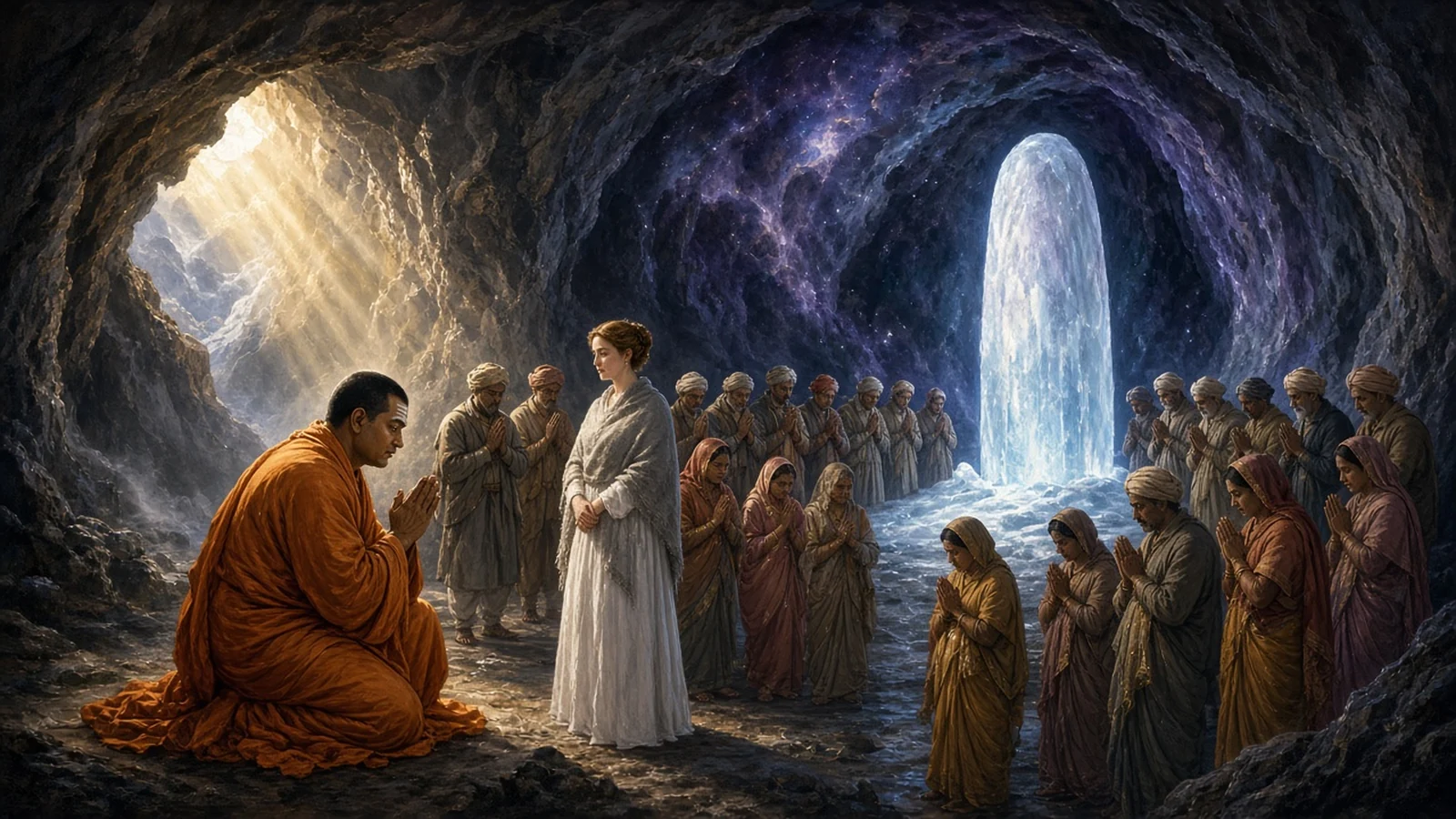
The gods came to Kailash in a crowd, and they came as beggars.
Surapadman ruled them. He and his brothers, Singamukhan with the lion's face and Tarakan, had sat a thousand years in penance until Shiva came to them, and they had asked for life that did not end and rule that did not end, and Shiva, who gives what is asked for, had given it, with one door left open: nothing but a power born of himself could touch them. So Surapadman took the three worlds, built his city in the sea, and set the gods to work in it, and the few who had slipped away climbed the mountain.
"We cannot fight him," said Indra. "Nothing in our hands will cut him. He has your word for that."
"He has my word," said Shiva. "He does not have my son."
The boy had been born for this, out of six sparks from his father's faces, nursed by six mothers in a forest of reeds and gathered into one by his mother's arms, and all of that is told elsewhere in this Lore. He had grown as the sons of gods grow, in days, and he stood now in the court of Kailash among the gods, young, bright, and unarmed.
Shiva made him commander of the armies of heaven in front of them all.
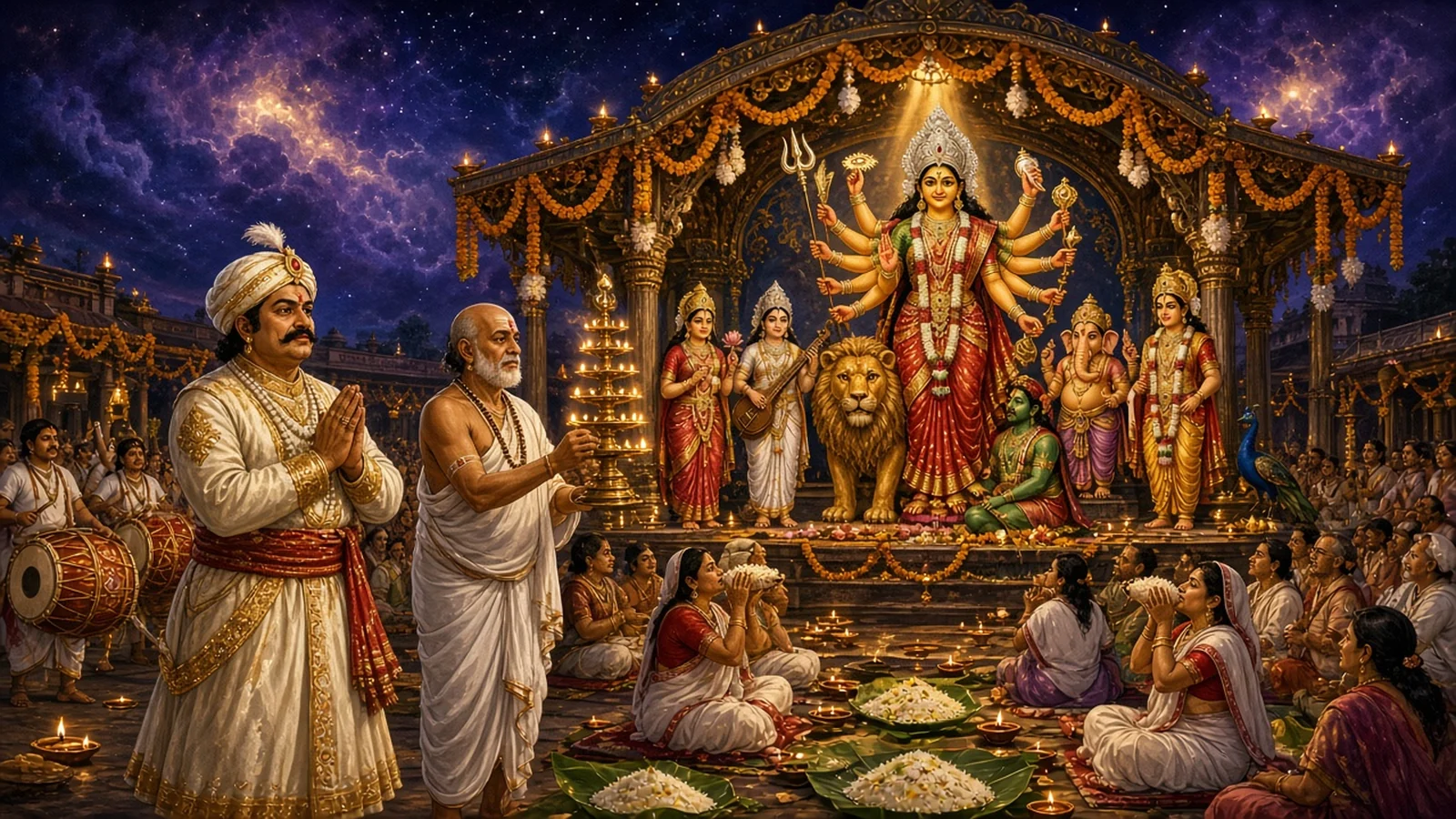
But a general goes nowhere without a weapon, and this weapon was not the father's to give. Parvati rose. The court went quiet, because the Goddess does not often rise in it.
She held out her hand, and in it lay a lance. Its blade was the shape of a leaf, broad at the heart and drawn to a point, and it shone as if it had been cut from the moon that stood full above the mountain. It was not made of metal. It was made of her. The Tamil poets would say for a thousand years afterwards that the Vel is Shakti herself, the power of the Goddess in the shape of a spear, and that when the boy took it he took his mother into his hand.
"This is the Vel," she said. "Where it goes, I go. Nothing it is thrown at will stand, and nothing it is thrown for will be lost, and it will come back to you."
He took it. That night the moon of Thai was full and the Pusam star stood with it, and that is why the day is kept.
"Mother," he said, "what shall I call it?"
"They will call it many things," said Parvati. "Vetrivel, the lance that wins. Veeravel, the lance of the brave. Gnana Vel, because it is knowledge, and what it cuts is the dark. You will call it mine."
Then she did what every mother does, and he let her: she put her hand on his head and looked at him a moment too long.
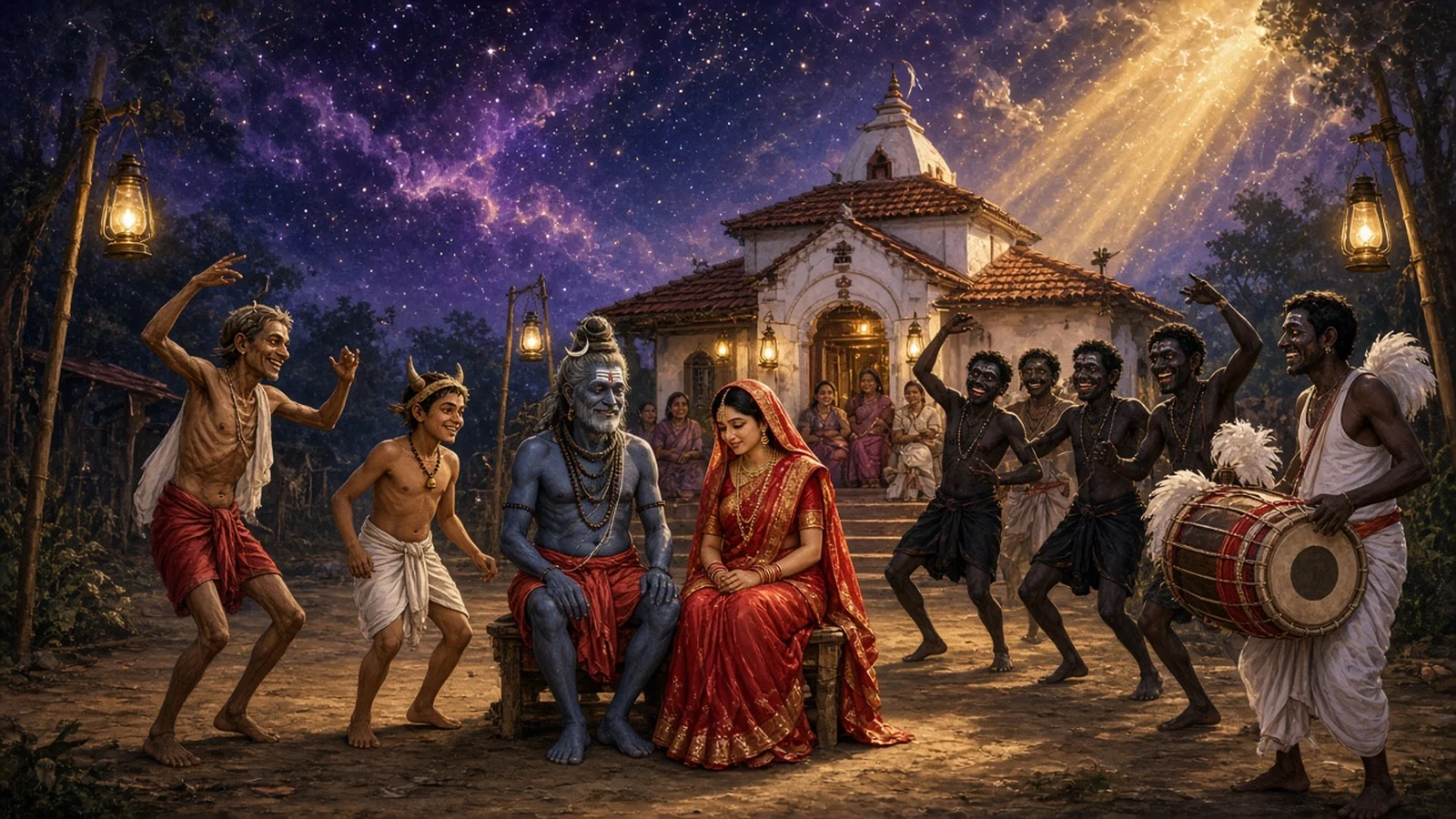
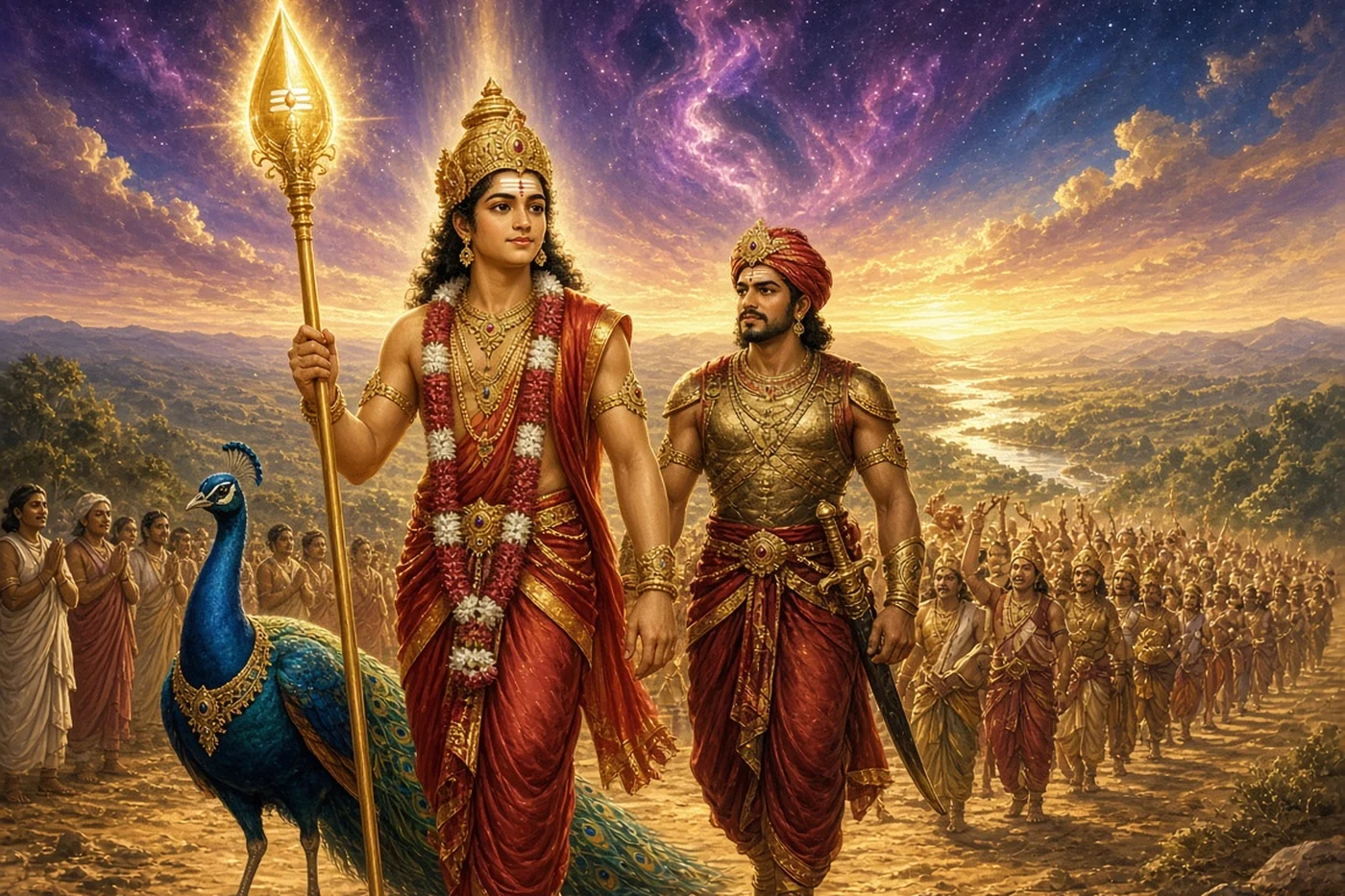
Nine champions rose from the floor of the court, born of the ringing of her anklets, and Veerabahu was the first of them. Shiva gave his son an army, the hosts of the mountain, every strange shape that follows him. The other gods gave what they had. Then the boy went down from Kailash with the Vel in his hand, and the whole of heaven went south behind him.
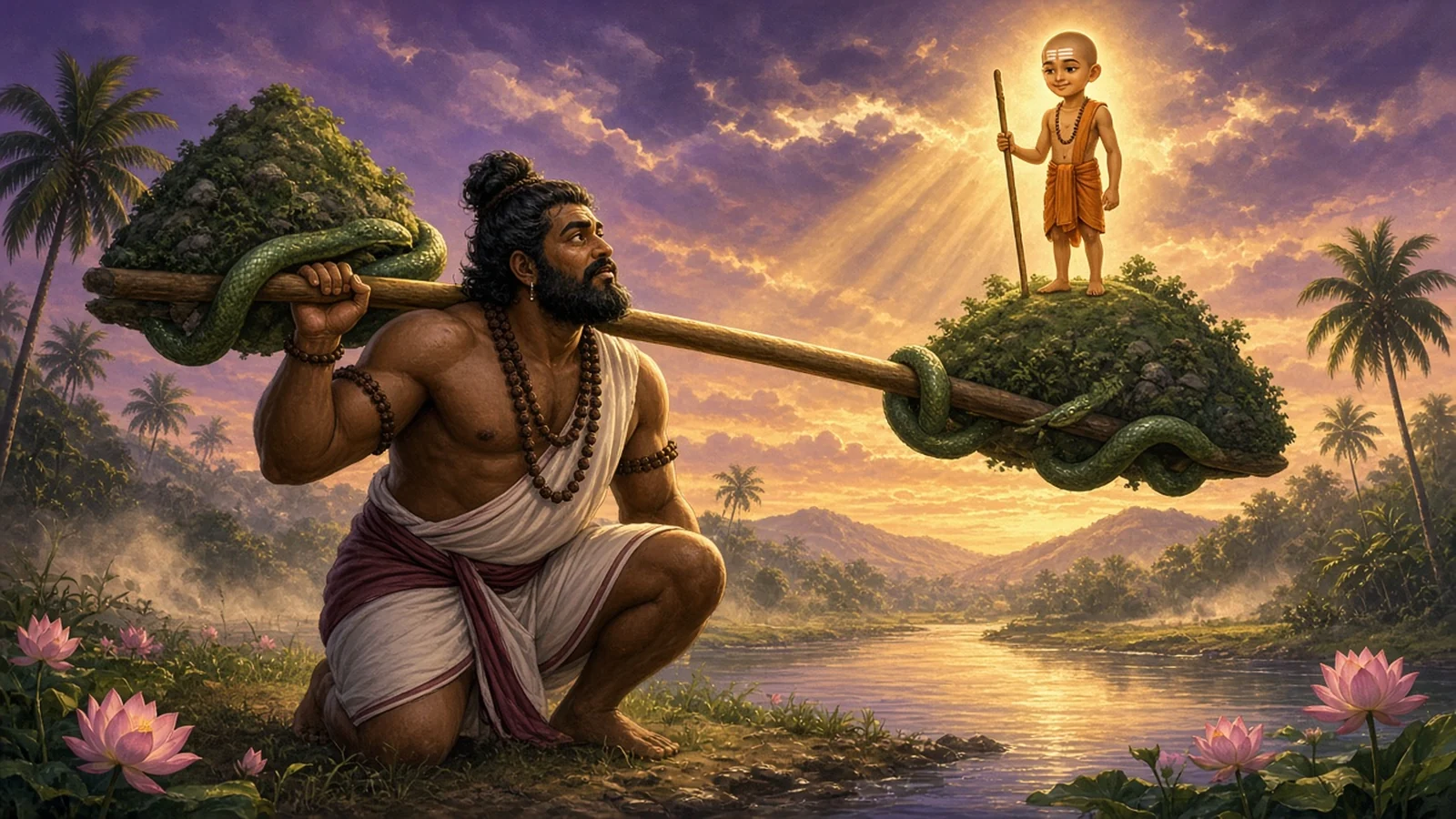
They crossed the north, the rivers, the forests and the dry country, and all the way the gods who had been slaves ran beside the army, and when they sang they sang the lance's name before the boy's. He carried it point upward, and the people of every country they passed through came out to see the light on it.
Where the march ended, on the sand at the very bottom of the land, with the sea in front of them and the demon's city somewhere out in it, another story begins. It has its own page here: the mango tree in the sea.
As the poets and the temples keep it
Arunagirinathar's songs · Nallur, Tank Road and the Thaipusam walk · 2 min read
In Tiruvannamalai, around the year 1400, a man who had wasted his life tried to end it, and Murugan stopped him. His name was Arunagirinathar. He woke, the story goes, with two marks on his shoulders, a lance and a peacock, and he spent the rest of his days singing. Sixteen thousand songs, his admirers say; about thirteen hundred and thirty survive, and they are the Thiruppugazh, sung in every Murugan temple still.
He gave the Vel songs of its own. The Vel Virutham is ten verses to the lance alone, with eleven each for the peacock and the cock beside it, and in his Kandar Anubhuti, fifty-one verses long, the lance is called on in twenty-five. The first verse opens with the Vel and the peacock. The fourth calls it the Sakti Vel and tells what it did: it went through Surapadman and his kin, and it went through the Krauncha mountain. His Kandar Alangaram sings of the same shining lance hurled at the demon and the hill.
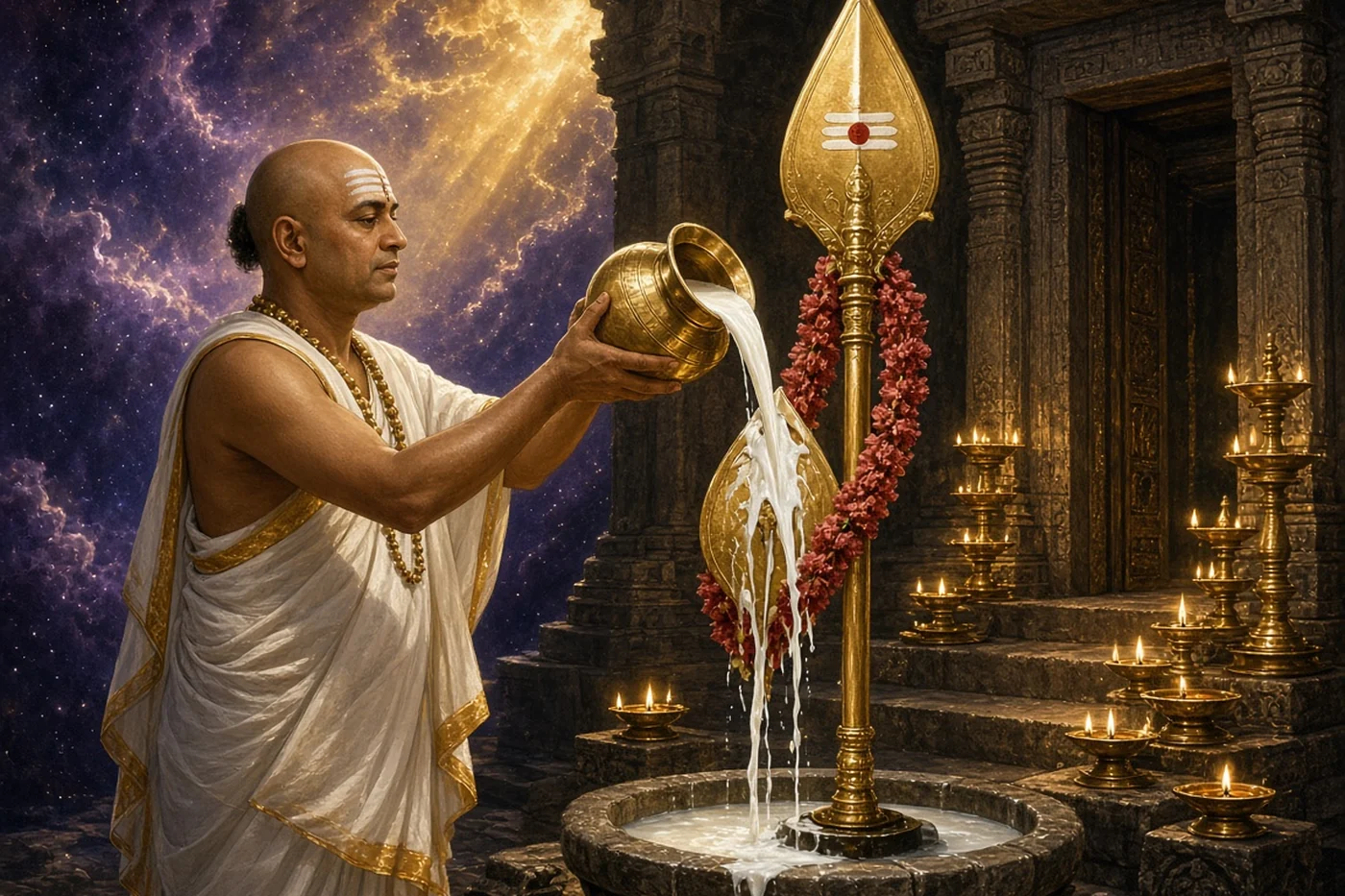
The commentators have read that verse for centuries. The mountain, they say, is karma, the great heap of what one has done, and Surapadman is the ego, the self that will not bow. Nothing cuts either one but wisdom, and the Vel is wisdom. That is why the Tamil name for it is Gnana Vel as often as Shakti Vel, and why the pilgrim who has fasted for forty-eight days is given, at the end of the walk, not an image but a spear to pour his milk on.
For the Vel is worshipped by itself. At Nallur in Jaffna the sanctum of the great Kandaswamy temple holds no figure of the god at all; the Vel stands there alone, and has since the temple was rebuilt in 1734. In Singapore the Thaipusam walk, four kilometres from Serangoon Road to the Chettiars' temple on Tank Road, ends at the Vel: the milk the bearer has carried on his head or in his kavadi is poured over the blade, the abhishekam, and then ash is pressed on his forehead and the frame is unhooked from his skin.
On the roads of Penang and at the foot of the Batu Caves the cry all day is the lance's name, vel, vel, vetri vel, and in Kerala the kavadi dancers shout harohara as they go.
Murugan has one other great day of the Vel in the year, Skanda Sashti, the sixth day of the bright half of Aippasi, when the shore at Tiruchendur sees the spear thrown and the demon fall. It has its own page coming in this Lore. Thaipusam is the day before all that, the day the spear came into his hand.