As Taherpur tells it
Taherpur, Rajshahi, in the north of Bengal, now Bangladesh · 3 min read
In the days of Akbar there was a raja at Taherpur, on the Rajshahi side of the Padma, named Kangsanarayan. He held his lands under the emperor's seal and was rich, and he was not at ease. His astrologers read trouble in his stars, and the emperor's letters did not comfort him. He wanted to do something large enough to be seen from heaven.
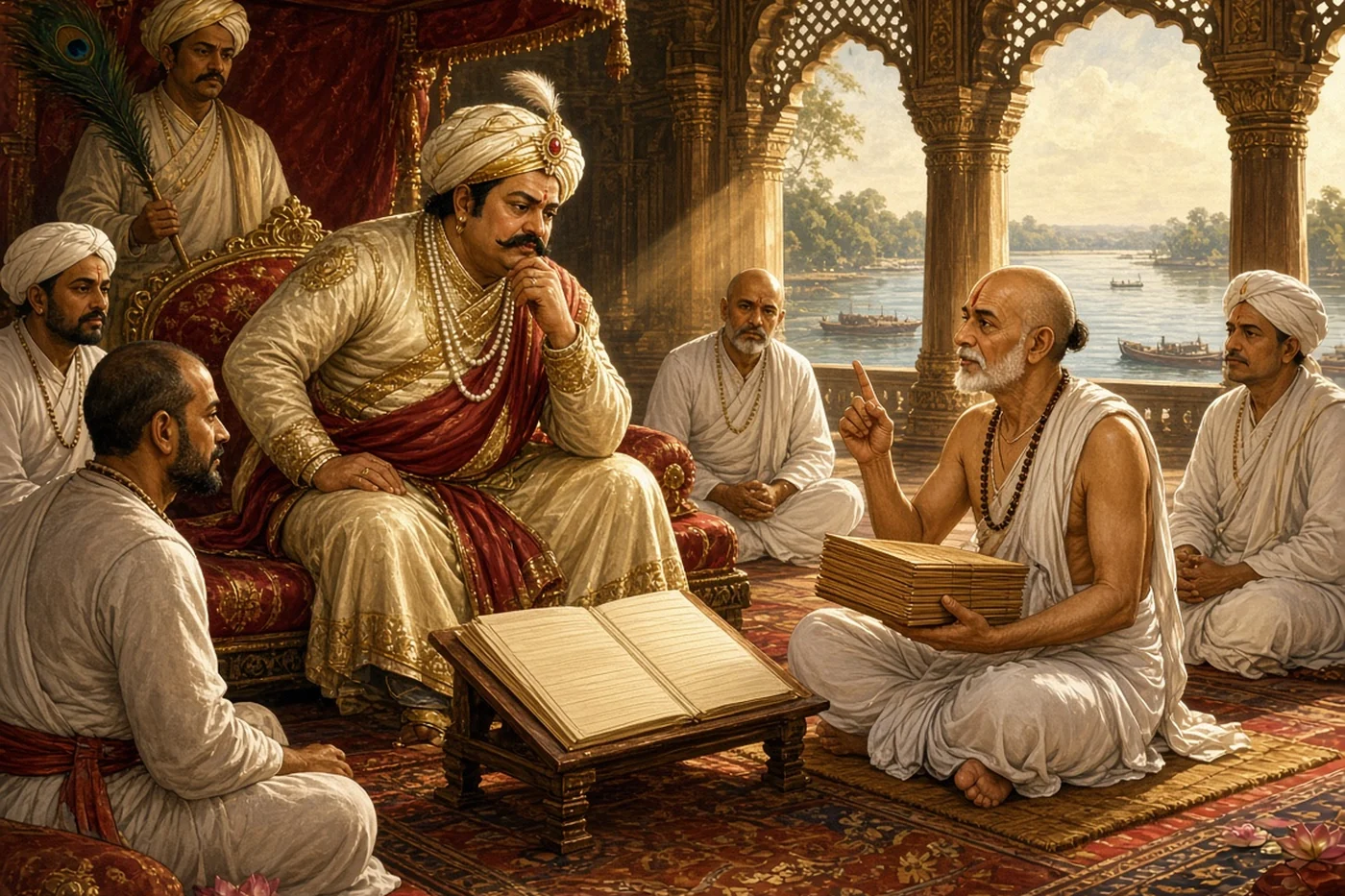
He called the pandits of his court. "I want to hold a great sacrifice," he said. "The kind the old kings held. Tell me which."
The man who answered was Ramesh Shastri of Basudevpur, a tantric and the most learned man in the district. "The books know four great sacrifices," he said. "The Vishvajit and the Rajasuya, the horse sacrifice and the cow sacrifice."
"Then one of those."
"The first two are for an emperor who owns the earth and makes other kings bow. You hold Taherpur under Akbar. And the horse and the cow are forbidden in this age. The Kali age does not allow them. They belonged to the kshatriyas of another time."
The raja sat for a while without speaking. "Then there is nothing left for a king to do in this age," he said.
"There is one thing," said Shastri. "The autumn worship of Durga. The books call it the great sacrifice of the Kali age. Whoever holds it gets the fruit of all the others together. Suratha held it in the first age, when he had lost his kingdom, and got it back. Rama held it in the second age, out of her season, before he crossed to Lanka, and Ravana fell. It is the sacrifice that was left to us."
"Then I will hold it," said Kangsanarayan, "and I will hold it so that no one has ever held it like this."
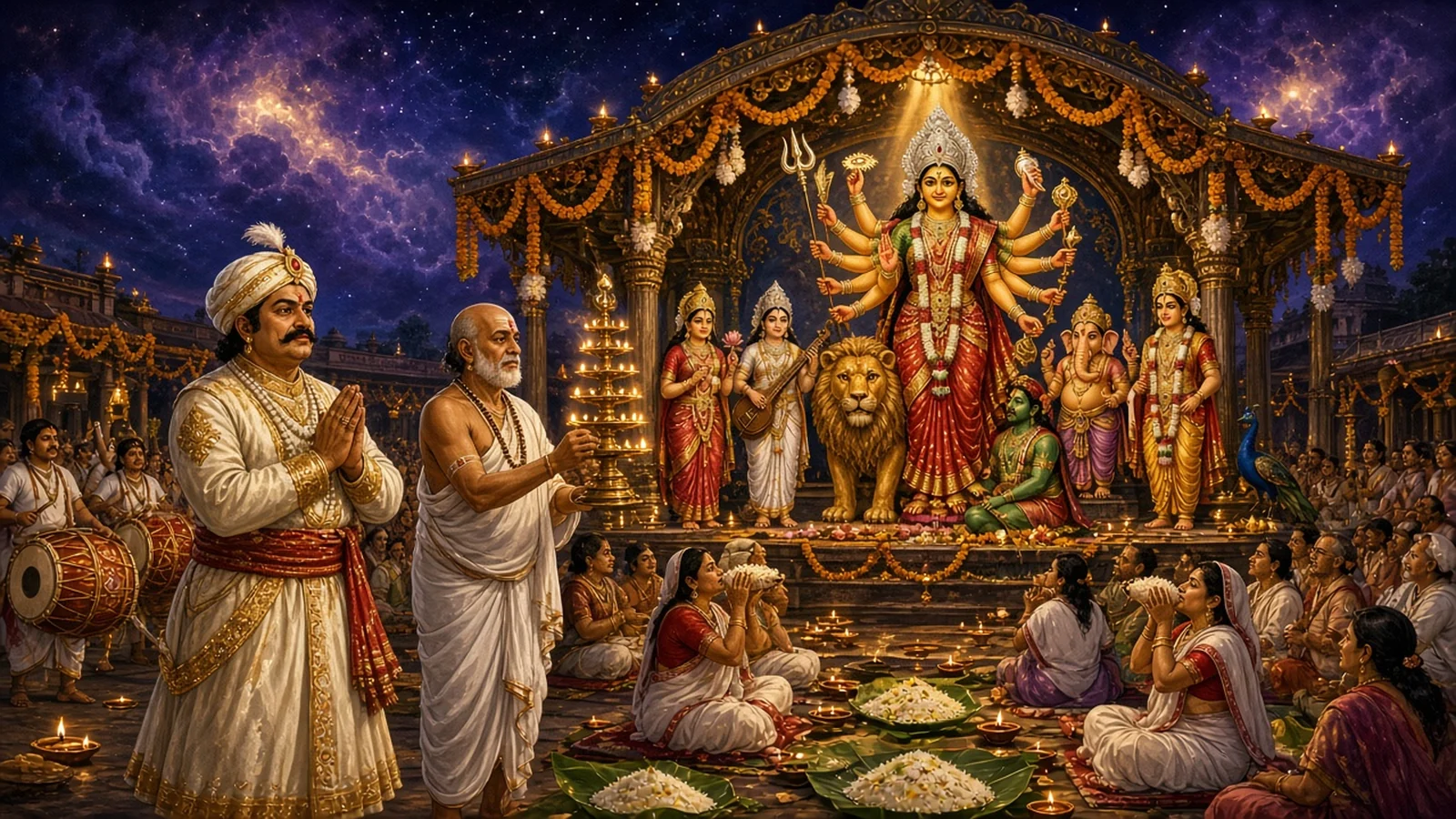
He meant it. Shastri, they say, wrote out the procedure: the waking of the Goddess on the sixth day, the nine plants bathed at dawn on the seventh, the lamps at the joining of the eighth and the ninth, the farewell on the tenth. The image was built of straw and clay and painted, the Goddess with her lion and the demon under her foot, her four children beside her under one arch. The raja fed the whole district. The tellers say he spent eight lakh rupees on that one autumn, or nine, or eight and a half. Nobody agrees on the figure and everybody agrees it was enormous, and the news of it went down the river to every court in Bengal.
Across the water in Bhaduria, Raja Jagatnarayan heard of it and would not be outdone. "Suratha worshipped her in spring," he said. "If Taherpur has the autumn, Bhaduria will have the spring." He held a Basanti Puja in Chaitra, in Suratha's manner, and for a while Bengal had two great pujas of the Goddess, one at each end of the year. The spring one faded. The autumn one did not.
Taherpur is a small town now. The raja's palace is a college, and students sit where his court sat. Of the temple where the first puja was held there is one ruined wall and an old tank, and beside the wall a small family shrine with metal images of the Goddess and her children. Every autumn the town says that the Durga Puja of the world began here, and holds its own.
As Kolkata tells it: the puja of 1757
Shobhabazar, north Kolkata · 2 min read
In June 1757 Clive's army beat the Nawab at Plassey, and a Bengali who had helped him came out of it rich. Nabakrishna Deb had taught Persian to Warren Hastings and carried the Company's messages, and he knew which way the wind was blowing. That same year he began a great house at Shobhabazar in the north of the town, with a pillared hall for the Goddess, and that autumn he held a Durga Puja in it such as Calcutta had never seen.
The story the city tells is that Clive wanted to give thanks for his victory and had nowhere to do it. St Anne's, the only church in the town, had been wrecked when the Nawab took Calcutta the year before. "Give thanks at my house," Nabakrishna is supposed to have said. "The Goddess has just won a war of her own."
"But I am a Christian," said Clive.
"Leave that to me."
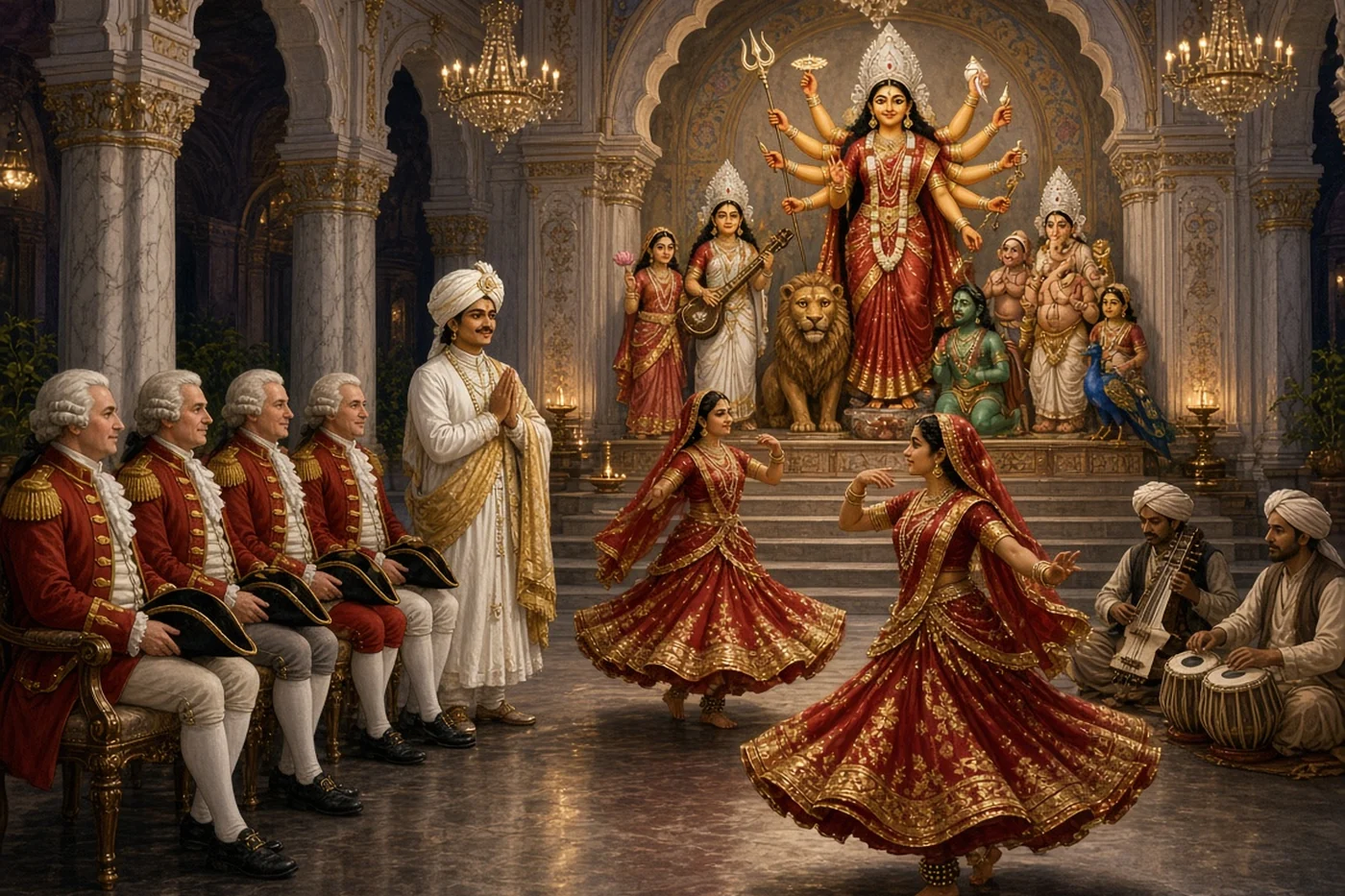
So the Englishmen came to the puja. They sat in the hall and watched the dancers from the Muslim gharanas, and were served beef and ham and wine in one room while the priests chanted in the next, and no one said a word about it. Whether Clive truly sat there, and whether it was 1757 or a year or two on, the records do not settle and historians still argue.
What is certain is what came of it. Every rising family in Calcutta wanted an Englishman at its puja after that, and the great houses of the north, the Debs, the Daws, the Ghoshes, the Mitras, the Deys, built their own halls for the Goddess and their own customs. One fired a cannon at the Sandhi Puja. One dressed Kartik in English breeches. At Shobhabazar, on the tenth day, a nilkantha bird was let go to fly ahead to Kailash and tell Shiva that she was coming home. The bird is clay now, since live ones may not be released, but it still goes.
The Goddess did not stay in the mansions. At Guptipara up the river, twelve friends turned away from a zamindar's hall held their own puja by subscription, the first baroyari, around 1790. In 1910 a society at Balaram Basu Ghat Road in Kolkata held the first sarbajanin puja, a puja for everyone, and the pandals followed. In 2021 UNESCO put the Durga Puja of Kolkata on its list of the heritage of humanity.