As the Rarh villages tell it: the farmer's wedding
West Bengal · a village Gajan on the last night of Chaitra · 4 min read
In the last week of Chaitra the men of the village stopped being themselves. The potter, two of the Bagdi boys from the brick kiln, and the old cowherd who had done it forty years running put on the sacred thread in the temple yard, tied the red cloth round their waists, and were sannyasis of Shiva until the year ended. They slept on the temple floor, ate once a day, and went from house to house in the heat with a staff and a bag for the alms of paddy and oil.
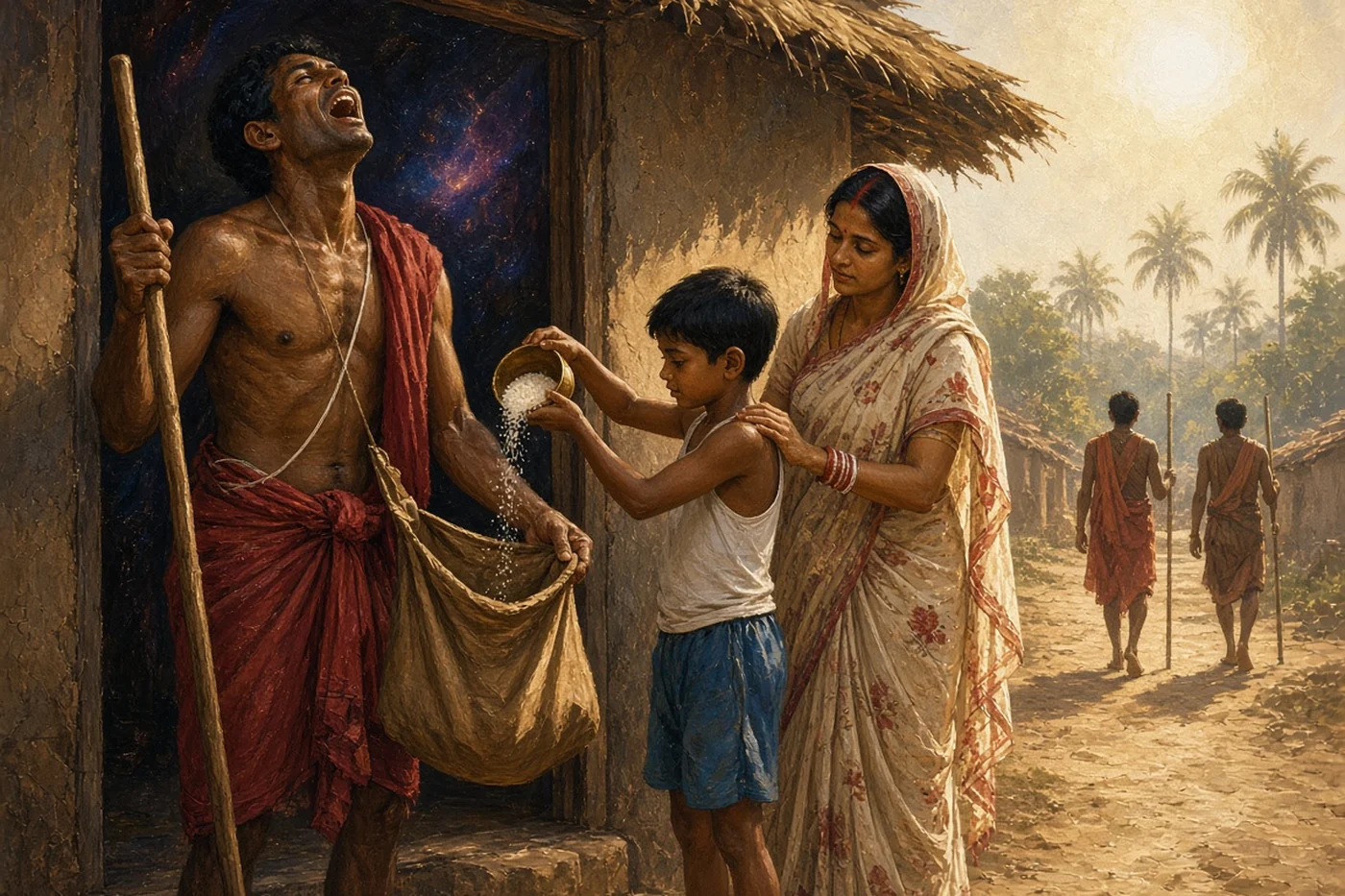
The boy whose father was among them stood at the door with his mother when the sannyasis came by. His father did not look at him. He was not supposed to.
"He is not your father this week," his mother said. "He is one of Baba's people. Give him the rice."
The boy poured it into the bag. His father roared, the long Gajan roar that the village said gave the festival its name, and went on to the next door.
The women kept their own vow. On the day before the Sankranti his mother ate nothing from morning till the lamp was lit, and then she went to the temple with the other wives, poured milk on the linga, laid a whole raw mango before it, and set a small lamp burning for her son's sake before Shiva as Nilkantha, the blue-throated, the one who swallowed poison so that others would live.
"What are you asking him for?" the boy said on the way home.
"For you. That is what the Nil fast is. Every mother here is asking the same thing tonight, and he has a great deal to listen to."
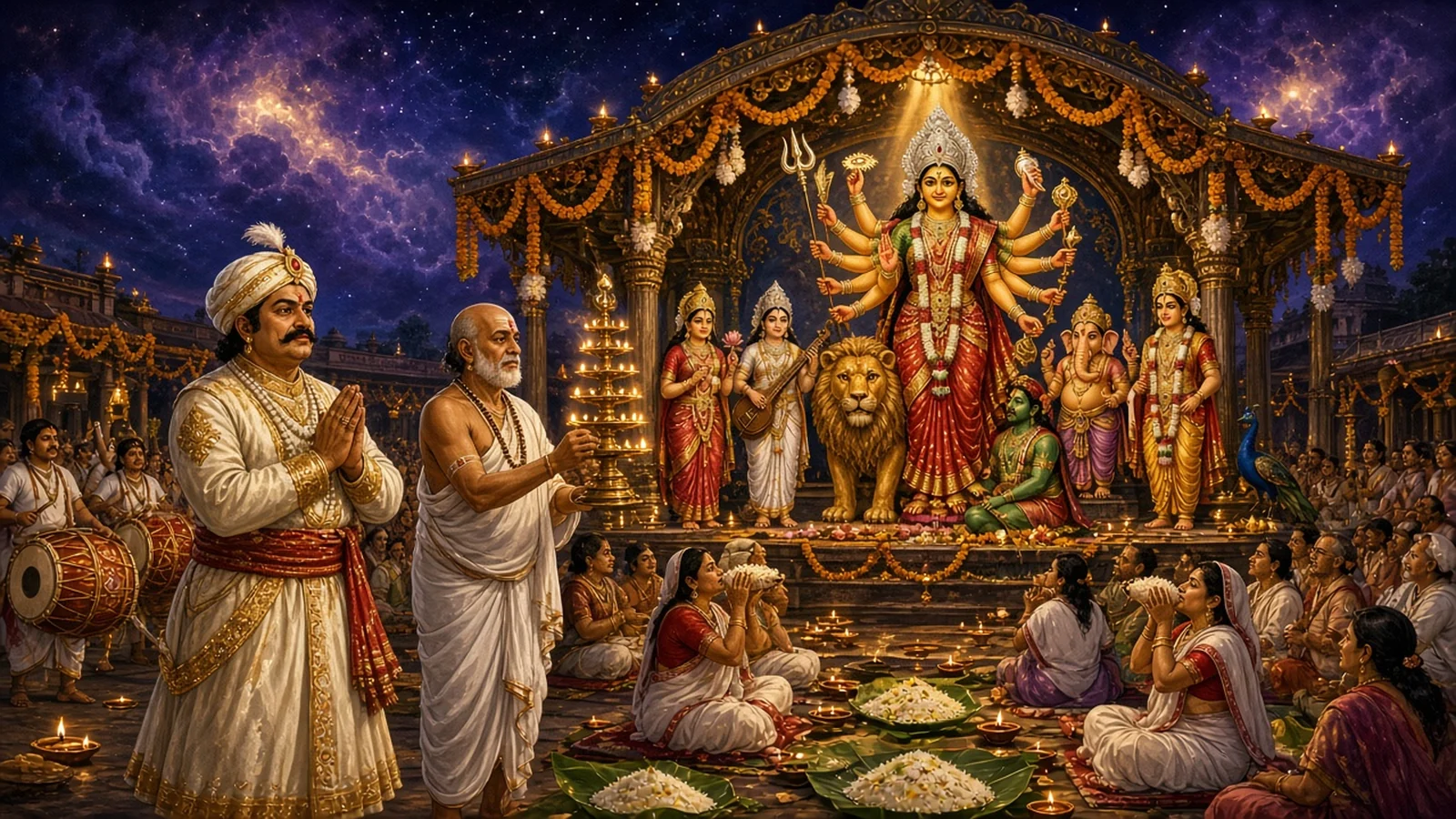
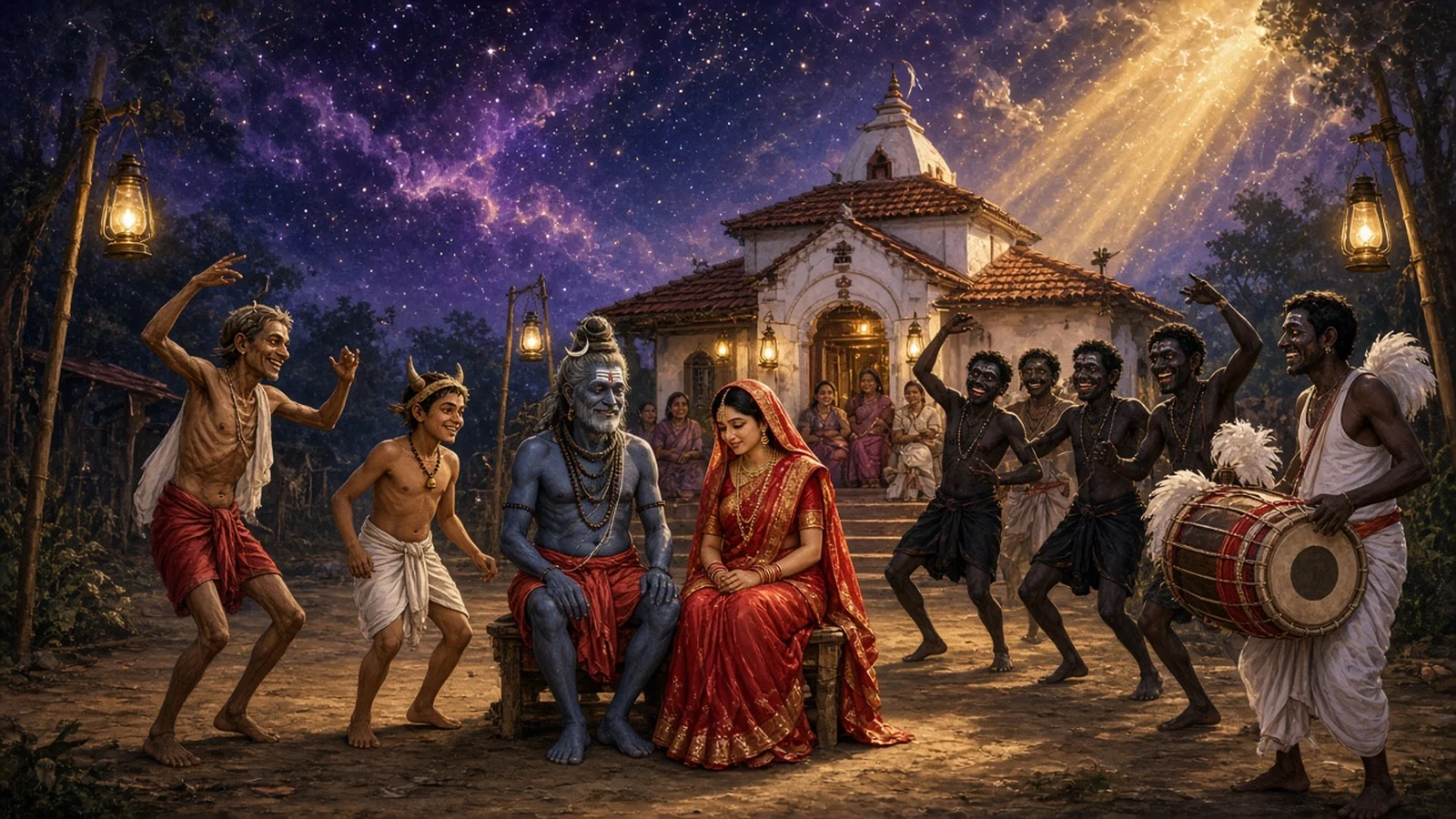
That night was the wedding. The temple yard was lit with hurricane lamps and a dhak was going. The cowherd, who was the chief sannyasi, had been painted blue from the waist up, with ash on his face, a rope of beads and a crescent cut from tin in his hair, and sat on a low stool as the bridegroom. The potter was the bride, Nil, Gauri, whatever the village called her that year, with a red sari over his head.
The others were the wedding party, and they had made themselves into Shiva's household: one was Nandi with horns of straw, one was Bhringi, all ribs and elbows, and the rest were ghosts, soot-black, teeth painted white, who danced round the couple shrieking and had to be shouted back by the drummers.
Then the singers began the old verses, and the yard went quiet to hear what everyone already knew. How the god slept so long that his household went hungry. How his wife woke him.
"There is no rice in the pot," the potter sang, in Gauri's voice. "The children cry. You sit with your pipe and your friends from the cremation ground and call it meditation."
"Then what would you have me do?" sang the cowherd. "I am a beggar. I own a bull and a drum."
"Do what every man in this yard does. Go to the field."
And the verses carried him there, as the Shivayan has it: to Indra for a grant of land written out on a deed, to Vishvakarma for a plough, to Kubera for seed because the god had none, and to Bhima, his big slow companion, to walk behind the oxen. The singers made the whole village laugh at the god who did not know which end of the plough to hold, and nobody thought it disrespect, because the god they were laughing at was one of them.
Before dawn the sannyasis bathed in the pond and went to the field where the Charak tree had been raised, a tall stripped trunk with a bamboo wheel on top, worshipped the day before as Shiva and his bride in one body. The old cowherd was tied to the wheel by a rope round his waist, since this village had given up the hooks, and swung out over the crowd while the dhak beat and the mothers held their babies up towards him for a blessing.
The boy's father came home at noon, a farmer again, and sat down and asked for rice.
As the Puranas tell the wedding: Himalaya's door
Told across India · the Shiva Purana · 2 min read
The Puranas know nothing of a poor man's wedding. In the Shiva Purana the bride is Parvati, the daughter of Himalaya, the mountain king, and his wife Mena, and she has earned her husband by sitting through summers and winters in meditation until the god of ascetics could not refuse her.
Still, Shiva did not come to the wedding like a king. The seven sages had gone ahead to settle the match, and Himalaya's city was decorated for a thousand miles. The gods came in procession, Vishnu on Garuda, Brahma on his swan, Indra on his elephant, the sun and the moon and the planets, the Gandharvas singing. And then came the bridegroom, on a bull, with the snakes on his arms, ash on his body, the moon in his matted hair, and behind him his own people, the ganas and the ghosts, misshapen, many-headed, howling with joy.
Mena had climbed to the roof to see her son-in-law. She had taken each god in turn for Shiva and been pleased. When the real one came into view she fainted.
"This is the husband my daughter has prayed for?" she said when they revived her. "A beggar with a bull, with corpses for company? I will not give her. Let her stay unmarried."
Parvati would not be moved. Narada spoke, and Himalaya spoke, and at last Shiva, who had been amused, took pity on the mother and showed himself as the gods see him, young and brilliant, dressed in silk and jewels, with the ghosts turned to shining attendants. Mena worshipped him, and gave her daughter gladly.
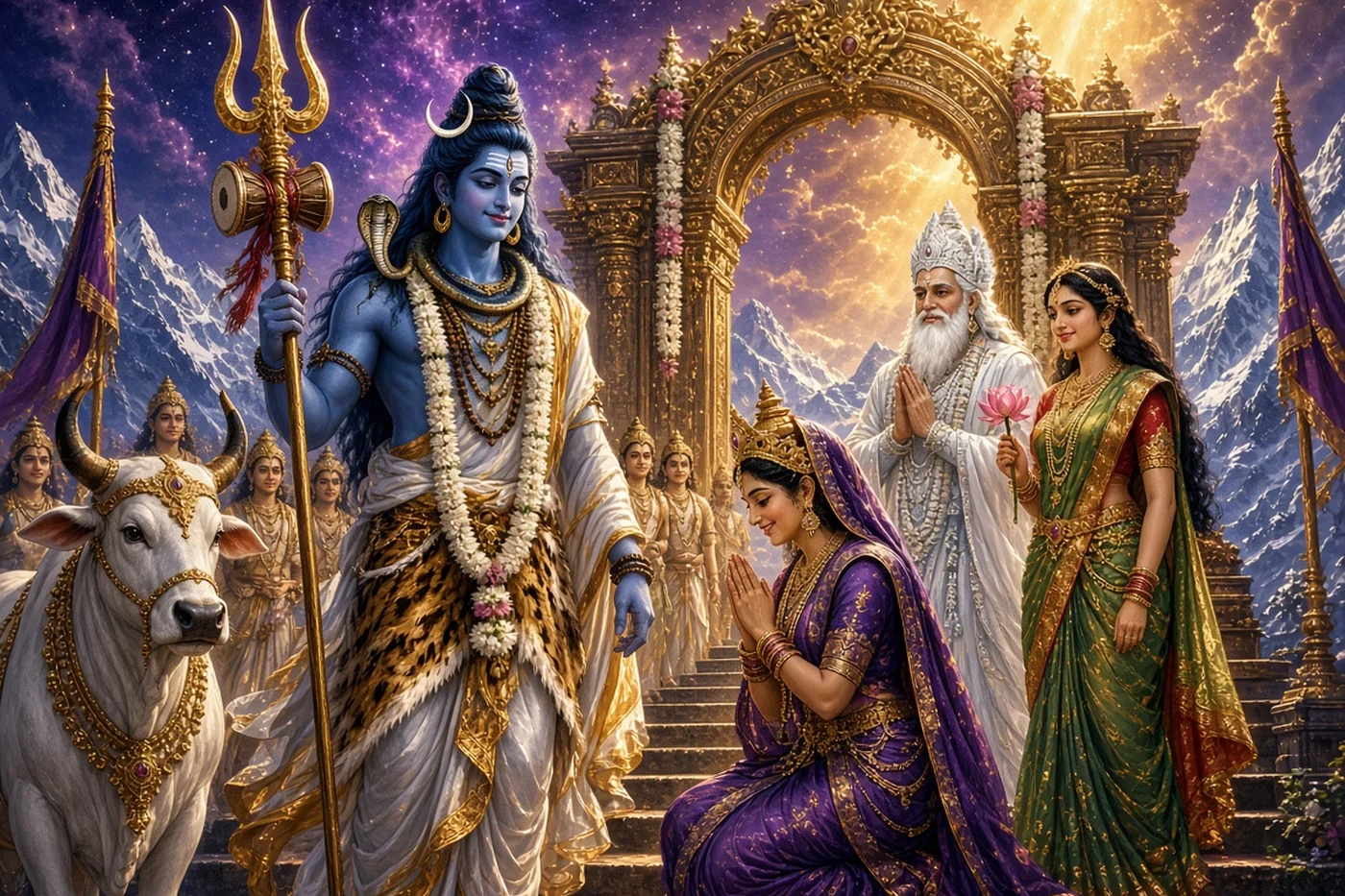
Brahma was the priest. The fire was lit, the seven steps were walked, Himalaya gave the bride away with the water poured over the hands, and the gods threw flowers until the ground was covered. Then Shiva took Parvati home to Kailash, the silver mountain, and the ganas went with them, and their household was never again spoken of as poor.
That is the wedding the Gajan keeps, the village tellers say, only the god who came to Himalaya's door with his ghosts has come instead to theirs.