As the Maliks of Batakote tell it
Kashmir · Batakote and the mountains above Pahalgam · 4 min read
Batakote is a village a little way above Pahalgam, where the Lidder comes down out of the mountains, and the Maliks who live there say the cave was found by one of their own. His name was Buta Malik, and he kept sheep.
One summer, the family says, he took his flock higher than the grazing usually carried him, and was out for days. On a bare slope above the last trees he came upon a sadhu sitting alone, with nothing about him but a small fire and a sack.
Buta did what a shepherd does with a traveller in the high country. He sat down, and he shared his bread.
"You are a long way from your village," the sadhu said.
"The sheep go where the grass is," said Buta. "I go where the sheep go."
They talked while the flock grazed. When the shepherd got up to gather it, the sadhu pushed the sack across the ground towards him.
"Take this home with you."
Buta looked inside. It was coal, black lumps of it, and nothing else.
"Coal? There is wood enough in the valley for ten winters."
"Take it," the sadhu said. "You were kind to a stranger. It is what I have."
Buta did not want to insult him. He put the sack over his shoulder and drove the sheep down.
It was dark when he reached Batakote. His wife had the fire going. He dropped the sack by the door and said nothing about it until she asked what he had brought back from the mountain.
"Coal. A holy man gave it to me. He had nothing else to give."
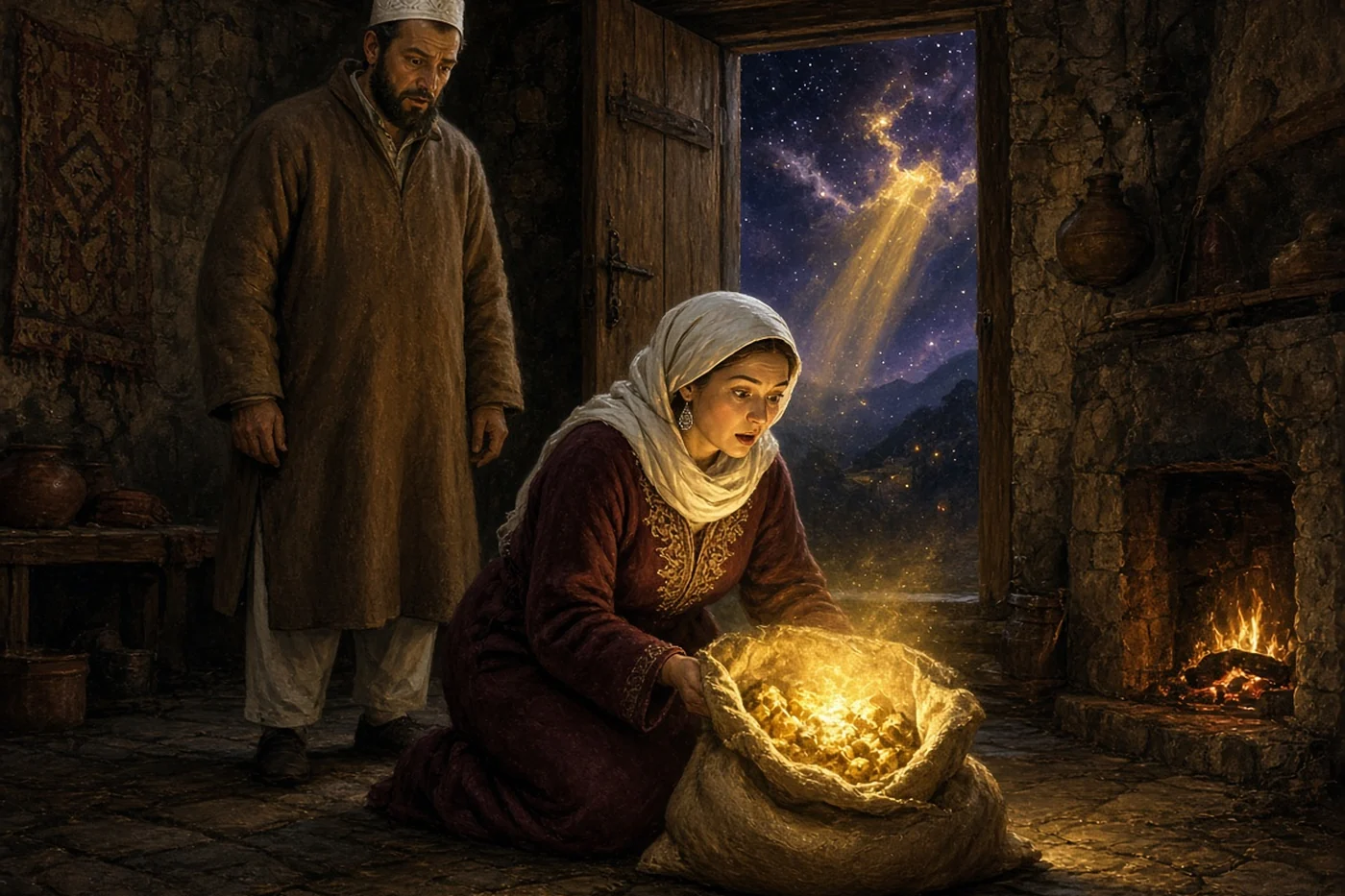
She untied it to see. Then she called him by his name in a voice he had not heard from her before. The lumps in the sack were gold.
He did not sleep. Before it was light he was climbing back the way he had come, the sack left at home, to find the sadhu and thank him, and perhaps to ask him what it meant.
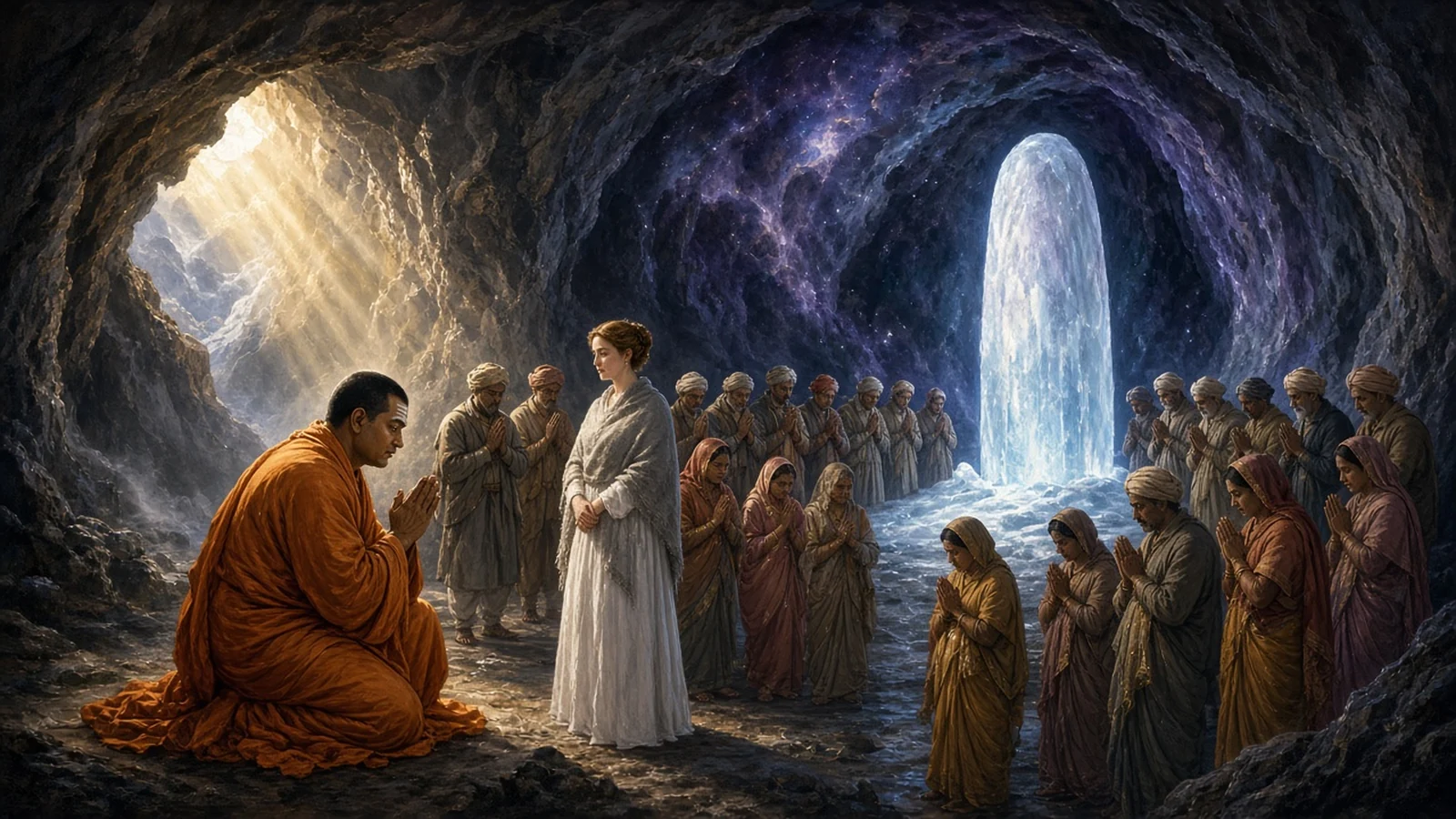
The slope was where he had left it. The ashes of the fire were cold. There was no sadhu, and no track to show where a man had gone. But in the rock above the place where he had sat there was an opening Buta had not noticed the day before, a wide low mouth in the mountain, and he went in.
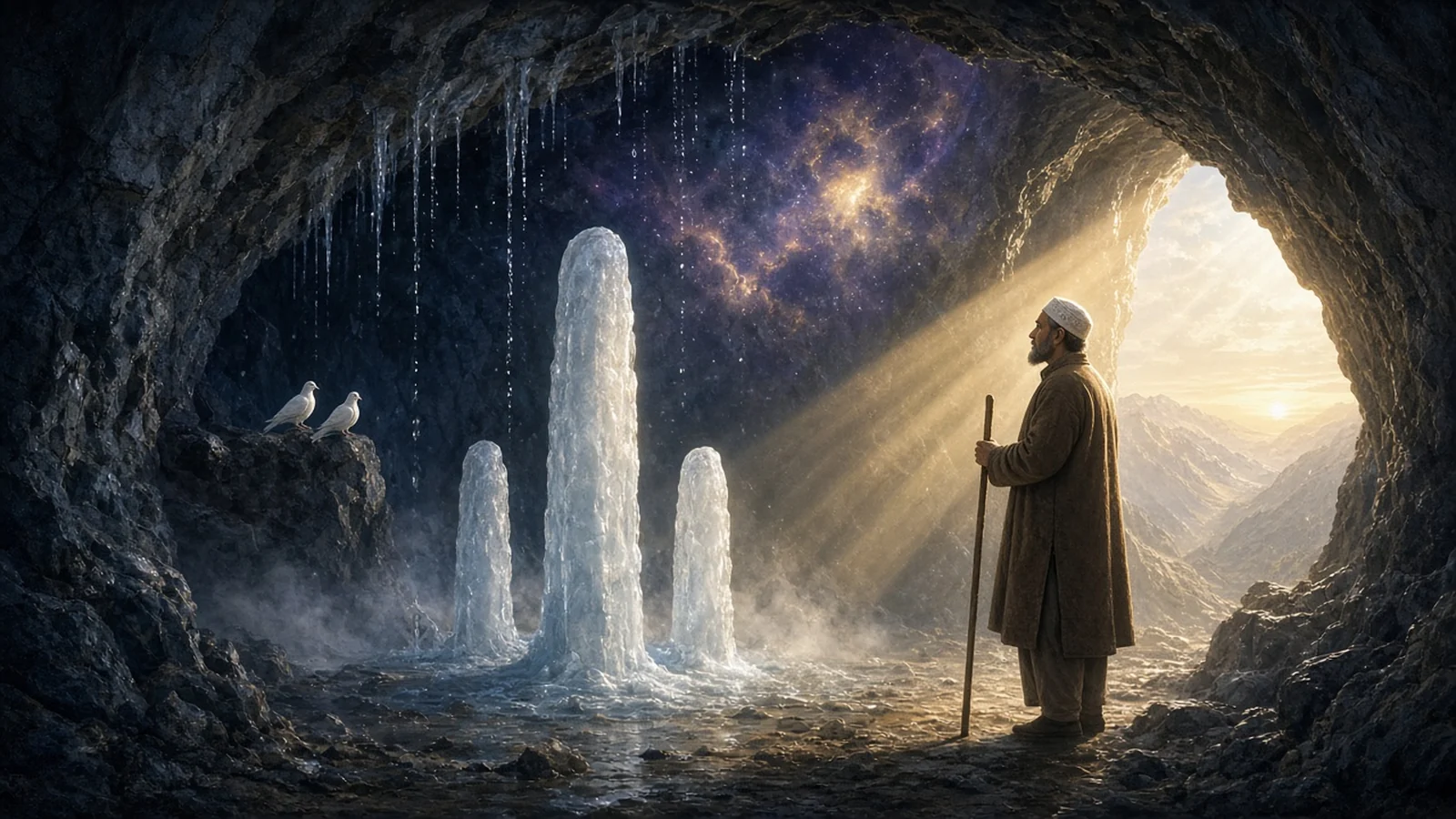
At the back, in the half dark, a pillar of ice as tall as a man rose from the floor of the cave on its own, and two smaller ones stood beside it. Water dripped from the roof. Near the ice, the family says, a pair of pigeons sat and watched him, and did not fly.
He stood there a long time. Then he went down and told the village, and the village told the valley, and the Hindus of the valley came up to look, and said that this was Amareshwara, the lord of the immortals, whom their old books spoke of.
The ruler of Kashmir in those years was Gulab Singh. He was pleased, the Maliks say, and he gave an order. At the cave, as long as pilgrims came to it, a Malik of Batakote was to be present with the mahant and the purohits, and a third of what the pilgrims offered was to be theirs.
So it was, for four generations and more. After Buta, his children organised the fortnight of the pilgrimage each summer. The Maliks kept the track open, guided the yatris up from Batakote, carried the sick, and at the cave a Malik sat beside the mahant of the holy mace while the Brahmins of Mattan said the prayers. In the villages on the road, the family remembers, the pilgrims were met with songs and given kehwa to drink. A Muslim family had found a Hindu god's house and kept its door, and nobody in the valley thought that strange.
When it had all changed, one of Buta's descendants said that a holy place was not a thing that could be sold, and that he would go up to the cave every summer as long as he could walk.
As the old Kashmiri books tell it: the sage, the disciples and the mace
Kashmir · the Bringesha Samhita, the Nilamata Purana and the Rajatarangini · 2 min read
The Kashmiri Pandits say the cave was never found by a shepherd, because it was never lost.
In the beginning, their books say, the valley was a lake. The sage Kashyapa drained it, and that story is told in the Lore as The Pebble the Myna Dropped. When the water had gone, a sage walked the new land and saw the lord in a cave of ice high above the Lidder. Some name him Bhrigu, whose Amarnath Mahatmya lists the halts of the old road. The Pandit tradition names him Bhringesha, and keeps a book under his name, the Bringesha Samhita.
Bhringesha, it says, sent his disciples up every summer to see the ice. The road was wild, and demons set upon the pilgrims in the high passes. So the sage sat down and prayed.
"Lord, they go up to you in your own season. Who will guard them on the way?"
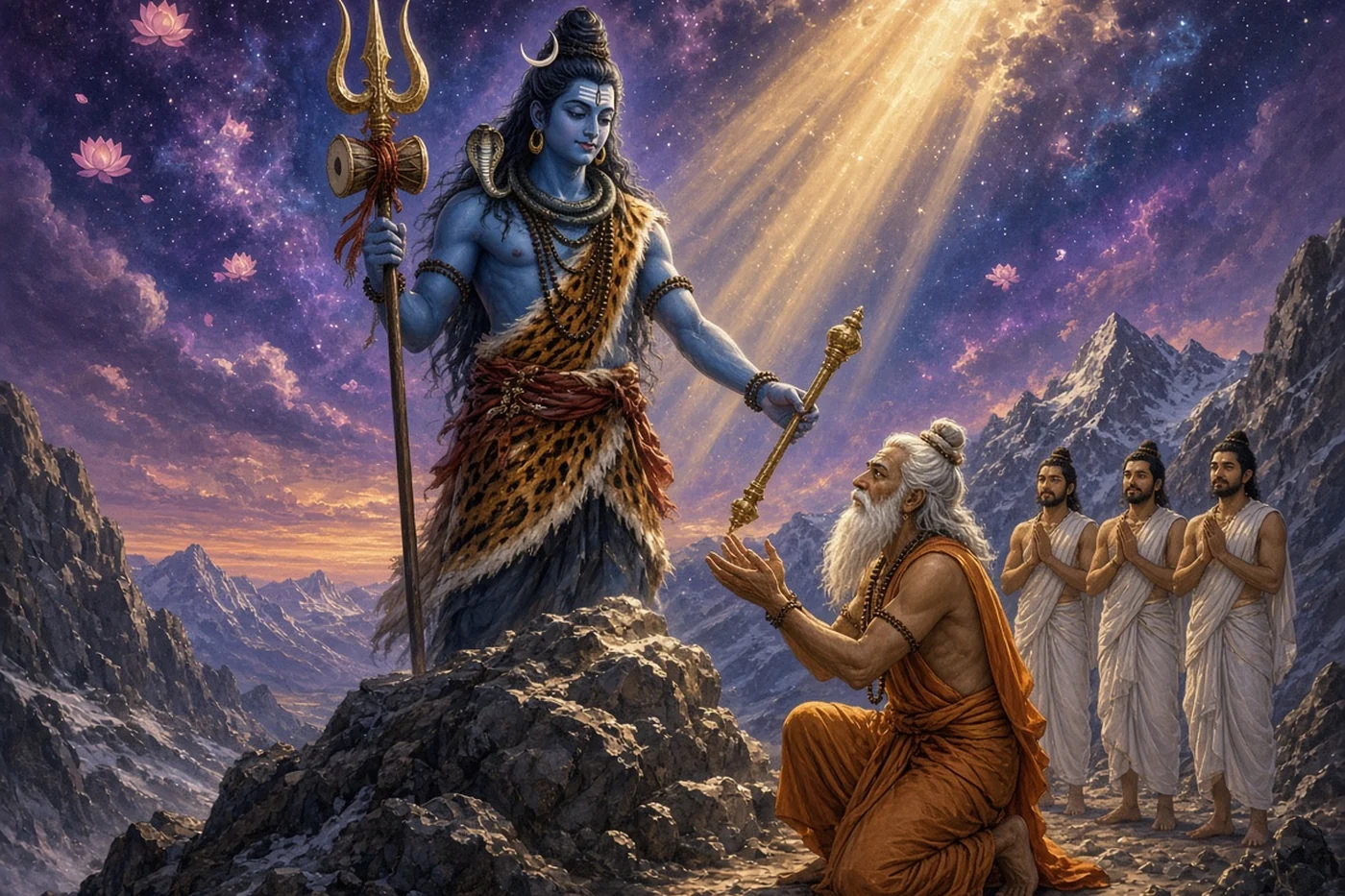
Shiva gave him a mace. Carried at the head of the pilgrims, it was their protection, and it is the mace that leads the yatra still, the Chhari Mubarak, which the mahant of the Dashnami Akhara brings to the cave for the full moon of Shravan.
After the sages come the chronicles. The Nilamata Purana, listing the holy bathing places of Kashmir, gives a bath at Amaresha the merit of a gift of a hundred cows. Kalhana, writing his history of the kings in 1148, says that the people who go on the pilgrimage to Amareshvara still see the lake, white as a sea of milk, which the Naga Susravas made for himself on a far mountain. He tells of a king, Aryaraja, who spent his summers worshipping lingas of snow above the forests, and of Queen Suryamati, wife of King Ananta, who gave Amareshvara monasteries, land, tridents and stone lingas. Jonaraja, who carried the chronicle on, records that Sultan Zain-ul-Abidin went up to the shrine in the fifteenth century.
The Maliks, in this telling, were not finders but keepers. Malik, the Pandit writer M. M. Munshi argues, was a title given to the men who guarded the passes and the roads under the old sultans, and when the Dogras opened the routes the Maliks of Batakote turned to guiding the pilgrims. Lawrence, who surveyed the valley in 1895, wrote that they took a third of the offerings for keeping the track, carrying the sick and preventing theft, and that the other two thirds went to the Pandits of Mattan and the Giri mahants who led with the mace. He wrote nothing of a discovery.
If the yatra ever went quiet, the Pandit writers allow, it was under the Afghans, between 1753 and 1819, and a shepherd's flock may have strayed into a cave his grandfather's generation had known well.