As the Devi Bhagavata tells it
Devi Bhagavata Purana, book 5, chapters 2 and 3 · 3 min read
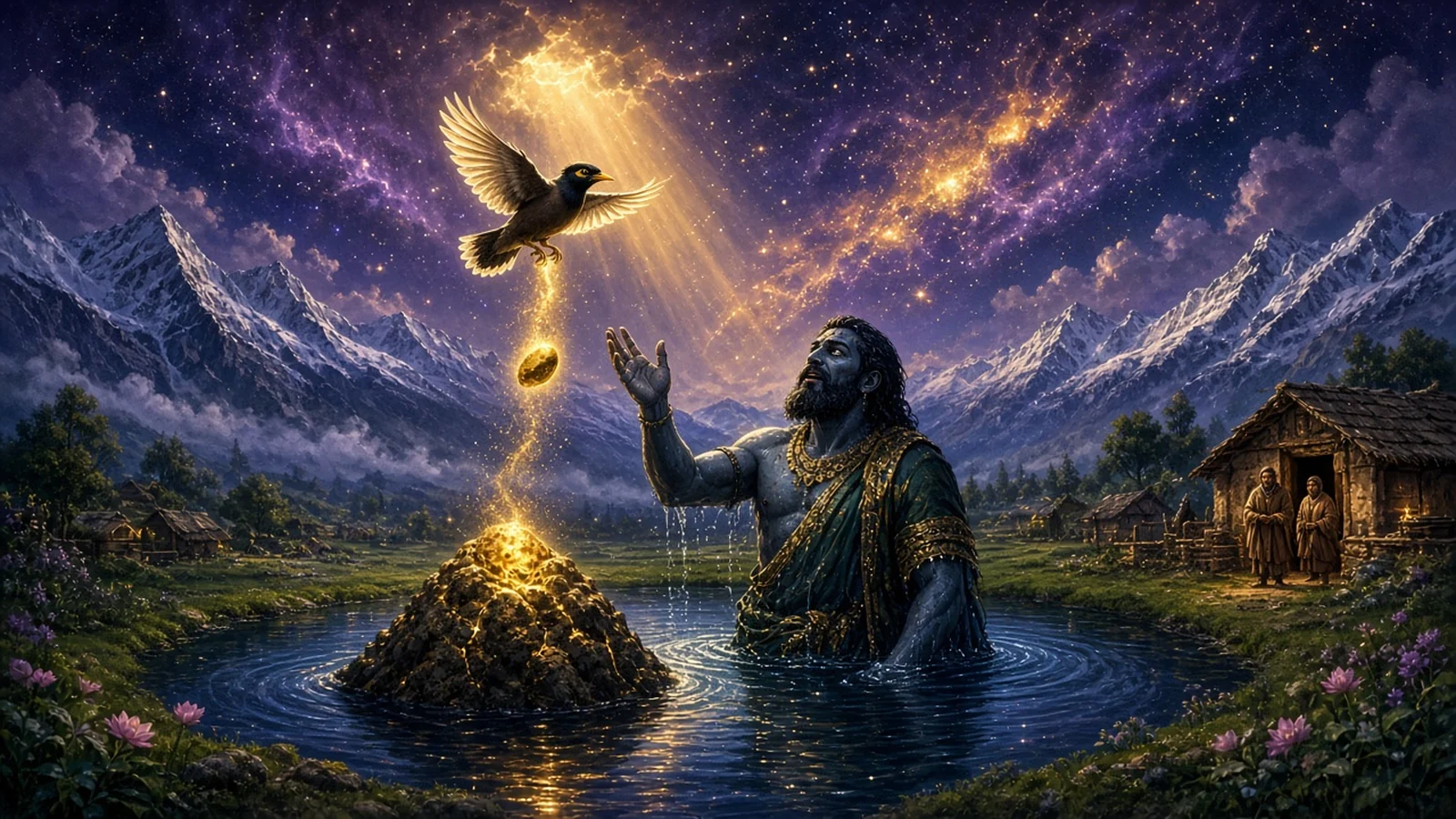
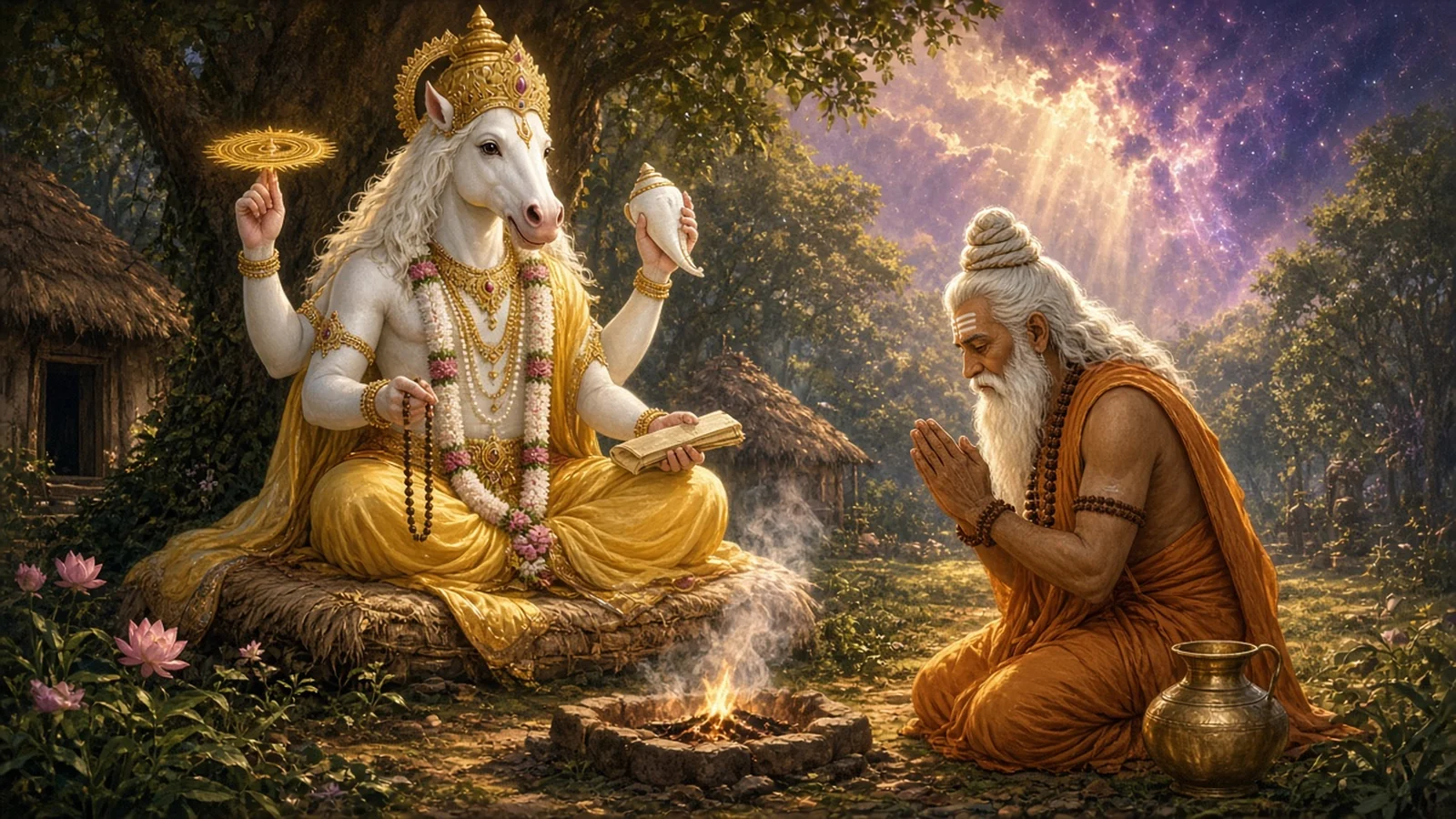
Danu had two sons, Rambha and Karambha, and the brothers had everything a demon could want except children. So they went to the land of the five rivers to pray for sons. Karambha walked into the water until it reached his neck and stood there. Rambha sat on the bank under a peepul tree that the yakshas haunted, lit a fire, and prayed to it.
Indra watched from heaven and did not like what he saw. "Two demons praying for sons greater than their fathers," he said. "I know how that ends." He took the shape of a crocodile, slid into the river, caught Karambha by the legs and pulled him under. Karambha did not come up.
When the news reached the peepul tree, Rambha drew his sword and set it against his own neck. "If my brother is gone, this head goes into the fire," he said.
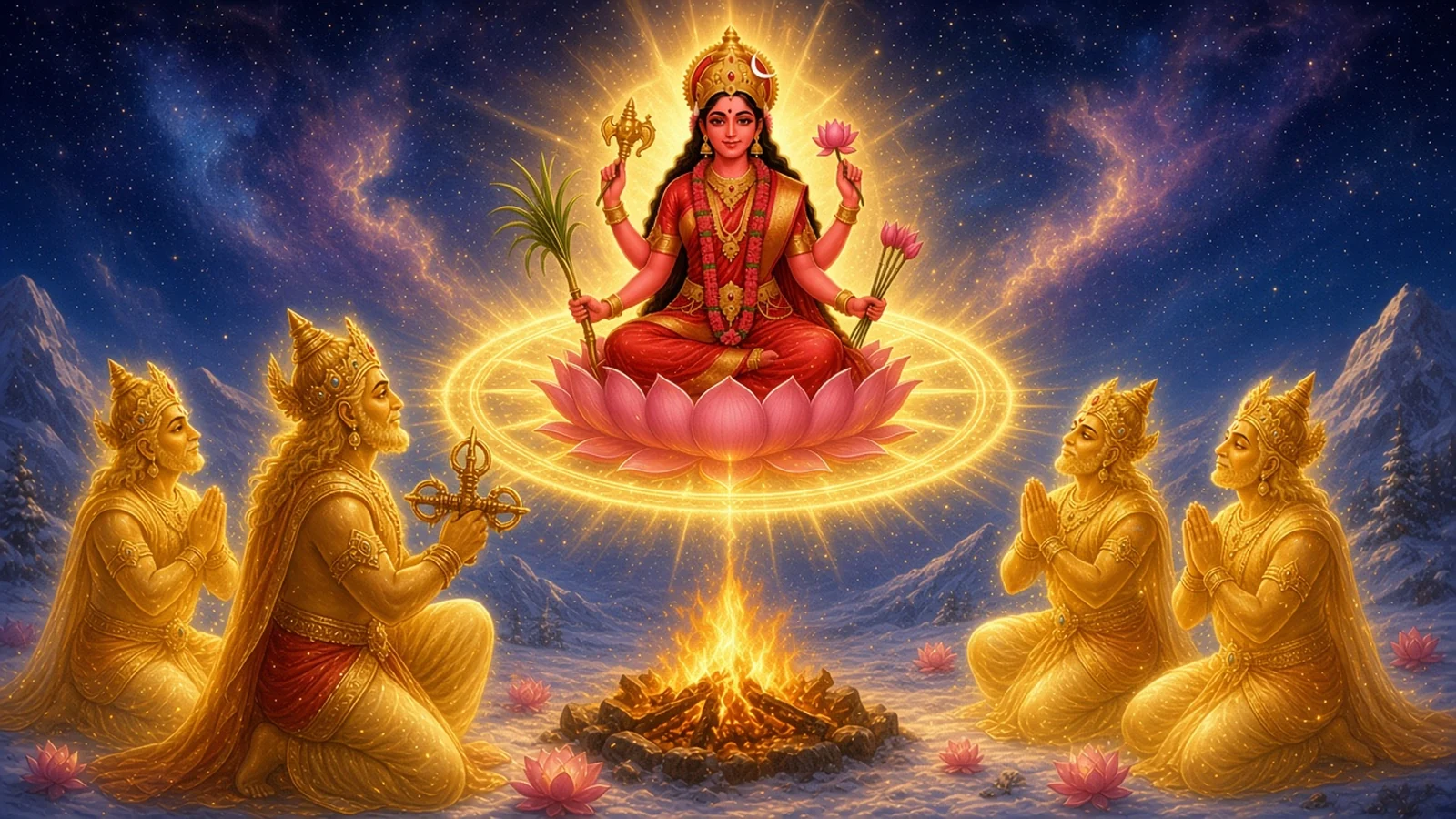
The Fire spoke out of the flames. "Stop. A man who kills himself goes where no one can follow him. You have prayed to me. Ask."
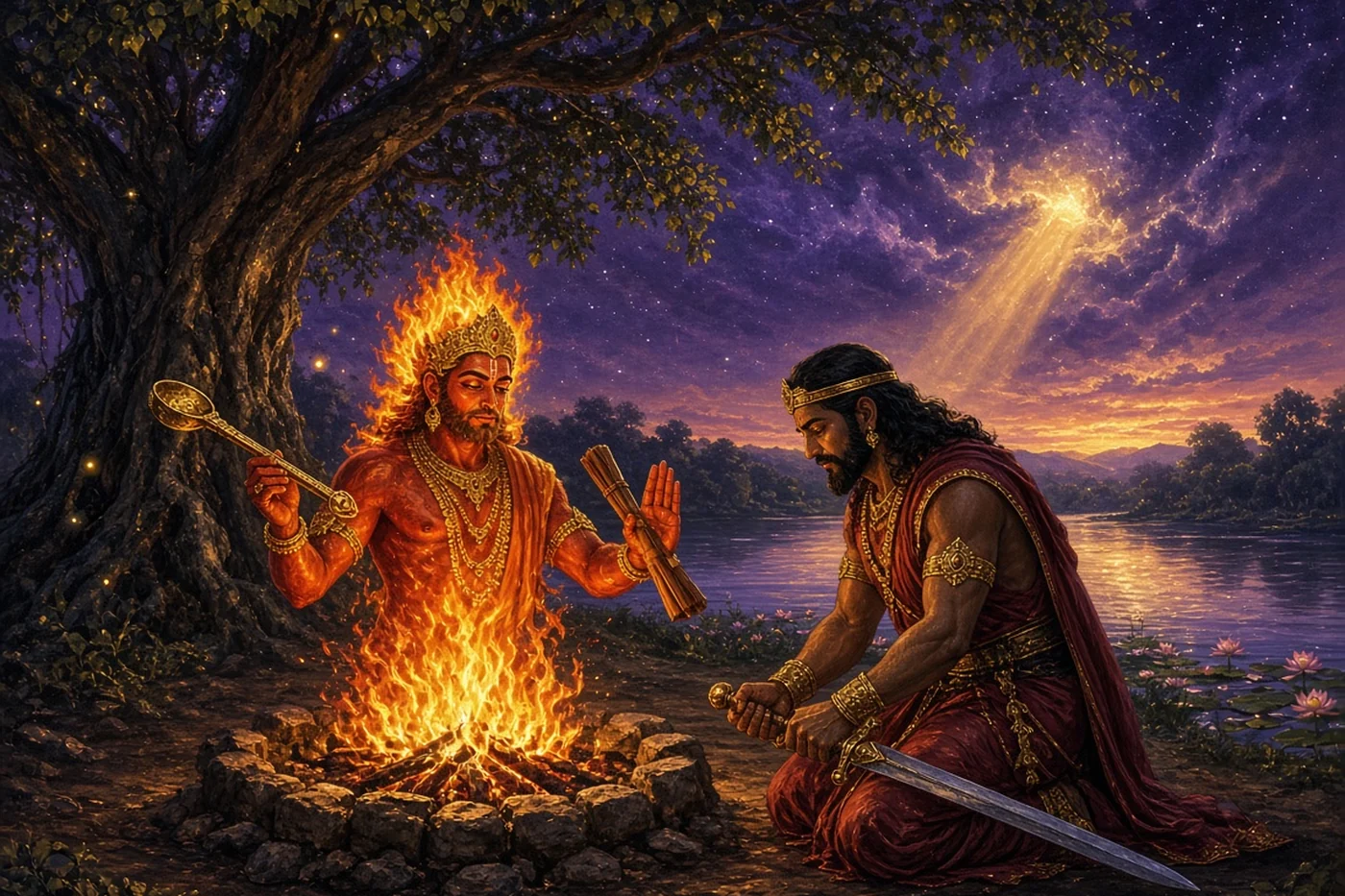
"A son," said Rambha. "A son who will take the three worlds. Let no god be able to kill him, and no demon, and no man. Let him wear any shape he likes, and let everyone bow to him."
"He is yours," said the Fire, "and he will be stronger than you. Whatever female you love will bear him."
On the road home Rambha met a she-buffalo, young and lovely, and loved her, and she conceived. He took her down to Patala to keep her safe, but a bull buffalo followed her there and wanted her, and when Rambha stood in its way it gored him and he died. The she-buffalo ran back to the peepul tree. The yakshas shot the bull and built Rambha a pyre, and the she-buffalo climbed onto it and burned with him.
Out of that fire came a child with the head of a buffalo. That was Mahisha. And out of the same fire, because he could not bear to leave the boy, came Rambha again in a new body, and they called him Raktabija. The demons made the child their king.
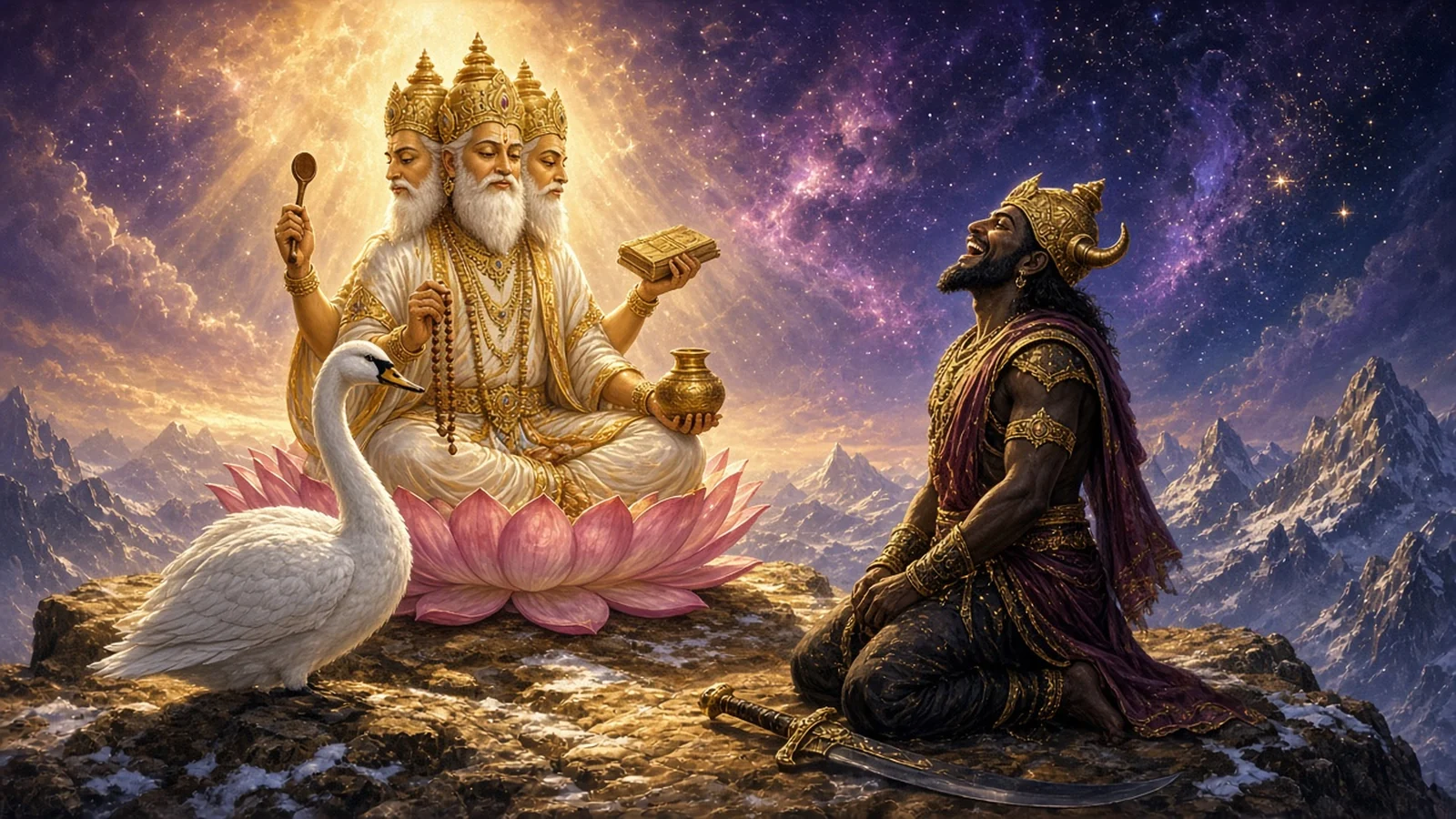
When Mahisha was grown he went up Mount Sumeru and prayed to Brahma for ten thousand years, until Brahma came down on his swan.
"Ask," said Brahma.
"Let me never die."
"That I cannot give. Whatever is born dies. It is the one law I keep myself. Ask for something else."
Mahisha thought about it. "Then let no god kill me, and no demon, and no man."
"You have left someone out," said Brahma.
"Women?" Mahisha laughed. "A woman is weak. What woman could hurt me? I leave them out gladly."
"Then it is a woman who will kill you," said Brahma, and went home.
Mahisha did not hear the warning, only the boon. He took the earth first. The kings who would not pay him tribute died, the ones who would became his servants, and the brahmins made their sacrifices to him. He gave his army to Chikshura, his treasury to Tamra, and his legions to Asiloma, Bidala, Trinetra and Vaskala. Then he sent a messenger up to heaven.
"Tell Indra this," he said. "Leave heaven, or serve me, or fight."
Indra laughed when he heard it. "Tell the buffalo's son I will make a good bow of his horns," he said. "He eats grass. His horns are the only weapons he has, and I will cut them off and see what he does then." The messenger went home and softened the words, but Mahisha understood them, and in his rage his tail lashed and the ground steamed under him.
"Beat the drums," he said. "I will take Indra's heaven, and Varuna's, and Yama's, and Kubera's. Men cannot kill me, gods cannot, demons cannot. And a woman?" He laughed again. "Let her try."
The war went as Brahma had said it would. The gods' anger became a woman, and when Mahisha changed shape under her blows, lion and man and elephant and buffalo, she threw her discus and took his head.
As the Kalika Purana tells it: three deaths and a place at her feet
Kalika Purana, chapters 60 and 61 · Kamarupa, Assam · 2 min read
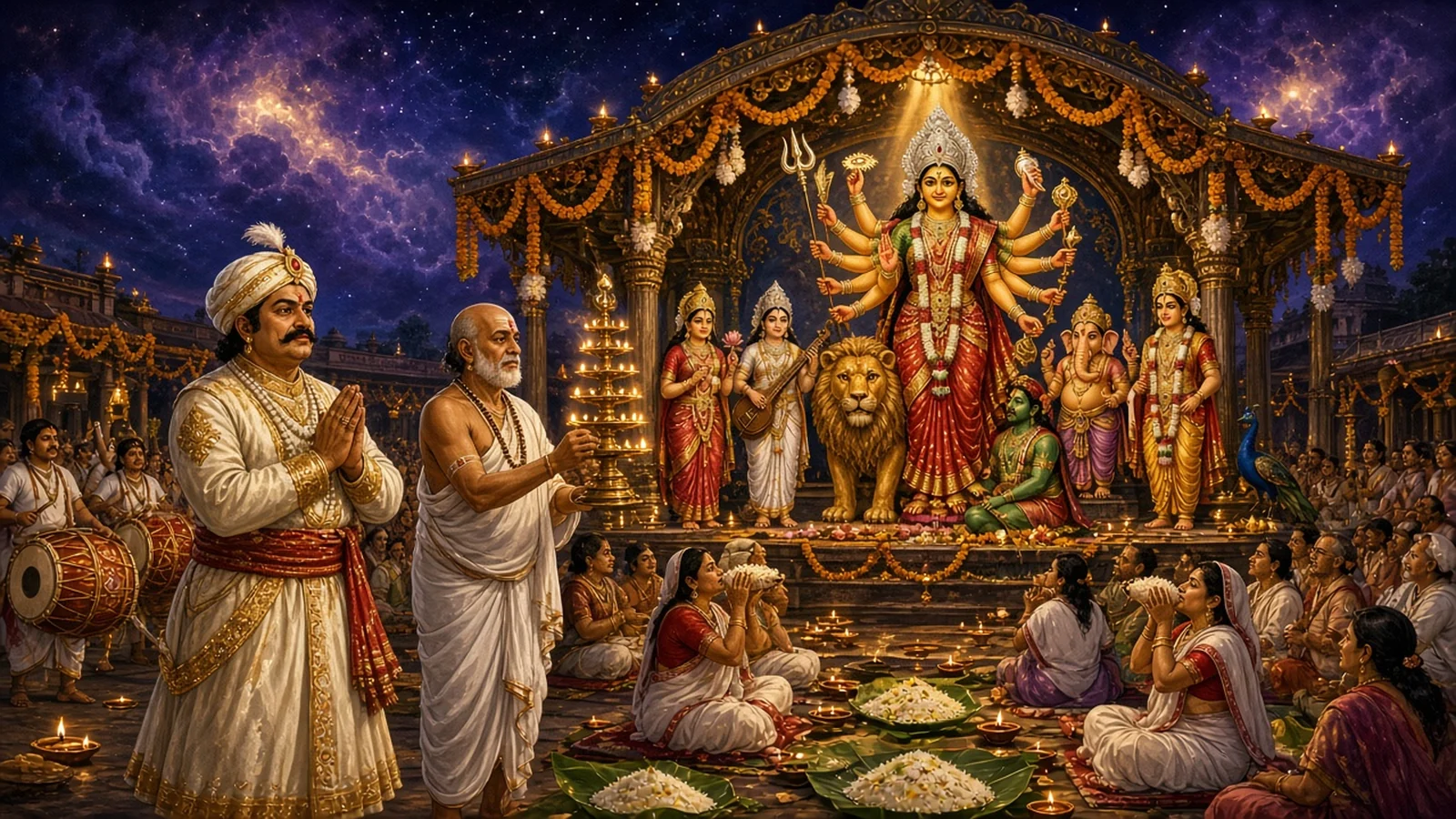
The Kalika Purana, written in Kamarupa, says Mahisha was not killed once. The Goddess killed him three times, in three ages of the world. At the first creation she came for him as Ugrachanda, with eighteen arms. In the second she came as Bhadrakali, with sixteen. In this age she came as Durga, with ten, and that is the killing the clay images show.
Between the second death and the third, the tellers say, Mahisha dreamed. He saw a dark goddess standing over him, and his own head in her hand. He woke and knew the dream for what it was, and instead of hiding from it he turned towards it. He left his wars for a while and prayed to Bhadrakali with everything he had.
She came, sixteen-armed, and asked what he wanted.
"Show me what I saw," he said. So she showed him his two deaths, his body under her foot in one age and his head in her hand in the other.
"I know I will die by your hand a third time," said Mahisha. "I am not asking to be spared. I am asking for two things."
"Ask."
"A share of the offerings when people worship you. And this: as long as the sun is in the sky, do not let me be parted from your feet."
The Goddess considered the first. "The shares of the sacrifice were given out long ago, to the gods who stood there before you," she said. "I cannot carve you a new one. But when I kill you I will not cut off your head and throw it down. I will set my foot on you and keep you there. Whoever worships me will see you under my foot, and the honour that touches my feet will touch you."
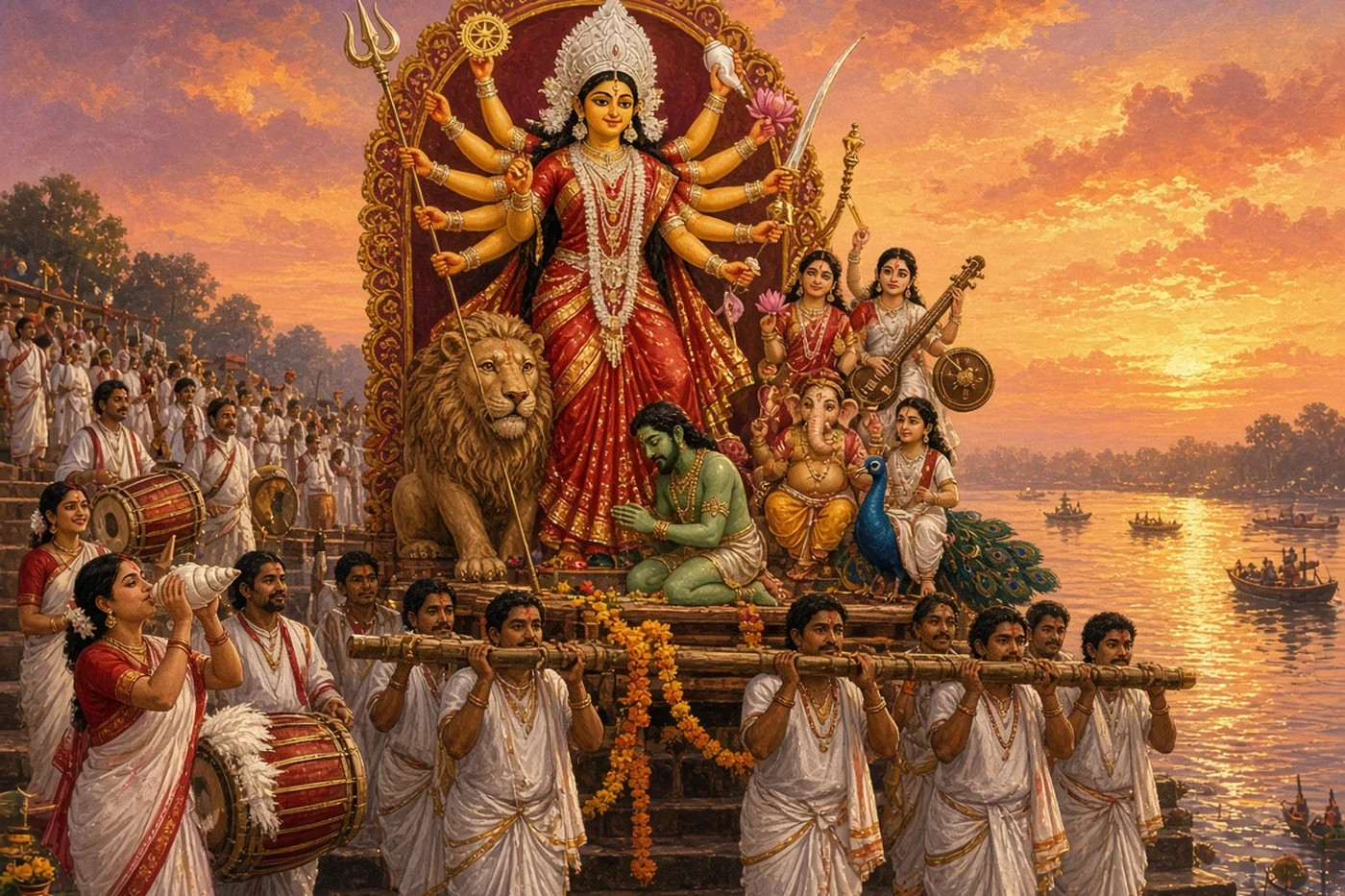
That is why, in Kamarupa and in Bengal, the image of the Goddess always has the demon in it, and why he is not pulled out and thrown away when the worship is over. He goes down to the river with her.