Festival · Three weeks of walking to the god who stands on a brick, on the day the other god lies down
Ashadhi Ekadashi and the Pandharpur Wari
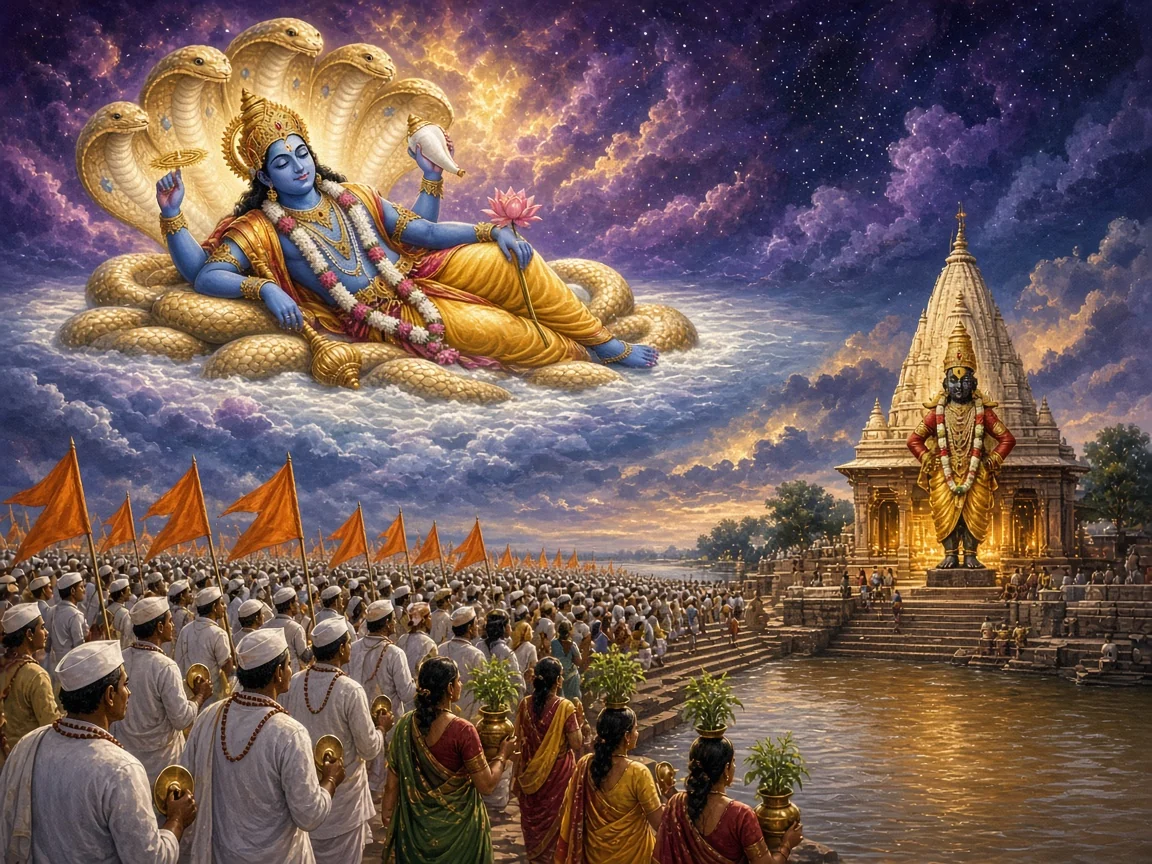
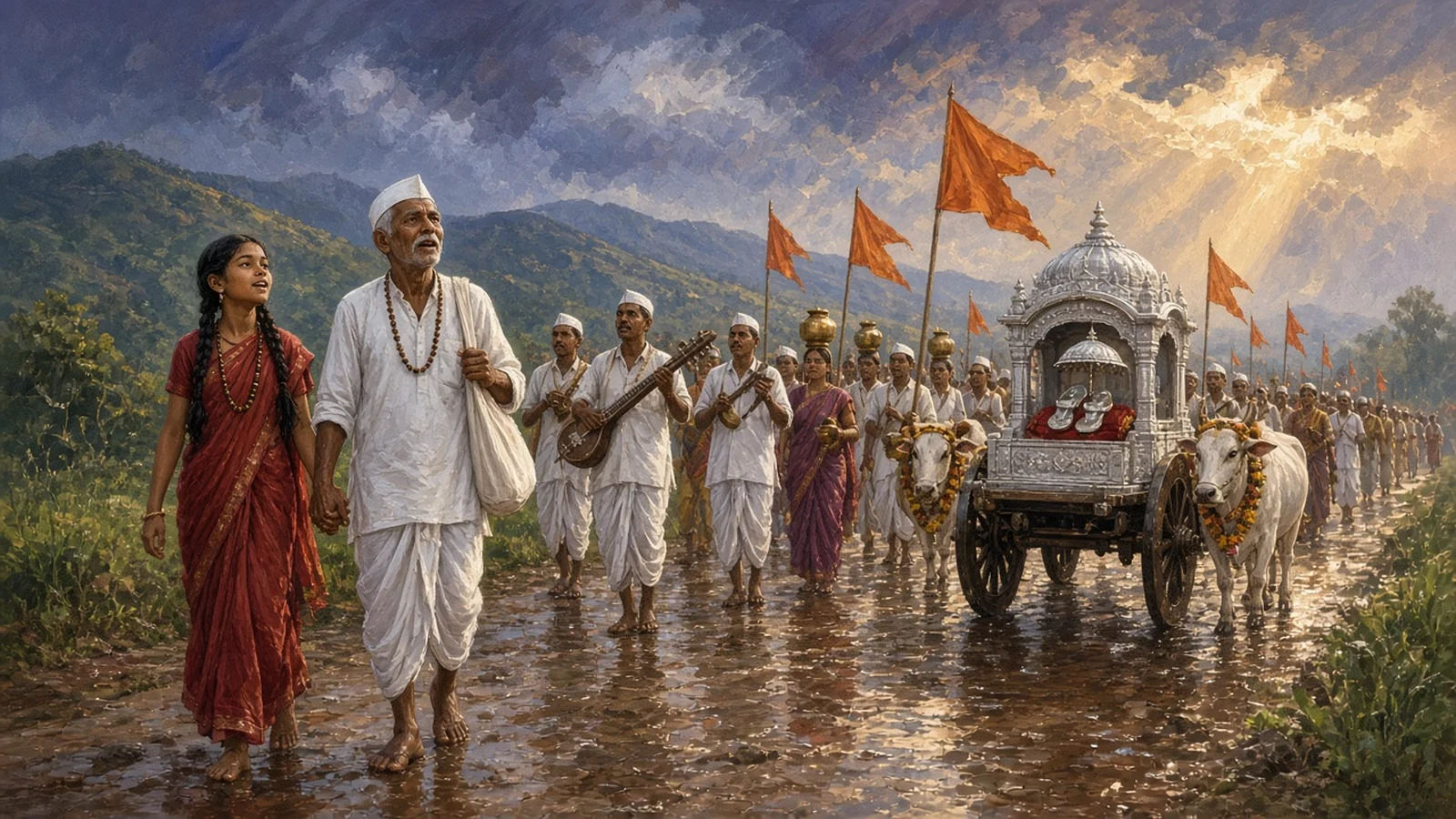
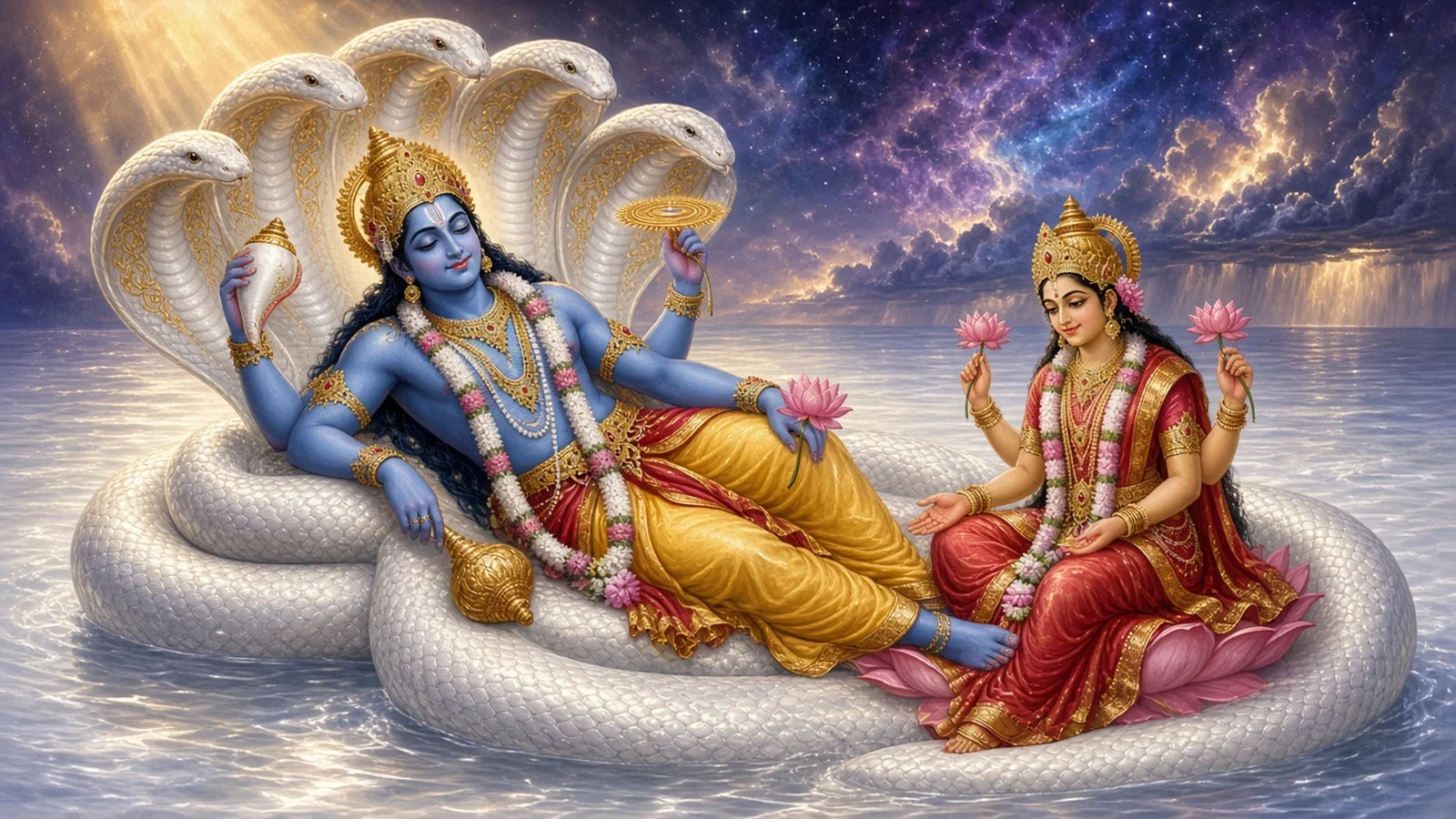
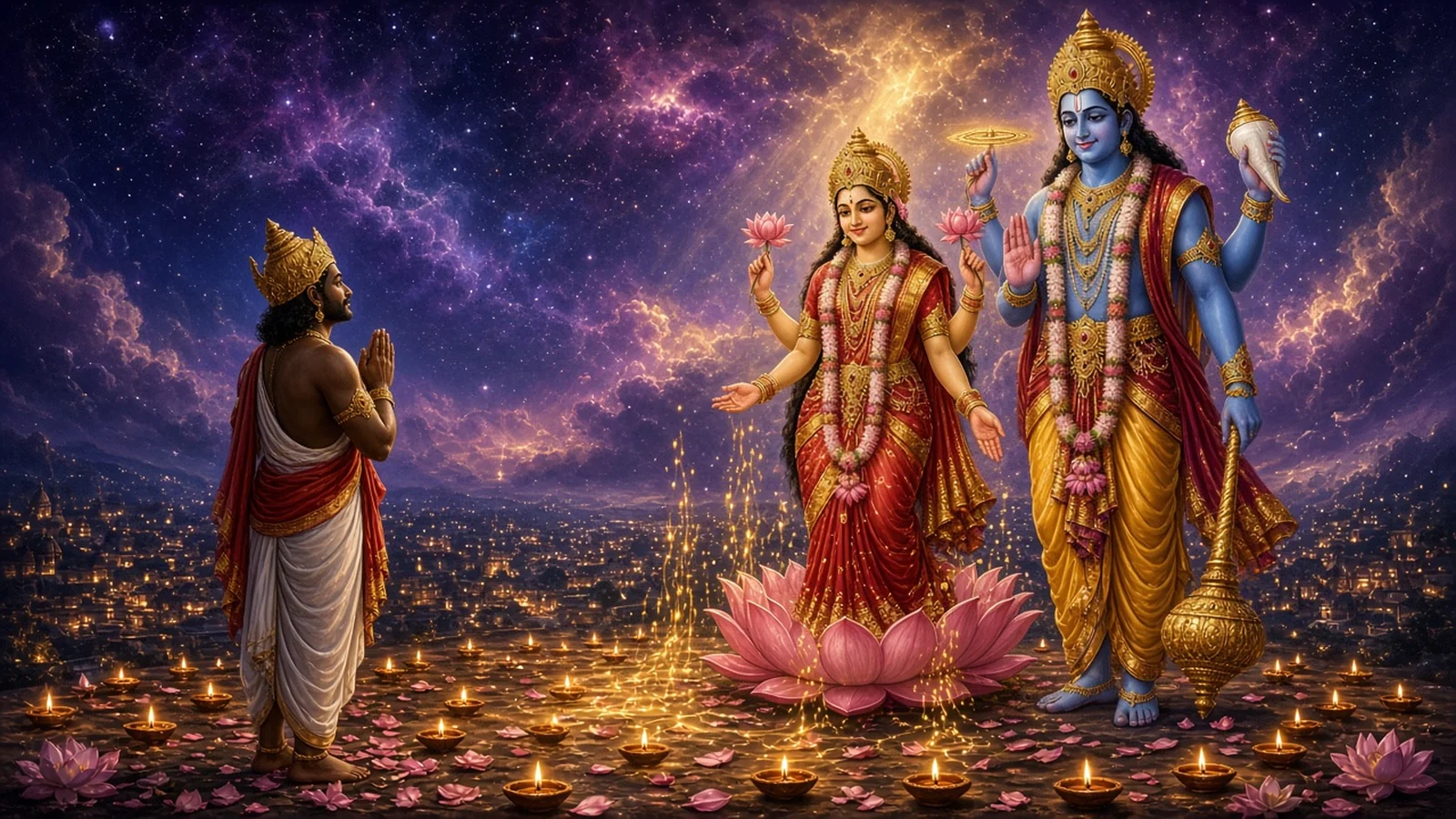
Ashadhi Ekadashi is the eleventh day of the bright fortnight of Ashadha, in late June or July, when the rains have begun. Across India it is Devshayani, the day Vishnu lies down on the serpent Shesha in the ocean of milk and sleeps for the four months of Chaturmas, kept with a fast and the katha of King Mandhata. In Maharashtra it is the day the Wari ends. For about three weeks the Varkaris have walked behind the palanquins carrying the sandals of the saints Dnyaneshwar and Tukaram, from Alandi and Dehu to Pandharpur, singing, and on this morning a million of them bathe in the Chandrabhaga and queue to see Vithoba, the god who stands on a brick with his hands on his hips and, the Varkaris say, does not sleep.
When is Ashadhi Ekadashi and the Pandharpur Wari in 2027? Ashadhi Ekadashi, when the Wari reaches Pandharpur, is Wednesday 14 July 2027. In 2028: Sunday 2 July 2028. The eleventh of the bright fortnight of Ashadha, in late June or July, about a fortnight after the Rath Yatra and a few days before Guru Purnima.
The eleventh day of the bright fortnight of Ashadha, in late June or July. Across India it is Devshayani Ekadashi, the day Vishnu lies down on Shesha in the ocean of milk for the four months of Chaturmas; in Maharashtra it is the day the Pandharpur Wari ends and a million Varkaris reach Vithoba's temple.
When is Ashadhi Ekadashi in 2027?
Wednesday 14 July 2027. The Ekadashi tithi runs from midday on 13 July to early afternoon on the 14th, so the fast is kept on the 14th and broken on the morning of 15 July; a calendar or two print the 13th. In 2028 it falls on Sunday 2 July.
What is the Pandharpur Wari?
The Varkaris' walk of about 250 kilometres over some three weeks behind the palanquins carrying the sandals of the saints Dnyaneshwar, from Alandi, and Tukaram, from Dehu, with other saints' palanquins joining, to reach Pandharpur for Ashadhi Ekadashi. The walkers go in numbered dindis, sing the saints' abhangs and the chant Gyanba Tukaram, hold the horse's ringans on the way, and camp together at Wakhari the night before.
What is a ringan?
The horse ceremony of the Wari. The Varkaris form two long rows or one great circle in an open field and the saint's riderless horse runs between or round them, often racing a ridden horse and winning; the pilgrims then gather the dust its hooves have raised and rub it on their foreheads.
Why does Vishnu sleep for four months?
The Padma Purana says that after sending King Bali to Sutala he promised to stay at Bali's door, so one form of him keeps that promise while the other lies on Shesha from this Ekadashi until Prabodhini Ekadashi in Kartik. The Varkaris add that the Vishnu of Pandharpur does not sleep; Vitthal stands on his brick, awake, for whoever comes.
Next, in 2027Wednesday 14 July 2027
Prime godVithoba (Vitthal, Pandurang), Krishna standing on the brick
with 3 more
WhereMaharashtra above all, and northern Karnataka; the Devshayani fast across the north, Gujarat, Odisha and Nepal
How longOne day and night of Ekadashi at the end of a walk of about three weeks, with the fast broken on Dwadashi morning; the four months of Chaturmas begin on it
The eleventh of the bright fortnight of Ashadha, in late June or July, about a fortnight after the Rath Yatra and a few days before Guru Purnima
Why it is kept
Ashadhi Ekadashi is two festivals that happen to be one day. In the Vishnu temples of the north it is Devshayani, the god's going to bed: on the eleventh of bright Ashadha, with the rains begun, Vishnu lies down on the serpent Shesha in the ocean of milk and does not wake for four months, and the fast and the katha are kept for him. In Maharashtra it is the morning the Wari arrives. For about three weeks the Varkaris have been walking, some hundreds of thousands of them, behind two silver palanquins carrying the sandals of the saints Dnyaneshwar and Tukaram, and on this day they come down to the Chandrabhaga at Pandharpur, bathe, and queue for the feet of a god who is standing up, hands on his hips, on a brick. Vitthal, the Varkaris say, does not sleep.
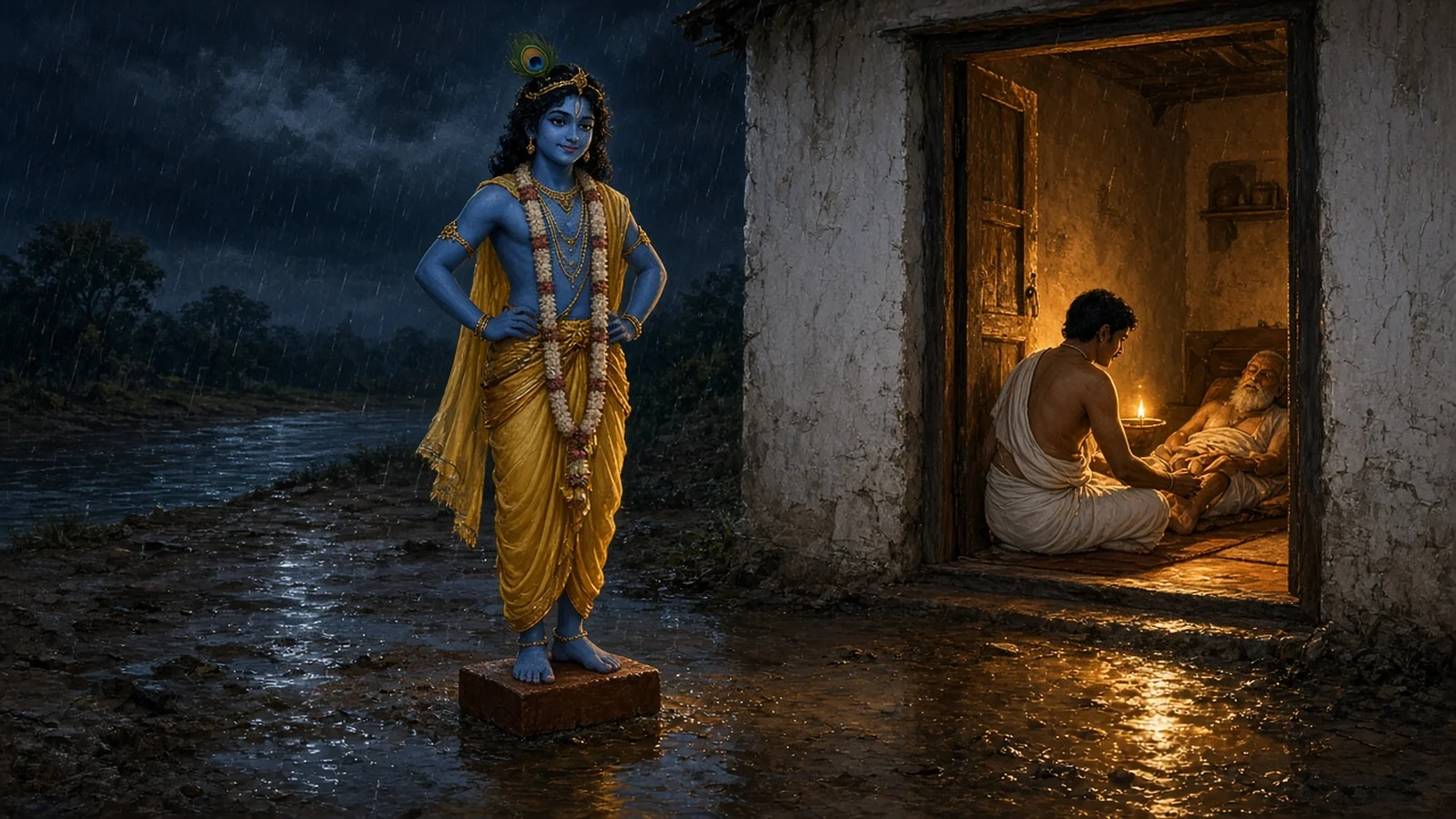
The brick came first. Krishna came to Pandharpur to see Pundalik, who was pressing his old father's feet and would not stop for a god, and was thrown a brick to stand on and told to wait, and is waiting still; The God Who Waited on a Brick tells it. From the thirteenth century the Marathi saints walked to him. Dnyaneshwar put the Gita into Marathi and went into his samadhi at Alandi in 1296; Namdev the tailor sang to him; Chokhamela the Mahar sang from outside the door he was not allowed through; Eknath revived the path and Tukaram the grocer gave it four thousand songs. Tukaram's son began carrying the saints' sandals to Pandharpur in 1685, and a Satara nobleman, Haibatrao Baba, gave the walk its palanquins, its horse and its dindis in the early nineteenth century. The Walk to Pandharpur tells the Wari from inside one dindi, with that history as the walkers tell it.
Pundalik keeps pressing his father's feet while the god waits on the brick at his door
The sleep has a story of its own. The Padma Purana's chapter for this Ekadashi is not about Mandhata but about Bali: Vishnu, having sent the demon king down to Sutala with the third step, promised to stay at his door, and so divided himself, one form at Bali's gate and one asleep on Shesha until Kartik. The katha the north reads on the night is the king's instead. Mandhata's land went three years without rain, the sage Angiras told him the cause and a cruel cure, the king refused it and asked for another, and the whole kingdom fasted on this Ekadashi and the rain came. The Four Months the God Sleeps tells both, and the Varkaris' answer to them.
Vishnu lies down on Shesha in the ocean of milk for four months, Lakshmi at his feet
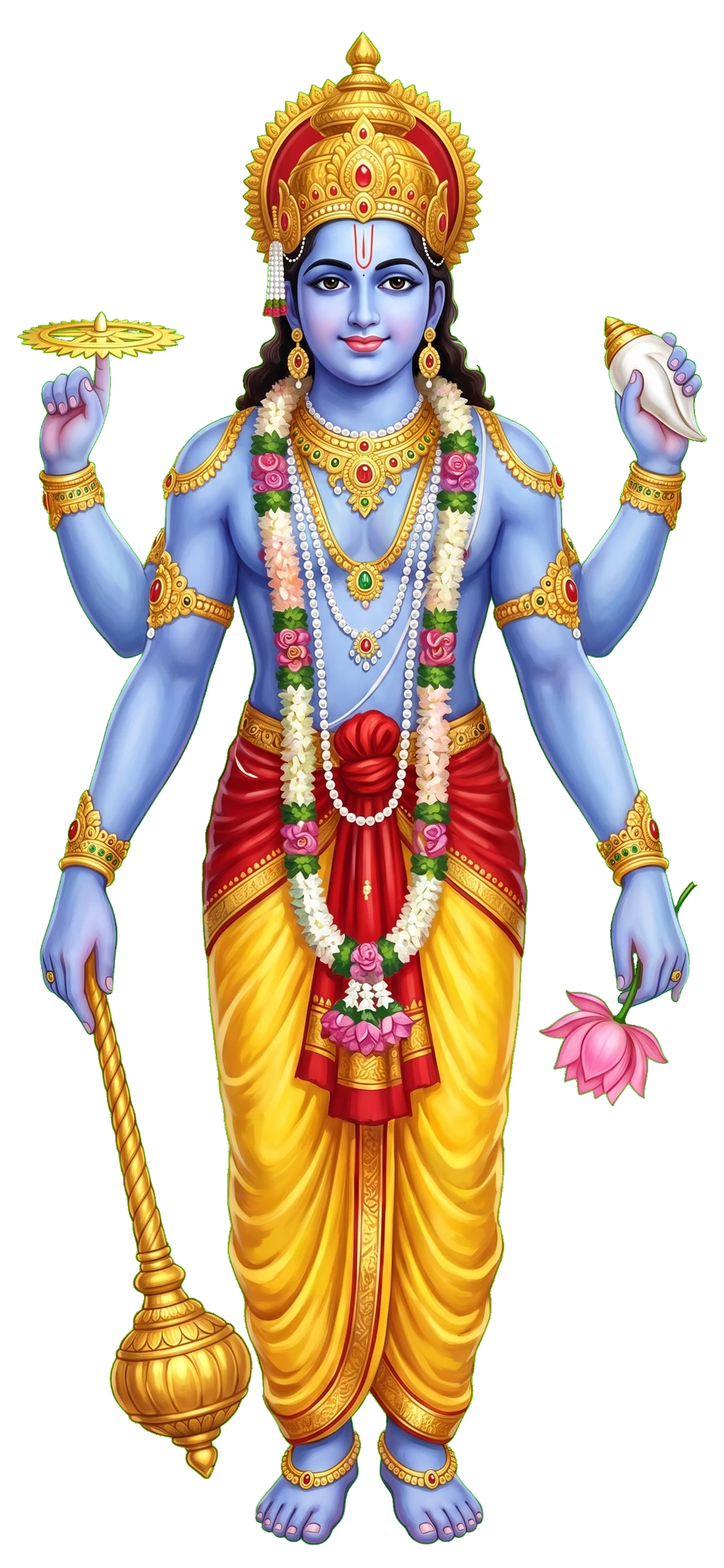
The god of the day twice over. At Pandharpur he is Vitthal, the black stone image standing on the brick Pundalik threw him, hands on hips, whom the Varkaris walk to and whose feet every pilgrim may touch; and everywhere else he is the Vishnu who lies down on Shesha in the ocean of milk on this Ekadashi and sleeps until Prabodhini in Kartik, while one form of him keeps his promise at Bali's door.
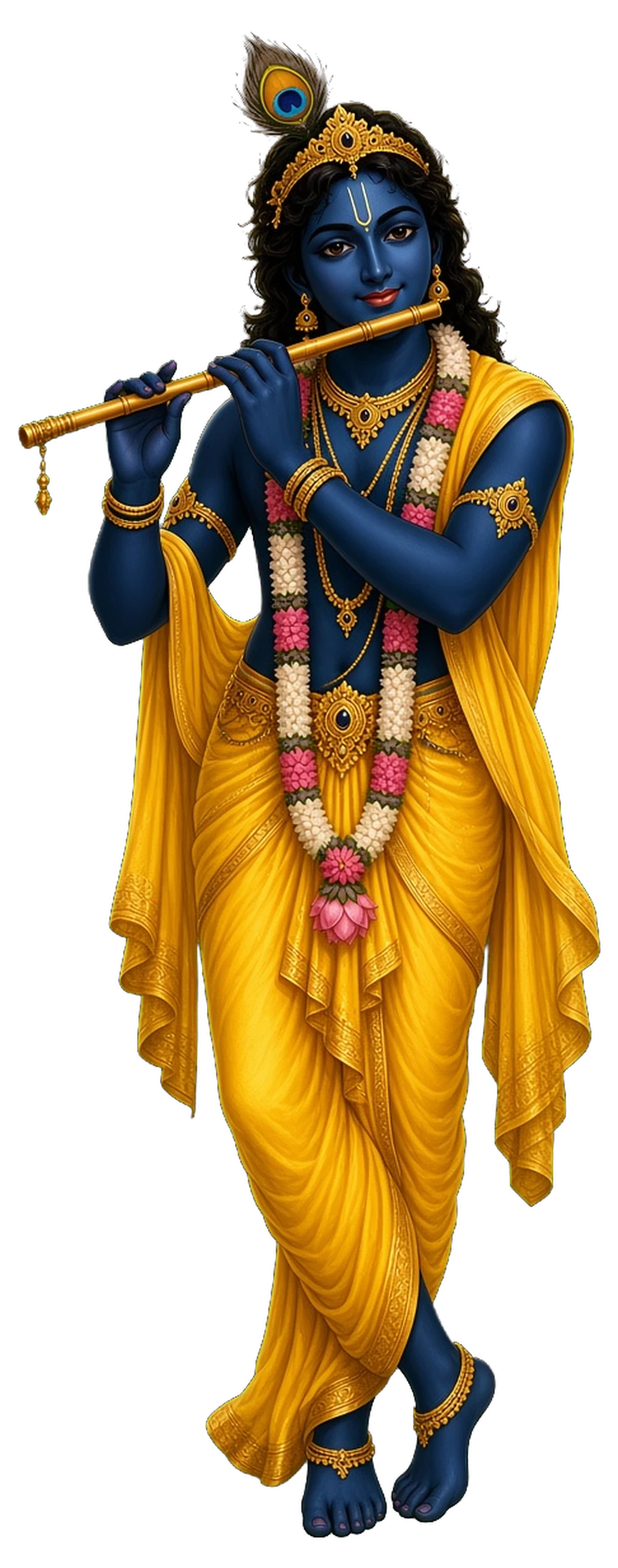
The Varkaris' Vitthal is Krishna, come from Dwarka to Pundalik's door and kept waiting on a brick; their saints sing to him as the cowherd, and the Haridasas of Karnataka sign their songs with his name as Vitthala.
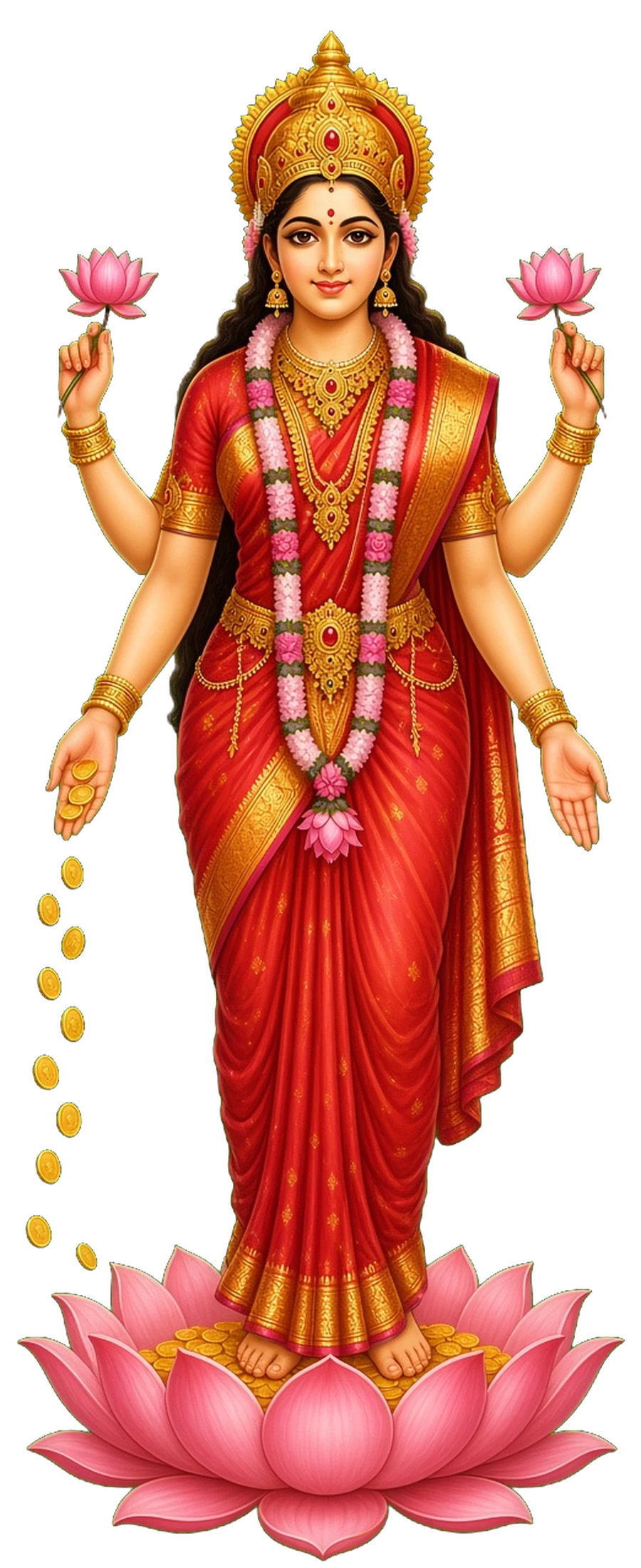
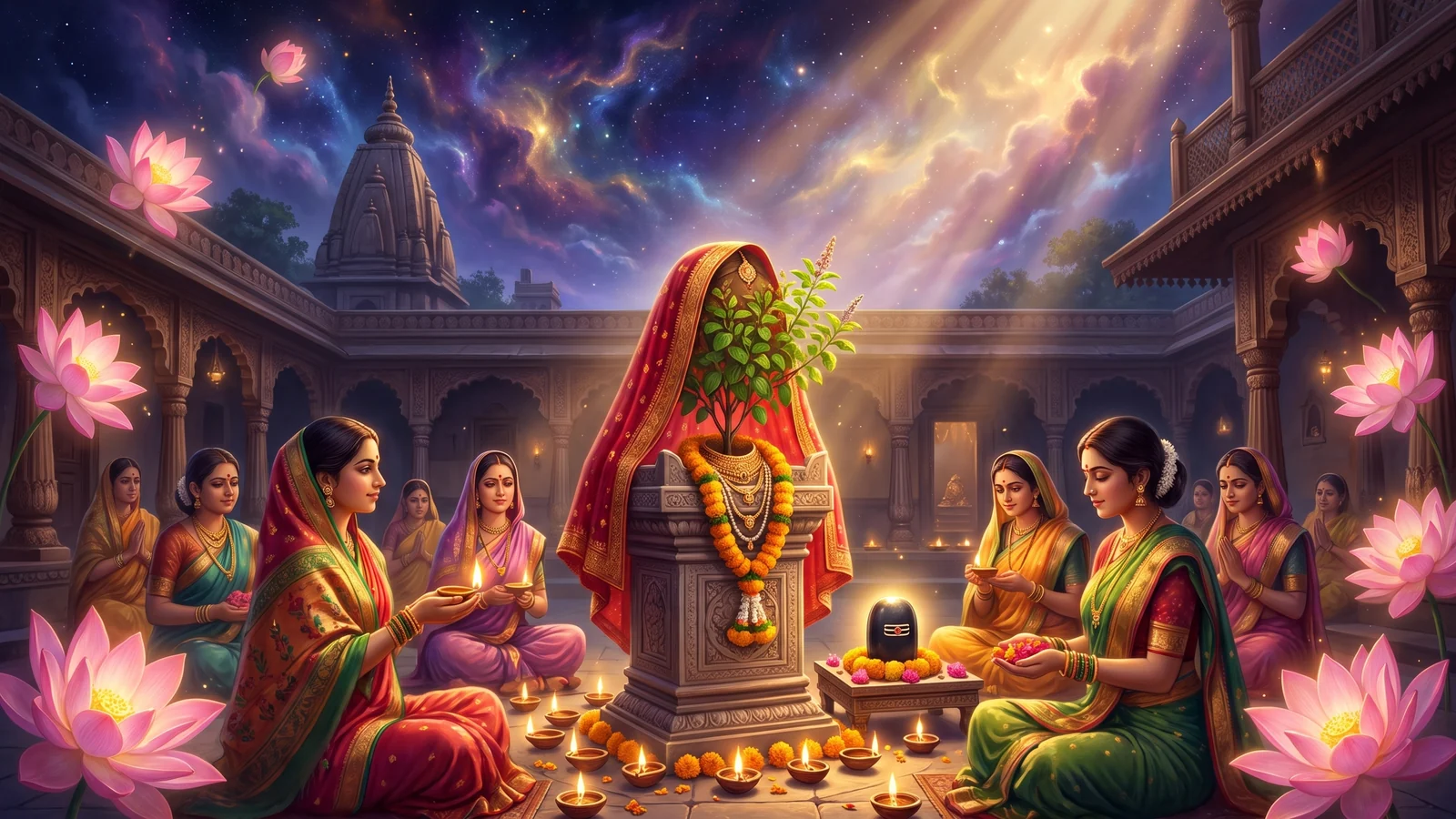
Vitthal's consort at Pandharpur, mother Rukmini, worshipped in her own shrine beside his; the Varkaris take blessings from Vitthal and Rukmini together, and in the Chaturmas stories it is Lakshmi who goes down to Sutala to ask for her husband back and is married to him as Tulsi when he wakes.
D
Dnyaneshwar and Tukaram
The two saints whose sandals walk. Dnyaneshwar wrote the Gita in Marathi and took samadhi at Alandi in 1296 at twenty-one; Tukaram, a grocer of Dehu, sang some four thousand abhangs to Vitthal in the seventeenth century. Their padukas travel in silver palanquins from Alandi and Dehu, and the whole road shouts their names together, Gyanba Tukaram.
From Alandi to Pandharpur
1
The palkhis set out
About eighteen days before Ekadashi, in the dark fortnight of Jyeshtha or early Ashadha
Prasthanthe Dehu and Alandi departures
Tukaram's padukas leave Dehu first, and Dnyaneshwar's leave Alandi the next afternoon, each in a silver palanquin on a cart drawn by white bullocks, after a last worship at the saint's samadhi, to the shout of Gyanba Tukaram from a hundred thousand throats. Behind them fall in the dindis, the walking groups of a village or a community, a hundred to five hundred each, numbered and placed in order, with a veena-player to begin the abhangs, a drummer, flag-bearers, women with tulsi plants on their heads and a cook who goes ahead with the pots. In 2026 the two palanquins left on 7 and 8 July; the 2027 dates are announced by the Alandi and Dehu Sansthans in the spring, and should fall in the last days of June.
Dnyaneshwar's silver palanquin leaves Alandi with his sandals, and the dindis fall in behind
PuneSaswadJejuriLonandPhaltanthe Nira snanthe ubhe and gol ringans
Both roads go through Pune, where the palanquins rest two nights and the city feeds everyone. Dnyaneshwar's then climbs to Saswad and Jejuri, bathes in the Nira at Lonand, and goes on by Taradgaon, Phaltan, Natepute, Malshiras and Velapur; Tukaram's goes by Baramati, Indapur and Akluj. Each morning a horn is blown three times, and the day's walk begins at six. On the open stretches come the ringans: the Varkaris form two long rows a kilometre long or one great circle, and the saint's riderless horse runs between or round them, and ten thousand people scoop up the mud it has thrown and rub it on their foreheads. Dnyaneshwar's horse runs at Chandobacha Limb near Taradgaon, at Purandawade, Khudus Phata and Thakurbuva's samadhi; Tukaram's at Belwadi, Indapur and Akluj.
The ringan: the saint's riderless horse runs the circle and the Varkaris take its dust
Three kilometres short of Pandharpur the roads meet at Wakhari, and the two great palanquins camp beside Eknath's from Paithan, Nivruttinath's, Sopan's, Muktabai's, Namdev's and the rest, hundreds of them in one field. Dnyaneshwar's horse runs its last standing ringan at Bajirao's well, and somewhere on the last hill the dindis break into the dhava, the run in memory of the day Tukaram first saw the temple and could not walk any more. Nobody sleeps much.
The night at Wakhari: the palanquins camp together and the dindis sing in sight of Pandharpur
Before dawn the Chief Minister of Maharashtra performs the government's puja at Vitthal's feet, with a Varkari couple chosen for the honour beside him; in 2026 and 2025 the couples went home with the state's award for the cleanest dindi and a year's free bus pass. Then the town fills. The pilgrims bathe in the Chandrabhaga, the Bhima widened into a slow brown bend under the ghats, pass Pundalik's shrine in the river bed, touch Namdev's step and Chokhamela's tomb at the gate, and join the queue for the sanctum, where every pilgrim may lay a hand on the god's feet; in 2026 the queue was more than twenty-five kilometres long and most Varkaris were content with the sight of the spire. The temple stays open all night. Across Maharashtra and the north the day is kept at home with the Ekadashi fast, sabudana khichdi for those who eat, the katha of King Mandhata read in the evening, and in the Vishnu temples the god is put to bed for four months.
Ekadashi dawn: pilgrims bathe in the Chandrabhaga below Vithoba's temple and Pundalik's shrine
The fast is broken after sunrise on the twelfth day, inside the tithi; in 2027 that is the morning of 15 July. The palanquins turn for home a few days later, by a shorter road, and the Varkaris keep the festival going until Guru Purnima, the full moon four days on, when the sannyasis sit down for the rains. The four months have begun: no weddings, no thread ceremonies, no new house entered, until Prabodhini Ekadashi in Kartik wakes the god and the tulsi is married.
Dwadashi: the fast broken at home after sunrise as the palanquin turns for home
Pandharpur, MaharashtraThe temple, the Chandrabhaga and the crowd
Vithoba's town on the Bhima holds a million people on the day. The Chief Minister's puja before dawn opens it; the ghats of the Chandrabhaga are solid with bathers; Pundalik's shrine stands in the river bed in front of the god; the queue for the sanctum runs for kilometres along the bank and the temple stays open day and night through the Ashadha fortnight, so that everyone who walked can touch the feet. Ekadashi pilgrimages to the town are inscribed from the eleventh century, a shrine to Vithoba from 1189, and a Hoysala grant for the temple from 1237.
Alandi and Dehu, Pune districtWhere the palkhis set out
Alandi on the Indrayani, where Dnyaneshwar went into his sanjeevan samadhi in 1296 and Haibatrao Baba, who gave the Wari its present shape, lies under the first step of the temple; and Dehu a little upstream, Tukaram's town, with his birthplace temple, the Gatha temple with four thousand abhangs carved on its walls, and the ghat from which the Varkaris say he went bodily to Vaikuntha. Each town fills on the day its palanquin leaves.
The roadPune, Saswad, Jejuri, Lonand, Phaltan and the ringans
Every town on the two roads turns out to feed and house the dindis and to see the palanquins; fairs spring up at the halts, Pune gives the walkers two days, Lonand bathes the padukas in the Nira, and the fields at Chandobacha Limb, Khudus Phata, Belwadi, Akluj and Wakhari fill for the ringans, when the saint's horse runs and the Varkaris take its dust. The two roads meet at Wakhari the night before Ekadashi.
Northern KarnatakaVitthala of the Kannada country
The Varkari country runs over the border into Karnataka, and dindis walk to Pandharpur from the Kannada districts, and from Andhra and Tamil Nadu too. The Kannada Haridasas made Vitthala their own god five centuries ago. Purandara Dasa, the father of Carnatic music, signed his thousands of songs Purandara Vitthala, Vyasatirtha of Hampi initiated him, and Krishnadevaraya built the Vitthala temple at Hampi, where, the tradition says, the Pandharpur image was once carried and brought back.
The north and NepalDevshayani and Harishayani
In the north the day is Devshayani, the god's going to bed, kept with the Ekadashi fast without grain, the katha of King Mandhata, and in the Vishnu temples the beginning of the four months' sleep. Nepal keeps it as Harishayani Ekadashi and calls it Tulsi Planting Day, when the basil seeds sown on Nirjala Ekadashi are set out. Gujarat calls it Devpodhi Ekadashi, with the same meaning, and begins its Chaturmas on it.
OdishaSuna Besha at Puri
The same eleventh evening at Puri is the Suna Besha, when Jagannath and his brother and sister sit in gold on their chariots before the Lion Gate, the day after they have come home from the Gundicha temple; Odisha's calendars call it Harishayana or Bahuda Ekadashi. That day belongs to the Rath Yatra, which has its own page.
ISKCON and the Vaishnava temples everywhereSayana Ekadashi
The Gaudiya and other Vaishnava temples keep the day as Sayana or Padma Ekadashi with the fast, the night's chanting and the Bhavishyottara katha, and take the Chaturmas vows month by month from it; some send their devotees to Vitthal at Pandharpur for the day. Vaishnava maths in the south brand the Tapta Mudra on the day, and the Tamil country calls the Ekadashi Toli.
The Varkari sampradayaThe vari and its vows
The Varkaris are the people of the vari, the regular going to Pandharpur, and their path is seven centuries of Marathi saints of every caste, Dnyaneshwar the outcast Brahmin, Namdev the tailor, Chokhamela the Mahar, Janabai the maidservant, Gora the potter, Savata the gardener, Sena the barber, Eknath, Tukaram the grocer. They wear the tulsi mala, keep the Ekadashi fast twice a month, eat no meat, onion or garlic and drink no liquor, recite the Haripath daily, and on the road bow to one another and call each other Mauli, mother. No priest stands between the walker and Vitthal; the darshan is the worship.
Vaishnavas of every lineDevshayani and the Chaturmas
Every Vaishnava house keeps the twenty-four Ekadashis, and this is the one that opens the four months. The Padma Purana asks the keeper to sleep on the ground while the god lies down, to give up vegetables in Shravana, curd in Bhadrapada, milk in Ashvina and pulses in Kartik, and to keep every Ekadashi between Shayani and Prabodhini; the almanacs add no weddings, thread ceremonies or house entries until the god wakes. The other great Ekadashi of the year, in Margazhi, has its own page, Vaikuntha Ekadashi, with the grades of the fast.
JainsVarshayog
Jain monks and nuns stop their wandering for the same four months, so as to harm none of the small lives the rains bring out, and the laity keep Paryushana and the day of forgiveness inside them; their Chaturmas begins on the Ashadha full moon, four days after this Ekadashi, which the Guru Purnima page tells.
BuddhistsVassa
The Theravada monks' three-month rains retreat begins from the same full moon, with Asalha Puja, and ends with the gift of robes at Kathina.
How it is kept
The Wari begins about eighteen days before. Tukaram's padukas leave Dehu, Dnyaneshwar's leave Alandi the next afternoon, and the dindis fall in behind, each a village or a community, numbered and placed, fed by the towns they pass. The horn blows three times at dawn and the day's walk begins; the night ends with abhangs in a school or a field. On the open stretches the horse runs the ringan and the Varkaris take its dust. On the tenth of bright Ashadha the roads meet at Wakhari, three kilometres from the town, and hundreds of palanquins camp together.
The night on the road: a dindi sings abhangs round the lamps with veena, drum and cymbals
Before dawn on Ekadashi the Chief Minister performs the government's puja at Vitthal's feet with a Varkari couple chosen for the honour. The pilgrims bathe in the Chandrabhaga, pass Pundalik's shrine, Namdev's step and Chokhamela's tomb, and queue for the sanctum, where everyone may touch the god's feet; in 2026 the queue was more than twenty-five kilometres long. Most Varkaris see the spire and are content.
Everywhere else the day is the fast: no grain, for most no cooked food but sabudana, fruit and milk, and for the strict nothing until the twelfth morning; the katha read in the evening; the Vishnu temples putting the god to bed. From this day until Prabodhini in Kartik there are no weddings, no thread ceremonies and no house-warmings, and the Padma Purana's keeper sleeps on the ground and gives up one food a month.
Devshayani at home: the fast, the sabudana and the katha read aloud in the evening
In the old texts
The Varkaris' scripture is in Marathi: the Dnyaneshwari, Dnyaneshwar's verse Gita of about 1290, and the abhangs of Namdev, Eknath, Chokhamela, Janabai and Tukaram, some four thousand of Tukaram's in the Gatha, which Dilip Chitre and Arun Kolatkar have put into English. Mahipati gathered the saints' lives in the eighteenth century. The Panduranga Mahatmyas of the Skanda and Padma Puranas, late regional texts, give the brick in Sanskrit; no older Purana knows it, and the historians R. C. Dhere and Richard Eaton read Vitthal as a herders' god older than his Krishna name.
The day's own text is the Ekadashi Mahatmya of the Padma Purana's Uttara Khanda. Chapter 53 is Shayani: Bali, the dwarf, the two forms of Vishnu and the vows of the four months. Chapter 57 is the Padma Ekadashi of bright Bhadrapada, and that is where the Purana keeps King Mandhata's drought and Angiras's fast; the katha books, citing the Bhavishyottara Purana, tell the same king for Ashadha, which shares the name Padma. The Bhagavata's eighth book, chapter 22, has Vishnu promise to stay with Bali on Sutala. The Varkaris' saying that Vitthal is awake while Vishnu sleeps is in no text; it is in the walking.
Where this page comes from. Written by Devalok from the Pandharpur Wari as the Varkaris keep it and as the Alandi and Dehu palkhi schedules, Sahapedia, the Maharashtra press, Incredible India and the Wikipedia articles record it, from the Devshayani katha of the Bhavishyottara Purana tradition and the Padma Purana (Uttara Khanda 53 and 57), the Bhagavata Purana (8.22), the Chaturmas observances of Nepal, Gujarat, Odisha and the Vaishnava temples, and the Drik Panchang and Dekho Panchang calendars for 2027 and 2028, as recorded in the Devalok Lore. Our own words throughout.