Festival · The flag at the window, for a year that begins
Gudi Padwa
Gudi Padwa is the new year of Maharashtra and Goa, kept on the first day of the bright half of Chaitra, in March or April. A gudi, a bamboo pole dressed in bright silk with neem and mango leaves, a garland of sugar crystals and an upturned pot on top, is raised at the window or door at sunrise. It is told as Brahma's flag on the morning of creation, as Rama's flag of victory, and as the flag Paithan raised for Shalivahana, whose era the Marathi almanacs count. Kashmir keeps the same morning as Navreh, for the Goddess Sharika of Hari Parbat.
When is Gudi Padwa in 2027? Gudi Padwa is Wednesday 7 April 2027. In 2028: Monday 27 March 2028. The first day of the bright half of Chaitra, in March or April.
Also calledGudhi PadvaSamvatsar PadvoSausar PadvoVarsha PratipadaNavrehChaitra Shukla Pratipada
Next, in 2027Wednesday 7 April 2027
Prime godBrahma
with 3 more
WhereMaharashtra, Goa and the Konkan, with Konkani families in Karnataka and Kerala; Kashmiri Pandits as Navreh; and other new years the same morning across India
How longOne day
The first day of the bright half of Chaitra, in March or April
Why it is kept
Gudi Padwa is the Marathi new year, and the gudi is a flag. On the first morning of the bright half of Chaitra, Marathi and Konkani families tie a length of bright silk to the top of a bamboo pole, hang neem and mango leaves and a garland of sugar crystals on it, cap it with an upturned pot of copper or silver, and set it up at a window or beside the door where the street can see it. Padwa is pratipada, the first day. The same morning is the new year of the Deccan, of Kashmir, of the Sindhis and of Manipur, and each keeps it in its own way.
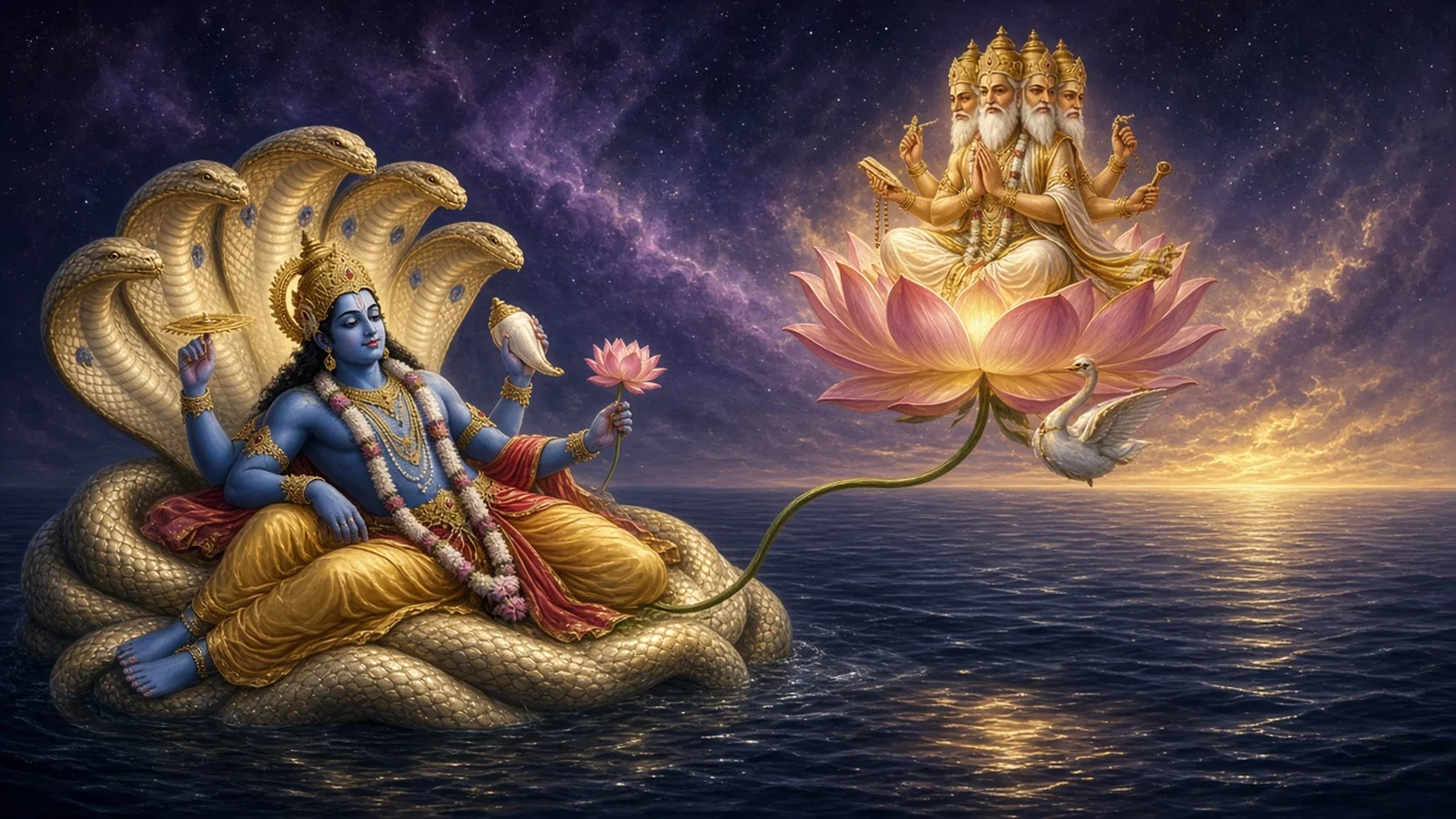
Three answers are given for the gudi, and Maharashtra keeps all three. The first is Brahma's. The almanacs say the world was made at sunrise on this day, and the morning of creation, which has its own page, Ugadi, is the beginning of every lunar new year, this one among them. The gudi is then Brahma's flag, the banner of the first morning.
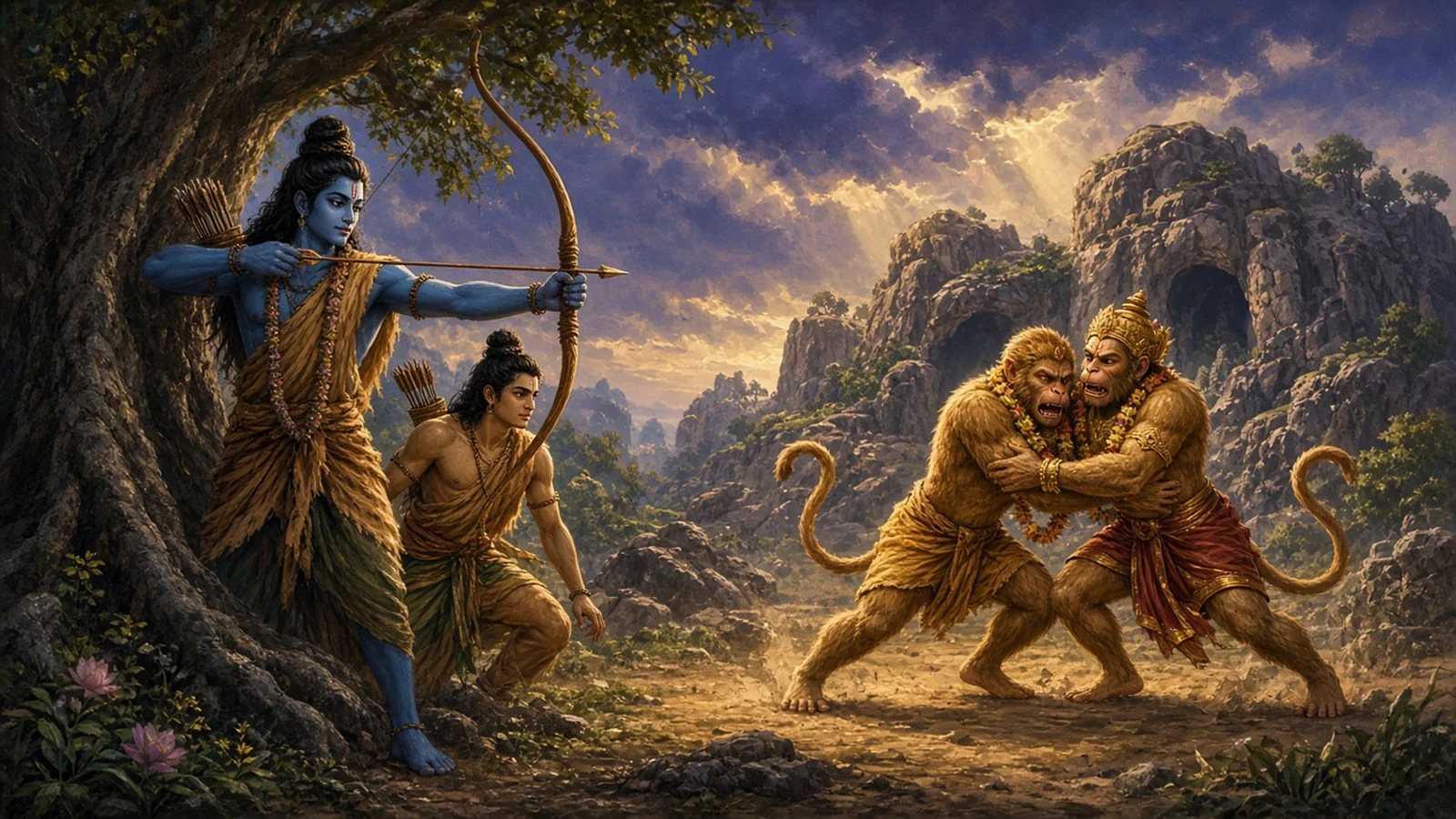
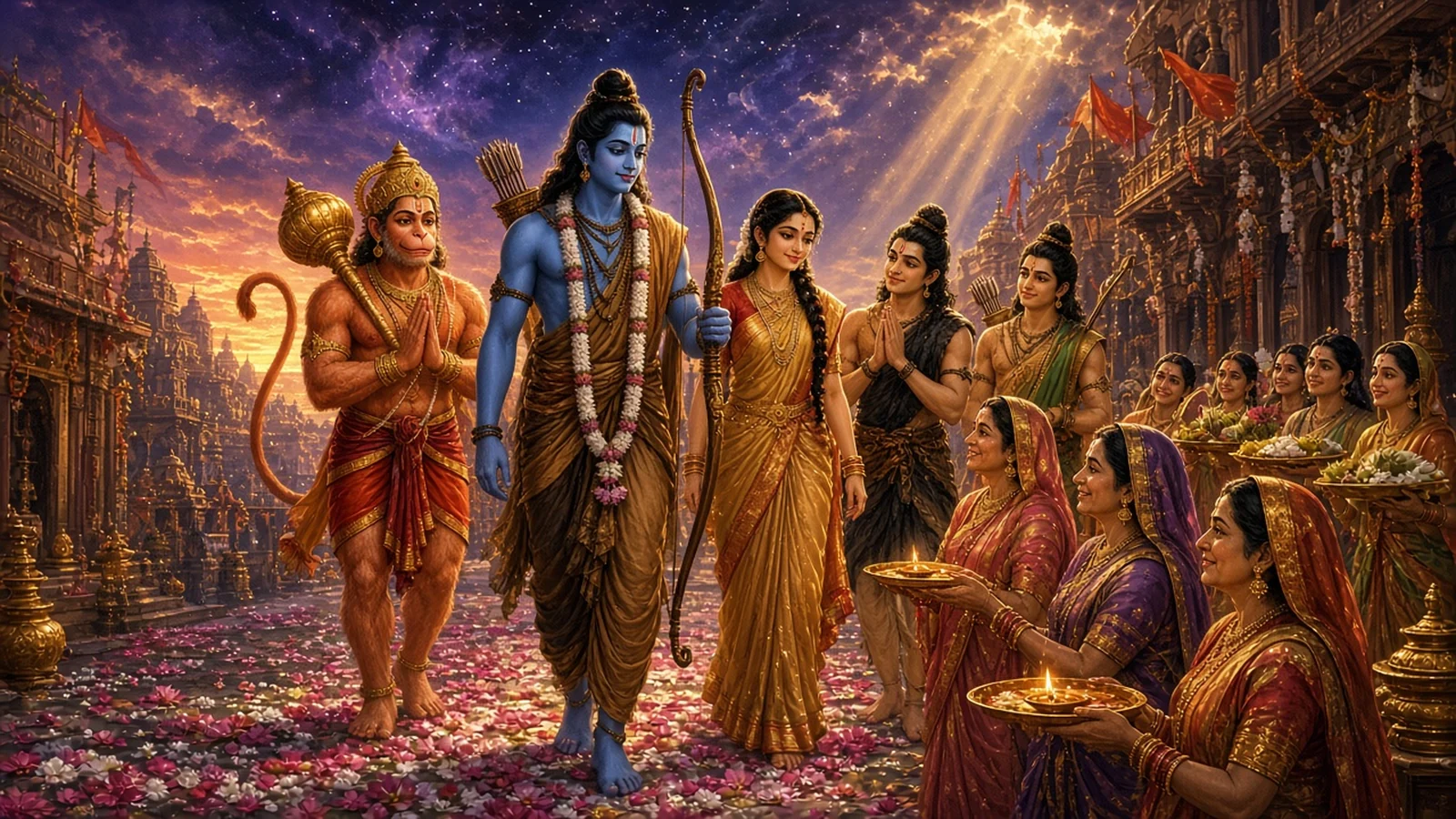
The second is Rama's. The gudi is a flag of victory, and the victory is his: over Vali, the monkey king he shot from behind a tree in Kishkindha, or his return to Ayodhya at the end of the fourteen years, when the city raised its flags for him.
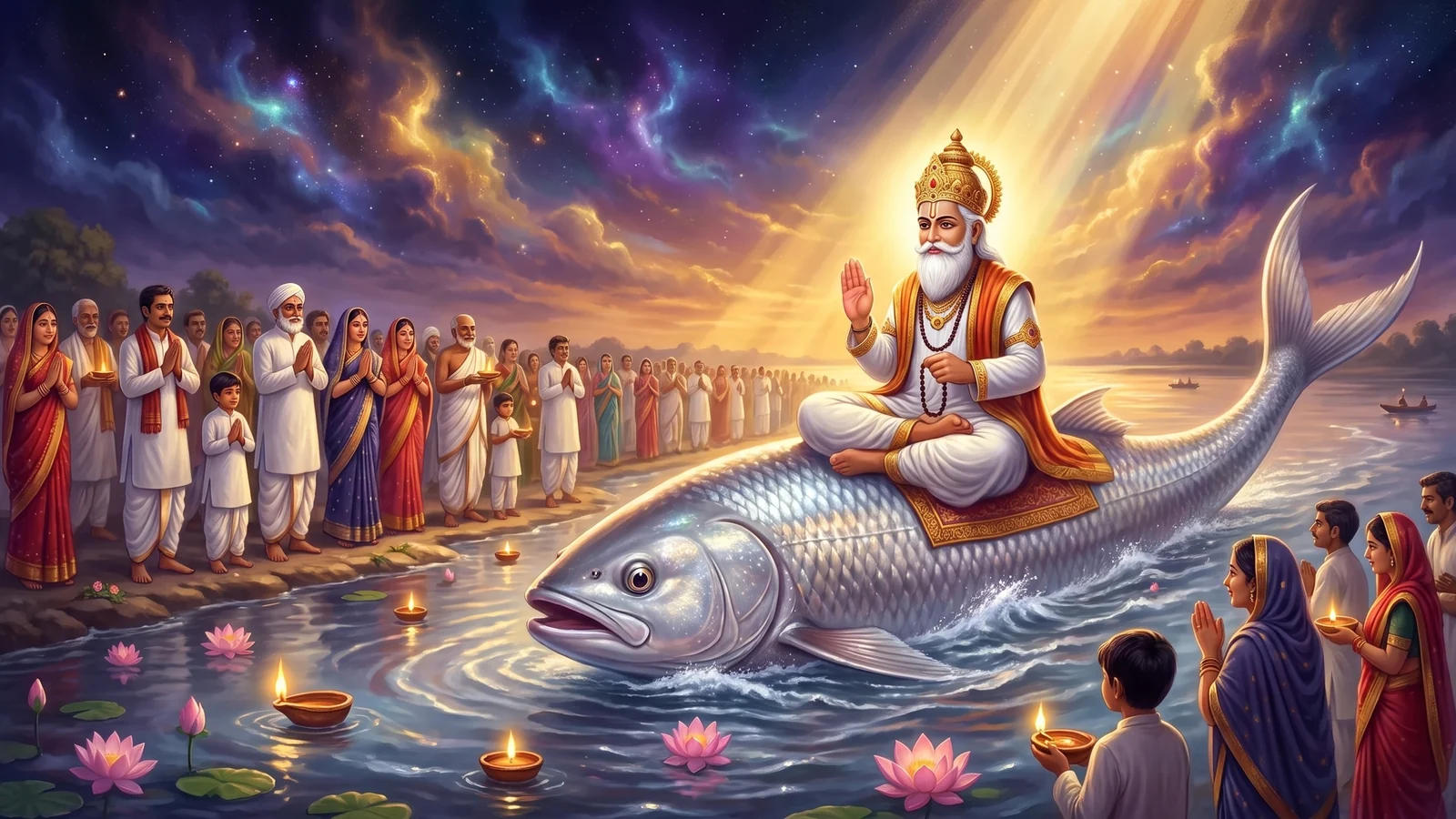
The third is Paithan's, and it is the one the Marathi almanacs count by. Shalivahana, a potter's boy of Pratishthana on the Godavari, shaped an army of clay, woke it with nectar and beat the army that came against him, and the town raised flags at every door when he came home. He began his count of years from that day, the Shalivahana Shaka, and the gudi is told as the flag Paithan raised for him. Historians read the era differently, as the afterword to his story says.
In Kashmir the morning belongs to Sharika, the Goddess who came as a myna and dropped a pebble on the demon in the water, and the pebble grew into Hari Parbat. The day she settled on the hill is Navreh, and the Kashmiri Pandits begin their year with her.
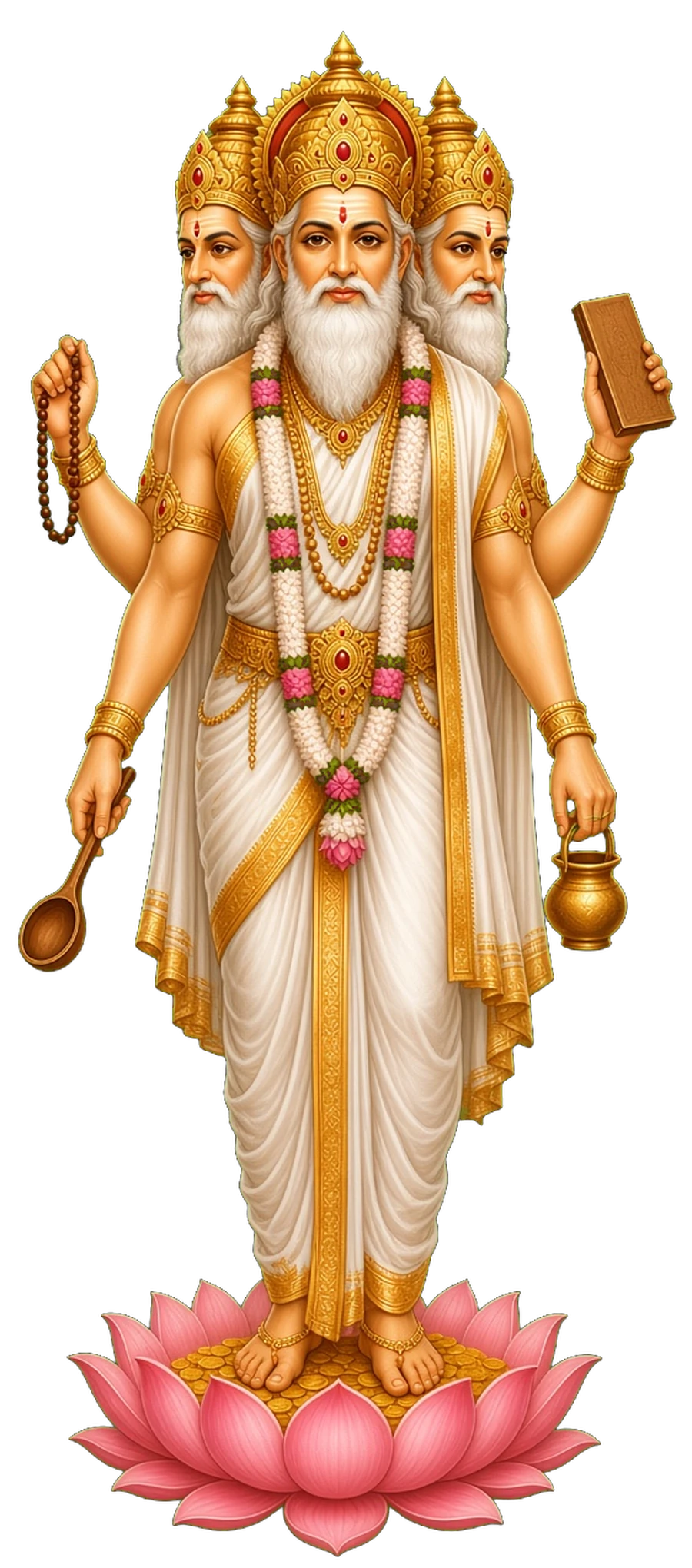
The creator, who the almanacs say began making the world at sunrise on this day. The gudi is told as his flag, the banner of the first morning, and the Marathi year begins where the world did.
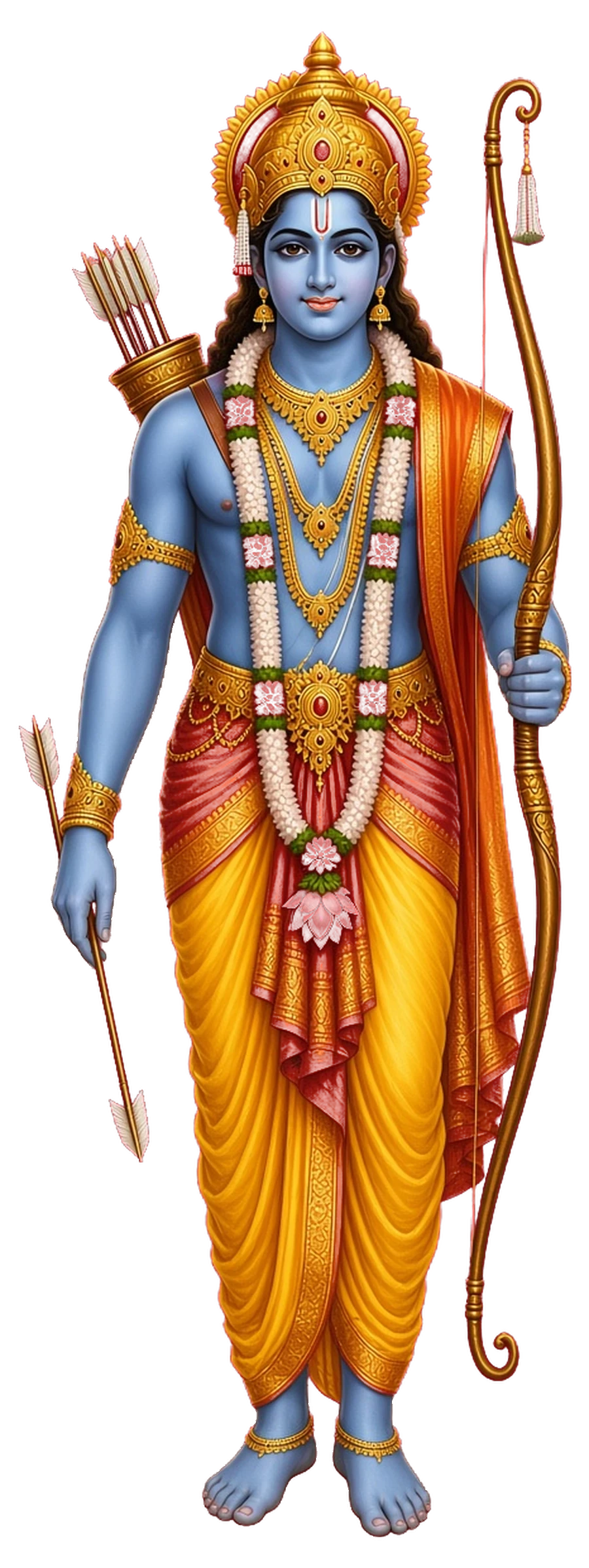
The gudi is a flag of victory, and the victory is Rama's. Maharashtra tells it as the day he shot Vali and gave Kishkindha to Sugriva, or as the day Ayodhya raised its flags for his return after the fourteen years.
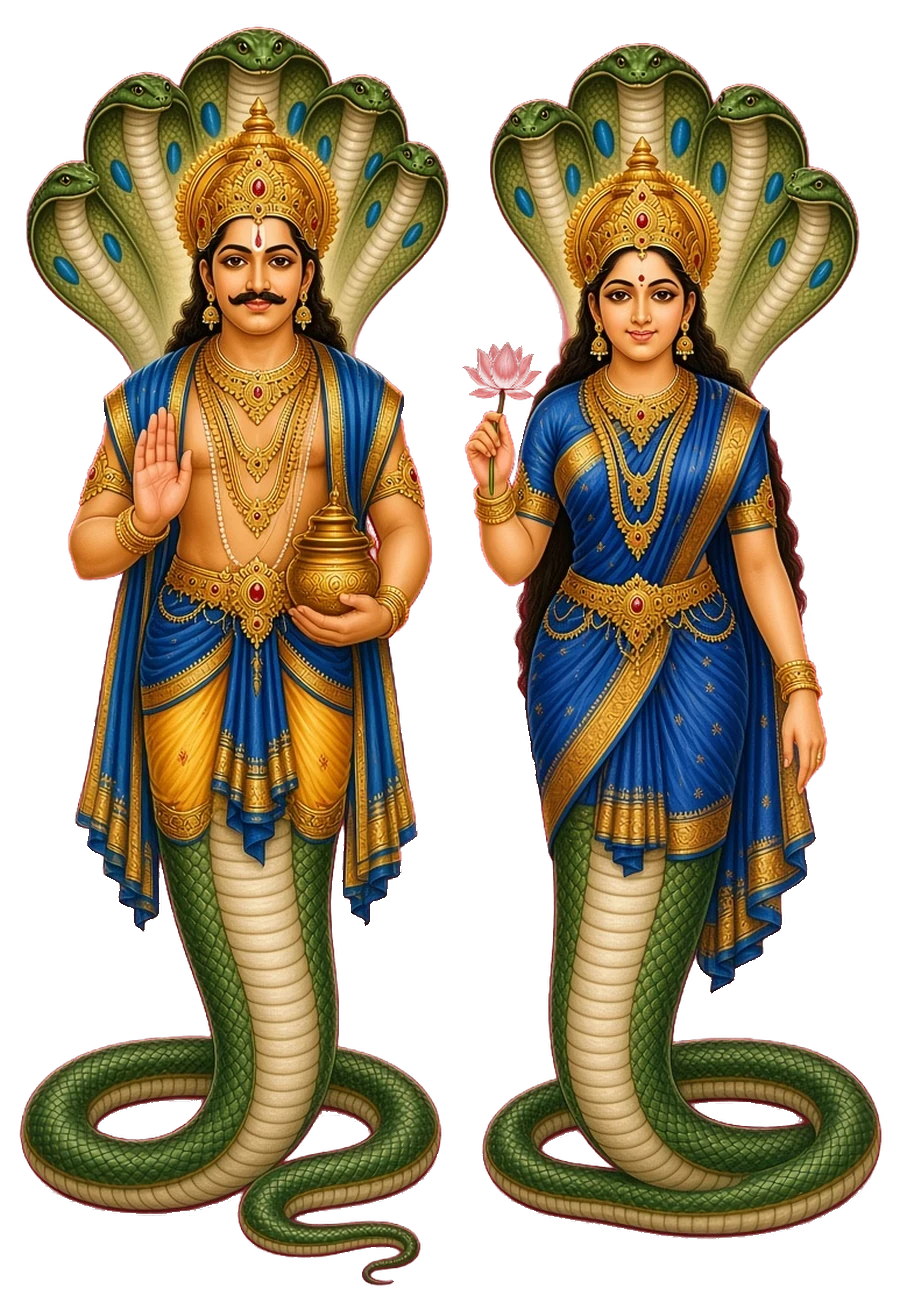
In the Shalivahana legend the potter's boy of Paithan is the son of a serpent king, and it is the serpents' nectar that wakes his army of clay. The flag Paithan raised for his victory is the gudi.
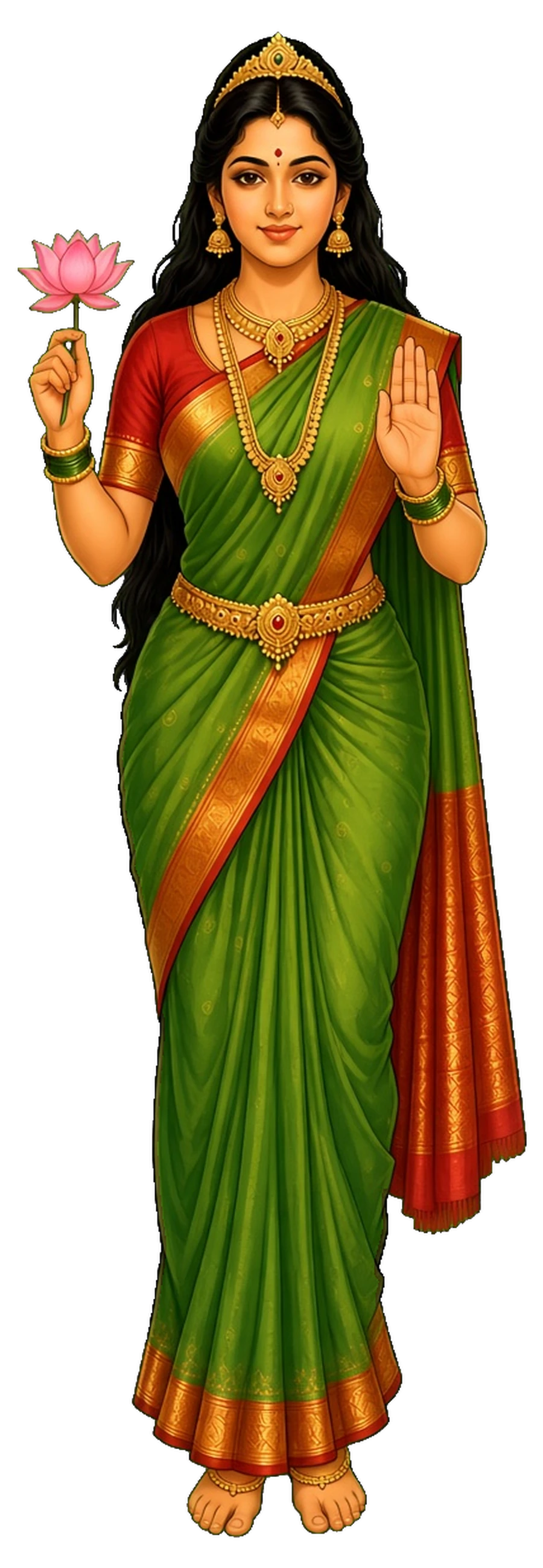
The Goddess of Kashmir, who came as a myna and dropped the pebble that became Hari Parbat. The day she settled on the hill is Navreh, the Kashmiri Pandits' new year, kept on this same morning.
The morning of the gudi
1
Gudi Padwa
The first day of the bright half of Chaitra · Wednesday 7 April 2027
Samvatsar PadvoNavrehCheti ChandSajibu Cheiraoba
Before sunrise the house is washed and a rangoli drawn at the door. At sunrise the gudi is dressed and raised at the right of the main door or at an upstairs window, and worshipped where it stands. The first taste of the year is neem with jaggery or sugar. Then shrikhand with hot puris, puran poli and the reading of the new almanac, and in Mumbai the shobha yatra fills the lanes. In Kashmir the Navreh thali, laid the night before, is the first thing seen on waking. The gudi comes down at sunset.
Every Marathi house raises its gudi at a window or the door. In Mumbai the day has become a parade. The shobha yatra of Girgaon, the oldest and largest, goes through the lanes from early morning with dhol and tasha troupes, lezim dancers, floats and saffron flags, and at its head women in nine-yard nauvari saris riding motorcycles, in turbans and traditional jewellery. Dombivli, Thane, Dadar, Vile Parle and Pune have their own.
Goa and the KonkanSamvatsar Padvo
The Konkani Hindus of Goa, the Konkan coast and the Konkani families settled in Karnataka and Kerala keep the day as Samvatsar Padvo, or Sausar Padvo, the first day of the new samvatsara, with the gudi, the rangoli, mango and neem leaves at the door and the neem eaten first.
KashmirNavreh
The Kashmiri Pandits' new year, dedicated to Sharika of Hari Parbat. On the night before, the eldest woman of the house fills a thali with rice and sets on it an odd number of walnuts, a coin or a gold ring, a pen and inkpot, curd, bread, salt, a sprig of sweet flag, spring flowers, a mirror and the new almanac, the nechipatri the family priest has brought, with a painted scroll of the Goddess. Before sunrise a daughter carries it to each sleeper, who wakes to it and leaves a coin on it for her. The walnuts go into the river, the rice is cooked yellow for the Goddess, and before 1990 the whole community of Srinagar climbed Hari Parbat that morning.
Sindh and the Sindhi communityCheti Chand
The Sindhi new year and the birthday of Jhulelal, the god of the Indus, kept at the new moon of Chaitra with the bahrana, a lamp, sugar, fruit and a water jar with a coconut, carried to the river or lake.
ManipurSajibu Cheiraoba
The Meitei new year, on the first day of the lunar month of Sajibu. Food is offered to the household god Sanamahi in the morning, an odd number of dishes is cooked and exchanged with neighbours, and in the afternoon families climb a hill nearby.
Andhra Pradesh, Telangana and KarnatakaUgadi
The Deccan keeps the same morning as its own new year, with the pachadi of six tastes and the reading of the almanac, and it has its own page, Ugadi.
All communities of Maharashtra and GoaA day for beginnings
Gudi Padwa is one of the sadeteen muhurat, the three and a half days of the year on which nothing need be checked in the almanac before beginning, with Akshaya Tritiya, Vijayadashami and the half day of Balipratipada. Shops open their new account books, families buy gold or a vehicle, move into new houses and start new ventures, and the day is a public holiday kept by people of every background.
JainsShalivahana in the chronicles
The Jain chroniclers of the west told the story of Satavahana of Pratishthana as their own, a king who turned to the Jina after his victory, and they remember that the monk Kalakacharya moved the Paryushana fast by a day at Pratishthana for his sake.
Muslims and Sikhs of SrinagarOne hill, three faiths
Hari Parbat, the hill of Navreh, also holds the shrine of the Sufi saint Makhdoom Sahib on its southern slope and the gurdwara of the sixth Guru at the Kathi gate, and the wall round its foot was begun by Akbar. People of all three faiths climb it.
How it is kept
The house is washed the evening before and a rangoli is drawn at the door. At sunrise the gudi goes up, at the right of the main door or at an upstairs window, and it is worshipped where it stands; it comes down at sunset. The first thing eaten is tender neem leaves with jaggery or with sugar crystals, in many houses with tamarind and coriander seed too: bitter and sweet together, because the year will bring both. Then the feast, shrikhand with hot puris, puran poli, chakli and bhakarwadi, and the priest or the eldest reads the new almanac.
In Mumbai the day is a parade. Girgaon's shobha yatra fills the lanes from early morning with dhol and tasha troupes, lezim dancers, floats and saffron flags, led by women in nauvari saris on motorcycles, and the suburbs and Pune follow. Goa keeps the day as Samvatsar Padvo, the first of the new samvatsara, with the gudi, the neem and the rangoli. It is one of the sadeteen muhurat, the three and a half days that need no almanac, so gold is bought, vehicles are brought home and houses are entered for the first time.
In Kashmir the night before Navreh the eldest woman of the house fills a thali with rice: walnuts in an odd number, a coin, a pen and inkpot, curd, bread, salt, flowers, a mirror and the new almanac. Before sunrise a daughter carries it to each sleeper, and the first thing seen in the new year is plenty. The walnuts go into the river, and the rice is cooked yellow for the Goddess.
In the old texts
The verse that makes Chaitra's first bright day the morning of creation comes through Hemadri's Chaturvarga Chintamani, which gives it as the Brahma Purana's; the Ugadi page tells that story. Shalivahana's is a chronicle legend, not a Puranic one. The Jain prabandhas of the west, the Kalpa Pradipa of Jinaprabha Suri from about 1300, the Prabandha Kosha of Rajashekhara and the older Puratana Prabandha Sangraha, tell of Satavahana of Pratishthana, the serpent king's son raised by a potter, his clay army and his war with Vikramaditya, and a Marathi Shalivahana Charitra follows them. The first text to call the era of 78 CE Shalivahana's is a Kannada poem of 1222.
Kashmir's story is in the Nilamata Purana, the valley's own Purana of the sixth to eighth centuries, which tells of the lake Satisara, the demon Jalodbhava who could not die in water, Ananta's plough and Vishnu's discus, and goes on to list the rites of the Kashmiri year. Kalhana opens the Rajatarangini (1.25 to 1.27) with the same lake and Kashyapa's making of the land. The myna and the pebble are the hill's own tradition.
Where this page comes from. Written by Devalok from the verse on Chaitra quoted by Hemadri in the Chaturvarga Chintamani, the Valmiki Ramayana, the Jain prabandhas on Satavahana as summarised by A. N. Upadhye, the Nilamata Purana and the Rajatarangini, and accounts of the festival in Maharashtra, Goa and Kashmir, as recorded in the Devalok Lore. Our own words throughout.