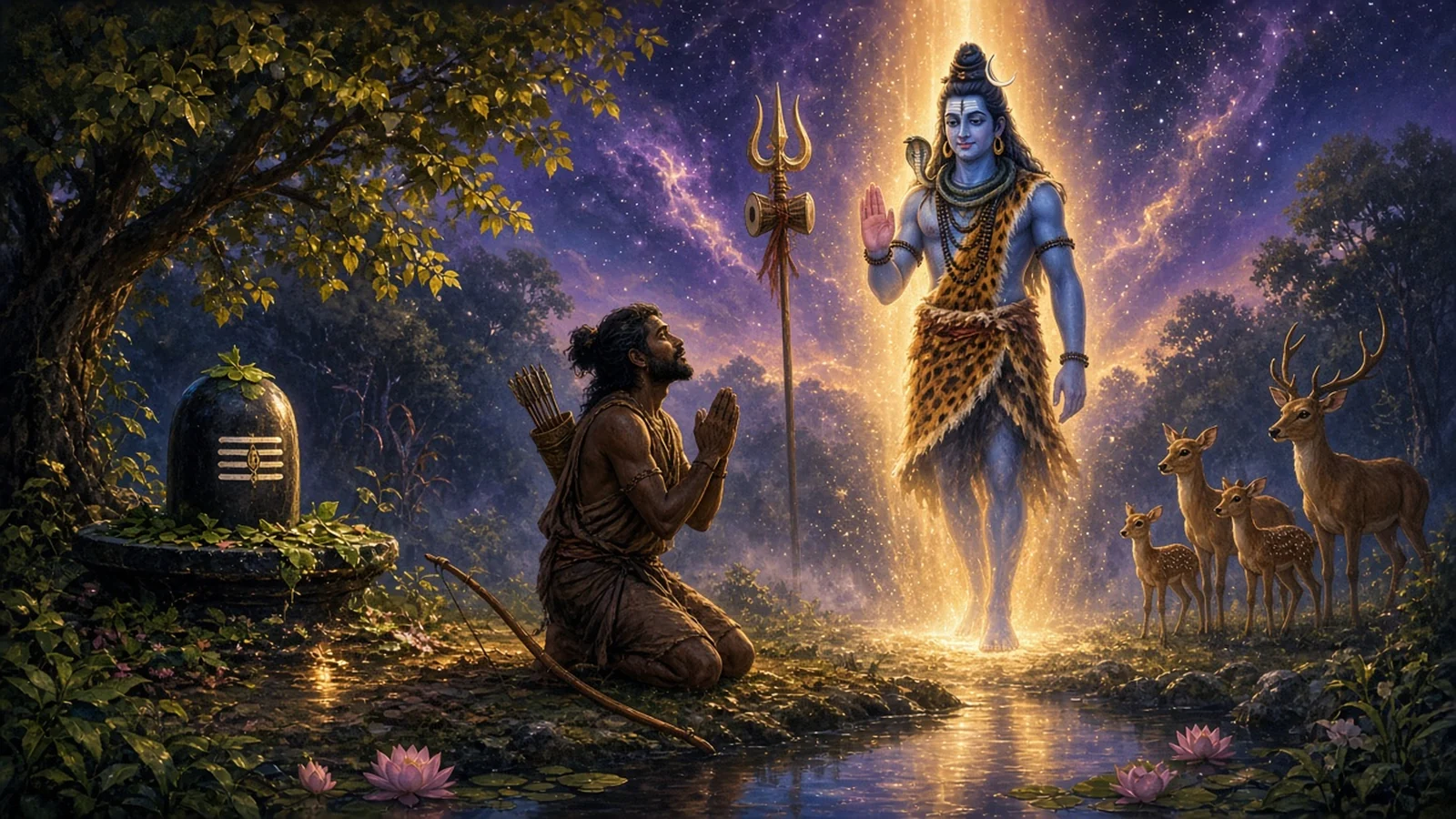
Festival · A month on the road with the Ganga on two shoulders, and not one drop on the ground
Kanwar Yatra
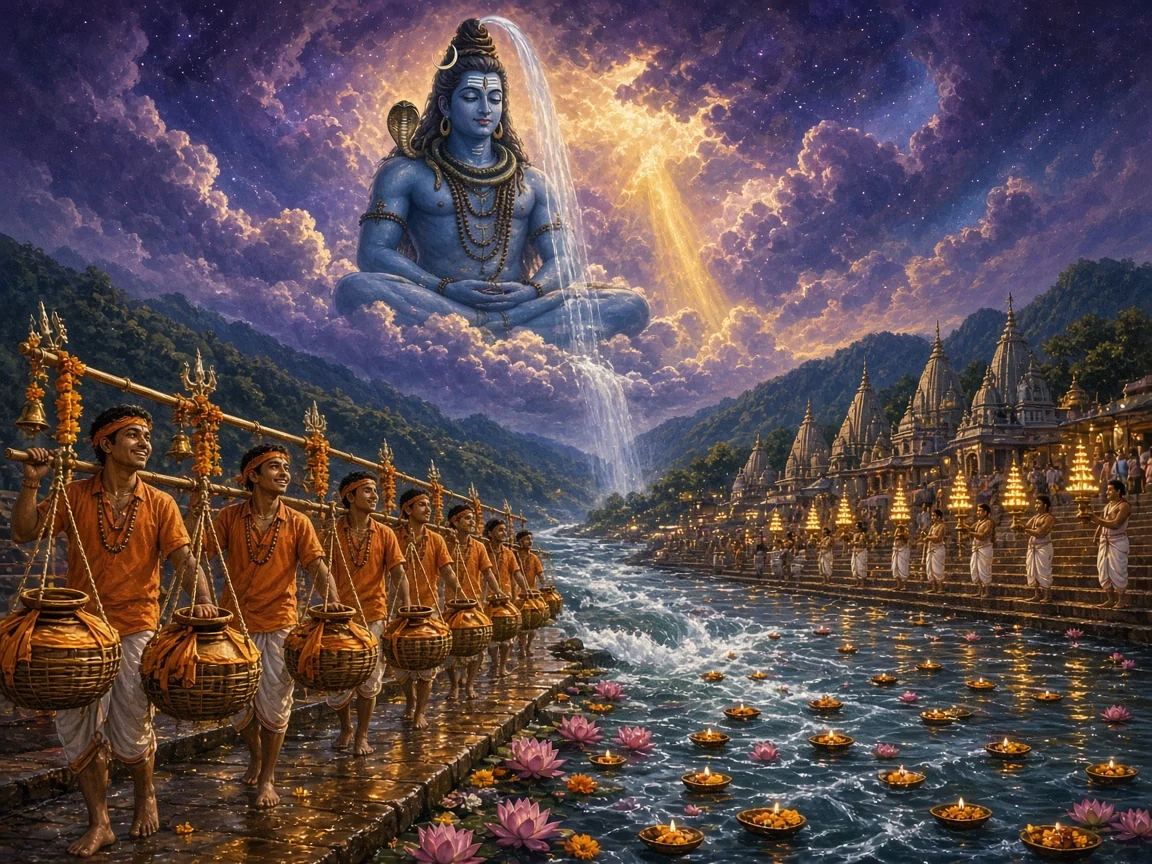
The Kanwar Yatra is the walk of the rainy month of Shravana, when millions of Shiva's devotees, most of them young men in saffron, fill two pots with Ganga water at Haridwar, Gaumukh, Gangotri or Sultanganj, hang them from a bamboo pole called the kanwar, and carry them home on foot without once letting them touch the ground. In the west the walk ends on Shravan Shivratri, when the water is poured on the lingas of Pura Mahadev, Augharnath, Kashi Vishwanath, Neelkanth and thousands of village temples; in the east the Shravani Mela walks it a hundred and five kilometres from Sultanganj to Baidyanath at Deoghar all month, chanting Bol Bam. The reason given is the poison in Shiva's throat, which the Ganga cools.
When is Kanwar Yatra in 2027? Shravan Shivratri, when the water is poured, is Saturday 31 July 2027; it runs 19 July to 17 August 2027. In 2028: Thursday 20 July 2028. The month of Shravana as the north counts it, from the day after Guru Purnima to Raksha Bandhan, in July and August; the western walk ends on Shravan Shivratri, the fourteenth of the dark fortnight.
Also calledKanwar YatraKanvar YatraKavad YatraKanwar MelaSawan KanwarShravani MelaBol BamBol Bam YatraDak KanwarJalabhishek of Sawan Shivratri
In short
What is the Kanwar Yatra?
The pilgrimage of the month of Shravana in which devotees of Shiva carry Ganga water in two pots slung from a bamboo pole, the kanwar, on foot from Haridwar, Gaumukh, Gangotri or Sultanganj to a Shiva linga, never letting it touch the ground, and pour it on the linga. Haridwar counted more than four crore pilgrims leaving with water in 2026.
When is the Kanwar Yatra in 2027?
Through the month of Shravana as the north counts it, from Monday 19 July to Tuesday 17 August 2027. The western walk ends on Shravan Shivratri, Saturday 31 July 2027, with the water poured through that night and the next day; in 2028 Shravan Shivratri falls on Thursday 20 July.
Why must the kanwar not touch the ground?
It is the vow of the road. Once the pots are filled and lifted, the water goes to the linga without being set down; walkers rest the pole on wooden stands, the khari kanwariya has a friend hold it upright, and a pole that touches the earth is made good with a penance of squats.
What is a dak kanwar?
The running kanwar. Dak kanwariyas fill at Haridwar and run home in relays, without food or rest, passing the pole from runner to runner while their team follows in a truck, and pour within a day and a night. In the east the same pilgrims are called dak bams.
Who carried the first kanwar?
The shrines give three answers. Pura Mahadev's tellers say Ravana brought Ganga water to Shiva there, the temple's legend and Bhakti Bharat say Parashurama carried it from Garhmukteshwar, and the road gives its pole to Shravan Kumar, who carried his blind parents. Historians find the earliest mention in the eighteenth century, on the Sultanganj road.
Next, in 2027Saturday 31 July 2027
19 July to 17 August 2027
Prime godShiva, Neelkanth, whose throat the water cools
with 2 more
WhereWestern Uttar Pradesh, Delhi and Haryana on the Haridwar road; Uttarakhand; Kashi; Bihar and Jharkhand on the Sultanganj to Deoghar road; Rajasthan, Punjab and Madhya Pradesh send walkers too
How longAbout a fortnight on the Haridwar road, from the start of Shravana to Shravan Shivratri; the whole month on the Deoghar road
The month of Shravana as the north counts it, from the day after Guru Purnima to Raksha Bandhan, in July and August; the western walk ends on Shravan Shivratri, the fourteenth of the dark fortnight
Why it is kept
Every year in the rains the roads of the north turn saffron. For about a fortnight, from the start of Shravana to its Shivratri, millions of young men walk down the Delhi to Haridwar highway and back up it again, each with a bamboo pole across his shoulders and a pot of Ganga water hung from either end, and none of them will let it touch the ground. In Bihar the same walk goes on for the whole month, from Sultanganj to Deoghar, to the shout of Bol Bam. At the end of every road is a linga, and the water is poured on it.
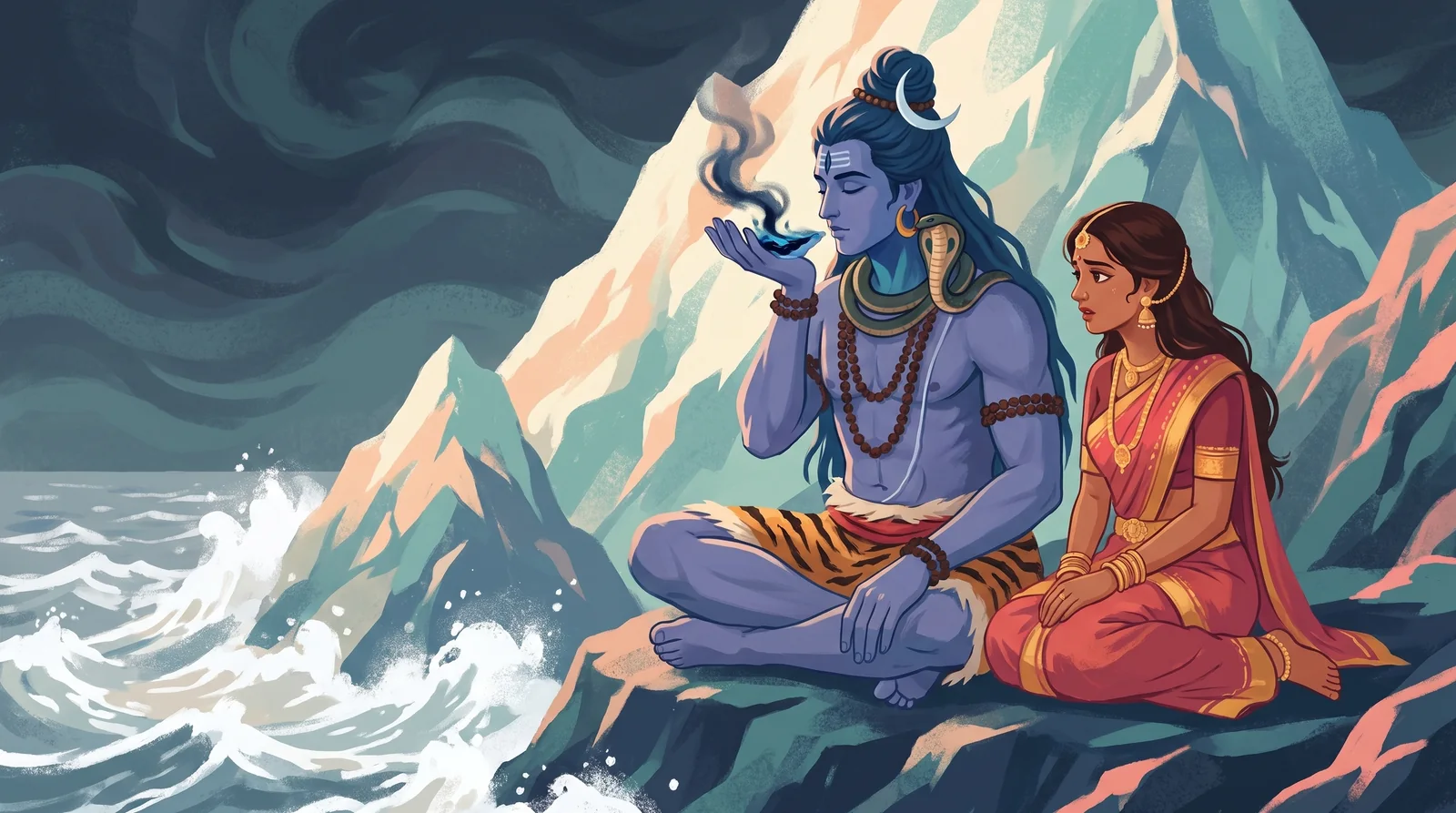
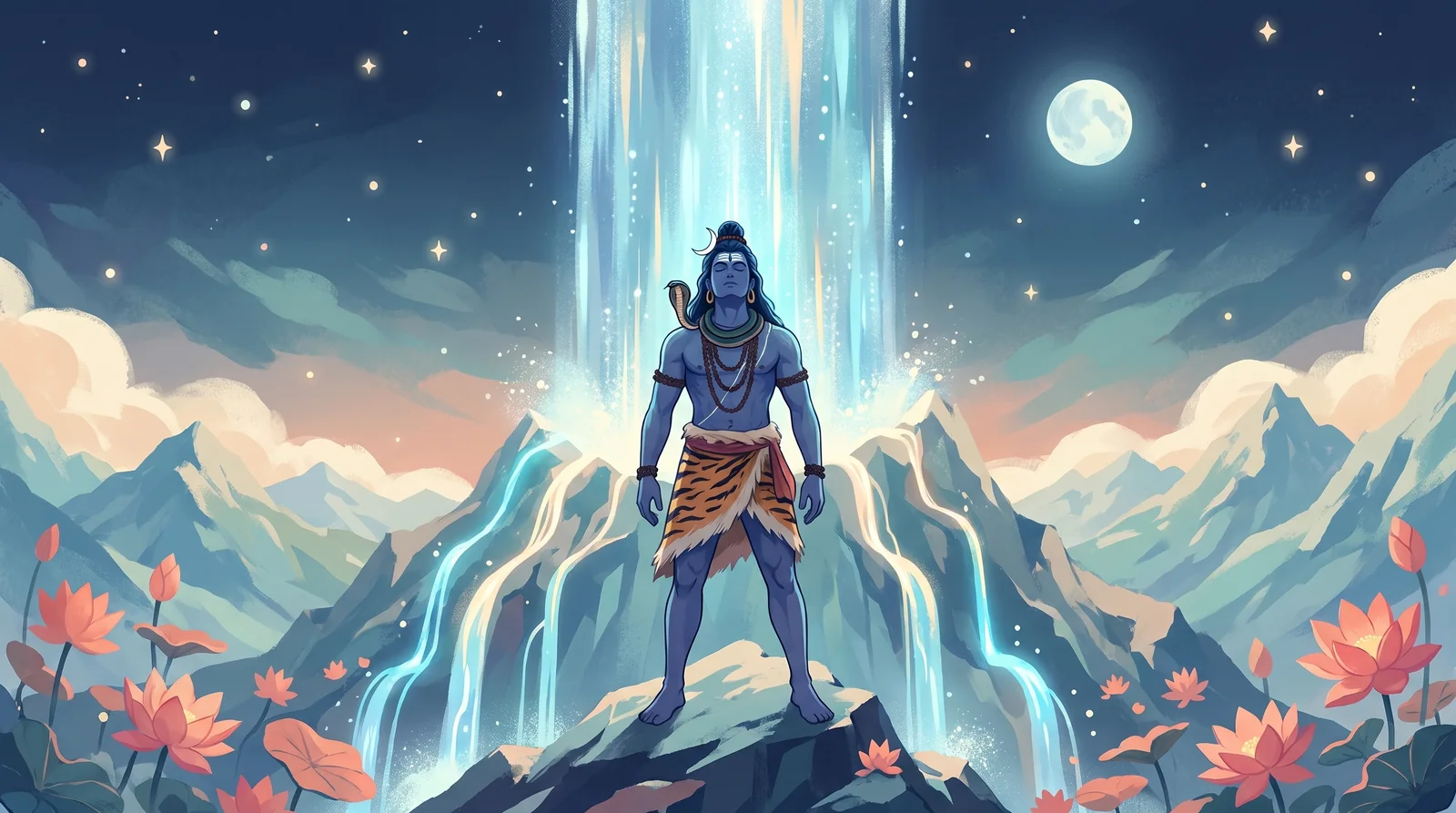
The kanwariyas give one reason. When the gods and the asuras churned the ocean, Shiva drank the poison that rose from it, and it stayed in his throat; the water of the Ganga cools it, and Shravana, the month the tellers give, is when it is carried. The Blue Throat tells the drinking, and Ganga in His Hair how the river came to be his.
Shiva drinks the poison from the churned ocean and his throat turns blue
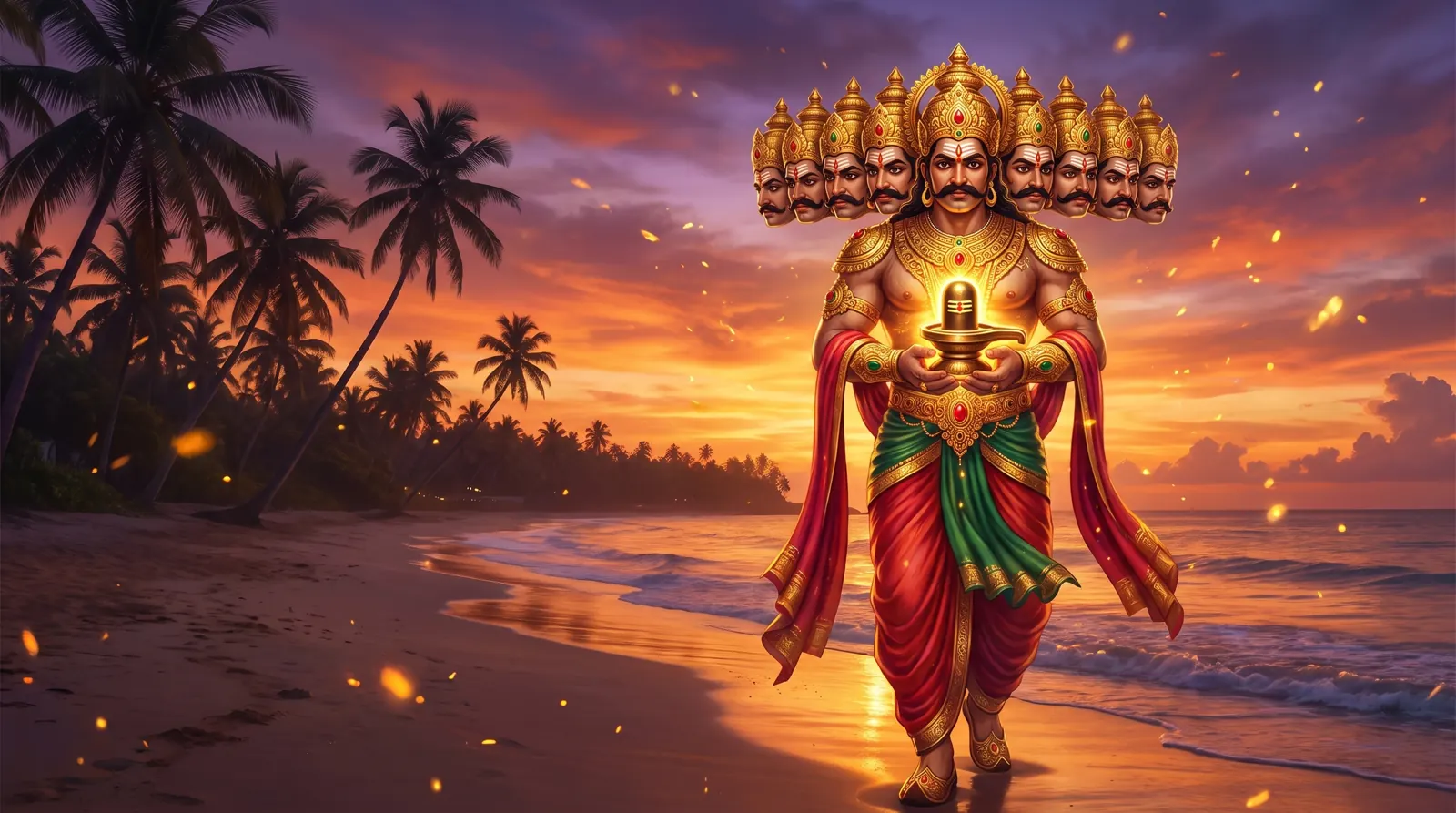
Who began it is told three ways. At Pura Mahadev the tellers say Ravana carried Ganga water to the linga there to ease the god's burning; the temple's own legend and the devotional sites say Parashurama brought it from Garhmukteshwar and so was the first kanwariya; and the road says the pole itself is Shravan Kumar's, who carried his blind parents in two baskets. The First Kanwariya tells all three. At Deoghar the first to carry the water from Sultanganj is said to be Rama.
Shravan Kumar carries his blind parents in two baskets hung from a pole
The historians are plainer. Devi Prasad Dubey of Allahabad finds the earliest mention in the eighteenth century, when pilgrims carried water from Sultanganj to Deoghar. The walk spread from rural ascetics to the towns of the Hindi belt after the 1960s, helped by Marwari merchants, and grew enormously from the 1980s, with better roads and the politics of those years; it was a small affair until then. It is now the largest annual religious gathering in India.
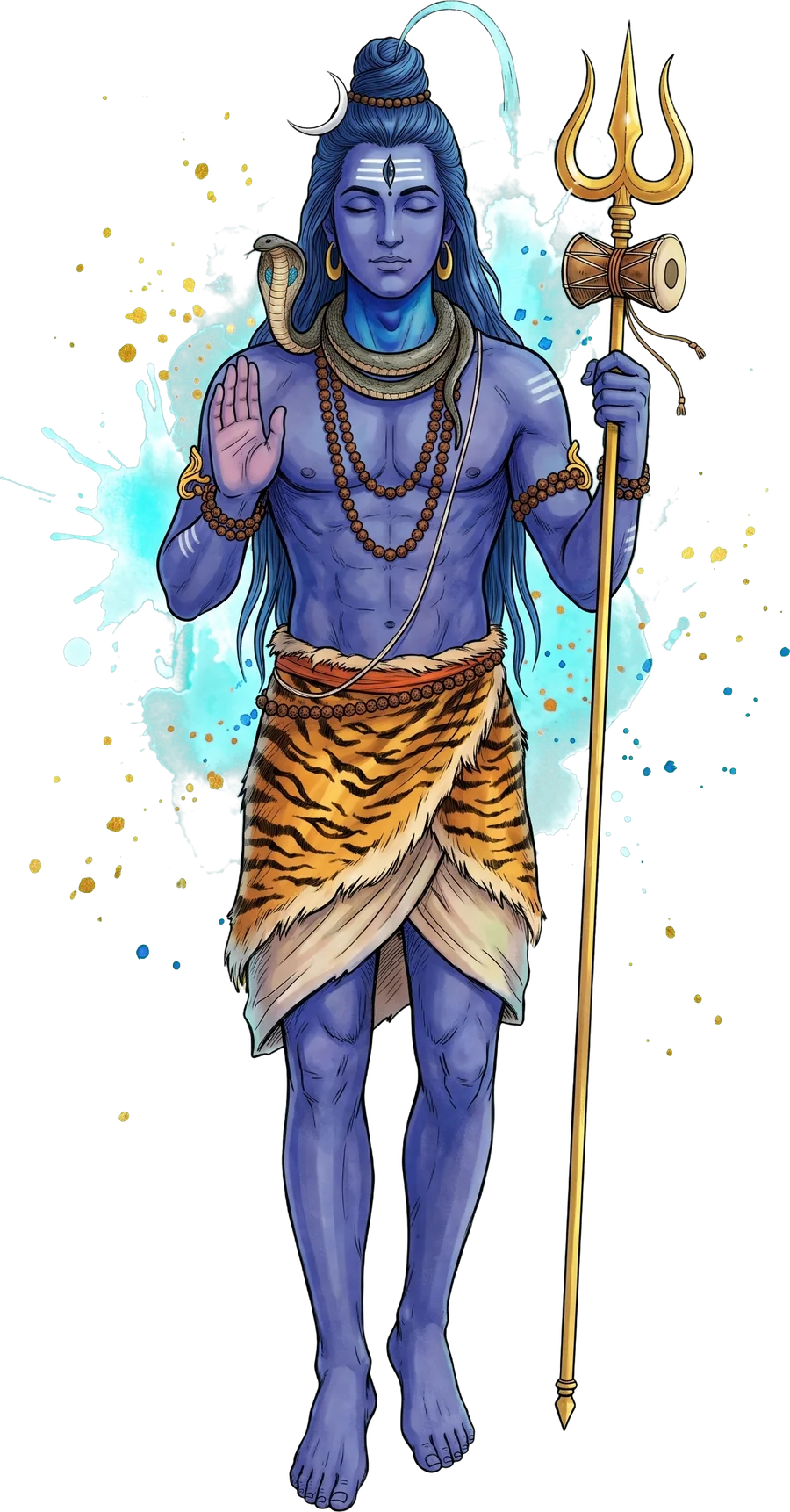
The god at the end of every road. The kanwariyas carry the Ganga to him because, the tellers say, the poison he drank at the churning of the ocean still burns in his throat, and the river that fell through his hair is the one water that soothes it. They call him Bhole, the innocent one, and themselves bhole after him; in the east he is Baba Baidyanath, the physician.
G
Ganga
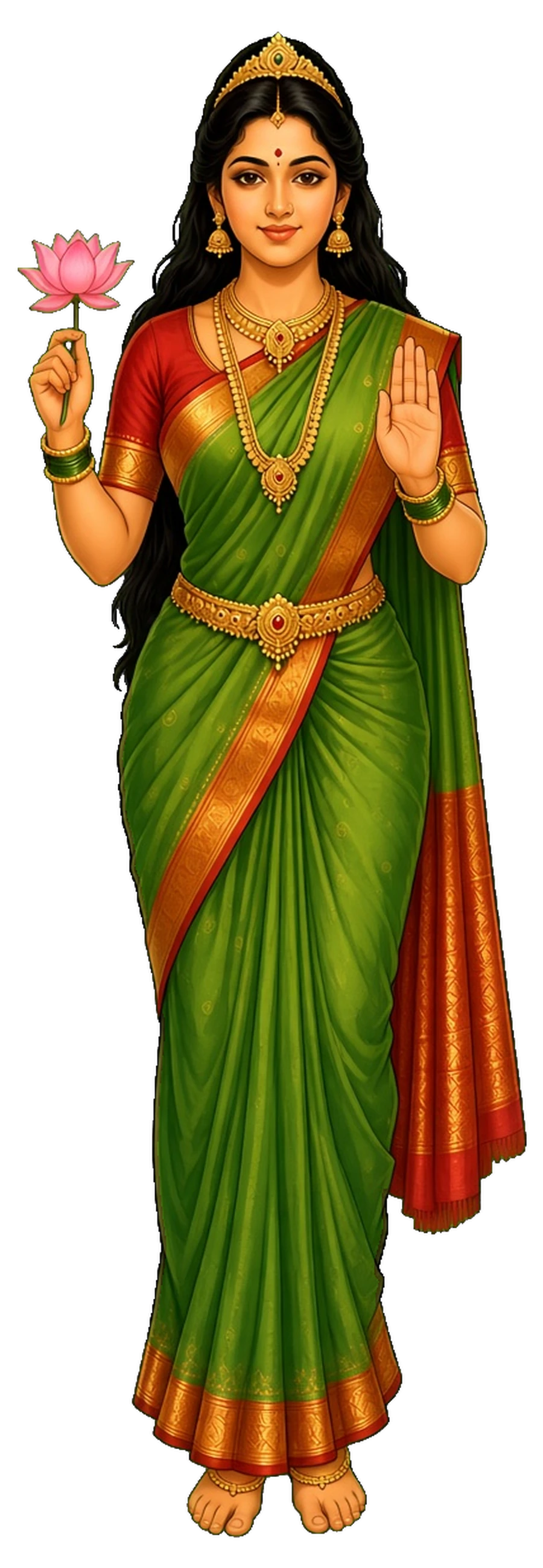
The water itself. It is drawn where she is holiest, at Har ki Pauri where she leaves the hills, at Gaumukh and Gangotri where she begins, and at Sultanganj where she turns to flow north, and it is carried as hers from the moment the pots are sealed.
Shravana is her month too. Hariyali Teej, the women's festival of her fast for Shiva, falls three days into its bright fortnight, a few days after the kanwariyas have poured their water, and has its own page.
A month on the road
1
The water drawn
From the first day of dark Shravana, the day after Guru Purnima
Har ki PauriGaumukh and GangotriSultanganjAjgaibinathsealing the pots
The pilgrims come up to the river by bus and train, and go down to it on foot. At Haridwar they fill at Har ki Pauri, where the Ganga comes out of the hills; the strongest go on into the mountains, to Gangotri or to the glacier's mouth at Gaumukh, for water from nearer her source. Stalls on the ghats sell the pots, the clay to seal them, saffron cloth and the kanwar poles, decorated with bells, flowers, tridents and pictures of Shiva. In the east the water is drawn at Sultanganj in Bihar, where the river flows north, below the temple of Ajgaibinath on its rock. Once sealed and lifted, the water is not set down again until it reaches the linga.
Har ki Pauri: kanwariyas fill their pots, seal them with clay and lift the kanwar
samanya kanwarkhari kanwardandi kanwarthe standsthe seva campsBol Bam
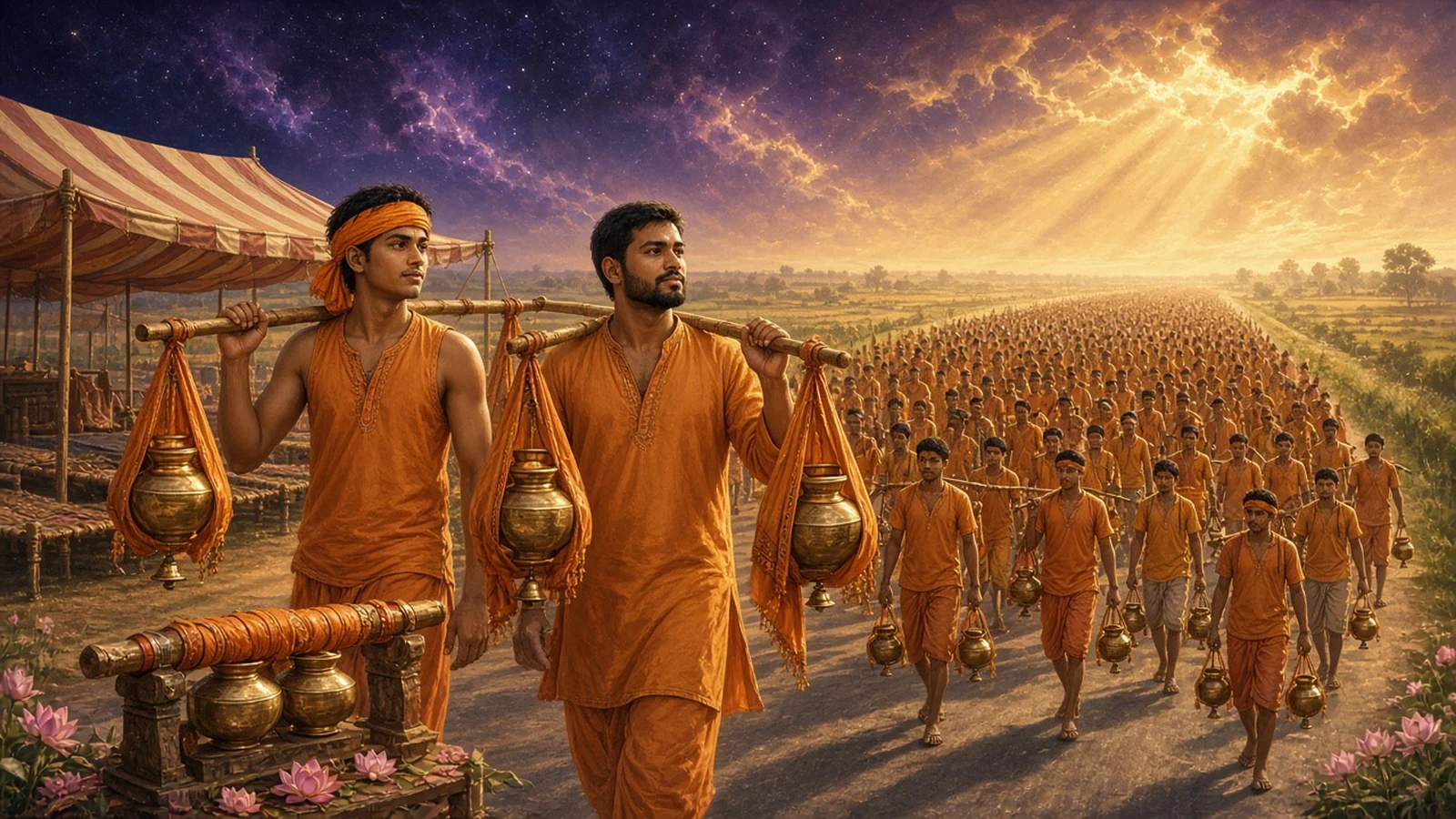
Then they walk, barefoot or in cloth slippers, in saffron, in groups from one village or one street, a hundred or two hundred kilometres home. Most carry the ordinary kanwar, which may rest on the wooden stands kept at every halt. The khari kanwar may never rest at all; when its bearer stops, a companion holds it upright. A few go the whole way as dandi kanwariyas, measuring the road with their bodies, lying full length and rising again. A kanwar that touches the ground is a broken vow, made good with squats holding the ears. Camps put up by kanwar committees, traders and villages feed, house and bandage the walkers for nothing, and the road answers every "Bol Bam" with "Har Har Mahadev". The vows are strict: no meat, liquor, leather, soap or oil, and celibacy until the water is poured.
The road home in saffron, the kanwars resting on wooden stands at a halt
dak bamthe relaysthe closed highwaythe flower shower
The road fills to bursting in the final days, and the dak kanwariyas come. They fill at Haridwar and run, without food or rest, handing the kanwar from runner to runner in relays while their team follows in trucks and on motorcycles, to pour at home within a day and a night. In 2026 Uttar Pradesh closed the Delhi to Haridwar highway to every vehicle from 4 to 12 August, put about 25,000 police and some seven thousand cameras on the Meerut zone's roads, and showered the walkers with petals from helicopters; by the evening before Shivratri Haridwar's count of pilgrims who had left with water stood at more than 4.4 crore, 63 lakh of them on that last day.
Dak kanwariyas run the relay, passing the kanwar on while petals fall from the sky
The night the water is poured. The queues form at the great shrines before midnight and the pouring goes on through the night and the next day: at Pura Mahadev near Baghpat, where in 2026 more than twenty lakh had poured by evening along a queue three kilometres long; at Augharnath in the old Meerut cantonment, where the police were on duty from two in the morning; at Neelkanth above Rishikesh, which claims the spot where the poison was drunk; at Kashi Vishwanath; and in every village temple to which a walker has carried his two pots. In 2027 the fourteenth begins late on Saturday 31 July and the night's puja falls just after midnight. On the Deoghar road the Shravani Mela goes on to the full moon.
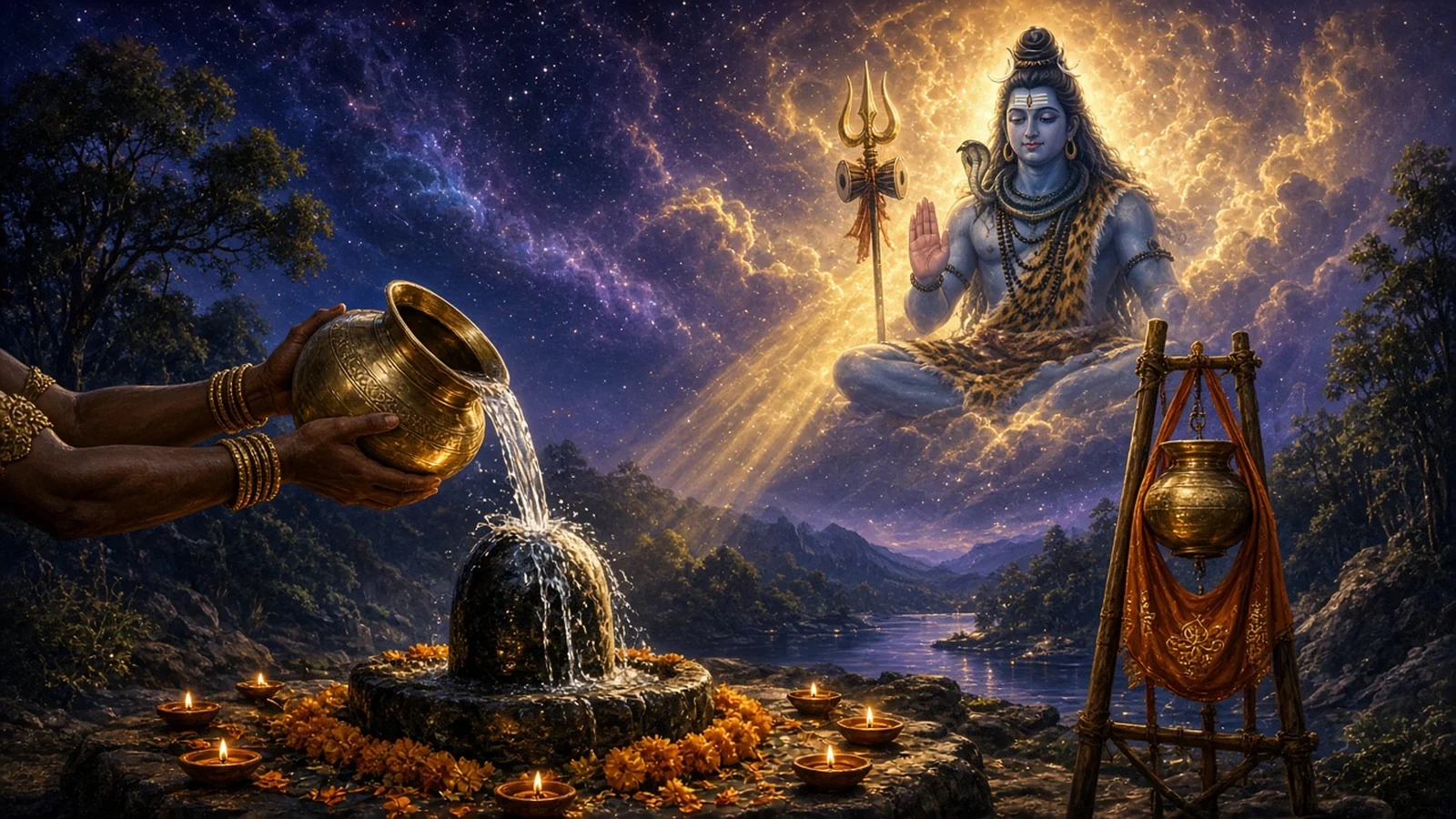
Shravan Shivratri: the seals broken and the Ganga water poured on the linga at night
Western Uttar Pradesh, Delhi and HaryanaThe Haridwar road and the home shrines
The great flood of the yatra comes down the Delhi to Haridwar highway through Muzaffarnagar, Meerut, Ghaziabad and Baghpat, and along the Ganga canal road, to the villages and towns of the Doab, Delhi and Haryana. Its two great shrines are Pura Mahadev, the Parashurameshwar temple above the Hindon in Baghpat district, and Augharnath in Meerut, near the well where the sepoys of 1857 are said to have met, its linga found in the ground in 1844. Most walkers, though, pour on their own village's linga.
UttarakhandHaridwar, Gaumukh and Neelkanth
Haridwar is where the water is drawn and where the state counts the pilgrims, tens of lakhs a day at the end. The strongest walk on to Gangotri or up to Gaumukh for their water. From Rishikesh many climb over the Lakshman Jhula to Neelkanth Mahadev, where the Shravan Shivratri fair is one of the temple's two great days, and Kankhal's Daksheshwar temple fills because Shiva, the devotees say, spends the whole of Shravana there, in his in-laws' house.
KashiVishwanath in Shravana
Varanasi has a smaller kanwar of its own, and through the month the queues for Kashi Vishwanath carry Ganga water from the city's ghats to the jyotirlinga.
Bihar and JharkhandThe Shravani Mela, Sultanganj to Deoghar
For the whole month the pilgrims draw water at Sultanganj, below Ajgaibinath, and walk about a hundred and five kilometres to Baba Baidyanath at Deoghar, one of the twelve jyotirlingas, in four or five days, or in one if they are dak bams. The two state governments run it together as one of the longest fairs in the world, with camps along the road and special trains to Jasidih; Deoghar counts some thirty-five to forty lakh pilgrims in a usual year. Many walk on another forty-five kilometres to Basukinath.
Shaivas, and anyone who keeps the vowsBhole and bam
Nobody initiates a kanwariya. Anyone who keeps the vows of the road may carry the pots, and most who do are young men from the villages and small towns of the north, with women, families and old men among them. In the west they call one another bhole, in the east bam. The sociologist Vikash Singh, who walked with them, reads the walk in his study Uprising of the Fools as a place where young men with few prospects prove their worth.
The campsSeva on the road
The road is fed by its camps, put up by kanwar committees, traders' and temple associations, villages and organisations such as the RSS and the VHP, with food, cots, medicine and massage, free to every walker. In places, and in some years, Muslim organisations run camps too; in 2024 Muslim groups of Ludhiana and Malerkotla in Punjab kept up their langars and water stalls for the kanwariyas.
The stateA road closed for a fortnight
Uttar Pradesh, Uttarakhand, Delhi and Haryana close highways, divert traffic, police the route and count the walkers, and Bihar and Jharkhand run the Shravani Mela. The yatra has had its troubles. The Supreme Court spoke sharply after the violence and vandalism on the roads in 2018, the walk was cancelled in 2020 for the pandemic, and in 2021 Uttarakhand suspended it while Uttar Pradesh went ahead.
How it is kept
The pilgrim goes up to the river by any means and comes back only on foot. At the ghat he fills his pots, seals them with clay, ties them to the pole and lifts it, and from then on it rests only on the wooden stands at the halts, or not at all if his is a khari kanwar. He wears saffron, goes barefoot, eats no meat, touches no leather, soap or oil, and walks with his village or his street, sleeping in the free camps along the road.
A seva camp at night: food for the walkers, the kanwars hung on wooden stands
The last days belong to the dak kanwariyas, who run home in relays within a day and a night, and to the state, which shuts the highway to traffic. On Shravan Shivratri the walkers stand in queues kilometres long at Pura Mahadev and Augharnath, at Neelkanth and Kashi, or simply at the temple at the end of their own lane, break the seals, and pour. Those who cannot walk keep the Mondays of the month at home.
In the east the Shravani Mela has its own shape: the pilgrims are bam and call each other bam ji, they walk a hundred and five kilometres to Baidyanath in four or five days, and at the temple the crowd is so great that their water is often poured into a brass channel that carries it to the jyotirlinga. Many go on to Basukinath.
At Deoghar the bam pour their water into the brass channel to Baidyanath
In the old texts
No Purana we could read describes the kanwar, and none of the three tellings of its first bearer is in a text we could find. The reason the walkers give rests on the churning of the ocean, which the Bhagavata Purana tells in its eighth book, chapter seven, with Shiva drinking the poison and his throat turning blue. The Shiva Purana's Koti Rudra Samhita, chapter twenty-eight, tells how Ravana won a linga from Shiva and set it down at Vaidyanatha, which Deoghar holds itself to be; it says nothing of the water or the month.
The pole has the oldest text. The Valmiki Ramayana's Ayodhya Kanda, chapters sixty-three and sixty-four, has the old king Dasharatha remember the night by the Sarayu when, as a young prince, he shot at a sound in the dark and killed a youth filling a pitcher for his blind parents. Valmiki does not name the youth and gives him no pole; the name Shravan Kumar and the baskets on his shoulders are the later telling the kanwariyas carry. The road's own words are its calls, Bol Bam and Har Har Mahadev.
Where this page comes from. Written by Devalok from the Kanwar Yatra and the Shravani Mela as the kanwariyas keep them and as the Wikipedia articles, Outlook Traveller, Hinduism Today, All India Radio, PTI, the Tribune, the Hindi press and Bhakti Bharat record them, from the traditions of Pura Mahadev and Deoghar, the Shiva Purana (Koti Rudra Samhita 28), the Bhagavata Purana (8.7) and the Valmiki Ramayana (Ayodhya Kanda 63 and 64), the work of Devi Prasad Dubey and Vikash Singh, and the Drik Panchang calendar for 2027 and 2028, as recorded in the Devalok Lore. Our own words throughout.