As Pura Mahadev tells it: Ravana's water
Western Uttar Pradesh · Pura, Baghpat district, on the night of Shravan Shivratri · 3 min read
The queue at Pura Mahadev had not moved for an hour. It ran back from the temple gate through the lanes of the village and out along the road, saffron as far as anyone could see, and every man in it had a kanwar on his shoulder and a week of road in his legs.
The boy from Ghaziabad turned to the old man behind him, a farmer from the next village who had come only to watch.
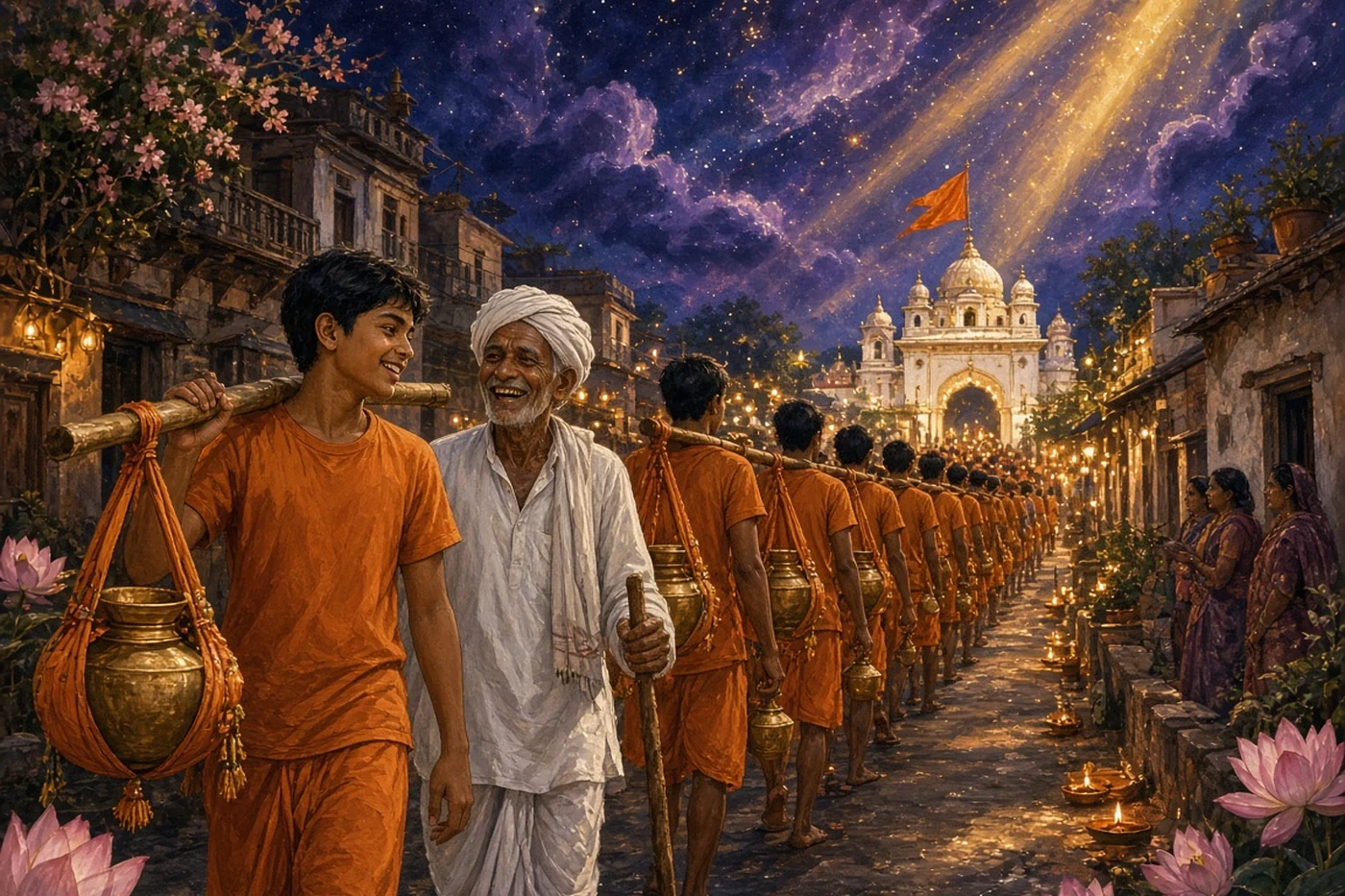
"Baba, who was the first? Who carried the first kanwar?"
The old man laughed. "Ask ten people in this line, you get three answers. Here, at Pura, we say Ravana."
"Ravana? The king of Lanka?"
"Before he was anything else, he was Shiva's. Listen."
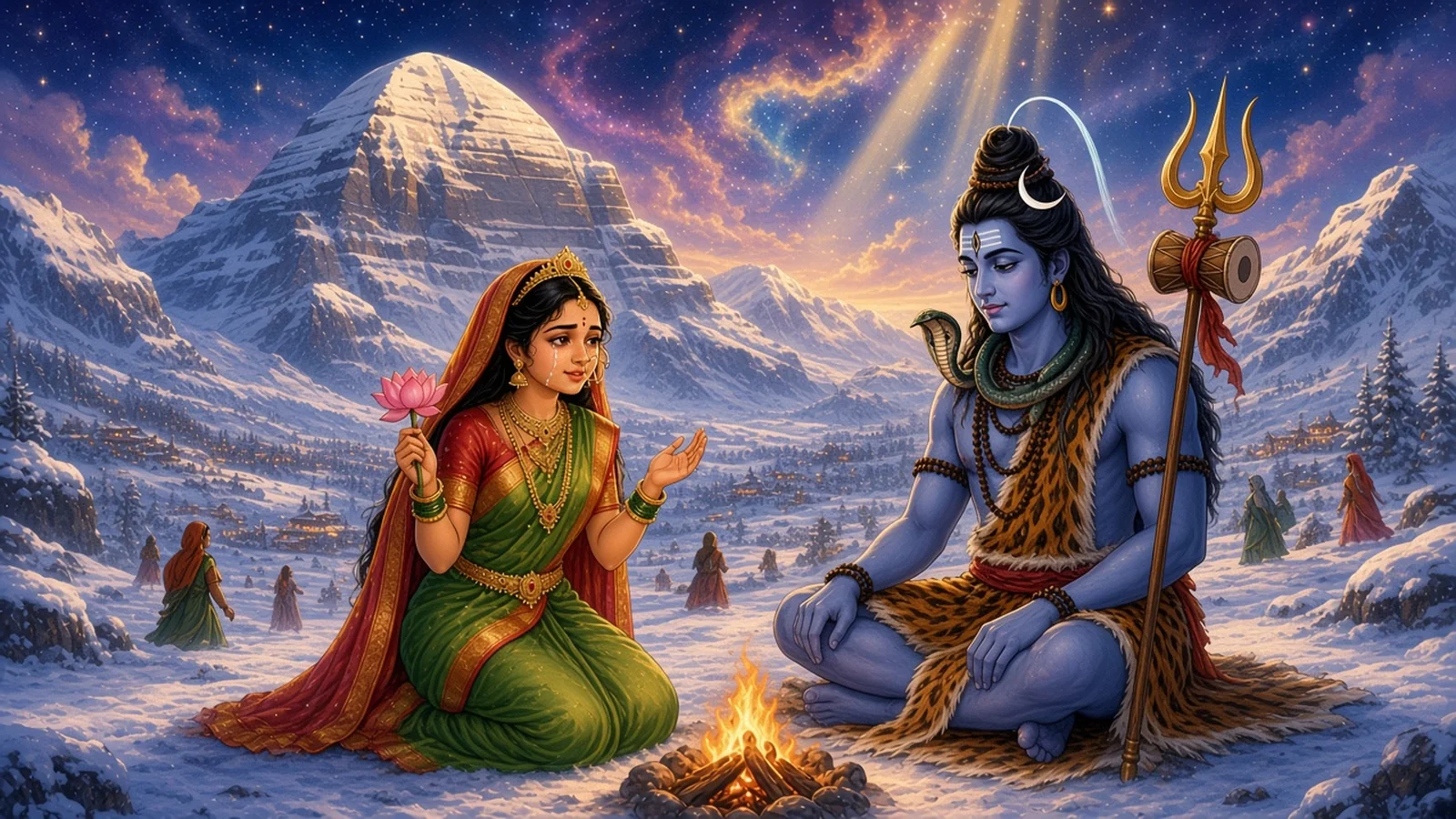
It was the Treta Yuga, the old man said, long after the churning of the ocean. Shiva had drunk the poison that rose from the milk to save the three worlds, and it had stopped in his throat and turned it blue. But stopping is not the same as ending. The poison stayed. It burned in him, and the god of the mountain, who had swallowed the world's fire for everyone else, sat with it alone.
Ravana heard of it in Lanka. He was the greatest devotee Shiva ever had, a man who would cut off his own heads for his god, and he could not bear it.
"What cools fire?" he asked.
"Water," said his ministers.
"Which water?"
"Ganga's, lord. She came down from heaven through his own hair. If any water reaches him, it is hers."
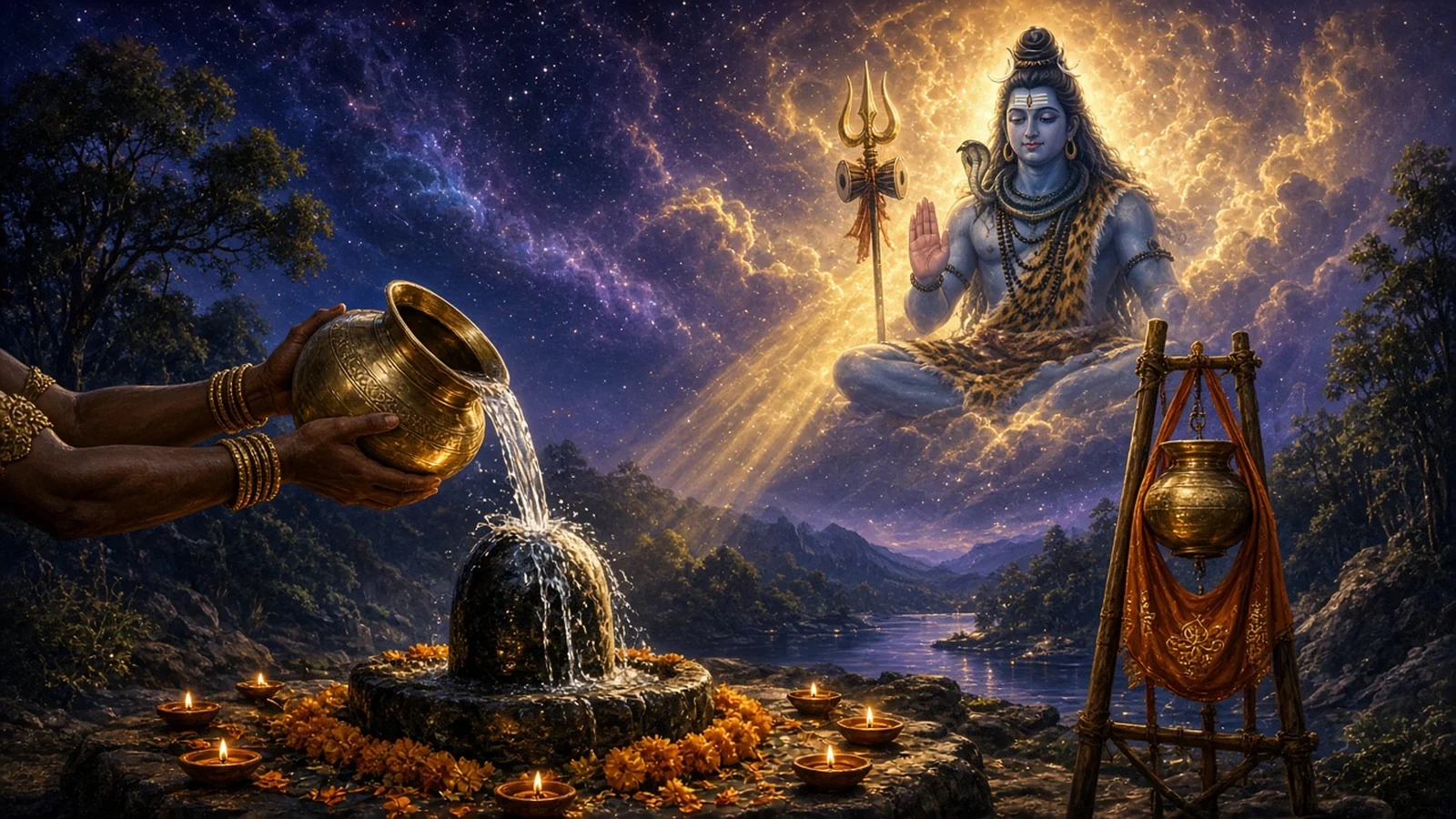
So the king of Lanka went north. At the Ganga, by Haridwar, he filled two pots, tied them to the ends of a pole, put the pole across his shoulders, and walked. He walked through the forest country between the rivers until he came to this place above the Hindon. There he set up a linga with his own hands. Then he lifted the pots and poured the river over it.
"And the burning stopped?" asked the boy.
"It eased," said the old man. "That is why we pour. Ravana did it once, in the Treta Yuga, and the god was soothed. We do it every year, in the rains, because every year the poison is still there."
The boy looked down at his own pots, sealed with clay at Har ki Pauri six days before.
"I didn't think Ravana would be in it," he said.
"Why not? He knew Shiva better than the gods did. He won Shiva's own linga once and lost it at Deoghar, and people tell that story too. Here he is the one who started the walk."
Before four in the morning the temple's flag was worshipped and the bells began, and the queue moved at last. When the boy reached the linga and broke the seal and tipped the water out, the old man was no longer behind him. He had gone home to sleep. But the boy remembered whose road he had been walking on.
As the temple's legend and the road tell it: Parashurama and Shravan Kumar
Pura Mahadev and the Sarayu · 2 min read
The temple has a second name, Parashurameshwar, and a second answer. In its legend this was once the Kajri forest, where the sage Jamadagni lived with his wife Renuka. Every day she shaped a pot of clay, filled it at the Hindon and poured it on Shiva. One day King Sahasrabahu of Hastinapur came to the hermitage, failed to take its wish-giving cow, and carried Renuka off instead. When she came back, her husband sent her away as unclean and told his sons to kill her. Three refused. The fourth, Parashurama, obeyed.
Then the son was sorry. He sat in penance here and set up a linga, and Shiva was pleased with him, brought his mother back to life and gave him the axe that made his name. With it, the legend says, he killed Sahasrabahu and cleared the earth of kings twenty-one times, and he built a temple over his linga. The temple fell and was forgotten, until the queen of Landhaura passed by and her elephant would not move, and the linga was dug out where it stood.
Many say it was Parashurama who first carried the Ganga to it. He brought the water from Garhmukteshwar, from the ghat now called Brajghat, to consecrate the linga at Pura, and some add that he did it every Monday of Shravana. That is why they call him the first kanwariya.
The road gives a third name, and it is not a god's or a king's. Shravan Kumar's parents were old and blind and wanted to see the holy places, so he tied two baskets to the ends of a bamboo pole, sat one parent in each, put the pole across his shoulder and carried them. The kanwariyas say their pole is his, and the two pots his two parents, carried with the same care.
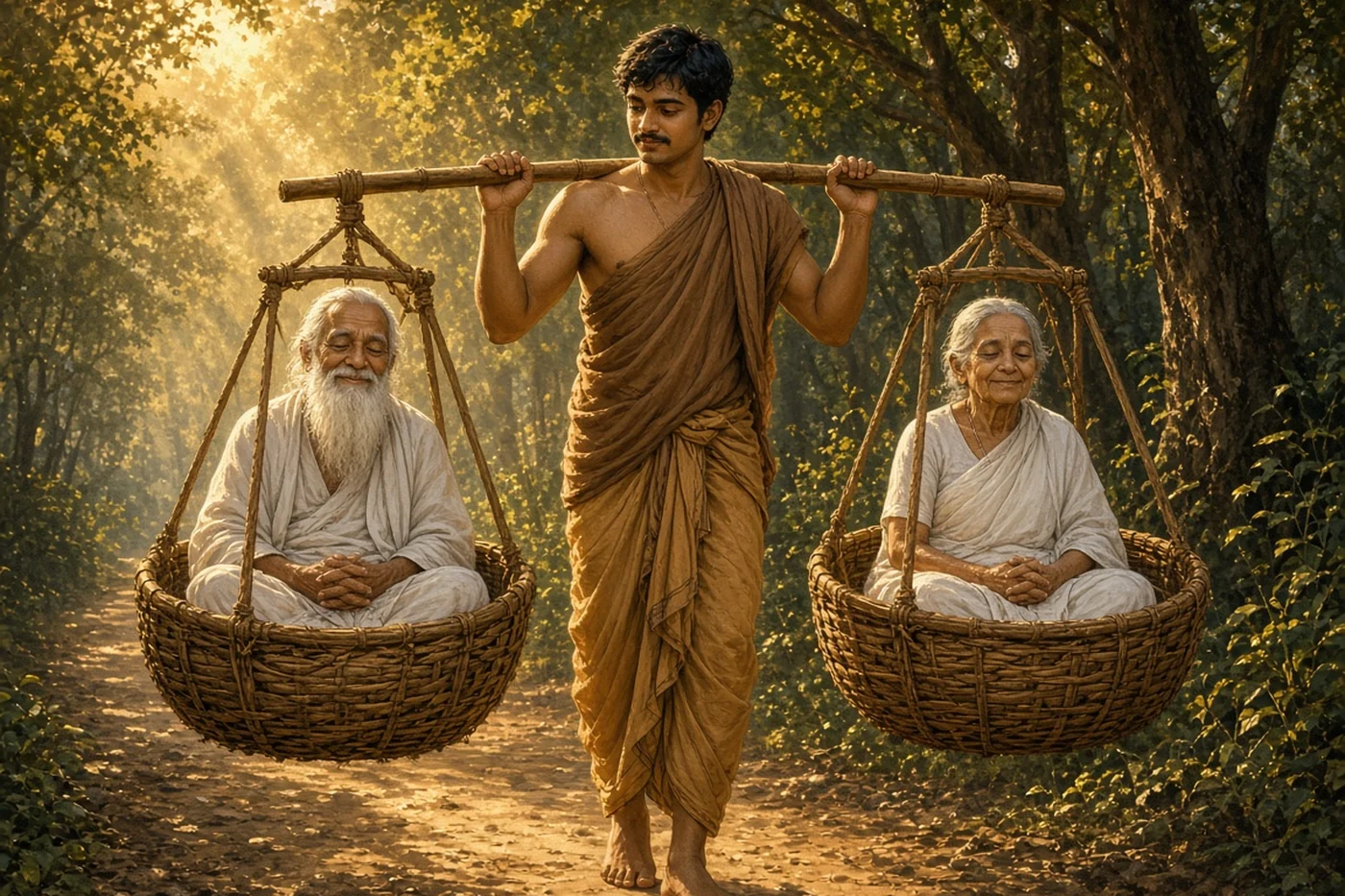
The oldest telling of that boy is in the Ramayana, and it ends at a river. In the rains a young prince named Dasharatha waited by the Sarayu at night to hunt, heard a sound like an elephant drinking, and loosed an arrow at it. It was a young ascetic filling a pitcher for his blind parents. He died on the bank, and the king carried the water to them himself.