Festival · The night a hill becomes a lamp, and every Tamil doorstep answers it
Karthigai Deepam
Karthigai Deepam is the oldest festival of lamps in the Tamil country, kept on the full moon of the month of Karthigai when the Krittika star rides with it, in late November or December. Every house sets out rows of clay lamps at dusk and shares pori and appam, and at Tiruvannamalai a copper cauldron of ghee is lit on the summit of Arunachala, the hill the Tamils say is Shiva's own pillar of fire, as the god comes out half man and half woman and lakhs walk the fourteen kilometres round the hill through the night. Kerala keeps the same star as Thrikarthika for the goddess, and the Telugu and Kannada lands as Karthika Pournami.
When is Karthigai Deepam in 2026? The Maha Deepam on the hill is Tuesday 24 November 2026. In 2027: Sunday 12 December 2027. The full moon of the Tamil month of Karthigai with the Krittika star, in late November or December; Tiruvannamalai's festival runs ten days to it.
Also calledKarthika DeepamThiruvannamalai DeepamMaha DeepamBharani DeepamKarthigai VilakkeeduThrikarthikaKarthika PournamiYanai Pandigai
In short
What is Karthigai Deepam?
The Tamil festival of lamps, kept on the full moon of the month of Karthigai when the Krittika star rides with it, in late November or December. Rows of clay lamps are lit at every doorstep, and at Tiruvannamalai a cauldron of ghee is lit on the summit of Arunachala.
When is Karthigai Deepam in 2026?
Tuesday 24 November 2026, with the Bharani Deepam before dawn and the Maha Deepam on the hill at about six in the evening. The ten-day festival at Tiruvannamalai would open with the flag about 15 November; the temple had not announced its 2026 schedule when this page was written. In 2027 it is Sunday 12 December.
Why is a lamp lit on the hill at Tiruvannamalai?
The Tamil tradition says Arunachala is the pillar of fire that Brahma and Vishnu could not measure, cooled into a hill, and that Shiva promised to show it as fire once a year. The same night the temple remembers Parvati taken back into his left half, and brings out the half-woman image as the summit is lit.
What is the Bharani Deepam?
The first flame of the Deepam day, lit before the sanctum at about four in the morning, five lamps from one, read as the five elements coming out of Shiva, which are joined into one again at dusk to light the hill. Homes light a small Bharani Deepam the same morning.
What is eaten and lit at home on Karthigai Deepam?
Rows of agal vilakku, clay lamps with cotton wicks in sesame oil or ghee, on the threshold and walls at dusk, some houses counting twenty-seven; pori, puffed rice tossed in jaggery, with appam and adai, shared with the neighbours.
Next, in 2026Tuesday 24 November 2026
Prime godArunachaleswarar, the hill of fire
with 4 more
WhereTamil Nadu and Puducherry, Kerala, Andhra Pradesh, Telangana and Karnataka, and the Tamils of Sri Lanka, Malaysia, Singapore and the world
How longOne evening at home; ten days at Tiruvannamalai, the flag going up nine days before the Deepam
The full moon of the Tamil month of Karthigai with the Krittika star, in late November or December; Tiruvannamalai's festival runs ten days to it
Why it is kept
Karthigai Deepam is the night the Tamil country answers a hill with its doorsteps. On the full moon of Karthigai, when the Krittika cluster rises with the moon, a copper cauldron of ghee is lit on the bare summit of Arunachala at Tiruvannamalai and seen across the plain, and from Chennai to Jaffna every house sets a row of small clay lamps on its threshold at the same hour. It is older than Diwali in the south, the Sangam poets sang it, and it has three reasons at once.
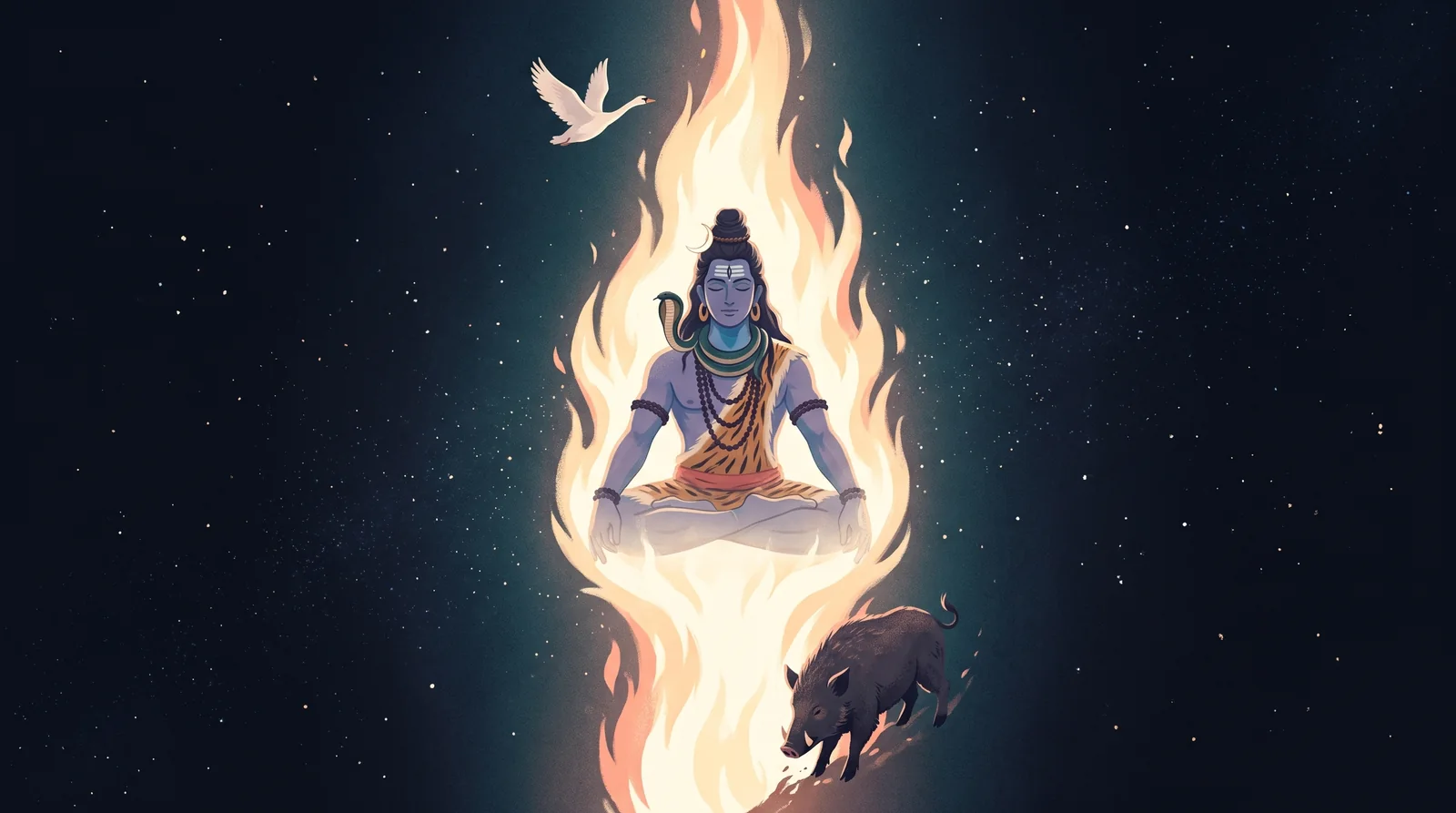
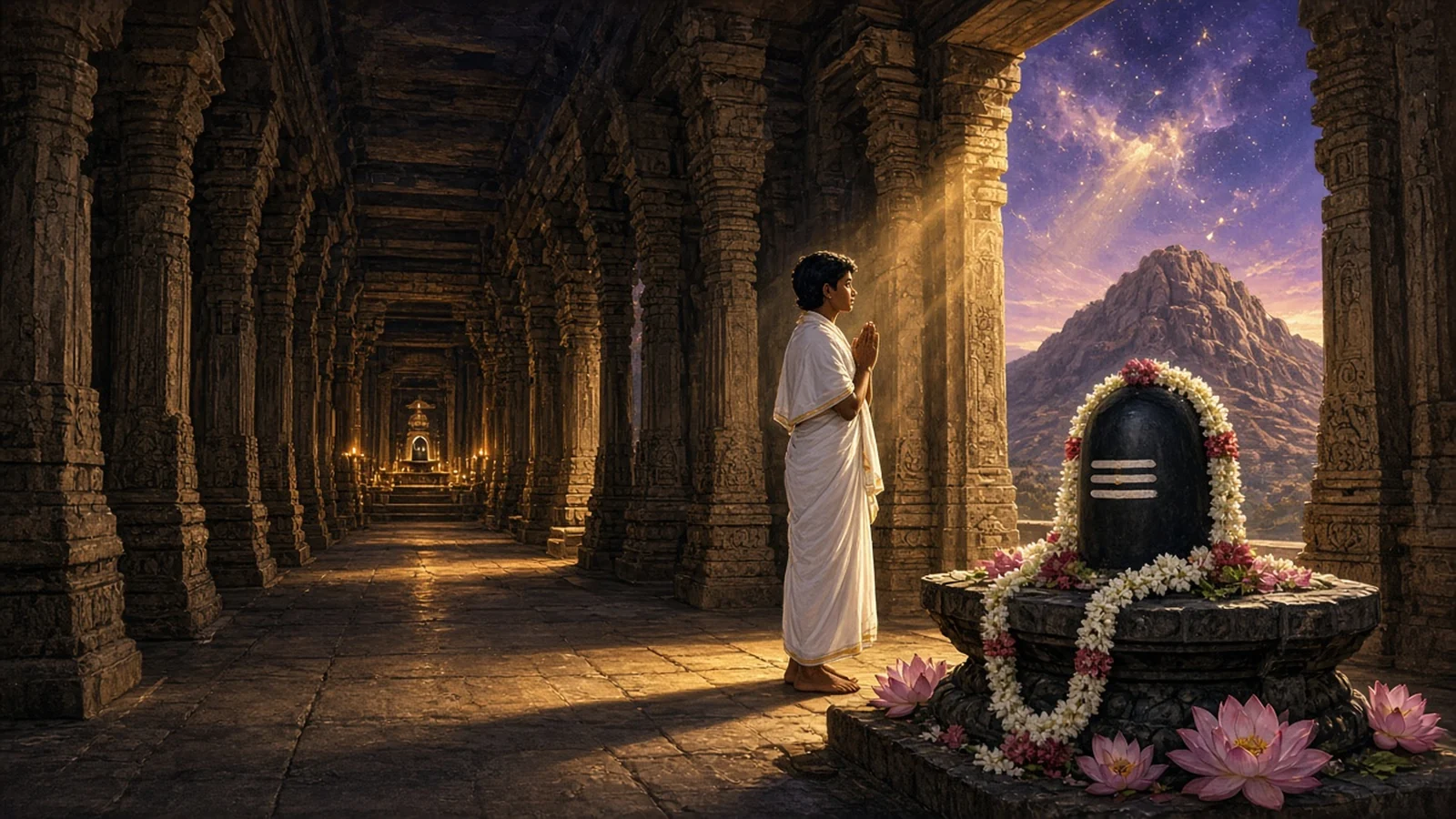
The first reason is the hill. Tiruvannamalai says that the pillar of fire that stood between Brahma and Vishnu when they quarrelled, the one with no top and no bottom, did not go out: it cooled into Arunachala so that people could live beside it, and Shiva promised to let it be seen as fire once a year. The Lore tells the quarrel in The Pillar of Fire and the Deepam evening in The Lamp on the Hill. The temple adds a second reason the same night: Parvati, sent to do penance at the hill's foot after she covered her husband's eyes, was taken back on this full moon, and the Skanda Purana ends her story with the light she asked to be shown every year; the temple goes further and shows her taken into his left half, in The Hill of Fire.
The pillar of fire with no top or bottom: Brahma as a swan flies up and Vishnu as a boar digs down
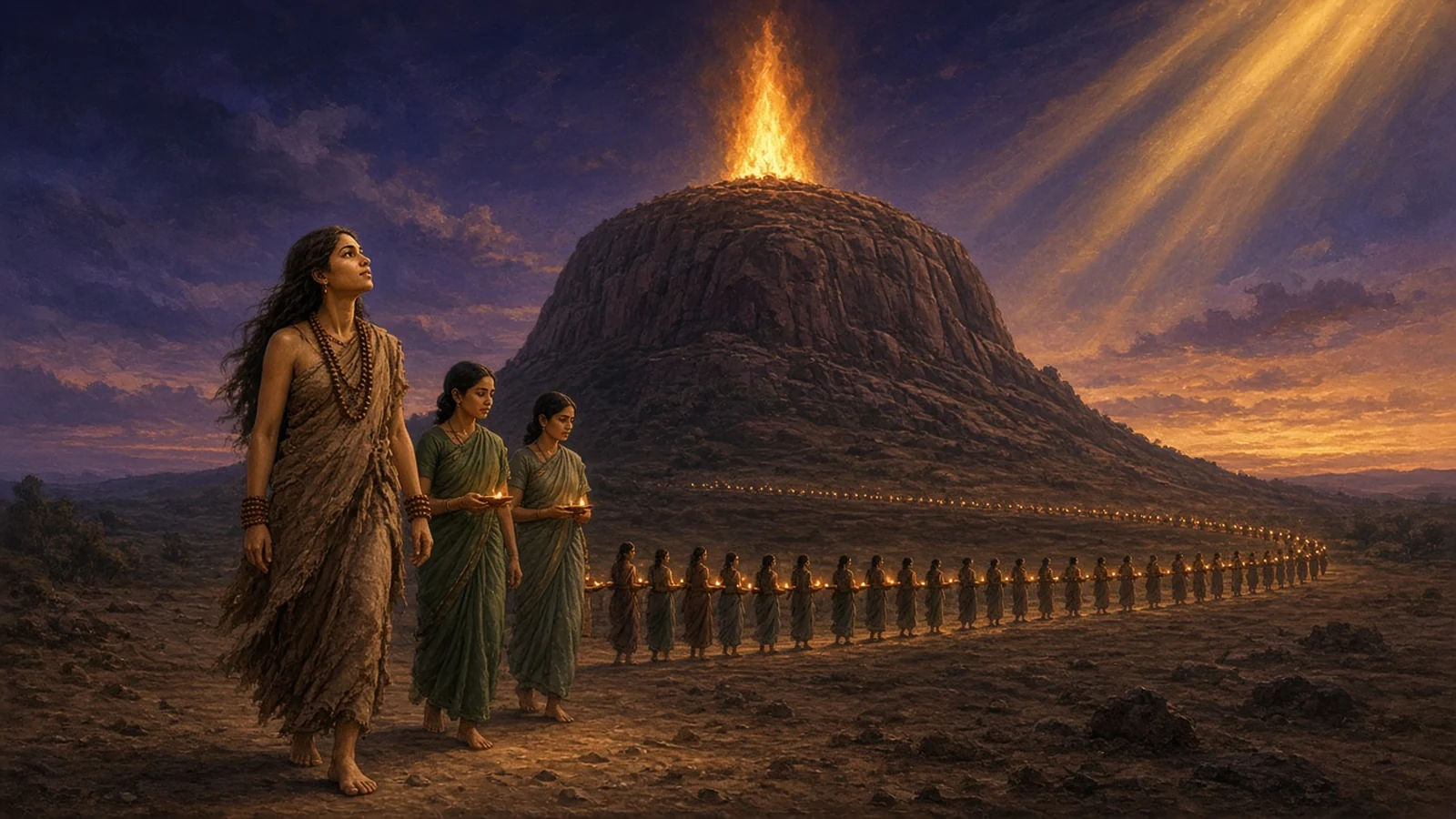
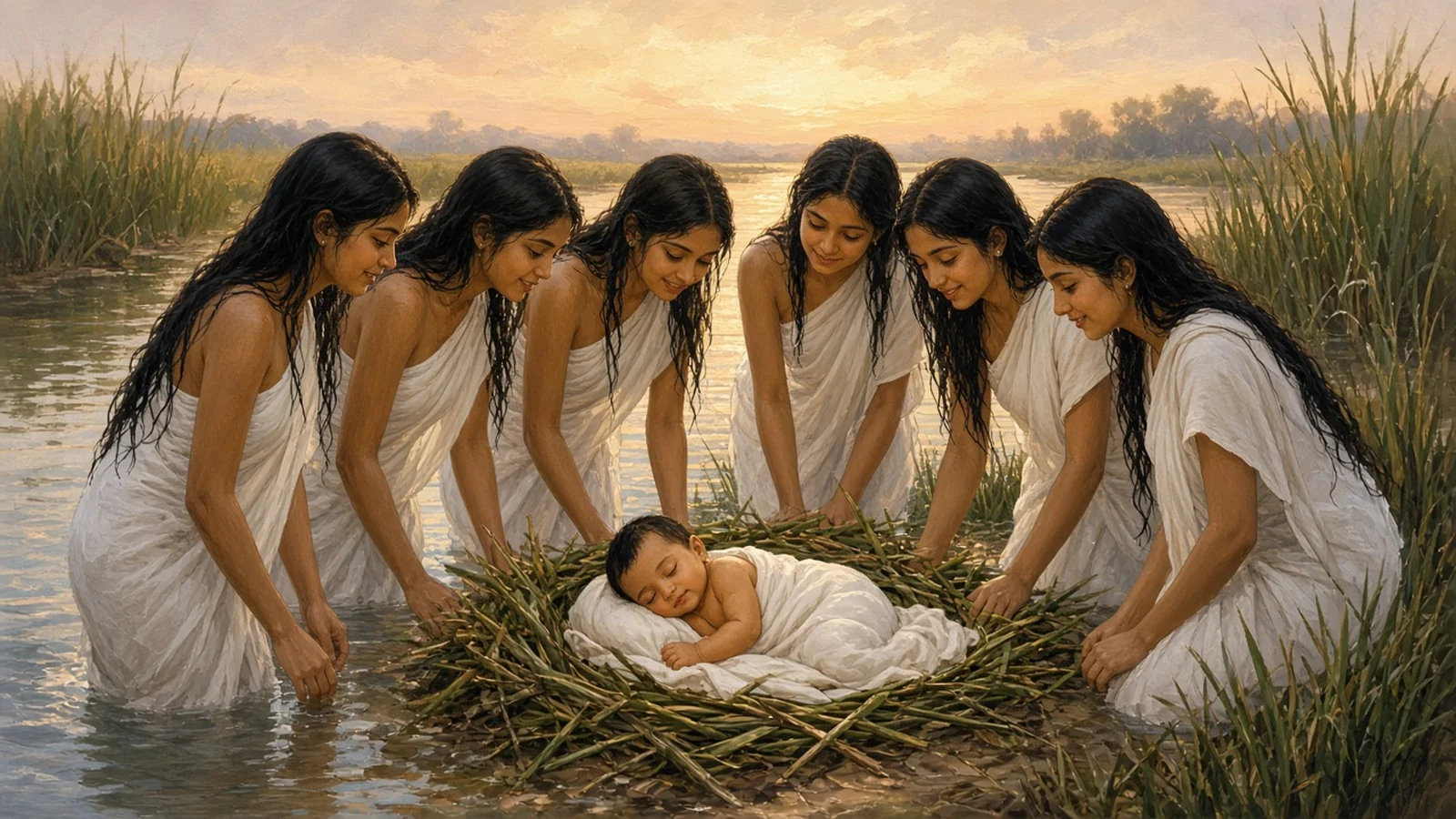
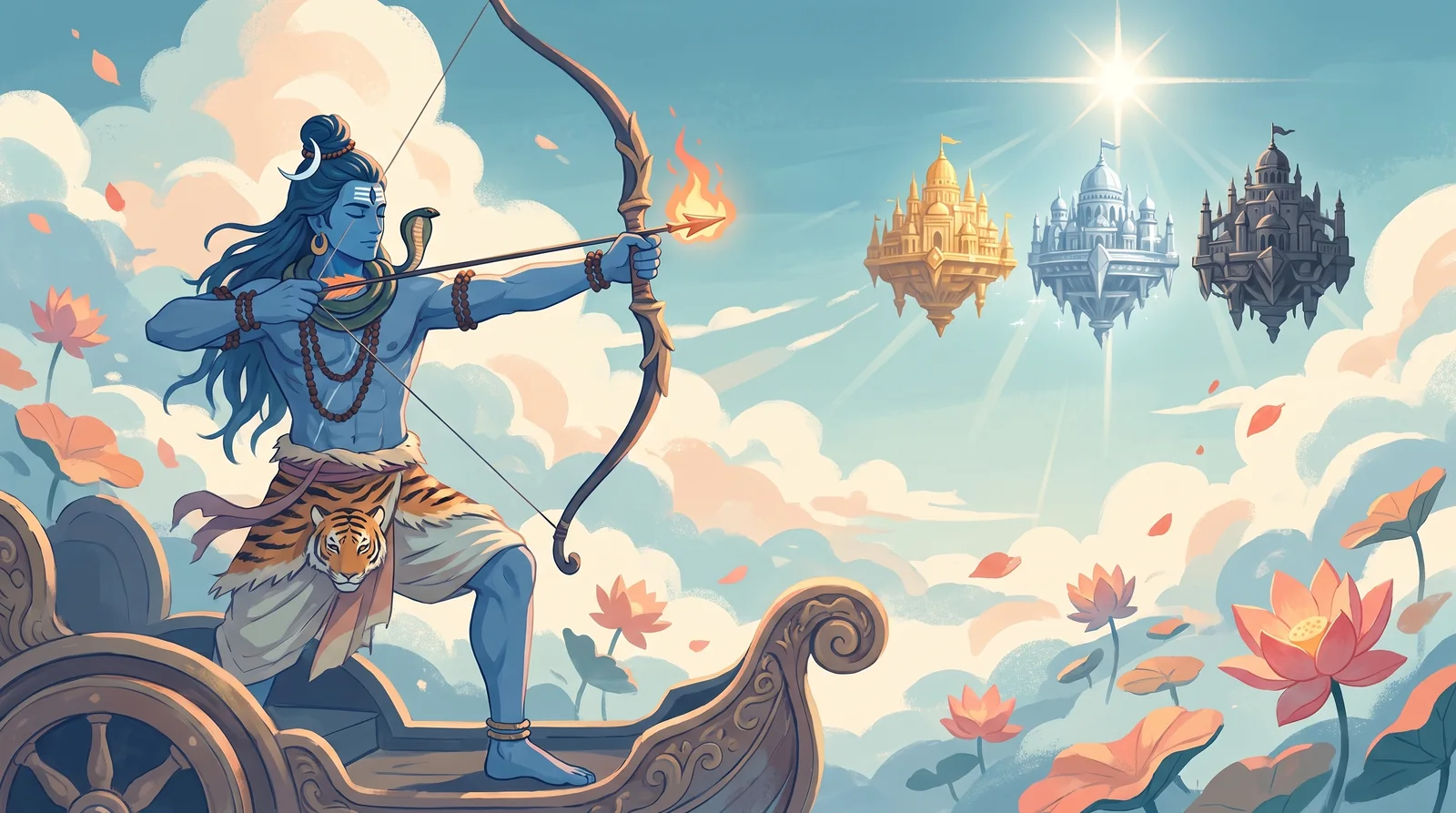
The third reason is Murugan's. The star of the night, the Krittika, is the six maidens who nursed the six sparks of Shiva on the reed pond until Parvati gathered them into one six-faced boy, told in The Child with Six Mothers. He is Karthikeya for the star, and for his devotees the lamps are lit for his birth. The same full moon is Kartik Purnima in the north, kept for the three cities burned with one arrow; the north's night has its own page.
Six Krittika maidens tend six babies on lotuses in the reed pond under their six stars
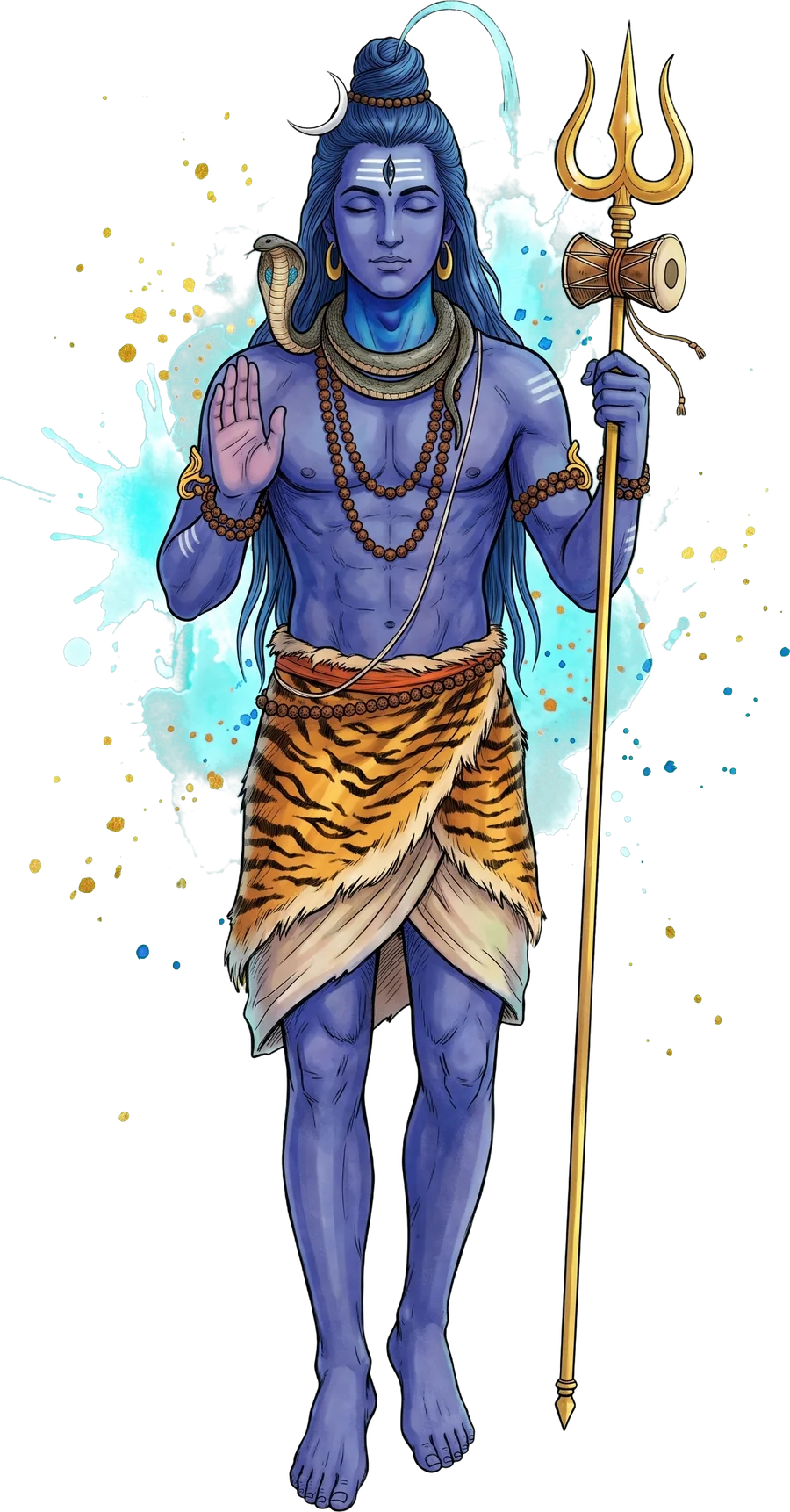
The god of the night, and the hill itself. The Tamil tradition says the pillar of fire that Brahma and Vishnu could not measure cooled into Arunachala, and that once a year he lets it be seen as fire again. The Bharani Deepam before his sanctum at dawn and the Maha Deepam on his summit at dusk are both his.
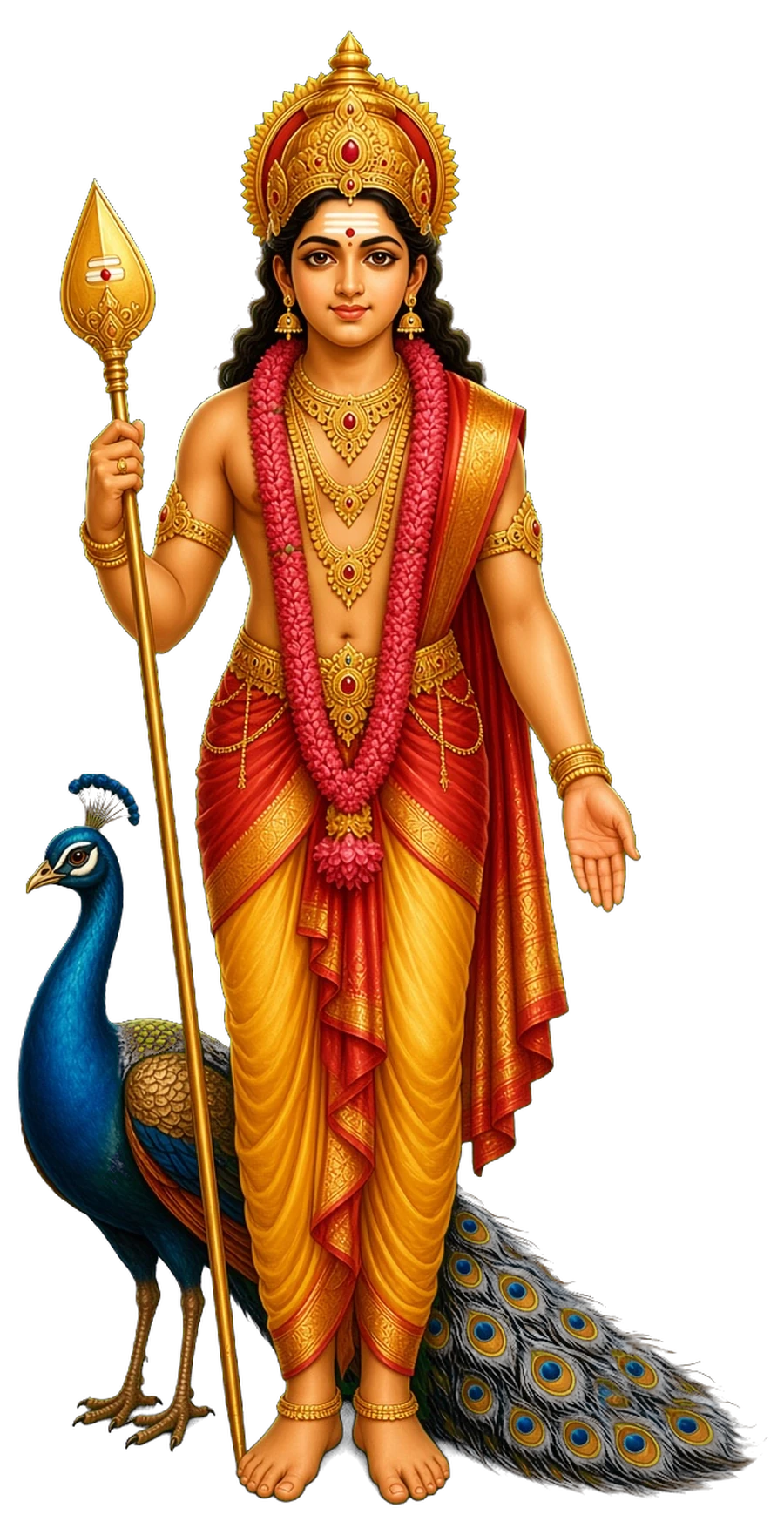
The six-faced boy nursed by the six stars of the Karthigai cluster, which gives the month its name and the god his. For his devotees the lamps are lit for his birth, and the Murugan hill temples light their own Deepam the same evening.
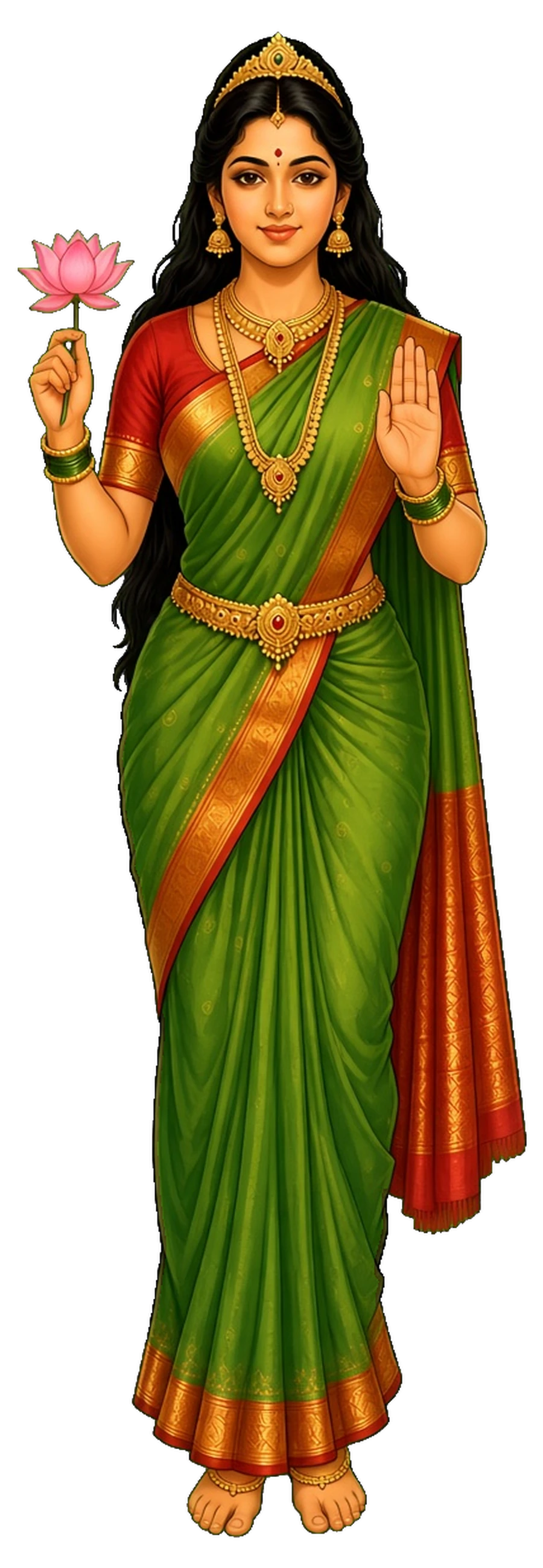
The goddess of Tiruvannamalai, who did penance at the hill's foot and was taken back by Shiva on this full moon; the temple shows her taken into his left half, and brings the half-woman image out as the hill is lit. Kerala's Thrikarthika is her day.
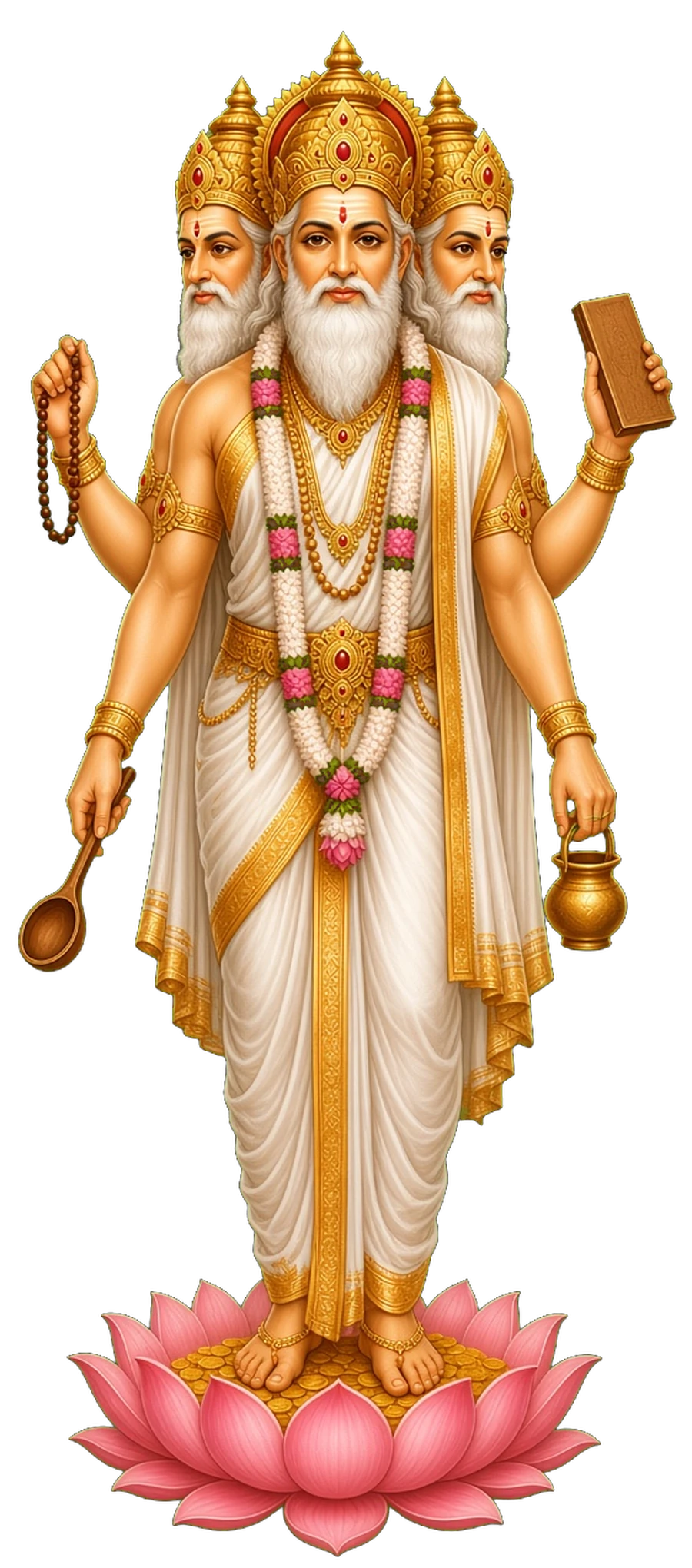
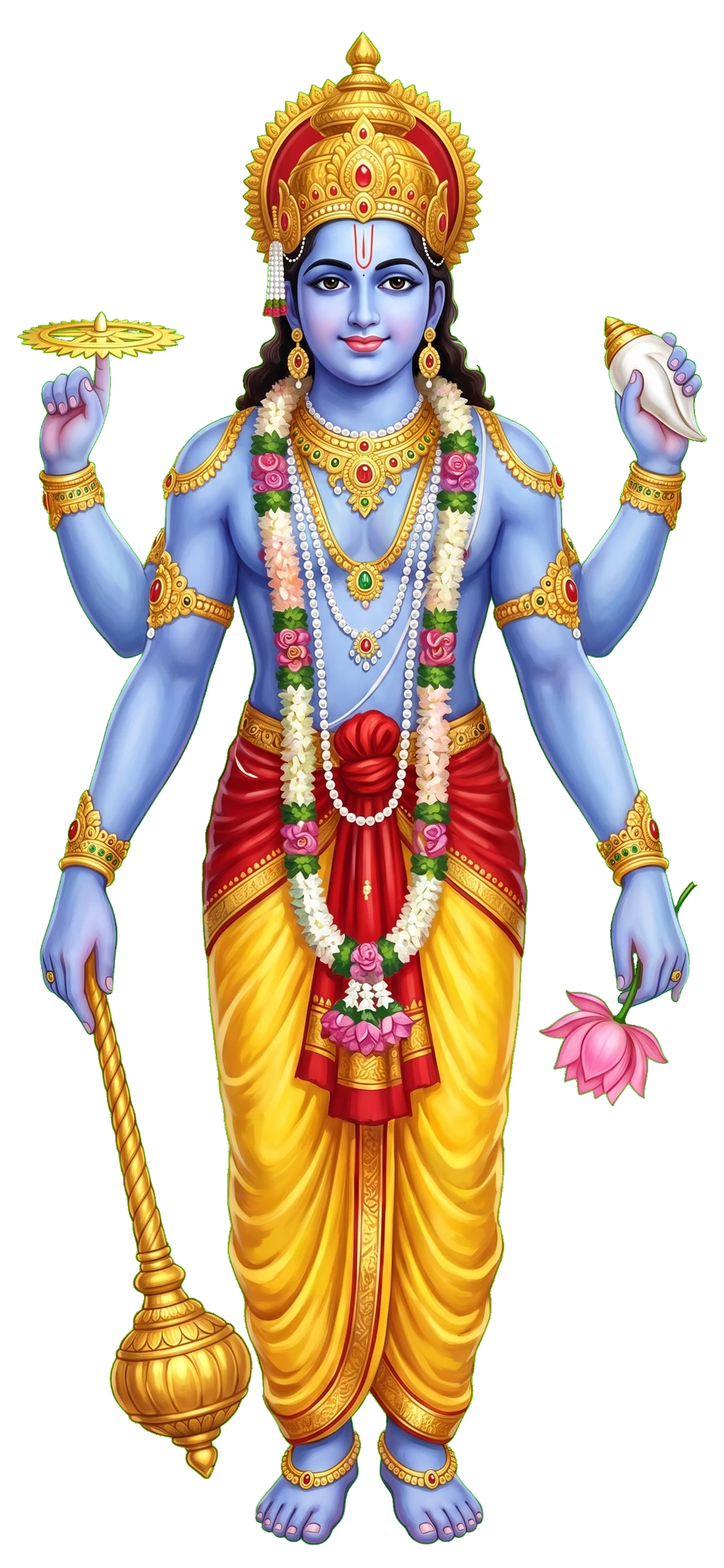
The seeker who became a swan and found no top to the pillar, and lied about it. The Deepam is the pillar burning again, so he is in every telling of the night.
The seeker who became a boar and found no bottom, and said so. In the Vaishnava houses of the Tamil country the same moon is Vishnu Deepam and the Yanai Pandigai of the clay elephant.
Ten days to the Maha Deepam
1
The flag goes up, and nine nights of mounts
Day one of the ten, about nine days before the Krittika full moon · Sunday 15 November 2026
Dwajarohanamthe Brahmotsavam
At Tiruvannamalai the festival opens with the flag hoisted on the golden mast of the Arunachaleswarar temple, and from then on the god and his family come out every night on a different mount: the silver vahana, Indra's vimana, the lion, the wish-granting cow, the silver bull as tall as a house, the sixty-three Nayanmar saints in procession, the silver car, the great wooden car on the seventh day, the horse, and the Kailasa mount on the ninth night. The town fills day by day; the temple expects tens of lakhs across the ten days. The 2026 schedule had not been announced when this page was written, and the flag day given here is the expected one.
The festival images of the god and goddess ride the silver bull past the golden flagstaff at night
The Deepam day, about four in the morning, before the sanctum · Tuesday 24 November 2026
the first flame
Before sunrise the priests light a single flame before the sanctum and from it five lamps, read as the five elements coming out of the one god, and the crowd that has waited through the night says his name. At home across Tamil Nadu a small lamp is lit at the same hour. From morning the men of the fishermen's clan who hold the right carry the copper cauldron, the ghee, the camphor and the cloth for the wick up the bare rock to the summit, 2,668 feet above the temple.
Before dawn a priest lights five brass lamps from one flame before the sanctum
The Deepam day, about six in the evening, as the full moon rises · Tuesday 24 November 2026
Thiruvannamalai Deepamthe Ardhanarishvara darshan
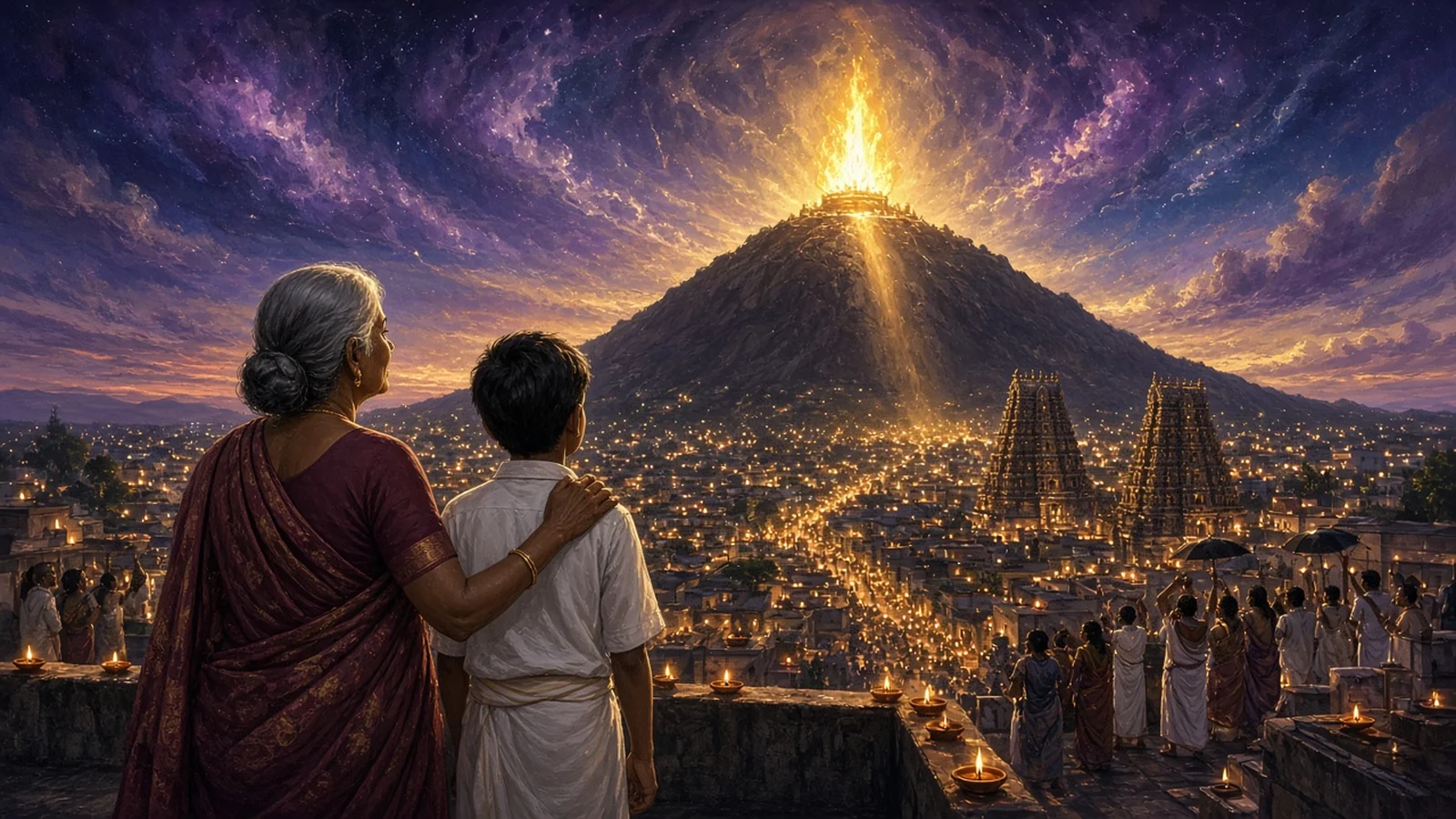
The five lamps of the morning are made one again. The sanctum opens and the god comes out as Ardhanarishvara, his right half himself and his left half Unnamulai, and as the sanctum's flame is carried to the flagstaff the wick on the summit is lit. The whole town cries "Annamalaiyarukku Arohara", the lamps of every house below the hill are lit in answer, and the flame on the hilltop, seen across the plain, burns for days. Then the girivalam begins: fourteen kilometres round the hill, barefoot, the hill on the right, past the eight lingams of the directions, walked by lakhs through the night. The flag comes down, and the float festival follows on the tank.
The half-man, half-woman image comes out at dusk as the flame is lit on the summit of the hill
The Karthigai full moon with the Krittika star, after sunset · Tuesday 24 November 2026
Karthigai VilakkeeduThrikarthikaKarthika Pournami
Across Tamil Nadu the house is cleaned and a kolam drawn in the morning, pori is tossed in jaggery and appam and adai are fried, and at dusk rows of agal vilakku, shallow clay lamps with cotton wicks in sesame oil or ghee, are set on the threshold, the compound wall, the windowsills and the well, some houses counting twenty-seven for the twenty-seven stars. Children carry the pori to the neighbours. Kerala lights the same lamps on its steps and verandahs as Thrikarthika for the goddess, the Murugan hills light their own Deepam, and in Andhra, Telangana and Karnataka the night is Karthika Pournami, with lamps on the tanks and the fire arch at Srisailam.
Rows of clay lamps on the threshold, the wall and the windowsills of a Tamil house at dusk
The greatest of the Arunachaleswarar temple's festivals, on the Chola inscriptions already and ten days long since the last century. The flag, nine nights of mounts and the wooden car, the Bharani Deepam before the sanctum at four in the morning, the cauldron carried up by the fishermen's clan, the Ardhanarishvara brought out at six as the summit is lit, the cry of "Arohara", the lamp that burns for days, and the girivalam of fourteen kilometres walked by lakhs through the night. The wire reports of recent years count a five-foot copper cauldron of 175 kilos, 600 kilos of ghee, 10 kilos of camphor and 1,500 metres of cloth; the old-timers say three tons of ghee. The float festival on the tank and a Sunday round of the hill close the ten days.
Tamil Nadu's homesKarthigai Vilakkeedu
The oldest Tamil festival of lamps, sung in the Sangam anthologies. Rows of agal vilakku on every threshold and wall at dusk, a small Bharani Deepam at home that morning, pori in jaggery, appam and adai, and the clay elephants of Yanai Pandigai in the Vaishnava houses, dressed and fed for three days and then set in the pond. In the temples a tall bundle of palm leaves and banana stalks, the sokkapanai, is set alight for the pillar of fire. The month has three Deepams on three days, the Murugan temples keeping theirs on the Krittika star, the Vishnu temples on Rohini, and every other temple and house on the full moon.
Tiruchengode and PalaniThe other hills
At Tiruchengode in Namakkal district the main image itself is half woman, Shiva's right and Parvati's left in one six-foot body on a hill of 1,156 steps, and the Deepam is kept there with its own procession. Palani and Thiruparankundram, the Murugan hills, light a lamp on their summits for the boy of the six stars, and villages round Madurai light their own small hills, such as Perumal Malai, without any priest at all.
KeralaThrikarthika
The Karthika star of Vrischikam is the goddess's day. At dusk the nilavilakku is lit in the prayer room and small clay lamps line the steps, the verandah, the compound wall, the cowshed and the well; the Bhagavathi temples hold their Karthika Vilakku, and at Kumaranalloor near Kottayam, where the goddess is said to have come as a light from Madurai to a temple meant for Kumara, the gods of Udayanapuram and Thrissur are worshipped on their own southern walls, where the legend says they climbed up to watch her go by.
Andhra Pradesh, Telangana and KarnatakaKarthika Pournami
The same full moon ends the holy month of Karthika for the Telugu and Kannada lands, with a dawn bath in the river, lamps floated on the tanks and lit in the temple courtyards, and at Srisailam the Jvalathoranam, a fire arch on the full-moon night which the pilgrims say cleans whoever sees it. Karnataka also keeps the clay elephant of Yanai Pandigai.
The north on the same moonKartik Purnima and Dev Deepawali
In the Hindi lands this is Kartik Purnima, the night Shiva burned the three cities, and at Varanasi the ghats are lit as Dev Deepawali; that night has its own page.
Sri Lanka and the diasporaKarthikai Vilakkeedu
The Tamils of Jaffna, Batticaloa and the hill country light the lamps and the temple fires at Nallur and the other kovils, and the day took on a second meaning in the war years, when it fell beside the day of remembrance and lamps were sometimes forbidden. Tamil temples in Malaysia, Singapore, Mauritius, London and Toronto light their rows of lamps the same evening.
The Tamil Shaivas and the Murugan devoteesOne lamp, two reasons
The Shaiva reading is the pillar of fire and the goddess taken back into the god; the Murugan reading is the birth of the six-faced boy under the Krittika star. Nobody chooses. The Tevaram saints Sambandar and Appar sang the hill and its goddess, and Manikkavacakar composed his Tiruvempavai at Tiruvannamalai.
The Vaishnava housesVishnu Deepam and the clay elephant
The Vaishnava families of the Tamil country keep the full moon as Vishnu Deepam, with their lamps and the Yanai Pandigai, the clay elephant made and dressed for three days and immersed, and the Vishnu temples keep their own Deepam on the Rohini star.
The Ayyappa pilgrimsThe Karthigai mala
The first of Karthigai, in the middle of November, is the day the Ayyappa pilgrims of Tamil Nadu and Kerala put on the black clothes and the mala for the forty-one days to Sabarimala, whose season opens the same week; the Deepam falls inside their vow, and many light their lamps in the pilgrim's dress.
How it is kept
At Tiruvannamalai the festival is ten days. The flag goes up on the golden mast, and every night the god comes out on another mount, the lion, the wish-cow, the silver bull, the wooden car that fills the street, until the ninth night's Kailasa mount. On the tenth morning, about four, the Bharani Deepam is lit before the sanctum, five lamps from one flame, and from sunrise the fishermen's clan who hold the right carry the five-foot cauldron and the pots of ghee up the rock. At six, as the full moon rises, the five lamps are made one, the Ardhanarishvara image is brought out, the sanctum's flame reaches the flagstaff and the summit is lit. The town cries "Annamalaiyarukku Arohara", the lamps of every house below answer, and the girivalam begins, fourteen kilometres barefoot round the hill through the night, which lakhs walk, in the rain as often as not. The flame burns for days; the float festival follows on the tank.
Barefoot pilgrims walk round Arunachala through the night under the lamp on its summit
At home the house is cleaned and the kolam drawn in the morning, the pori is tossed in hot jaggery and pressed into balls, the appam and adai are fried, and at dusk the agal vilakku are filled and set out on the threshold, the compound wall, the windowsills and the well, with the first lamps before the god's picture and the rest handed down the line to the children. Kerala does the same with its nilavilakku inside and its chirathu on the steps; the Vaishnava houses add the clay elephant; the Murugan hills light their own Deepam; the Telugu lands bathe at dawn and float lamps on the tanks.
Pori tossed in jaggery and pressed into balls, appam frying, and the first lamp lit at the shrine
In the old texts
The lamps are the oldest part. Readers of the Sangam anthologies point to the Akananuru for lamps lit on the evening of the Karthigai full moon and for a line likening them to the red flowers of the silk-cotton tree, to the Natrinai for a lamp set on a war drum at dusk under the Karthigai star, and to the Paripadal for the star itself; the later Jivakachintamani has lamps burning on the top of a hill, and the Kar Narpadu names the night. The verse numbers vary from reader to reader and are given here as the readers give them.
The hill's book is the Arunachala Mahatmya inside the Skanda Purana: the pillar of fire, Parvati's penance, and in its twelfth chapter the Krittika full moon on which she asked for the yearly light and was answered. The Kanda Puranam of Kachiyappa Sivachariar gives the Tamil birth of Murugan under the six stars. The Tevaram saints Sambandar and Appar each sang ten verses to the god and goddess of Tiruvannamalai, Manikkavacakar's Tiruvempavai was composed there, and in 1915 Ramana Maharshi added a hundred and eight verses of his own to the hill, with his reading of the Deepam as the light within; his coming to the hill, and his own translation of the Mahatmya, are told in The Hill That Called Him.
Where this page comes from. Written by Devalok from the Karthigai Deepam of the Arunachaleswarar temple as the temple, the district and the PTI reports of 2025 keep it, the Skanda Purana's Arunachala Mahatmya, the Kanda Puranam reading of the day, the Sangam references and the household customs of the Tamil country, the Thrikarthika of Kerala, the Karthika Pournami of the Telugu lands, the life of Ramana Maharshi as his ashram tells it, and the Drik Panchang calendar for 2026 and 2027, as recorded in the Devalok Lore. Our own words throughout.