As the ashram tells his coming
South India · Tiruchuzhi, Madurai and Tiruvannamalai, 1879 to 1950 · 4 min read
He was born Venkataraman, in the temple town of Tiruchuzhi south of Madurai, on the night of 29 December 1879, so late that the family wrote down the 30th. His father died when the boy was twelve, and he was sent to an uncle's house in Madurai to finish school.
In November 1895 an elderly relative called at the house.
"Where have you come from?" the boy asked.
"From Arunachala."
The word went through him. He knew it only as a name in a hymn, not as a place with a railway station. "Where is that?"
"What, you do not know Tiruvannamalai? That is Arunachala."
Soon after he found the Periyapuranam, the lives of the sixty-three Shaiva saints, and could not put it down. Then, one afternoon in the middle of July 1896, alone upstairs, he was taken by a fear of death so sharp that he lay down on the floor, held his breath, stiffened his limbs and asked himself what exactly was about to die. The body would be carried out and burned. But the thing that knew the body was burning was not the body, and it did not stop. He got up a different person.
Six weeks later his elder brother scolded him for sitting with his eyes shut over a grammar book. "What use are books to someone like you?" The boy heard it as an instruction. On 29 August 1896 he took three rupees from the five meant for a college fee, left a note saying he had gone in search of his Father and that no one need grieve, and went to the station.
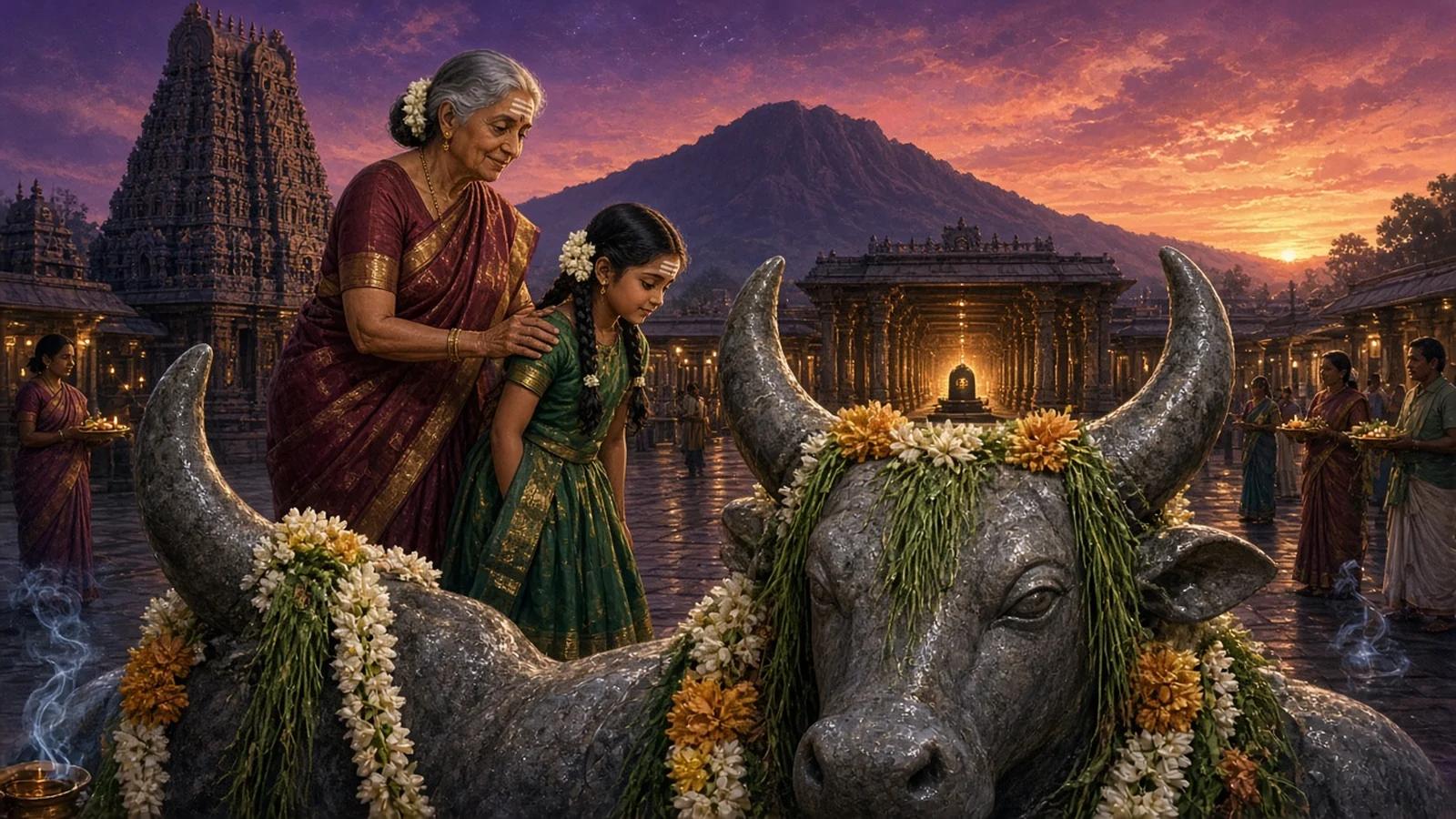
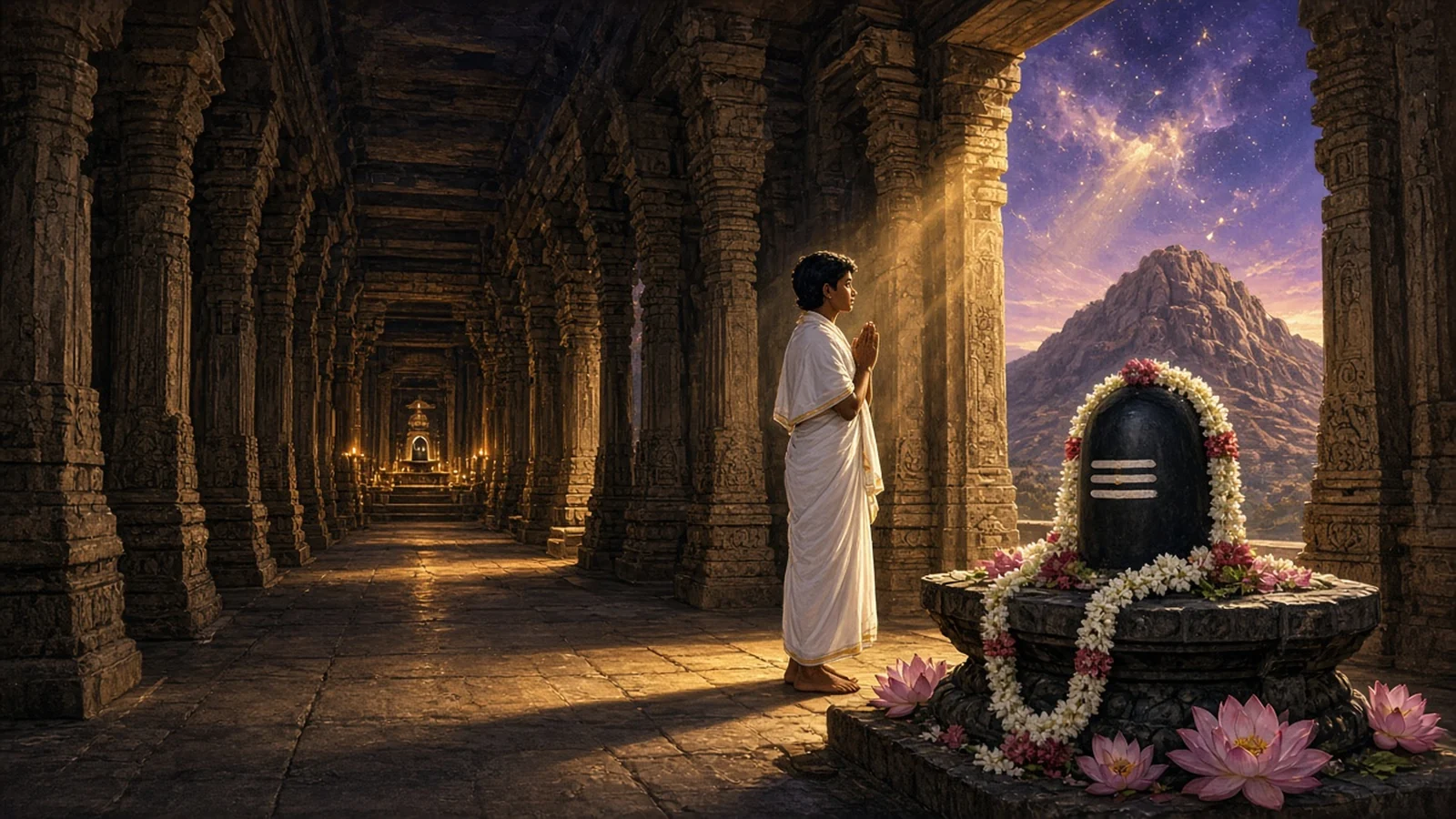
The money ran out on the way. He walked, pawned his gold earrings for the last fare, and on the morning of 1 September 1896 got down at Tiruvannamalai and went straight to the great temple. The gates stood open and nobody was about. He walked through court after court to the sanctum and stood before the linga.
"I have come," he said to it, "at your call."
He had his head shaved at the tank, threw the last coins into the water, and never again owned anything.
For months he sat in the thousand-pillared hall. Boys threw stones at the silent youth, so he went down into the Patala Lingam, a damp vault under the hall, and sat in the dark while insects ate at his thighs and he did not notice. Seshadri Swami, the town's half-mad holy man, chased the boys off. "There is a young swami in that pit," he told people, and devotees carried the boy out. After that somebody always fed him.
In 1899 he moved up onto the hill itself, to the Virupaksha cave, where he lived for seventeen years and where people first called him Ramana. His mother came to plead with him to come home and got a note in reply: what is to happen will happen, the wise are quiet. She came back in 1916 to stay, and they moved higher, to Skandashram.
By then he had written a hundred and eight verses to the hill with the refrain Arunachala Siva, calling the mountain a magnet that draws iron and will not let it go. When his mother died in 1922 he buried her at the hill's foot, walked down to her grave each day, and one day did not walk back up. The ashram grew around that grave. Asked once what was so special about the hill, he answered that Kashi is a place where Shiva lives; Arunachala is Shiva.
Every Karthigai he watched the Deepam. On 4 December 1949, already very ill, he sat on the north verandah facing the summit, and when the flame leapt up on the hill the ashram lit its own vessel of ghee below it, three fires in a triangle. The beacon, he had written, is a sign: drop the thought that you are the body, turn the mind in, sink it in the heart, and the light you see is the Self.
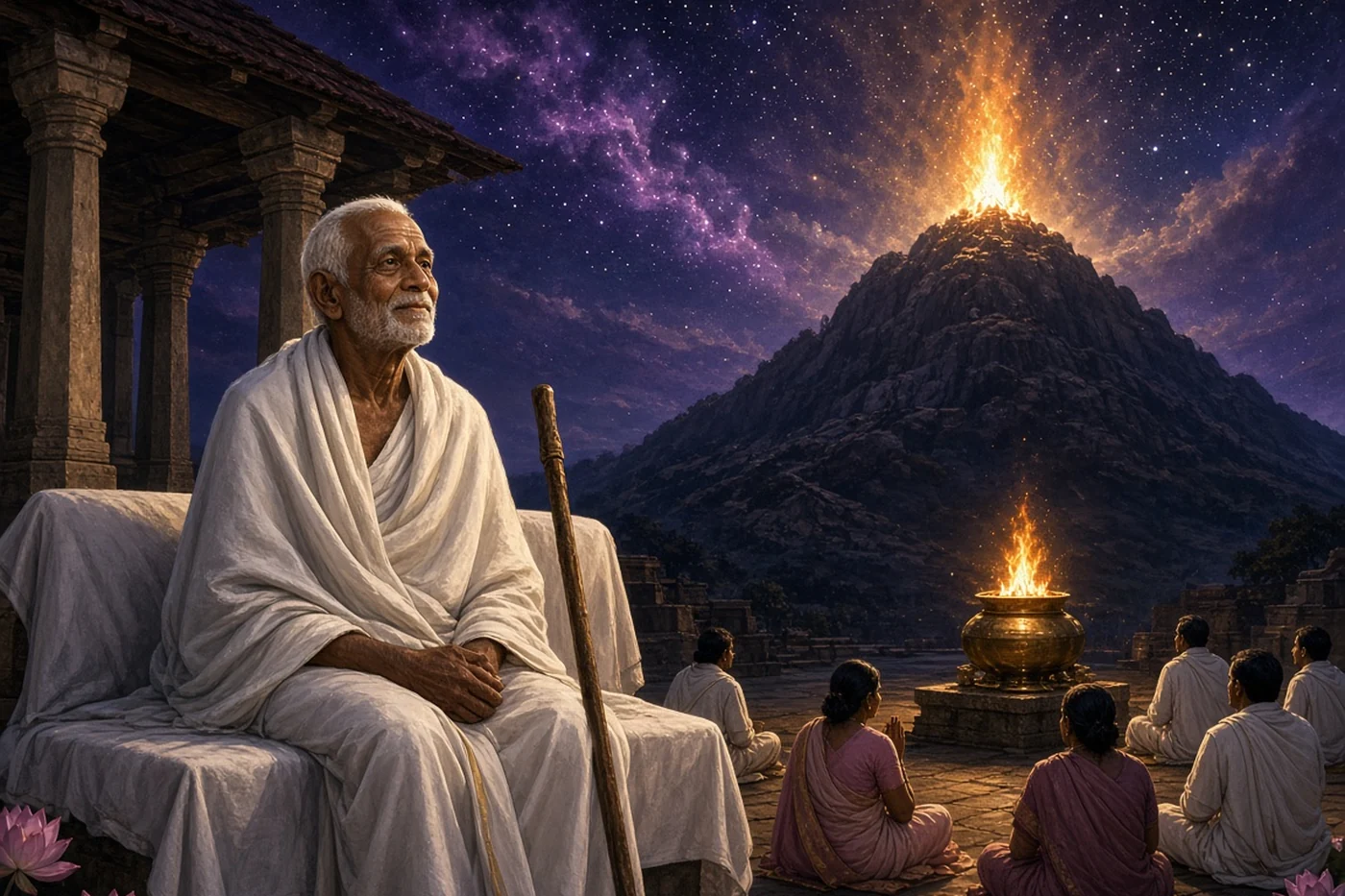
On 14 April 1950, at 8.47 in the evening, while the people outside the room sang the hundred and eight verses, he died. A French photographer standing in front of his house saw a slow bright star come in from the south, cross the sky and go out behind the hill, and looked at his watch.
As the Arunachala Mahatmya praises the hill
Skanda Purana, Maheshvara Khanda · in Ramana's own selection · 3 min read
The hill had its own book long before the boy came, and he was its best reader. From five Sanskrit sources he copied out by hand more than two and a half thousand verses in praise of Arunachala, chose a few, and turned them into Tamil; the ashram printed them as the Sri Arunachala Mahatmyam. This is what the Purana says, as he chose to pass it on.
It opens with Nandi speaking. Arunachala, he says, is the most sacred of all places, the heart of the earth and the secret heart-centre of Shiva himself, and the Lord stays there always in the form of the glorious hill. The day the linga took shape is the Ardra star in the month of Margazhi; the day Vishnu and the gods worshipped the Lord stepping out of the light is Shivaratri.
Then Shiva answers for himself. "Though I am fire by nature," he says, "I have taken the lowly form of a hill out of grace, so that the world may be sustained. I live in it as a Siddha." The bonds of karma, the verses go on, hold every creature, and the mere sight of this shining hill makes them fall away.
One verse ranks the great Shaiva towns, and it is the one the whole Tamil country knows: to see Chidambaram, to be born at Tiruvarur, to die at Kasi, each of these frees a soul; "by merely thinking of Arunachala, one will surely attain liberation". To live within three yojanas of it burns off every defect, even without a teacher's initiation.
The goddess has a verse too, and it is a warning. The hill is a refuge for the devout, she says, and whoever harms another here is destroyed; no one should court the anger of the god who stands here as a hill of fire.
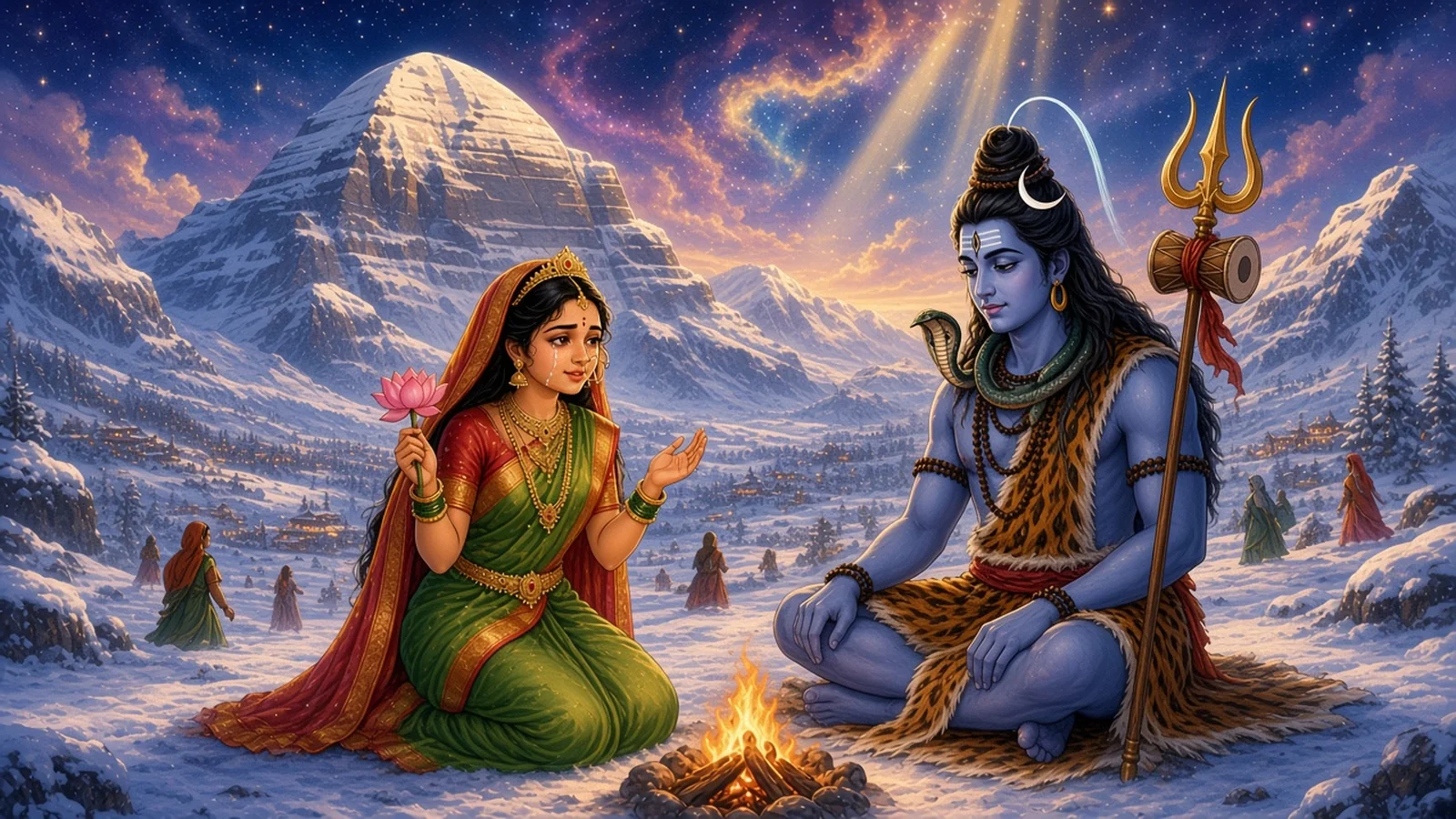
The Purana's own story of the hill, Parvati's penance at its foot, Mahisha, the linga stuck to her palm, is told in The Hill of Fire. Its ending is the part the lamp remembers. On the full moon of Karttika under the Krittika star she worshipped the hill as the Lord's fiery form, a light filled the universe, and a golden Purusha came out of the mountain and gave her a new name.
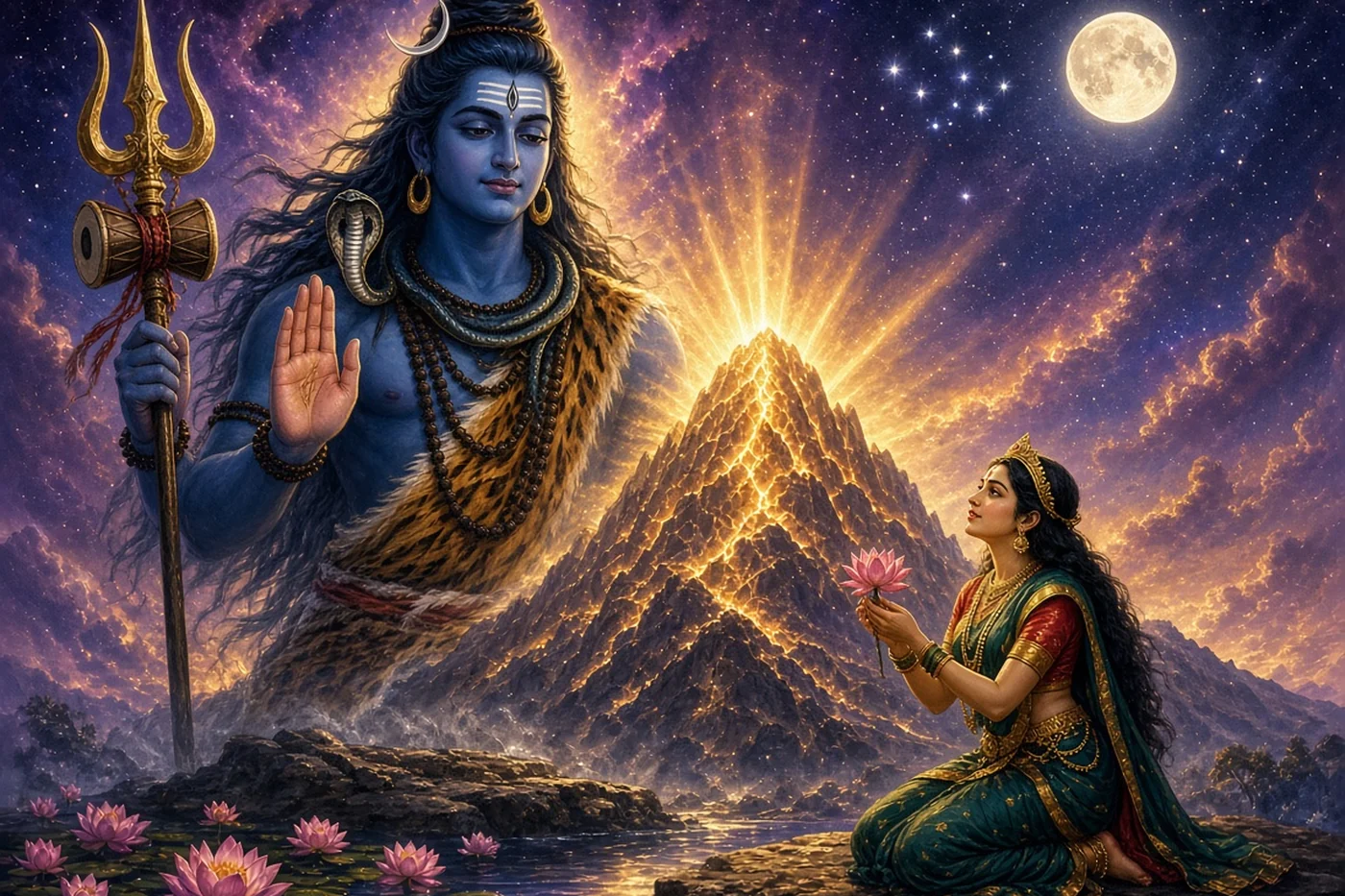
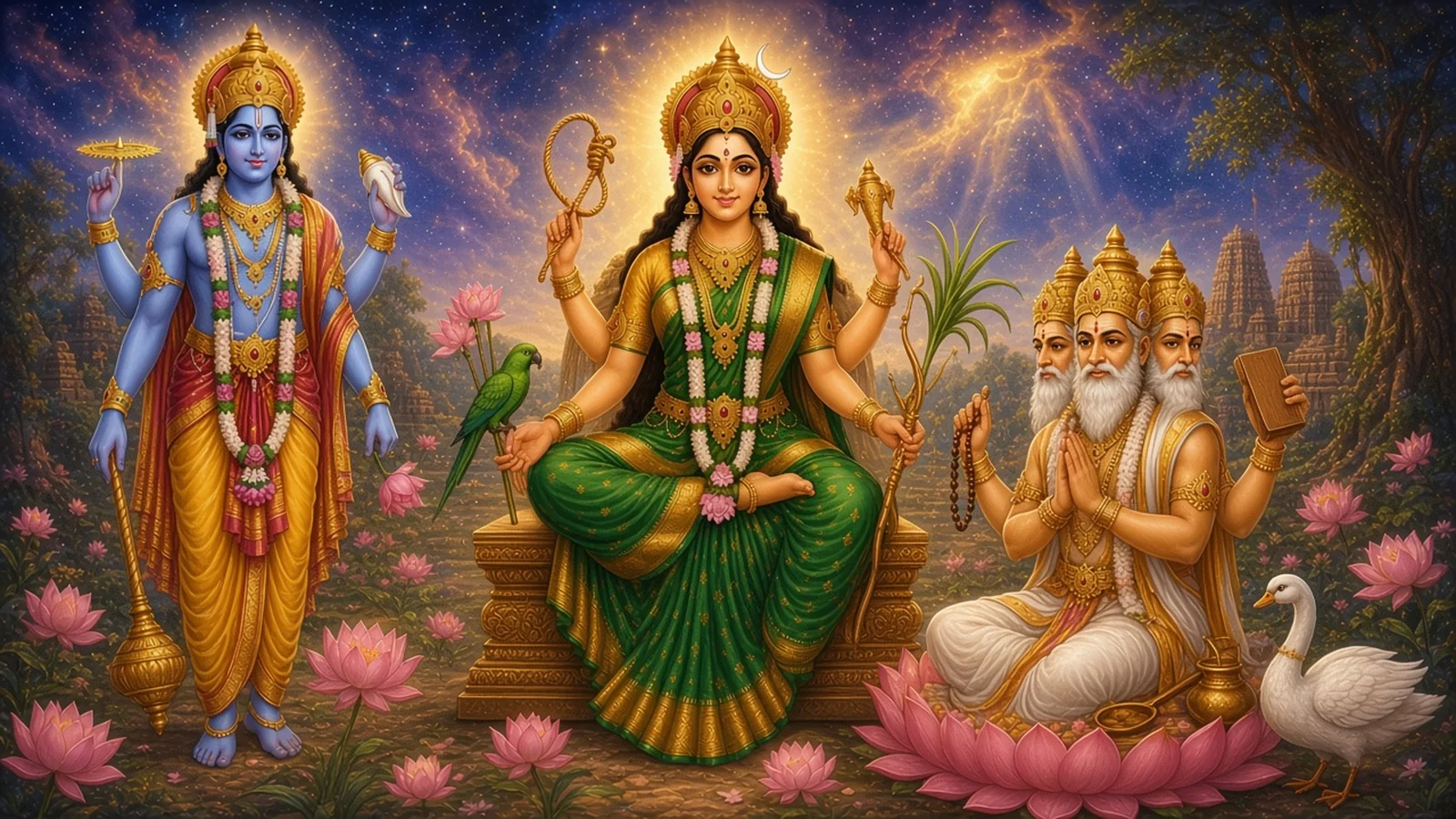
She asked him for one thing more: that his great light be seen on the hill on this day every year, so that all beings might be freed of sin. "So be it," said the Lord, and went back into the stone. She walked round the hill as a bride walks round the marriage fire, with Brahma and Vishnu behind her, and the Purana adds that whoever walks round it after her, bows to it or merely looks at it, earns what all the tirthas and sacrifices give, and pleases Shiva more than penance, charity or yoga.
Ramana told the people who walked it to go slowly, "like a woman in her ninth month", in silence or with the god's name, because every step was worth something.