As the vrat katha tells it
North India · read on the night of Hartalika Teej · 4 min read
On Kailash one evening Parvati asked Shiva a question she had asked before.
"Tell me the vow that pleases you most. Not the hardest one. The one you love."
Shiva smiled. "You should know it. You made it. Have you forgotten the girl you were in Himavat's house?"
"Tell me anyway," she said. So he told her her own story.
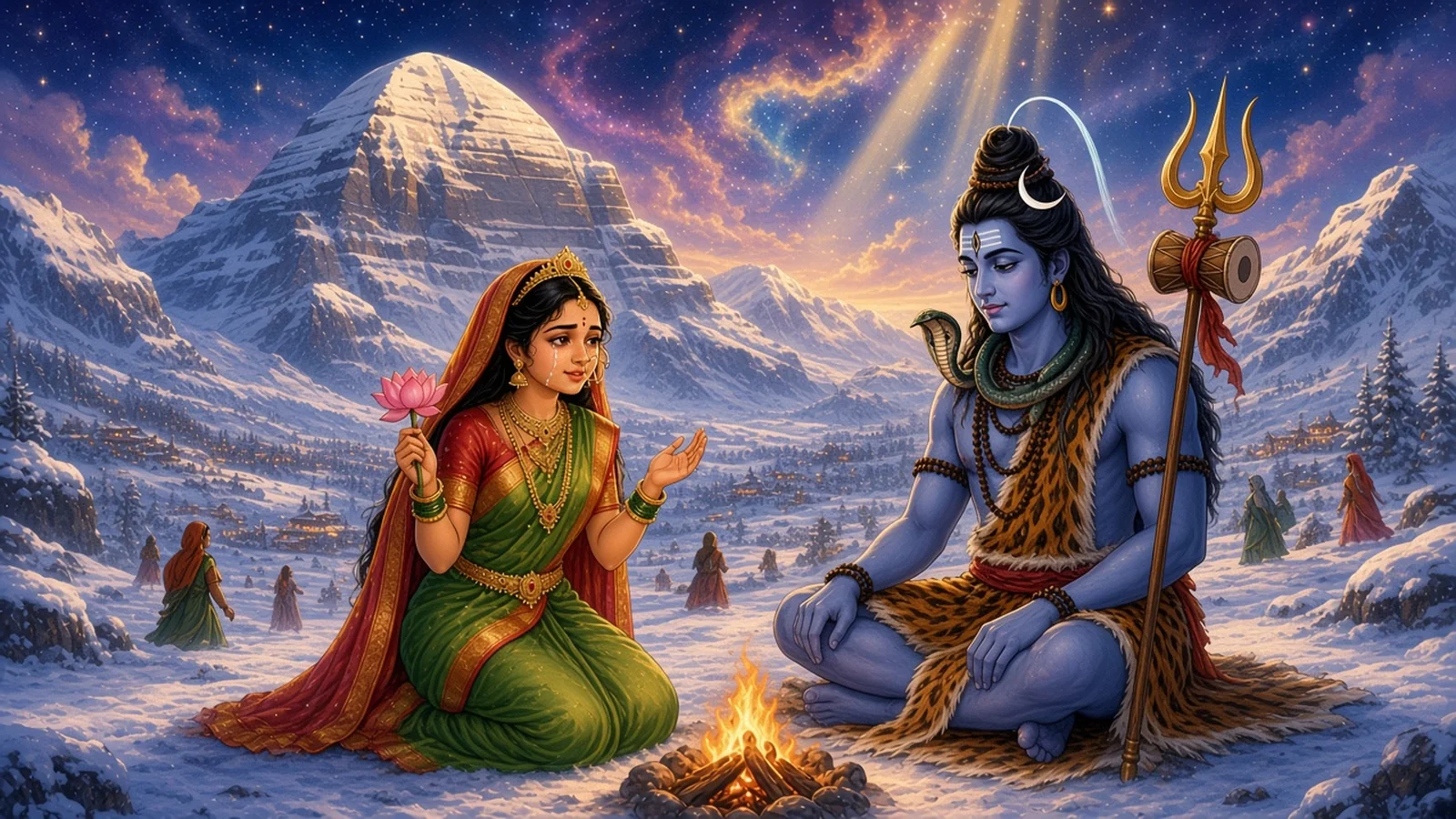
When she was small, he said, she was called Shailaputri, the mountain's daughter, and from the time she could walk she had set her heart on one husband. She went out to a quiet place and sat down and prayed for him. Twelve years, then sixty-four more, eating dry leaves when there were leaves, standing in the rain when it rained, and in the cold months standing in the river until her feet went numb.
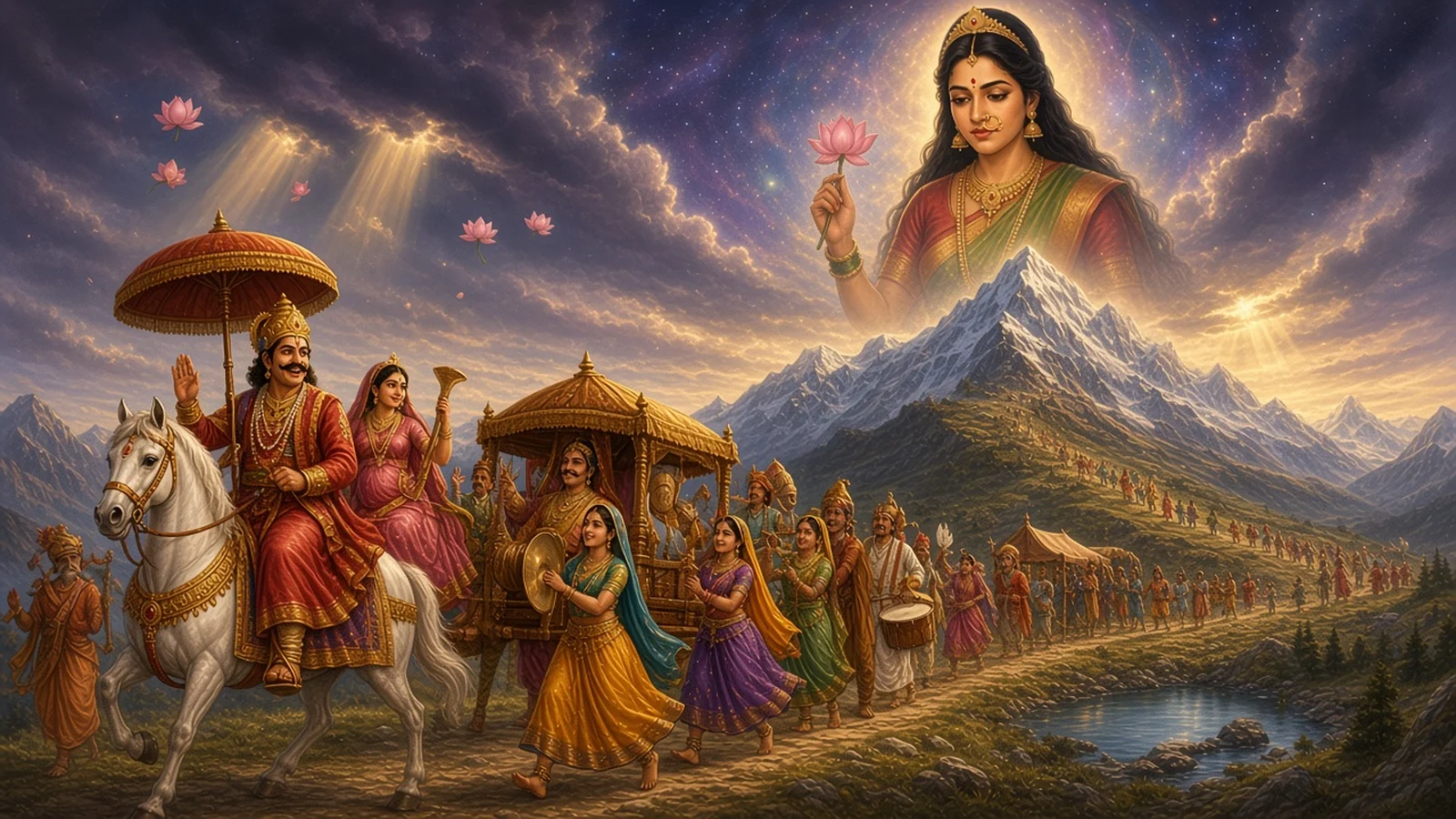
Her father Himavat watched and grew frightened. A girl who sits in the snow for a god who never comes is not a girl any king knows what to do with.
Then the sage Narada came to the mountain palace, and Himavat told him his trouble.
"Why trouble?" said Narada. "I have come about exactly this. Lord Vishnu would take her. There is no better match in the three worlds."
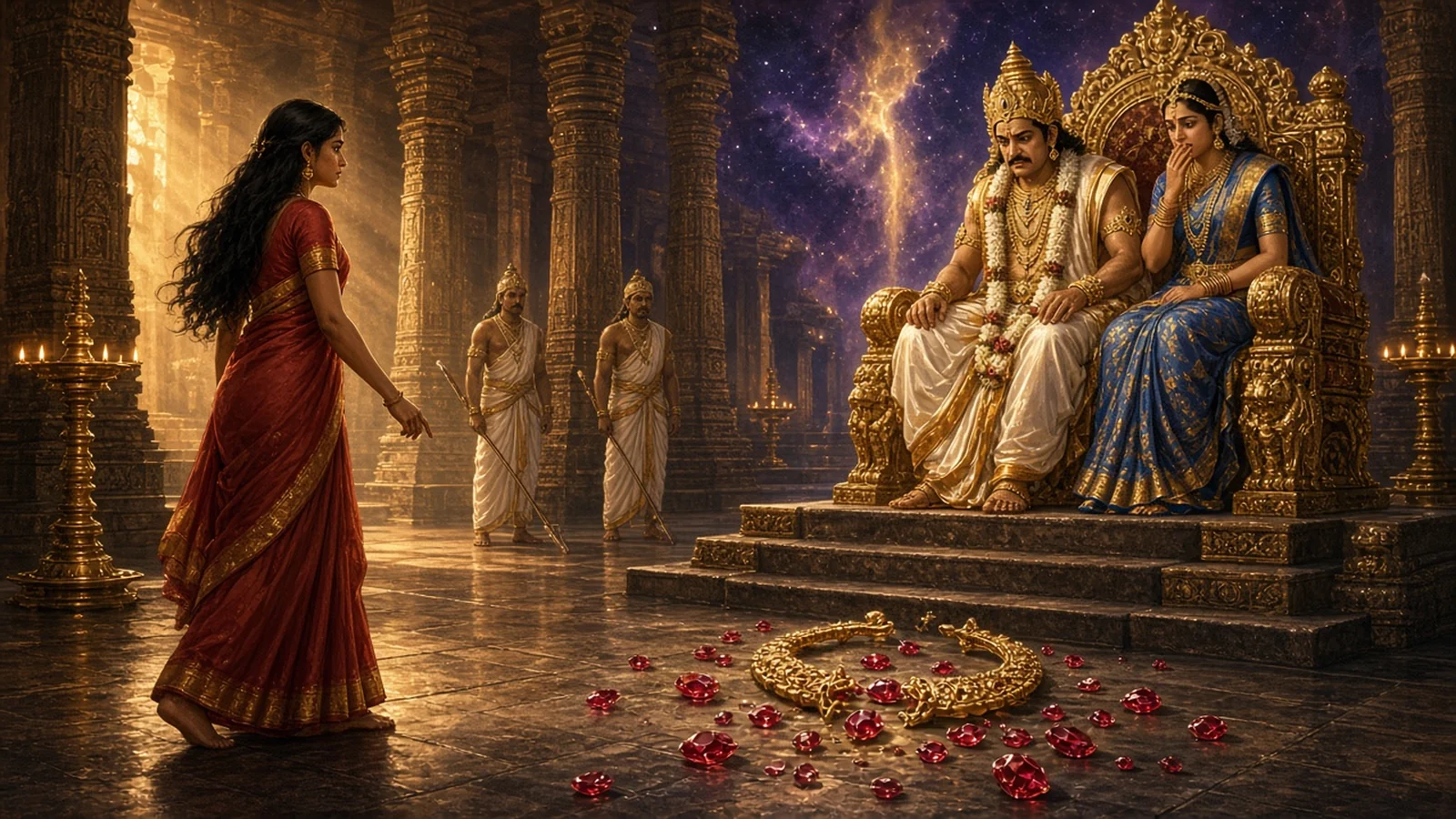
Himavat gave his word on the spot. Narada carried it to Vishnu, who agreed, and the thing was settled before the bride had heard of it.
A friend who had grown up beside her found her under a tree with her face in her hands.
"Who has died?" the friend said.
"Nobody. My father has given me to Vishnu."
"Vishnu is a fine husband."
"I do not want a fine husband. I have prayed for Shiva since I was a child and I will go on praying for him, and if they dress me as a bride for anyone else I will not live to wear it."
The friend looked at her for a while. "Then you cannot stay in this house. Get up."
That night the two girls slipped out by a back way. The friend led her down through the forest to a river, and in the bank above the river there was a cave, and there she left her and went to find water and roots.
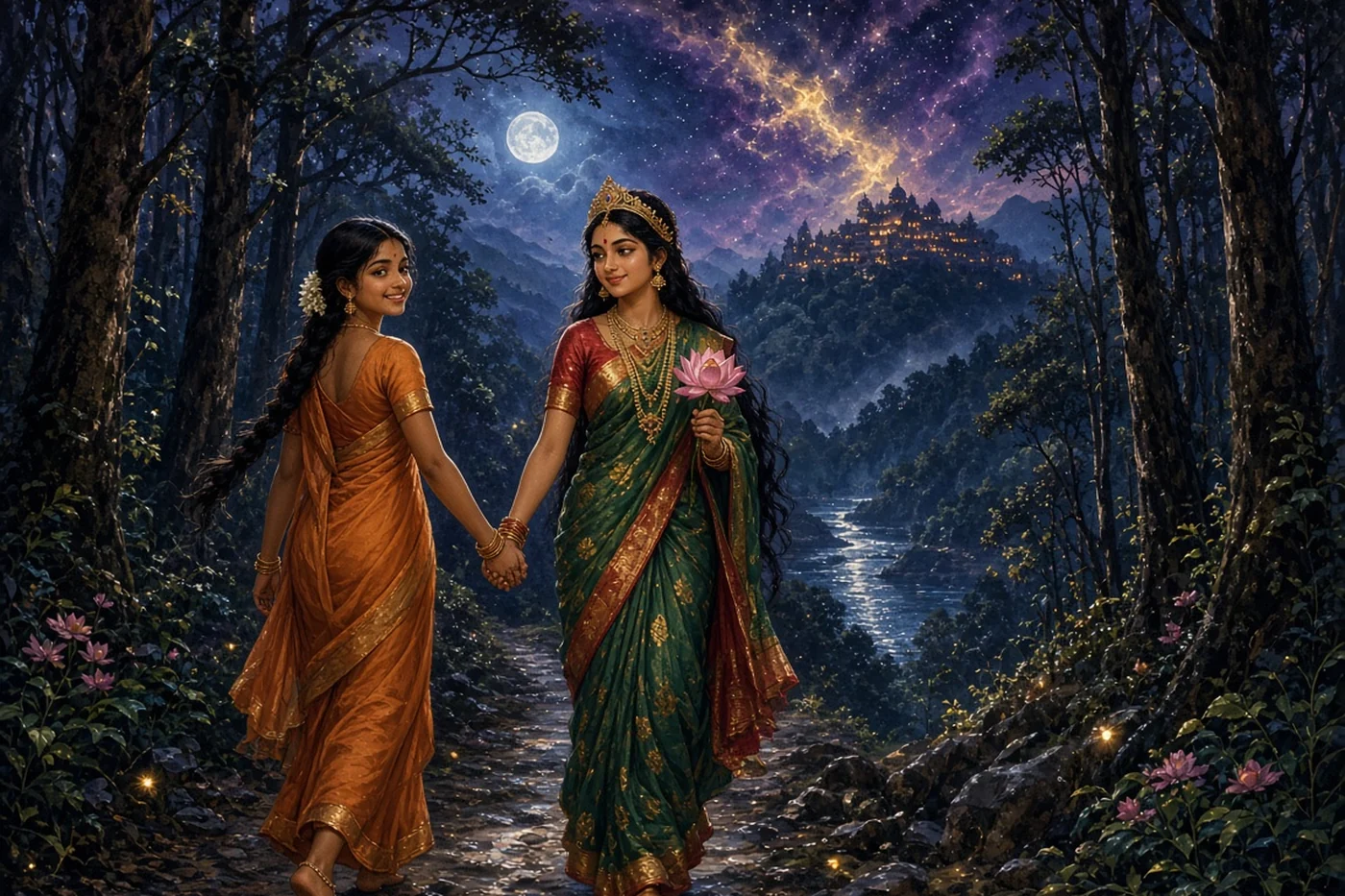
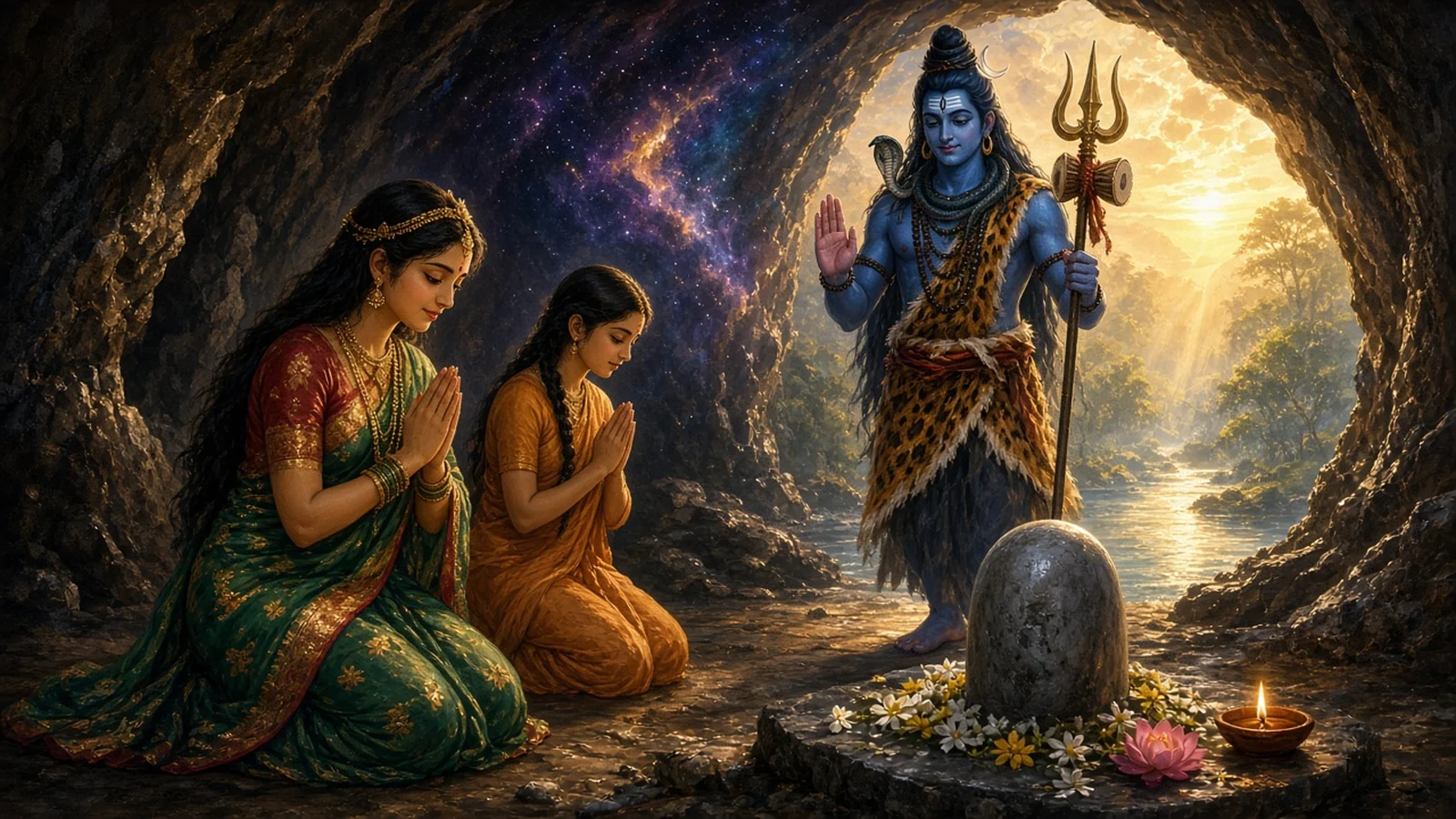
It was the third day of bright Bhadrapada, with the moon in the star called Hasta. Parvati went down to the river, gathered the wet sand in her two hands and shaped it into a linga. She set it in the cave with wild flowers and sat down before it. She did not eat that day. She did not drink. When the night came she did not sleep. She sang to the sand, and her friend sang with her, and the night went on and on.
Towards dawn the cave filled with light, and the one she had prayed to for seventy-six years was standing in front of her.
"Ask," said Shiva.
"You know what I want."
"Then it is yours. I am your husband from this hour, and no one will give you to anyone else."
He was gone before she could touch his feet. The girls broke their fast at sunrise and worshipped the sand linga once more, and that, Shiva said to his wife on Kailash, was the first Hartalika.
Himavat meanwhile had turned the mountain upside down. He thought his daughter had been stolen, and in a way she had. When his soldiers found the cave he came himself, and he wept to see her so thin.
"Come home."
"On one condition. You give me to Shiva and to no one else."
"To Shiva, then," said the king. "I was wrong."
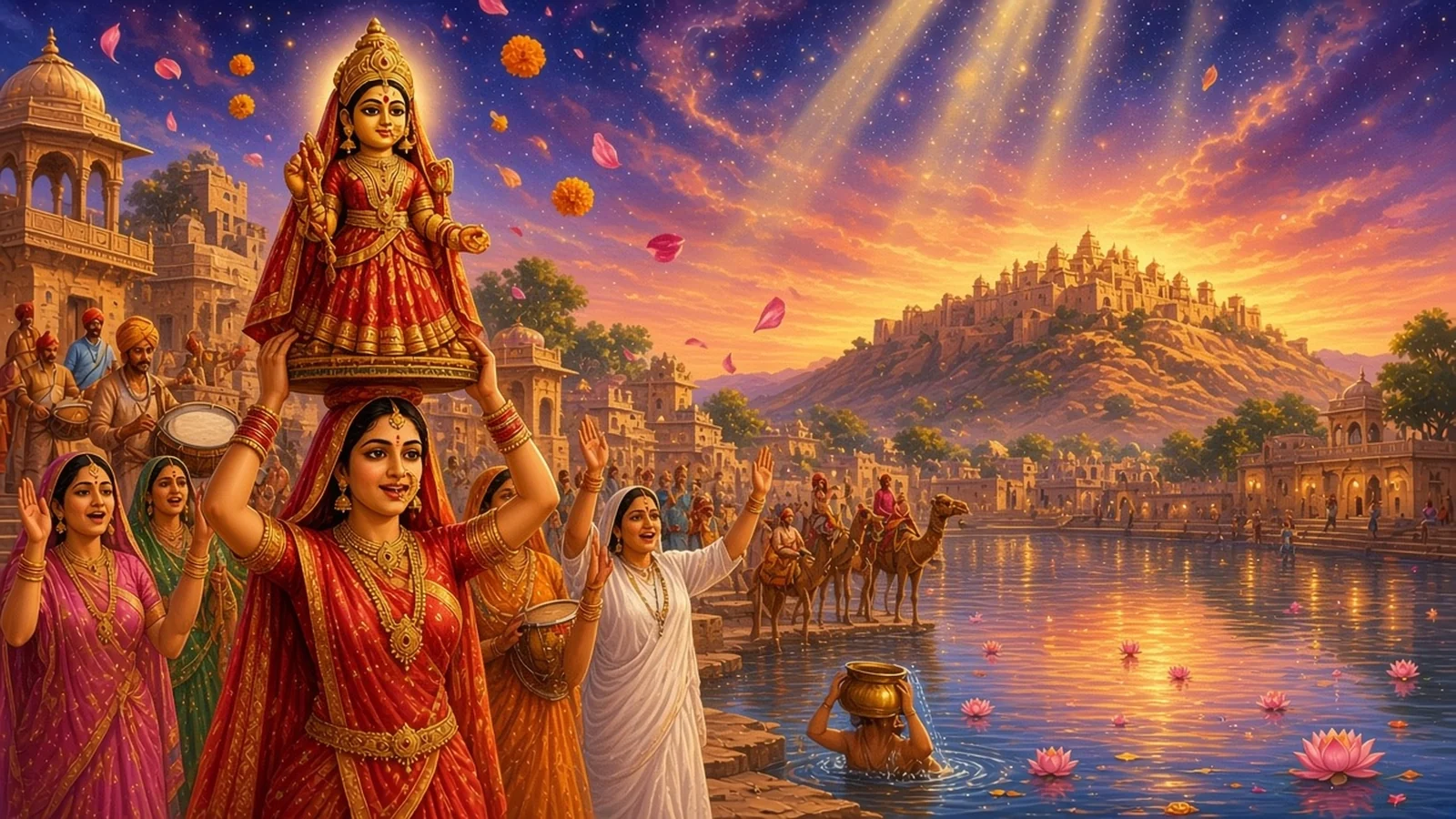
The wedding that followed is the one the whole world knows. And the vow, Shiva told her, belongs now to every woman who keeps it as she did: a day with no food and no water, a Shiva and a Gauri of sand or clay, the night awake with songs, and in the morning the fast broken and the images given to the water. The unmarried keep it for a husband like Shiva. The married keep it for the long life of the one they have.
As Nepal keeps Haritalika Teej
Nepal · Kathmandu, Pashupatinath, the hills · 2 min read
In Nepal the story is the same and the days are different, and the first of them is a feast.
The night before the fast is called Dar. A married woman is called back to the house she was born in, by her mother or her brothers, and fed. The old rule says the Dar must be eaten before two watches of the night have passed, and be pure food, milk and ghee and wheat bread and sweets, because tomorrow there will be nothing.
"Eat," said a mother in Kathmandu to a daughter who had been living in her husband's village for a year. "You will not eat tomorrow, and you will not drink either."
"I know how Teej works, Ama."
"Then eat."
The daughter ate, and the aunts sang, and the songs were not all about Shiva. Teej songs in Nepal have always been the women's own, and for sixty years and more they have carried what the women could not say in the kitchen, about a husband gone abroad for work, a mother-in-law, a village with no road, a law that gave the house to the son. Scholars who collected a thousand of them in one hill village called them the commentary of women nobody lets speak.
In the morning the daughter put on red, the red of her wedding, with the glass beads and the tilahari at her throat and sindur in her hair, and went with the others to Pashupatinath. The fast there is kept without water, from the Dar until the puja is done, and the women say that is the point of it. Parvati kept it so, and won Shiva with it.
The temple steps were red from end to end. The queue to the linga took hours. While they waited the women danced, in rings, to the Teej songs from the loudspeakers and to the old ones they knew by heart, and nobody who was fasting sat down, because that is how hunger finds a person.
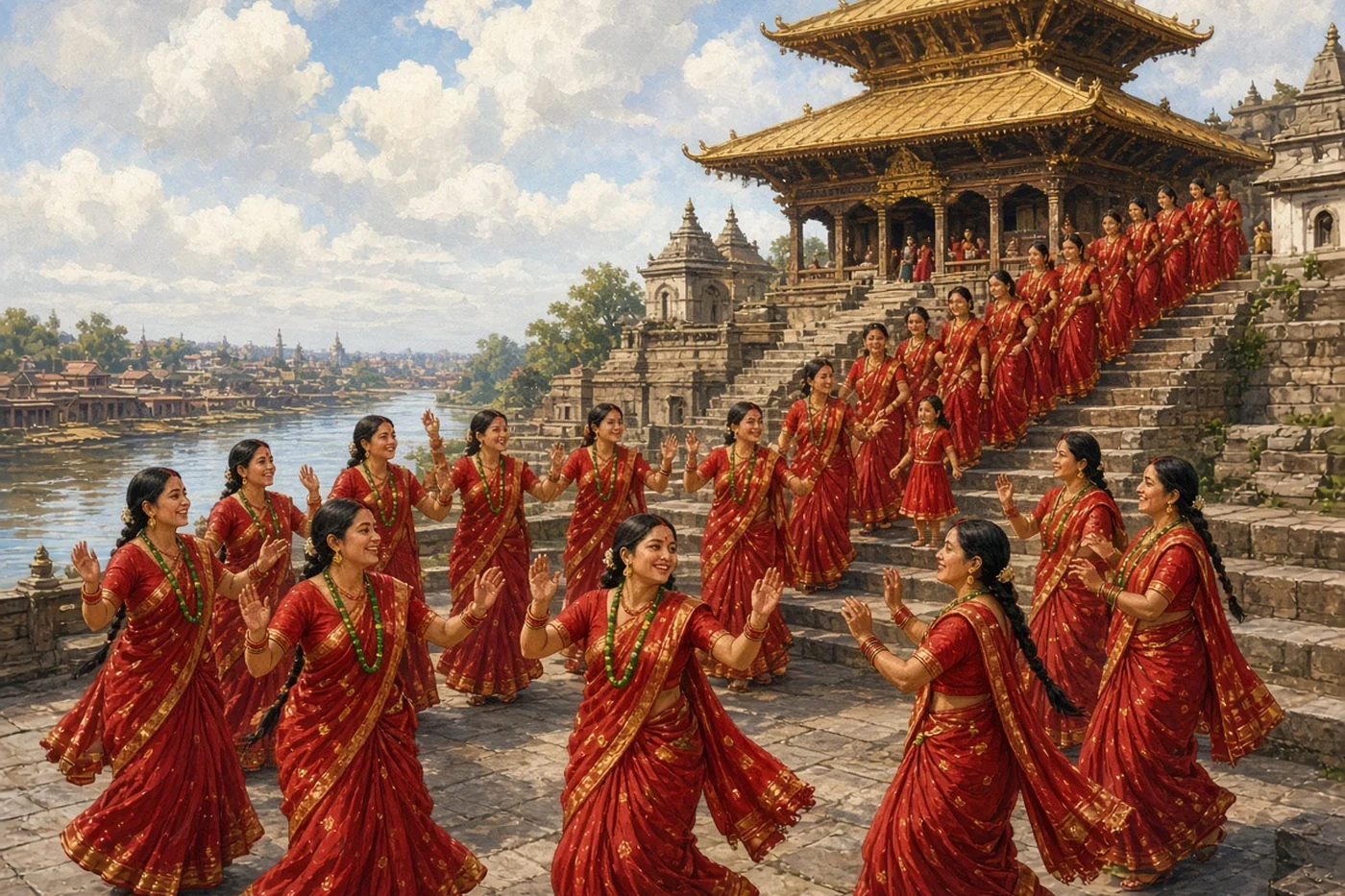
"Why do we dance?" a girl asked her mother in the queue.
"To keep the hunger off. And because it is the one day nobody tells us not to."
At night they lit a lamp before Shiva and kept it burning until morning.
Two days later came Rishi Panchami. Before dawn the daughter went down to the river with the women of the lane and bathed, and brushed her teeth with the stems of the datiwan plant, three hundred and sixty-five of them, one for each day of the year, and rubbed herself with earth and ash, and worshipped the seven sages and Arundhati. The old books say the bath washes away whatever a woman did wrong in the year without knowing it, in the days she was not allowed into the kitchen. Many younger women now keep the dance and leave the bath, and say so in their own Teej songs.