As Tiruvannamalai keeps the tenth day
South India · Tiruvannamalai, Tamil Nadu · 4 min read
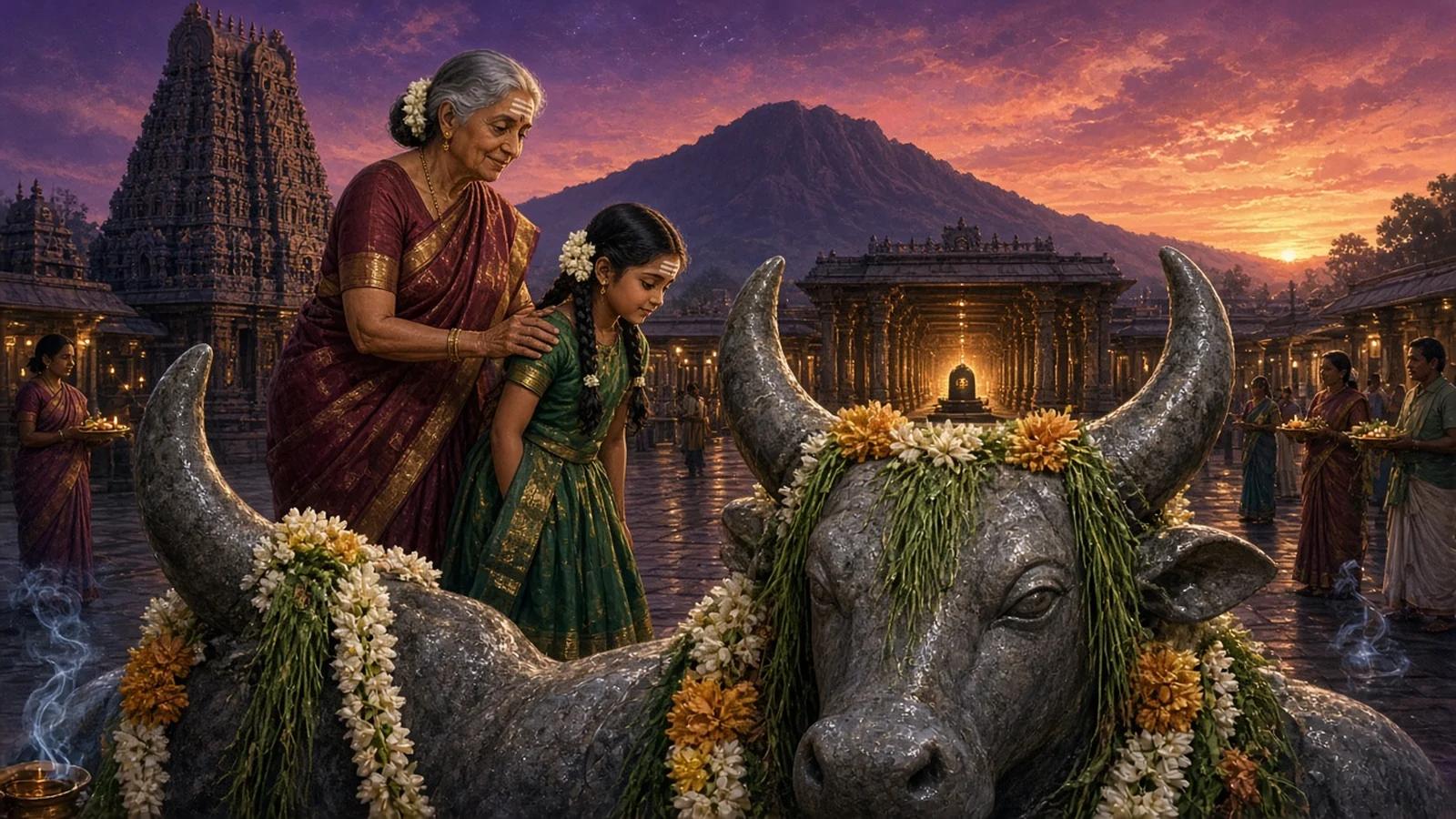
The flag had gone up on the golden mast ten days before, and since then the town had hardly slept. Every night the god had come out on a different mount, the lion, the wish-granting cow, the silver bull as tall as a house, the great wooden car that filled the street from wall to wall, and on the ninth night the Kailasa mount. Now it was the tenth morning, and still dark, when Meenakshi Paatti shook the boy awake.
"Up, Arun. The Bharani Deepam. Miss the first lamp and you have missed the whole day."
They went in through the east tower with half the town. Before the sanctum a priest held a single flame, and from it he lit five lamps, one after another, while the crowd pressed forward and said the god's name.
"Why five?" the boy whispered.
"Earth, water, fire, wind and sky. Five things out of one light. Tonight they go back into one. Watch the hill at dusk and you will see where."
By sunrise a line of men was already on the slope above the temple. Fishermen, Paatti said, and it was their family's right and nobody else's. The copper cauldron, five feet high and heavier than two grown men, went up on their shoulders, and behind it came the ghee, pot after pot, hundreds of kilos of it, and the camphor, and a bale of cotton cloth long enough to lay from the temple gate to the edge of the town, to be twisted into one wick.
The town filled all day. Buses from Madurai and Salem and Bengaluru, lorries with families on the roof, roads closed, umbrellas everywhere because the Karthigai rain never quite stops. In the afternoon the god was bathed at the tank. Then the light began to go.
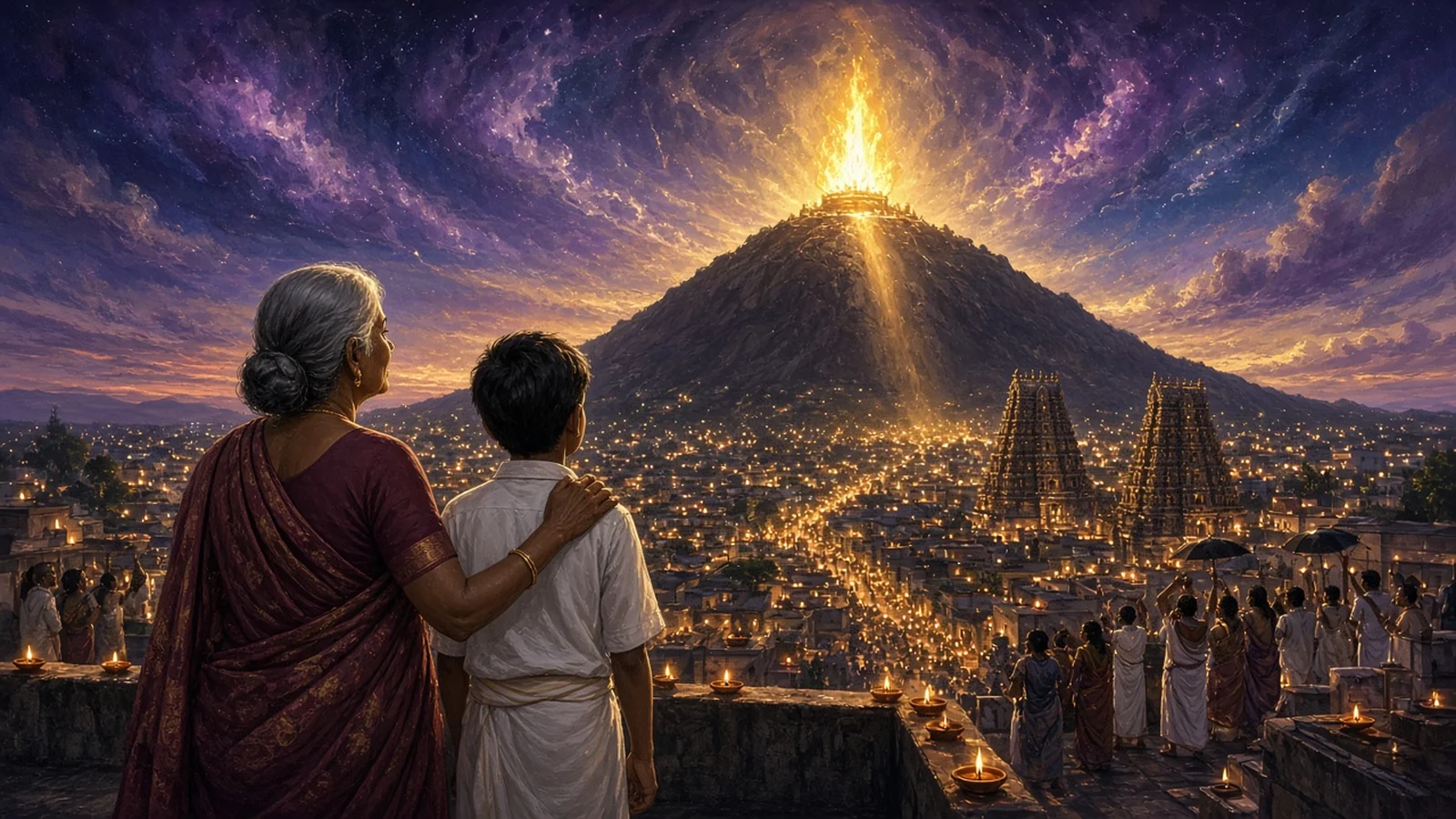
They found a place on a roof in the car street with a hundred others. Across from them the hill stood black against the last of the sky, two thousand six hundred feet of bare rock, and on its top a point no bigger than a grain of rice.
"Tell it again," said the boy. "Why the hill."
"You know it."
"Tell it anyway."
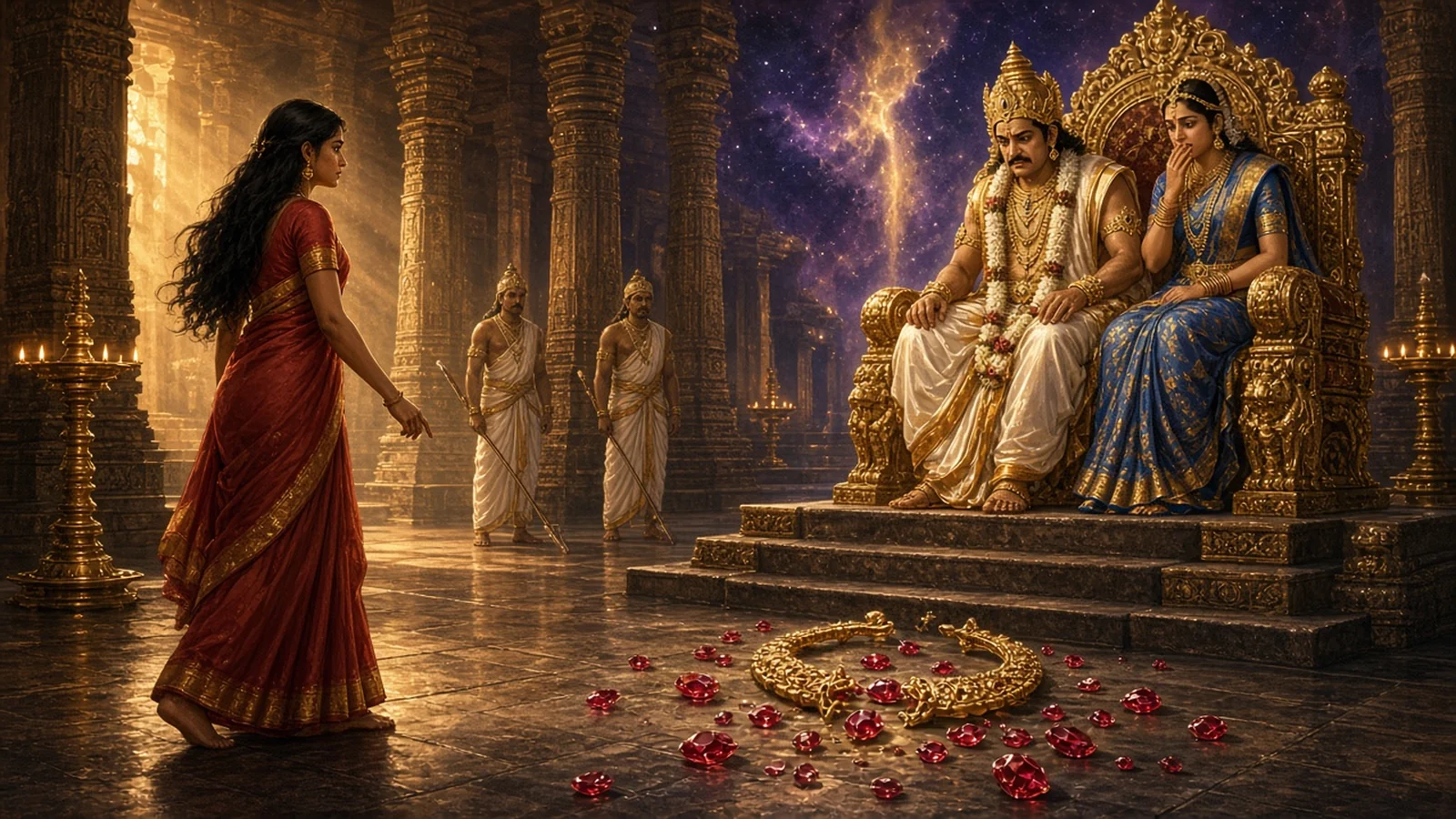
"Two gods quarrelled over which of them was greater," she said, "and a pillar of fire stood up between them with no top and no bottom. One flew up and one dug down, and neither found an end, and one of them lied about it. That pillar is this hill. It cooled so that people could live beside it. Once a year he lets us see what it really is. The rest of the year it is only stone."
Inside the temple the five lamps of the morning were being made one again. The bells began. Then the sanctum opened and the god came out, and it was not the god of the morning. Everyone on the roof stood up together. The image was half a man and half a woman: the right side Shiva with his matted hair, the left side Unnamulai in silk, one body.
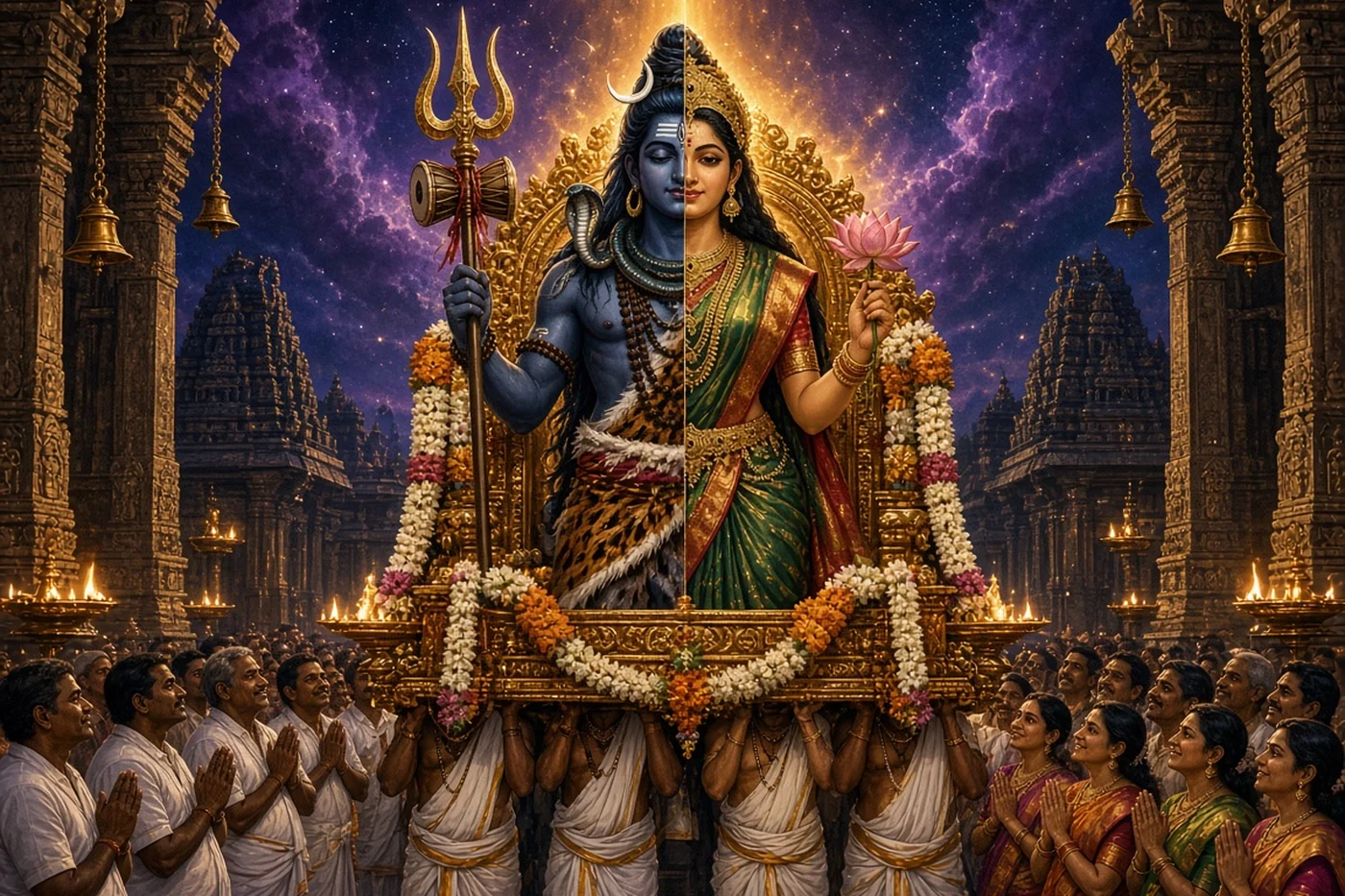
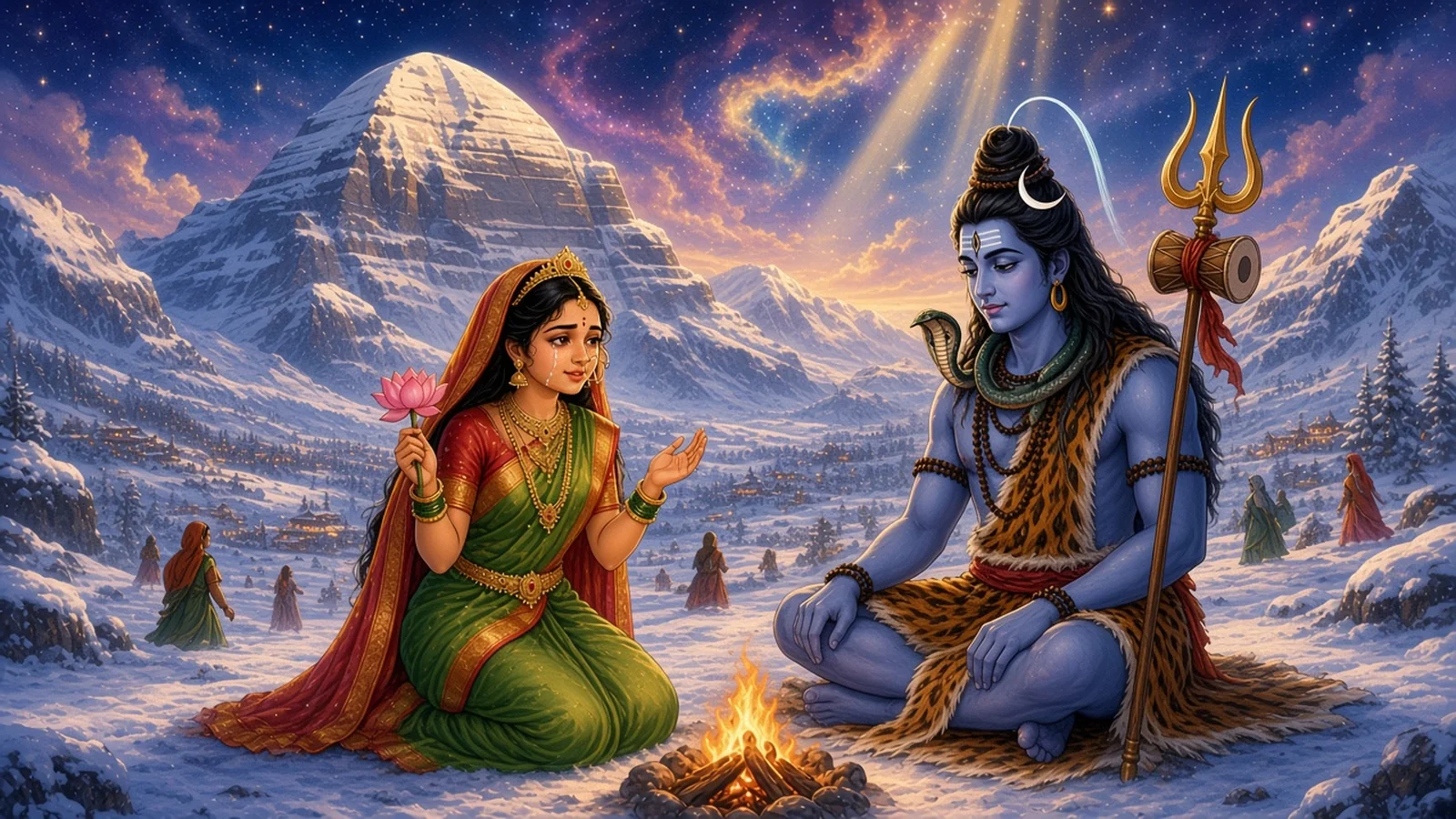
"Tonight he takes her back," said Paatti. "Not beside him. Into him. She did her tapas at the foot of this hill, and on this one night in the year she is his left half."
A priest carried the sanctum's flame out to the flagstaff, and on the summit, at the same moment, a man put a torch to the wick.
The grain of light on the hilltop became a flame the height of a house. The whole town said one thing at once, "Annamalaiyarukku Arohara", and the sound did not stop, and from every roof and doorway under the hill the small lamps were lit in answer until the streets were lines of fire.
"Now we walk," said Paatti.
They went down and joined the river of people going round the hill, fourteen kilometres, barefoot, the hill always on their right, past the eight lingams of the eight directions, with the fire on the summit above them the whole way. It would burn for days. Towards morning the boy fell asleep on his feet and his grandmother steered him by the shoulder, and the lamp on the hill did not go out.
The quarrel of the two gods and the goddess's penance under the hill are told in The Pillar of Fire and The Hill of Fire.
As Murugan's people and the Tamil homes keep it
Tamil Nadu · the six sparks and the agal vilakku · 2 min read
For the devotees of Murugan the lamp on the hill is a birthday lamp.
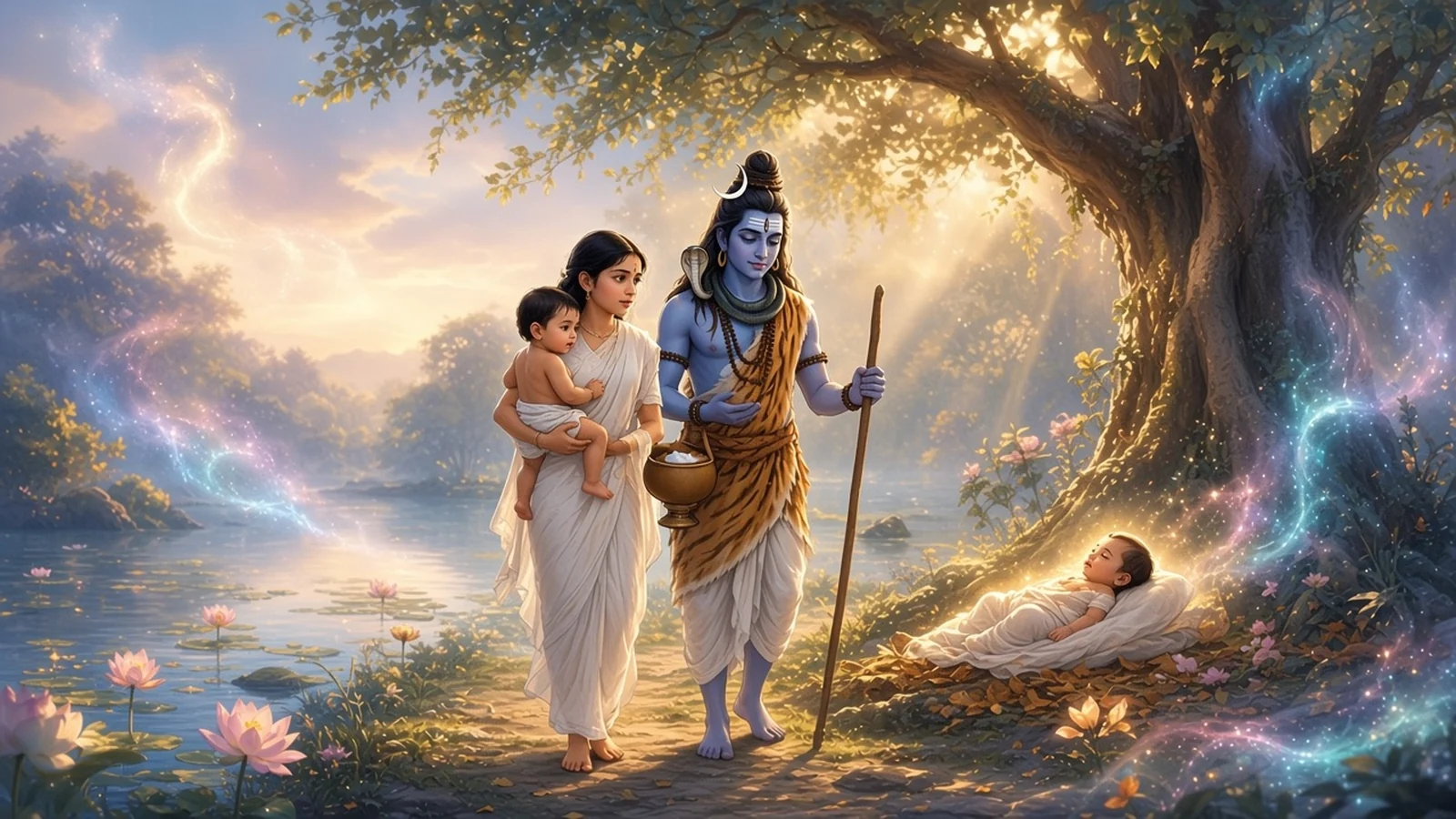
The Kanda Puranam says that when the demon Surapadman had emptied heaven, Shiva took a form with six faces, and from the third eye of each face came a spark that filled all space. He gave the six sparks to the wind and the fire to carry to the Ganga, and the river, who could not hold them either, laid them in a pond ringed with reeds, the Saravana Poigai. There they became six babies, each on a lotus, and the six maidens of the Karthigai star came down and nursed them, one to each. The whole of it, and how Parvati gathered six children into her arms and lifted out one, is told in The Child with Six Mothers.
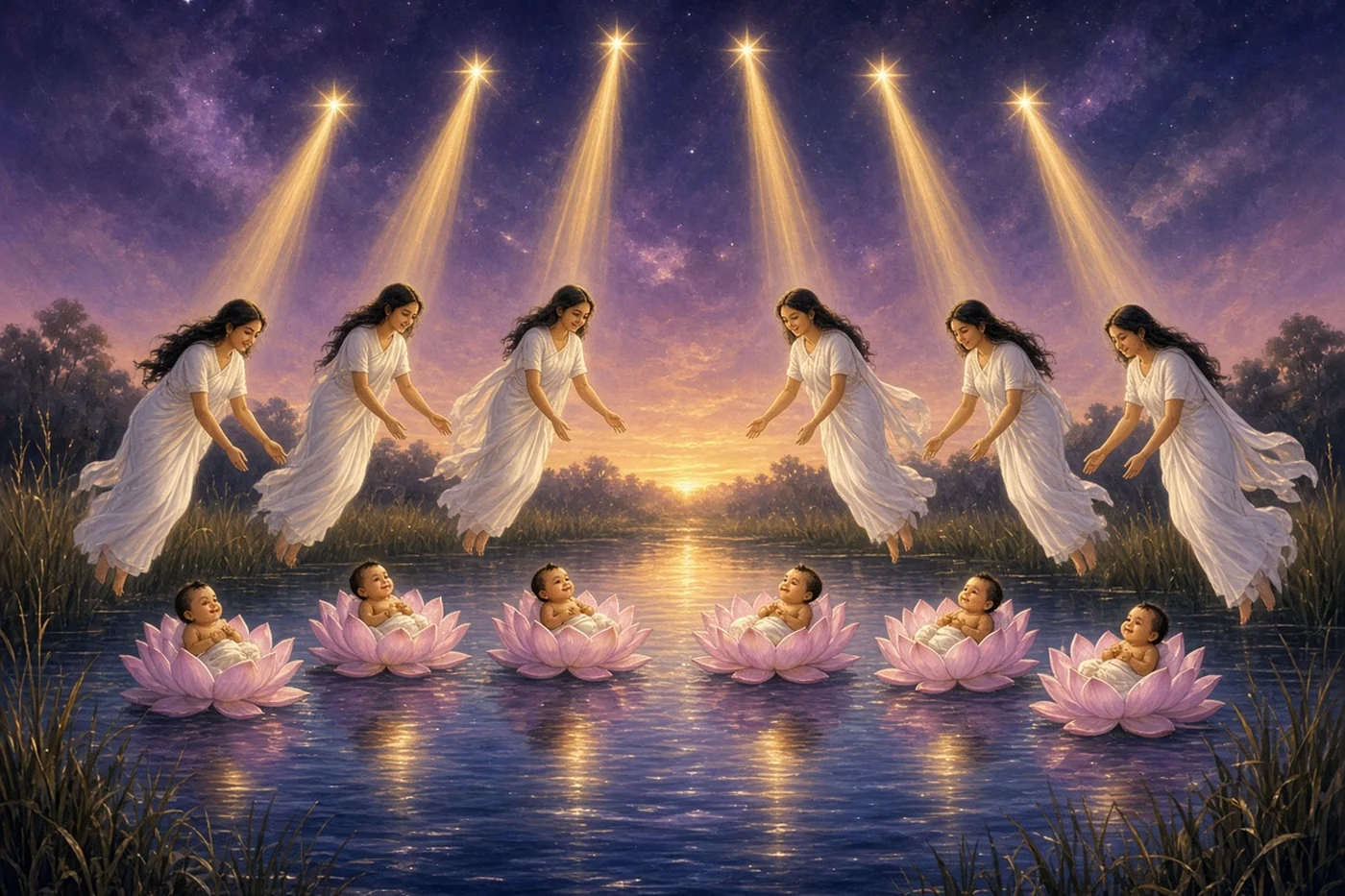
That star is the Krittika, the one the Tamils call Karthigai, and it gives the month its name and the god his. So when the Krittika rides with the full moon, Murugan's temples hold their Kumaralaya Deepam, and at Palani and Thiruparankundram a lamp is lit on the hilltop for the boy the six stars fed.
"Whose lamp is it, then?" a child asks at the door, with the taper in her hand.
"Light it," says her mother, "and it is everyone's."
The doorstep lamps are older than any of the stories. The Sangam poets sang of lamps lit on the Karthigai evening two thousand years ago, and readers point to the Akananuru's verses on the lamps of the full-moon night and to a line that likens them to the red flowers of the silk-cotton tree; the Jivakachintamani has them burning on the top of a hill.
The lamp is the agal vilakku, a shallow clay saucer with a twist of cotton in sesame oil or ghee, and on the Karthigai evening a house sets out dozens of them, on the threshold, along the compound wall, on the windowsills and the well, some families counting twenty-seven for the twenty-seven stars. In the temple courtyards a tall bundle of palm leaves and banana stalks, the sokkapanai, is set alight in memory of the pillar.
Before the lamps the kitchen has been busy. Pori, puffed rice, is tossed in hot jaggery and pressed into balls, and appam and adai are fried and set before the lamps with the first offering, and the children carry plates of pori to the neighbours when the lighting is done. In the Vaishnava houses of the Tamil country the same moon is Vishnu Deepam, and a small clay elephant is made and dressed and fed grass and jaggery for three days, the Yanai Pandigai, before it is set in the pond.
"The hill is far," the mother says, blowing out the taper. "The door is here. He sees both."