Festival · Sixteen days when the ancestors come home to be fed
Pitru Paksha
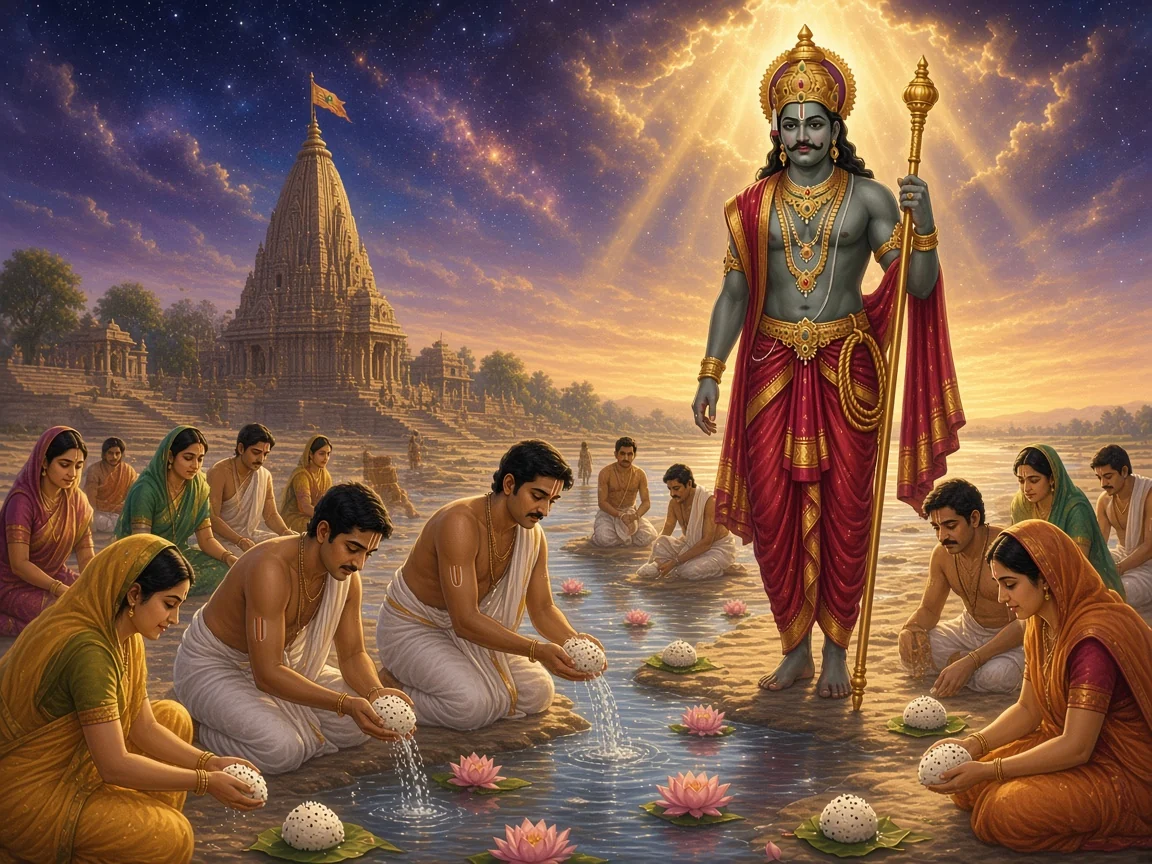
Pitru Paksha is the fortnight of the fathers, the waning half of the moon that ends on the new moon before Navratri, when Hindu families feed their dead. On the lunar day on which a parent or grandparent died, the son offers balls of rice with sesame and pours water from his hands, priests are fed, and food is set out for the crow, the cow and the dog. The last day, Sarvapitri Amavasya, is for every ancestor at once, and the pilgrims who can go make their offerings at Gaya, on the sand of the Phalgu.
When is Pitru Paksha in 2027? Sarvapitri Amavasya, the day for all the ancestors, is Wednesday 29 September 2027; it runs 15 to 29 September 2027. In 2028: Monday 18 September 2028. The dark half of Bhadrapada in the amanta calendar, which the purnimanta calendar calls the dark half of Ashvin; from the full moon to the new moon, in September or early October.
Also calledPitri PakshaShraddha PakshaShraddhSorah ShraddhaKanagatMahalaya PakshaMahalaya PakshamPitru Karma in the south
In short
What is Pitru Paksha?
The fortnight of the fathers, the dark half of Bhadrapada (Ashvin in the north's count), when Hindus make offerings of rice, sesame and water to three generations of their dead, feed priests and the poor, and set out food for the crow, the cow and the dog.
When is Pitru Paksha in 2027?
From the full-moon shraddha on Wednesday 15 September 2027 to Sarvapitri Amavasya on Wednesday 29 September 2027, with Navratri beginning the next day. In 2028 it runs from 3 to 18 September.
Which day is my family's shraddha?
The lunar day of the fortnight that matches the lunar day on which the person died. The ninth is kept for mothers, the fourteenth only for violent deaths, and the new moon for everyone, including those whose day is not known.
Why do people go to Gaya?
Because a pinda offered at Gaya is believed to free the fathers for good. The Vayu Purana says the asura Gaya asked for it when Vishnu pinned him under the stone there, and the Mahabharata already says a man should hope for many sons so that one of them goes to Gaya.
Next, in 2027Wednesday 29 September 2027
15 to 29 September 2027
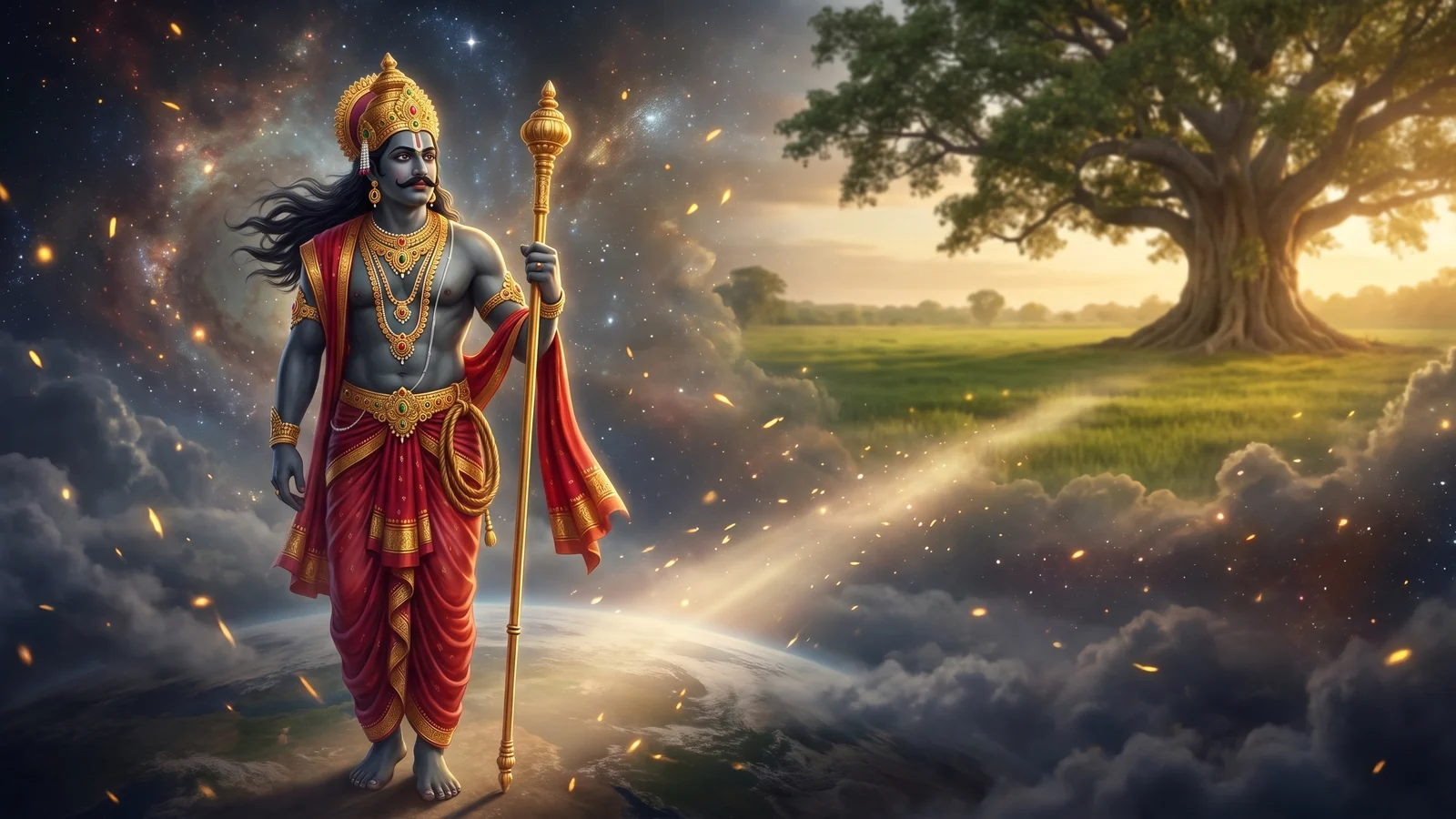
Prime godYama, lord of the fathers
with 3 more
WhereEvery Hindu family, at home or at a river; the great pilgrim places are Gaya in Bihar, Varanasi, Prayagraj and Haridwar, Siddhpur in Gujarat for mothers, Trimbakeshwar in Maharashtra and Rameswaram in the south
How longSixteen lunar days, counting the full-moon shraddha; fifteen when counted from the day after the full moon
The dark half of Bhadrapada in the amanta calendar, which the purnimanta calendar calls the dark half of Ashvin; from the full moon to the new moon, in September or early October
Why it is kept
Pitru Paksha is the one time in the year when the dead are expected home. For sixteen days, from the full moon of Bhadrapada to the new moon, Hindus believe that the ancestors come down from their own world to the houses of their descendants and wait there to be fed, and the families feed them: rice and barley pressed into balls with ghee and black sesame, water poured from the hands, a meal for the priests and the poor, and food set out for the crows. Nothing new is begun in these days. No one marries, buys a house or starts a business, and when the new moon has passed, the ancestors go back and Navratri begins.
A Hindu is said to be born owing three debts, one of them to his fathers, and the shraddha is how it is paid. The ancestors of three generations live in the world of the fathers, which Yama rules, and what they eat there is what their descendants give them on earth. A father, a grandfather and a great-grandfather are named in the rite, and the mother's line beside them, and they are thought to need the offering as the living need food.
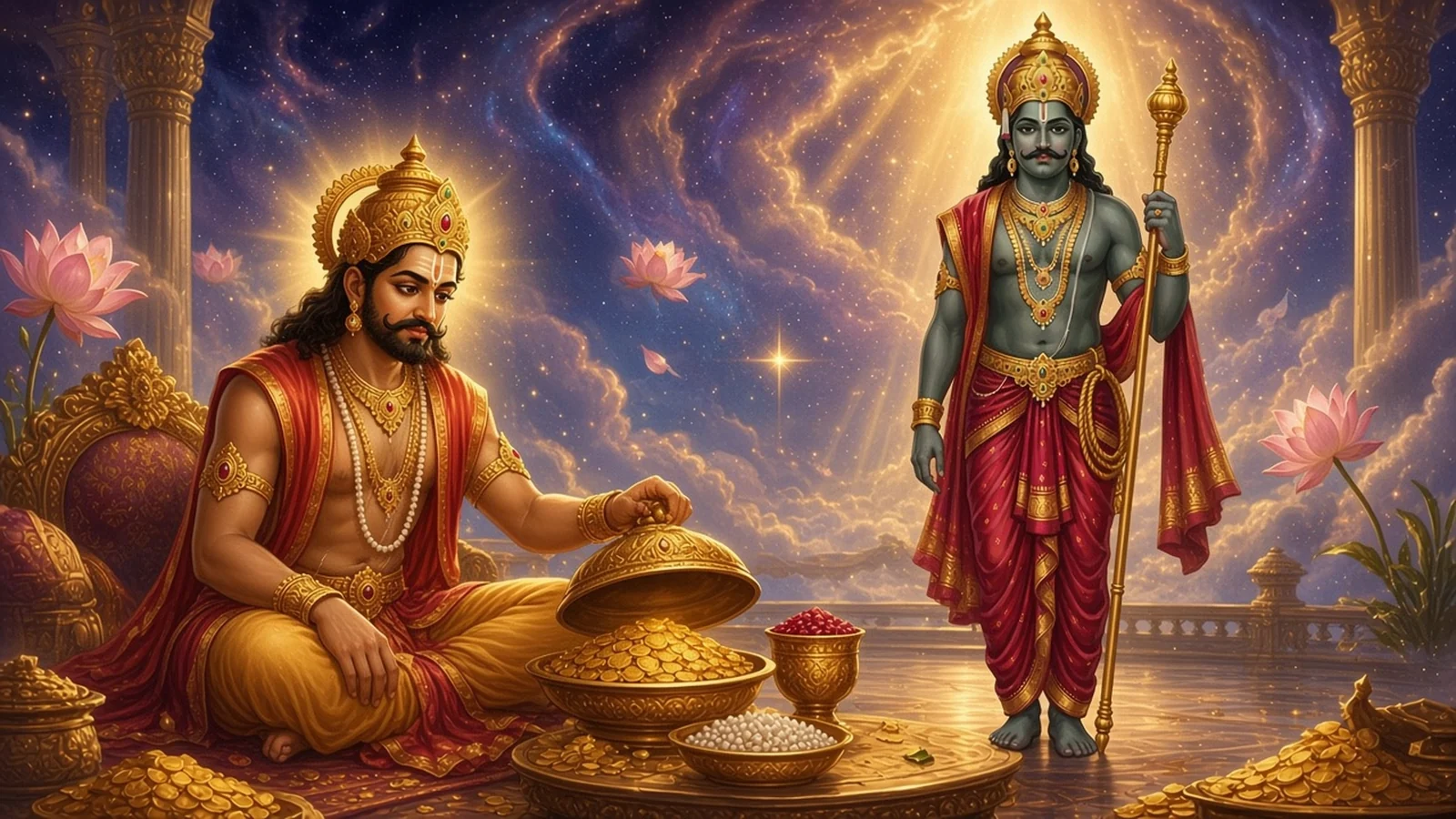
The fortnight has a story of its own, told in many households and found in no old text: Karna, who gave gold all his life, was served gold in the next world and sent back to earth for a fortnight to feed the fathers he had never known. The Mahabharata tells instead of the first shraddha, made by the sage Nimi on a new moon in grief for his son, and of the fathers who ate so much that they fell ill, until Agni agreed to eat with them and took the first share. For what the dead go through and why they need the pindas at all, families read the Garuda Purana.
Karna in the next world, seated before dishes of gold and jewels with nothing to eat
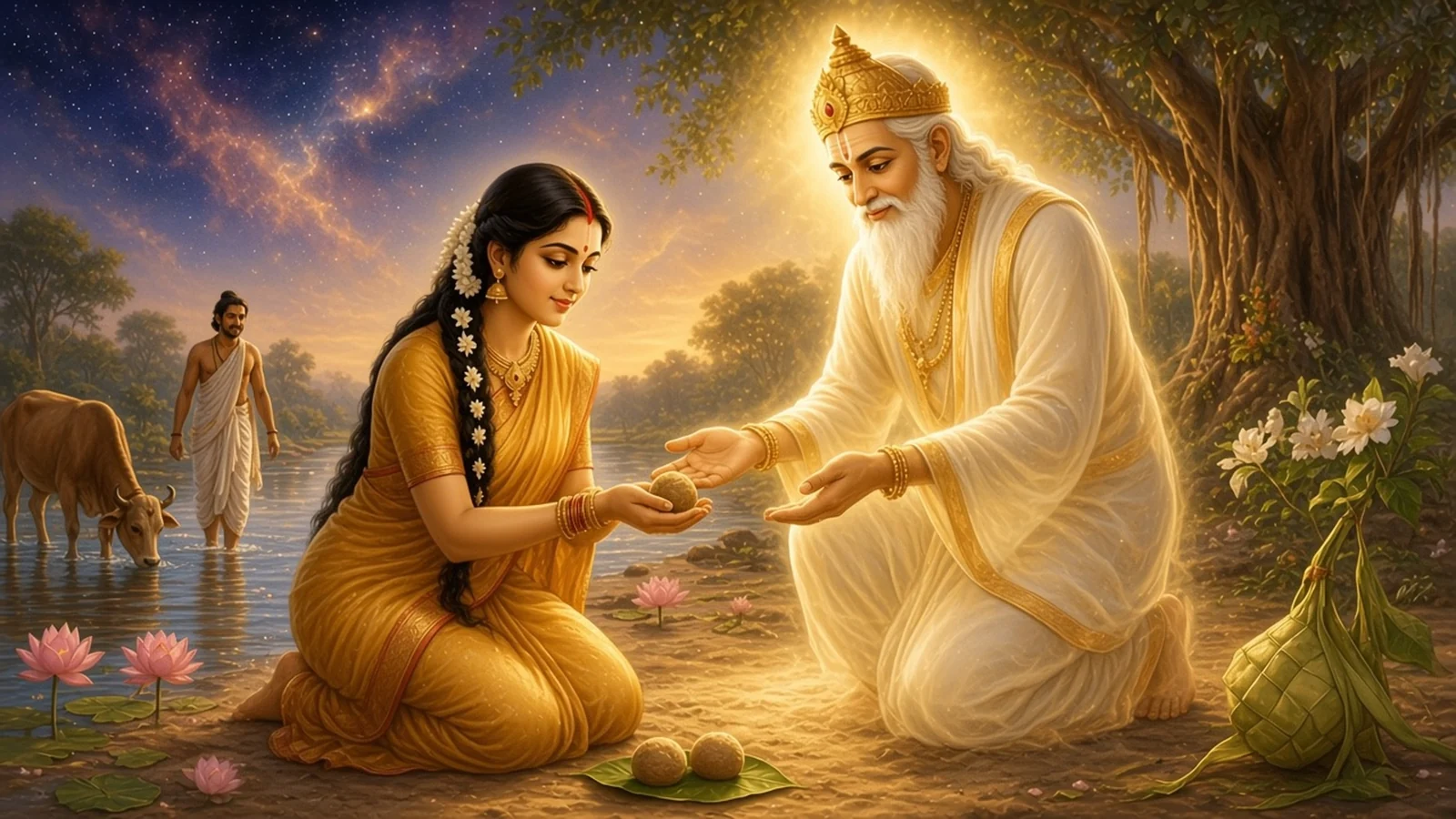
Gaya's story is the Vayu Purana's. Vishnu pinned the pious asura Gaya under a stone with his mace, and in return the asura asked that anyone who offered a pinda on his body should take his fathers with him to Brahma's world. Sita's sand pinda on the Phalgu is told there too.
Vishnu rests his foot on the sleeping asura Gaya, who becomes the land of Gaya
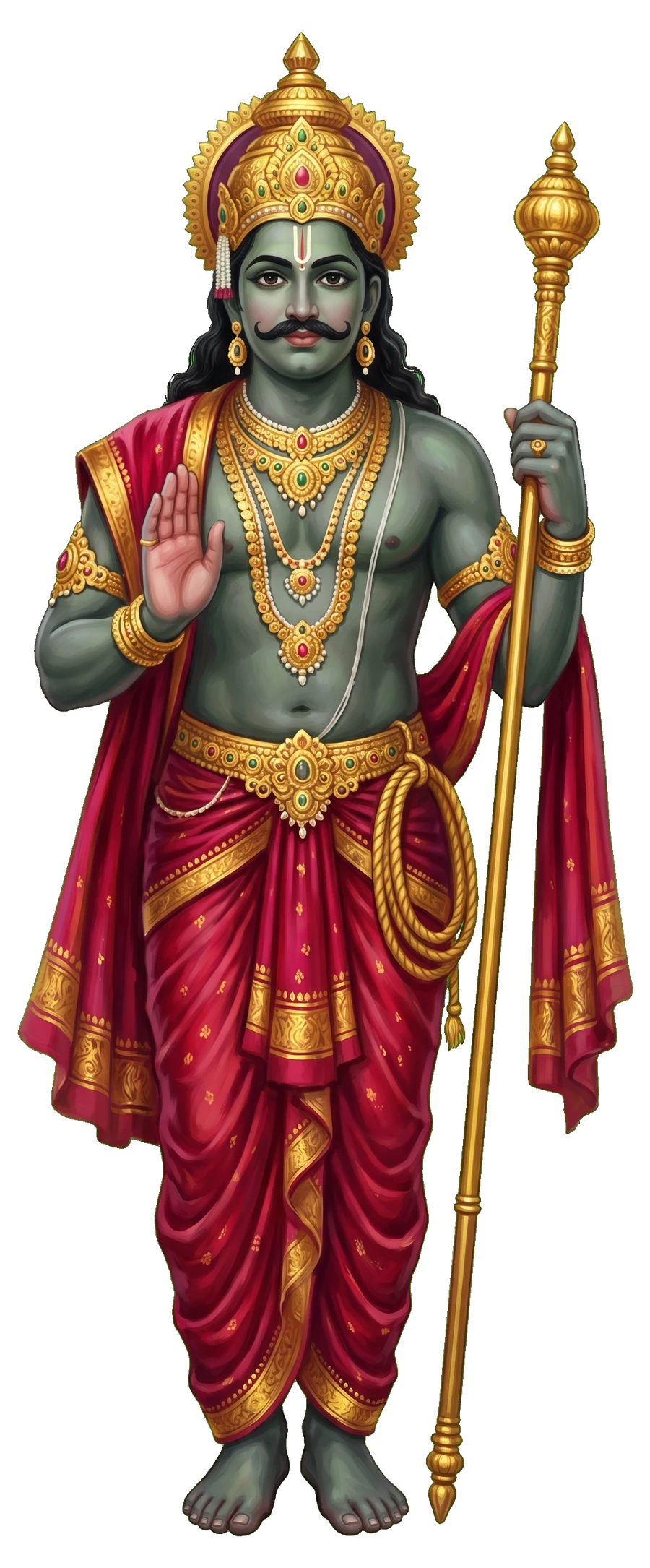
The first to die and the king of the dead, who rules the world of the ancestors. In this fortnight he lets them go down to their families to be fed, and he is worshipped with Vishnu at the rite. The crow that takes the rice is called his messenger, and his dogs are fed with it.
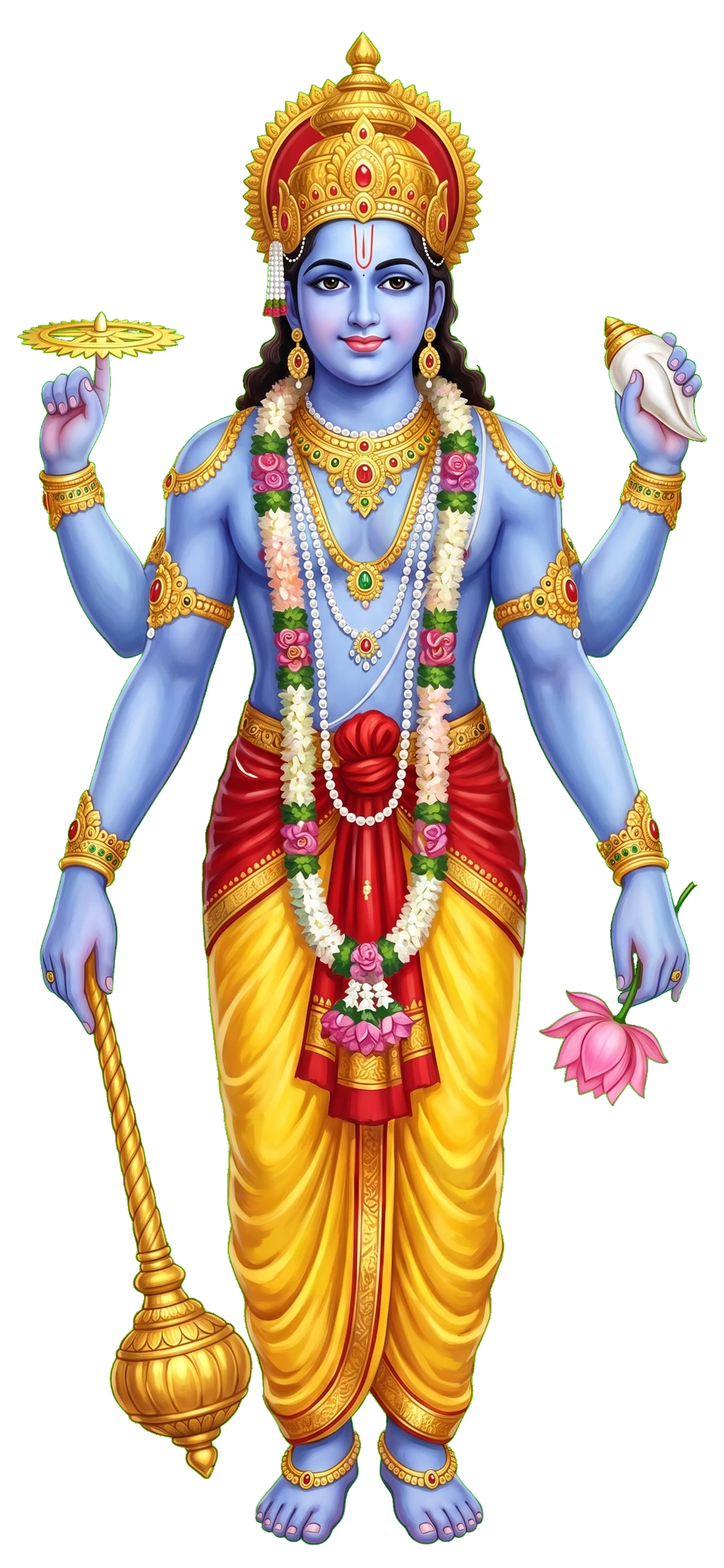
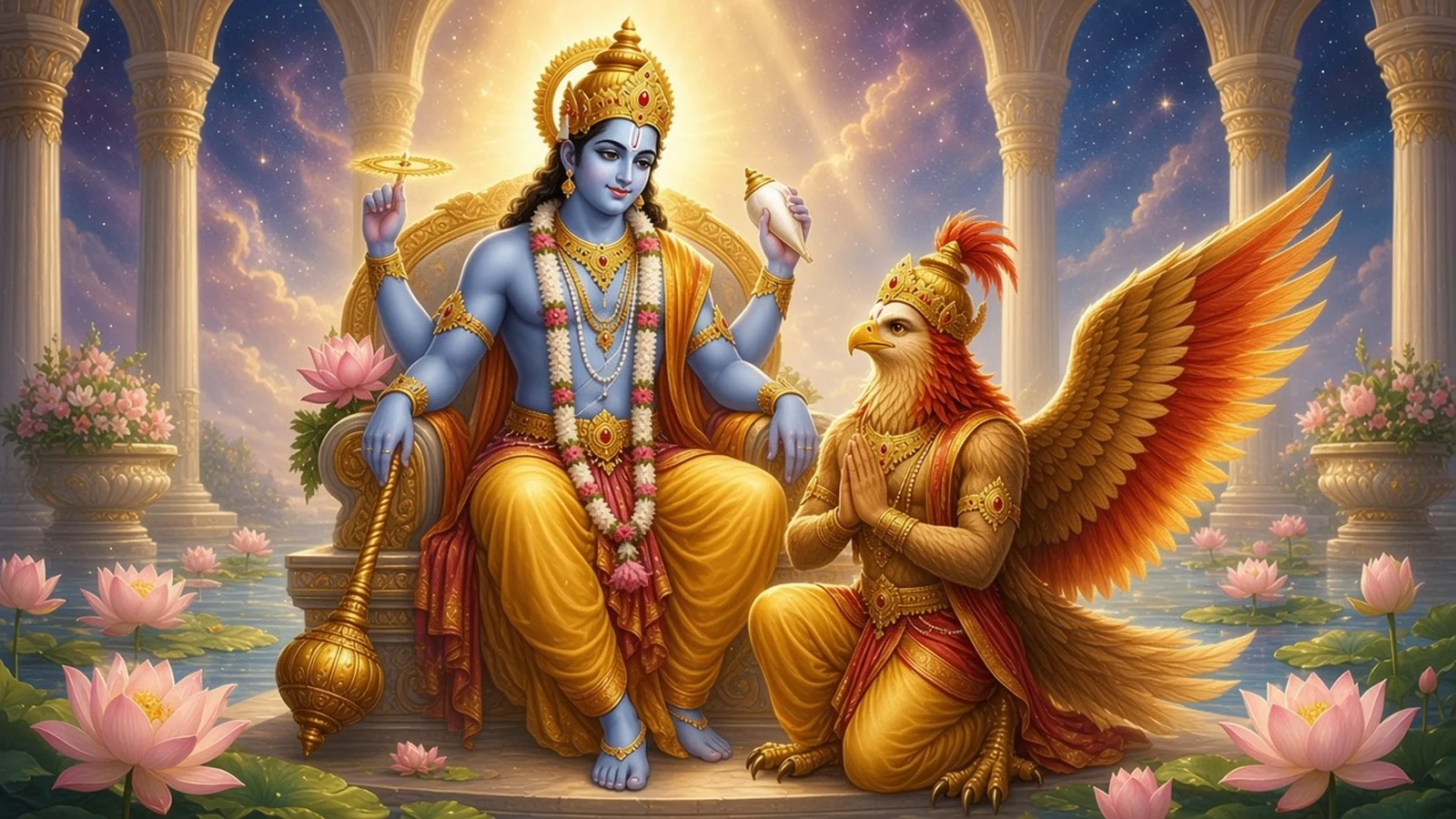
Vishnu as the bearer of the mace, who holds the asura Gaya still under the stone at Gaya and left the footprint worshipped in the Vishnupad temple. The tradition says that every pinda is offered finally to him, and the river there, the Phalgu, is counted as the water from his feet.
T
The Pitris (the ancestors)
The fathers and mothers of three generations, named one by one in the rite, and the whole line of the family's dead behind them. They live with Yama, come down in this fortnight to their descendants' houses, and are believed to go back satisfied or disappointed with what they were given.
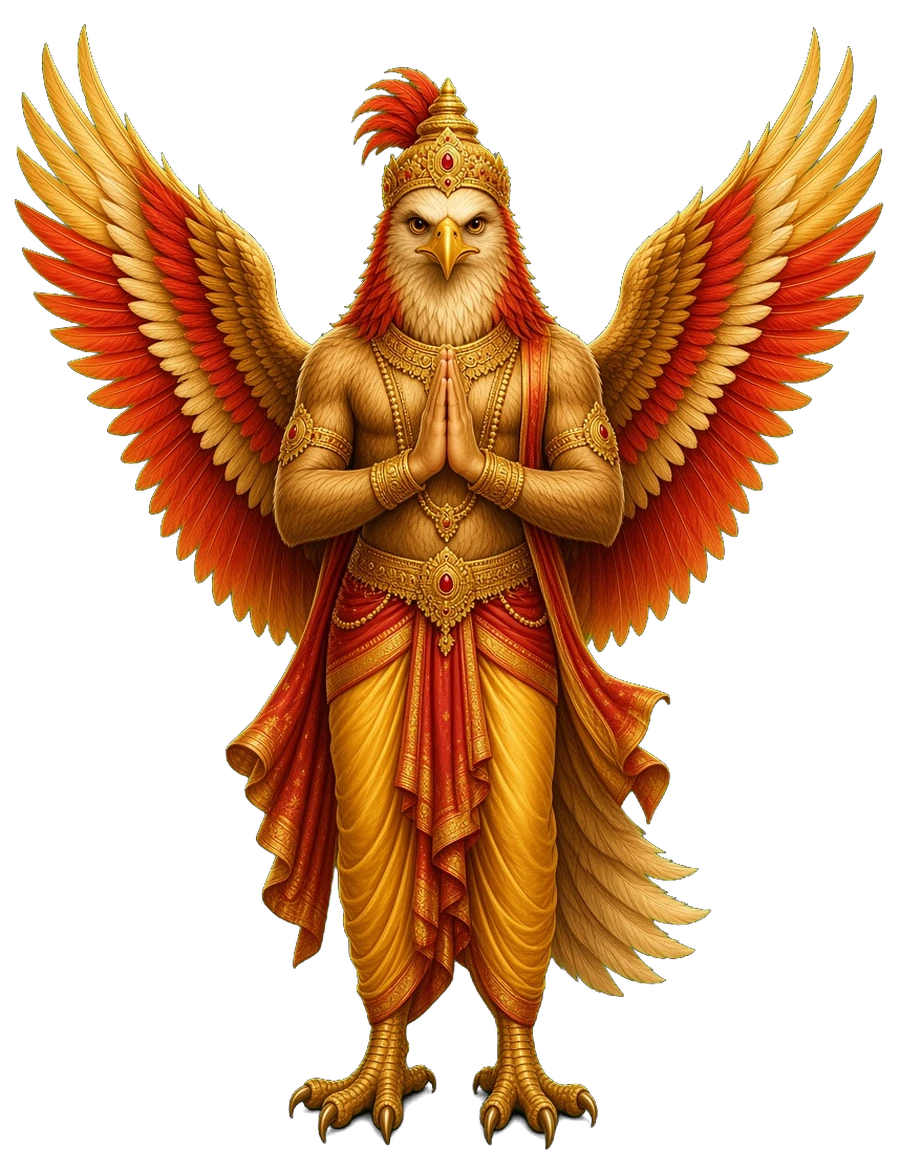
The bird to whom Vishnu tells the Garuda Purana, the book read in Hindu homes after a death, on what happens to the dead and why they need the pindas.
Sixteen days for the ancestors
1
Purnima Shraddha
The full moon of Bhadrapada, the day before the dark half begins · Wednesday 15 September 2027
Proshthapadi Purnimathe full-moon shraddha
The rites for those who died on a full moon of any month are done on this day, and with it the fortnight is counted as sixteen days. In Prayagraj the pandas at the Sangam open their registers of families on the first days, and the first water is poured for Bhishma before a family's own dead. In 2028 the full-moon shraddha falls on Sunday 3 September.
At the Sangam a panda opens the family register as the first water is poured for Bhishma
The first to the thirteenth day of the dark half · Thursday 16 September 2027
Pratipada to TrayodashiMaha BharaniBharani PanchamiSanyasi Dwadashi
Each family keeps its own day, the lunar day of the fortnight that matches the lunar day of the death, whatever the month it happened in. The shraddha is done in the afternoon, and the son, or the eldest man of the family, offers pindas and tarpan for his father, grandfather and great-grandfather and for the mother's line. Maha Bharani, on Monday 20 September 2027 (Saturday 9 September 2028), is for those who died in the past year; the twelfth is kept for children and for sannyasis.
On the family's day a son offers pindas of rice and sesame on darbha grass, facing south
The ninth day of the dark half · Friday 24 September 2027
Avidhava NavamiMatru Navamithe mothers' day
The day for mothers, and for married women who died before their husbands. In 2028 it falls on Wednesday 13 September. Families who want a mother's rite done at its own place go to Siddhpur in Gujarat, where the shraddha for mothers is kept as Gaya keeps the fathers'.
At the Bindu Sarovar in Siddhpur a son offers pindas for his mother
4
Ghata Chaturdashi
The fourteenth day of the dark half · Tuesday 28 September 2027
Ghayala ChaturdashiChaturdashi Shraddha
The fourteenth is kept only for those who died by weapons, in accidents or by violence; for anyone else the shraddha is moved to the new moon. In Varanasi the Tripindi shraddha for the untimely dead is done at Pishach Mochan Kund. In 2027 the thirteenth and fourteenth shraddhas fall on the same day; in 2028 the fourteenth is Sunday 17 September.
Tripindi shraddha for the untimely dead at Pishach Mochan Kund in Varanasi
5
Sarvapitri Amavasya
The new moon that ends the dark half, the day before Navratri begins · Wednesday 29 September 2027
The day for every ancestor together, for those whose day is not known and for any rite that was missed; a shraddha on this day is said to be as fruitful as one at Gaya. At Gaya the last pinda of the pilgrimage is offered under the Akshayavat, with kheer, and the ancestors are sent back. Rameswaram's beach fills before dawn. In Bengal this is Mahalaya, the morning the goddess is called, and in Telangana Bathukamma begins. In 2028 the day is Monday 18 September.
The last pinda, with kheer, under the Akshayavat at Gaya as the ancestors are sent home
Gaya is the place every son is told to reach once. During the fortnight Bihar holds its Pitru Paksha mela, and pilgrims make their offerings at the vedis, 54 now, from the Vishnupad temple and the Phalgu to the 676 steps of Pretshila for those who died untimely deaths. On one day the pindas at Sitakund are made of sand, and the last is offered under the Akshayavat. The Gayawal pandas keep registers that list who of a family came, and when.
Varanasi and PrayagrajThe Ganga before Gaya
The old order of the pilgrimage is Prayagraj, then Kashi, then Gaya. At the Sangam heads are shaved, the pandas trace a family through their registers and Bhishma is given water first. In Varanasi the ghats, Dashashwamedh above all, fill on the new moon, and Pishach Mochan Kund keeps the Tripindi shraddha for those who died before their time.
HaridwarHar ki Pauri and the Narayani Shila
Families pour tarpan at Har ki Pauri and Kushavarta Ghat, and take their pindas to the Narayani Shila temple, which the tradition counts with Badrinath and Gaya among the great places for the rites of the dead. Haridwar's pandas keep family registers of their own.
Siddhpur, GujaratMatru Gaya, for mothers
As the fathers are given their pindas at Gaya, the mothers are given theirs at Siddhpur, at the Bindu Sarovar by the Kapila ashram, where Kapila taught his mother and Parashurama made the offering for Renuka. The rites are kept here in Bhadrapada as well as in Kartik and Chaitra, by priests who keep the families' records.
Trimbakeshwar, MaharashtraAt the source of the Godavari
Rama is said to have done his father's shraddha here, where the Godavari rises. Pilgrims bathe at Kushavarta, then make tarpan and shraddha, and the Tripindi shraddha and the Narayan Nagbali rite are done for unquiet dead. Maharashtrian homes cook puran poli for the fortnight and feed Brahmins, cows, crows and dogs.
The southMahalaya Paksham, and Rameswaram
Southern homes keep the fortnight as Mahalaya Paksham and call the rite Pitru Karma; Kerala calls it Bali. On Mahalaya Amavasai in Purattasi the crowds bathe in the sea at Rameswaram's Agni Theertham, give tharpanam and pinda, give a cow, clothes and food, and then bathe in the twenty-two wells of the Ramanathaswamy temple.
BengalMahalaya
Bengal's tarpan on the Ganga at dawn on the new moon, and the radio Chandipath that wakes the city, are told on our Durga Puja page.
NepalShraddha Karma
Nepal keeps the fortnight as Shraddha Karma, with pinda daan at home and at the rivers, and at the Gokarneshwar temple near Kathmandu pindas are offered daily through the season.
HinduEvery Hindu family
Pitru Paksha belongs to no one sect. Vaishnava, Shaiva and Shakta homes keep it alike, in every region, the eldest son or the nearest man of the family offering for the three generations on the father's side and the mother's. Families that cannot travel give food and clothes in the names of their dead, and the new moon is kept by those who know no dates at all.
How it is kept
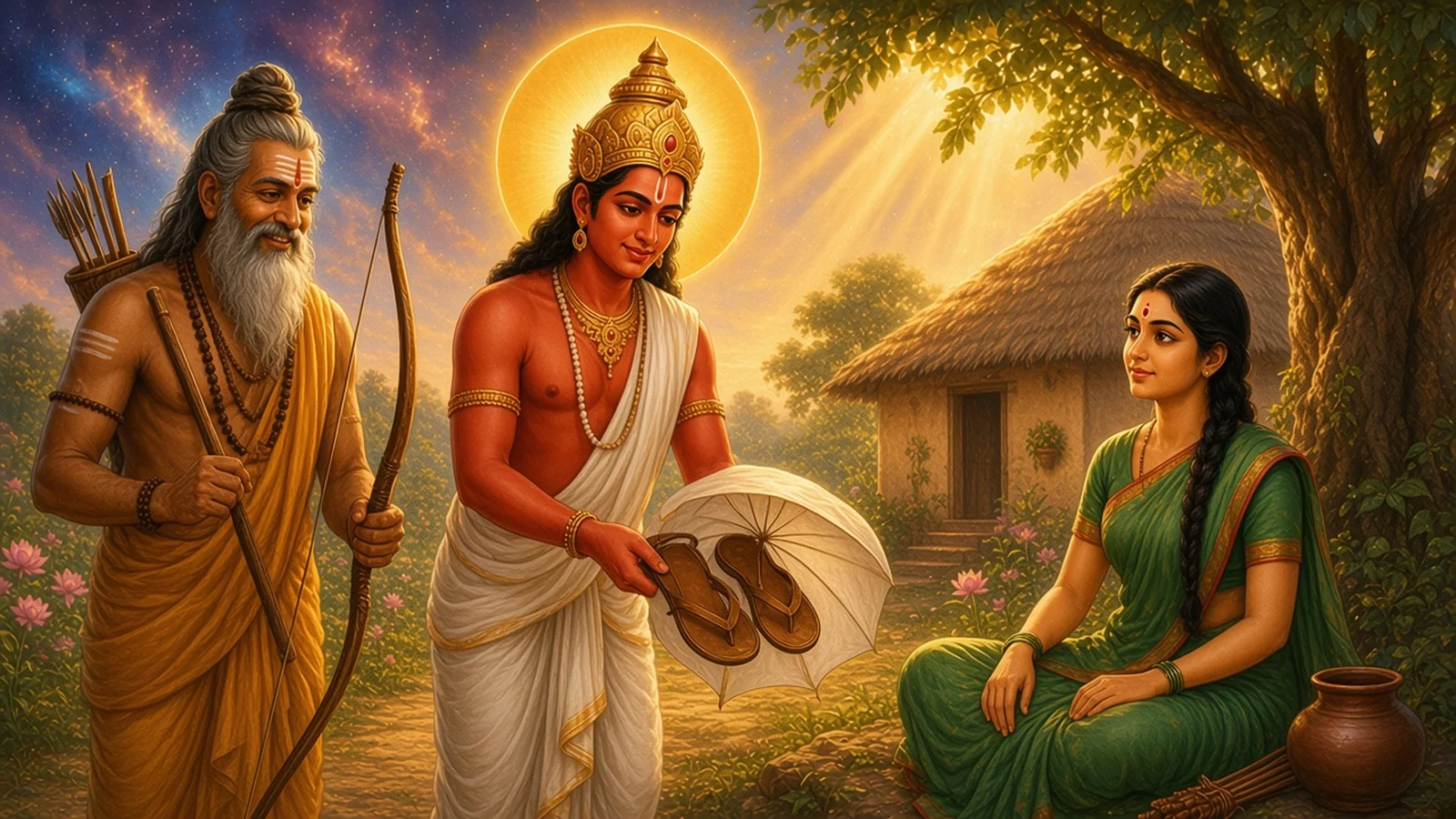
The rite is done in the afternoon on the family's day. The man who performs it bathes, puts a ring of darbha grass on his finger, moves his sacred thread to the right shoulder and sits facing south. He makes the pindas and sets them on darbha, calls his fathers by name, and pours water with black sesame from his joined hands as tarpan. A fire offering goes to Agni and Soma, who carry the food on. Priests are then fed and paid as though the ancestors themselves were eating, and shares are set out for the cow, the dog and the crow, which is held to be Yama's messenger or the ancestor himself come to eat. Kheer, rice, dal and pumpkin are cooked, and many families give an umbrella and sandals as well.
Priests fed on banana leaves, and shares set out for the crow, the cow and the dog
Most families keep it at home or at the nearest river, and many go to a tirtha at least once. The great place is Gaya, where pilgrims move round the vedis for days with the Gayawal pandas, and families come to Varanasi and Prayagraj, to Haridwar's Har ki Pauri, to Siddhpur for their mothers, to Trimbakeshwar, and to the sea at Rameswaram. On the new moon those who have kept nothing, or know no dates, make one offering for all their dead.
In the old texts
The Anushasana Parva of the Mahabharata gives Bhishma's teaching on shraddha: what each lunar day of the dark fortnight brings to the man who offers on it, why the fourteenth is left for those killed by weapons, why sesame is the best of offerings, and the line that a man should wish for many sons in the hope that one of them will go to Gaya, to the banyan whose offerings never run out. The Manusmriti, in its third chapter, makes the shraddha a monthly duty on the new moon and sets out whom to feed and what to give, and the Grihya Sutras lay down the household rite. The Gaya Mahatmya of the Vayu Purana is the charter of Gaya's pilgrimage, with its vedis, the Phalgu as Vishnu's water and the undying banyan. The Garuda Purana is the book of the dead itself, read aloud in the days after a death.
Where this page comes from. Written by Devalok from Drik Panchang's shraddha tables for 2027 and 2028, the Gaya Mahatmya of the Vayu Purana, the Mahabharata's Anushasana Parva (87 to 92) in Ganguli's translation, the Manusmriti (3.122), the reporting of Prabhat Khabar, The Times of India, The Hindu, Dainik Bhaskar and the Free Press Journal from the 2026 fortnight, Gujarat Tourism on Siddhpur, and the encyclopedia articles on Pitru Paksha and Shraddha, as recorded in the Devalok Lore. Our own words throughout.