Rama Navami is Rama's birthday, the ninth day of the bright half of Chaitra in March or April, and the last day of the spring Navratri. The texts and the almanacs put the birth at midday, so the day is kept at noon, with a fast till then, the Ramayana read through the nine days before, and a small image of the child laid in a cradle and rocked as the conch sounds. Ayodhya bathes in the Sarayu and fills its streets, the south pours pearls over Sita and Rama at their wedding, and every house has panakam or a sweet for the child.
When is Rama Navami in 2027? The birth at noon on Rama Navami is Thursday 15 April 2027. In 2028: Monday 3 April 2028. The ninth day of the bright half of Chaitra, in March or April, at noon.
Also calledRam NavamiSri Rama NavamiRamnavami
Next, in 2027Thursday 15 April 2027
Prime godRama
with 3 more
WhereAll India, above all Ayodhya and the Hindi belt, Bhadrachalam and the Telugu country, Karnataka, Tamil Nadu, Maharashtra, Bihar and Nepal's Janakpur, and ISKCON temples everywhere
How longOne day, the ninth and last of Chaitra Navratri; twelve days of festival at Bhadrachalam and a month of music in Bengaluru
The ninth day of the bright half of Chaitra, in March or April, at noon
Why it is kept
Rama Navami is a birthday with an hour. Valmiki says Rama was born in the month of Chaitra, on the ninth day of the bright fortnight, under the star Punarvasu; Tulsidas adds that it was midday, neither hot nor cold, the hour the whole world rests. So the festival has a clock in it. The morning is for fasting and reading, and everything waits for noon.
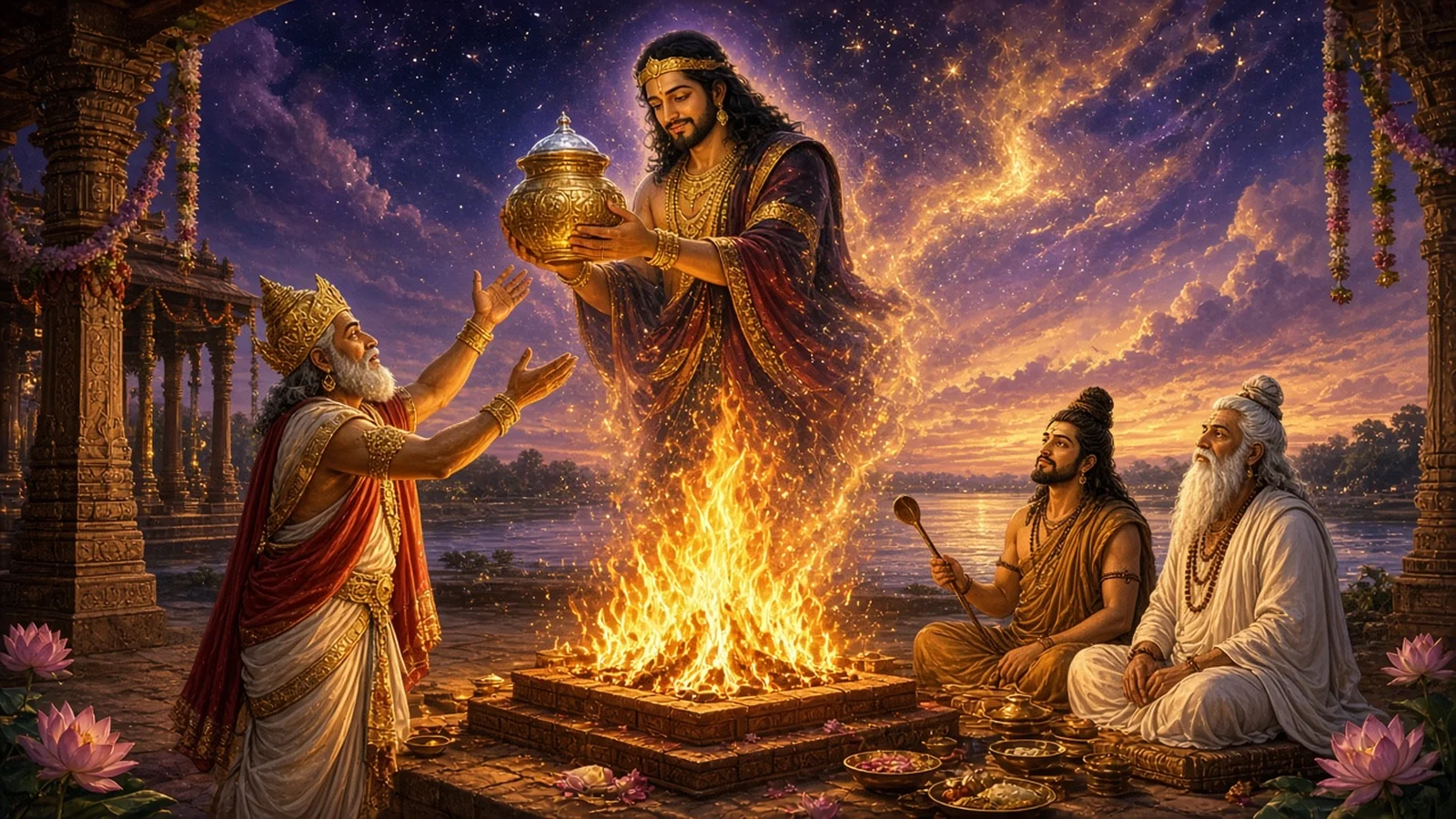
King Dasharatha of Ayodhya had three queens and no son. He held the horse sacrifice on the north bank of the Sarayu and then the rite for a son, and a being rose out of the fire with a golden vessel of payasam for his queens. Kausalya ate half and bore Rama. The gods had arranged it: Ravana, the demon king of Lanka, had asked Brahma to be safe from gods, gandharvas, yakshas and demons, and had not bothered to name men, so a man was needed, and Vishnu agreed to be born as one.
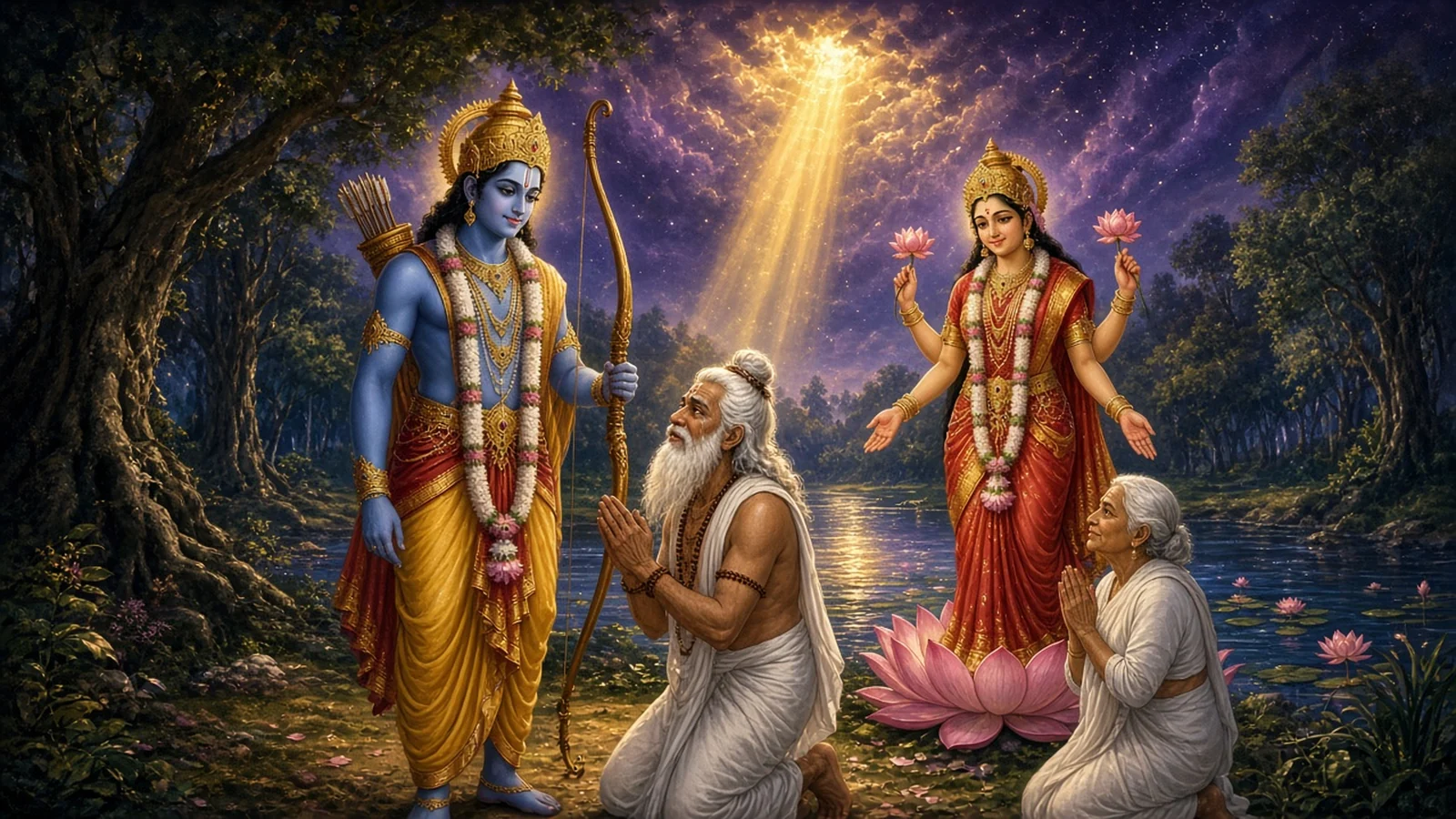
Tulsidas gives a second reason, older than Ravana. The first man, Svayambhuva Manu, and his wife Shatarupa gave up their kingdom, stood for thousands of years in the forest of Naimisharanya, and when Vishnu appeared they asked for a son like him. There was no one like him, so he came himself, and they were reborn as Dasharatha and Kausalya to receive him. Both reasons are read on the day, and the day is kept for the moment they led to: a god who agreed to be a baby.
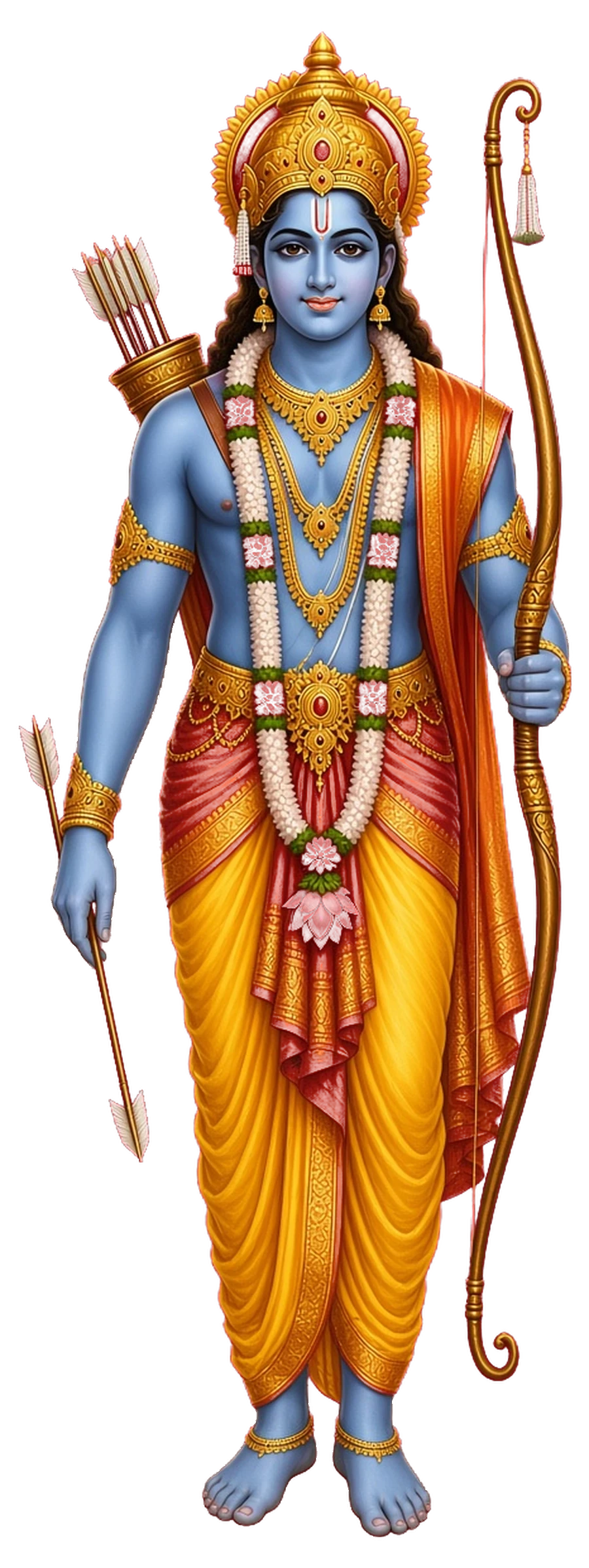
The child born to Kausalya at noon on the ninth of Chaitra, Vishnu's seventh avatar, born a man because only a man could kill Ravana. The day is his birthday, and in the south his wedding day too.
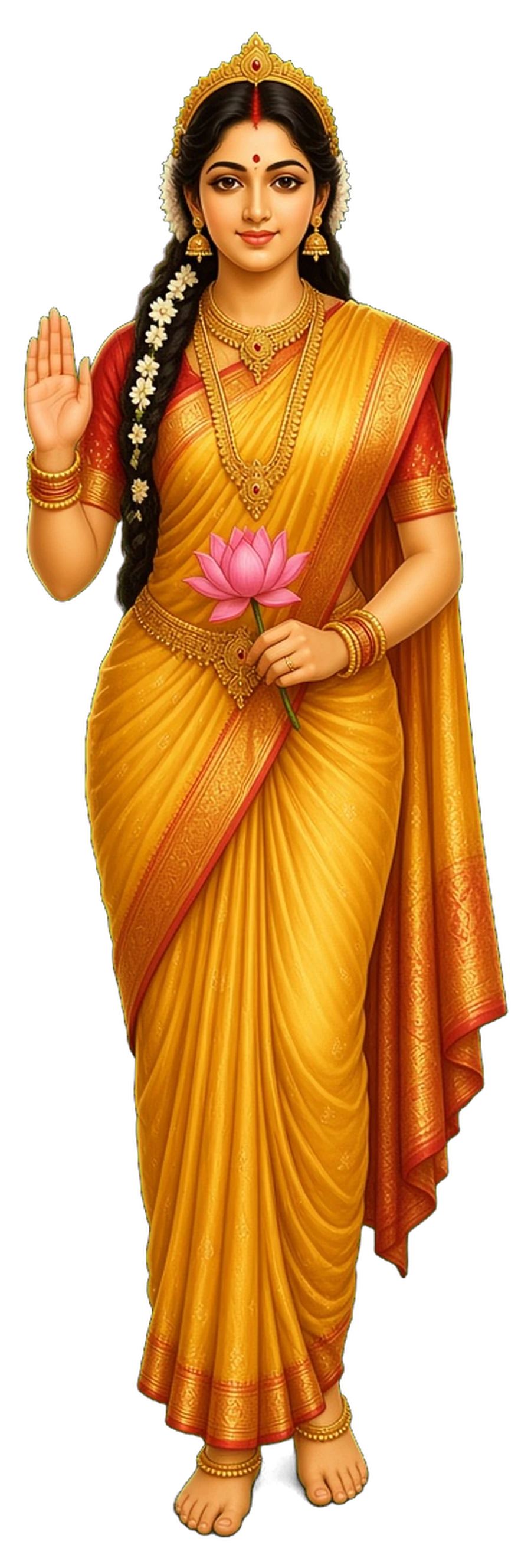
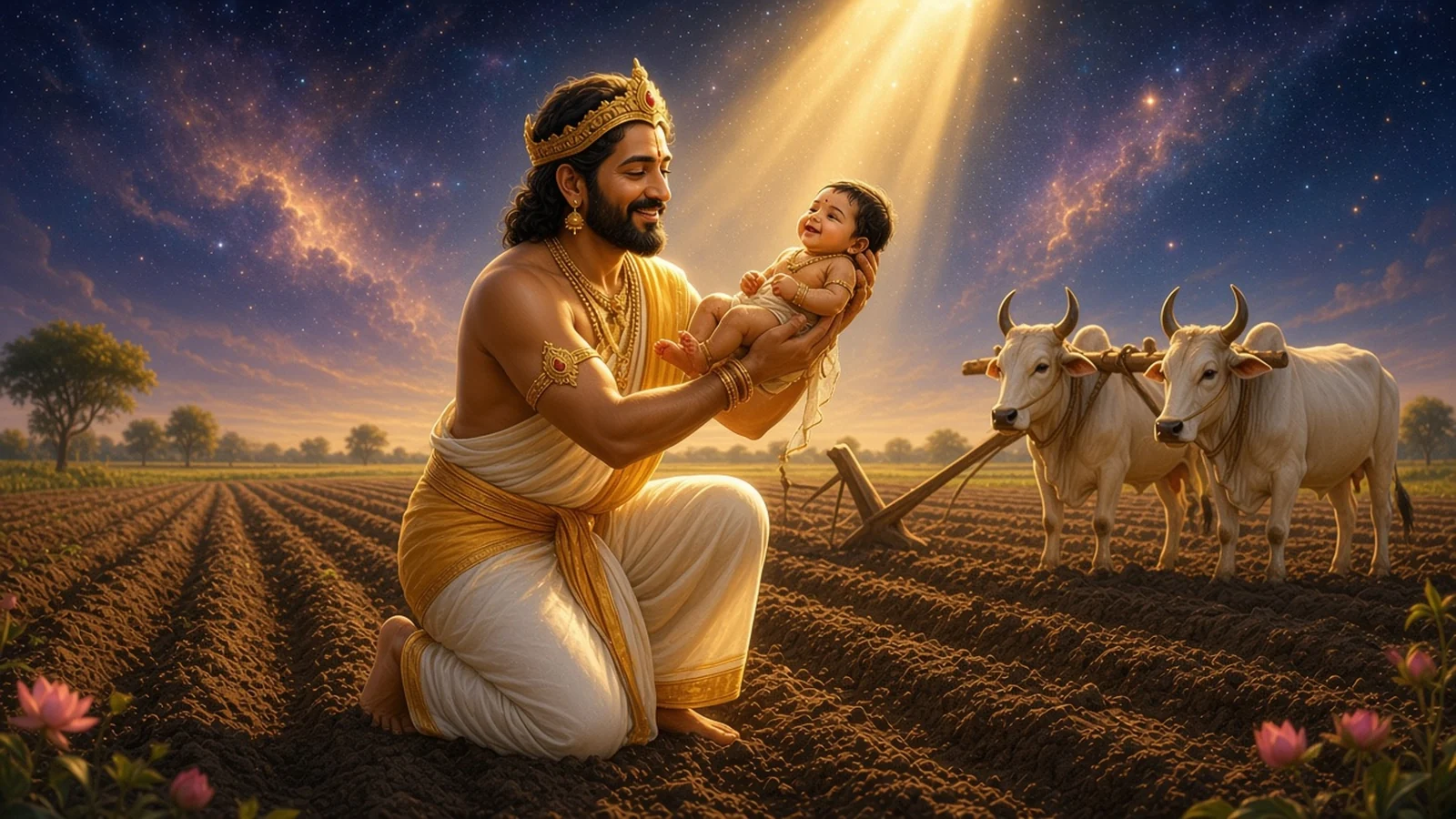
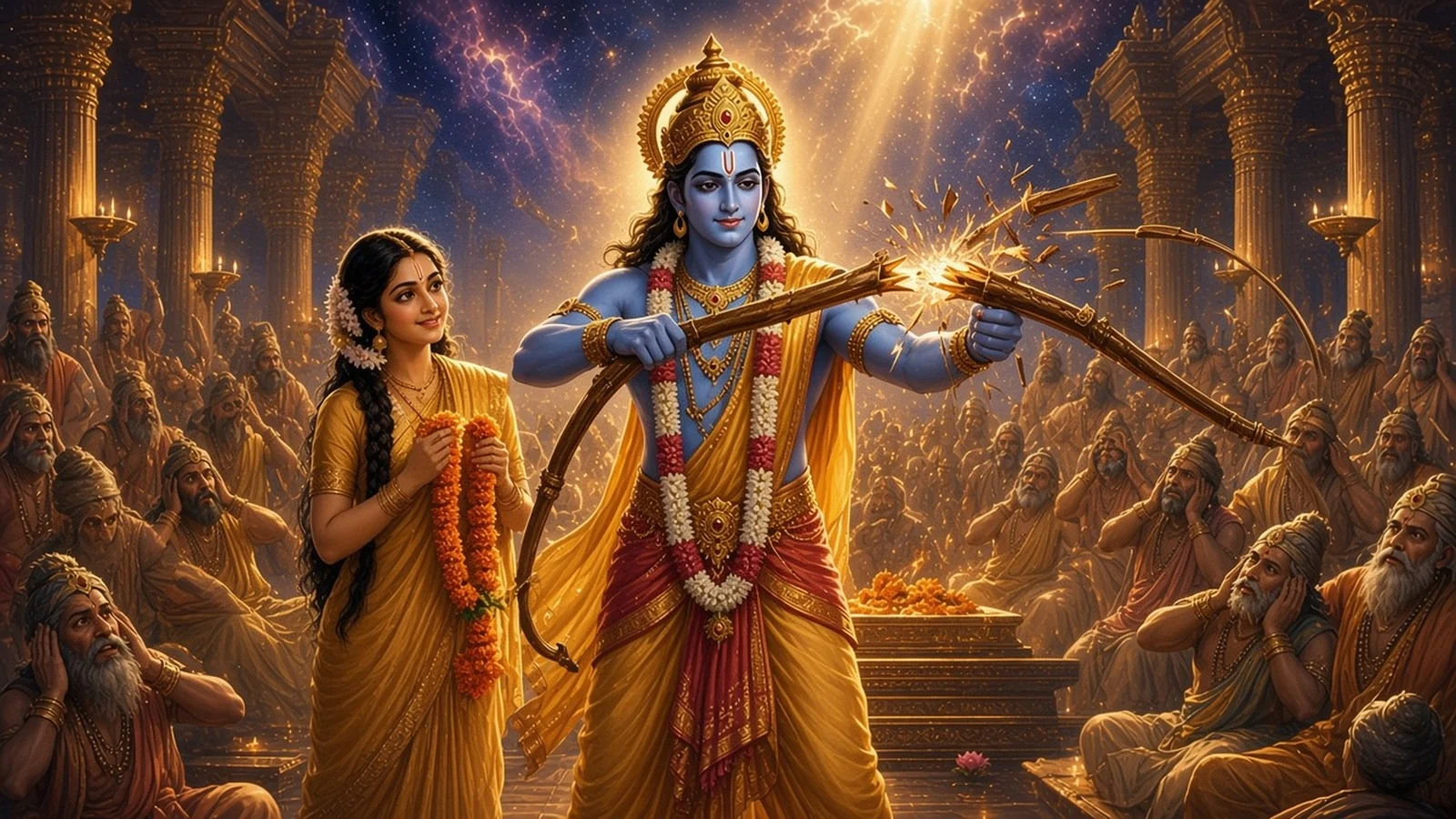
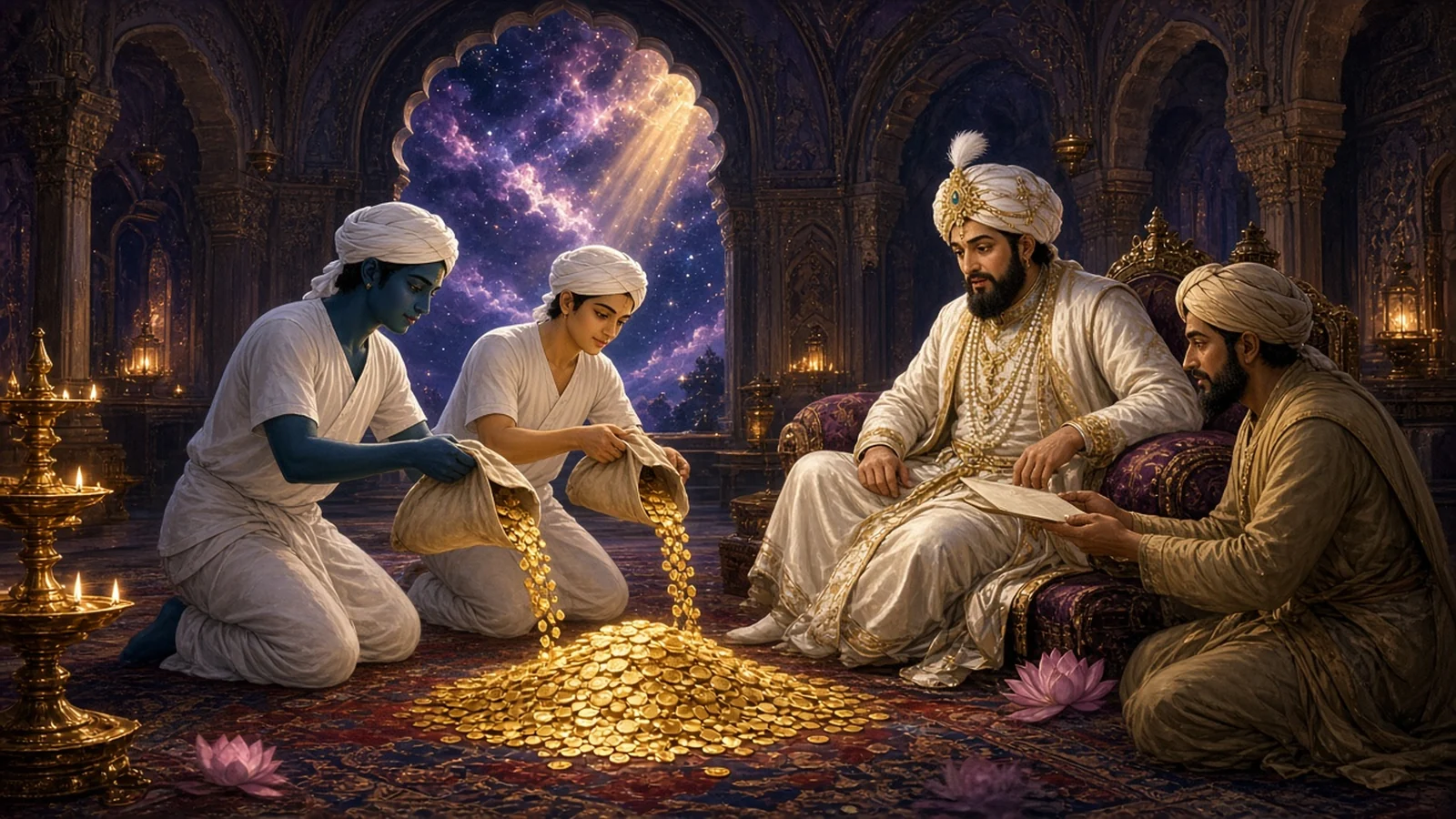
Married to Rama on this day at Bhadrachalam, Vontimitta and across the Telugu and Tamil country, in the Sita Rama Kalyanam, with pearls poured over the couple. Sitamarhi, where she was found in the furrow, keeps a great fair.
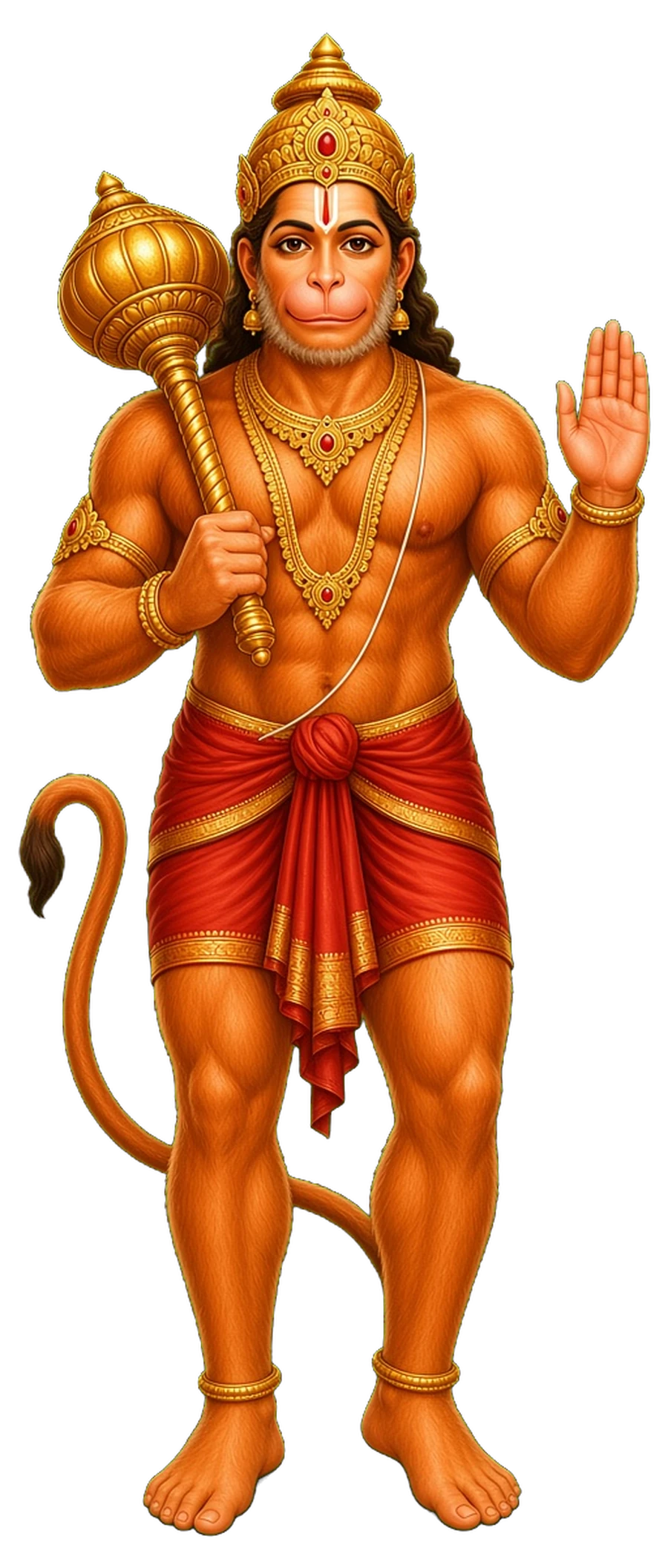
Rides in the rath yatras beside Rama, Sita and Lakshmana, and his Hanuman Garhi is the first stop of every pilgrim in Ayodhya. Valmiki has him fathered by the wind god in the same chapters that tell of Rama's birth.
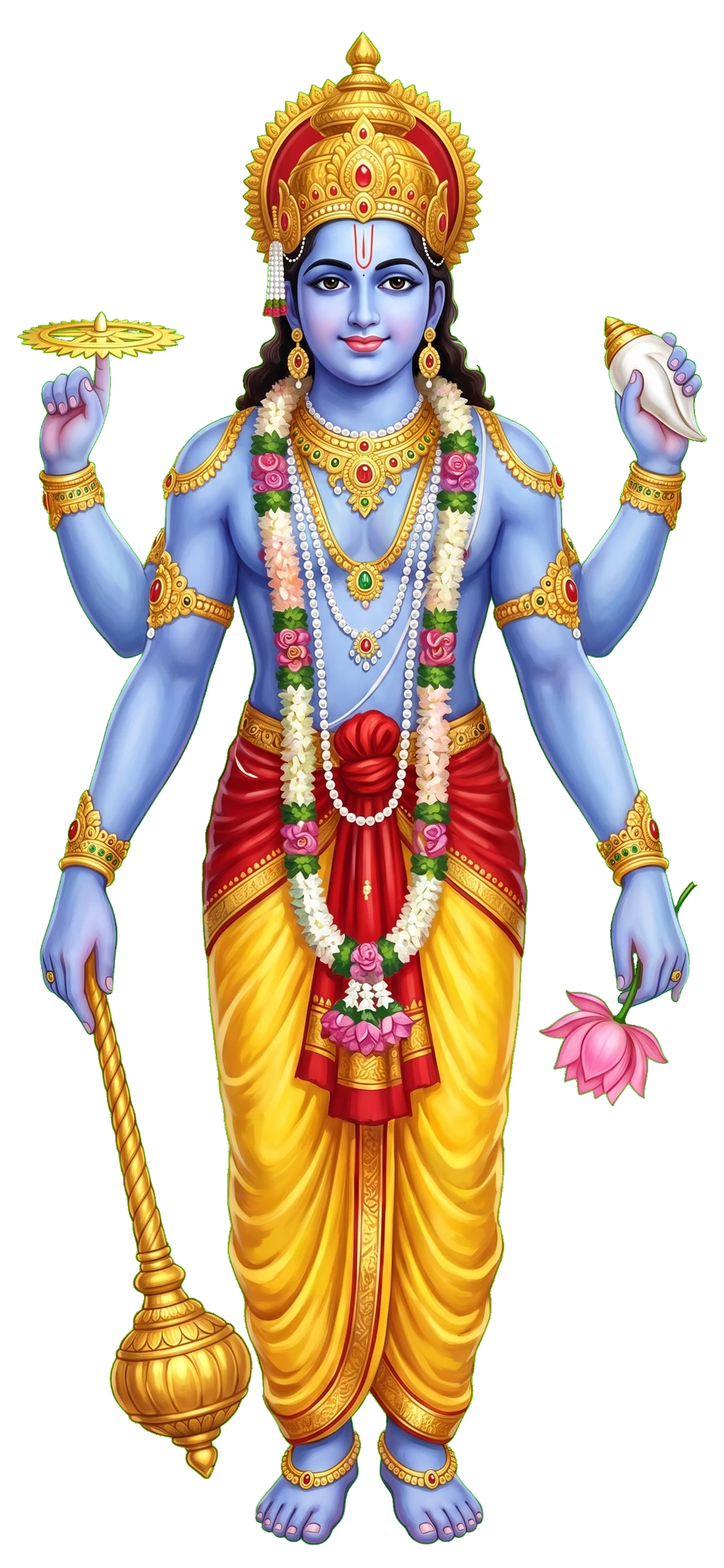
Chose Dasharatha for his father when the gods asked him to be born as a man, and in Tulsidas promised Manu and Shatarupa, long before, that he would be their son because there was no one else like him to send.
The day of Rama Navami
1
The birth at noon
The ninth of the bright half of Chaitra, at midday · Thursday 15 April 2027
JanmotsavaMadhyahna puja
The fast is kept from morning. In temples and homes the Ramayana reading that began on the first of Chaitra comes to its end, and as the sun reaches the middle of the sky the conch is blown, the birth is announced, and a small image of the child Rama is laid in a decorated cradle and rocked, while Tulsidas's hymn of the birth, Bhaye Prakat Kripala, is sung. In Ayodhya a ray of sunlight is led onto the forehead of Ram Lalla at that moment. Then panakam, buttermilk and sweets are handed round and the fast is broken.
The same day, from the Abhijit hour to the evening, in the south · Thursday 15 April 2027
KalyanotsavamThirukalyanam
In the Telugu and Tamil country the day is a wedding. At Bhadrachalam on the Godavari the images of Rama and Sita are carried to the Mithila ground, the marriage is performed as the Agamas prescribe, and the state's pearls, mixed with rice and turmeric, are poured over the couple as talambralu; at Vontimitta the Kalyanam is held in the evening. Rath yatras of Rama, Sita, Lakshmana and Hanuman go through the streets, and in Bengaluru the month of music is under way.
Pilgrims bathe in the Sarayu at dawn, climb the seventy-six steps of Hanuman Garhi and go on to Ramkot and the temple of Ram Lalla, the child Rama. Since 2024, when the new temple was consecrated, mirrors and lenses lead a beam of sunlight onto the forehead of the black stone child at noon on Rama Navami, and the Ramcharitmanas recitations that run through the nine days across Uttar Pradesh end at the same hour. Tulsidas says he began writing the Ramcharitmanas in this city on a Rama Navami in 1574.
Bhadrachalam and VontimittaSita Rama Kalyanam
At Bhadrachalam in Telangana, where the tax collector Gopanna built Rama his temple with the sultan's revenue, the wedding of Sita and Rama is the heart of a twelve-day Brahmotsavam. The sultan Abul Hasan, Tana Shah, began sending pearls and silk for the wedding, and every government since has kept it up; today the Chief Minister brings them. The pearls are mixed with rice and turmeric and poured over the couple. Vontimitta in Andhra Pradesh, under the Tirumala trust, holds its Kalyanam in the evening.
KarnatakaPanaka and a month of music
Neighbourhood mandalis set up tents and hand out panaka, the jaggery drink, and kosambari to passers-by. In Bengaluru the Sree Ramaseva Mandali, founded in 1939 by a boy of fourteen, has held a month of classical concerts in a pandal on the Old Fort High School grounds in Chamarajpet every Rama Navami since; M. S. Subbulakshmi sang there thirty-two times.
Tamil Nadu and the far south
Panakam, neer mor, the spiced buttermilk, and a salad of soaked dal are the offerings of the day in Tamil homes. Rameswaram, where Rama worshipped Shiva before crossing to Lanka, is one of the great gathering places of the day.
MaharashtraThe noon and the chariot
The birth is re-enacted at noon with conches and song, and at Nashik the Kalaram temple of Panchavati, on the ground where Rama is said to have lived in exile, sends its chariot through the town on Rama Navami. The quarrel over that chariot in 1930 was part of Ambedkar's fight to open the temple to everyone.
Sitamarhi and JanakpurSita's country
Sitamarhi in Bihar, where tradition says Janaka found Sita, holds one of the great spring fairs of the state on Rama Navami, with trade in pots, brass, spices and cloth. Across the border at Janakpur in Nepal the Ram temple and the Janaki temple fill with sadhus and pilgrims from both countries, and the songs sung are the Mithila songs for a birth in the family.
ISKCON and the diaspora
ISKCON temples everywhere keep the day with a fast till noon or sunset, kirtan and the reading of the Ramayana. The descendants of indentured workers keep it in Durban, Trinidad, Guyana, Suriname, Mauritius and Fiji, with the Ramayana recited and bhajans sung as their great-grandparents did.
All HindusThe day of the ideal king
Rama Navami belongs to no sect. Vaishnavas keep it as the avatar's birthday, Shaivas remember that Rama worshipped Shiva at Rameswaram, and in the north the name of Rama is the greeting and the last word. Odisha's Jagannath temples observe the day and begin their preparations for the summer Ratha Yatra.
The Ramayana beyond the Hindu fold
The story of Rama has Buddhist and Jain tellings of its own. The Pali Dasaratha Jataka makes Rama a prince of Benares and a former life of the Buddha, who teaches his brother not to grieve for their father; the Jain Paumachariya of Vimalasuri, about the third century, calls him Padma, has Lakshmana kill Ravana, and ends with Rama as a monk who reaches liberation. Neither keeps Rama Navami, but both keep Rama.
How it is kept
The nine days of Chaitra Navratri lead up to it. In many homes and temples the Ramayana, Valmiki's or Tulsidas's, is read from the first day so that it ends on the ninth, and in Uttar Pradesh the temples hold an unbroken twenty-four-hour recitation of the Ramcharitmanas that finishes at noon. On the day itself people fast, some till noon and some, as the almanacs prescribe, from sunrise to sunrise.
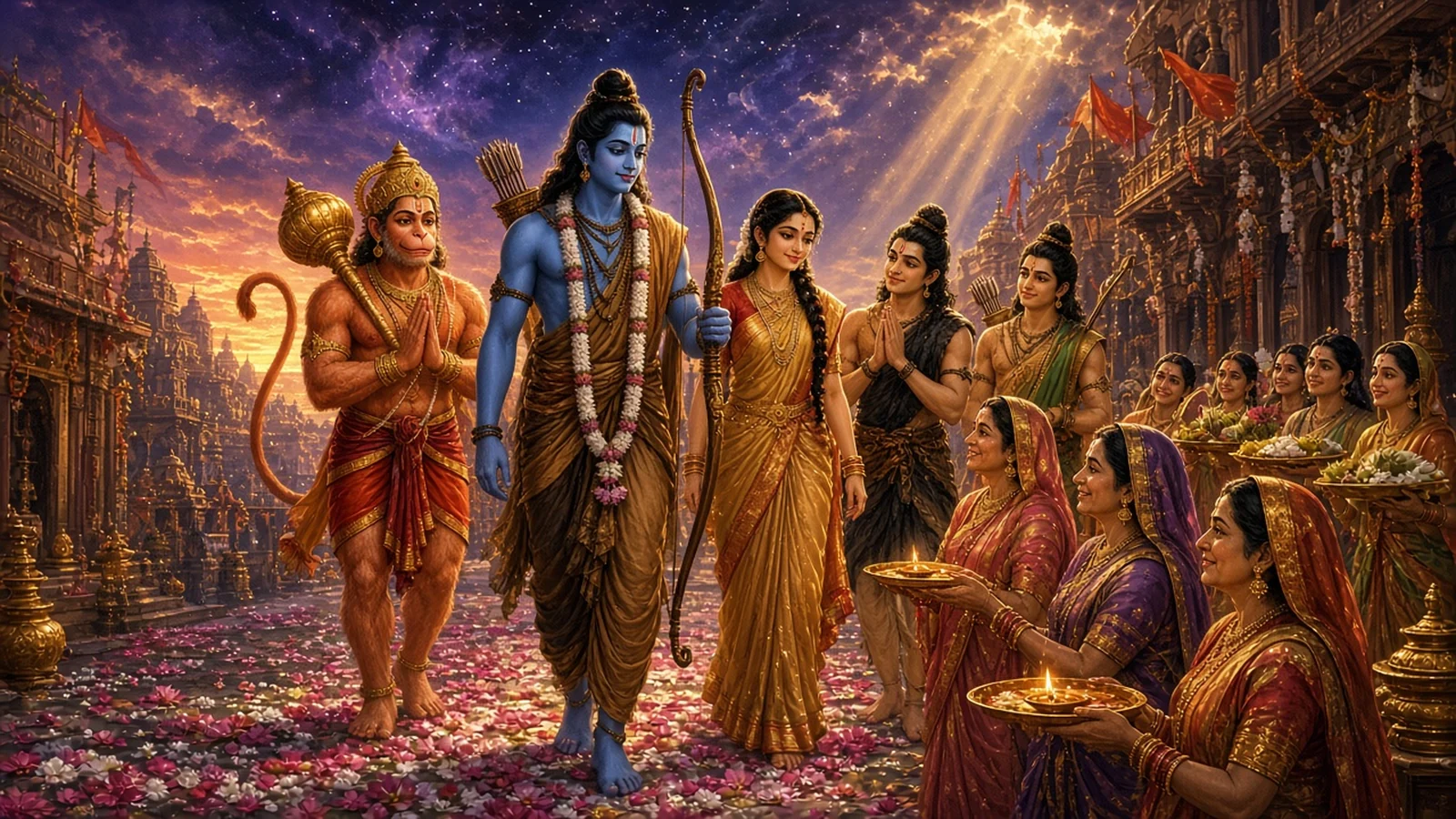
At midday the conch is blown and the birth is announced. A small image of the child Rama is bathed, dressed and laid in a cradle hung with flowers, and the family and the congregation take turns to rock it while Bhaye Prakat Kripala is sung. In Ayodhya the pilgrims have bathed in the Sarayu at dawn and stand in the streets around Ramkot; at noon the sunlight falls on Ram Lalla's forehead. In the afternoon and evening the chariots go out, with Rama, Sita, Lakshmana and Hanuman riding together, and there are Ramlila plays, kirtans and discourses.
The south turns the birthday into a wedding. At Bhadrachalam the marriage of Sita and Rama is performed on the Godavari's bank with the state's pearls poured over the couple, and the Telugu and Tamil temples follow with their own Kalyanams. The food of the day in the south is cooling: panakam of jaggery, dry ginger and cardamom in water, neer mor, and kosambari of soaked dal. Bengaluru's mandalis hand panaka to anyone passing their tents, and the city's month of Rama Navami concerts fills the evenings.
In the old texts
Valmiki's Bala Kanda is the oldest account: the king's sorrow, Sumantra's story of the horned sage Rishyashringa, the horse sacrifice, the rite for a son, the being from the fire, the division of the payasam among the three queens, and the birth with five planets in their exaltation and the moon with Jupiter in Cancer. The same chapters tell how the gods, at Brahma's word, fathered the monkeys, Hanuman among them, who would help the boy when he grew up.
Tulsidas's Ramcharitmanas, written in Awadhi and begun, he says, in Ayodhya on a Rama Navami in 1574, gives the hour, the mother's vision of the four-armed Lord, her plea that he be a child, and the story of Manu and Shatarupa. Its birth hymn is the song of the day across north India. The Agastya Samhita, as the medieval law books quote it, fixes the observance at the navami that falls at noon with Punarvasu, and gives the rules for the years when it does not. In Tamil, Kamban's Ramavataram of the twelfth century stands beside Valmiki, first recited, the temple says, at Srirangam.
Where this page comes from. Written by Devalok from the Valmiki Ramayana (Bala Kanda 8 to 18), the Ramcharitmanas of Tulsidas (Bal Kand), the Agastya Samhita as the law books quote it, and accounts of the festival from Ayodhya, Bhadrachalam, Bengaluru, Nashik, Sitamarhi and Janakpur, as recorded in the Devalok Lore. Our own words throughout.