Festival · The day Murugan took the spear, and his people take up the burden
Thaipusam
Thaipusam is Murugan's festival on the full moon of the Tamil month of Thai, in late January or early February, when the Pusam star stands with the moon. It is kept as the night Parvati gave her son the Vel, her own power in the shape of a lance, to destroy the demon Surapadman. Devotees who have fasted for weeks walk to his hill temples carrying the kavadi, a burden on the shoulders, with milk pots on their heads and small vels through their cheeks, and pour the milk over the god. From Palani it has gone with the Tamils to Kerala, Sri Lanka, Malaysia, Singapore, Mauritius and Reunion, and the crowd at the Batu Caves outside Kuala Lumpur is counted in the millions.
When is Thaipusam in 2027? Thaipusam is Friday 22 January 2027. In 2028: Wednesday 9 February 2028. The full moon of Thai that falls with the Pusam star, in late January or early February.
Also calledThai PoosamThaipoosamThaipooyamThai PusamCavadeeThaipoosam CavadeeKavadi
Next, in 2027Friday 22 January 2027
Prime godKartikeya
with 3 more
WhereTamil Nadu and Puducherry, Kerala as Thaipooyam, and the Tamil world, Sri Lanka, Malaysia, Singapore, Mauritius, Reunion, South Africa and Fiji
How longOne day and the night before, at the end of a fast of forty-eight days; at Palani ten days of festival around it
The full moon of Thai that falls with the Pusam star, in late January or early February
Why it is kept
Thaipusam takes its name from the month and the star: Thai, the tenth Tamil month, and Pusam, the star that stands with the full moon that night. It is Murugan's day, and it is kept with the body. The devotee who has fasted for weeks walks barefoot to the god's hill with a burden on his shoulders, milk on his head and small lances through his cheeks, and pours the milk over a spear.
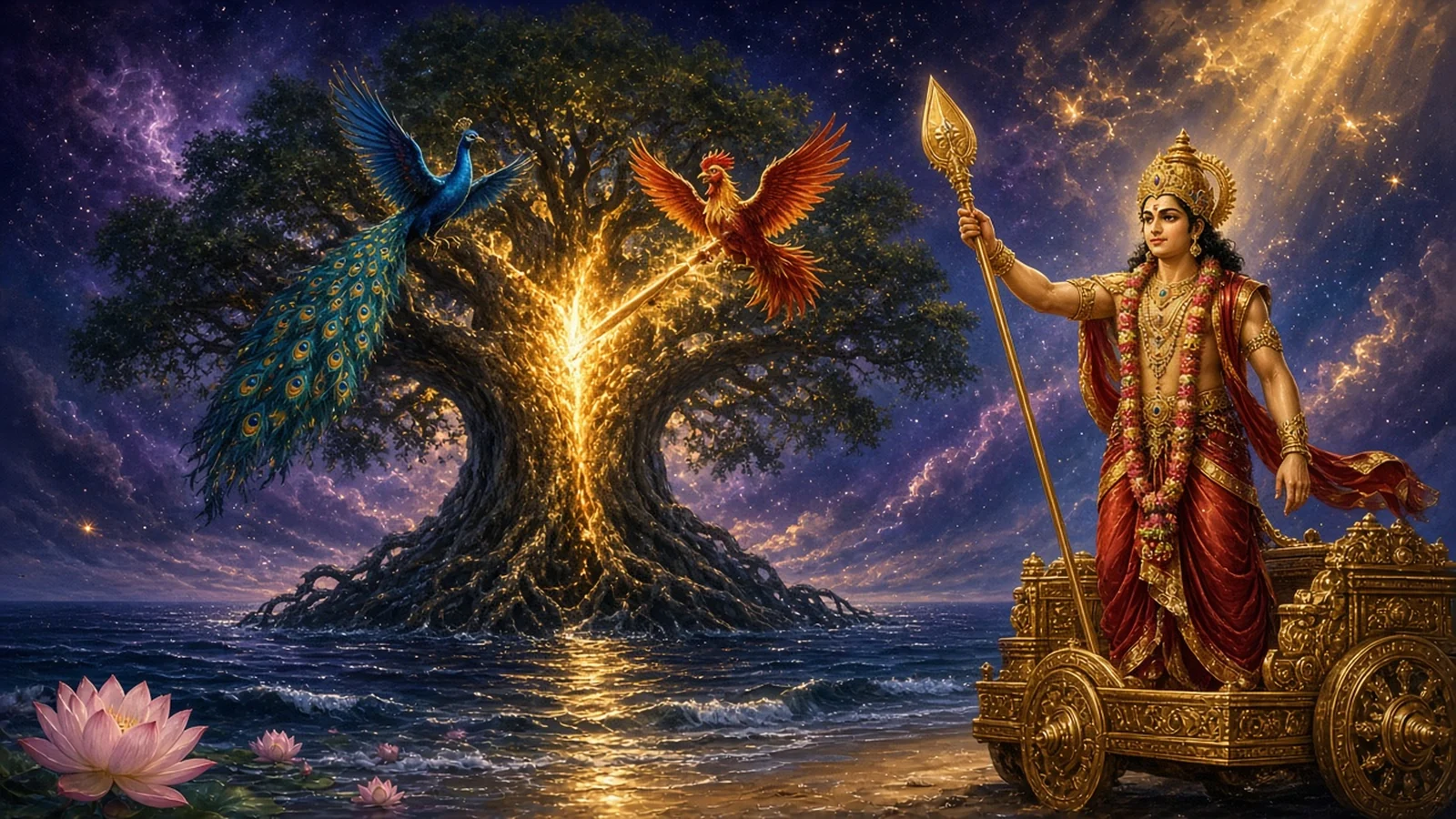
The Tamil tradition gives one reason for the date. The demon Surapadman and his brothers had won boons from Shiva that made them all but unkillable, and had made slaves of the gods. Shiva's young son was made commander of the armies of heaven, and on the full moon of Thai, with the Pusam star beside it, Parvati put her own power into his hand in the shape of a leaf-bladed lance. That lance is the Vel, and the Tamils say it is Shakti herself. The boy marched south with it, and what he did with it on the shore at Tiruchendur has its own story in the Lore.
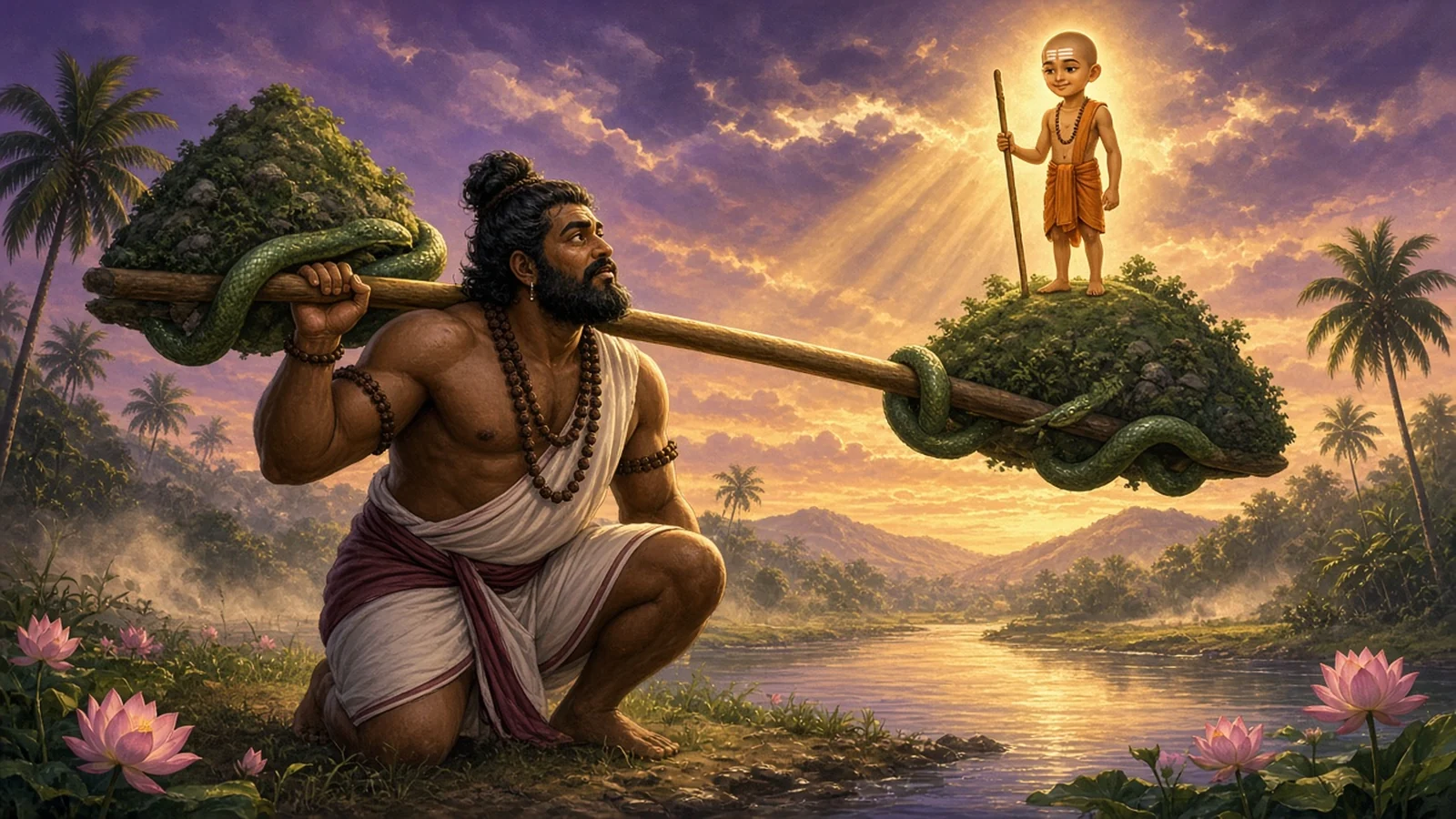
The reason for the kavadi is older than any one temple and belongs to Palani. The asura Idumban, sent by the sage Agastya to fetch two hills from the north, slung them from a pole across his shoulders and set them down to rest in the Tamil country. He could not lift one again, because a bald boy with a staff was standing on it. The fight that followed gave Murugan his hill, gave Idumban the gate to guard, and gave every pilgrim since the right to carry a burden to the god and be heard. Idumban's shrine still stands on the way up the Palani hill, and the kavadi bearer honours him before he climbs the rest.
The Vel is wisdom as well as power. The pilgrim's lance through the cheek, the poets say, is the spear that cuts the dark.
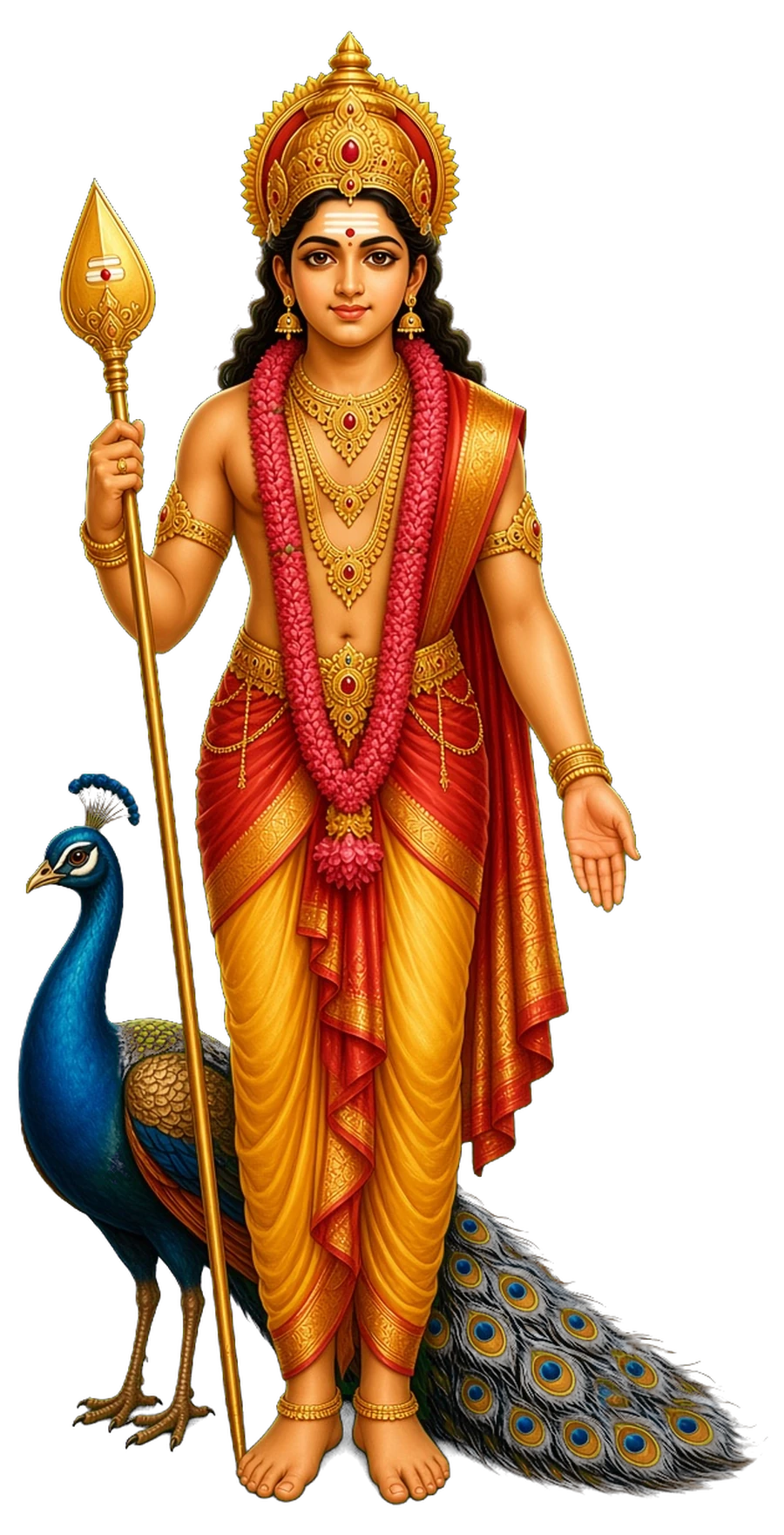
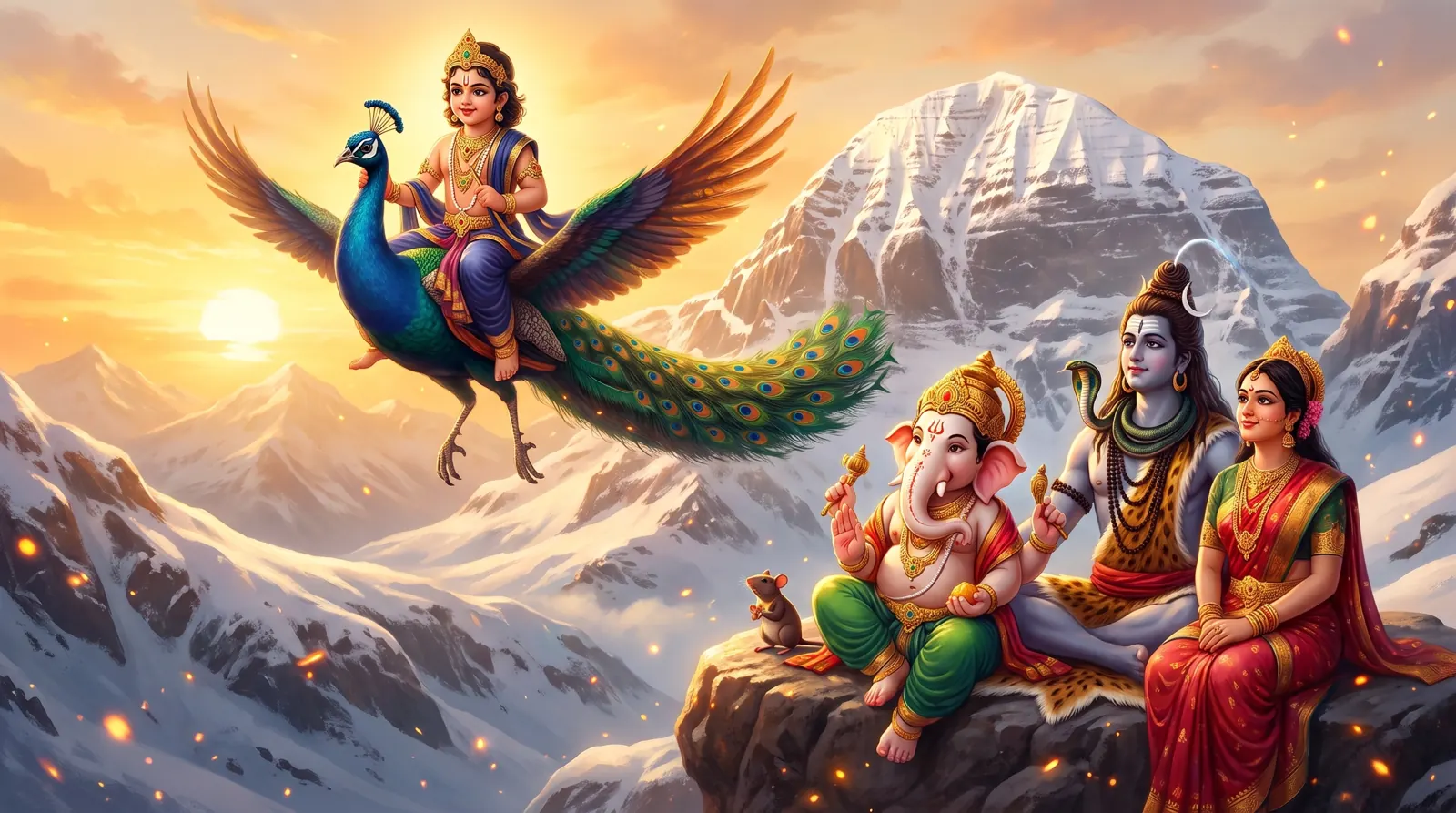
Murugan with the Vel, the god of the day. Every kavadi climbs to him, every milk pot is poured over his lance, and his six abodes in Tamil Nadu, with Palani first among them, are the oldest places of the festival.
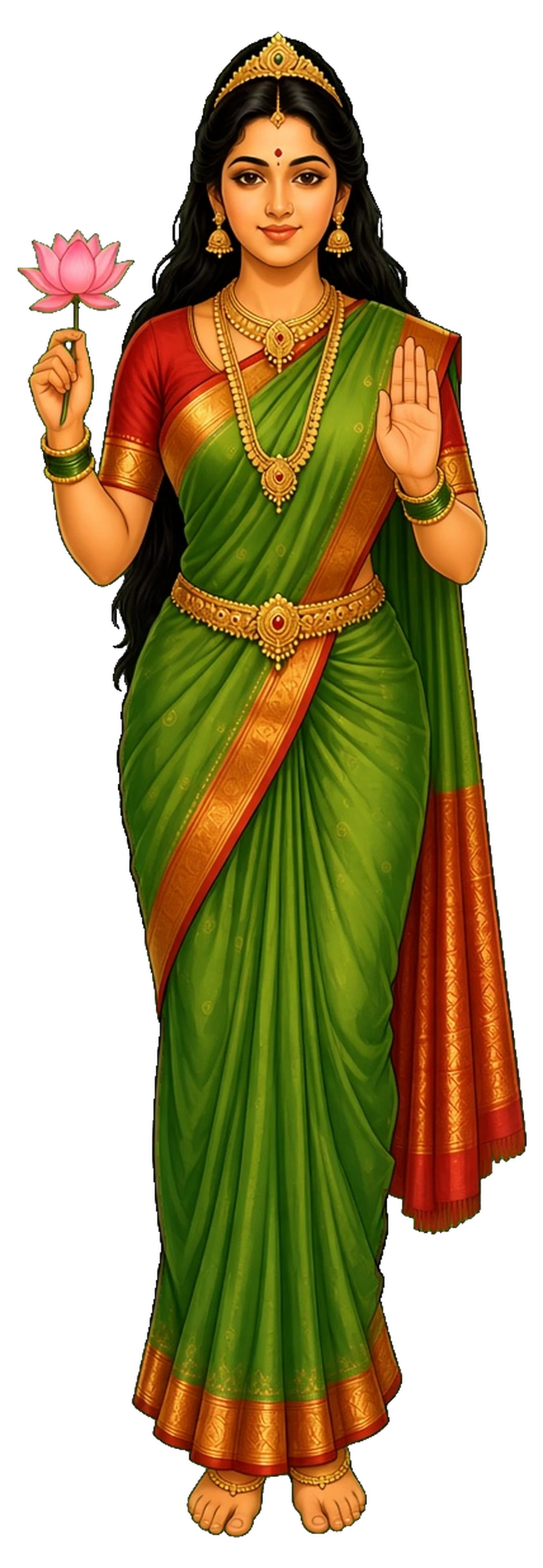
The mother who gave the Vel. The Tamil tradition says the lance is Shakti herself, the Goddess's own power in the shape of a spear, handed to her son on the Pusam star of Thai.
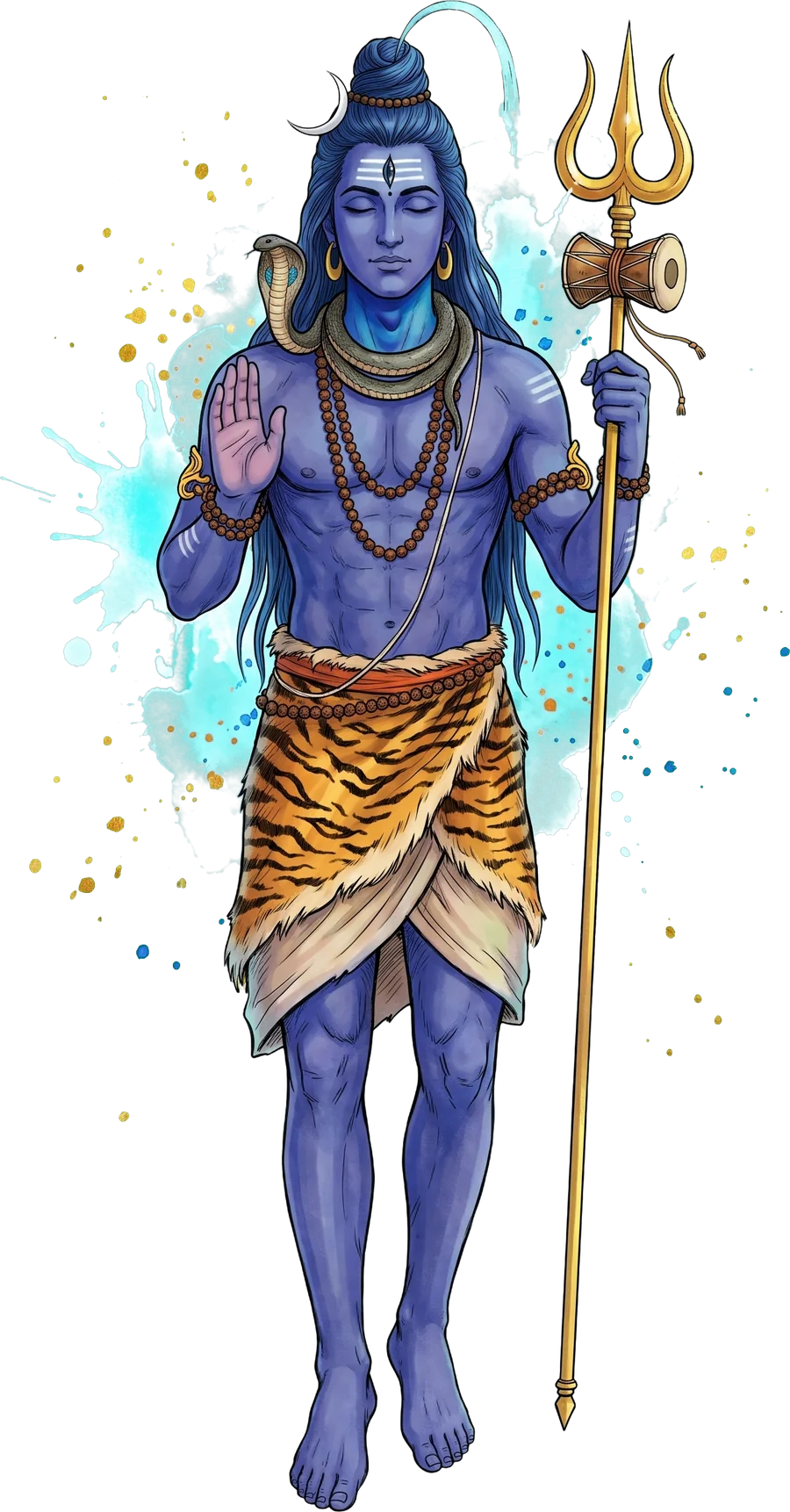
The father who made his son commander of the gods, and whose Kailash the two hills of Palani came from. One temple account adds that this is also the day of his Ananda Tandavam at Chidambaram.
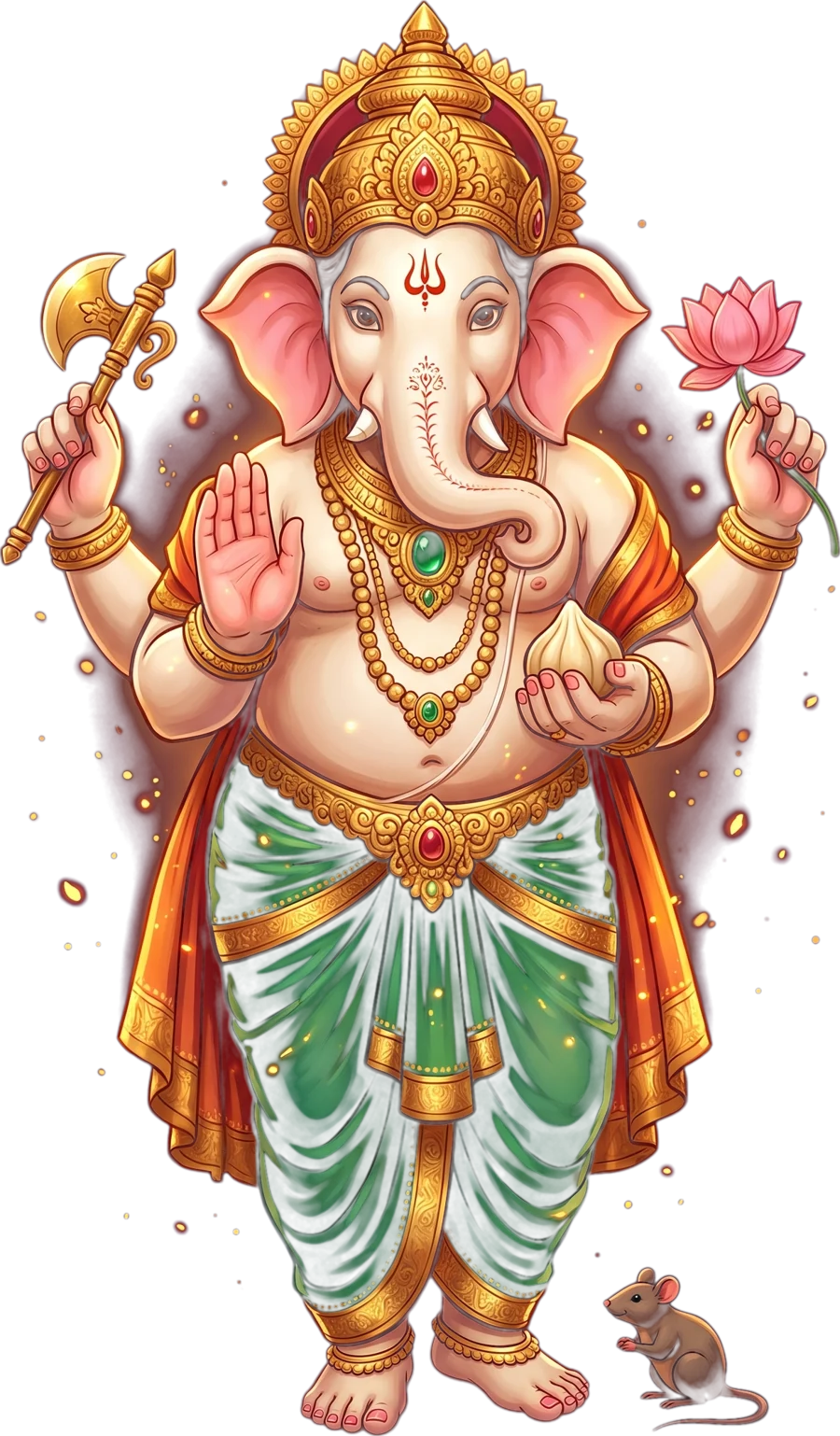
The brother who won the fruit of wisdom, the reason Murugan was standing on the Palani hill when Idumban set it down. In Singapore the eve procession takes Murugan to visit him on Keong Saik Road.
The day of the kavadi
1
The eve, the vow and the chariot
The day before the full moon of Thai · Friday 22 January 2027
Punar PusamChetty Pusamthe forty-eight days
The day itself is the end of a long road. A kavadi bearer has fasted for forty-eight days, one vegetarian meal a day, no drink, no footwear, a cold bath each morning and the floor to sleep on, and in Kerala the Kavadi Vratham runs forty-one days in yellow or saffron. On the eve the chariots go out. In Singapore the silver chariot carries Murugan from Tank Road to his brother Ganesha's temple on Keong Saik Road and back by evening. In Penang the golden chariot leaves Queen Street at six in the morning and the Chettiars' silver one an hour later, and both reach the Waterfall temple after midnight, past the coconuts smashed on the roads before them. At Palani the flag has gone up at the Periyanayaki Amman temple days before and the god's wedding is kept the night before Thaipusam.
The full moon of Thai with the Pusam star · Friday 22 January 2027
Thai PoosamThaipooyamCavadeeKavadi Aattam
Before dawn the bearers bathe in the river or the tank, have the frame fixed to their shoulders, and set out. The simplest kavadi is a pot of milk on the head. The great ones are arches of wood or steel hung with peacock feathers and flowers, up to two metres tall and thirty kilograms, some held to the body by hooks and spikes through the chest and back, while small vels go through the cheeks and tongue. The drums play and the crowd shouts the lance's name, vel, vel, vetri vel. At Palani the kavadis go up the hill in groups by the Elephant Path, stopping at Idumban's shrine on the way. At Batu Caves they climb two hundred and seventy-two steps on the right-hand side of the stairs. In Singapore they walk four kilometres from Serangoon Road to Tank Road. At the top the milk is poured over the Vel, ash is given, and the kavadi comes off.
The night of the full moon and the week after · Friday 22 January 2027
Theppa Therthe Idumban puja
In Kerala the kavadi dance at Koorkkancheri runs from the morning through the night until dawn and ends with fireworks, and at Haripad the caparisoned elephants come out. Palani goes on for days after the full moon: the car festival follows and the ten days close with the Theppa Ther, the god floated on the tank. Madurai's Meenakshi temple and Mylapore's Kapaleeshwarar keep float festivals on their tanks the same night. In Singapore a small puja is made at home in the week after to Idumban, the first man who carried a kavadi, and the chariot at Batu Caves carries Murugan with Valli and Deivanai back to the city.
Thaipusam is the chief festival of the Dandayudhapani temple, kept over ten days. For a week before, pilgrims walk to Palani from Madurai, Dindigul, Theni, Sivaganga, Tiruppur, Erode and the Nilgiris with peacock-feather kavadis on their shoulders, fed on the road by volunteers with water and tender coconuts. They bathe in the tank, climb past Idumban's shrine to the god with the shaven head, and many shave their own heads at the top. In 2025 three thousand police were posted on the hill.
Tiruchendur, Vadapalani and the six abodes
Tiruchendur by the sea draws lakhs for its Thaipusam procession, and all six of the Arupadai Veedu, with Swamimalai, Tiruttani, Tirupparankundram and Pazhamudircholai, fill with kavadis the same day. In Chennai the Vadapalani temple, grown from a picture of the Palani god that a devotee kept in a hut around 1890, is the city's Thaipusam, with its idol standing like Palani's. Tamil Nadu made the day a public holiday in 2021.
KeralaThaipooyam
The Malayalis keep the day as Thaipooyam, on the Pooyam star of Makaram. At Koorkkancheri in Thrissur the Sree Maheswara temple, a Shiva temple consecrated by Narayana Guru, keeps a seven-day Thaipooya Mahotsavam for Subrahmanya that the district ranks second only to Thrissur Pooram, with temple-shaped kavadis six to ten feet high and flower kavadis danced to the chenda from morning to dawn. At Haripad the Subrahmanya temple, whose idol was found in the backwaters and consecrated on this very star, keeps the forty-one-day Kavadi Vratham and ends with elephants and fireworks.
MalaysiaBatu Caves and Penang
Thamboosamy Pillai set a vel in the Batu Caves outside Kuala Lumpur in the late 1880s, in a cave whose mouth is the shape of a vel's tip, and the Tamils of Malaya have climbed to it every Thaipusam since 1889 or 1892. A silver chariot brings Murugan the thirteen kilometres from the Sri Mahamariamman temple in the city, the bearers bathe in the Sungai Batu and climb two hundred and seventy-two steps past a golden Murugan nearly forty-three metres high. More than a million came in 2023 and 1.8 million over the days of 2025. Penang keeps three days around its Waterfall Hilltop temple, where the kavadis climb five hundred and thirteen steps, with a golden chariot since 2017 and thousands of coconuts broken on Jalan Datuk Keramat; 1.5 million were expected in 2023.
SingaporeSerangoon Road to Tank Road
The Chettiars built the Sri Thendayuthapani temple on Tank Road in 1859, and the kavadi walk to it from the Sri Srinivasa Perumal temple on Serangoon Road, about four kilometres, is one of the largest in Southeast Asia, with tens of thousands taking part. Volunteers fix the kavadis, medical teams walk the route, live music was allowed back at set points in 2016, and the day was a public holiday until 1968. The city added the festival to its heritage inventory in 2018.
Sri Lanka
The Tamils of Jaffna and the east keep Thai Pusam at their Murugan temples. At Nallur the sanctum of the Kandaswamy temple holds no image at all, only the Vel, and the island keeps a second festival of the lance, Adi Vel, in July or August.
Mauritius, Reunion and the further diasporaCavadee
In Mauritius the day is Thaipoosam Cavadee, a national holiday, and thousands carry the cavadee from the Kovil Montagne and other temples. On Reunion the Tamils of Saint-Andre and Saint-Louis keep ten days, with ten thousand expected at the Petit Bazar temple in 2010 and nearly nine hundred carrying the cavadee the year before. Durban, Cape Town and Palm Ridge in South Africa, and Nadi and Suva in Fiji, keep it at their Murugan temples.
Tamil Hindus everywhereThe vow
The kavadi is carried for a vow, for a sick child, an exam passed, a danger survived, and the forty-eight days of fasting are the price of it. Rich and poor walk the same road barefoot, and the Singapore heritage record notes that the piercing is more common in the diaspora than in India, where the law limits it.
The states and the island nationsA public holiday
Thaipusam is a holiday in Kuala Lumpur, Putrajaya, Selangor, Penang, Perak, Johor and Negeri Sembilan, in Mauritius, and since 2021 in Tamil Nadu; Singapore kept it as one until 1968.
Malaysians and Singaporeans of other faiths
In Penang the Chinese have long carried kavadis and broken coconuts beside the Tamils, so many that a 2014 report called the day a community affair, and Singapore's record of the festival notes people of other ethnic groups among the kavadi bearers and non-Hindu crowds along the route.
How it is kept
The festival begins forty-eight days early. The bearer eats one vegetarian meal a day, gives up drink and company, sleeps on the floor, bathes cold, and prays, and in Kerala keeps a forty-one-day vratham in yellow. On the eve the chariots go out: in Singapore to Ganesha's temple and back, in Penang from Queen Street and Penang Street to the Waterfall temple through the night, in Kuala Lumpur from the Mariamman temple in the small hours toward the caves.
On the day the bearer bathes, has the kavadi fixed, and walks. The frame may be a pole with a milk pot at either end, an arch of peacock feathers on the shoulders, or a two-metre altar held to the chest and back by spikes. Drums carry him, and the crowd shouts the lance's victory. At Palani the kavadis go up by the Elephant Path; at Batu Caves up two hundred and seventy-two steps; in Singapore four kilometres through the city. At the top the milk is poured over the Vel, ash is given, and the hooks come out. In the week after, a Singapore household makes a small puja to Idumban.
Kerala dances. At Koorkkancheri the temple-shaped and flower kavadis go round to the chenda from morning until the next dawn, and at Haripad the dancers shout harohara with lances through their cheeks and end with elephants and fireworks. Palani closes its ten days with the god floated on the tank.
In the old texts
The Vel is Tamil before it is anything else. Nakkirar's Tirumurukarruppatai, the guide to Murugan, a Sangam poem of about three hundred lines that is the first of the Ten Idylls and is also counted in the Shaiva Tirumurai, leads the pilgrim to the god's shrines and names the six abodes under their old names, Tiruvavinankudi for Palani among them, and sings him with six faces and twelve arms, the killer of Surapadman.
The war itself is the Kanda Puranam, the Tamil Skanda epic of Kachiyappa Sivachariyar, priest of the Kumara Kottam at Kanchipuram, in six books and more than thirteen thousand stanzas, whose first line, the tradition says, Murugan wrote himself. Whether Parvati or Shiva hands over the Vel in it is argued; the festival follows the mother. The Sanskrit Skanda Purana's Kaumarika Khanda has a different enemy, Taraka, and has Kumara hurl the Shakti at him at sunset on the seventh day of the war; the Mahabharata's Shalya Parva lists the gifts at Skanda's installation, a dart and a banner from Indra, two cloths from Uma, a garland from Vishnu, an army from Shiva, and knows no Vel.
Arunagirinathar of Tiruvannamalai, around 1400, gave the Vel ten songs of its own, the Vel Virutham, and calls on it in twenty-five of the fifty-one verses of his Kandar Anubhuti, as the Sakti Vel that went through Surapadman and the Krauncha hill. The Palani sthalapurana carries Idumban and the two hills, and Bhogar's idol of nine herbs on the top of one of them.
Where this page comes from. Written by Devalok from the Thaipusam tradition of the Murugan temples of Tamil Nadu, Kerala, Malaysia and Singapore, the Kanda Puranam, the Skanda Purana's Kaumarika Khanda, the Mahabharata's Shalya Parva, Arunagirinathar's songs, Nakkirar's Tirumurukarruppatai, and the records of Kerala Tourism, Roots.sg and the Malaysian and Indian press, as recorded in the Devalok Lore. Our own words throughout.