As Valmiki's Uttara Kanda tells it
Trikuta, by the southern sea · the Ramayana's last book · 3 min read
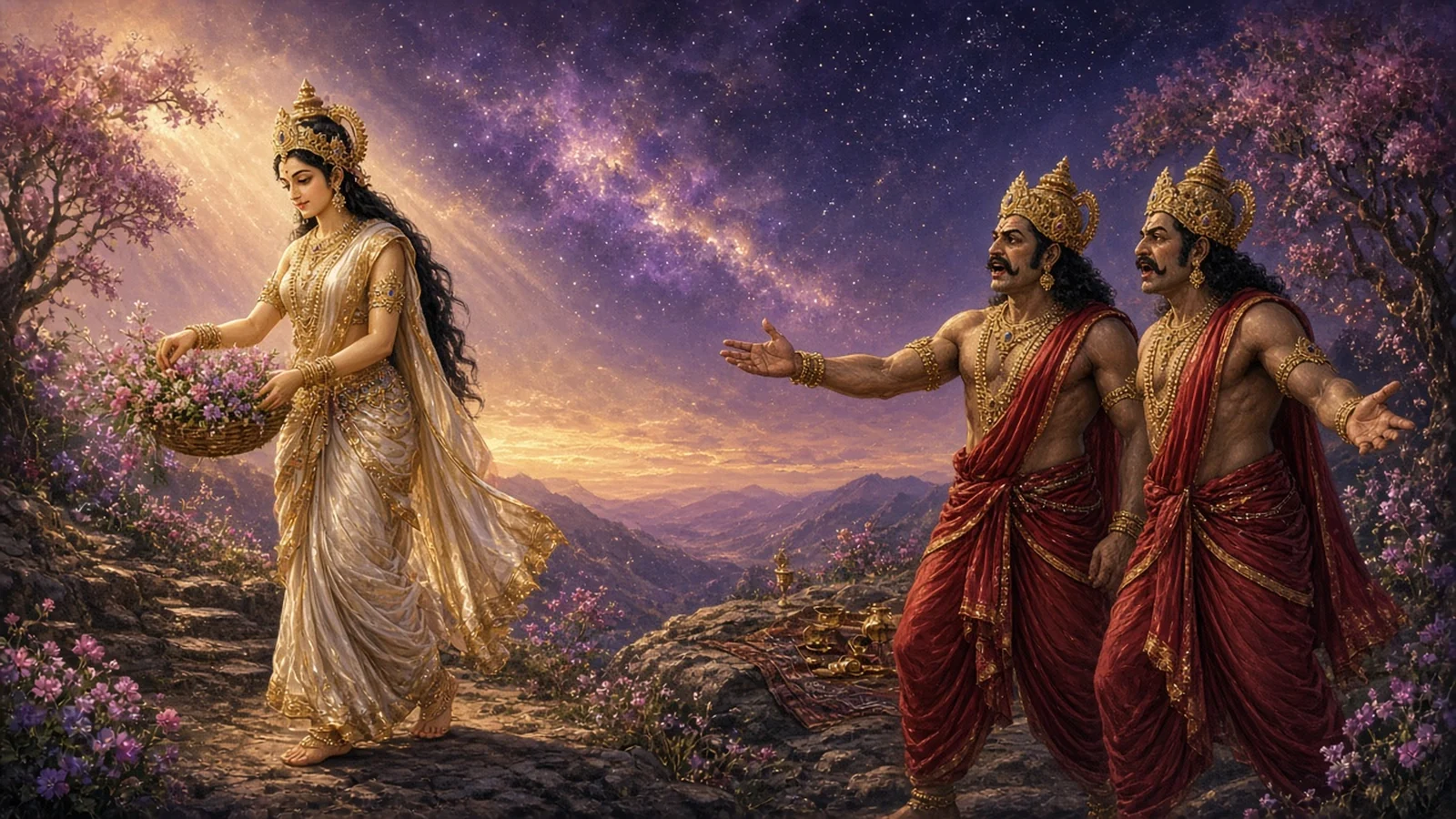
Three brothers came down from Mount Meru with Brahma's boons still warm on them. Malyavan, Sumali and Mali, the sons of the rakshasa Sukesha, had asked the creator for lives that nobody could cut short and for a loyalty to one another that nothing could break, and he had given them both. Now the gods and the sages were hiding from them, and they wanted a house to match.
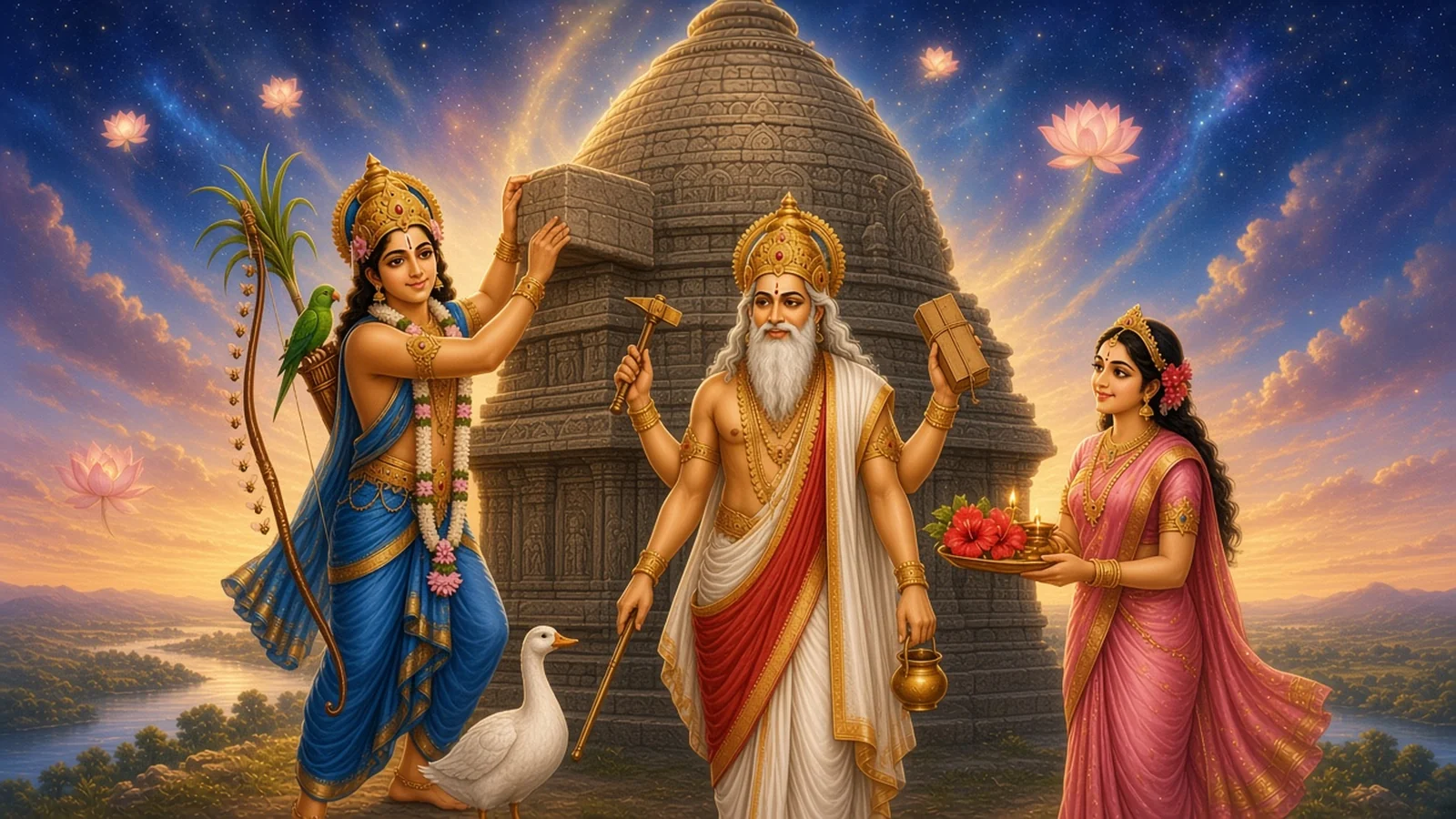
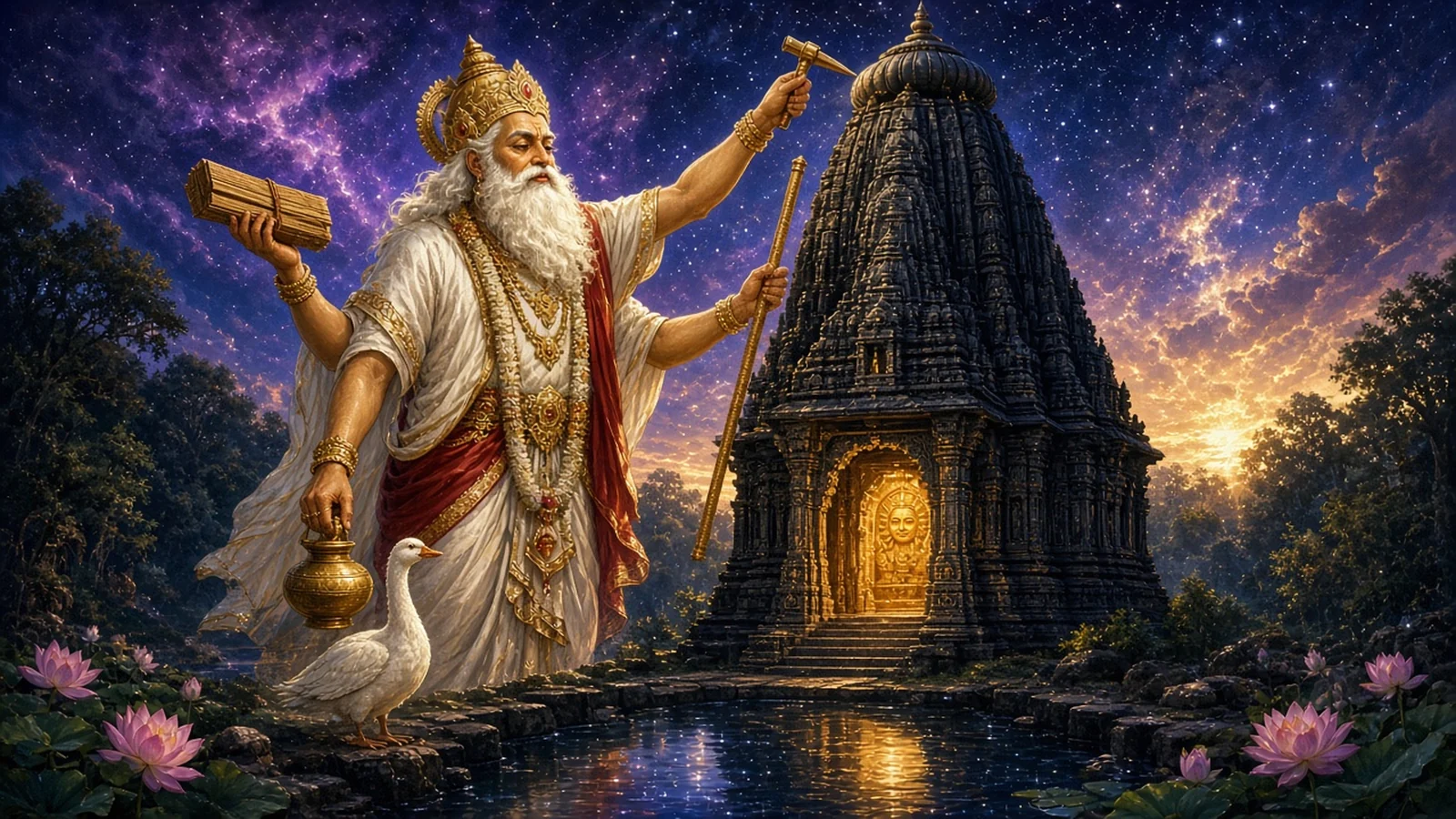
They went to Vishvakarma, who builds for the gods.
"Make us a home," Malyavan said. "On Himavat, on Meru, on Mandara, wherever you like. It must be as good as Shiva's."
The craftsman looked at the three of them. He did not pick up a tool.
"I do not need to build you anything," he said. "There is a city already. Go south until you reach the sea, and on the shore you will find the mountain Trikuta, with Suvela beside it. On the middle peak, where the clouds sit and even the birds find it hard to land, I built a city at Indra's command. Its walls are gold. Its gateways are gold. It is thirty leagues across and a hundred long, and it is called Lanka. Live in it the way the gods live in Amaravati. Nobody will ever get you out."
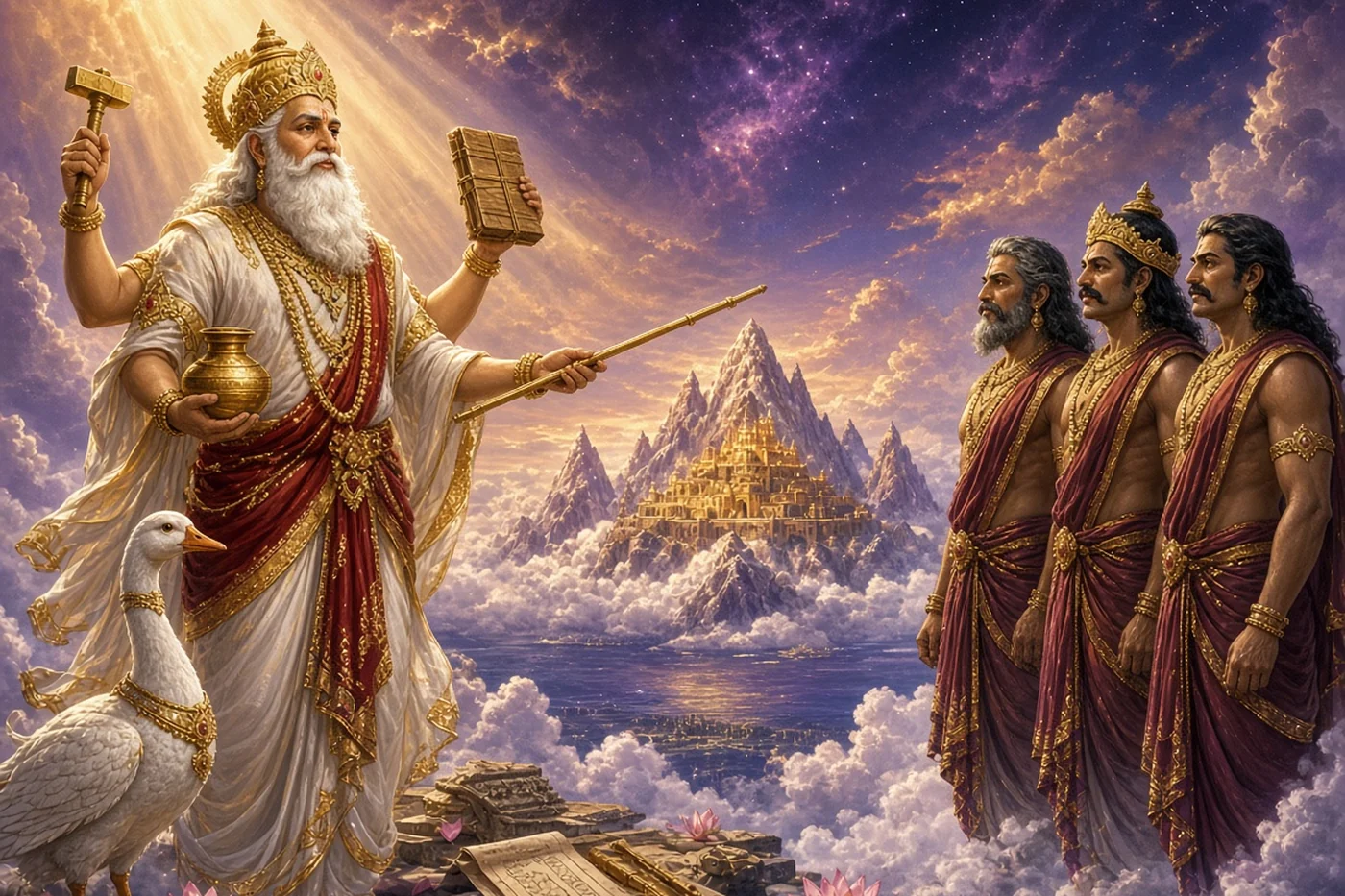
They went, with thousands behind them. Lanka had deep moats and hundreds of golden houses, and the three brothers took it and were happy there. A gandharva woman named Narmada gave them her three daughters, and the children came: Prahasta and Akampana and Dhumraksha to Sumali, and among his daughters a girl called Kaikasi, who would matter later.
Happiness did not quiet them. They went on tormenting the gods and breaking the sacrifices of the sages until Vishnu himself came down against them. Mali fell to him. Malyavan struck the god in the chest with a spear and was driven off by the beating of Garuda's wings, and the rakshasas who were left took their wives and went down into Patala, leaving the golden city with nobody in it.
Far from there a sage's son named Vaishravana, whom the world calls Kubera, had finished a thousand years of penance and asked Brahma to make him a guardian of the worlds. Brahma gave him the Pushpaka, the chariot that flies, and the keeping of all wealth. "Where should I live?" the young god asked his father, Vishravas.
"There is a city in the south," Vishravas told him, "on the top of Trikuta, built by Vishvakarma for the rakshasas. They fled it for fear of Vishnu. It stands empty. Go and live in it, and no harm will come to you there."
So Kubera filled Lanka with yakshas and flew home to see his parents whenever he liked, and from the ground Sumali watched the chariot pass over and thought hard.
He had a daughter. He sent Kaikasi to Vishravas at dusk, and the sage, interrupted at his evening rite, told her that her sons would be cruel, all but the last. The first was born with ten heads. Kaikasi raised him on one lesson. "Look at your brother," she said, whenever the Pushpaka went over. "Be like him."
Dashagriva did his long penance at Gokarna and came back with Brahma's boons, and his grandfather Sumali came up out of Patala to meet him. "Lanka is ours," he said. "Take it back."
"Kubera is my elder brother," the ten-headed one answered. "I will not."
It was Prahasta who changed his mind. "Brothers have fought before," he said. "Diti's sons and Aditi's sons were cousins, and look at them."
Ravana camped on Trikuta and sent Prahasta into the city. Kubera offered to share it. Then he asked his father what to do, and Vishravas, who had warned Ravana again and again, said: "Leave. Go to Kailasa. He has boons you cannot fight."
Kubera went, with his wife, his sons and his treasure, and the rakshasas carried Dashagriva into the city his grandfather had asked for and set him on the throne. The maker had built it once, for Indra. It had now had three masters, and none of them was the one it was built for.
As the storytellers tell it: the priest's fee
Kailasa and Lanka · a Kolkata telling and the popular retellings · 2 min read
Parvati had had enough of the cold.
"Everyone else has a house," she said to Shiva on the bare rock of Kailasa. "The gods have cities. Even the rakshasas have cities. We have snow."
Shiva had never wanted walls. But he loved her, so he sent for Vishvakarma.
"Build her a home," he said. "Make it so that she never asks again."
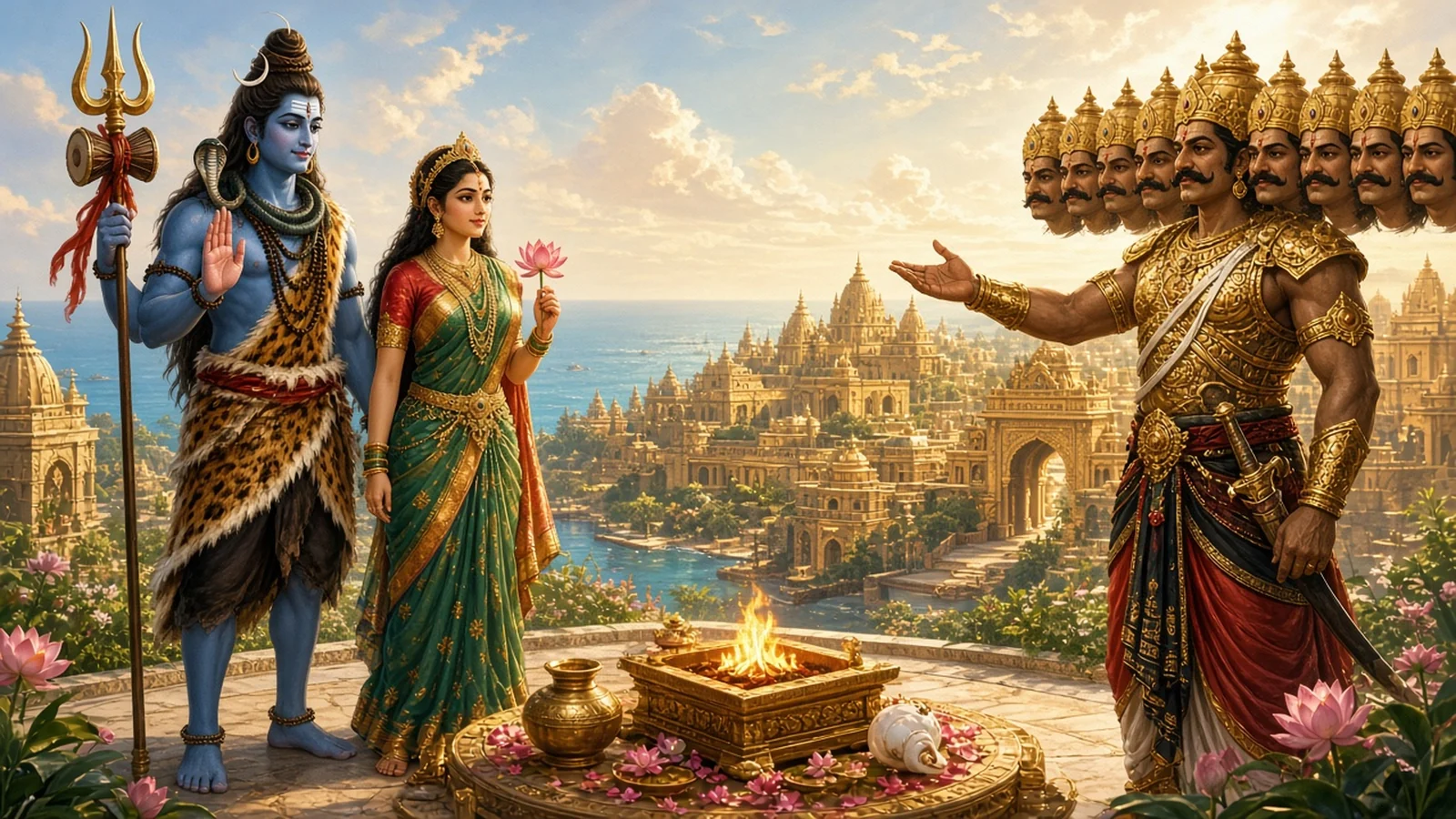
The craftsman went to the southern sea and built on an island there. He did not build a house. He built a city of gold with a palace at its heart, streets laid straight, gardens inside the walls and the walls themselves shining, and when it was done the storytellers of Kolkata say that it was a palace inside a city and a city inside a palace. He called it Lanka.
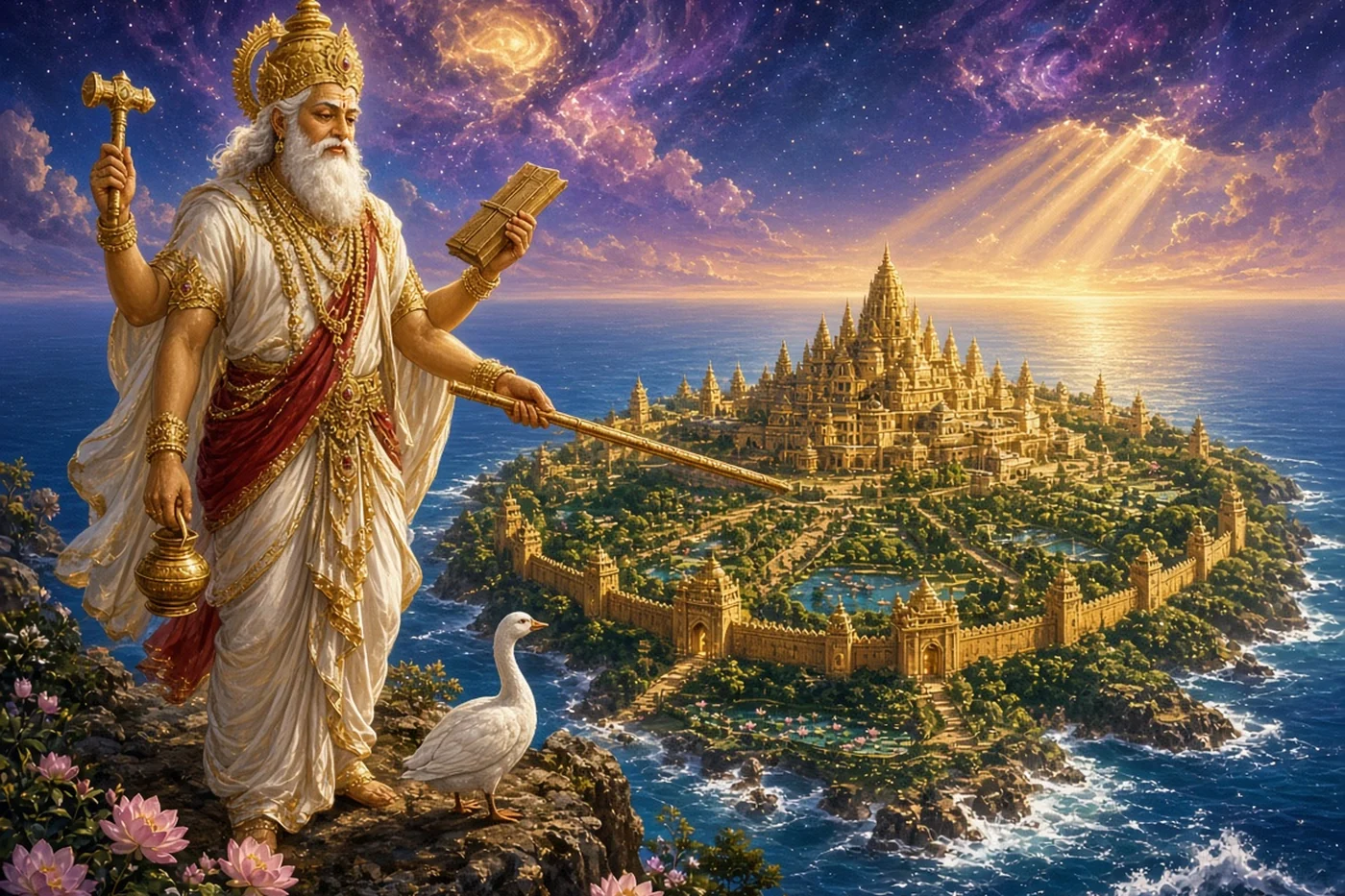
Shiva came to see it with Parvati and was pleased, and because a new house must be entered with the proper rites, he looked for a priest. The most learned brahmin alive was Ravana, the son of Vishravas, who knew the four Vedas and was Shiva's own devotee. Shiva asked him to perform the house-warming, and Ravana came gladly and did it well.
At the end of every rite the priest is paid. Shiva turned to him.
"Ask for your fee," he said. "Whatever you want."
Ravana had been looking at the gold all morning. He had never seen anything like it, and the storytellers say that in that moment he forgot that he had come as a priest.
"This," he said. "Give me the city."
There was a silence. Parvati looked at her husband. Shiva, who had never wanted walls in the first place, gave the only answer he knew how to give to a devotee who asks.
"It is yours."
He took Parvati back to Kailasa and the snow, and Ravana moved into the house that had been built for the god he worshipped. In one telling Nandi, who had watched it all, said over his shoulder that a monkey would burn it down one day, and in another the gold had come from Ravana's own half-brother Kubera, who gave it for Shiva's house and lost it to Ravana's fee. The city stood on its island until Hanuman came looking for Sita.