As a Howrah foundry keeps it
Howrah, West Bengal · the day the sun enters Virgo · 4 min read
The image came the evening before, on a hand-cart from Patuapara, wrapped in a bedsheet.
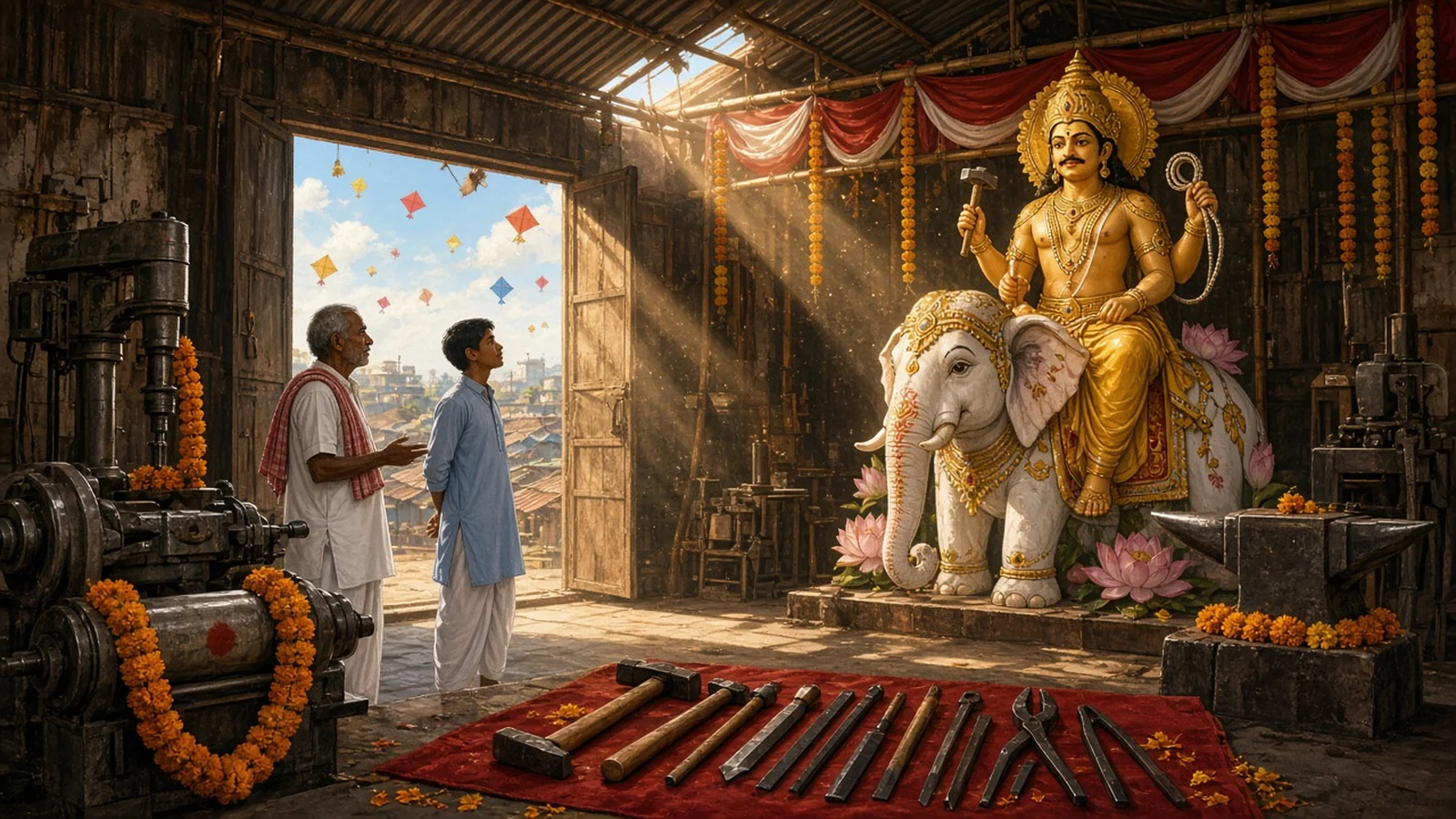
Bapi had been at the foundry for three weeks. He was sixteen and not yet allowed near the furnace; he swept, he carried, he watched. That afternoon the old moulder, Nitai-da, had him switch off the lathe he was never allowed to touch, wipe it down with an oiled rag, and tie marigolds round its handle. Then the drill press. Then the grinder, the bench vice, the anvil, the hammers laid in a row on a clean cloth. By dark not one machine in the shed was running, and the shed smelt of flowers instead of hot iron.
They unwrapped the image under the bamboo pandal where the moulding sand usually stood. A young man with a black moustache and a broad chest sat on a white elephant, a hammer in one hand and a measuring cord in the other.
"Why the elephant?" Bapi asked.
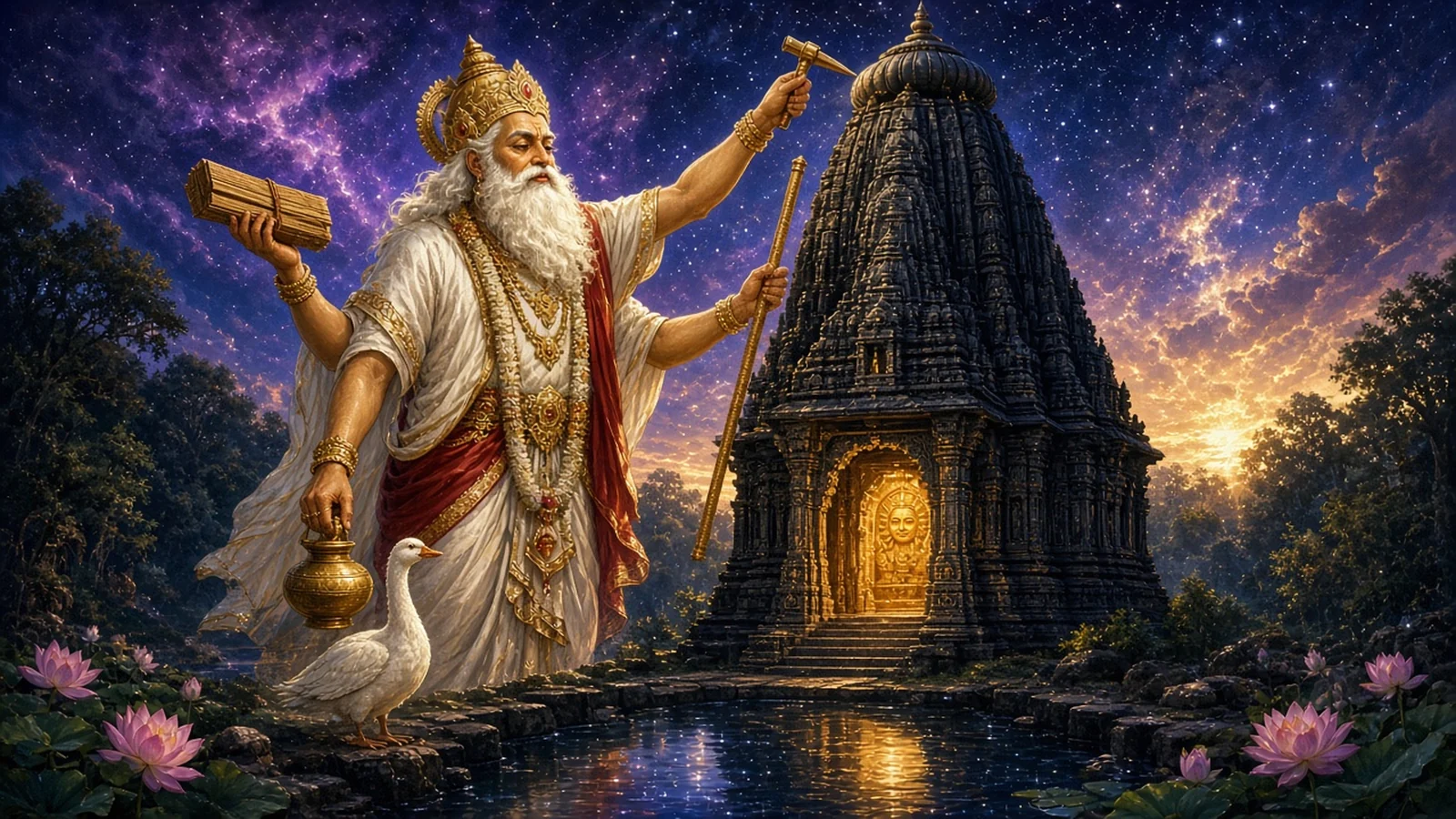
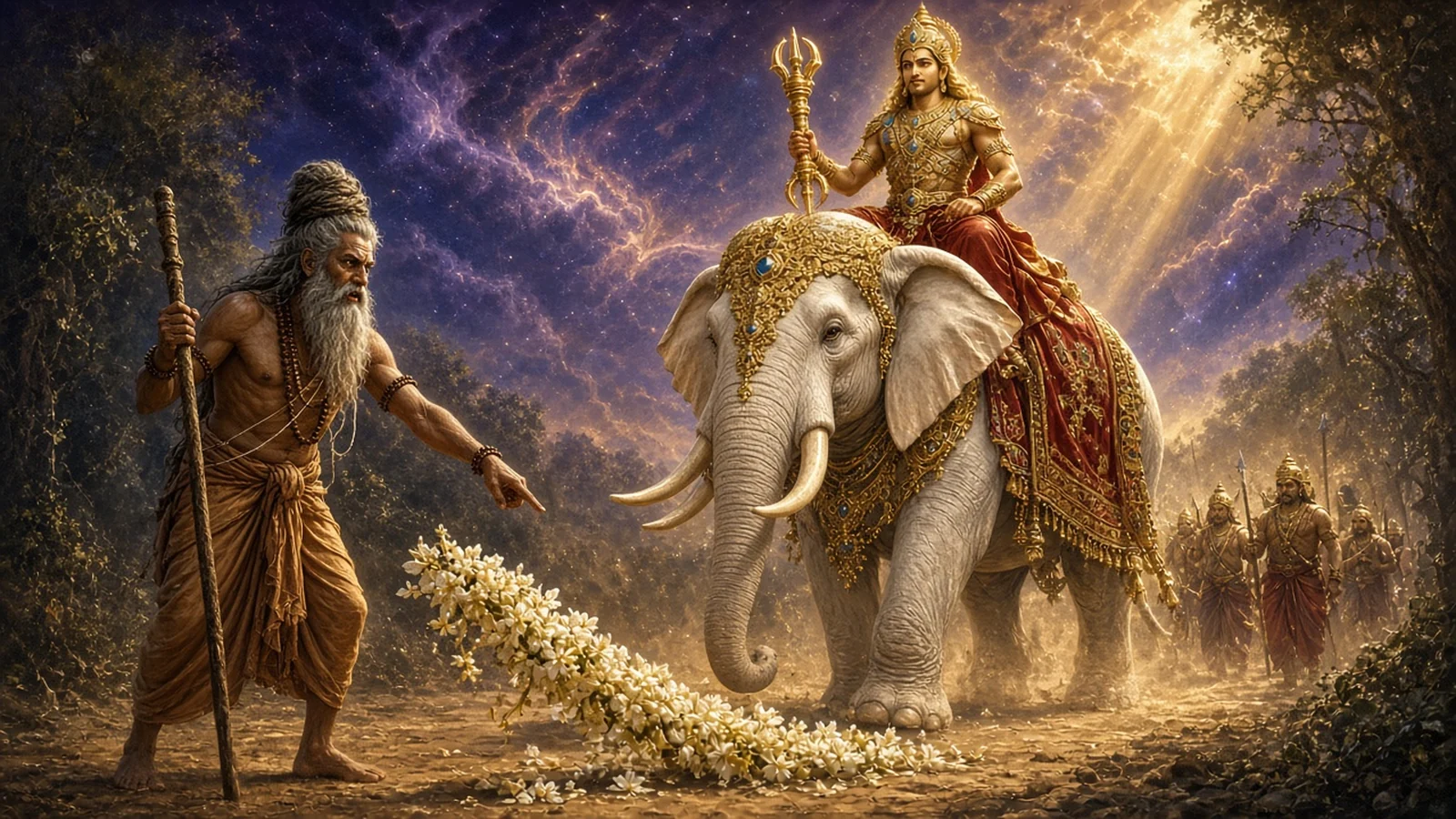
"Because this is Bengal," said Nitai-da. "In the Punjab he is an old man with a white beard, four arms, a goose at his feet and his five sons standing round him. Here he is young and he rides like Indra. Ask the image makers why. I have been asking for forty years."
"And why do the machines stop? We lose a day."
The owner, Haradhan Pal, had come in behind them with the priest. "We do not lose it," he said. "We give it. One day in the year the tools are not ours. They are his."
In the morning the whole street was the same. The taxi stand at the corner had a small image of its own on a table, every cab washed and garlanded, the drivers in clean kurtas. The bus depot had one. The cycle repair shop had one the size of a hand. From the rooftops the kites were already up, hundreds of them, and every few minutes a shout of "Bho-katta!" came down as a string was cut.
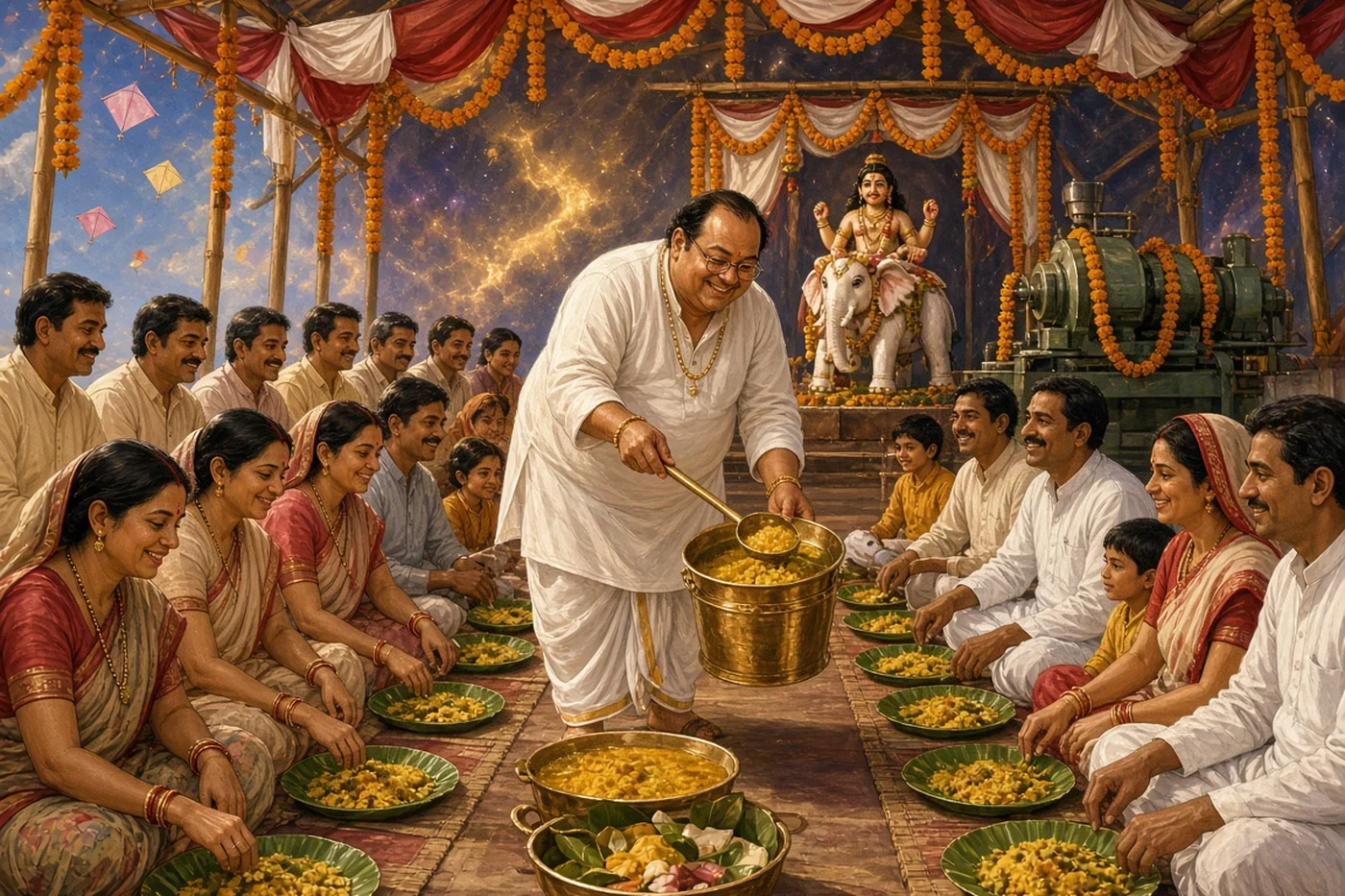
The priest chanted. Haradhan Pal put a dot of vermilion on the lathe, on the furnace door, on the anvil, and the workers did the same to their own hammers and files. Then the pandal filled with people from the lane, the owner's family, the men's wives and children, the drivers from the corner, and everybody sat down in rows for khichuri and labra off leaf plates, the owner serving with his own hands.
Bapi sat next to Nitai-da. "Who is he, really?" he asked. "Where does he come from?"
The old man took his time. "The oldest book there is asks the same question," he said. "The Rigveda. It says he has eyes on every side and arms on every side, that he made the earth and the sky, and then it asks what he stood on while he did it, and what wood he cut them from. It does not answer. Later they made him the carpenter of the gods. He built Indra's palace and Ravana's golden Lanka and Krishna's Dwaraka. He put the Sun on his lathe and ground him down and made Vishnu's discus from the shavings."
"On a lathe."
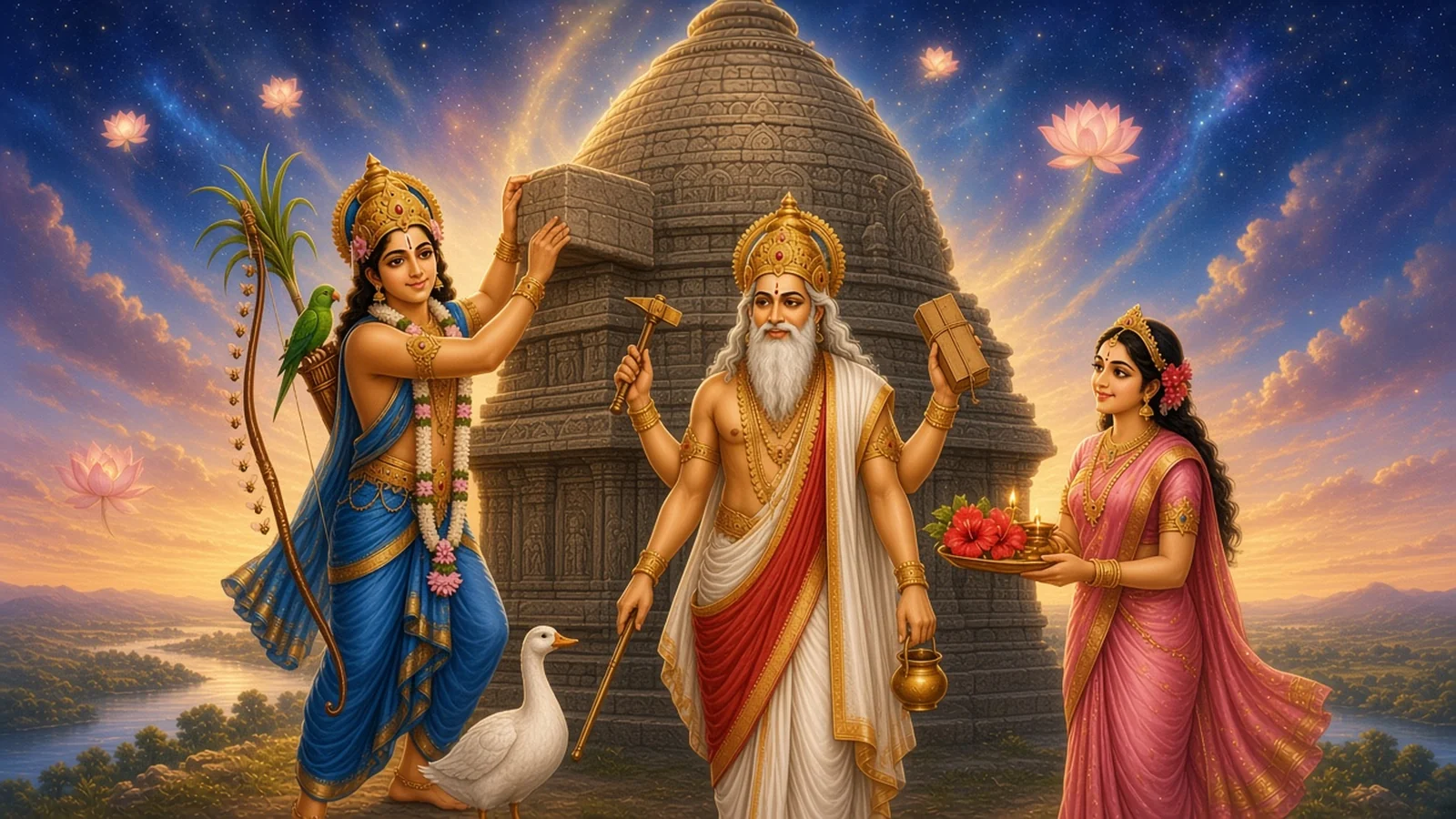
"On a lathe. Like that one." He pointed with his chin at the garlanded machine. "And the books of the craftsmen say he had five sons. Manu, who became the smith. Maya, the carpenter. Tvashta, who casts bell metal. Shilpi, the mason. Vishvajna, the goldsmith. Every blacksmith and carpenter and goldsmith in the south says he comes down from one of the five, and they call themselves Vishvakarmas after him. They say they are brahmins too. Not everybody agrees."
"And us?"
"We are foundry men. My grandfather worked a jute mill in Rishra, and the mill hands of Howrah and Hooghly were the first to set their tools before a pitcher and pray over them. The sahibs who owned the mills let it be. The Bengali owners made it a festival. Now the whole east keeps it, from here to Guwahati."
The next afternoon they carried the image to the ghat and gave it to the Hooghly, and walked back, and Nitai-da switched the lathe on. It had rested. So had they.
As the north keeps it: the morning after Diwali
Ludhiana and Bathinda, Punjab · and Gujarat and the south · 2 min read
In Ludhiana the factories shut for Diwali, and they do not open the next day either, because the next day is Vishvakarma Day.
Most of the hands at Sethi's hand-tool works had gone home to their villages in Bihar and Uttar Pradesh for Chhath, and the sheds were quiet. The owner rang the six who had stayed.
"Come in tomorrow morning," he said. "Not to work. Bring your wives."
They came at eight with the Diwali smoke still in the air. The lathes and the drop hammers were cold. Together they wiped them down, oiled them and marked each with a smear of turmeric and a dot of red, and set the framed picture on a chair at the end of the shed: an old man with a long white beard, four arms, a crown, seated, a goose at his feet and five young men standing round him.
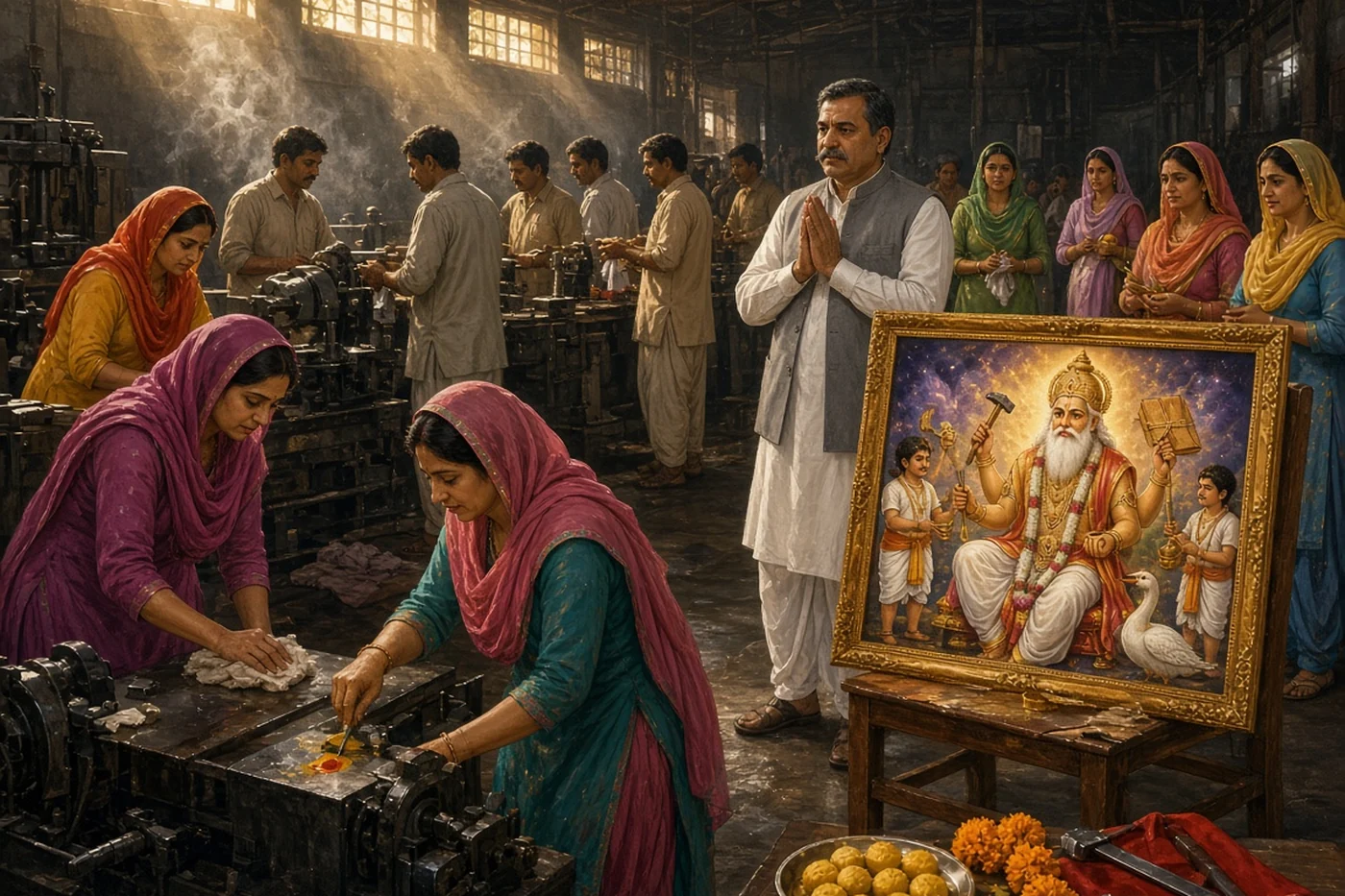
"Who are the five?" asked the youngest man's wife.
"His sons," said Sethi. "The smith, the carpenter, the metal caster, the mason and the goldsmith. The Lohars and the Tarkhans of the Punjab say they come down from them. My grandfather was a Lohar before he was a factory owner, and he kept this day with a hammer and a file laid on a cloth."
In Bathinda that same morning the Plumber Workers' Union set up its table on Amrik Singh Road, with the picture, coloured rice, fruit and sweets, and fed anyone who stopped. The finance minister came to a puja at the market and said the state's skill courses were the right tribute to the god. In Lucknow, on the same day after Diwali, the kites went up for the Jamghat as they had under the Nawabs, before one of those Nawabs went to Kolkata and, the story goes, took the kites with him.
In Gujarat the Suthars, the carpenters, and the Gajjars, who carve stone, keep him as their own god, and the almanacs there set his day in the Diwali week beside the new account books. In the south the five crafts who call themselves Vishvakarmas keep Rishi Panchami for him, the day they say his five sons met to honour their father.
Sethi's six did not stay long. There was nothing to do. They ate the sweets, took the leftover marigolds home to their wives, and went back to their quiet rooms until Monday, when the sheds would open and the hammers would start again.