As the Mahabharata tells it
Adi Parva, sections 210 to 214 · Narada to the Pandavas · 3 min read
The sage Narada came to Indraprastha, where the five Pandava brothers ruled with one wife between them, Draupadi. When she had greeted him and gone back inside, he spoke to the brothers alone.
"She is the wife of all five of you," he said. "Make a rule among yourselves, or she will come between you. There were once two brothers who ate from one dish and sat on one seat, and nothing in the three worlds could kill them except each other. Yet they did kill each other, over a woman called Tilottama."
"Whose sons were they?" asked Yudhishthira. "And who was she?"
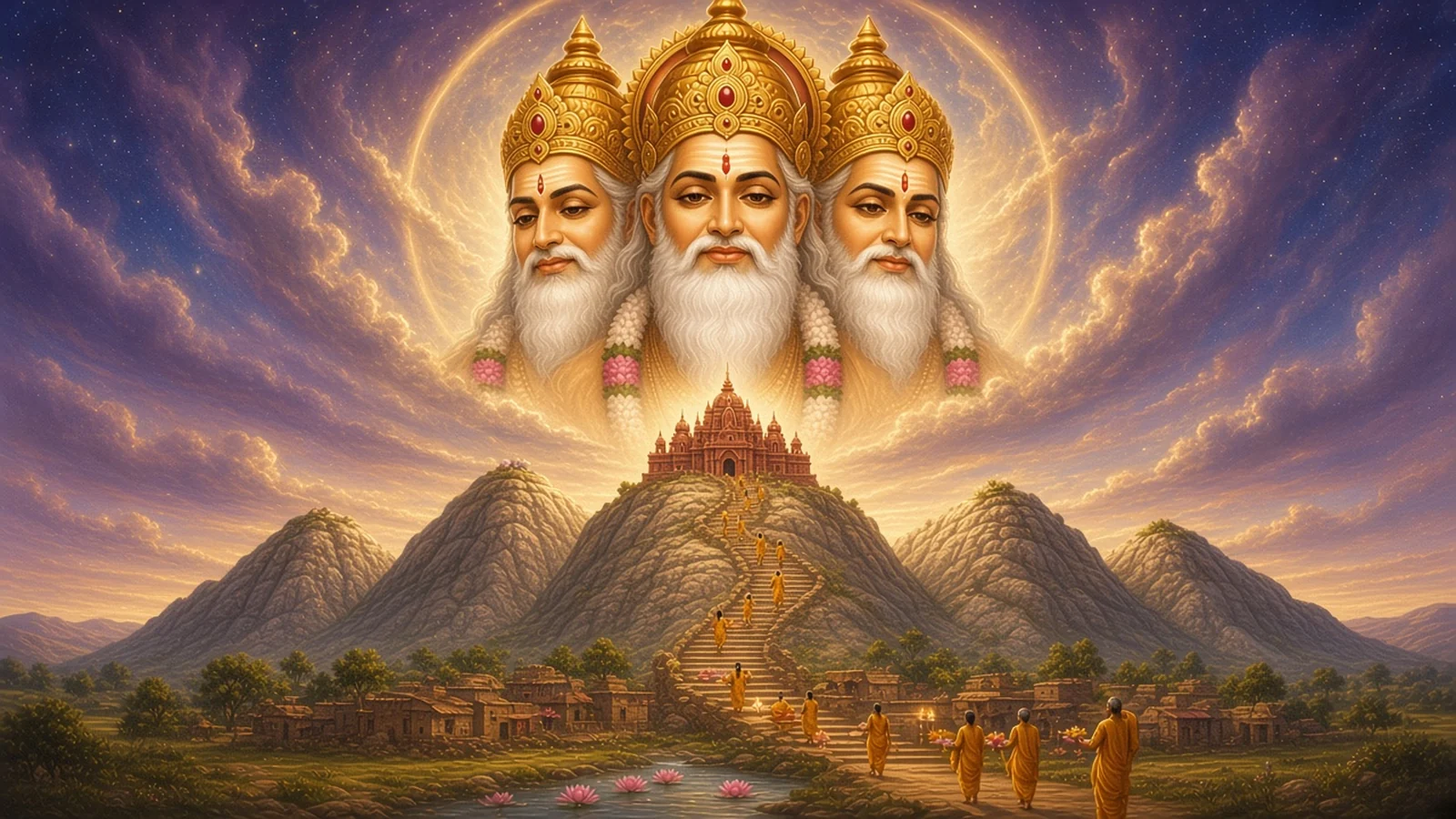
They were Sunda and Upasunda, sons of the demon Nikumbha, so alike that they seemed one person cut in two. Together they went to the Vindhya hills to do penance. They lived on air and stood on their toes with their arms raised until the hills began to steam.
The gods were frightened. They sent treasures and lovely girls, and the brothers did not look up. They conjured the brothers' own mothers and wives running past with their hair loose, crying for help, and still the brothers did not move.
At last Brahma came. "Choose a boon," he said.
"Every weapon and every magic," said the brothers, "and let us never die."
"Not that," said Brahma. "You did this penance to rule the worlds. Choose the way you may die."
"Then let nothing harm us, moving or still," they said, "except each other."
"It is granted."
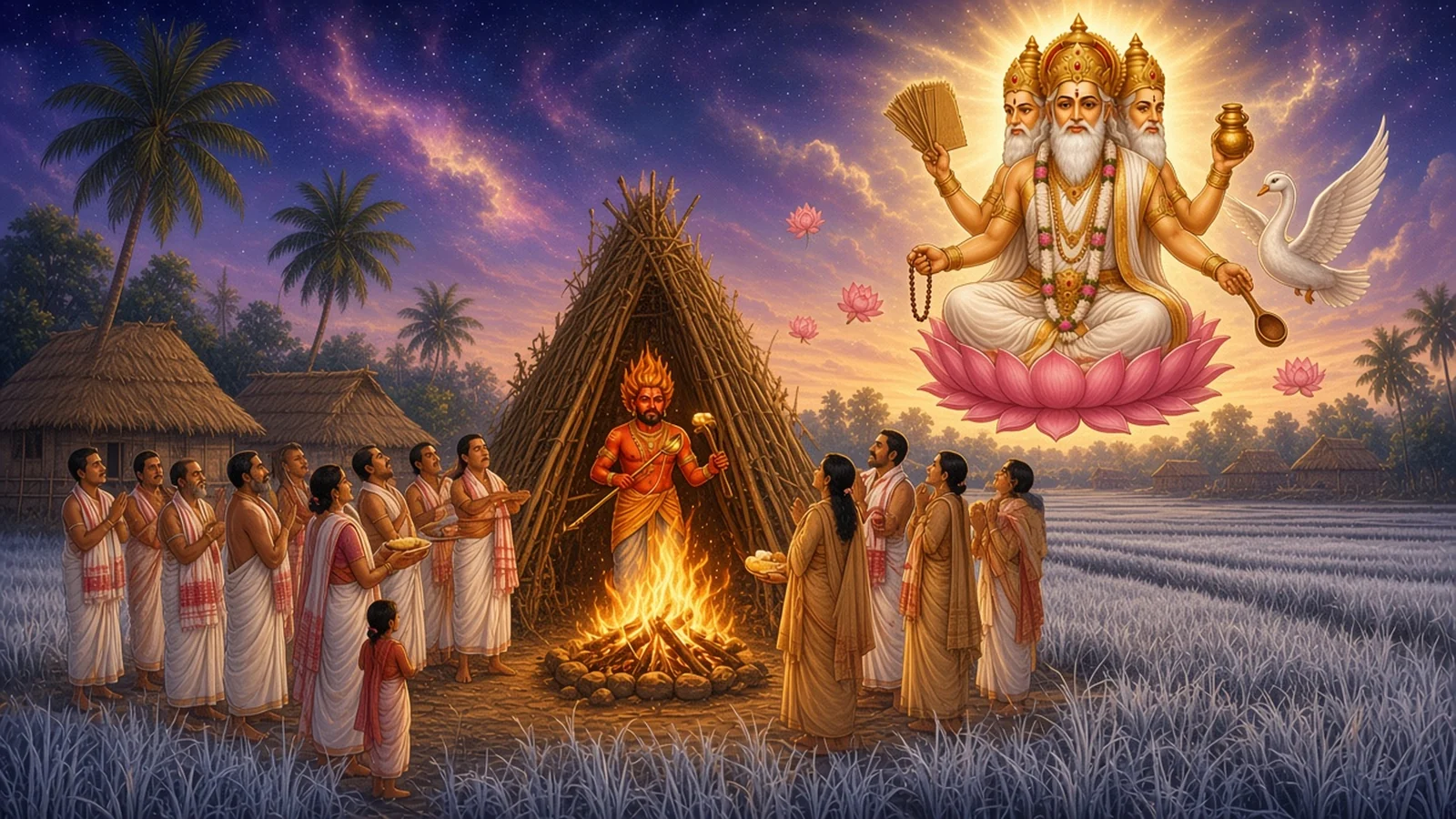
They feasted until a year went by like a day. Then they took Indra's heaven, the serpents' world and the earth. They killed sages at their altars and threw the sacred fires into the water, and the hermits' curses fell off them like arrows off a rock. Sacrifice stopped, markets closed, fields lay untended. The brothers settled at Kurukshetra with no one left to fight.
The sages went to Brahma, in whose court sat Shiva, Indra, Agni, Vayu, the Moon and the Sun. Brahma thought for a moment and called Vishvakarma, the maker of the gods.
"Make a woman," he said, "whom every heart will run after."
Vishvakarma gathered every beauty into her, and took a tiny grain from every jewel there was, so that she was made almost wholly of gems. Brahma named her Tilottama for those grains.
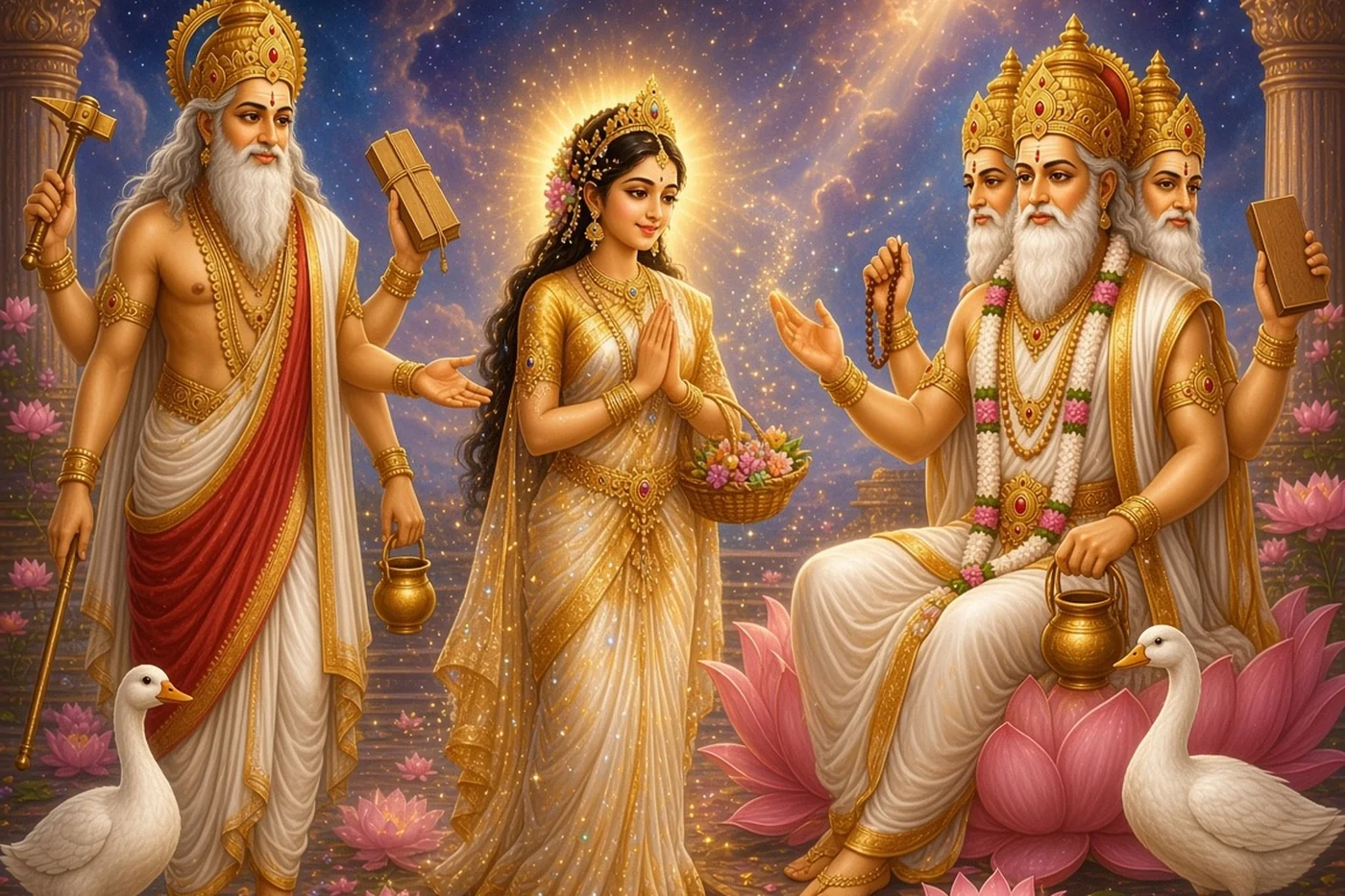
She bowed. "Lord, what am I made for?"
"Go to Sunda and Upasunda, and let your beauty set them against each other."
Before she left she walked round the gods in a circle of respect. Only Shiva and Indra kept their calm, and even they could not keep their eyes still. As she passed to Shiva's south, a second face opened on that side of his head, then one behind him, then one on the north, and so he came to have four faces. Indra grew a thousand eyes. Every sage turned his head after her. Only Brahma did not look.
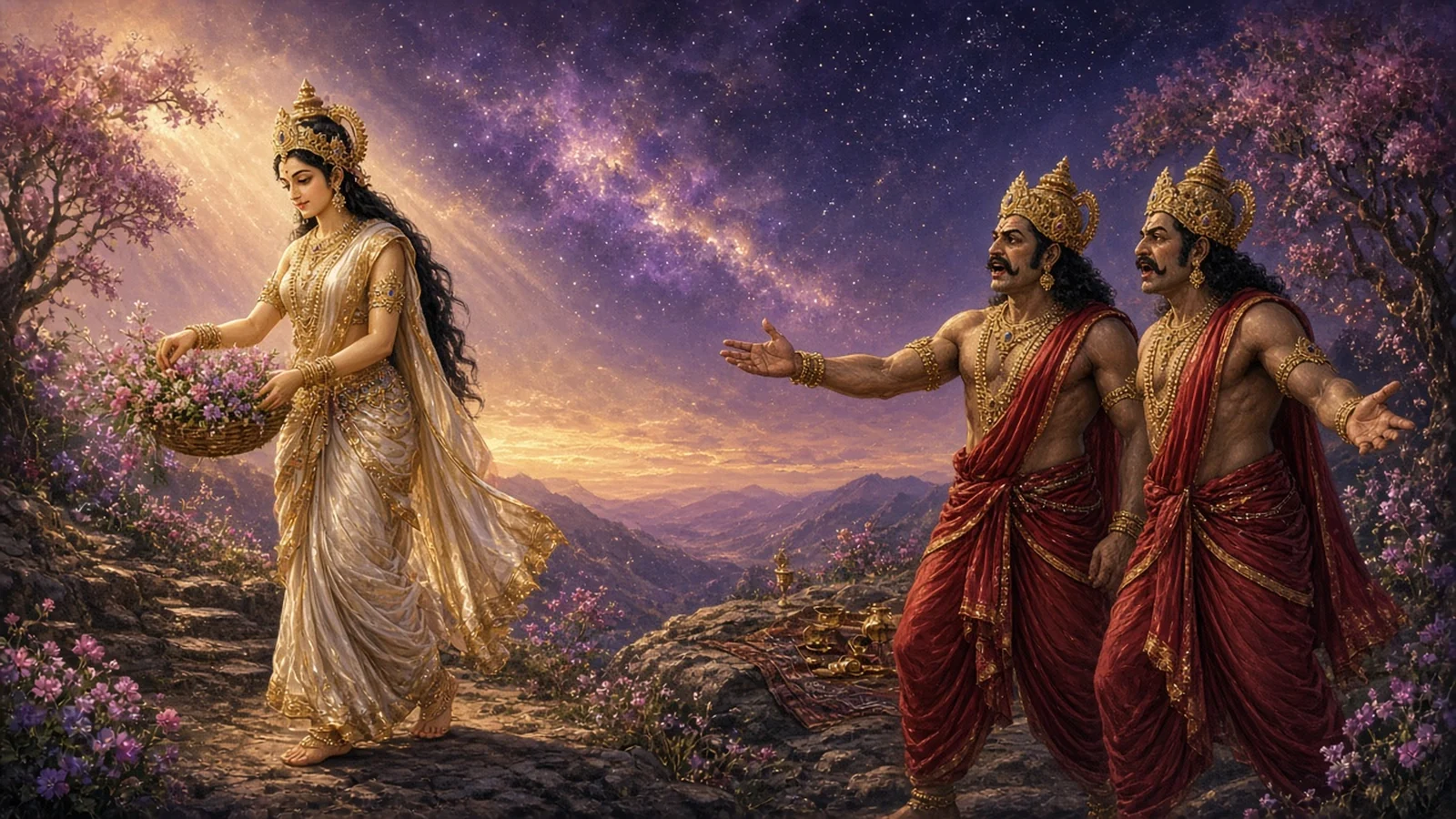
The brothers sat on a flat stony upland among flowering trees, flushed with wine, watching women dance for them. Tilottama came along the slope in red silk, picking wild flowers.
They both sprang up. Sunda caught her right hand.
"She is mine," he said. "You must honour her as your elder brother's wife."
"She is mine," said Upasunda. "To you she is your younger brother's wife."
"I took her hand first!" each shouted, and each lifted his mace. They struck together and fell together, like two suns knocked out of the sky, and their people fled to the world below.
Brahma came with the gods and praised Tilottama. "You will move among the Adityas," he told her, "and shine so bright that no one can look at you for long."
"So two brothers who were one in everything died over her," Narada told the Pandavas. "Do not let it happen to you."
There and then they made their rule: whoever came upon a brother sitting with Draupadi must go to the forest for twelve years.
As the Ocean of Story tells it
Kathasaritsagara, Book 3, chapter 15 · Kaushambi, eleventh-century Kashmir · 2 min read
Somadeva wrote his Ocean of Story in Kashmir in the eleventh century, and in it Narada tells the Tilottama story a second time, to a different king.
The king is Udayana of Vatsa, a descendant of the Pandavas, who rules from Kaushambi with his beloved queen Vasavadatta. His ministers have a secret plan for his good, one that will cost him some grief, and on the very day the court sets out to carry it through, Narada comes down out of the sky, shining like the moon. He gives the king a garland from the coral tree of heaven, and promises the queen a son.
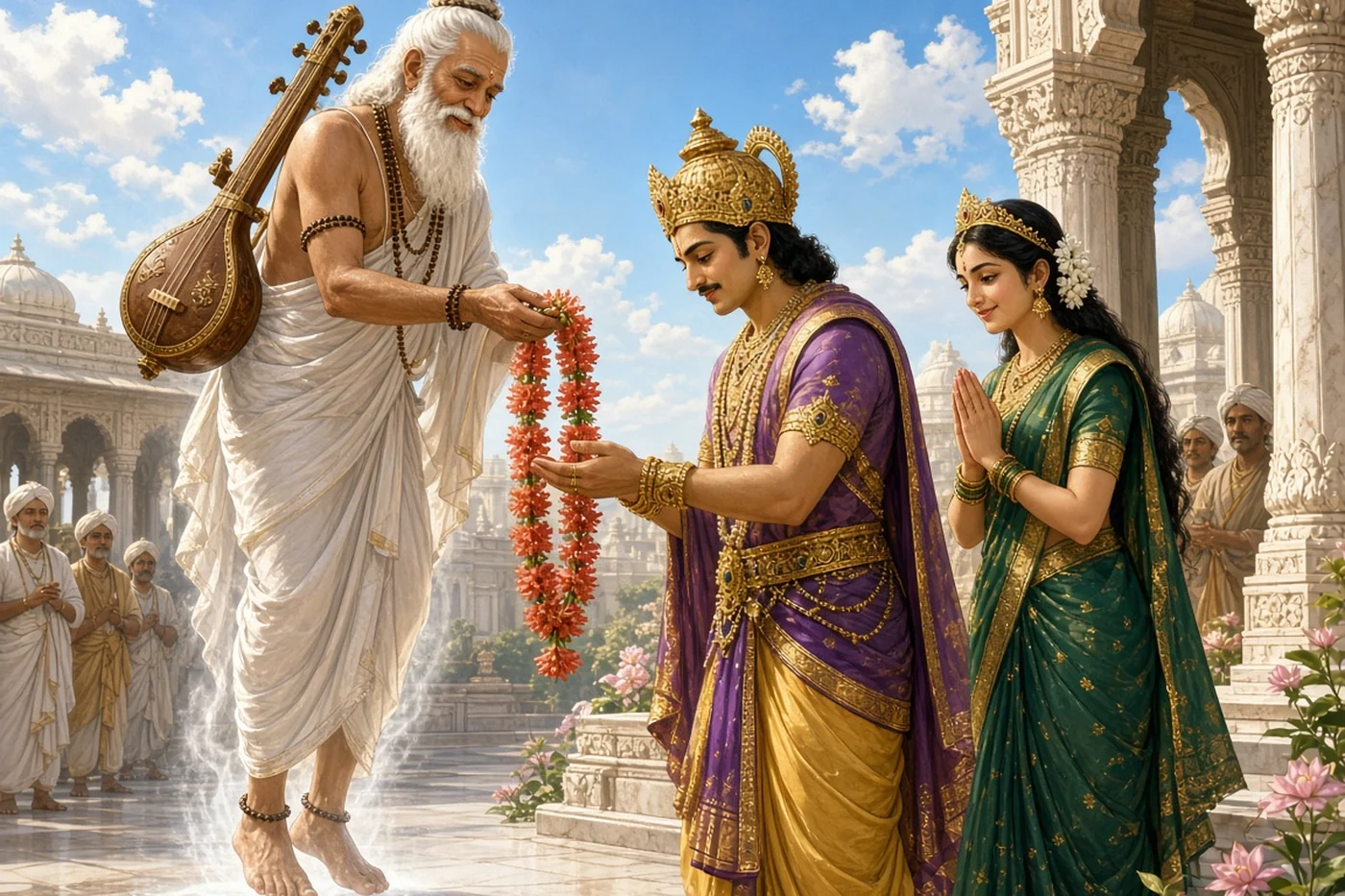
Then he looks at Vasavadatta and remembers.
"Your queen reminds me of Draupadi," he tells the king. "Your ancestors, the five brothers, had her for their one wife, and her beauty was as rare as this. I was afraid it would do harm. So I told them a story."
The story he tells is short. Sunda and Upasunda, two demon brothers, were stronger than the three worlds. Brahma, meaning to destroy them, had Vishvakarma make a woman of heaven, Tilottama. She was so lovely that when she walked reverently round Shiva, he grew four faces so as to watch her from every side at once.
At Brahma's word she went to the brothers, who were in a garden on Kailasa. They saw her and seized her at the same moment, one by each arm. Each pulled her his own way, they came to blows, and both of them died.
"You are five," Narada had told the Pandavas, "and you love one woman, so you must never quarrel over her. Keep this rule. When she is with the eldest, let the youngest think of her as his mother. When she is with the youngest, let the eldest think of her as his son's wife."
"They took my advice," Narada tells Udayana, "and so should you take your ministers'. You will grieve for a while. Do not grieve too much. It will end in happiness."
Then he vanishes. The ministers, who have heard every word, take it as a sign that their plan will work.