Festival · The bright fourteenth of Bhadrapada, when Vishnu is worshipped as the endless one with a cord of fourteen knots, and the Ganeshas of the ten days go back to the water
Anant Chaturdashi
Anant Chaturdashi is the fourteenth day of the bright half of Bhadrapada, kept for Vishnu as Ananta, the endless one, with a morning puja, the story of Sushila and Kaundinya, and a cord of fourteen knots tied on the arm for a year. In Mithila and the Nepal Terai the new thread is first churned in a bowl of milk, as if the family were searching the ocean of milk for the god. In Maharashtra, Hyderabad and wherever the public Ganeshotsav is kept, it is the last day of the ten, when the great Ganeshas are carried through the night to the sea, the lakes and the rivers.
When is Anant Chaturdashi in 2027? Anant Chaturdashi, is Tuesday 14 September 2027. In 2028: Saturday 2 September 2028. The chaturdashi, fourteenth day, of the bright half of Bhadrapada (August or September), on the day the fourteenth is current at sunrise; the tenth day after Ganesh Chaturthi.
The bright fourteenth of Bhadrapada, kept for Vishnu as Ananta with a puja, the story of Sushila and Kaundinya and a cord of fourteen knots tied on the arm. In Maharashtra and Hyderabad it is also the day the Ganeshas of the ten-day festival are immersed.
When is Anant Chaturdashi?
Calendars give Tuesday 14 September 2027 and Saturday 2 September 2028, the tenth day after Ganesh Chaturthi.
Why does the Anant thread have fourteen knots?
The Bhavishya Purana prescribes a cord of fourteen knots and a vow of fourteen years. Drik Panchang and Nepal's almanac say the knots stand for the fourteen worlds; Radio Nepal reported them as fourteen names of Vishnu.
Which arm is the Anant tied on?
Men tie it on the right arm and women on the left, and it is usually worn until the next Anant Chaturdashi. Some families in Bihar take it off after fourteen days.
Why are Ganesha idols immersed on Anant Chaturdashi?
It is the tenth day after Ganesh Chaturthi, the last of the ten days the public festival lasts, so the great mandal Ganeshas, and the household ones kept for the full ten days, are sent back to the water that day.
Next, in 2027Tuesday 14 September 2027
Prime godVishnu
with 3 more
WhereMost of India and Nepal; Maharashtra and Telangana for the Ganesh immersions; Bihar, Mithila and the Nepal Terai for the Anant puja; Digambara Jains everywhere
How longOne day. In Mumbai and Pune the immersion processions run through the night and into the next day
The chaturdashi, fourteenth day, of the bright half of Bhadrapada (August or September), on the day the fourteenth is current at sunrise; the tenth day after Ganesh Chaturthi
Why it is kept
On the fourteenth day of the bright half of Bhadrapada two very different things happen in the same country. In a Darbhanga courtyard a family stirs a bowl of milk with a knotted thread, and a priest asks whom they are looking for. In Mumbai a crowd that has not slept walks a Ganesha the height of a house down to the sea. Both belong to Anant Chaturdashi, the day of Ananta, the endless one, and the last day of Ganesha's ten.
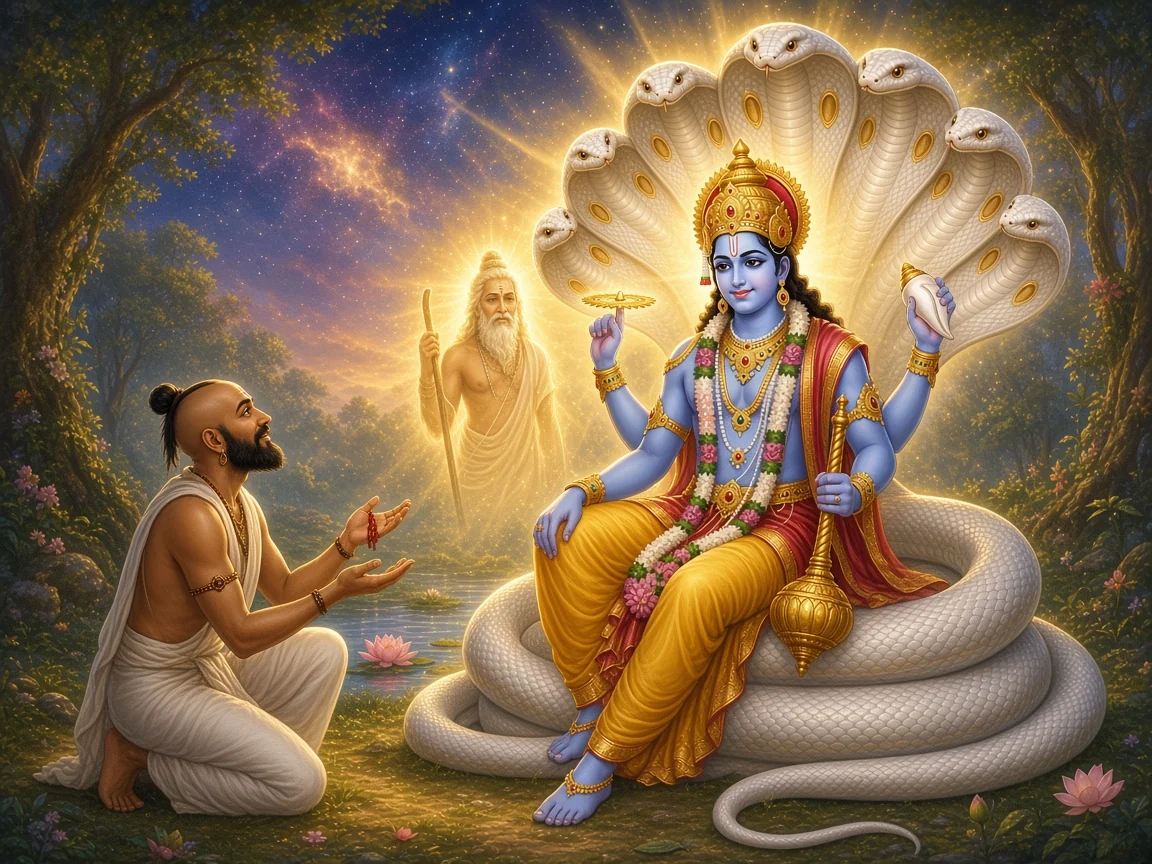
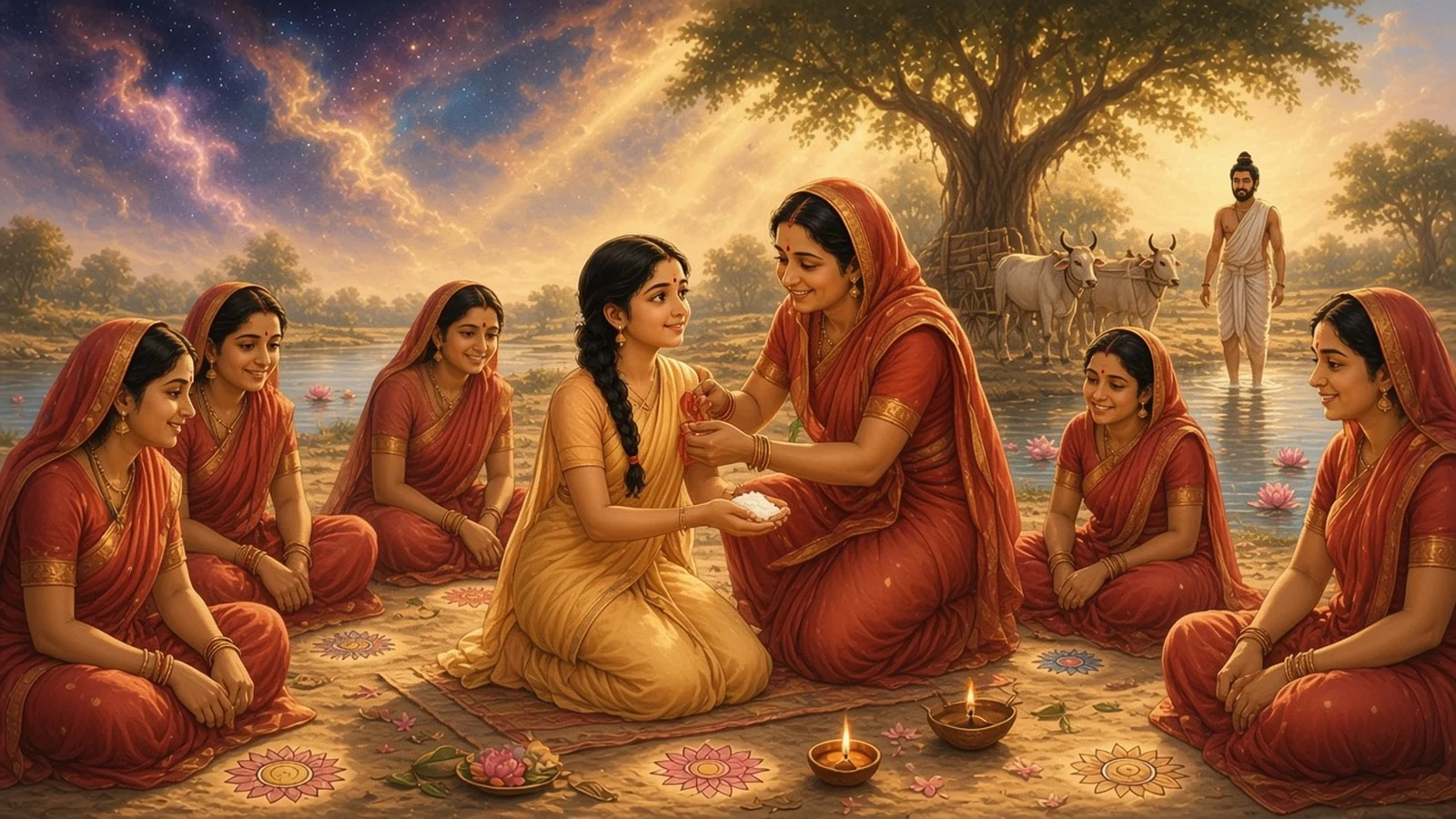
The Ananta of the day is Vishnu. In the chapter of the Bhavishya Purana that the vow books follow, Yudhishthira asks whether Ananta is the serpent Shesha, or the snake Takshaka, or the Self beyond everything, and Krishna answers that Ananta is his own name: he is time, and Shiva, Brahma, the sun and Shesha are all himself. Then he tells the story that is read on the day, The Thread Kaundinya Threw Away. A Brahmin's daughter, Sushila, learns the vow from women by a river and ties on a cord of fourteen knots. Her husband breaks it in scorn and loses everything, and he searches the forest until the god meets him as an old Brahmin. The serpent who shares the name, and whom Drik Panchang lists among the day's gods, is The Serpent Who Holds the Earth.
Sushila learns the vow of the fourteen knots from the women by the river
The Ganesha side of the day comes from the calendar, not from a story. Anant Chaturdashi is the tenth day after Ganesh Chaturthi, so wherever the god is kept for the full ten days, this is the day he goes home. How that farewell left the house for the street is told on the Ganesh Chaturthi page.
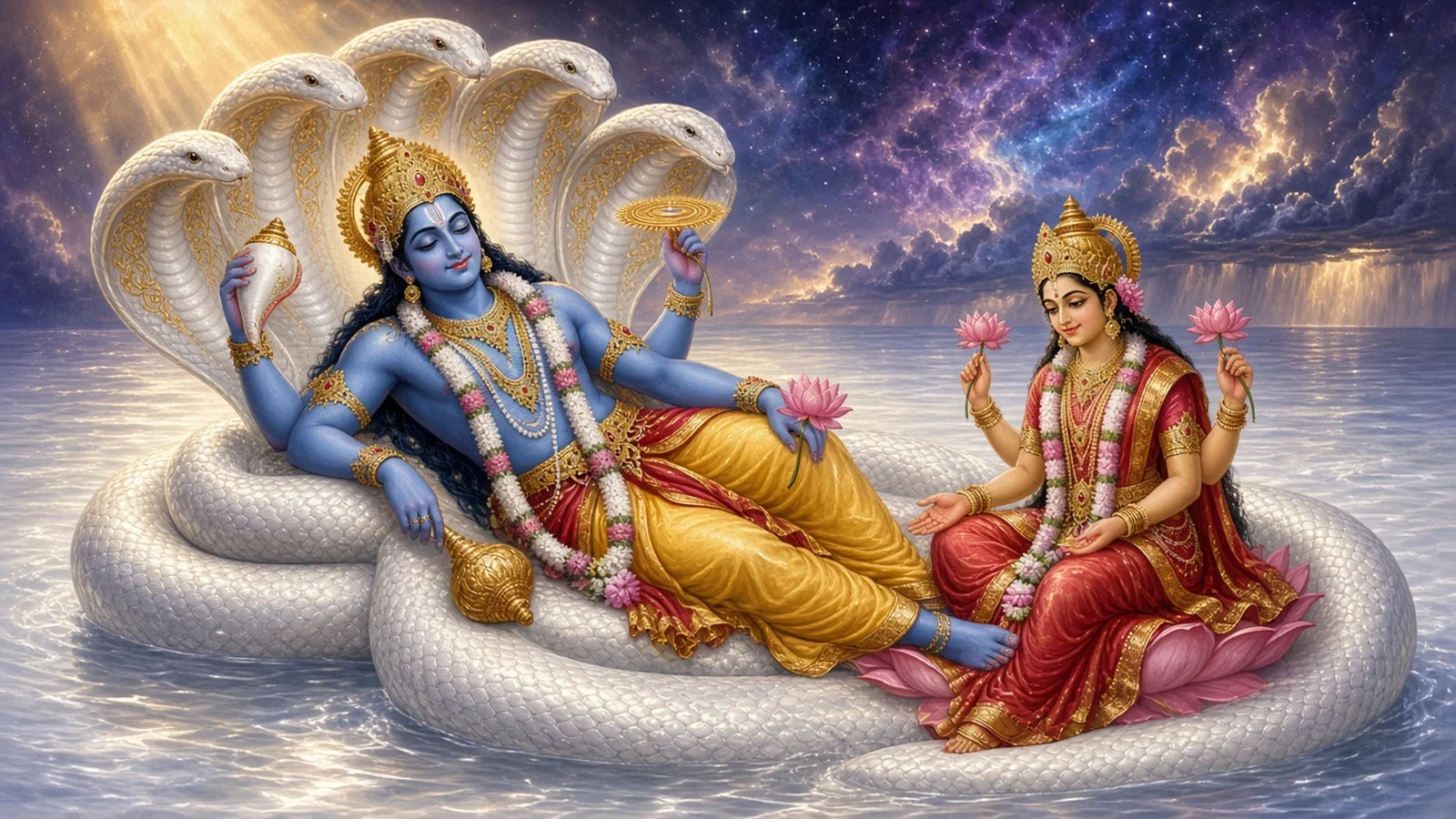
The churning in Mithila joins Ananta to the oldest picture of Vishnu: the god asleep on the serpent in the ocean of milk. Radio Nepal reports the tradition as reaching back to the churning that brought up fourteen jewels.
In a Mithila courtyard the new thread is churned in milk, the search for Ananta
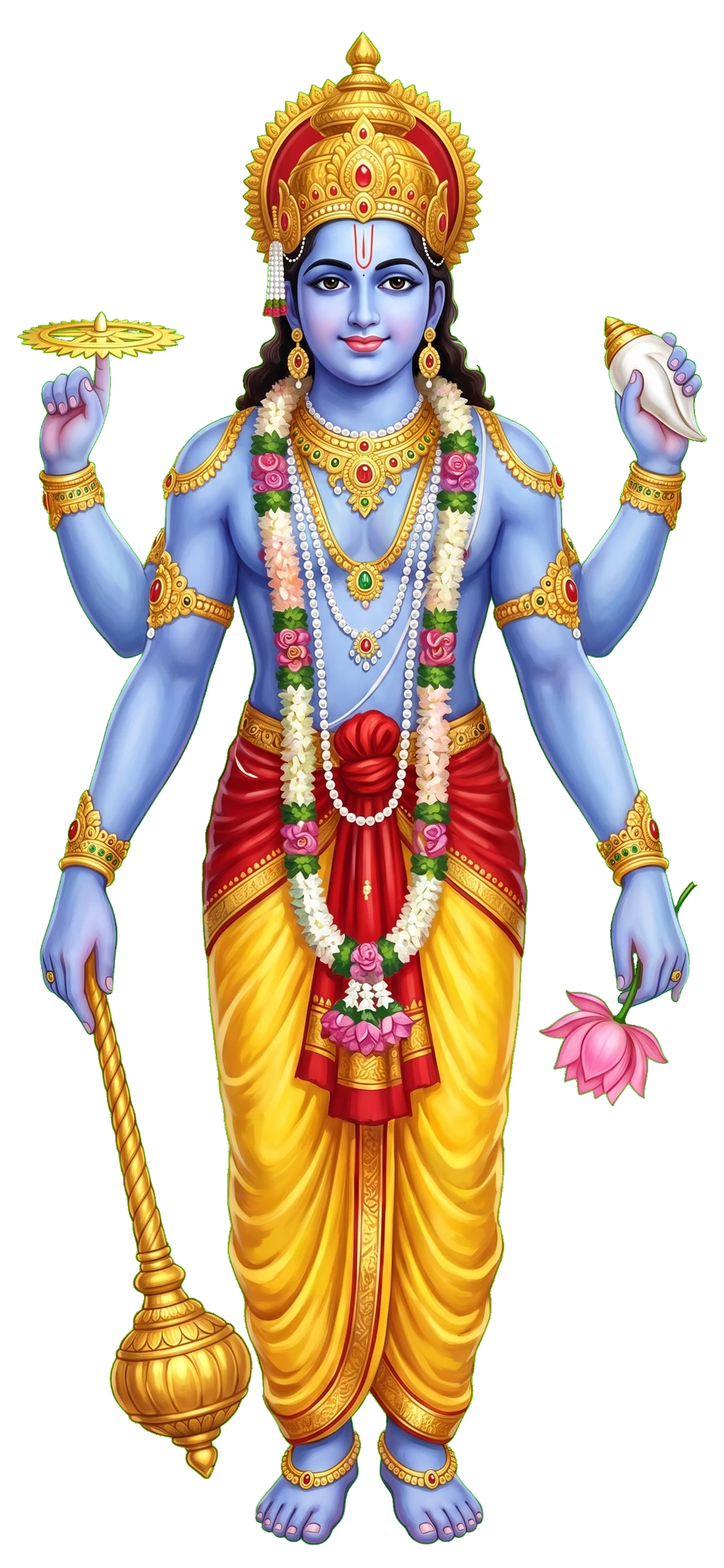
Ananta, the endless one. In the Bhavishya Purana Krishna tells Yudhishthira that Ananta is his own name, that he is time from the moment to the aeon, and that Shiva, Brahma, the sun and Shesha are all himself. He is worshipped in a kusha-grass image beside a water pot, and the fourteen-knotted cord is tied in his name.
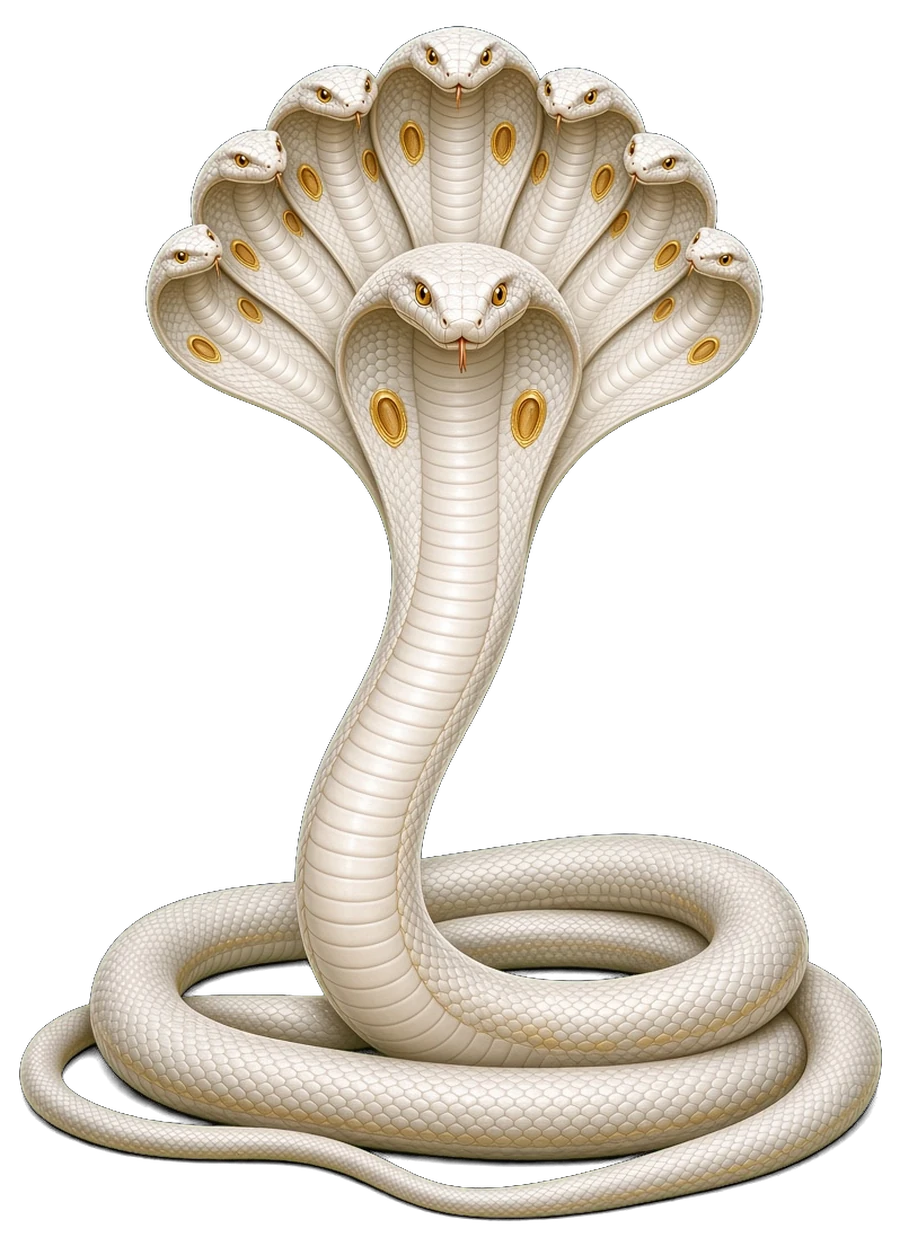
The serpent whose other name is Ananta, worshipped with Vishnu on this day as Sheshnag. In the Marathi Guru Charitra, Sushila shapes both Anant and Shesha from darbha grass; Yudhishthira's first question in the Purana is whether Ananta is the serpent.
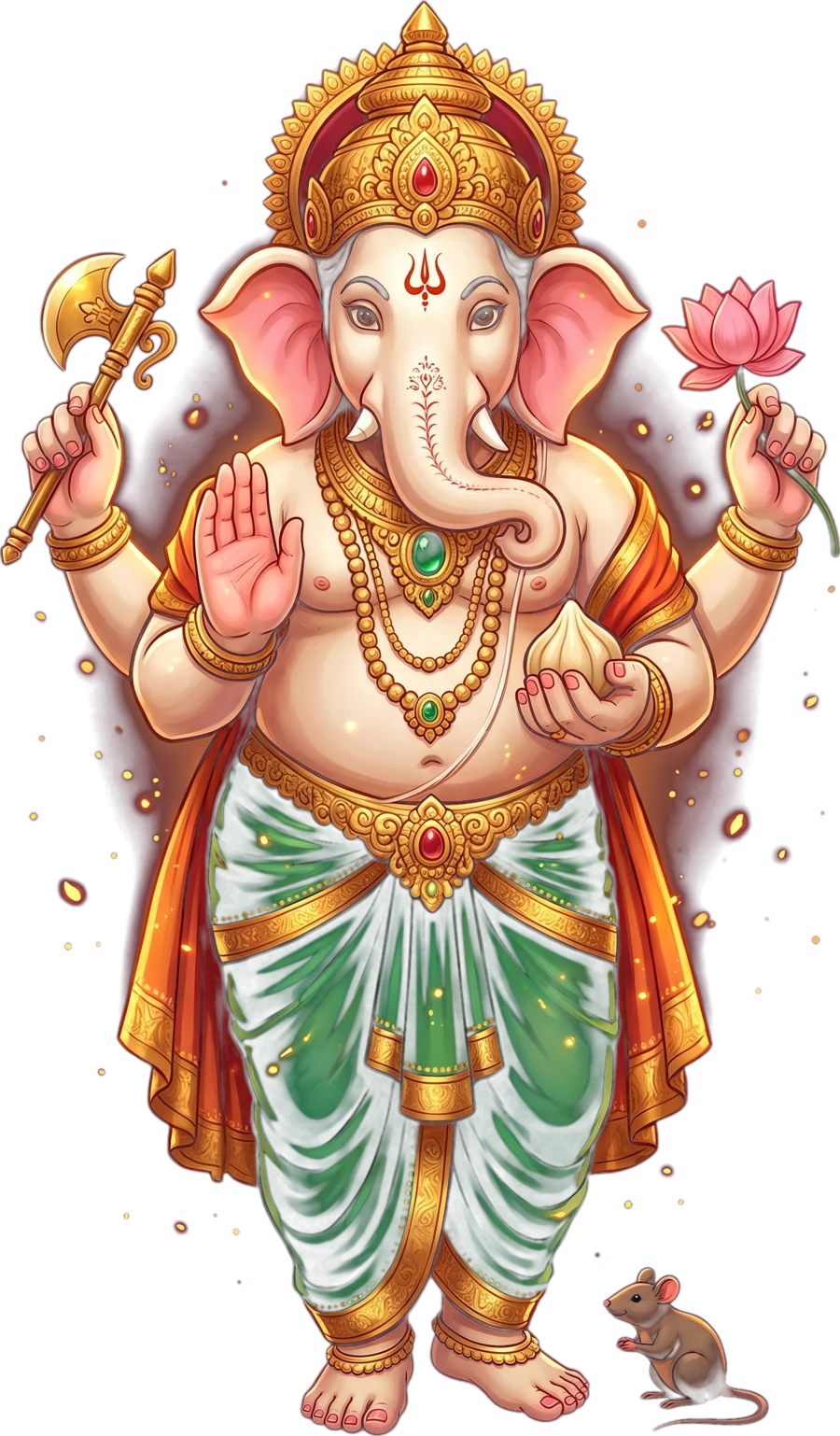
The god of the ten days, whose public and household images are immersed on this day. In Mumbai the Lalbaugcha Raja walks through the night to Girgaon Chowpatty, in Pune the five Manache Ganpatis lead the procession to the river, and in Hyderabad the giant Khairatabad Ganesha goes into Hussain Sagar.
A
Anantanatha, the fourteenth Jain Tirthankara
Shares only the name. For Digambara Jains the day is Ananta Chaudas, the last day of the ten-day Das Lakshana Parva; the sources we read do not tie it to the life of Anantanatha.
The fourteenth day
1
The morning puja and the thread
Chaturdashi, morning to afternoon · Tuesday 14 September 2027
Anant pujaAnant sutrathe fourteen knots
After a bath the keeper sets a water pot on an eight-petalled lotus drawn in rice paste and lays beside it a small Ananta made of kusha grass, then worships it with flowers, incense, a lamp and food offerings. The new cord, cotton, silk or kusha thread reddened with kumkum or yellowed with turmeric and tied in fourteen knots, is worshipped with the god. Men tie it on the right arm and women on the left. In Mithila the year-old thread is untied and worshipped first, and the new one is churned in cow's milk while the priest asks what is being churned and whom the family seeks. Nepal's almanac sets the puja in the afternoon and lets those who missed Janai Purnima change their sacred thread today.
A cord of fourteen knots tied on the right arm beside the kusha Ananta and the water pot
Chaturdashi, after the puja · Tuesday 14 September 2027
Anant vrat kathathe story of Sushila
Then the story is read aloud: Sushila, sent off with leftover flour, learning the vow from women by a river; Kaundinya tearing off the cord; the long search through the forest and the old Brahmin who was Ananta. The vow is meant to be kept for fourteen years and closed with a gift of fourteen pots, fourteen cords and fourteen sets of a married woman's things, though many keep it all their lives. The fast is broken after the puja, in Mithila with puris made without salt.
The katha read aloud after the puja, the family listening around the kusha Ananta
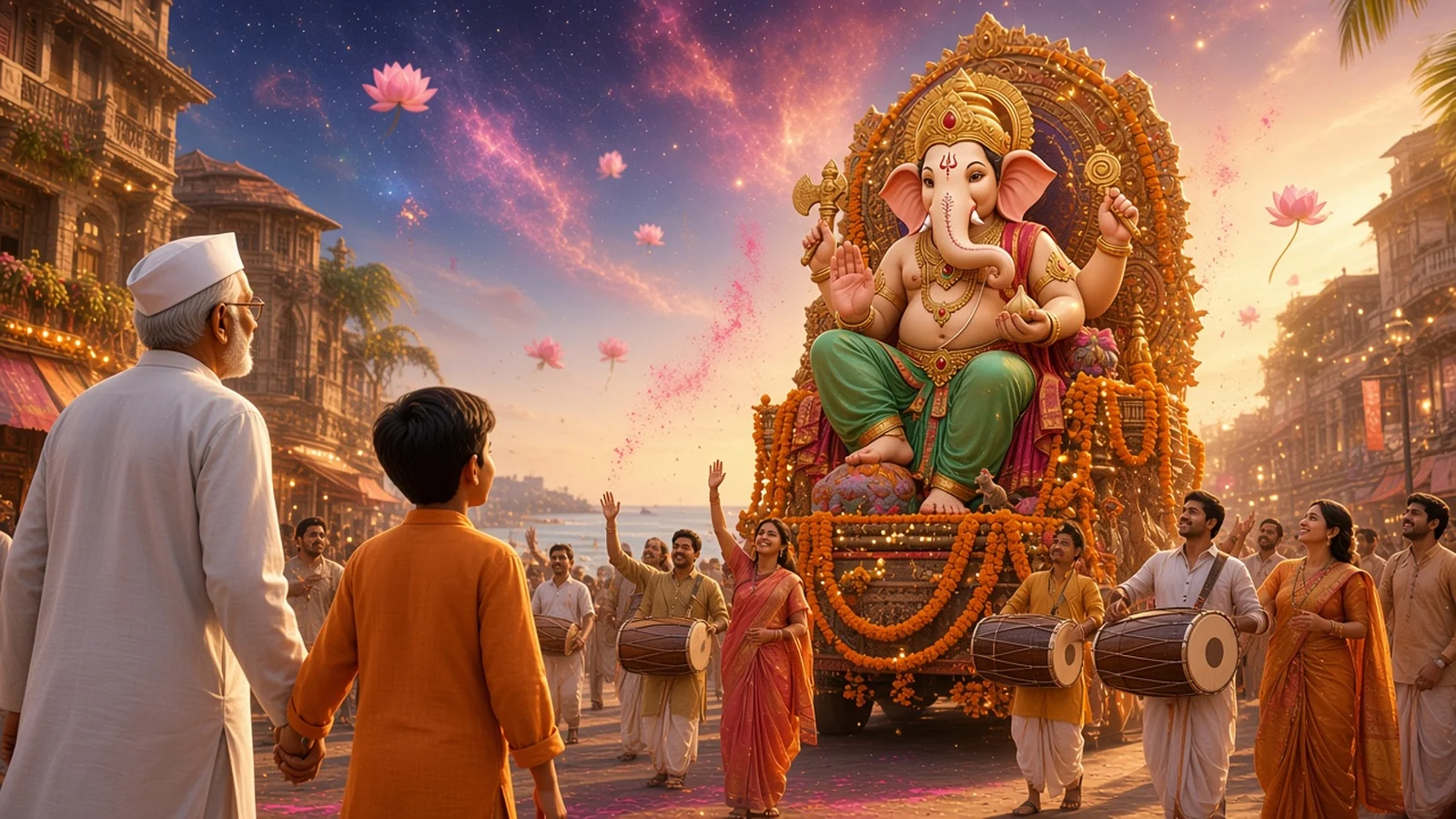
Households that keep Ganesha for all ten days do the uttarpuja, sing the last aarti, often tie him a bundle of food for the road home to Kailasa, and nudge the image on its seat to begin the farewell. Then the city takes over. In Mumbai the Lalbaugcha Raja leaves his pandal early in the afternoon and crosses the city all night by Byculla and Nagpada; in Pune the Kasba Ganpati sets off from the Tilak statue at Mandai at the head of about 650 mandals; in Hyderabad the Khairatabad Ganesha rolls from Khairatabad to the cranes on the Hussain Sagar shore.
The Raja of Lalbaug on his float, moving through the night crowds of Mumbai
Chaturdashi night into the next morning · Tuesday 14 September 2027
visarjanthe artificial pondsthe tide
The immersions go on through the night. Since a High Court ruling, idols in Mumbai up to six feet tall go into artificial ponds, a dozen of them on Girgaon Chowpatty alone in 2026, and the giants go to the sea, timed against the tide. The Lalbaugcha Raja reaches Chowpatty around dawn and is taken out to deep water on a raft by Koli fishermen, in 2026 at 10:46 the next morning. Pune's procession can run for more than a day.
Dawn at Girgaon Chowpatty: a family lowers its clay Ganpati into an artificial pond
The great public Ganeshas walk to the sea at Girgaon Chowpatty and the city's other beaches. The Lalbaugcha Raja, set up in 1934 by Koli fishermen and market vendors who had vowed him a market, left his pandal at about 1 pm in 2026, reached the beach at about seven the next morning and was taken out on a raft by Koli fishermen ahead of the tide. The city's rule now sends every idol up to six feet tall into artificial ponds, and in 2026 almost 97 per cent of nearly two lakh idols went into them.
PuneThe five Manache Ganpati
Pune's procession goes in a fixed order. The Kasba Ganpati leads, then Tambdi Jogeshwari, Guruji Talim, Tulshibaug and Kesari Wada, along Laxmi Road to the river ghats. In 2026 the five went into the water between 4:43 and 6:12 in the evening, Dagdusheth Halwai's Ganpati after them, and the whole procession took 33 hours and 27 minutes.
Hyderabad, TelanganaKhairatabad and Hussain Sagar
The tallest Ganesha of the city, the Bada Ganesh of Khairatabad, goes into Hussain Sagar. In 2026 the 69-foot Panchamukha Sankatahara Maha Ganapati set out at 10 am past Telephone Bhavan and the Secretariat and was lowered by crane at 2:40 in the afternoon.
Bihar and MithilaAnant puja and the churning
Here the day belongs to Vishnu. The women of a lane bring their baskets of fourteen sweets and fourteen fruits to one place, the kusha Ananta sits by a water pot on a rice-paste lotus, and the new threads are churned in cow's milk while the priest asks in Maithili what is being churned (the ocean of milk), whom the family seeks (Ananta) and whether he is found (yes). Some wind the thread round a cucumber for the churning. Many keep the thread a year; some immerse it after fourteen days.
NepalAnanta Chaturdashi vrata
Across the Terai and Mithilanchal the Anant puja fills the temples, Janakpur's Ram and Janaki temples among them, with threads of red, yellow and green. In Kathmandu the day often falls during Indra Jatra, and those who missed changing their sacred thread at Janai Purnima change it today.
Vaishnava householdsThe Anant vow
A household vow for Vishnu as Ananta, kept by women and men alike, with the fourteen-knotted cord worn for a year and the vow meant to run fourteen years. The Bhavishya Purana gives its rule and its story.
Ganapatya devotees and the public mandalsThe tenth-day visarjan
For the mandals of Maharashtra and the cities that took up the public festival, the day is the immersion, with dhol and tasha, gulal and the cry Ganpati Bappa Morya, pudhchya varshi lavkar ya.
Digambara JainsAnanta Chaudas
The tenth and last day of the Das Lakshana Parva, the ten days given to the ten virtues of the Tattvartha Sutra, kept with fasting and worship; Kshamavani, the day of asking forgiveness, follows. Anantanatha, the fourteenth Tirthankara, shares the name.
How it is kept
The Anant puja is done by day, in the morning or, by Nepal's almanac, in the afternoon. A small Ananta of kusha grass sits beside a water pot on a lotus drawn in rice paste and is worshipped with the new cords, which are then tied on, men on the right arm and women on the left. The story is read, the fast is broken, and the cord is worn for the year. The vow is meant to run fourteen years and end in a closing rite of fourteen gifts. In Bihar and Mithila the old thread is worshipped before it is untied, and the new one is churned in cow's milk, sometimes wound round a cucumber, while the Maithili questions go back and forth: what are you churning, whom do you seek, have you found him.
The Ganesh immersions start in the afternoon and do not stop. Families do the last puja and aarti at home and carry their images out to the drums. The great mandal Ganeshas walk for hours, in Mumbai and Pune for a day and more. Since a High Court ruling, idols in Mumbai up to six feet tall go into artificial ponds rather than the sea, and in 2026 nearly all of them did.
The last aarti at home before the family carries its Ganpati out to the drums
For Digambara Jains the day is Ananta Chaudas, the last of the ten days of the Das Lakshana Parva, followed by Kshamavani, the day of asking forgiveness.
In the old texts
The rule and the story are in the Bhavishya Purana, Uttara Parva, chapter 94, the part of the Purana often circulated on its own as the Bhavishyottara. It gives the cord of fourteen knots, the arm for each sex, the prayer to Vasudeva to lift the drowning out of the endless sea of the world, and the term of "nine years and five". The Marathi Shri Guru Charitra, the life of Narasimha Saraswati of Ganagapur written by Saraswati Gangadhar, retells it in its chapter 42 with the cord thrown into the fire. Mithila's priests set the day by the rule that the fourteenth must be current at sunrise, after the Tithichandrika of Pakshadhar Mishra. Some modern summaries place the legend in the Mahabharata; we found it in the Bhavishya Purana, where the Mahabharata's Krishna and Yudhishthira are only its frame.
Where this page comes from. Written by Devalok from the Bhavishya Purana (Uttara Parva, chapter 94), the Marathi Shri Guru Charitra (chapter 42), the Anant Chaturdashi dates and vrat katha of Drik Panchang for 2027 and 2028, Hamro Patro, Mithila Mirror and Mithila Legacy, the reports of the day in 2025 and 2026 from Prabhat Khabar, Radio Nepal, Lokmat, mid-day, ThePrint, The Free Press Journal, The Indian Express and Deccan Chronicle, and Wikipedia's articles on the festival, Paryushana and Anantanatha, as recorded in the Devalok Lore. Our own words throughout.