Festival · The full moon of the teacher, kept for Vyasa who divided the Veda and for every guru since
Guru Purnima
Guru Purnima is the full moon of Ashadha, in July, the day India gives to its teachers. It is Vyasa Purnima, the birthday of Veda Vyasa, who divided the one Veda into four and composed the Mahabharata, and the morning on which the Shankaracharya maths worship his seat and their sannyasis sit down for the rains. Disciples go to living gurus with flowers and a lamp, music and dance pupils play for their teachers, Nepal keeps it as Teachers' Day, and the south lights its first lamp before Dakshinamurthy, Shiva as the silent teacher under the banyan. Buddhists keep the same moon for the Buddha's first sermon at Sarnath, and Jains for the day Mahavira took his first disciple.
When is Guru Purnima in 2027? Guru Purnima, Vyasa's full moon, is Sunday 18 July 2027. In 2028: Thursday 6 July 2028. The full moon of Ashadha, in July, the first full moon after the summer solstice.
The full moon of Ashadha, in July, kept across India and Nepal as the day of the teacher. It is Vyasa Purnima, the birthday of Veda Vyasa who divided the Veda and wrote the Mahabharata, and the day disciples worship their own guru with flowers, a lamp and the padapuja.
When is Guru Purnima in 2027?
Sunday 18 July 2027. The Purnima tithi runs from the evening of 17 July to the evening of the 18th, so the day is the 18th. In 2028 it is Thursday 6 July.
Why is it called Vyasa Purnima?
Because the tradition holds that Vyasa was born on this full moon and finished dividing the one Veda into four on it. The Shankaracharya maths worship his seat at dawn and their sannyasis begin the two months of the Chaturmas, staying in one place for the rains.
Who is Dakshinamurthy?
Shiva as the first teacher, a young man under a banyan tree facing south with aged sages at his feet, teaching by silence and the sign of his hand. He sits in the south wall of almost every Shiva temple in Tamil Nadu, and his lamp is lit first on Guru Purnima.
What do Buddhists and Jains keep on this day?
Buddhists keep Asalha Puja or Dhamma Day, the Buddha's first sermon at Sarnath, and begin the rains retreat the next morning. Jains remember the day Mahavira took Indrabhuti Gautama as his first disciple, and their monks begin the four months of Varshayog.
Next, in 2027Sunday 18 July 2027
Prime godDakshinamurthy, the first teacher
with 4 more
WhereAll India and Nepal, and the Buddhist countries of Sri Lanka and Southeast Asia
How longOne day, from the Vyasa puja at dawn; the two months of the sannyasis' Chaturmas begin on it
The full moon of Ashadha, in July, the first full moon after the summer solstice
Why it is kept
Guru Purnima is the one festival in the Hindu year that is not for a god. It is for whoever taught you. On the full moon of Ashadha, the first after the summer solstice, the disciple goes to the teacher with flowers and a lamp, washes his feet or his sandals, and asks for nothing. The day is older than any one teacher: it is Vyasa's, who divided the Veda; it is Dakshinamurthy's, who taught without speaking; it is the Buddha's, who spoke for the first time at Sarnath; and in Nepal it is simply Teachers' Day, when the schools close and the children bring garlands.
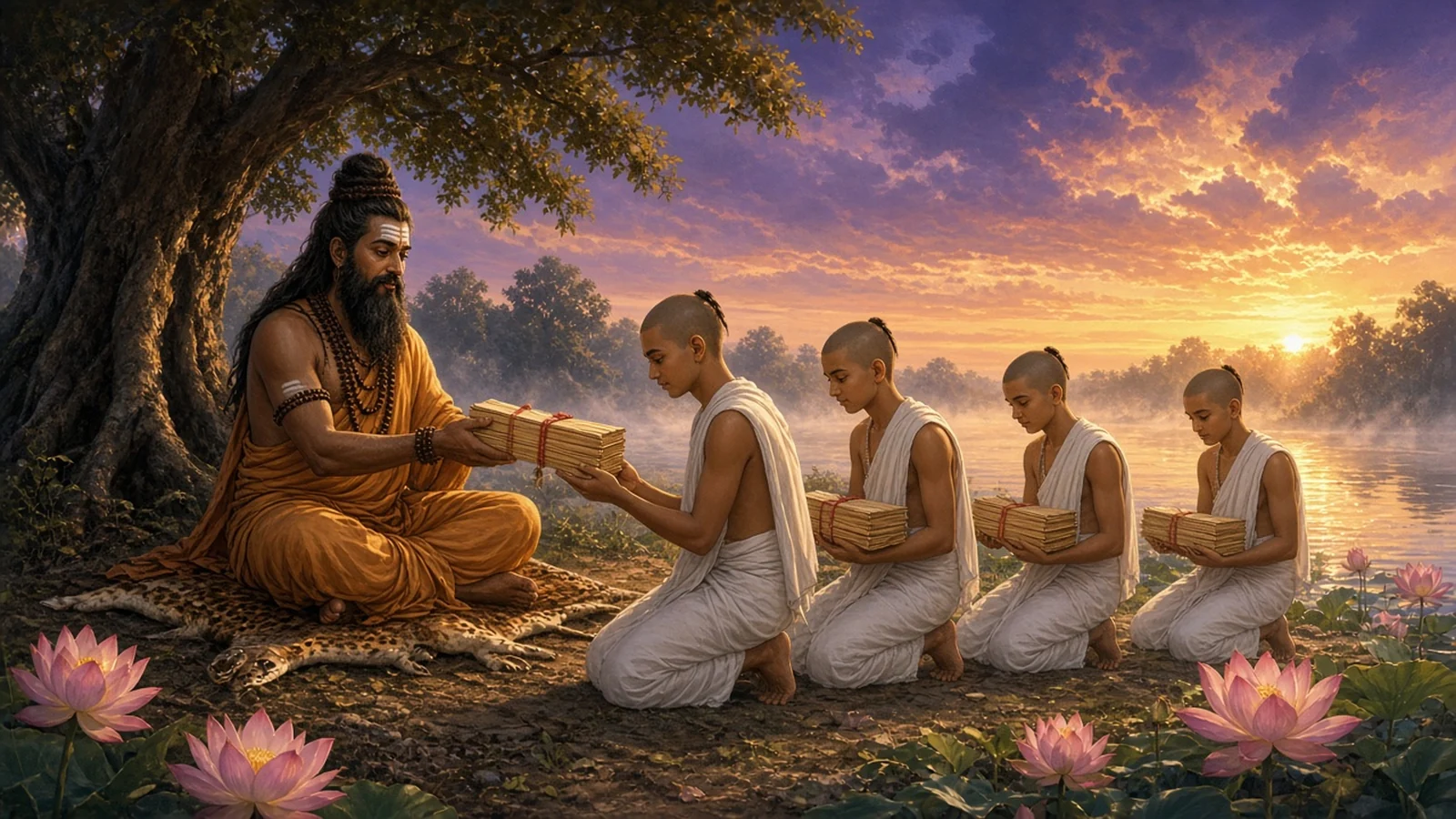
The day's first name is Vyasa Purnima. Vyasa was born, the tradition says, on this full moon, to the sage Parashara and a ferry girl on an island in the Yamuna, and on it he finished the work that gave him his name: he took the one Veda, too heavy for the short-lived men of the coming age, and divided it into four, and gave a quarter each to Paila, Vaishampayana, Jaimini and Sumantu. The Puranas and the Mahabharata he composed for everyone the Veda left out. Every line of teachers in India passes through him, which is why a Vaishnava who counts him among Vishnu's descents and a Shankaracharya who counts him the first of the acharyas worship the same seat on the same morning. The Island Where the Veda Was Divided tells his birth, his division and Ganesha's pen.
Vyasa on the island in the Yamuna gives the four Vedas to his four pupils
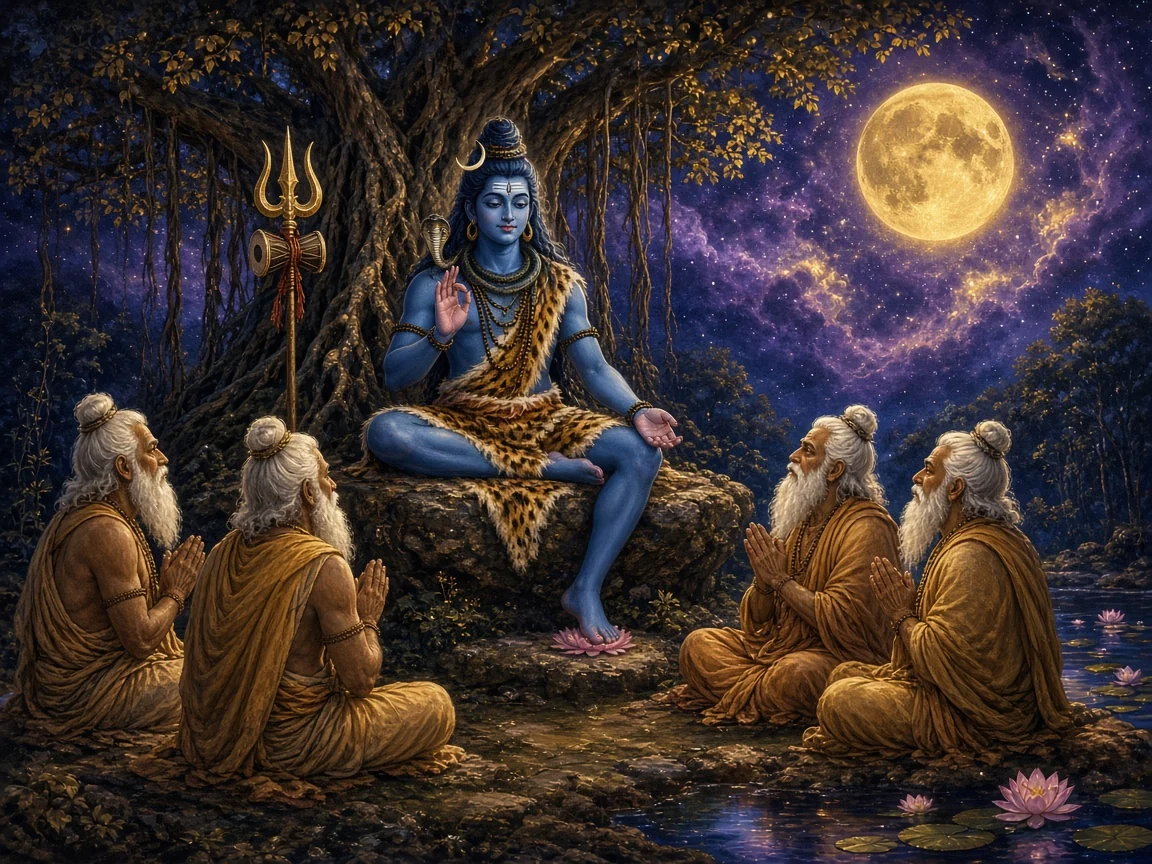
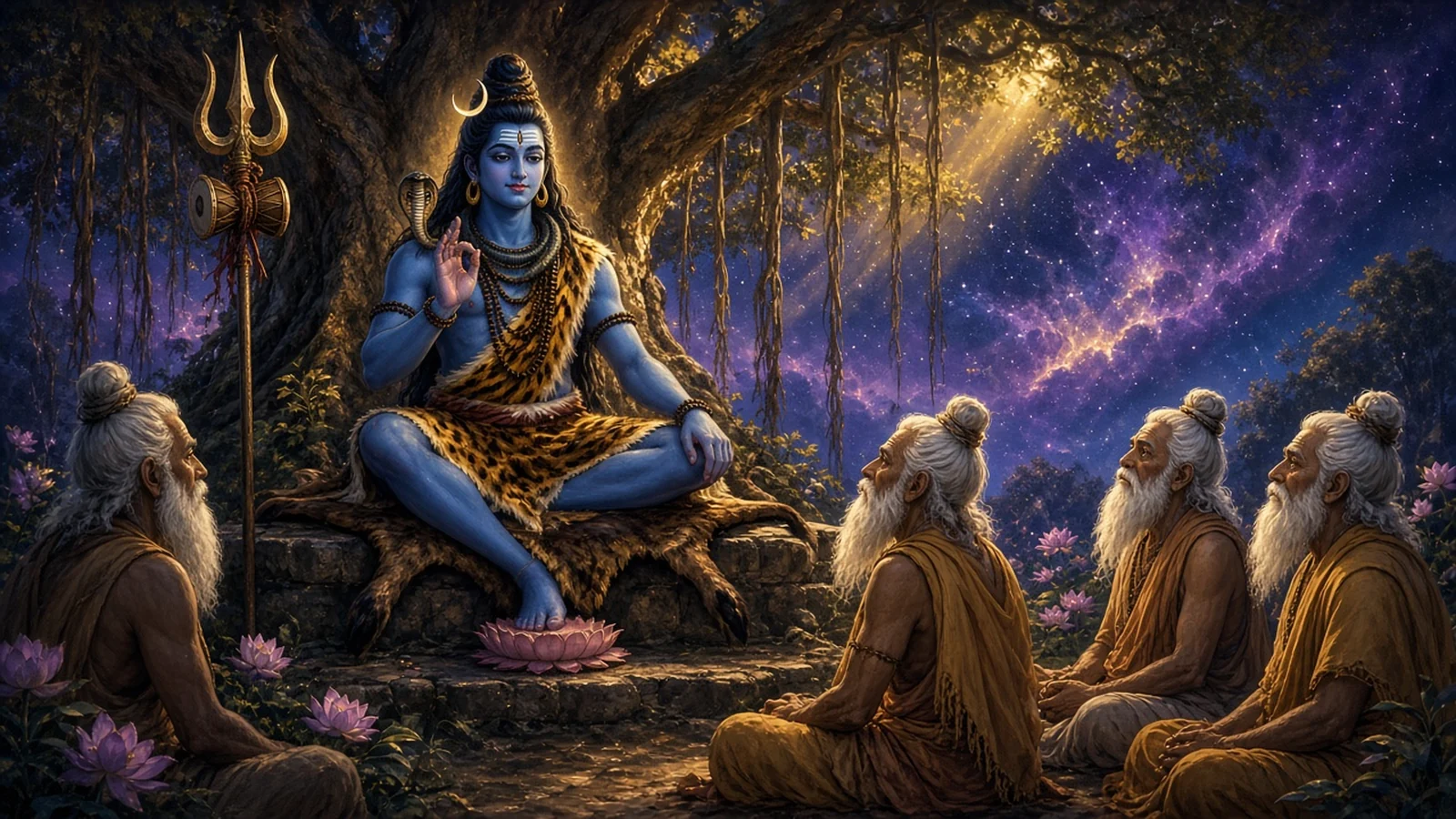
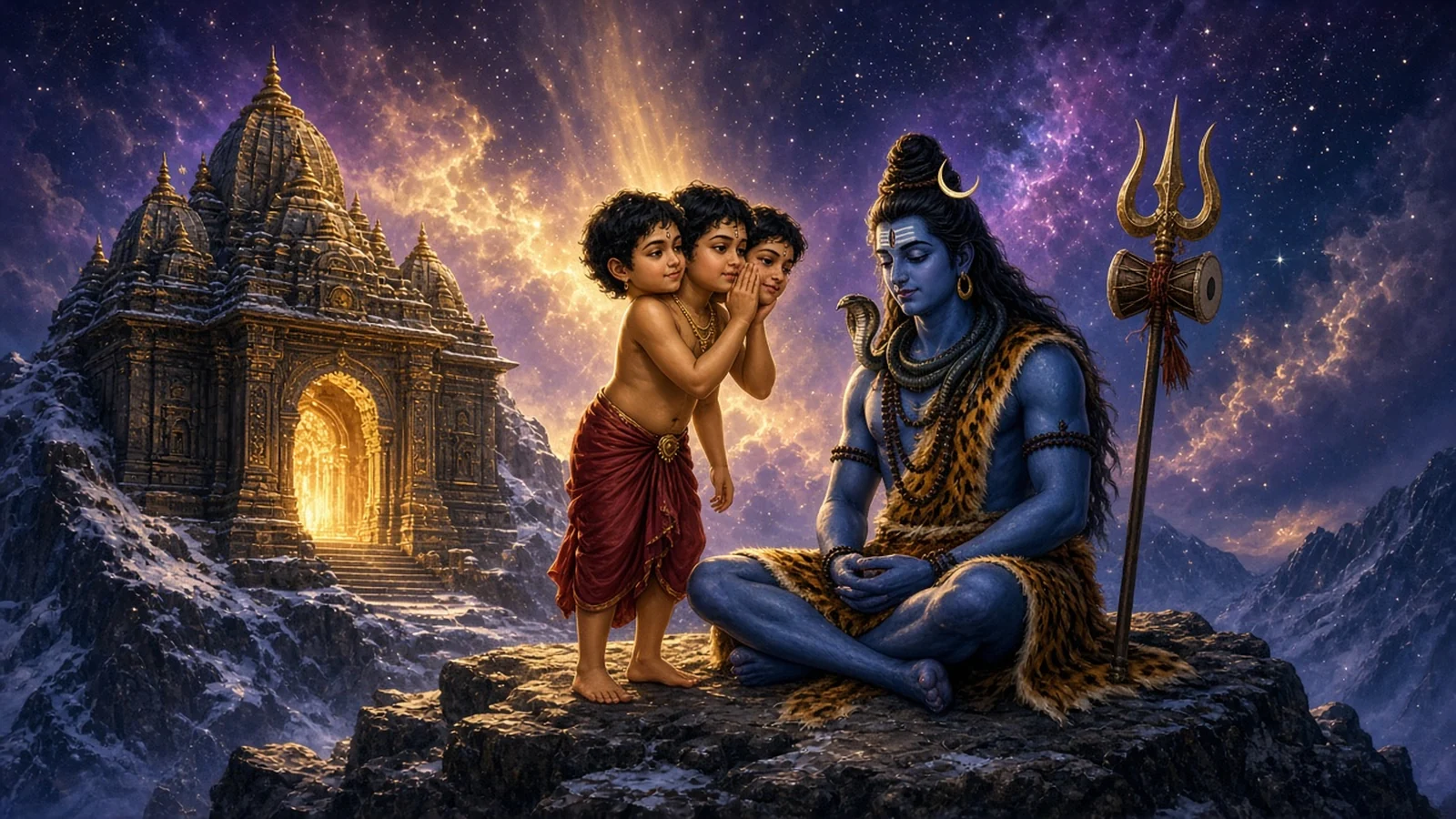
The south adds an older teacher. Dakshinamurthy is Shiva as a young man under a banyan, facing south, with the four sons of Brahma grown old at his feet and the dwarf of forgetting under his foot, and he answers every question with silence and a raised hand. The Teacher Who Taught by Silence tells the sages' questions and the Stotra's pictures, and then the yoga schools' new telling, that on this full moon Shiva turned south to teach seven sages and became the first guru.
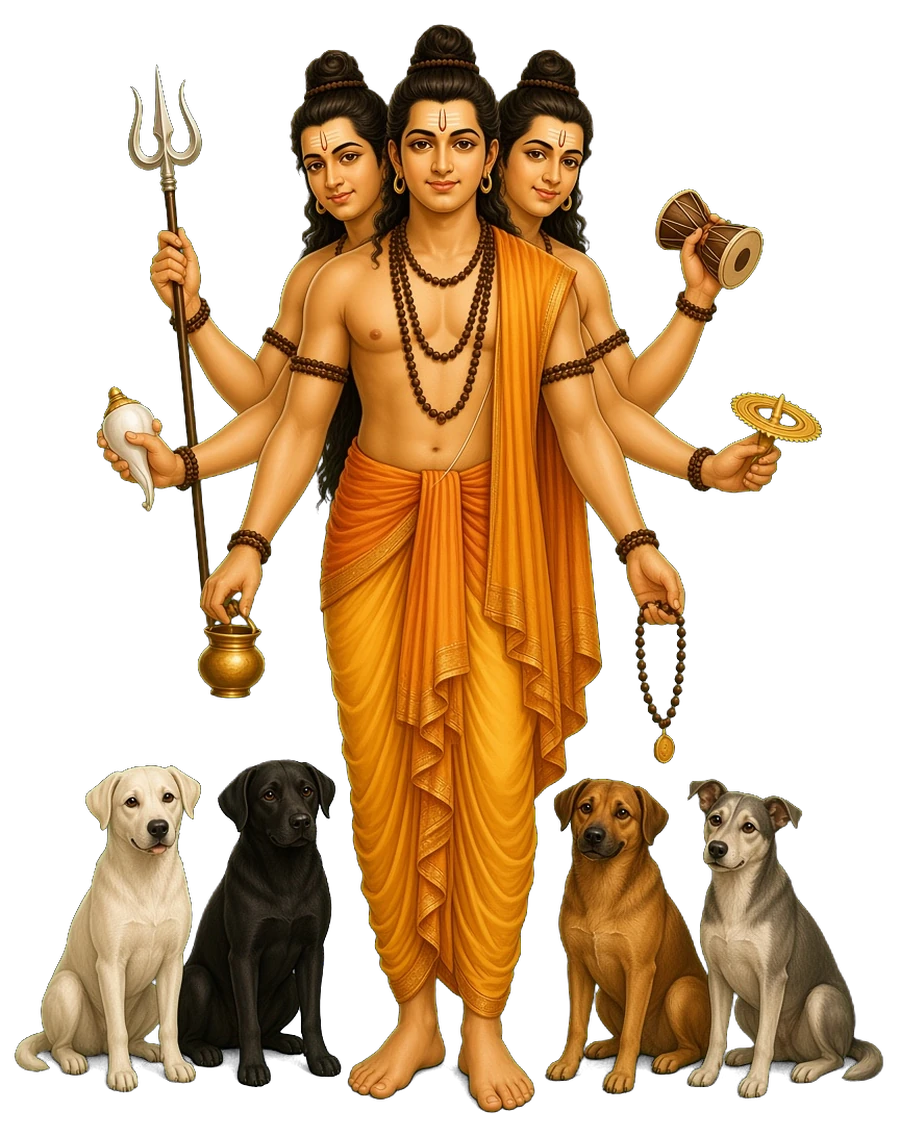
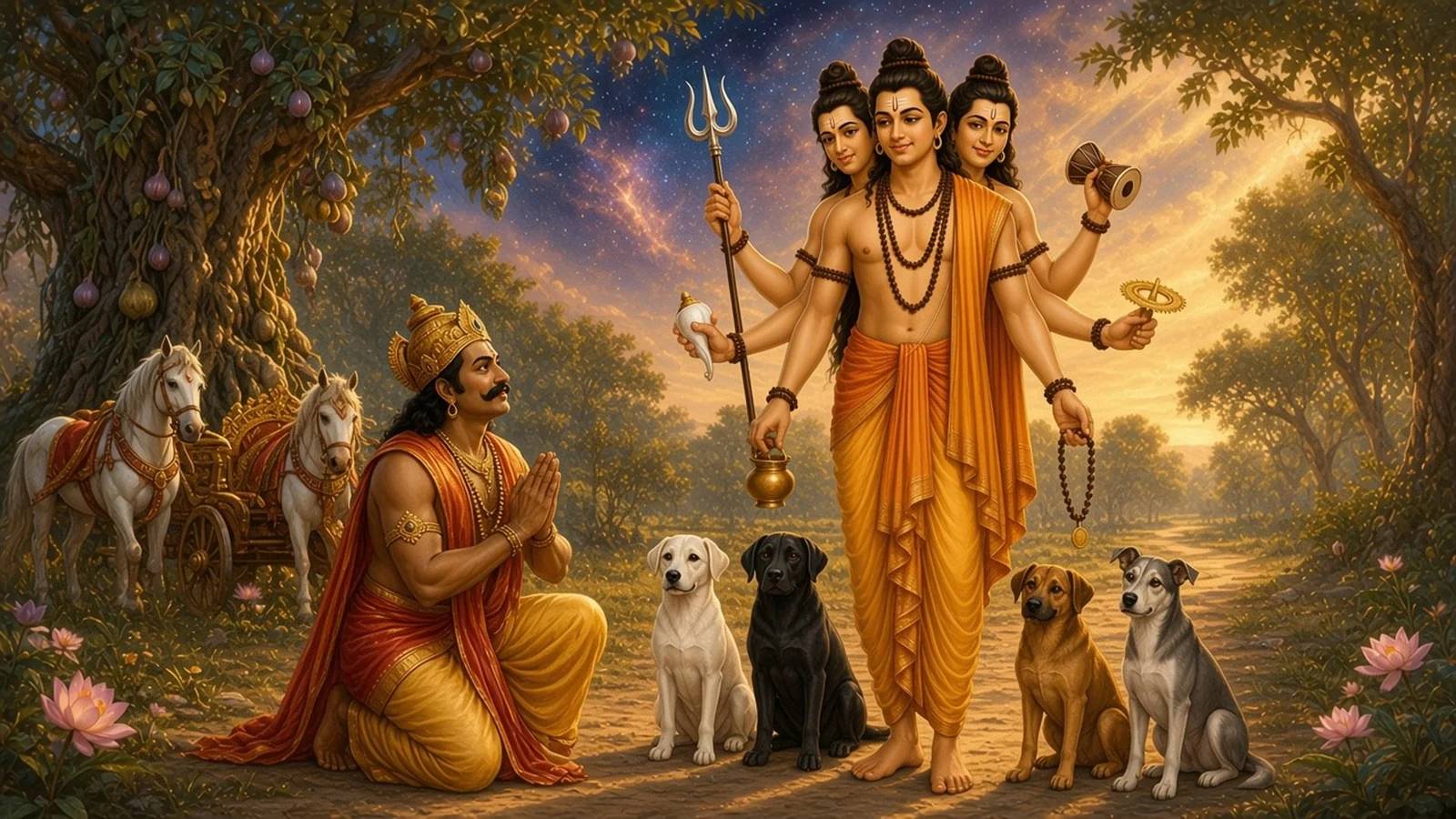
Dattatreya, the guru of gurus, has his own stories in the Lore, and his Deccan seats keep the day. And the full moon is shared: Buddhists keep it for the first sermon, Jains for Mahavira's first disciple.
Dattatreya, the guru of gurus, under the audumbar tree with his cow and four dogs
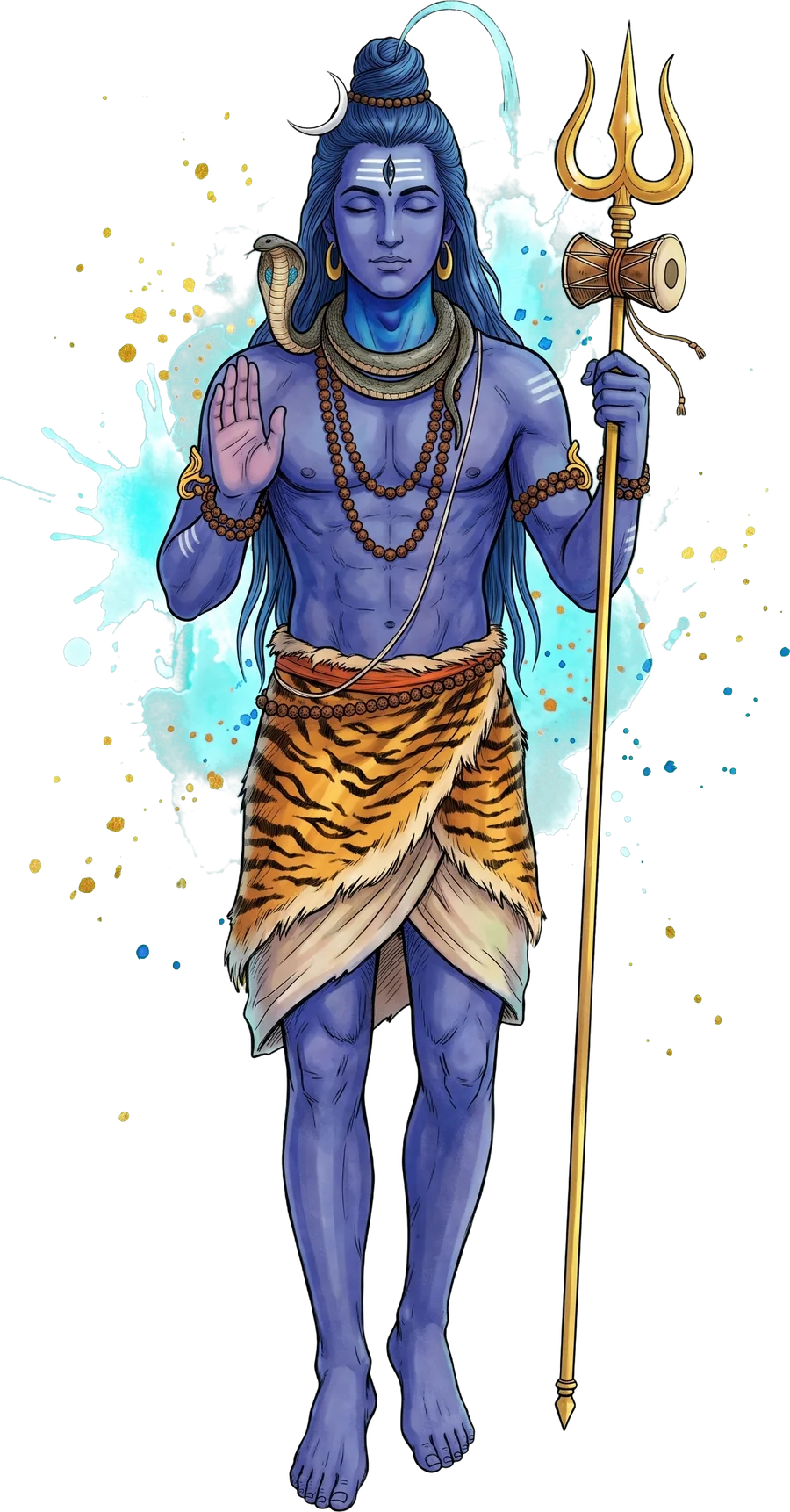
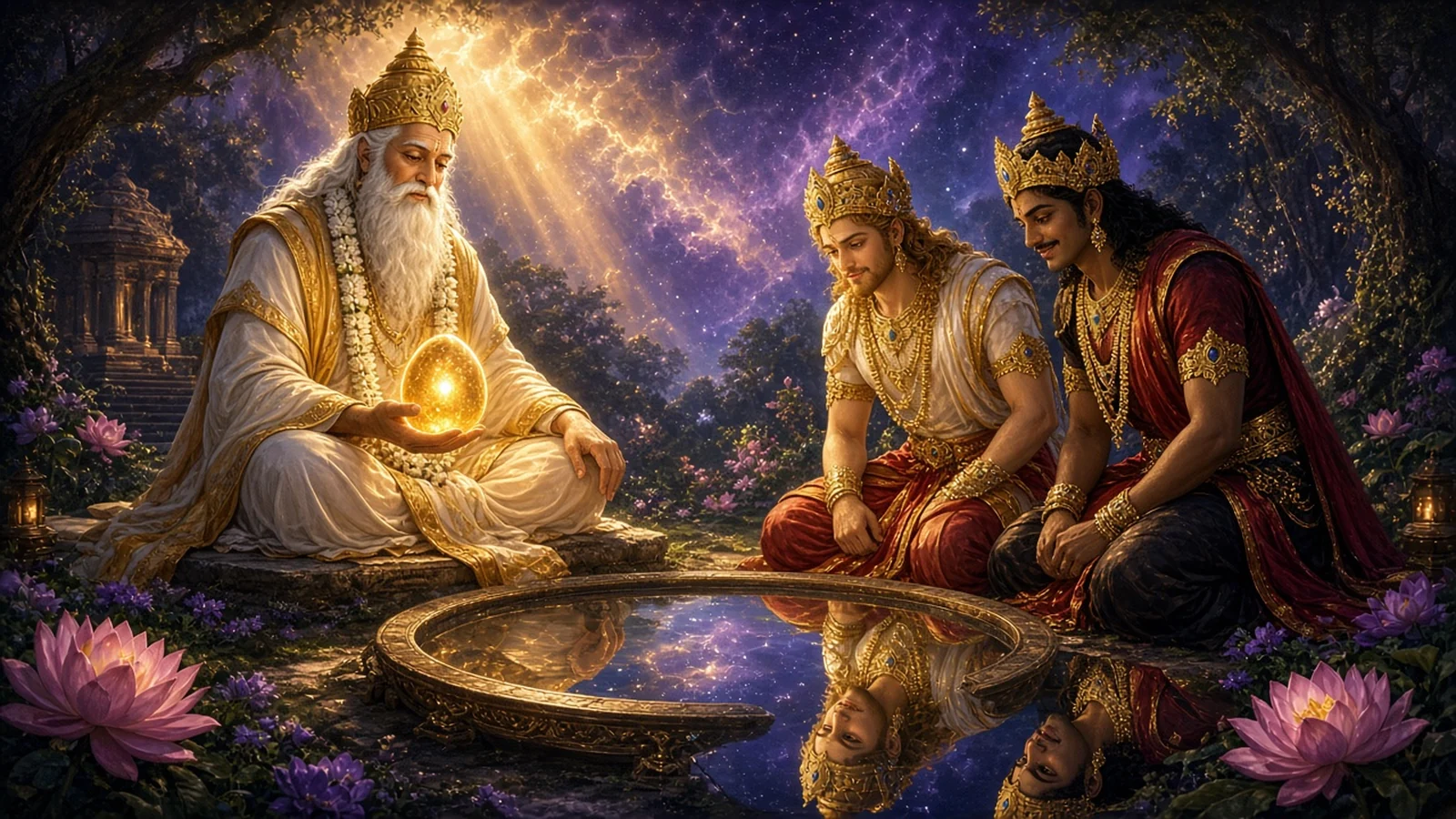
Shiva as the teacher who faces south under the banyan, a young man with aged sages at his feet, a dwarf under his foot and his hand raised in the sign of knowledge, teaching without a word. He sits in the south wall of almost every Shiva temple in the Tamil country, and the lamp is lit before him first on this morning. The yoga schools of today add that on this full moon Shiva turned south to teach seven sages and became the first guru.
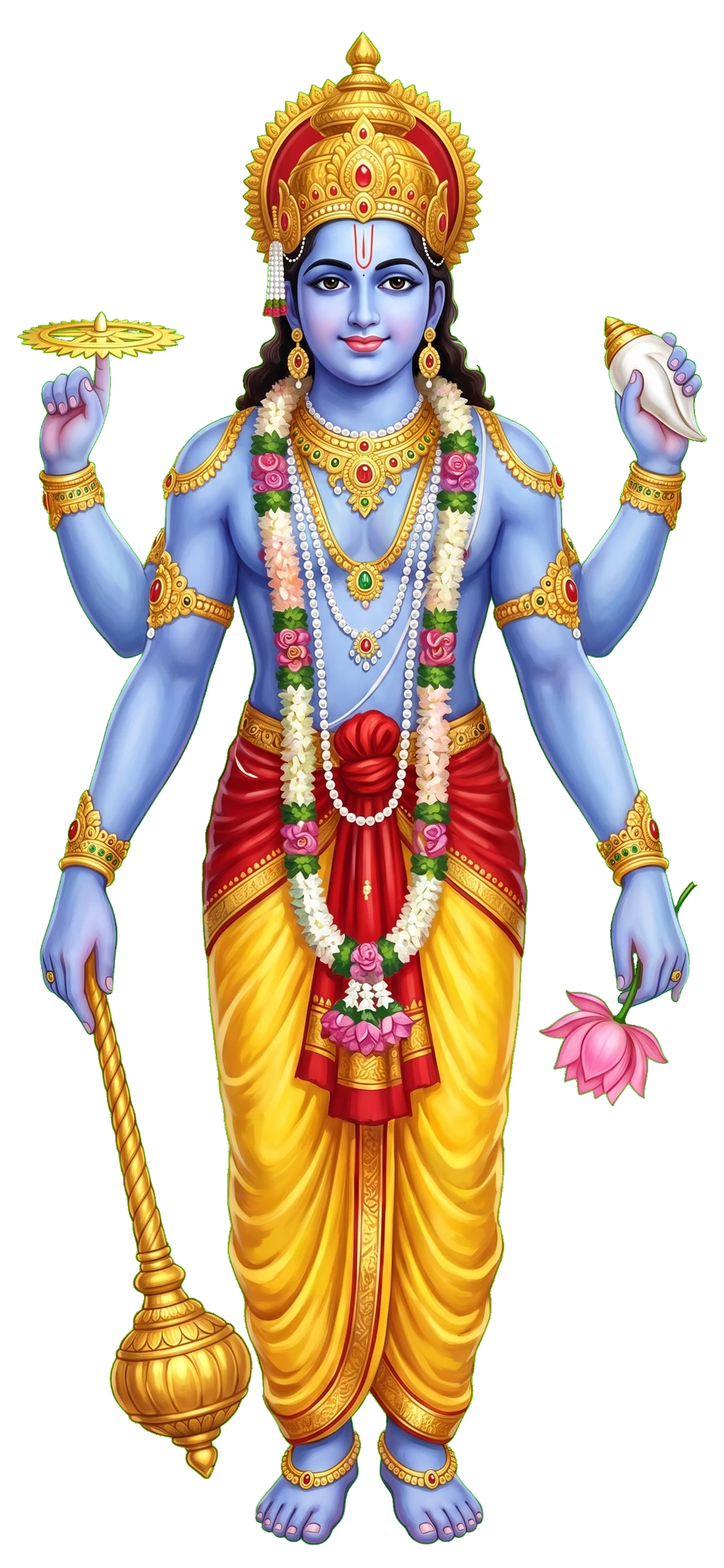
The Bhagavata counts Vyasa, born of Parashara and the ferry girl Satyavati on an island in the Yamuna, as the seventeenth of Vishnu's descents, and the Vishnu Purana has Vishnu take the form of a Vyasa in every Dvapara age to divide the Veda. His full moon is the day's older name, Vyasa Purnima, and the Vyasa puja of the maths is kept before his seat.
The guru of gurus, in whom the three gods are one, whose Deccan seats keep Guru Purnima as their own. At Gangapur the Datta padukas are worshipped and the whole town is fed, and the Datta devotees honour the line of his later incarnations the same morning.
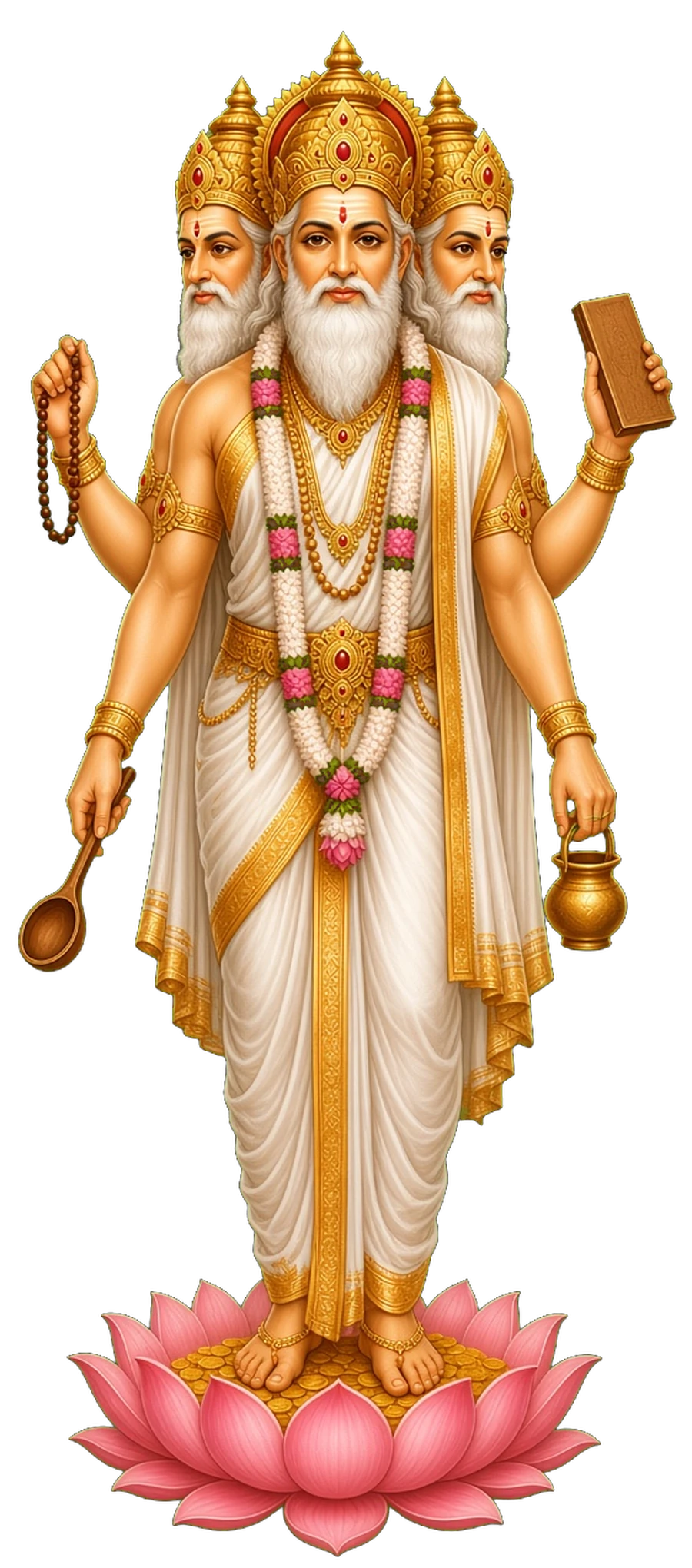
The father of the first pupils. His four mind-born sons refused to make the world and walked until they found the silent teacher under the banyan, and it was Brahma who told Vyasa to call Ganesha to write the Mahabharata down.
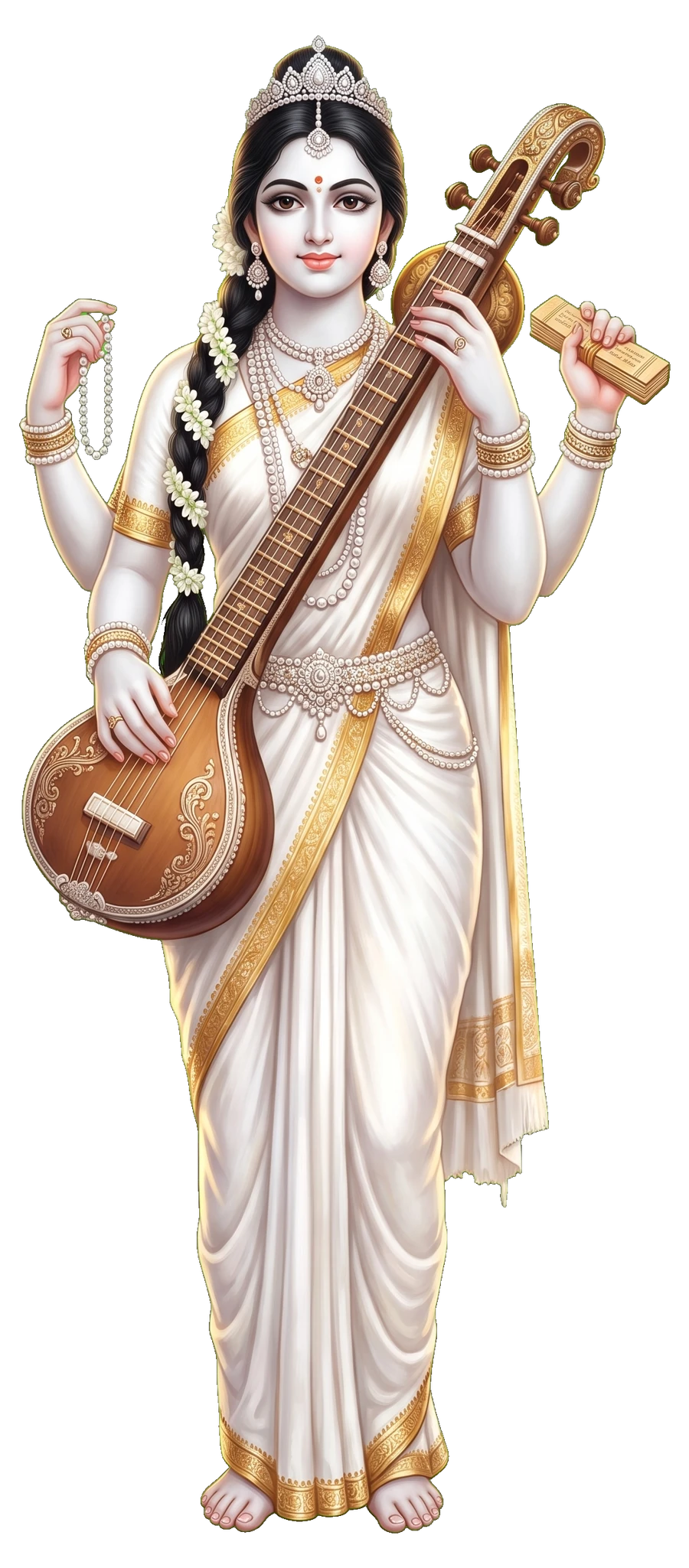
The goddess of the teaching itself. She presides at Sringeri as Sharadamba, where the Jagadguru's Vyasa puja opens the rains, and the Vyasa puja of the maths names her among the powers invoked.
The full moon of the teacher
1
Morning, the Vyasa puja
Ashadha Purnima, from first light · Sunday 18 July 2027
Vyasa PurnimaChaturmasya sankalpathe padapuja
In the Shankaracharya maths the day begins before Vyasa's seat. At Sringeri the Jagadguru worships Krishna, then Vyasa with his four pupils Paila, Vaishampayana, Jaimini and Sumantu, then Shankara with his four, then the four Kumaras, Shuka and Narada, and the line of teachers down to his own guru, with tulasi offered at every name, and takes the vow to stay in one place until the Bhadrapada full moon. Kanchipuram keeps the same puja and the same vow. In every ashram the morning is the padapuja: the guru's feet, or his sandals, washed and heaped with flowers by the disciples one by one, a lamp waved, the Guru Gita read.
At dawn the Jagadguru offers tulasi before Vyasa's seat, with Vyasa and his four pupils on it
Ashadha Purnima, through the day · Sunday 18 July 2027
Guru pujaTeachers' Day in Nepalthe gharanas' Guru Purnima
Disciples travel. Shirdi fills for the three-day Guru Purnima of Sai Baba, the one festival he asked for himself; Gangapur worships the Datta padukas and feeds everyone who comes; Coimbatore and the Ramakrishna maths hold their guru pujas and their discourses. In the music schools the pupils give a concert for the teacher and bow at the end, and in the dance schools the same; in Nepal the schools close for Teachers' Day and children bring garlands, a tika and a topi for every teacher. In the Tamil temples the first lamp of the morning was Dakshinamurthy's, the teacher in the south wall.
Music pupils play for their teacher on Guru Purnima, and one bows at his feet
For the Buddhists of Sri Lanka, Thailand, Myanmar, Laos and Cambodia this full moon is Asalha Puja, the day the Buddha walked from Bodh Gaya to the deer park at Sarnath and gave his first sermon to his five old companions, the turning of the wheel of the Dhamma; Kondanna understood it, and the order of monks began with him. Sri Lanka keeps it as Esala Poya, and Kandy's Esala Perahera belongs to the season. The next morning the monks sit down for Vassa, the three months of the rains. For the Jains the full moon begins the Varshayog, the four months when the monks stop wandering, and it is remembered as the day Mahavira made the brahmin Indrabhuti Gautama his first disciple and became a guru.
The Buddha gives his first sermon to his five old companions in the deer park at Sarnath
The Shankaracharya mathsSringeri, Kanchi, Puri, Dwaraka and Joshimath
The four seats Shankara founded, Sringeri in the south, Puri in the east, Dwaraka in the west and Joshimath in the north, with Kanchipuram's Kamakoti Peetham beside them, keep the day as Vyasa Purnima. The Jagadguru performs the Vyasa puja at dawn and takes the Chaturmasya sankalpa; at Sringeri the devotees are asked to read the Guru Saparya daily until the Bhadrapada full moon, when the vow ends, and at Kanchipuram the Viswaroopa Yatra, the acharya carried through the town, closes it. The Dashanami sannyasis of every order, whether or not they belong to a math, stop their wandering on this moon.
Maharashtra and the DeccanShirdi and the Datta seats
Shirdi's Guru Purnima is the festival Sai Baba asked for himself, begun when Tatya Nulkar worshipped him as guru on the full moon and Baba asked Tatya Kote Patil why only one man had; Dada Kelkar led the first full puja in the Dwarakamai, and the Sansthan now keeps three days of it. At Gangapur in the Karnataka Deccan, where Narasimha Saraswati's sandals lie under the audumbar at the meeting of the Bhima and the Amarja, the Datta padukas are worshipped, Sai Baba is honoured among Datta's later incarnations, and free food is served to everyone; Narsobawadi on the Krishna, his other seat, keeps its padukas too. Pune and Mumbai keep the day in the music schools.
The northKashi, Badrinath and the gharanas
Kashi keeps Vyasa's own linga, Vyaseshwar, by the Ghanta Karna pool, where the Kashi Khanda says Nandi froze the sage's raised arm until he admitted Shiva's greatness, and across the Ganga the Ramnagar fort holds a temple to Veda Vyasa. High above, at Mana beyond Badrinath, the Vyasa Gufa is shown as the cave where he worked, its rock roof lying in folds like the leaves of his books. In the Hindustani music world Guru Purnima is the day of the guru-shishya parampara, when disciples perform for the teacher, offer what they have, and bow, and a Mumbai school of music and dance fills an afternoon with sixteen pieces, each one introduced by a student and dedicated to the guru.
NepalTeachers' Day
Nepal keeps the Ashadha full moon as Teachers' Day across the country. The schools make a festival of it, and pupils bring garlands, sweets and a topi, the cloth cap, for every teacher, put a tika on their foreheads, and ask for blessings, with songs and speeches to follow. The day is remembered for Veda Vyasa too.
The Buddhist countriesSarnath, Esala Poya and Asanha Bucha
The first sermon was given in the deer park at Sarnath near Varanasi, and the full moon is kept there and across the Theravada world as Asalha Puja or Dhamma Day, with offerings at the temples and sermons heard. Sri Lanka's Esala Poya opens the season of Kandy's Esala Perahera; Thailand calls the day Asanha Bucha and the next day Wan Khao Phansa, when the rains retreat begins; Myanmar, Laos and Cambodia keep it, and in Java it is kept at Mendut and Borobudur.
The Jain communityThe start of Varshayog
For Jain monks and nuns the Ashadha full moon begins the four months when they stop walking, so as to harm none of the small lives the rains bring out, and the laity honour their teachers. The day is remembered as the one on which Mahavira, after his enlightenment, made the brahmin Indrabhuti Gautama his first ganadhara, the chief of his disciples, and so became a guru himself.
The modern ashramsIsha and the Ramakrishna maths
The Isha Foundation keeps the day at its yoga centre below the Velliangiri hills at Coimbatore, with a Guru Pooja in the morning, an evening of music and a guided meditation with Sadhguru, and tells it as the day Adiyogi became the first guru; those at home are asked to light a lamp before a picture and offer flowers. The Ramakrishna maths keep it with a dawn arati and Vedic chanting, a special puja, a homa, a discourse on the guru and prasad for everyone, at centres from Madurai to Dehradun.
Hindus of every lineThe Vyasa puja
Vaishnava, Shaiva, Smarta and Shakta lines all keep the day, because every line of teachers passes through Vyasa. The guru is worshipped with the padapuja, the Guru Gita of the Skanda Purana is read, and its verse that the guru is Brahma, Vishnu and Shiva and the supreme Brahman itself is the day's prayer in every tongue. Wherever a living guru sits, the disciples come to him; where none does, the teacher's picture or sandals take his place.
BuddhistsDhamma Day
The Theravada world keeps the moon for the first turning of the wheel of the Dhamma at Sarnath, the four noble truths and the middle way taught to the five ascetics, and the founding of the Sangha when Kondanna asked to follow. Lay people keep the eight precepts, listen to the sutta and give to the monks, who begin their rains retreat the next day.
JainsGuru Purnima and the Varshayog
Jains honour the Tirthankaras and their own teachers on the day Mahavira took Gautama Swami as his first disciple, and the monks' four-month retreat begins; the season runs on to Paryushana and ends with the day of forgiveness.
How it is kept
The morning belongs to the maths. At Sringeri and Kanchipuram the Jagadguru performs the Vyasa puja: Krishna first, then Vyasa in the middle of his four pupils, then Shankara in the middle of his, then the four Kumaras, Shuka and Narada, Gaudapada and Govinda, and at last his own teacher and the line behind him, tulasi at every name. Then he takes the Chaturmasya sankalpa, the vow to stay in one place until the Bhadrapada full moon, because the wet roads fill with small lives that a walking man cannot help treading on.
In the ashrams the day is the padapuja. The disciples come one by one to the guru's feet, or to his sandals, with water, sandal paste, flowers and a lamp, and the Guru Gita is read, with its verse that the guru is Brahma, Vishnu and Shiva. Shirdi keeps three days of it for Sai Baba, the one festival he asked for; Gangapur worships the Datta padukas and feeds the town; Coimbatore and the Ramakrishna maths hold their pujas, their homas and their discourses.
The padapuja: a disciple washes the guru's feet and heaps them with flowers by lamplight
The rest of the day belongs to living teachers of every kind. Music and dance pupils give a concert for the guru and bow at the end. Nepal's schools make a festival of it, with garlands, a tika and a topi for every teacher. In the Tamil temples the first lamp of the morning was lit before Dakshinamurthy in the south wall, and Alangudi, the Guru sthalam of the planet Jupiter, is full.
Teachers' Day in Nepal: children bring garlands, a tika and a topi for their teacher
In the old texts
Vyasa's birth is in the Adi Parva of his own Mahabharata, chapter 63 in Ganguli's translation: the fish, the ferry, the fog, the boons, the island and the promise. The first chapter of the same book has Brahma send Vyasa to Ganesha, the two conditions and the knotted verses; scholars read the passage as a late addition. The Bhagavata Purana's first book gives the division of the Veda at 1.4 and counts Vyasa the seventeenth descent of the Lord at 1.3.21; the Vishnu Purana's third book has Vishnu become a Vyasa in every Dvapara age, twenty-eight of them so far.
The Dakshinamurti Stotra, ten verses attributed to Adi Shankara, is the text of the silent teacher: the world as a city in a mirror, as a tree in a seed, the self as a lamp in a pot full of holes. The Guru Gita, which the day's readers take from the Uttara Khanda of the Skanda Purana as Shiva's teaching to Parvati, holds the verse that the guru is Brahma, Vishnu and Shiva, and derives the word from gu, darkness, and ru, the one who removes it. For the Buddhists the text is the Dhammacakkappavattana Sutta, the setting in motion of the wheel of the Dhamma, the first sermon in the deer park at Isipatana. The claim that Shiva became the first guru on this moon has no old text behind it; the encyclopaedias trace it to the Isha Foundation, and the Lore records it as the modern telling it is.
Where this page comes from. Written by Devalok from the Mahabharata (Adi Parva 63 and 1), the Bhagavata Purana (1.3 and 1.4), the Vishnu Purana's third book, the Dakshinamurti Stotra, the Guru Gita, the Dhammacakkappavattana Sutta, the Vyasa puja as the Sringeri and Kanchi maths describe it, the Shirdi Sai Sansthan, the Isha Foundation and the Ramakrishna maths on their own observances, the Wikipedia articles on the day, and the Drik Panchang calendar for 2027 and 2028, as recorded in the Devalok Lore. Our own words throughout.