As the Stotra and the southern temples tell it
Tamil Nadu · the south wall of the Shiva temples, and Shankara's Dakshinamurti Stotra · 3 min read
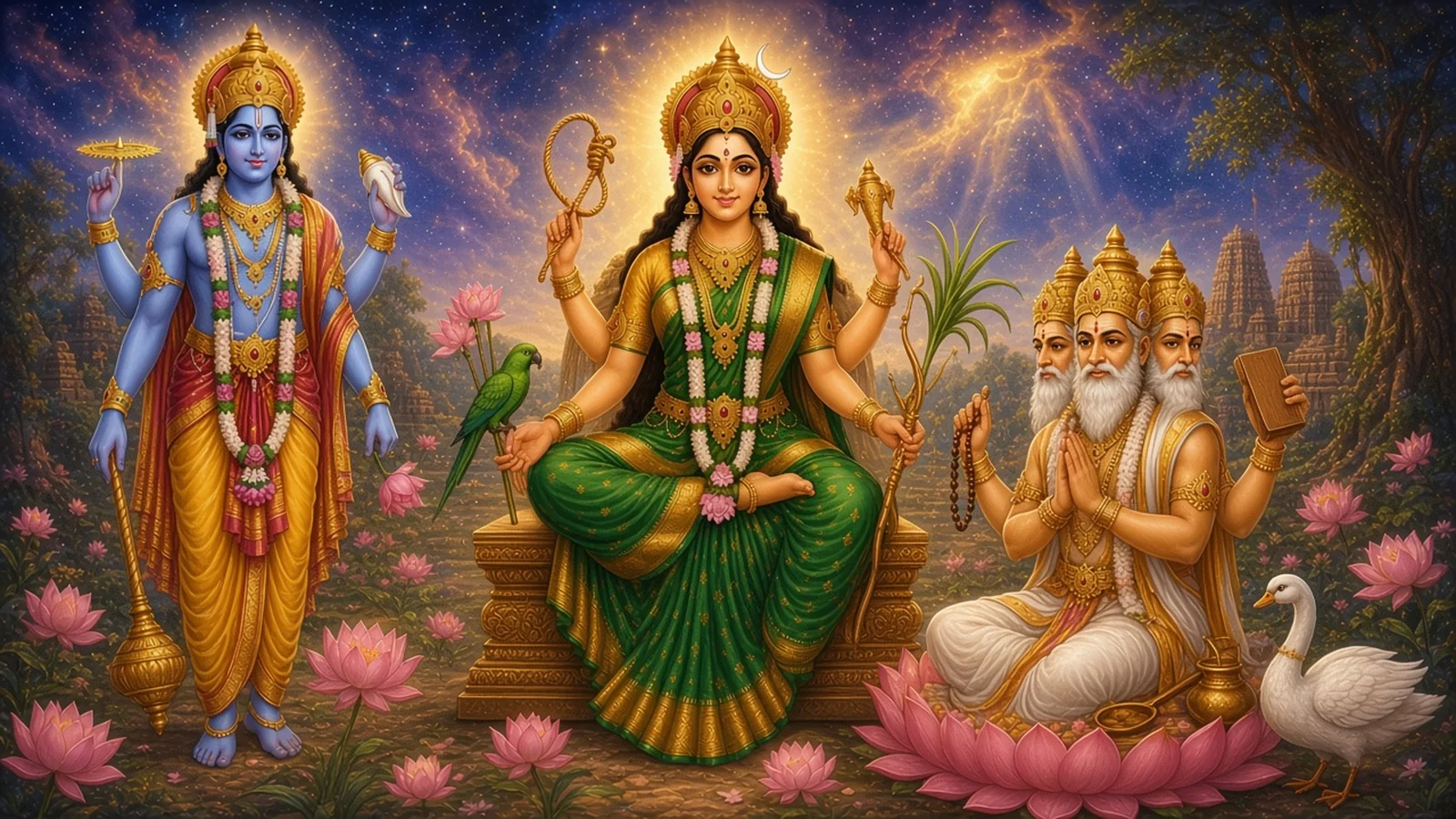
Brahma made four sons out of his mind before he made anything else, and asked them to help him fill the world. Sanaka, Sanandana, Sanatana and Sanatkumara looked at the world their father wanted filled and did not want it. They stayed the size of small boys, and they walked away to look for something that would not change.
They walked a long time. Whatever they asked, they were answered with words, and every answer grew another question.
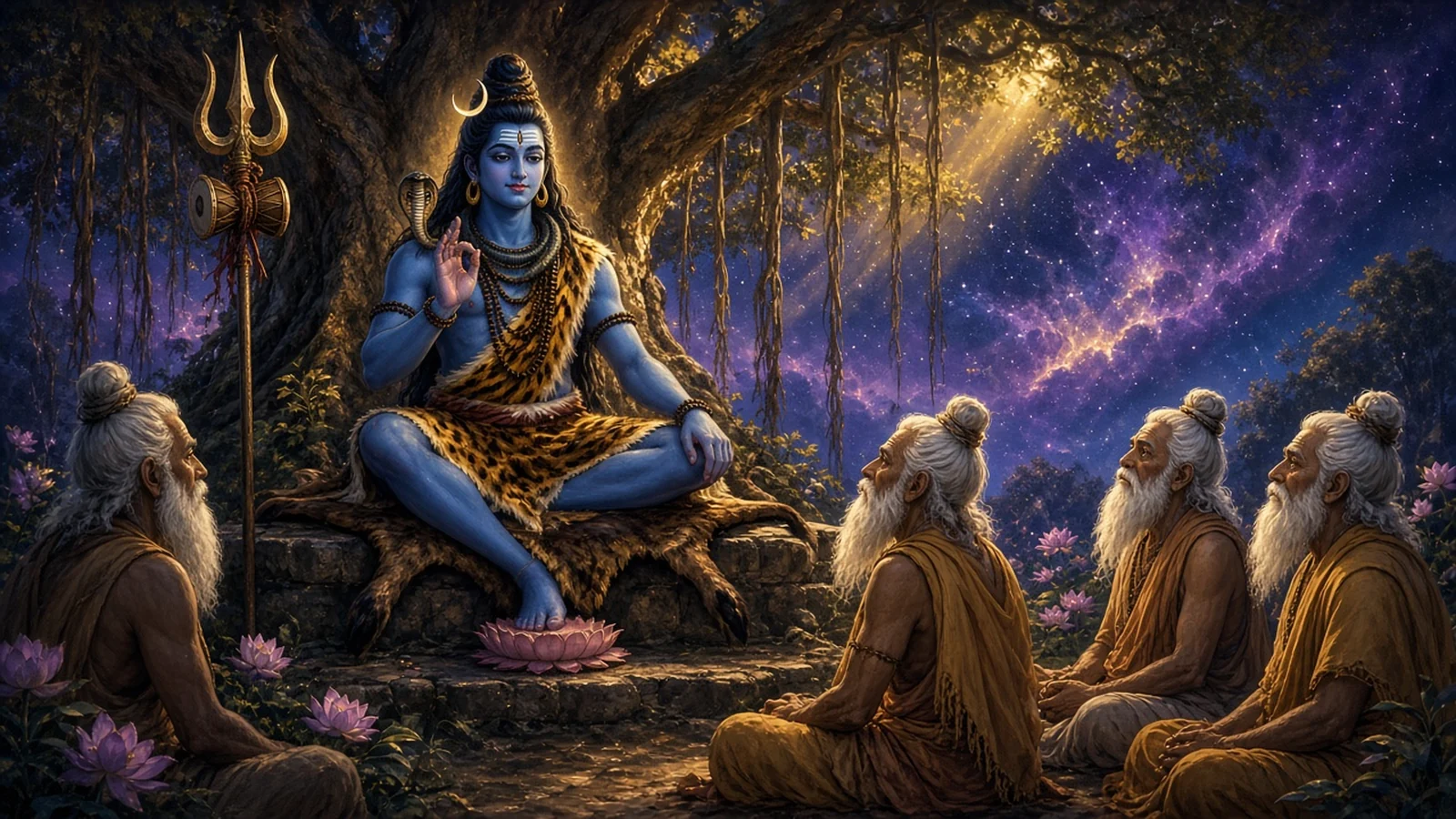
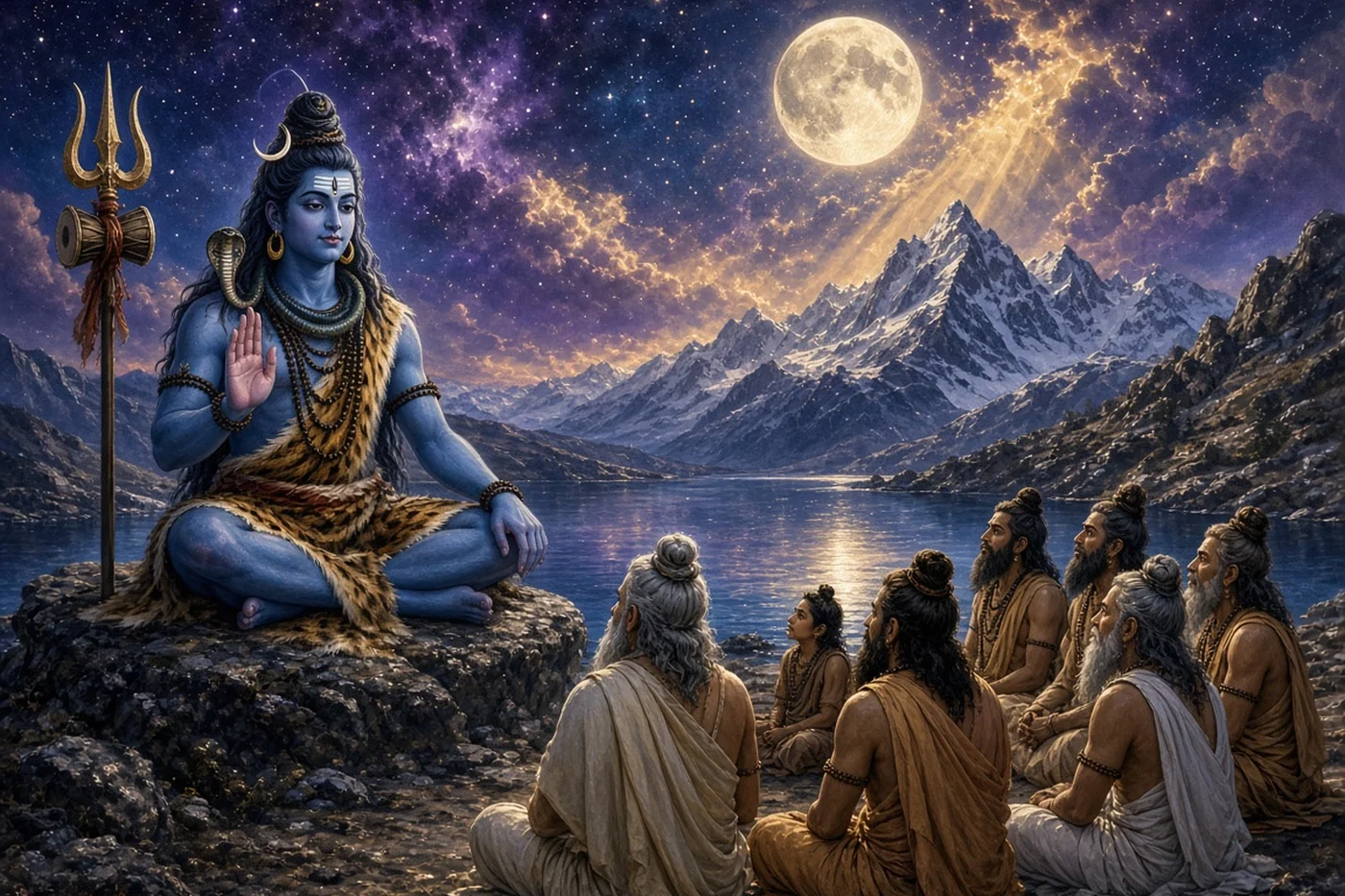
At last they came to a banyan tree, and under it sat a young man. He was younger than any of them. He sat on a deer skin with one foot folded on his thigh and the other pressed down on a dwarf, who lay flat under it and did not get up. His right hand was raised, the thumb and forefinger touching in a ring, the three other fingers open. He faced south. He said nothing.
"We have come a long way," said Sanaka. "Who made the world, and out of what?"
The young man did not answer. He did not look away either.
"Is the one who sees it the same as the one who is seen?" asked Sanandana.
Nothing.
"When I sleep I am gone," said Sanatana, "and when I wake I say I slept well. Who was there to know that I slept?"
Nothing. The hand stayed where it was. The fourth brother opened his mouth to ask the hardest question of all, and found that he had forgotten what it was. He sat down. One by one the others sat down beside him, and the questions went out of them like lamps at dawn, and what was left when the questions were gone was the answer.
That is the whole of the story, and the south has never wanted more of it. What the silence said is written out in ten verses that the tradition gives to Adi Shankara, the Dakshinamurti Stotra, and the verses are made of pictures rather than arguments. The world, says the first, is like a city seen in a mirror: it seems to be out there, but it is inside the one who looks. The second says the world sleeps in him like a tree in a seed, and he spreads it out the way a conjurer spreads his show.
Another verse says he is a lamp inside a pot full of holes, and the light that comes through the holes is what we call seeing and hearing. Another says the sleeper who wakes and says "I slept well" is the proof that something in us never slept. The hymn's opening salutes the young teacher "who teaches the knowledge of Brahman through silence", and the disciples round him are the old ones.
The dwarf under his foot has a name, Apasmara, forgetting. He is not killed. He is held down, because a world with no forgetting in it would have nobody left to teach.
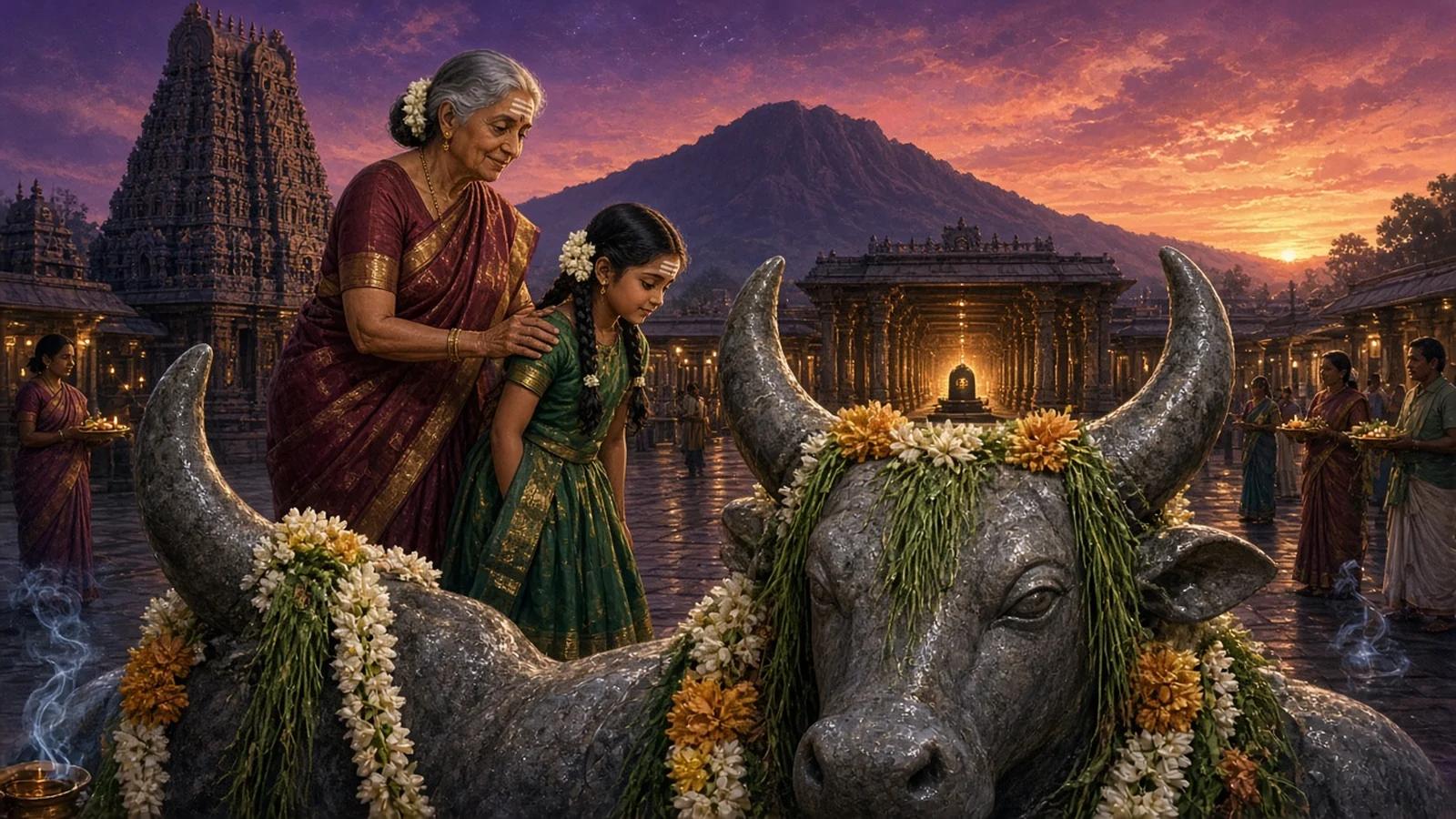
Walk round almost any Shiva temple in the Tamil country and you will find him. The path round the sanctum turns the south corner and there, in the niche of the south wall, sits the teacher under his tree with the sages at his feet, facing the direction the Agamas give to Aghora, the face of Shiva that burns and that knows. Pilgrims stop and are quiet there.
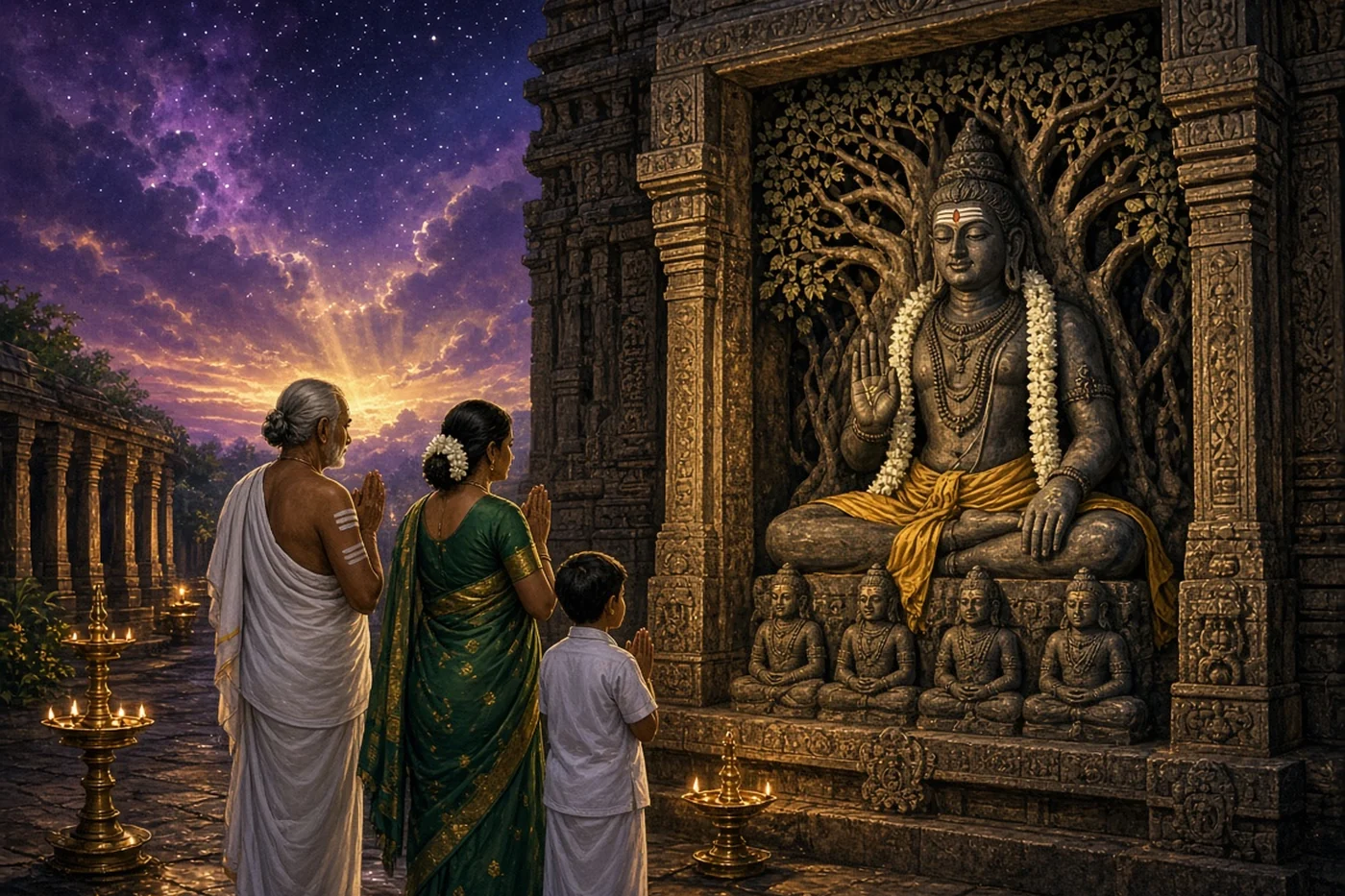
In most temples he lives in that wall; at Govindavadi near Kanchipuram he has a sanctum of his own, and at Suchindram in the far south he is worshipped before Ganesha, which happens nowhere else. Alangudi in the Kaveri delta is kept as the Guru sthalam, the seat of the planet Jupiter whose name is also Guru, and Thursdays are his day. On the full moon of Ashadha the lamps are lit before him first, because the day belongs to the teacher, and here is the first one.
As the yogic tradition tells it: Adiyogi at Kanti Sarovar
The Himalaya · a modern telling, as the Isha Foundation gives it · 2 min read
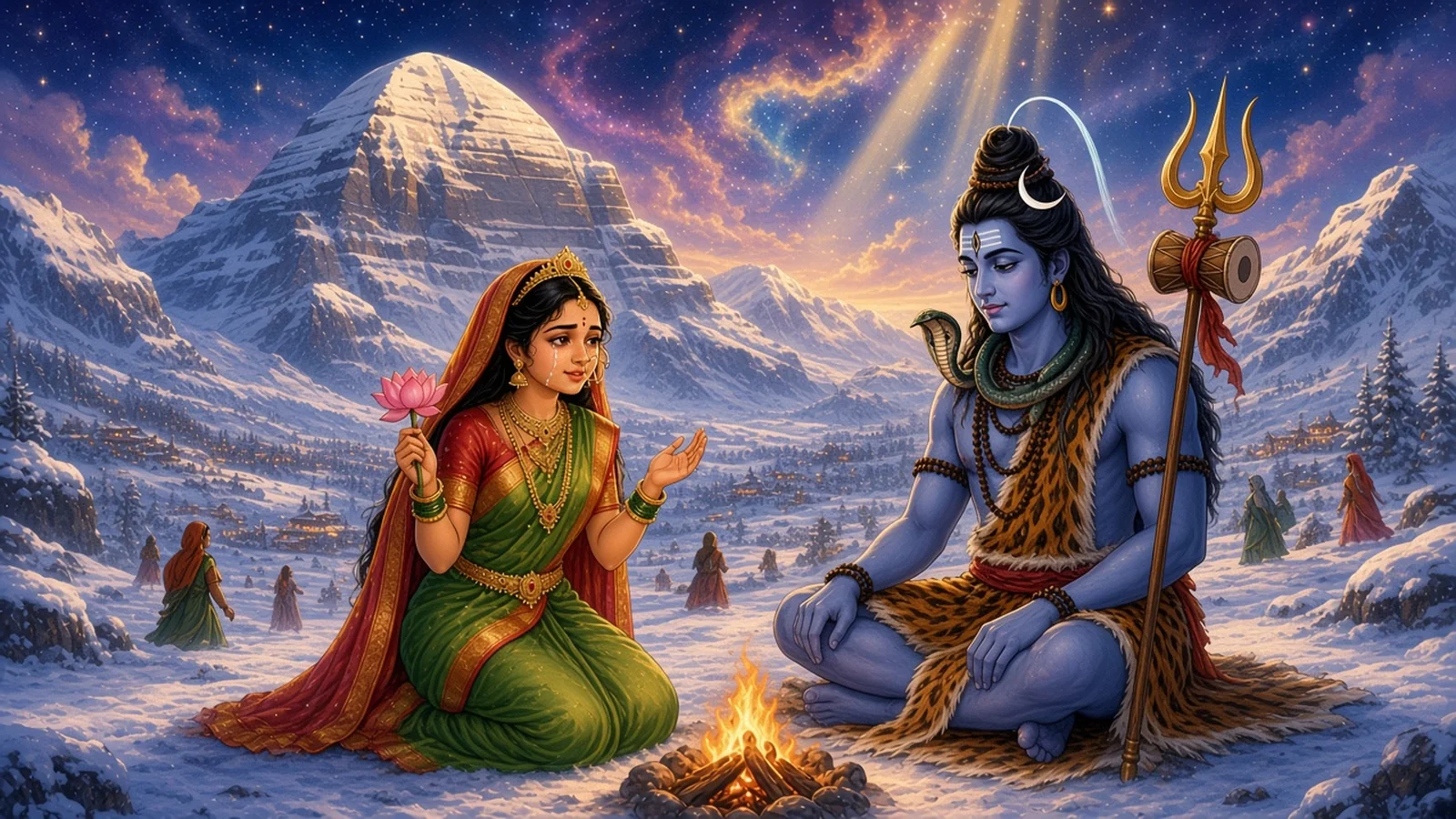
The yoga schools of today tell the beginning differently, and the Isha Foundation of Coimbatore tells it most fully. In their account Shiva is not yet a god with temples. He is Adiyogi, the first yogi, a man in the high Himalaya more than fifteen thousand years ago who has come to the end of what a human being can know, and does not know what to do with it.
So he dances. He dances across the mountains like a storm, and then he stops and sits completely still, for so long that people come up from the valleys to look at him. They cannot tell whether he is alive. He does not see them. Most of them go home.
Seven stay. They sit where they can watch him, and when at last he opens his eyes they ask him to teach them what he knows.
"This is not entertainment," he says, and closes his eyes again.
They do not leave. He tells them they are not ready and gives them a way to prepare, and they prepare for eighty-four years. Then one evening, when the sun has just turned south for its half year and the moon is full, he looks at the seven and sees that they have become vessels that can hold what he has. He turns to face them. They are sitting to his south. From that full moon, the tradition says, he is the first guru, and the full moon is Guru Purnima. Isha's great steel face of Adiyogi at Coimbatore looks south for that reason, and the lists of Dakshinamurthy's shrines now count it among them.
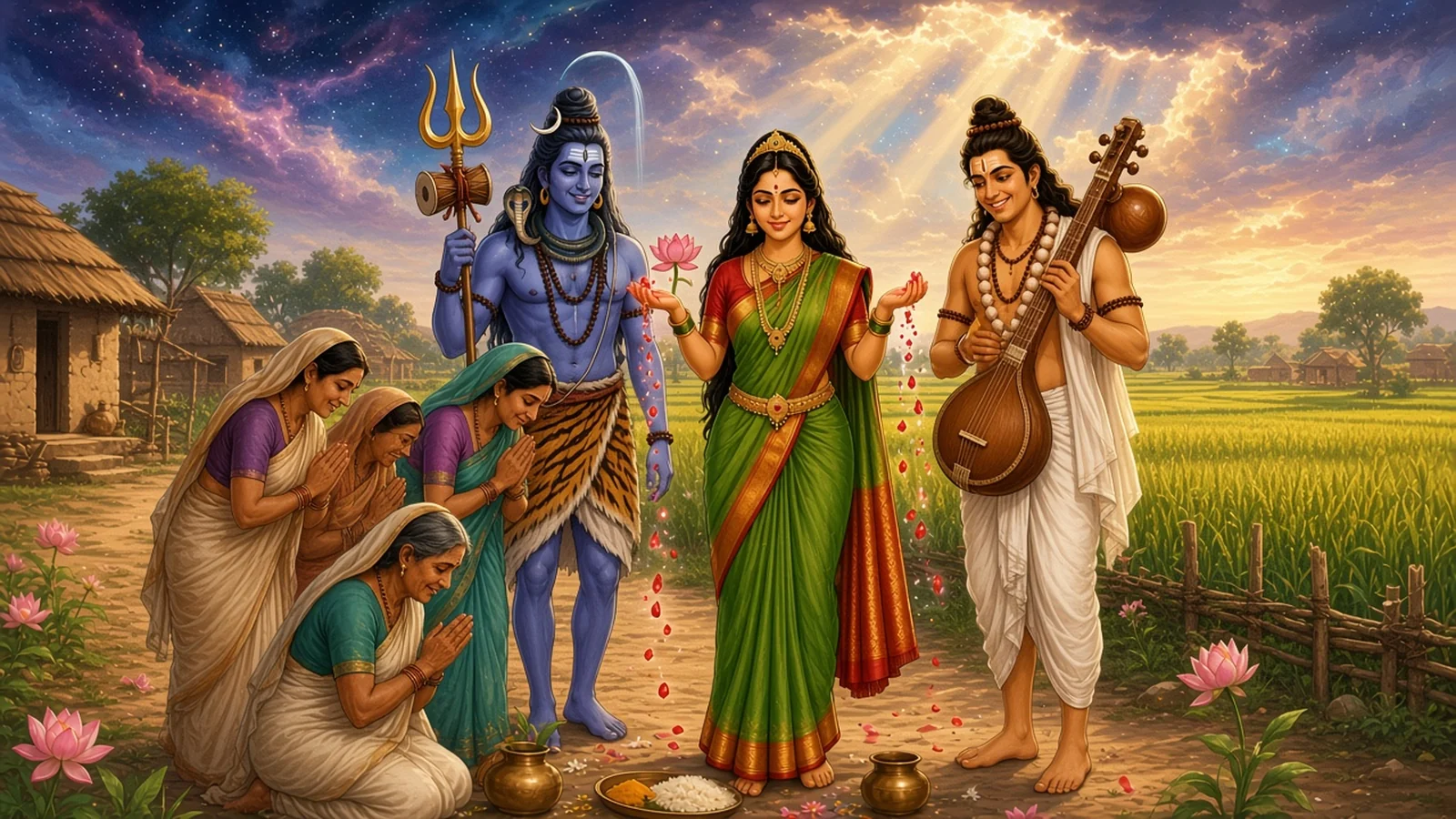
The teaching is given, this telling says, on the shore of Kanti Sarovar, a lake a few kilometres above Kedarnath. It is too much for one person, so he gives each of the seven one part of it, and the seven parts are the seven roots of every yoga taught since. The seven are the Saptarishis, and he sends them out in seven directions to carry it.
Before they go he asks for a fee. They look at each other; they own a loincloth each. Agastya, the smallest of them, understands first. "I give you back everything you taught me," he says, and the others do the same, and they walk away empty, which is why, Isha says, every guru puja since has had sixteen offerings and nothing in it that the giver keeps.