Festival · The one Ekadashi kept without even water, in the hottest week of the year, for the Pandava who could not keep the rest
Nirjala Ekadashi
Nirjala Ekadashi is the eleventh day of the bright fortnight of Jyeshtha, in late May or June, and the hardest fast of the Hindu year, kept from one sunrise to the next without food and without water. The story read on the day is Bhima's, the Pandava with a fire in his belly, to whom Vyasa gave this single day in place of all twenty-four. It is also the day the north gives water away, in earthen pots, fans and roadside stalls of sweet sharbat, the day after Ganga Dussehra.
When is Nirjala Ekadashi in 2027? Nirjala Ekadashi, the day after Ganga Dussehra, is Monday 14 June 2027. In 2028: Saturday 3 June 2028. The eleventh of the bright fortnight of Jyeshtha, in late May or June, the day after Ganga Dussehra and four days before Snana Purnima.
The Ekadashi of the bright half of Jyeshtha, in late May or June, kept from sunrise to sunrise without food or water. It is said to bring the merit of all twenty-four Ekadashis, because Vyasa gave it to Bhima, who could not keep the others.
When is Nirjala Ekadashi in 2027?
Monday 14 June 2027, the day after Ganga Dussehra. The fast is broken on 15 June at the parana time, which in Delhi falls between 1:45 and 4:33 in the afternoon that year. In 2028 it falls on Saturday 3 June.
Why is it called Bhimaseni or Pandava Ekadashi?
Because of Bhima, the Pandava who could not go without food. Vyasa gave him this one waterless day, and in the Padma Purana the Dvadashi after it is called Pandava Dvadashi; ISKCON says all five brothers kept it.
Is any water allowed?
The strict rule allows only a drop in the palm for the rites, as much as would cover a mustard seed. Many keep it more lightly, with water or fruit, and the sick, pregnant women and nursing mothers are excused.
Next, in 2027Monday 14 June 2027
Prime godVishnu
with 3 more
WhereThe north above all, from Haryana and Punjab to Braj and Haridwar; Puri's Rukmini wedding, Pandharpur, the Telugu country, Nepal and the Vaishnava temples everywhere
How longFrom the evening meal on the Dashami to the parana on the Dvadashi, about a day and a half with the fast itself running sunrise to sunrise
The eleventh of the bright fortnight of Jyeshtha, in late May or June, the day after Ganga Dussehra and four days before Snana Purnima
Why it is kept
Nirjala means without water. On the eleventh day of the bright half of Jyeshtha, when the north is at its hottest, those who keep this Ekadashi go from one sunrise to the next without food and without a drink, and spend the day giving water to everyone else. It is the one Ekadashi kept by people who keep no other, because the story says it is worth all twenty-four, and the story is about a man who could not fast at all.
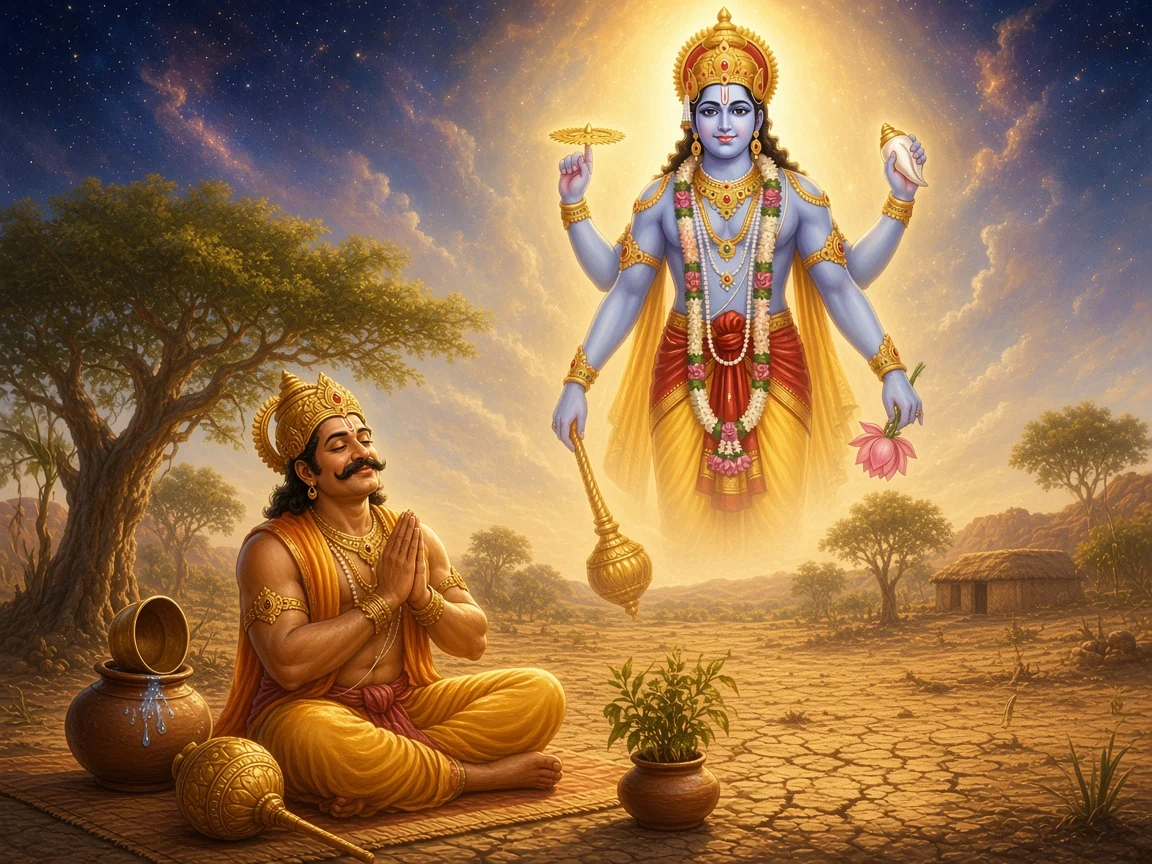
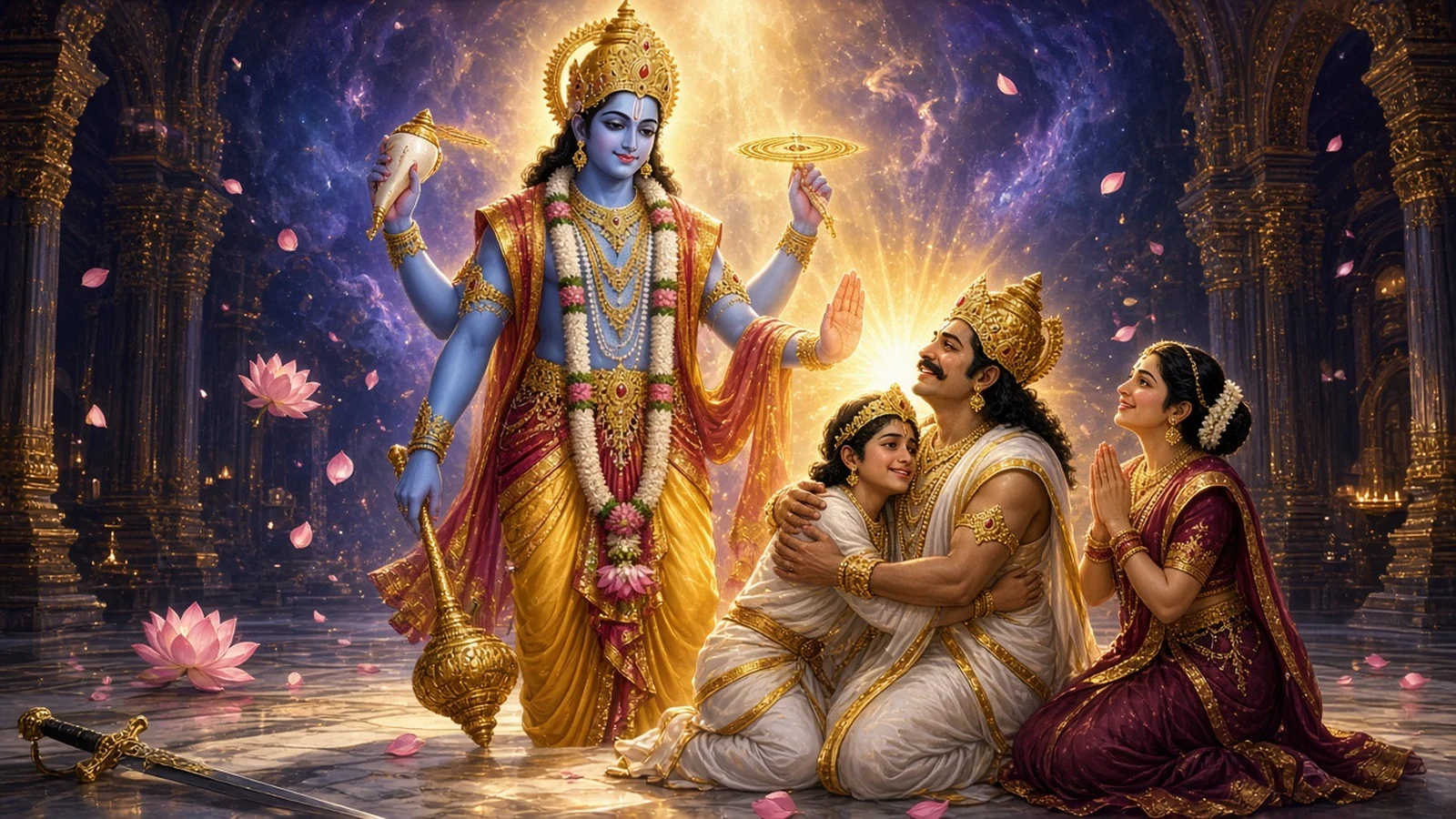
Bhima's whole family kept the Ekadashi, twice a month. Bhima could not. He was the son of the Wind, and a fire called Vrika burned in his belly and went quiet only when he ate, again and again; the Pandavas called him Vrikodara, wolf-bellied. He asked his grandfather Vyasa whether a man who gave gifts and worshipped Vishnu could reach heaven without the fasts, and Vyasa said no. Then, seeing him tremble, Vyasa gave him a single day: this Ekadashi, kept without even water, for the fruit of all the others. The Day Bhima Went Without Water tells it twice, once from the katha books and once from the Padma Purana, where Krishna sends Yudhishthira's question to Vyasa and the next day comes to be called Pandava Dvadashi.
Vyasa gives the hungry Bhima a single day, the one Ekadashi kept without even water
Behind it stands the origin of every Ekadashi, the maiden born of Vishnu who killed the demon Mura, which The Day the Gate Opens tells for Vaikuntha Ekadashi; and the two kings who would not break the fast, Rukmangada and Ambarisha, have their own story. The next Ekadashi of the bright half, Devshayani in Ashadha, opens the four months of Vishnu's sleep.
The radiant maiden born of the sleeping Vishnu, from whom every Ekadashi takes its name
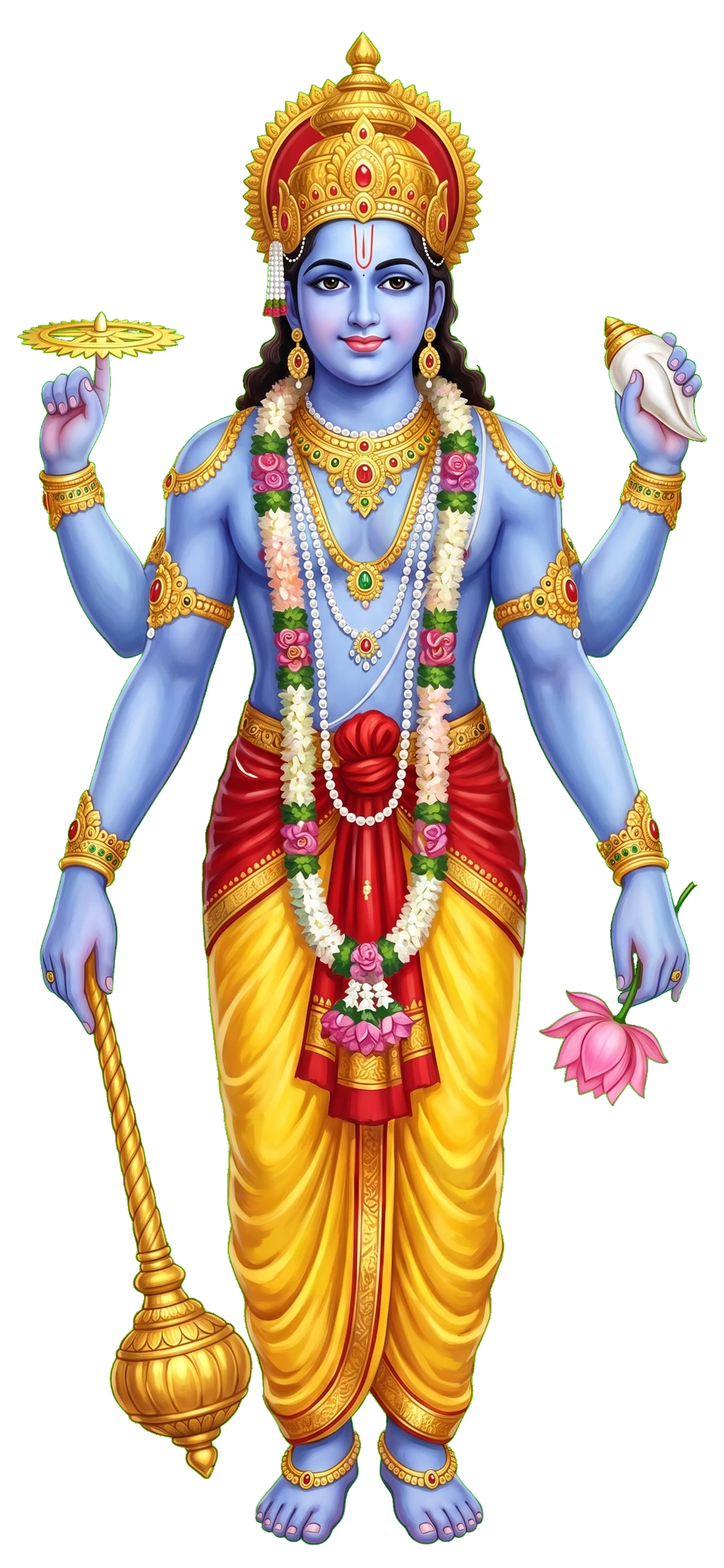
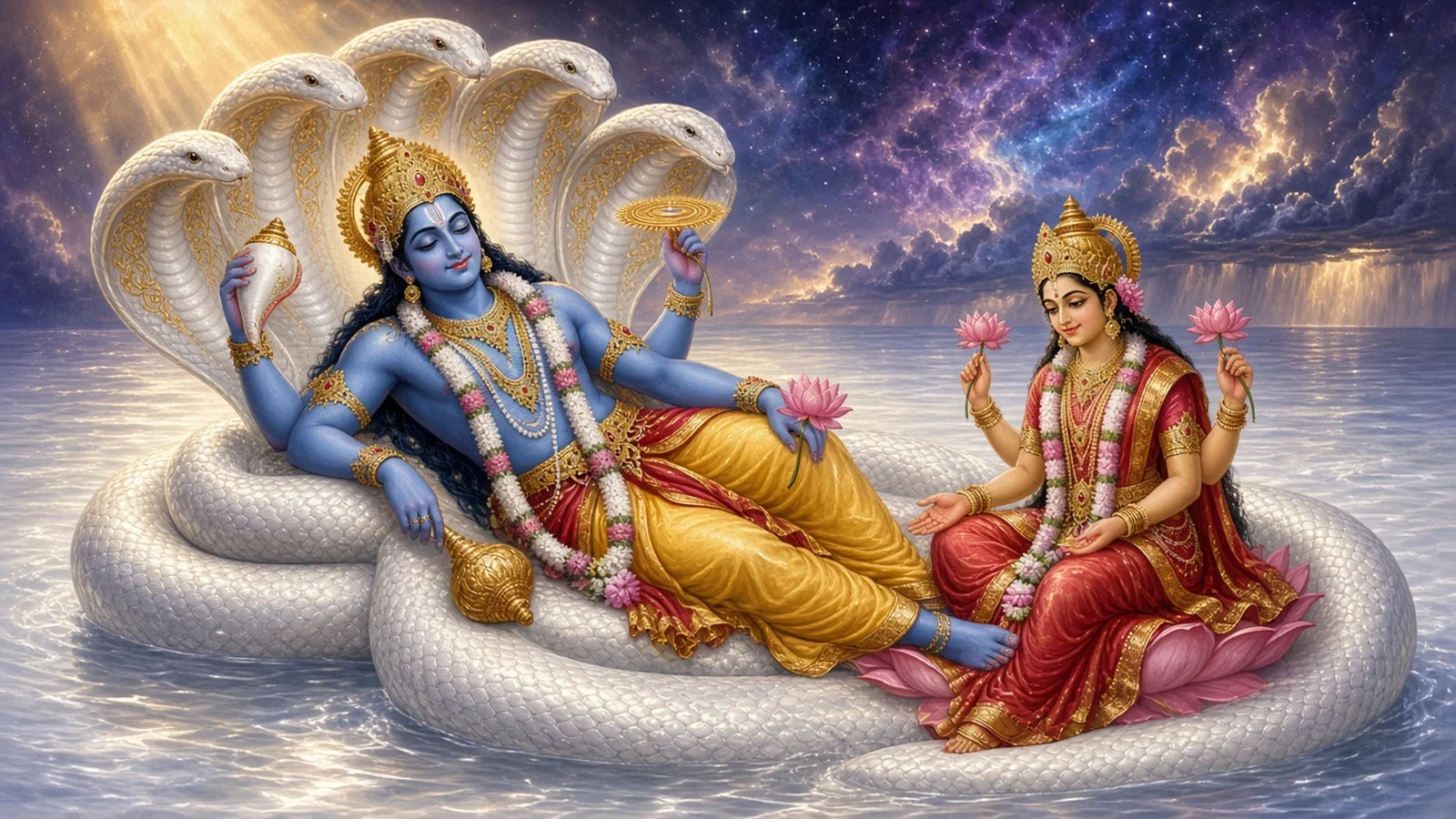
The god whose day every Ekadashi is. On this one he is bathed in panchamrit, given tulsi and a fan against the heat, and worshipped as Keshava, as Hrishikesha with a pitcher of water on the Dvadashi, and in the ISKCON prayer as Trivikrama; it is his messengers, not Yama's, who come for the one who keeps it.
In the Padma Purana's frame Krishna is the one Yudhishthira asks, and he hands the question to Vyasa; Vaishnava temples keep the day as Pandava Nirjala with the vow made to him, Mathura's crowds go to Dwarkadhish, and at Puri he is Madanmohana, who carries Rukmini off on this day and marries her.
B
Bhima
The second Pandava, son of the Wind, called Vrikodara, wolf-bellied, for the fire in his belly that would not let him miss a meal. The day is named for him because it was made for him.
V
Vyasa
The sage, grandfather of the Pandavas, who tells Bhima that the Ekadashi is the essence of the Puranas and then gives him the one day he can keep.
From one sunrise to the next
1
Dashami evening
Jyeshtha shukla dashami, before sunset
the single mealGanga Dussehra
The keeper eats once, early, and leaves out rice; many do the evening sandhya, and the earthen pots, fans, umbrellas and grain to be given away are bought and filled. In the north this day is Ganga Dussehra, the descent of the river, and in 2027 it falls on Sunday 13 June, so Haridwar and the ghats of the Ganga are already crowded when the fast begins.
On the Dashami evening at Haridwar, earthen pots, fans and umbrellas are bought for the gifts
Bhimaseni EkadashiPandava EkadashiRukmini Harana at Puri
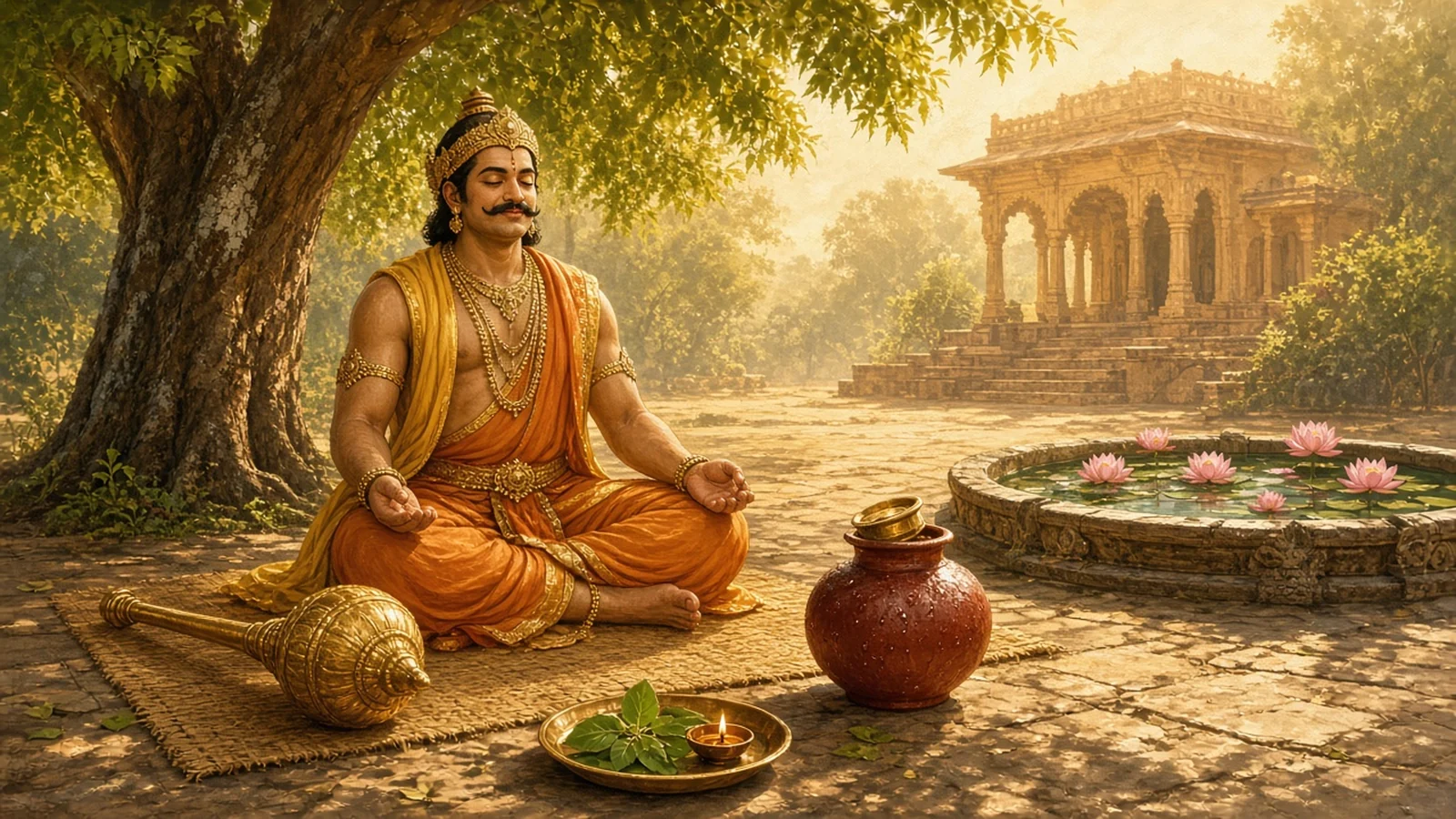
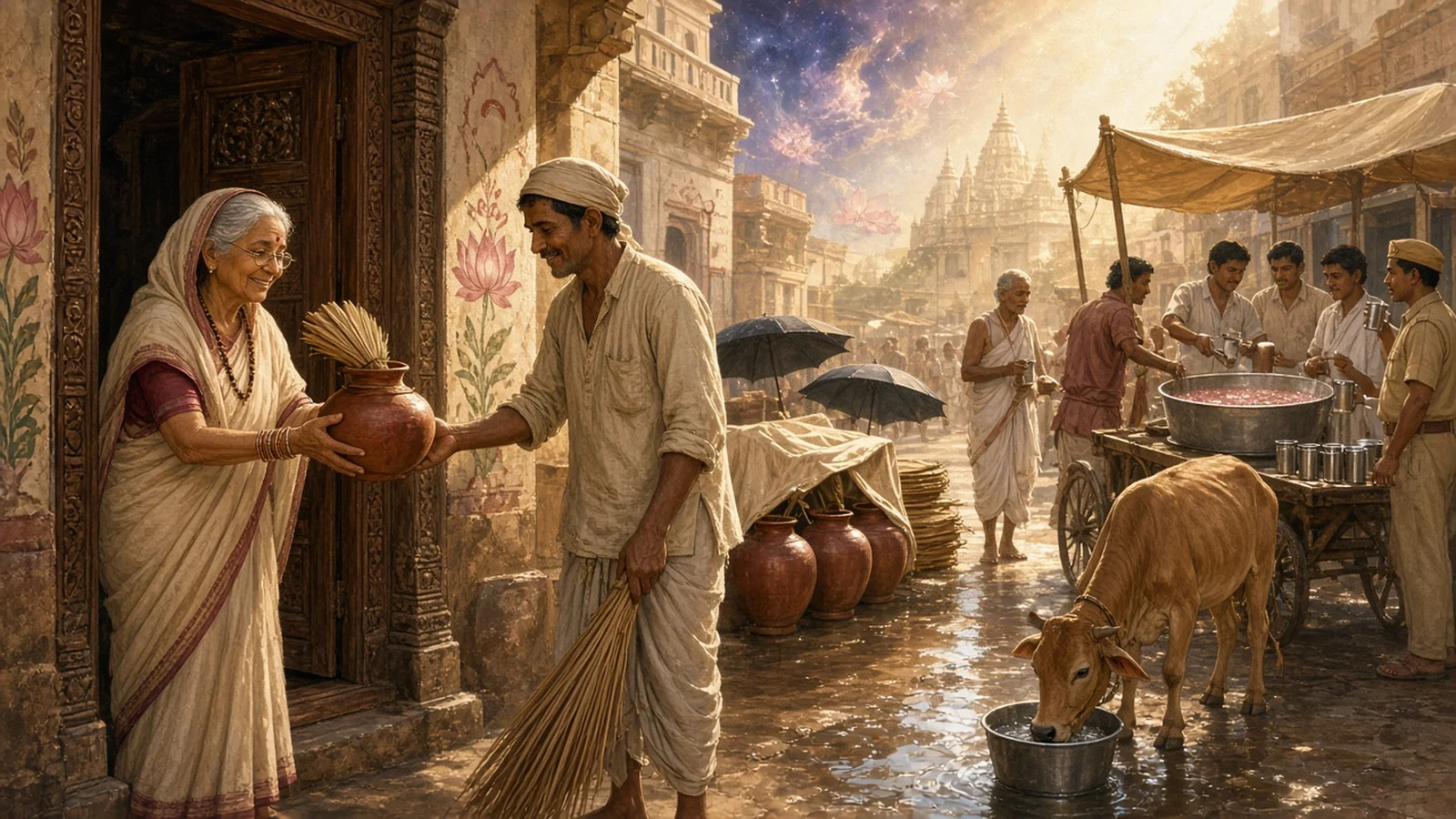
From sunrise nothing passes the lips, not even water, except a drop in the palm for the sips the rites require. Vishnu is bathed in milk, curd, honey, ghee and sugar, given tulsi, flowers, fruit and a fan, and the Vishnu Sahasranama is read; the story of Bhima and Vyasa is heard. Water is given all day: earthen matkas, fans, umbrellas, clothes and grain to those who need them, and in Haryana, Punjab and western Uttar Pradesh the chhabils, stalls of cold sweet water open to anyone on the road. The temples are full until the evening aarti, and many keep awake through the night.
Earthen pots of cool water, fans and umbrellas given away outside a Mathura temple on the fast day
Dvadashi paranaPandava DvadashiChampaka Dvadashi at Puri
The keeper bathes, worships, gives a pitcher of water, with sugar or gold if possible, and breaks the fast inside the Dvadashi at the time the almanac sets for the city. In 2027 that time is unusual: Delhi's parana on 15 June falls between 1:45 and 4:33 in the afternoon, because the first quarter of the Dvadashi runs past the morning, while Hyderabad and Bengaluru have a few minutes after 8:13 am. In 2028 the fast falls on Saturday 3 June and is broken early on 4 June.
The Dvadashi morning: a pitcher of water with sugar is given, and then the fast is broken
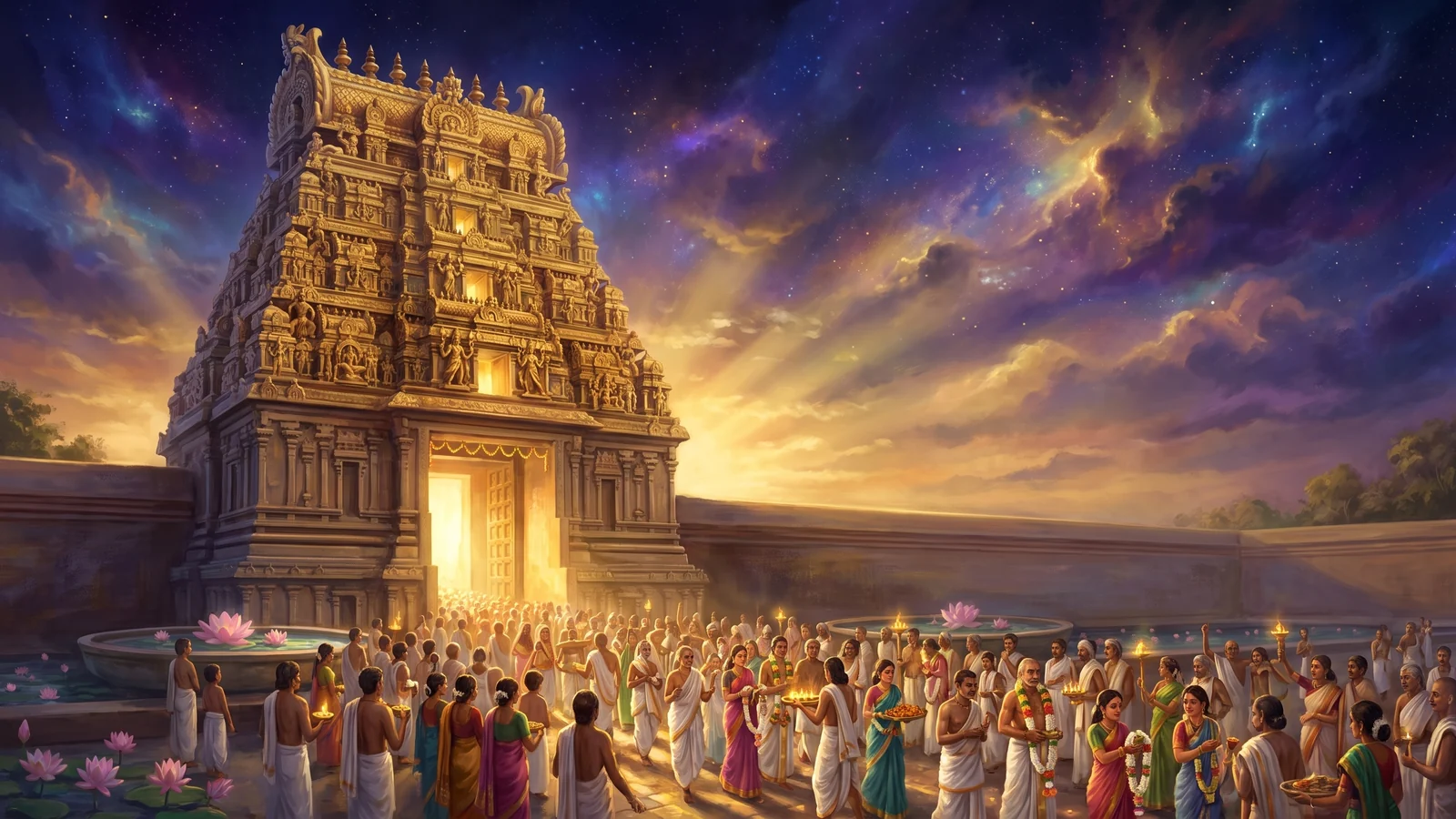
The day is kept hardest across the Hindi country. In Mathura the temples, Dwarkadhish above all, are full from morning to the evening aarti, and trusts give out earthen water pots by the hundred; in Vrindavan the pilgrims bathe in the Yamuna at dawn and queue at Banke Bihari before the doors open. Through Haryana, Punjab, western Uttar Pradesh and Uttarakhand temples, traders' associations, offices and neighbourhoods set up chhabils of cold sweet water, some on the same corner for twenty years, and in Haridwar the Ganga Dussehra crowd stays on to bathe at Har ki Pauri and make offerings for its ancestors.
Puri, OdishaRukmini Harana Ekadashi
In the Jagannath temple the day is Rukmini's wedding. Madanmohana, standing for Jagannath, carries her off from the shrine of Bimala while she prays, fights off Shishupala and marries her at night, with darshan closed in the afternoon for the rites; on Champaka Dvadashi the couple visit the Gajapati's house and the Jambeswar temple, where five images stand for the Pandavas. Odisha calls the fast Rukmini Ekadashi and Pandava Bhima Ekadashi.
Pandharpur, MaharashtraBefore Ashadhi
Thousands come to Vitthal three weeks before the Ashadhi crowd, bathe in the Chandrabhaga from dawn and queue for darshan, while town groups give out sabudana khichdi and fruit to those who cannot keep it dry; the Varkaris hold that it carries the merit of all the year's Ekadashis.
The Telugu countryBhimaseni Ekadashi
Telugu calendars call it Nirjala or Bhimaseni Ekadashi, with the tulsi circled and bhajans through the night; the papers repeat the shastras' allowance of water and fruit for the unwell.
NepalThe day the tulsi is sown
Nepal keeps the Bhima story with an ending of its own, the Pandava found fainting at dawn and revived with Ganga water and a tulsi leaf, and on this day sows the tulsi seeds that are planted out on Harishayani Ekadashi; earthen pots and bamboo fans are the gifts.
Vaishnavas of every lineThe hardest of the twenty-four
Every Vaishnava house that keeps the Ekadashis counts this one as worth all of them, and many who keep no other keep this. Some fast from sunrise to sunset only, and many take water and fruit; Odisha's custom excuses the sick, pregnant women and nursing mothers, and doctors warn that a day without water in the June heat risks dehydration, salt imbalance and low blood pressure, especially for those with diabetes or kidney disease.
ISKCON and the Gaudiya VaishnavasPandava Nirjala
ISKCON calls it Pandava Nirjala Ekadashi, a Maha-Ekadashi, reads the Bhima story from its Ekadashi book, which credits the Brahma Vaivarta Purana, and allows only the water that would cover a mustard seed in the sips of the rites. Its temples bathe the deity in milk in the evening and devotees chant many more rounds than usual; for those who cannot manage it the temples set out a ladder of water, juice, fruit and simple fasting food, following Prabhupada's word that no one should do less than they can.
How it is kept
The fast begins with a single early meal on the Dashami, without rice, which in the north is also Ganga Dussehra. From sunrise on the Ekadashi nothing is eaten or drunk; the rites allow a drop in the palm, no more than would hide a mustard seed. Vishnu is bathed in panchamrit and given tulsi and a fan, the Vishnu Sahasranama is read, and the story of Bhima is heard.
Vishnu's image bathed in milk, curd, honey, ghee and sugar, with tulsi and a fan beside him
The gifts are water and the means to bear the heat: earthen pots filled to the brim, fans, umbrellas, clothes and grain, and on the Dvadashi a pitcher of water with sugar or a little gold. In Haryana, Punjab and western Uttar Pradesh every town grows chhabils, stalls of iced sweet water for anyone passing, run by temples, shopkeepers, office staff and neighbours. The Pot of Cool Water follows a Mathura household through the day and Haridwar's crowds the morning after Ganga Dussehra.
A chhabil by a Haryana road: cold sweet water for anyone who passes in the June heat
Many stay awake through the night. On the Dvadashi the keeper bathes, gives the pitcher and breaks the fast at the parana time, which the almanac sets city by city and which in some years falls in the afternoon. Hartalika Teej, the other waterless fast, is kept by women for their husbands in Bhadrapada; this one is kept by anyone, for Vishnu.
In the old texts
The Padma Purana tells the day in its Uttara Khanda, chapter 51, in the series of Ekadashi chapters that Krishna recites to Yudhishthira. It sets the fast for the Jyeshtha Ekadashi when the sun is in the second or third sign, promises the fruit of twelve Dvadashis to whoever keeps it from sunrise to sunrise, and lists the gifts. ISKCON's Ekadashi book and Wikipedia name the Brahma Vaivarta Purana as the source of the version most kathas follow; some almanac sites name the Bhavishya Purana, and one cites a verse it says is from the Mahabharata. The epic gives Bhima his appetite and his name Vrikodara; we found no passage in it about this day. The fainting at dawn, in the Nepali and northern tellings, is in none of the texts.
Where this page comes from. Written by Devalok from the Nirjala Ekadashi katha as ISKCON's Ekadashi book and the katha books carry it, the Padma Purana (Uttara Khanda 51), the reports of the day from Mathura, Vrindavan, Haryana, Haridwar, Puri and Pandharpur, the Orissa Review and J. C. Mahanti on the Jagannath temple, Hamro Patro for Nepal, the Telugu press, and the Drik Panchang and Shubhdin Panchang calendars for 2027 and 2028, as recorded in the Devalok Lore. Our own words throughout.