As the Narada Purana tells it
Vidisha and Mount Mandara · Narada Purana, the second part · 4 min read
King Rukmangada of Vidisha, of the line of Ikshvaku, kept the eleventh day.
He had kept it all his life: no food on Ekadashi, the worship of Vishnu, and the fast broken with care on the twelfth. Then he decided that his people would keep it too. Criers went through the kingdom on the backs of elephants with his order. Everyone between eight years old and eighty-five was to fast on the eleventh day of every fortnight and worship Hari, and anyone who ate on that day without the worship would answer for it.
They obeyed him. And because they obeyed him, something happened a long way from Vidisha. A person who dies having kept the Ekadashi fast does not go to Yama. He goes to Vishnu. The road to the city of death emptied. The halls of punishment went quiet. Chitragupta, who writes down every life, sat with his pen dry.
Narada came by on his travels and found the god of death with nothing to do.
"What is this?" he said. "Where is everyone?"
"Ask the king of Vidisha," said Yama. "He has made a whole country fast on the eleventh day, and now they all go past me. I have a duty, and he has taken it away from me."
They went together to Brahma. Brahma heard them out and would not blame the king. "A man who so much as says the name of Hari," he said, "has done more than a pilgrimage to Kashi. The king is right. But you also have your work, and it must be done." So he settled it by making a woman. Her name was Mohini, and there was no one lovelier, and he sent her to Mount Mandara.
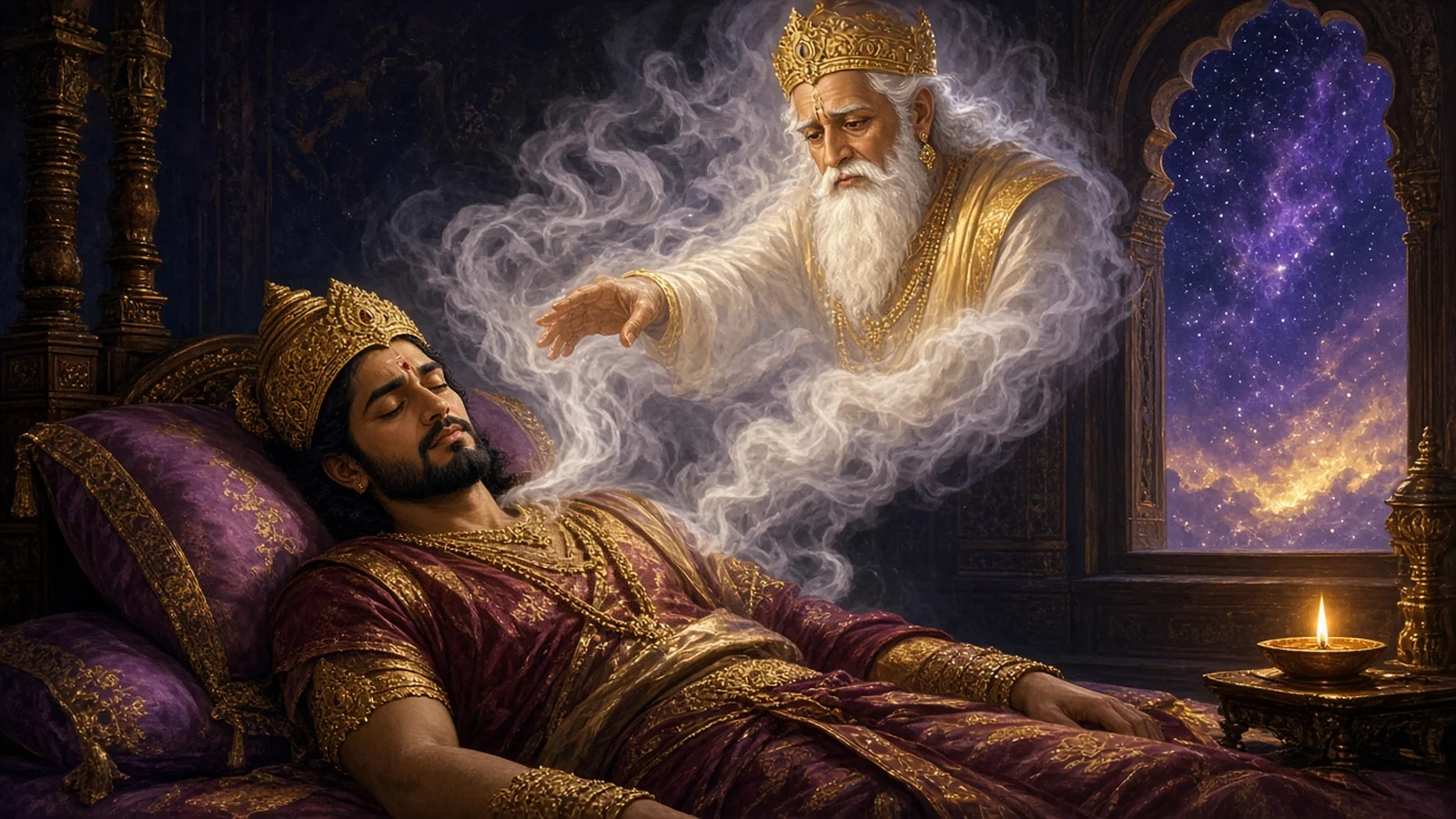
Rukmangada came up Mandara and found her sitting beside a linga of Shiva on the hilltop, singing. He forgot who he was.
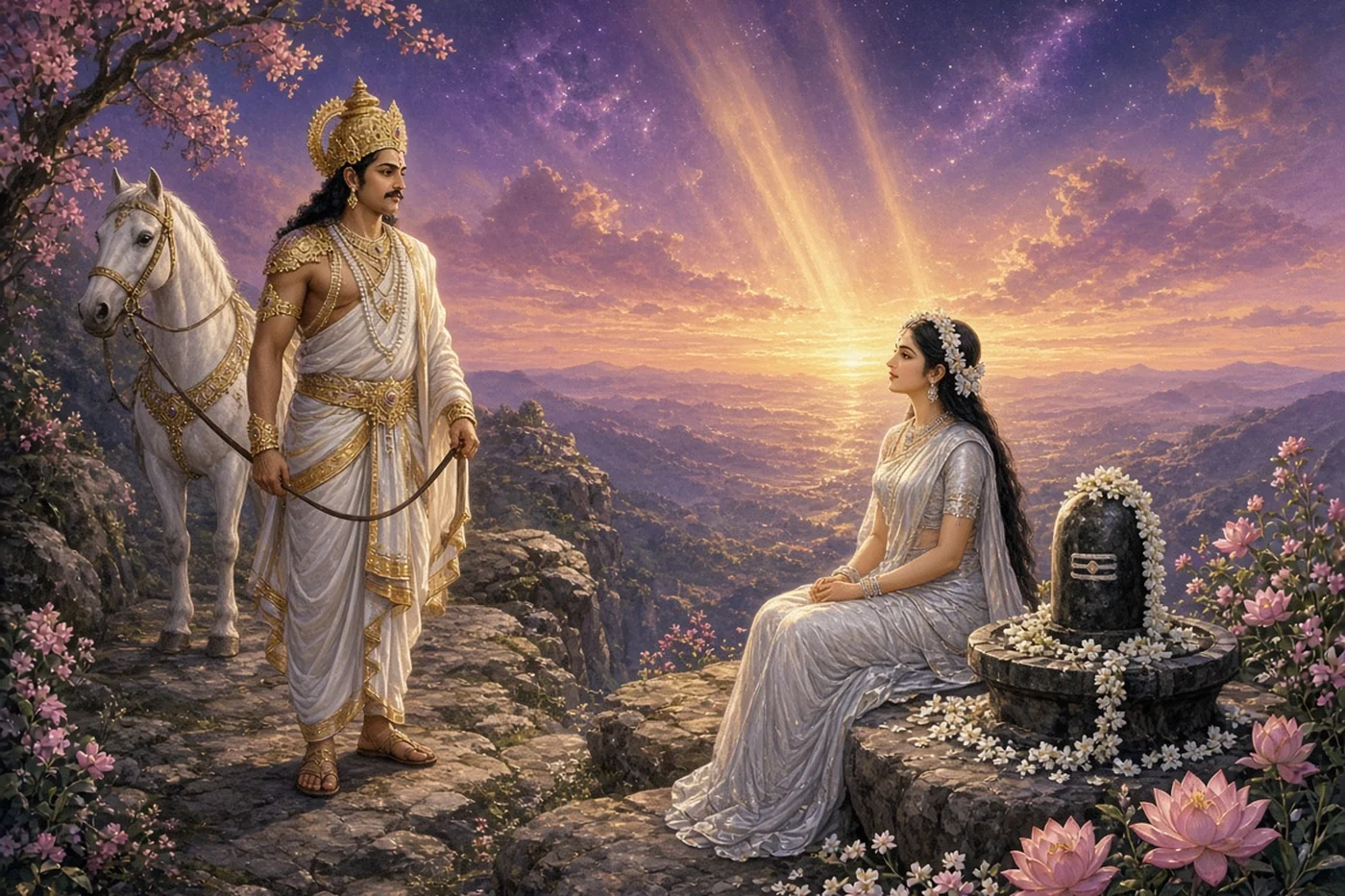
"Be my wife," he said.
"On one condition. Whatever I ask of you, you give me at once, without asking why. Even your kingdom."
"I am an Ikshvaku," said the king. "We do not break our word. Ask, and it is yours." She told him she was Brahma's daughter and must be married with the Vedas as witness, and it was done on the hill.
On the road home his horse trod on a lizard, and the lizard spoke in a woman's voice and begged him for the merit of his last twelfth-day fast, so that it might be freed. Mohini wanted him to ride on. He stopped and gave it, and the lizard went where the king's people went. It was the first thing she asked that he did not do, and she remembered it.
At Vidisha the queen, Sandhyavali, and the prince, Dharmangada, came out to meet the new wife and did her every honour, and the prince told the household to obey her as they obeyed the king. For years nothing happened. Then an Ekadashi came round, and Mohini spoke.
"You promised me whatever I asked. I ask this. Eat today."
The king offered her the treasury. He offered her the kingdom, and then his life. She wanted none of them. She brought in brahmins to argue that a king need not fast, that the sage Gautama had said so, that the day was for widows and holy men. He answered that he had kept it all his life and made a country keep it, and could not now be the one man who broke it.
"Then keep your word another way," said Mohini, and she turned to the queen. "Let the king cut off your son's head and lay it in my lap. The fast or the boy. He chooses."
Sandhyavali looked at her son.
"Let him keep both," said Dharmangada. "His word and his fast. Father, I ask it." And the queen, who could have stopped it with a word, said the same.
The king took up the sword. Mohini fainted where she stood. The blade went up over the boy's bowed neck.
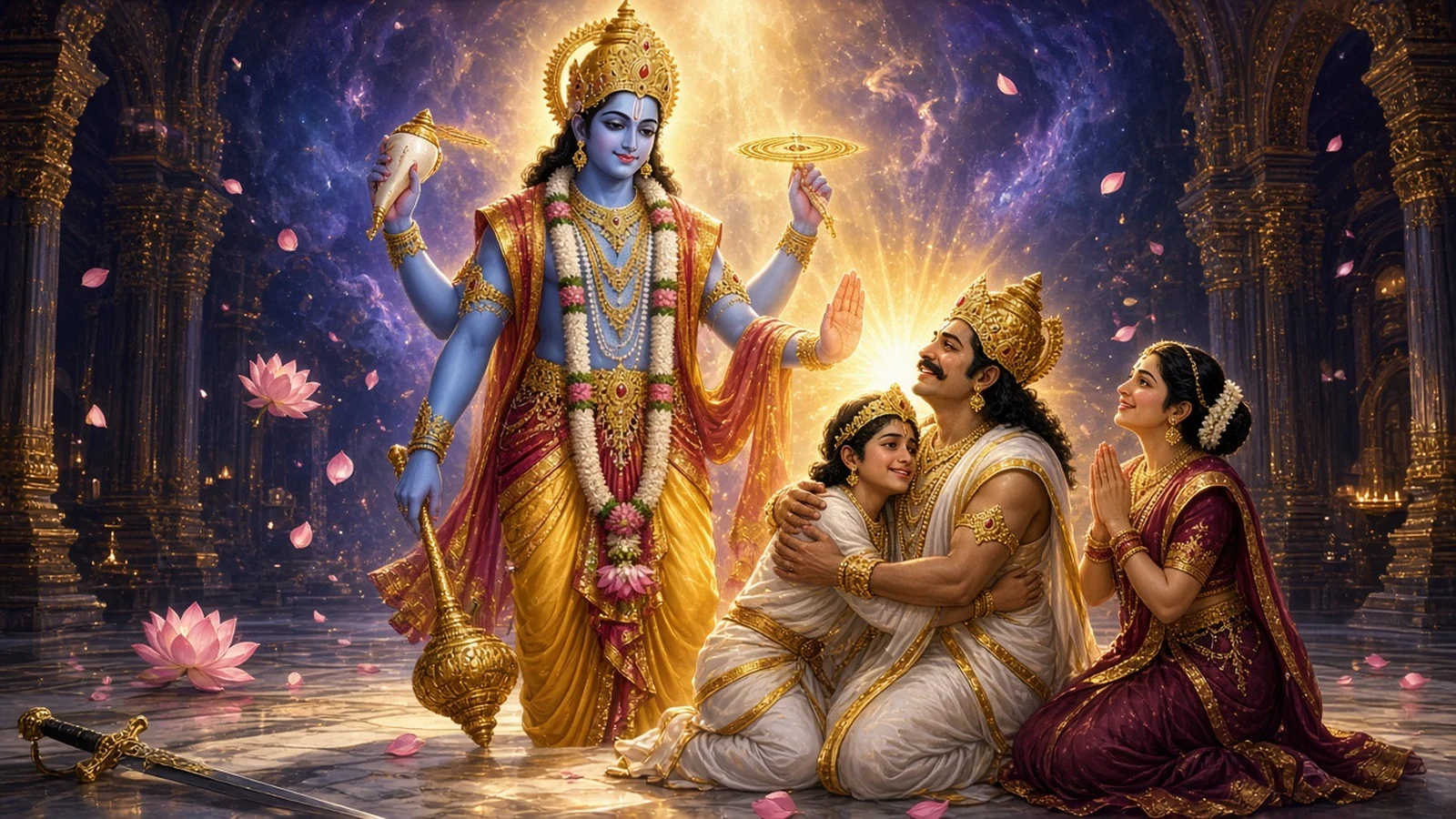
And Vishnu was there, between the edge and the neck, and the blade did not come down. He took the king by the hand, and the queen, and the prince, and carried the three of them to Vaikuntha, for a vow kept to the end. The Purana gives him no speech. He did not need one.
As the Bhagavata tells the other king
Madhuvana on the Yamuna · Bhagavata Purana 9.4 to 9.5 · 2 min read
Ambarisha was an Ikshvaku too, and ruled the whole earth, and thought nothing of it. Vishnu had given him the discus itself to guard him. For a year he and his queen kept every Ekadashi and every Dwadashi, and in the month of Kartika he went to Madhuvana on the Yamuna to finish the vow, bathed, worshipped, gave away cows past counting, and sat down to break his fast.
Durvasa arrived, uninvited.
The king rose, seated him, served him, and asked him to eat. The sage said he would bathe first, and went down to the river, and did not come back. The sun moved. The brahmins counted the hours of Dwadashi, and there was one left.
"If I eat before a guest," said the king, "I offend him. If I do not break the fast inside the tithi, I break the vow. Tell me what to do."
"Water," they said. "Water is eating and not eating." So he drank a little water and waited.
Durvasa came up from the river and knew it at once. "You have eaten before your guest," he said, "you who think yourself so devout," and he tore a hair from his head and threw it down, and a demon stood up out of it with a sword, burning. The king did not move. The discus came off its place beside him, burned the demon to nothing, and went after the sage.
Durvasa ran. He ran through the sky and the worlds, and the wheel of fire came behind him. He ran to Brahma, who told him this was no weapon of his to call off. He ran to Shiva, who sent him on. He ran to Vaikuntha and fell at Vishnu's feet.
"I cannot help you," said Vishnu. "I am not my own. My devotees have me in their hands, and this man is one of them. Go back to the king and ask him."
So the sage ran back to Madhuvana, with the discus still at his heels, and fell at the feet of the man he had cursed. Ambarisha was ashamed to see it. He prayed, not to Vishnu but to the discus, naming everything it was, fire and sun and the turning of the worlds, and asked it to spare a brahmin. It stopped, and cooled, and went back to its place.
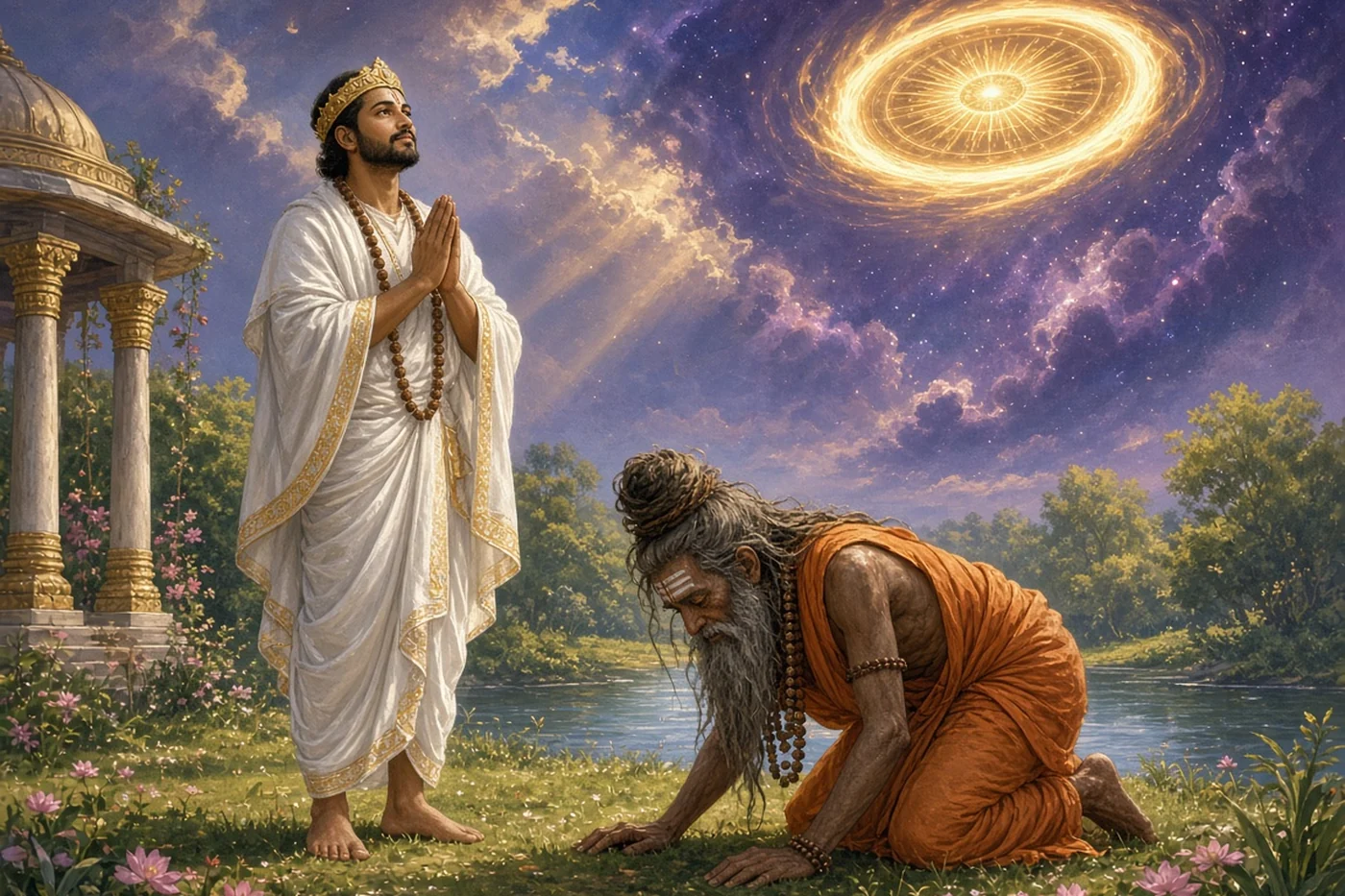
Then the sage saw what sort of king this was. "I took you for an ordinary man," he said. The king fed him, and only when the guest had eaten did he eat himself. He had waited a year with nothing but water for the sage to come back. The Bhagavata says that at the end of his life he gave the earth to his sons and went into the forest, and that whoever hears his story is on the road to the same place.