Festival · The first of Chithirai, when the almanac is opened and the year gets its name
Puthandu
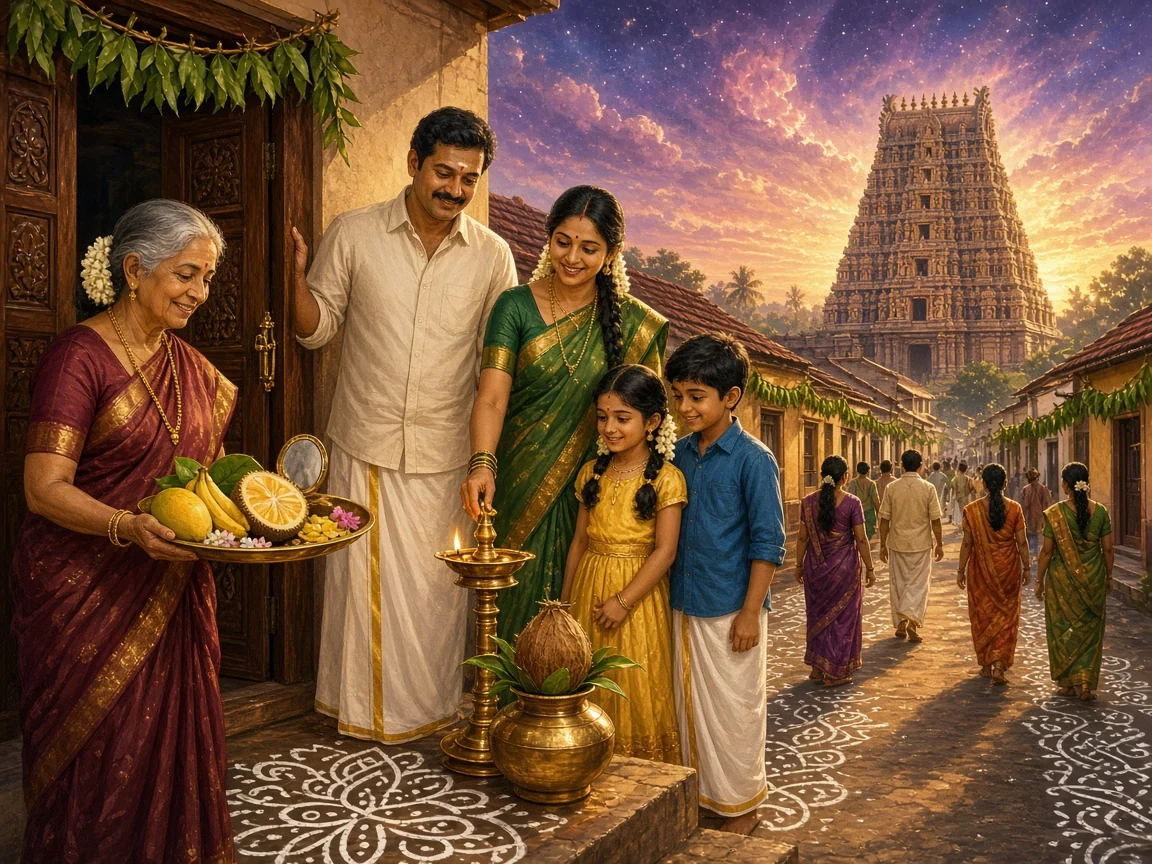
Puthandu is the Tamil New Year, the first day of Chithirai, kept on 14 April almost every year, the day the sun enters Mesha. The morning begins with a bath, new clothes and a kolam at the door, in many houses with a tray of fruit, gold and a mirror seen before anything else, and with a pachadi of six tastes in which raw mango and neem flower are the first things eaten. Then the new almanac is worshipped and read aloud, in the temple or by the eldest at home, and the year is given its name from the cycle of sixty. In Madurai the month that follows is the Chithirai festival, the queen's wedding and her brother's late arrival at the Vaigai.
When is Puthandu in 2027? Puthandu, the first of Chithirai, is Wednesday 14 April 2027. In 2028: Friday 14 April 2028. Chithirai 1, the day the sun enters Mesha (Aries), on 14 April almost every year; the next day when the sankranti falls after sunset.
Also calledPuttanduTamil New YearVarusha PirappuVarusappirappuPuthuvarushamChithirai 1Chithirai ThirunalChithirai Vishu
In short
What is Puthandu?
The Tamil New Year, the first day of the month of Chithirai, kept on the day the sun enters Mesha, 14 April almost every year. It is a morning of a bath, new clothes, a kolam, a pachadi of six tastes and the reading of the new almanac, and a public holiday in Tamil Nadu, Puducherry and Sri Lanka.
When is Puthandu in 2027 and 2028?
Wednesday 14 April 2027, when the sun enters Mesha at 3.33 in the afternoon, and Friday 14 April 2028, when the sankranti falls at 9.47 the night before and the year begins the next morning. The year that begins in April 2027 is Plavanga, the forty-first of the sixty.
What is the kani?
A tray laid the night before with mango, banana and jackfruit, betel, gold, coins, flowers and a mirror, seen with the eyes opened before anything else on new year's morning so that the year begins on plenty. The Kongu country keeps it under the name Chithiraikani; it is the same custom as Kerala's Vishukkani, and many Tamil houses begin with the bath instead.
Why is the pachadi eaten first?
Because it has every taste at once, raw mango for sour, jaggery for sweet, neem flower for bitter, chilli, salt, and tamarind in the neem version, and the year will have every taste too. It is made once a year, for this morning.
What is the panchanga padanam?
The reading of the new almanac on Puthandu, by the priest in the temple or the eldest at home, after it has been worshipped with sandal, kumkum and flowers. It gives the year its name from the cycle of sixty, and tells the rains, the harvest, the prices and what the year holds for each star.
Next, in 2027Wednesday 14 April 2027
Prime godSurya
with 4 more
WhereTamil Nadu and Puducherry, the Tamils of Sri Lanka, Malaysia and Singapore, and Tamils across the world
How longOne morning and a day, with Madurai's Chithirai festival running a month after it
Chithirai 1, the day the sun enters Mesha (Aries), on 14 April almost every year; the next day when the sankranti falls after sunset
Why it is kept
Puthandu is the Tamil word for new year, and the day is the first of Chithirai, when the sun comes back to the Ram. It is the quieter of the two Tamil new years. Pongal, three months earlier, is the harvest and the pot boiling over; this is a bath before dawn, a kolam, something sour and bitter eaten first, and a book opened and read aloud so that the year can be given its name.
The year is the sun's. The Tamil calendar counts twelve months from the sign the sun stands in, and Chithirai begins at the moment it enters Mesha; the almanac prints that minute, and if it falls after sunset the year waits for the next morning. The poets of the Sangam already counted this way: Nakkirar's Nedunalvadai follows the sun round eleven signs from Mesha, a Purananuru poem begins the year there, and the Silappatikaram lists the twelve signs from the Ram and sets Madurai's festival of Indra in Chithirai. The same sun, the same morning, is Vishu in Kerala, Baisakhi in the Punjab, Pohela Boishakh in Bengal and Bohag Bihu in Assam, and each of those has its own page.
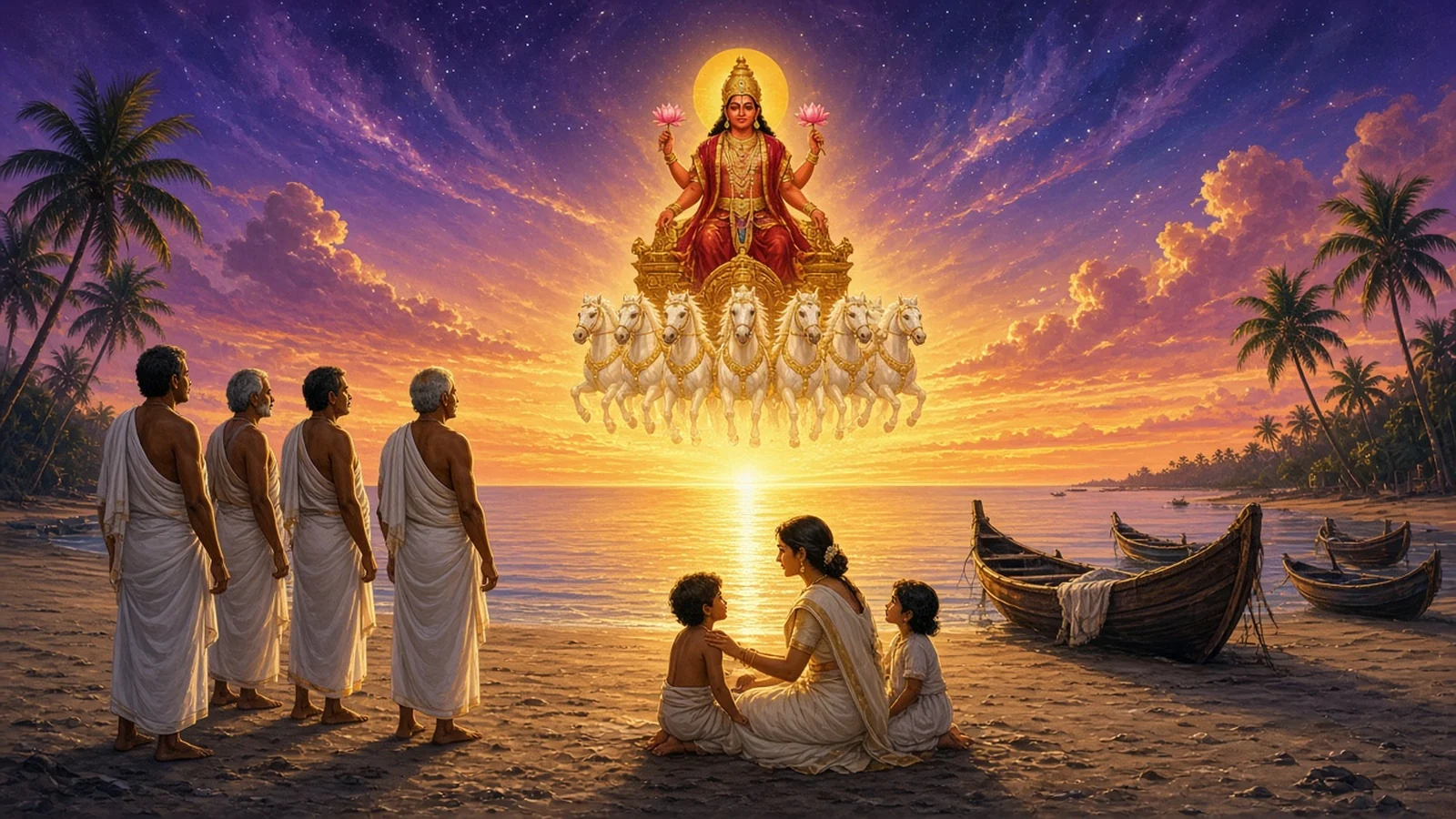
Surya rises in the sun's disc toward Mesha, the Ram, at dawn over a Tamil temple town
The Tamil accounts give the day a second reason, borrowed from the Deccan: that Brahma began making the world on it, as the Ugadi almanac says of its own new year a week or two earlier. And the almanac gives it a third. Every year has a name, from Prabhava to Akshaya, sixty in all before the cycle turns, and the reading on Puthandu begins with that name. The Lore tells where the names came from, as the almanac tells it, in The Sixty Sons Who Became the Years: Narada, Vishnu's maya, a woman's sixty sons dead in one war, and a boon.
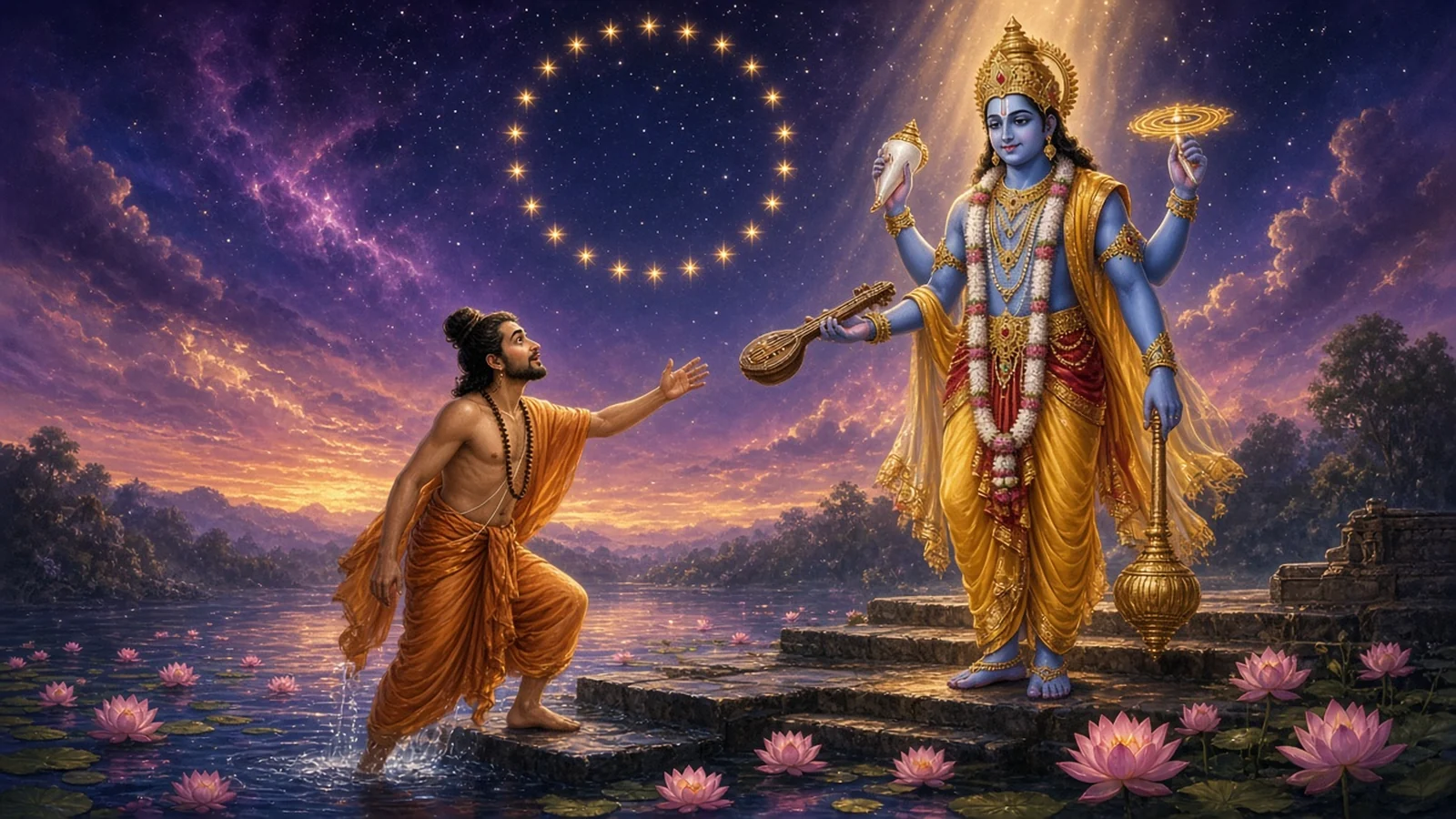
Vishnu and Narada watch sixty small lights rise in a wheel, the sixty years of the cycle
In Madurai the new year opens a month. The Chithirai festival marries the city's queen to Sundareswarar and then brings her brother Alagar down from his hill, too late, to the Vaigai. The Girl with Three Breasts tells the queen; The Brother Who Came Too Late tells the river.
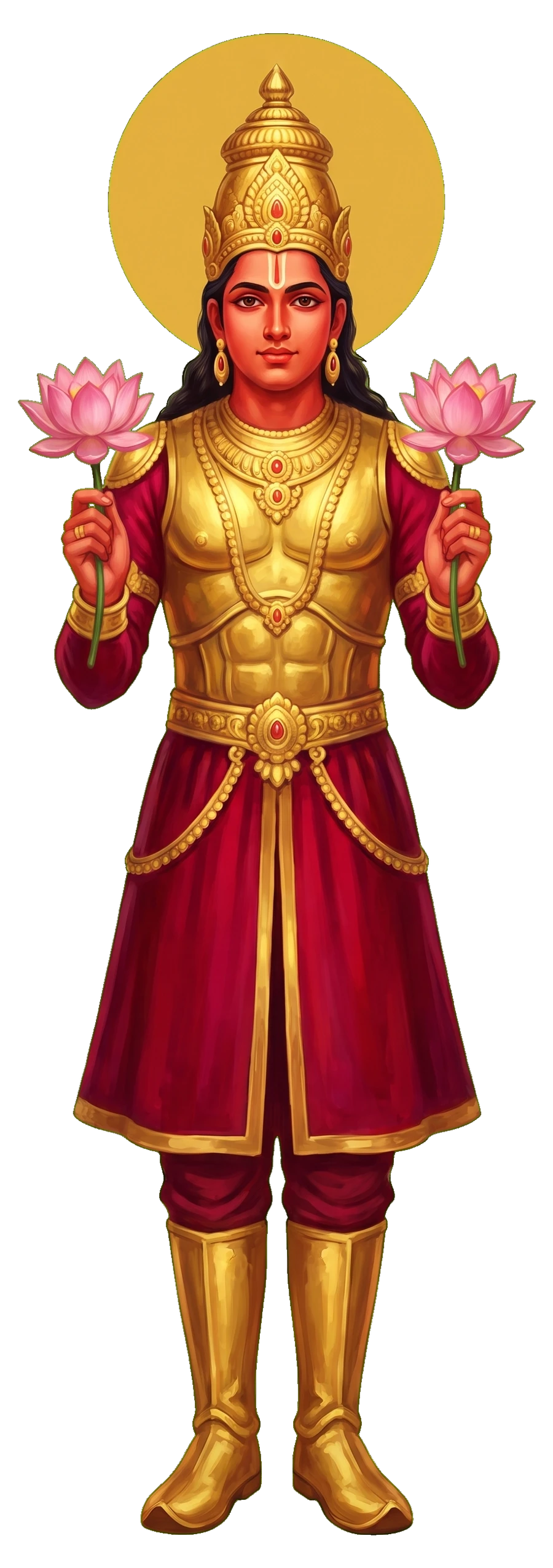
The sun, whose entry into Mesha, the Ram, begins the Tamil year. The almanacs fix the day by the minute of the sankranti, and Sangam poems already count the year from the sun's return to this sign.
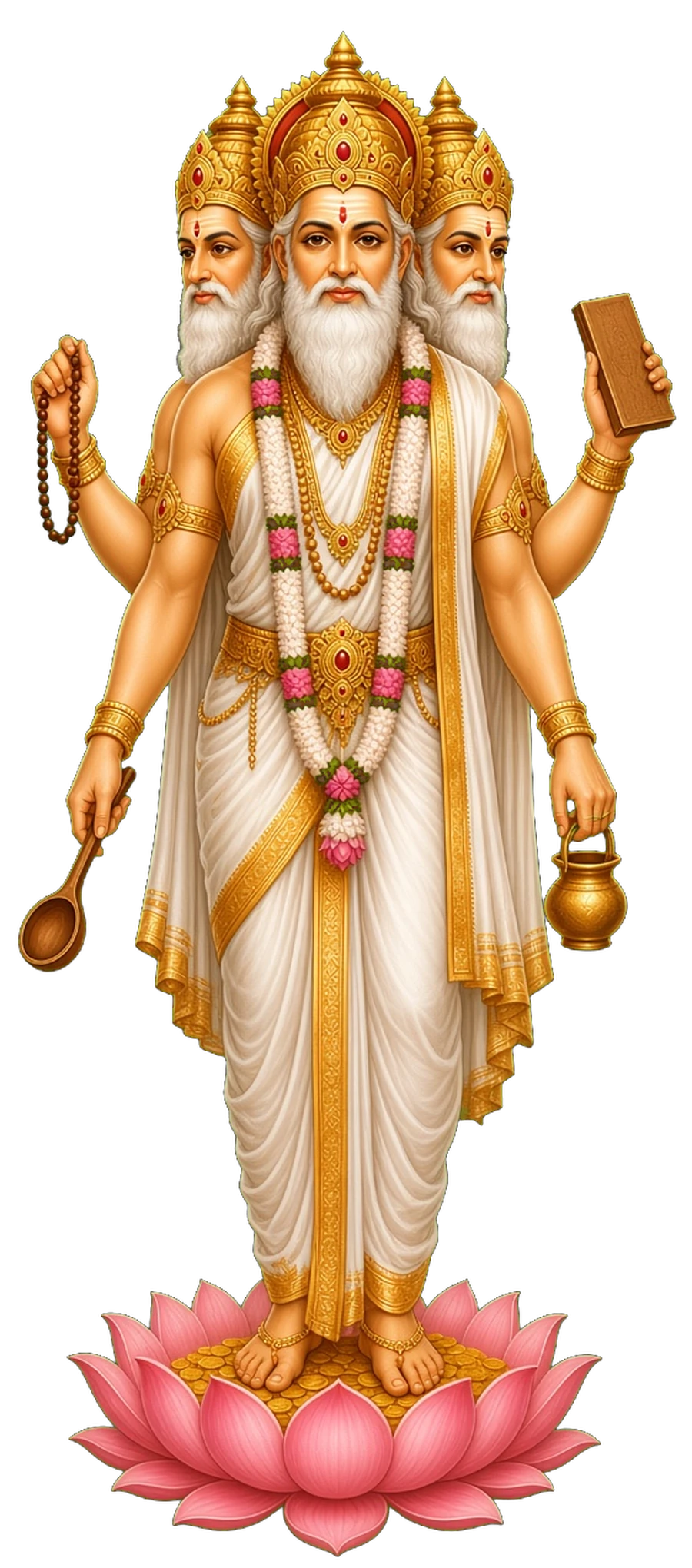
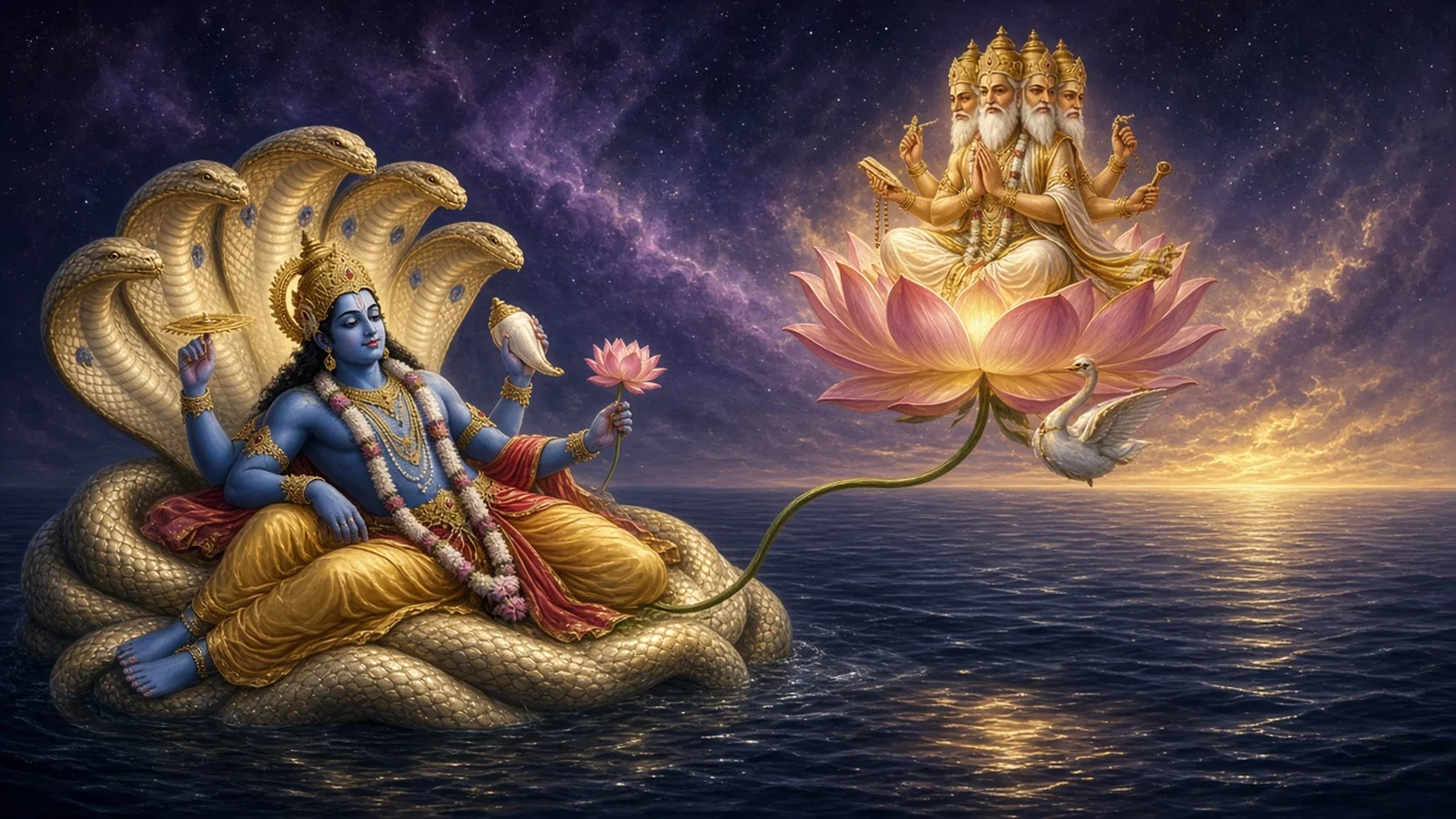
The creator. Tamil accounts of the day say Brahma began making the world on it, as the Deccan almanacs say of Ugadi, and the first twenty years of the cycle of sixty bear his name.
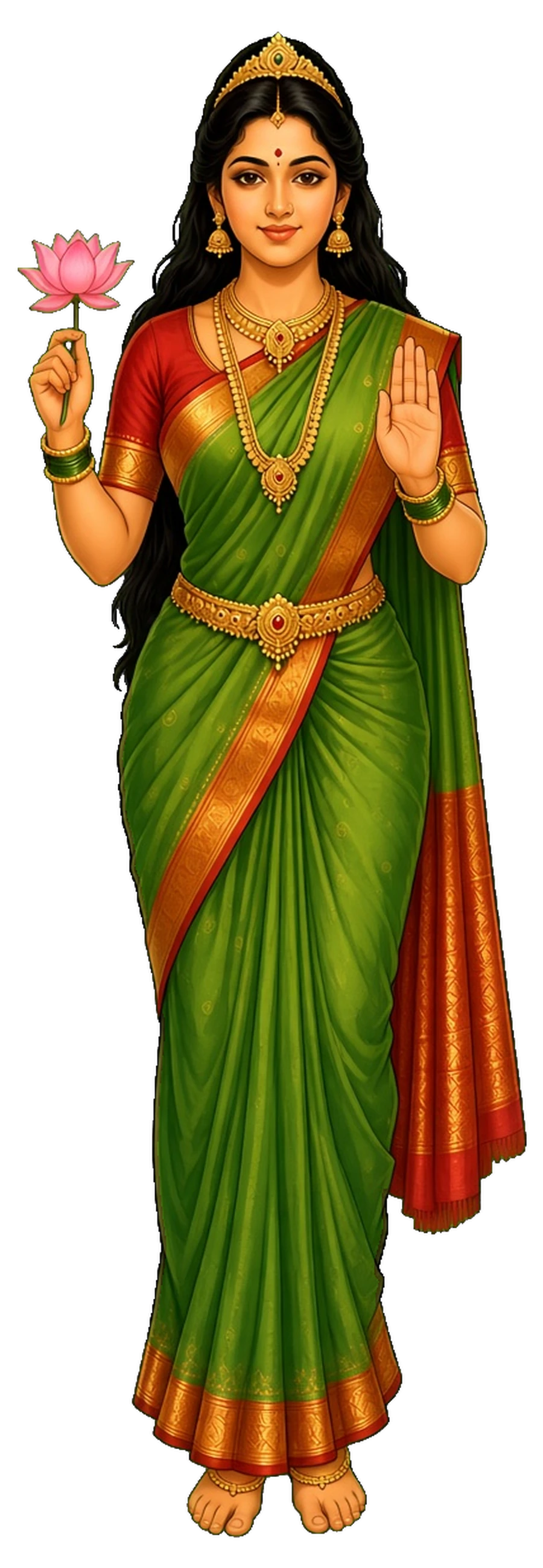
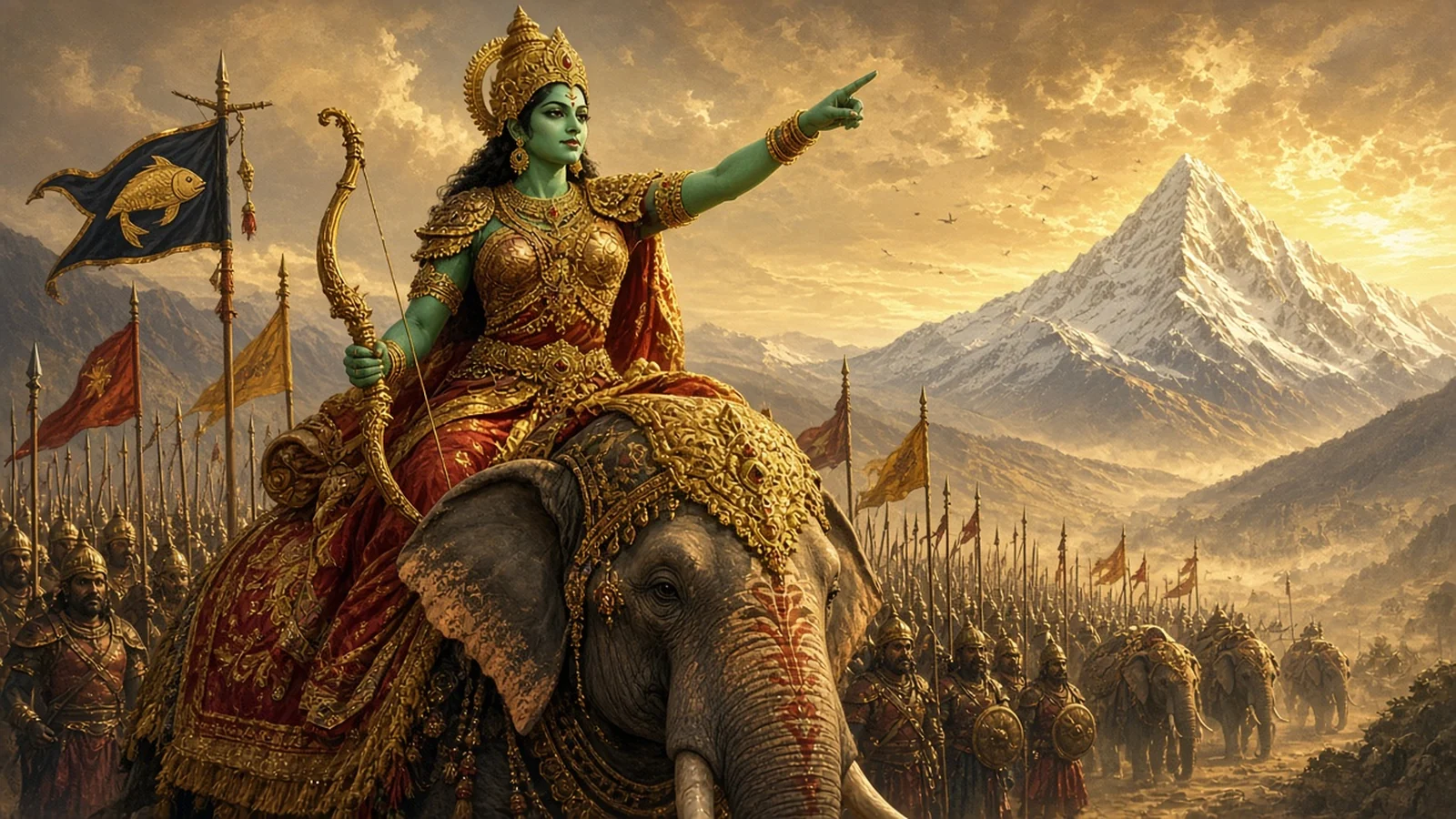
The queen of Madurai, whose coronation, conquest of the world and wedding to Sundareswarar fill the first half of the Chithirai festival that follows the new year.
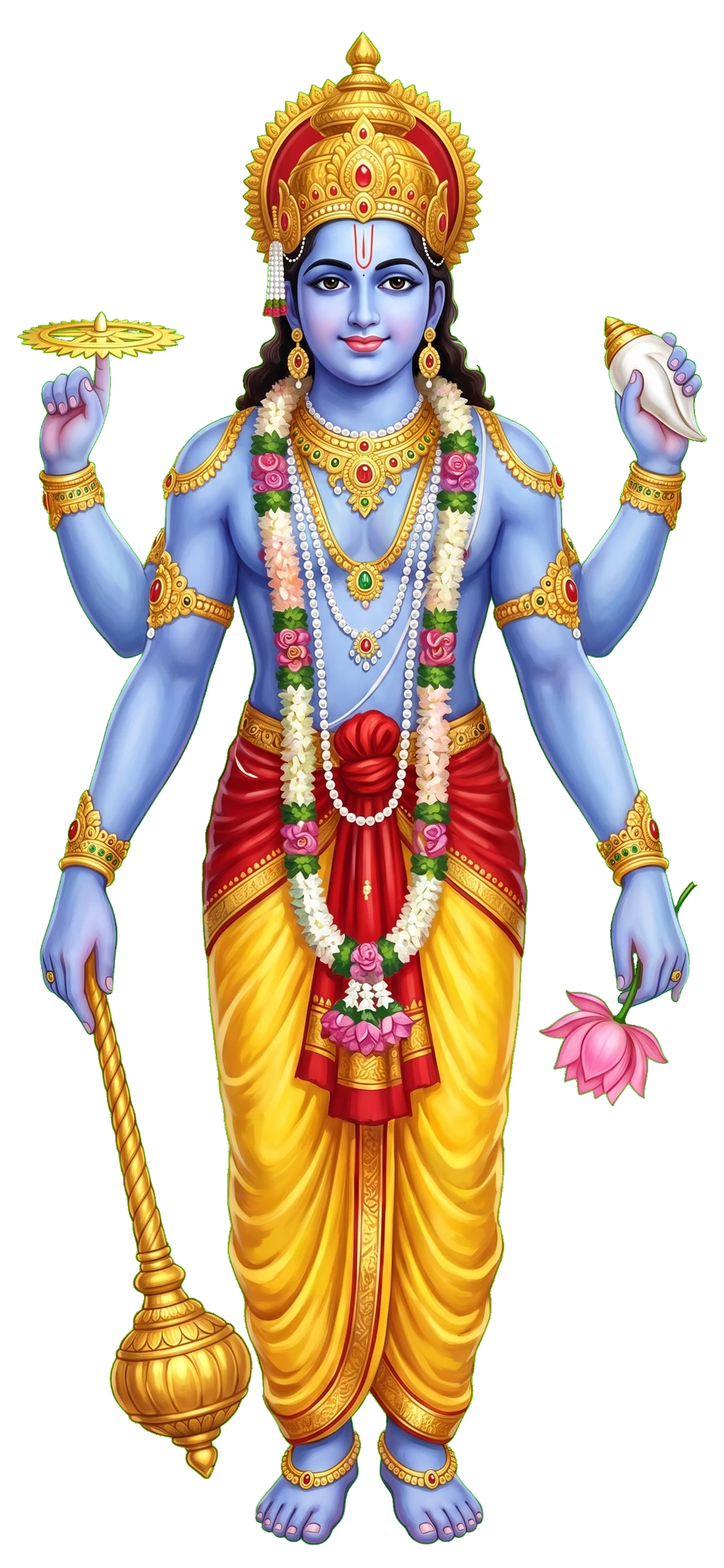
Vishnu of Alagar Koil, Meenakshi's brother in the festival, who comes down to Madurai as a Kallar to give her away, arrives at the Vaigai after the wedding and enters the river on a golden horse. In the almanac's legend it is Vishnu's maya that gives the sixty years their names.
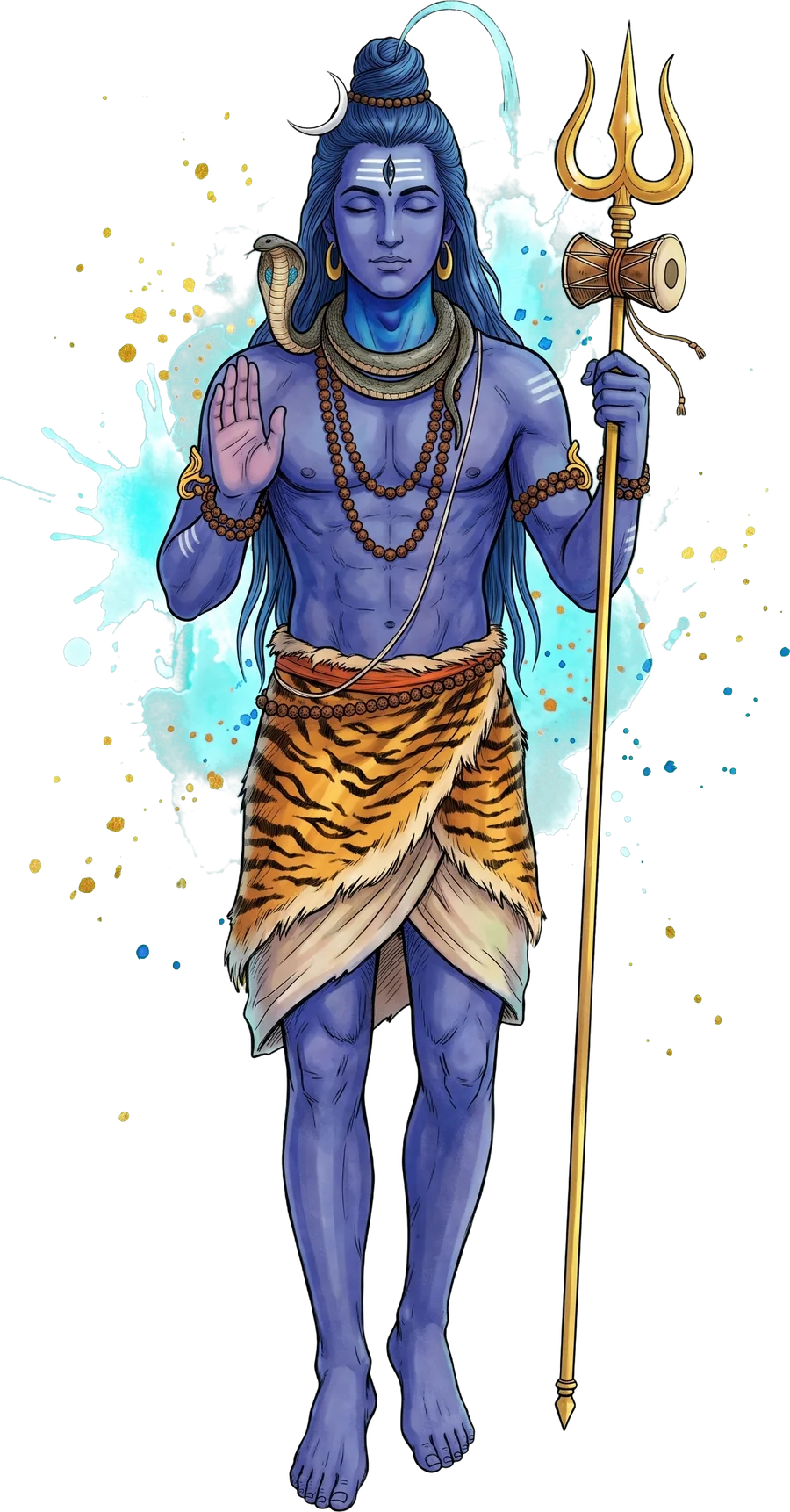
The bridegroom of Madurai, who, the temple says, would not wait for the brother and gave the bride away in Alagar's own form. The last twenty years of the cycle, from Plavanga, are counted as his.
The first of Chithirai
1
Dawn, the kani
Chithirai 1, before sunrise · Wednesday 14 April 2027
ChithiraikaniVishukanithe first sight
In the families that keep it, the Kongu country above all, an elder has laid a tray the night before: mango, banana and jackfruit, betel and arecanut, a coconut split open, gold or silver, coins, flowers, a mirror, and in some houses rice, a lemon and a cucumber. The juniors are woken and led to it with their eyes shut, so that the first thing the year shows them is plenty and their own face among it. Then they touch the elders' feet and are given money. Many Tamil houses do without the tray and begin with the bath; the door has had its kolam since first light and a string of mango leaves since the night before.
Eyes shut, a girl is led to the kani tray of mango, jackfruit, gold, flowers and a mirror
After the bath come the new clothes, laid before the deity first, and the lamp lit beside a brass pot of water with mango leaves. The first thing eaten is the pachadi, raw mango and jaggery with neem flower, green chilli and salt, and in the neem pachadi tamarind: sweet, sour, bitter, hot, salt and sharp at one go, because that is what a year is. The new panchangam is set before the lamp, anointed with sandal paste, kumkum and turmeric, given a flower, and opened. In the temples the priest reads it aloud, the panchanga padanam: the year's name in the cycle of sixty, the rains month by month, the harvest, prices, the fortunes of rulers, and what the year holds for each star. Then the temple, the greeting Puthandu vazhthukkal, and a feast with payasam and poli.
In the temple the priest reads the new almanac aloud to the town on Puthandu morning
Madurai's temple raises its flag and gives the first half of the month to its queen: Meenakshi is crowned, sets out to conquer the world, meets Shiva at Kailash and marries him before fifty priests, and the next morning the pair ride the chariot through the Masi streets. Then her brother Alagar leaves his hill as a Kallar, is welcomed at the city's edge, sleeps at Thallakulam, and at dawn on the full moon rides a golden horse into the Vaigai in a silk whose colour is the year's omen, with lakhs of people on the riverbed. He learns the wedding is over, gives his gifts in the river, frees the frog sage at Vandiyur, shows his ten forms through a night and goes home in a palanquin of flowers.
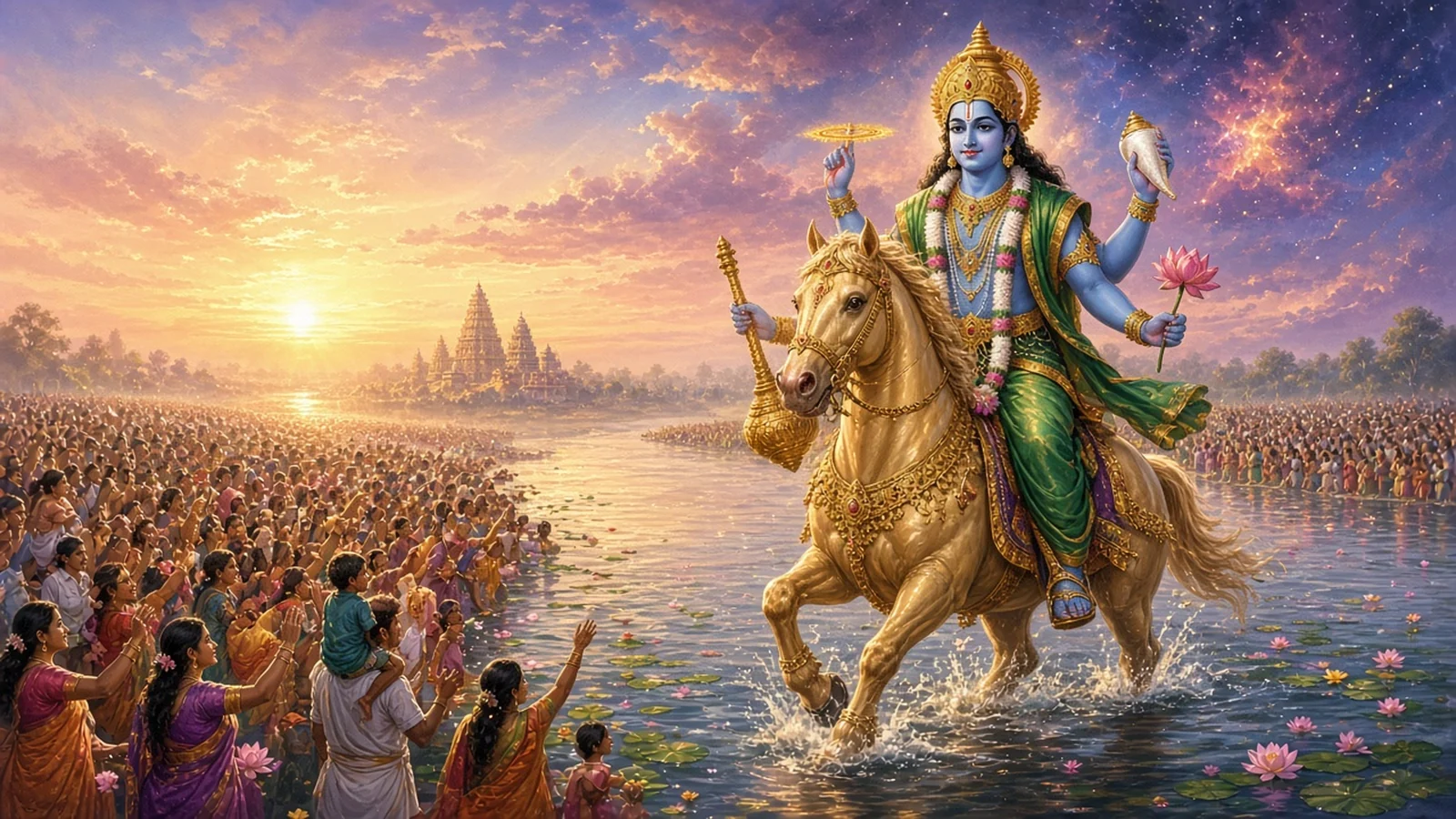
Kallazhagar on his golden horse enters the Vaigai in green silk, with Madurai on the riverbed
A state holiday and the quiet one of the two Tamil new years, after the noise of Pongal. Every house has its kolam and its mango leaves, the pachadi is made once a year, the temples hold special abhishekams and the almanac reading, the villages dance the kummi and kolattam, and around Madurai, Tirunelveli and Tiruchirappalli the oyilattam tells Murugan's stories. The Kongu country keeps the kani tray that Kerala keeps for Vishu, under the name Chithiraikani.
MaduraiThe Chithirai Thiruvizha
The new year opens the city's month. The temple's flag goes up, the queen is crowned, conquered and married, and the chariot runs; then Alagar comes down from his hill, and on the morning of the full moon between five and ten lakh people stand in the Vaigai to see the golden horse enter the water. The exhibition in the Puthu Mandapam, the stalls and the picnics on the riverbank on the full-moon night belong to the same month.
Puducherry and Karaikal
Puthandu is a public holiday of the union territory, kept as in Tamil Nadu with the kolam, the new clothes, the pachadi and the temples; at Puducherry's Thirukameswarar temple the car is pulled through the streets.
Sri LankaPuthandu and Aluth Avurudu, one holiday
The island keeps the sun's entry into Mesha as one national new year, Aluth Avurudu for the Sinhalese and Puthandu for the Tamils, with two public holidays, the day and its eve, and the astrologers' timetable for both, the bath for the old year, the empty hour between the years, the hearth lit and the milk boiled over at the set minute, the first meal and the first money. Tamil houses hang the mango-leaf thoranam and draw the kolam on the eve, anoint themselves with maruthu neer, the herbal water blessed at the kovil, let the milk boil over at the door as the sun crosses, set the kumbam in the prayer room, and go to the temple in the punya kaalam; the elders give kai vishesham, money that is not to be spent until next year. In the evening the north and east play por-thenkai, the coconut fight, break pots, climb poles, race carts and dance the kummi. Nallur in Jaffna and Thiruketheeswaram at Mannar open early for it.
Malaysia and Singapore
The Tamils of both countries keep the day in their temples and community halls, with Sikhs, Malayalis and Bengalis keeping their own new years beside them, and the leaders of every party send greetings. In Malaysia the day is a morning at the temple, the Sri Maha Mariamman of Shah Alam or the Sri Srinivasagar Kaliamman of Kuching, visits to the elders, new clothes, garlands and lamps, and fireworks at night; the priest names the year to the congregation.
Across IndiaThe same sun, other new years
The sun's entry into Aries is also Vishu in Kerala, Baisakhi in the Punjab, Pohela Boishakh in Bengal and Bohag Bihu in Assam, each with its own page in the Lore, and Pana Sankranti in Odisha; Kerala sometimes keeps its morning a day later than the Tamils, as in 2027, by a different rule for an afternoon sankranti.
Tamils in the public wayThe year's day
Puthandu is a public holiday in Tamil Nadu, Puducherry and Sri Lanka, and the greeting, the new clothes and the visits are kept by Tamils well beyond the temple, in Malaysia and Singapore alongside the new years of their Sikh and Malayali neighbours. The tray, the almanac and the temple visit are Hindu. The day is also Ambedkar's birthday, and the state marks both.
The Tamil state, 2008 to 2011The Thai 1 law and its repeal
In January 2008 the DMK government passed a law making Thai 1, Pongal day, the Tamil new year, citing a conference of scholars at Pachaiyappa's College in the early 1920s under Maraimalai Adigal, who wanted a Tamil calendar counted from Thiruvalluvar and a Tamil year free of the Sanskrit almanac; 14 April was renamed Chithirai Thirunal. Priests and scholars disputed the government's right to move a religious day, the law was challenged in court, and most houses went on keeping Chithirai 1. In August 2011 the new AIADMK government repealed it, Jayalalithaa telling the Assembly that the change had ignored the people's feelings, and the April day was restored. Those who hold that Thai 1 is the Tamil new year still do not send greetings on 14 April.
How it is kept
The house is cleaned the day before and mango leaves hung over the door. Where the kani is kept, the eldest lays the tray at night and leads the family to it before sunrise with their eyes shut; the first thing seen is fruit, gold, flowers and one's own face in the mirror, and the young touch the elders' feet and are given money. Elsewhere the morning starts with the bath. New clothes are laid before the deity and put on, the kolam goes down in rice flour, the lamp is lit beside the brass pot of water with its mango leaves.
Then the pachadi. Raw mango and jaggery, neem flower, chilli and salt, and in the neem version tamarind: every taste at once, on an empty stomach, so that nothing the year brings comes as a surprise. The new almanac is placed before the lamp, anointed with sandal paste, kumkum and turmeric, and opened, and in the temples the priest reads it to the town: the name of the year, the rains, the harvest, the prices, the rulers, and each star's fortune, while the listeners wait for their own. The greeting is Puthandu vazhthukkal, and the feast has payasam and poli.
The pachadi of raw mango, jaggery and neem flower, eaten first beside the lamp and the brass pot
Sri Lanka keeps the morning as one new year for the whole island, Aluth Avurudu and Puthandu together, by the astrologers' timetable: the old year's bath, the empty hour between the years, the hearth lit and the milk boiled over at the set minute, the first meal, the first money, and games in the evening. Malaysia's and Singapore's Tamils keep it in their temples; in Kuching in 2025 a young priest told his congregation the year's name and said that naming it was the heart of the morning.
Sri Lanka's new year: the milk boils over at the door at the minute the sun crosses
In the old texts
No Purana names Puthandu. The day belongs to the Sangam and to the almanac. Nakkirar's Nedunalvadai, the Purananuru and the Silappatikaram count the year from the sun in Mesha, the Tolkappiyam begins its six seasons in Chithirai, and inscriptions at Pagan in Burma and Sukhothai in Siam record south Indian courtiers who carried the calendar east. The Tamil almanac itself comes in two schools, the Vakya, which keeps the old verse rules for sacred days, and the Thirukanitha, which computes; the sixty-year cycle both print is the astronomers' Jovian cycle, oldest in the Surya Siddhanta, five turns of Jupiter through the twelve signs.
The legend behind the sixty names is not in the Surya Siddhanta or, so far as we could read, in any Purana. The Devi Bhagavata, in its sixth book, has Narada made a woman by Vishnu's maya at a tank near Kanauj, married to King Taladhvaja, and bereaved of twenty sons in a war before he is himself again; it is the Telugu and Tamil almanac tradition that makes the sons sixty and gives their names to the years, and Vettam Mani's Puranic Encyclopaedia keeps a version in which Krishna explains that the husband was Time himself. Madurai's month rests on the Tiruvilaiyadal Puranam for the queen and on Alagar Koil's own purana for the brother and the frog sage, and the historians add Tirumala Nayaka, who in the seventeenth century joined a Shaiva wedding and a Vaishnava journey into one festival.
Where this page comes from. Written by Devalok from the Tamil new year as Wikipedia, the Tamil almanac sites, Hindu Blog and eSamskriti describe it, the Chithirai festival of Madurai as the temples, the Tamil press, Tamil Nadu Tourism and Dr Sudha Seshayyan record it, the Sri Lankan new year as Time Out and the island's calendar give it, the Devi Bhagavata Purana (6.26 to 6.29), the Sangam references the encyclopaedia collects, and the Drik Panchang for 2027 and 2028, as recorded in the Devalok Lore. Our own words throughout.