As the Devi Bhagavata tells it
Devi Bhagavata Purana 6.26 to 6.29 · Shveta Dvipa and the tank near Kanauj · 3 min read
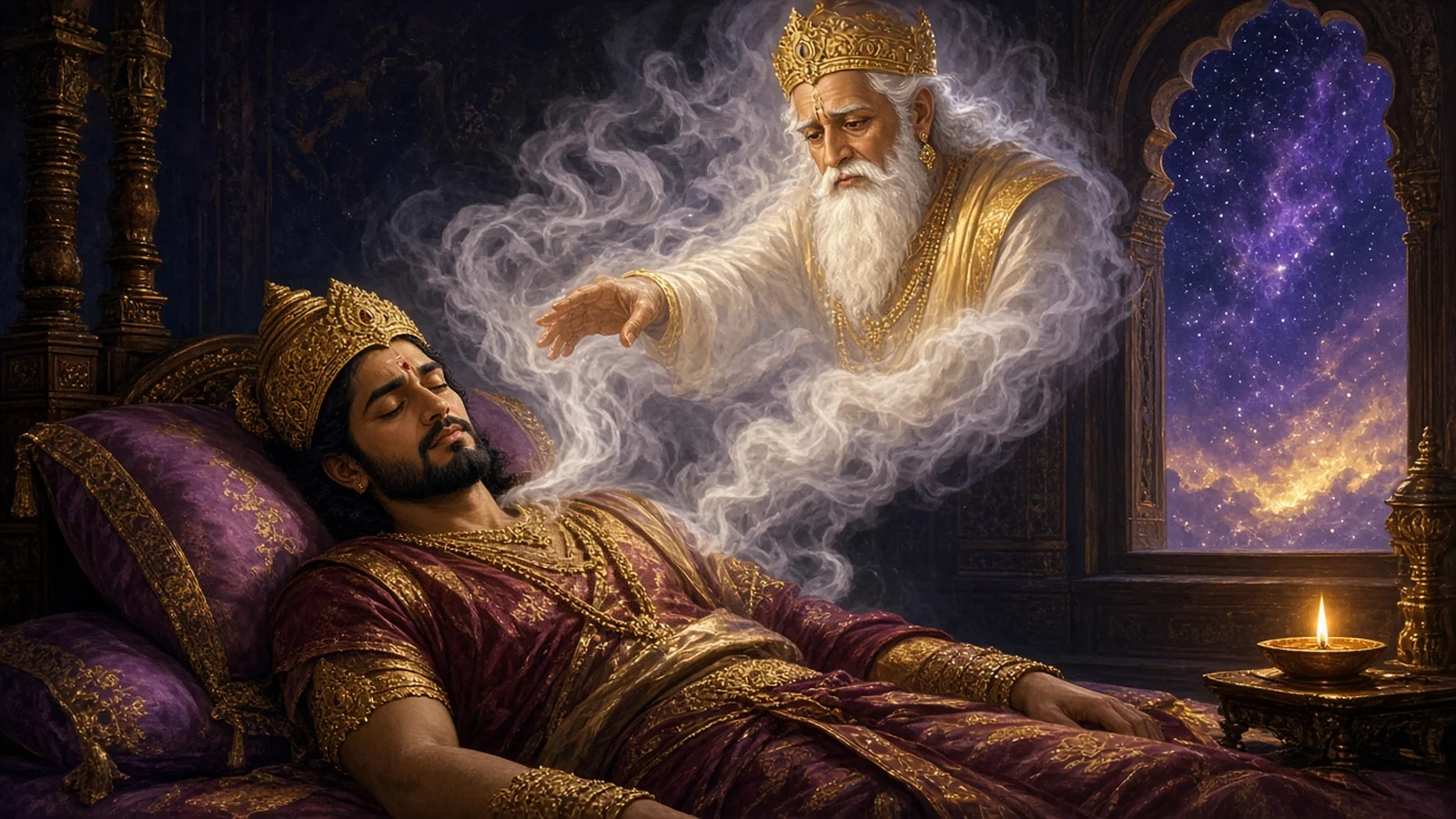
Vyasa, who had every reason to think himself wise, had just been made a fool of by his own longing for a son, and he wanted to know why.
"You are Narada," he said. "You know everything. Has it ever happened to you?"
Narada laughed. "Nobody in a body escapes it. Let me tell you the worst of mine."
He had gone one day to Shveta Dvipa, the white island where Vishnu lives, and as he came into the hall Lakshmi got up and left the room.
"Why did she go?" he asked.
"Because you are a man and she is a woman, and that is how the world is made," said Vishnu. "Nobody is free of maya, Narada. Not Brahma, not Shiva. Time himself is one of her faces."
"Then show her to me."
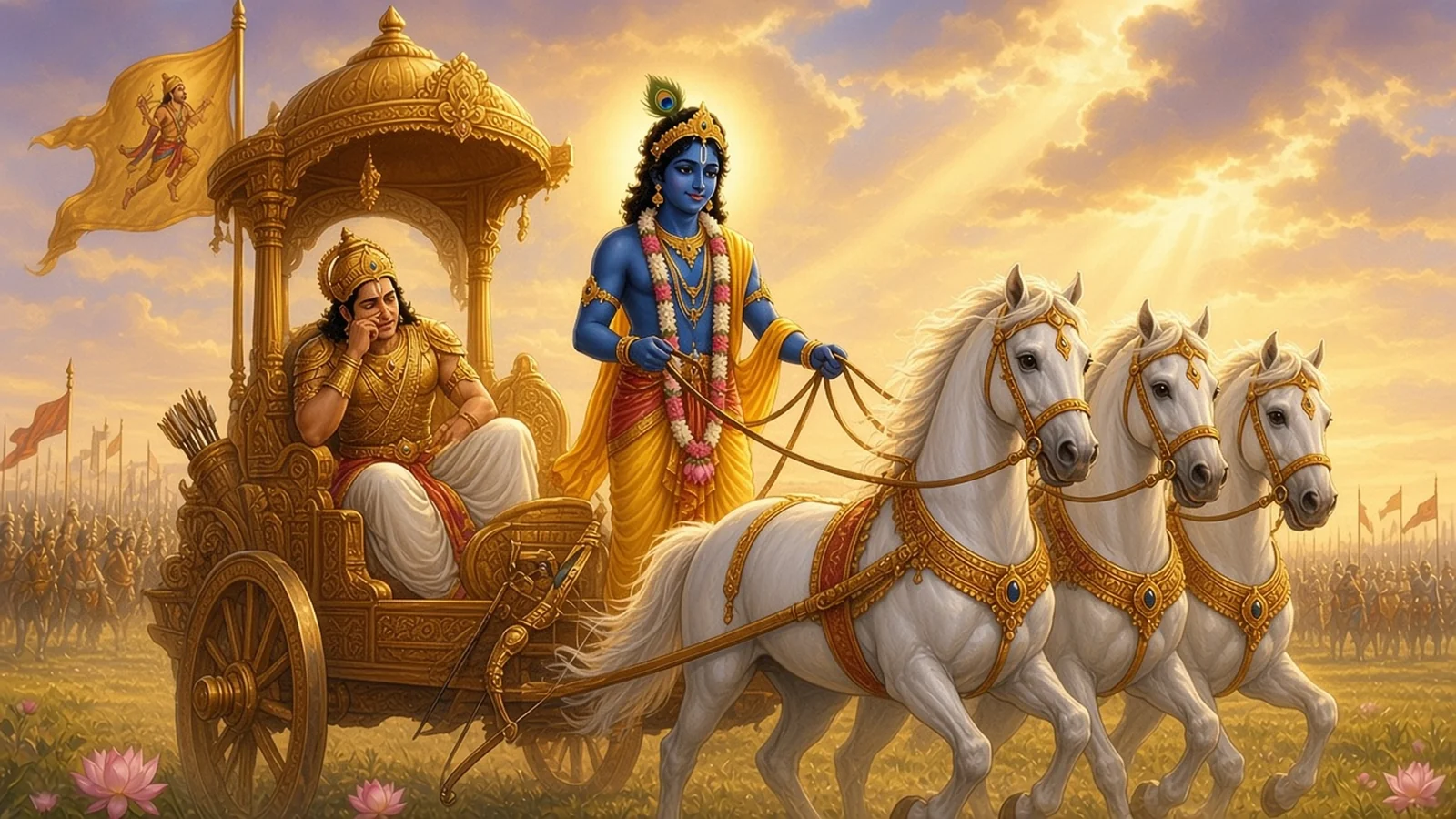
"Get on Garuda."
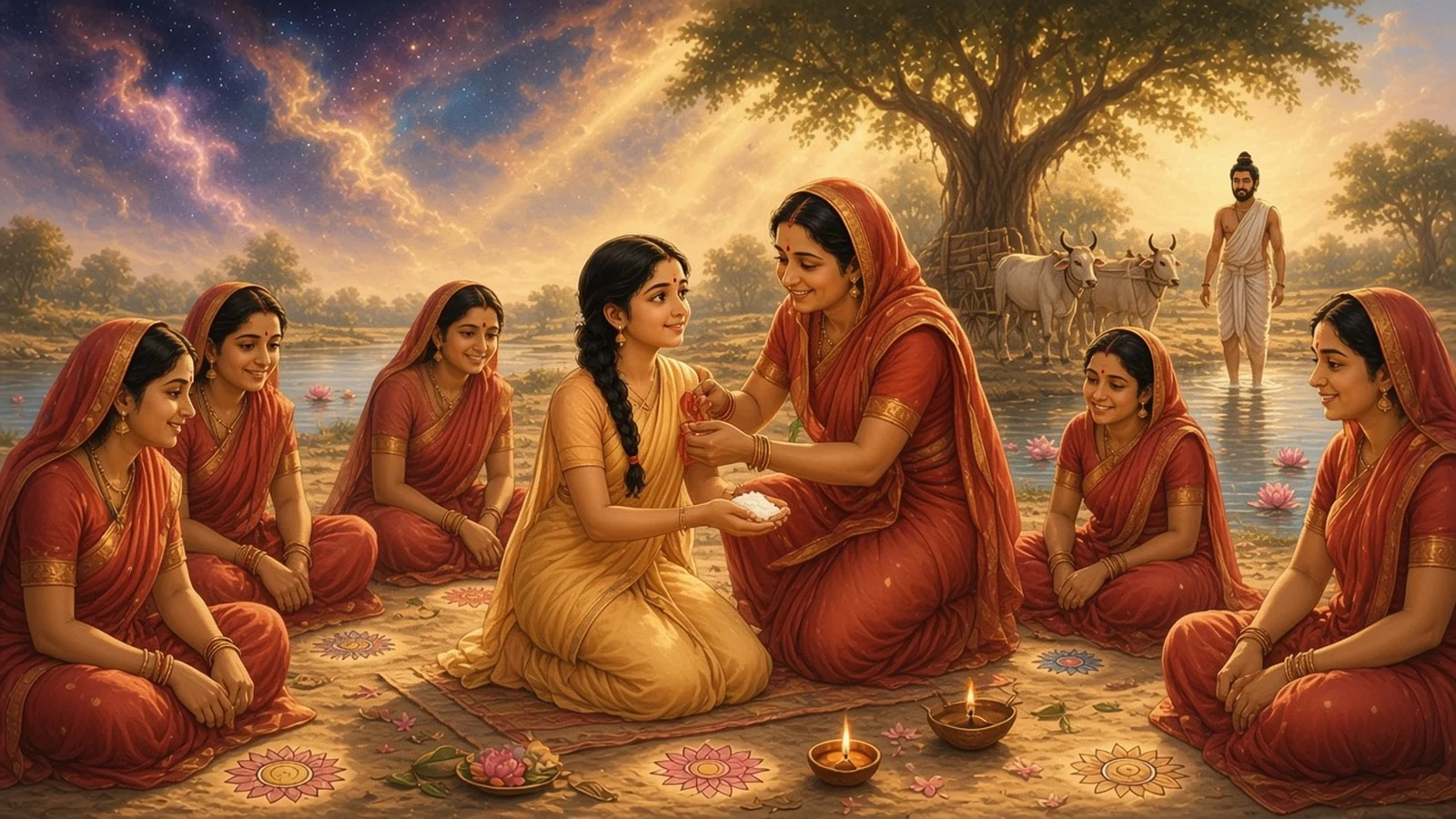
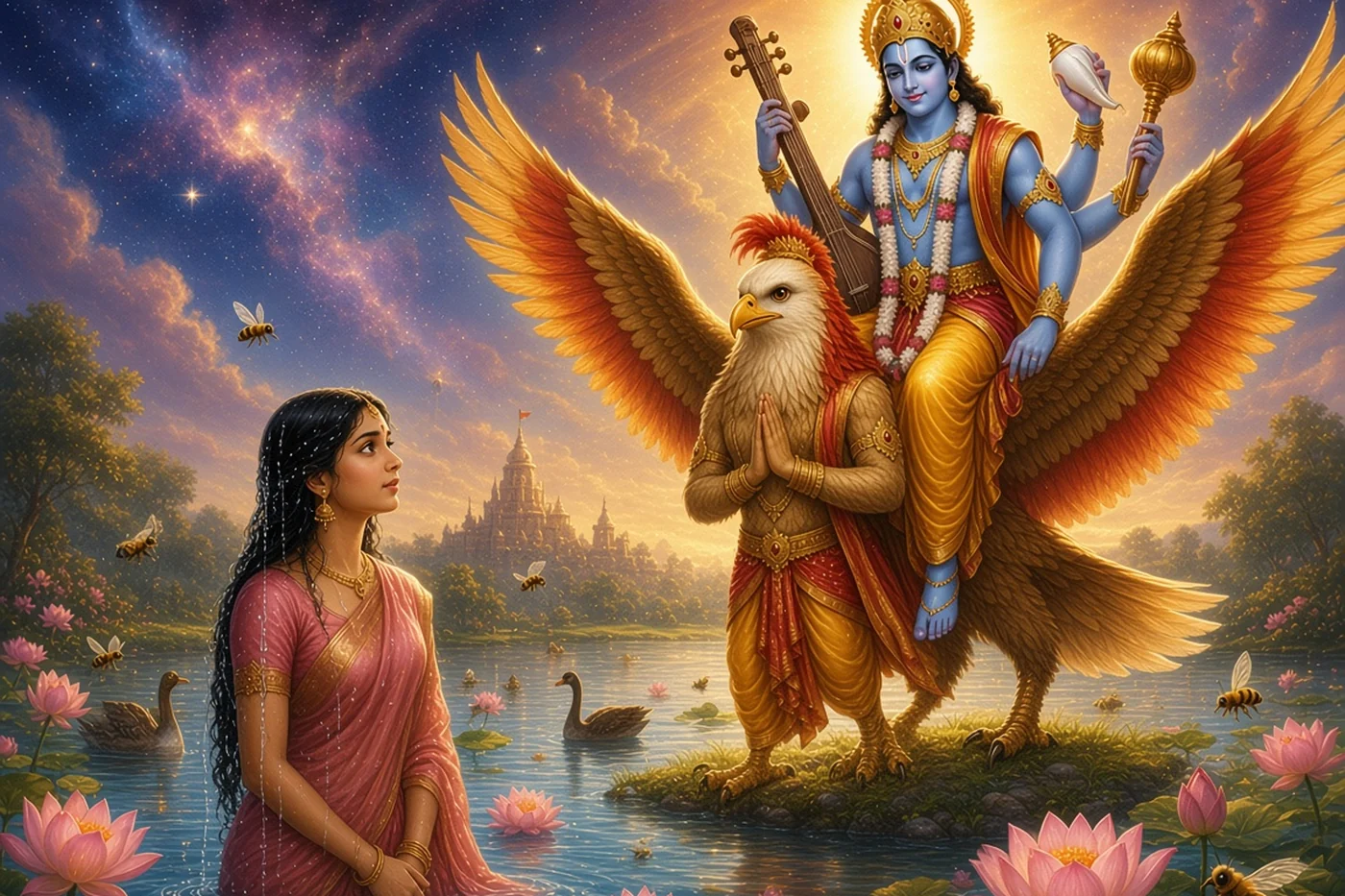
They flew over forests and rivers and towns, and came down near the city of Kanauj beside a tank full of lotuses, with geese on it and bees over it. The water was clear to the bottom.
"Let us bathe before we go into the city," said Vishnu.
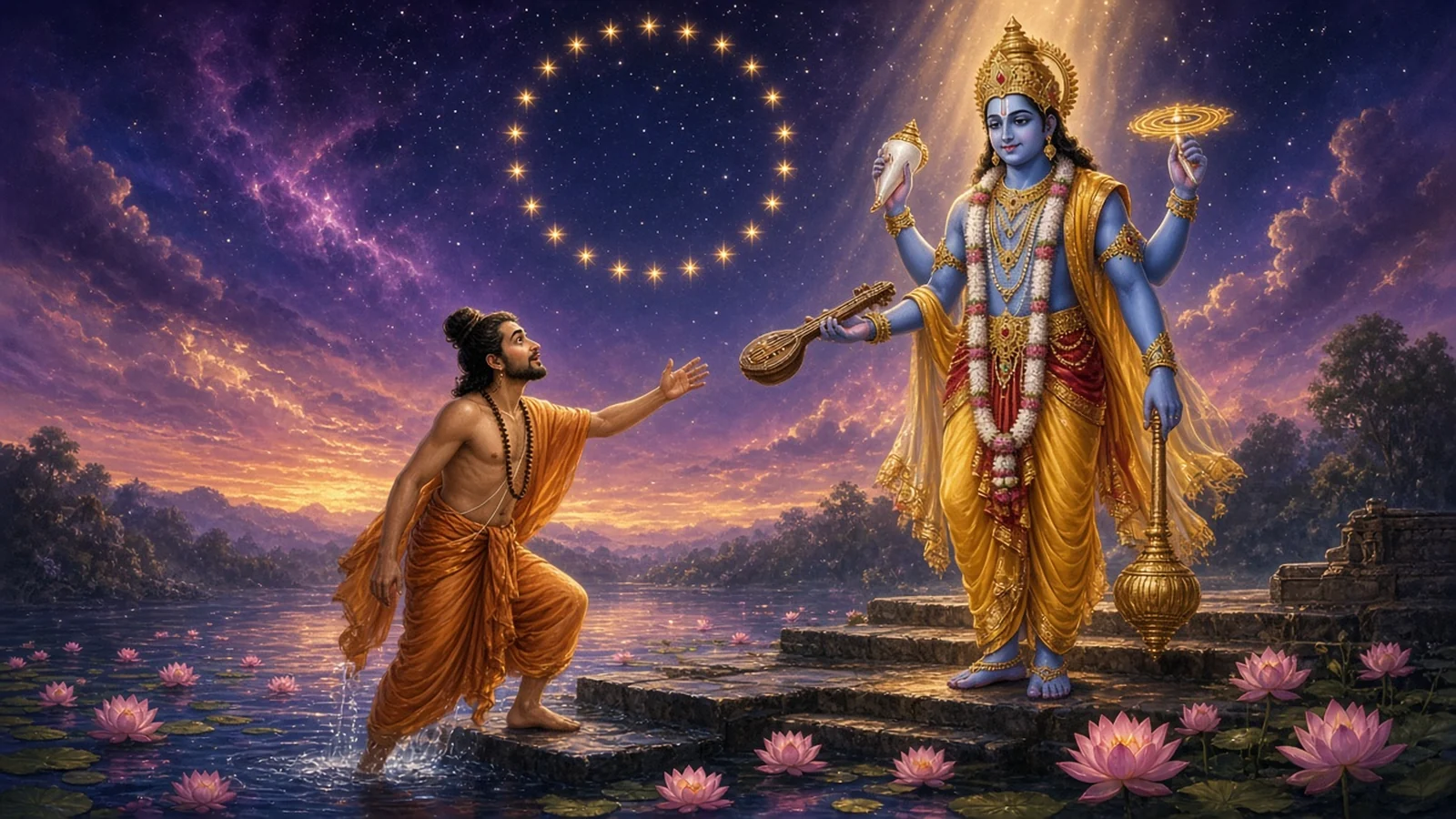
Narada laid his lute and his deerskin on the bank, tied up his hair, took a blade of kusha grass, sipped the water as the rule requires, and went under. When he came up he was a woman. She was young and beautiful, and she had no idea who she was. On the bank a man in yellow was picking up a lute and a deerskin that were not his, and then he was on the back of a great bird, and then he was gone. She did not even wonder about him. She had forgotten there was anything to remember.
A chariot came along the road with elephants and horses behind it, and the king in it stopped.
"Who are you, lady? A woman, a Naga, a Gandharva? Is there a husband? If not, choose me. I am Taladhvaja, and everything I have is yours."
She went with him. He called her Saubhagya Sundari, the beautiful one of good fortune, and he could not look at anything else. He let his ministers run the kingdom and spent his days with her in the gardens and the palaces, and she forgot the Shastras she had once known by heart as easily as she had forgotten the lute. Twelve years went by like a single afternoon. She bore him twelve sons, and then eight more, and the sons had sons, and the whole world was the sound of that house.
Then a king from far away came against Kanauj with chariots, elephants, horsemen and foot. Her sons and grandsons went out to meet him, and by evening every son she had was dead on the field, and the enemy had gone home.
She ran out among the bodies and would not be lifted.
"Where have you gone, my children, and left me here?"
An old Brahmin came walking across the field, thin, with the Vedas in his mouth, and stood over her.
"Woman, what are you crying for? All of this is a dream you are having. Think. Who are you?"
She could not answer.
"Give them water and sesame, as the dead are given. Then come with me and bathe. Not at home. At a tirtha."
He led her, with the king and his friends behind, to a tank called Pumtirtha, the men's water. On its bank he said, "You have had more sons than this in other lives, and more husbands, and wept for all of them. The world is a mirage. Go in."
She went in a woman and came up Narada, and on the bank stood Vishnu in his own form, holding out the lute.
"So that is maya," said Narada, and found he was shaking.
As the almanac reads it on Puthandu
Tamil Nadu · the panchanga padanam of Chithirai 1 · 2 min read
On the first morning of Chithirai the new almanac comes out of its paper. In a Madurai house it is laid in front of the lamp beside the tray of mangoes and gold, dabbed with sandal paste, kumkum and turmeric, given a flower, and only then opened. In the temples a priest does the same thing aloud for the whole town, and that reading is the panchanga padanam.
"Which year is this, thatha?" a child asks.
"Parabhava is over," says the grandfather. "This is Plavanga. Say it."
"Plavanga."
"The forty-first of the sixty. Prabhava is the first and Akshaya the sixtieth, and then it starts again, and if you live to sixty you will be born into your own year a second time. The first twenty years belong to Brahma, the next twenty to Vishnu, and from this one to Akshaya they are Shiva's."
"Why do the years have names?"
The grandfather turns a page. "Because they were boys once. Narada asked Vishnu to show him maya, and Vishnu made him a woman, and she married a king and bore sixty sons, and all sixty were killed in one war. When Narada was himself again Vishnu said: your sons will not be forgotten. Each one shall have a year, and the year shall have his name and his nature. So Krodhi is an angry year, and Vijaya a winning one, and Akshaya the one that is never lost."
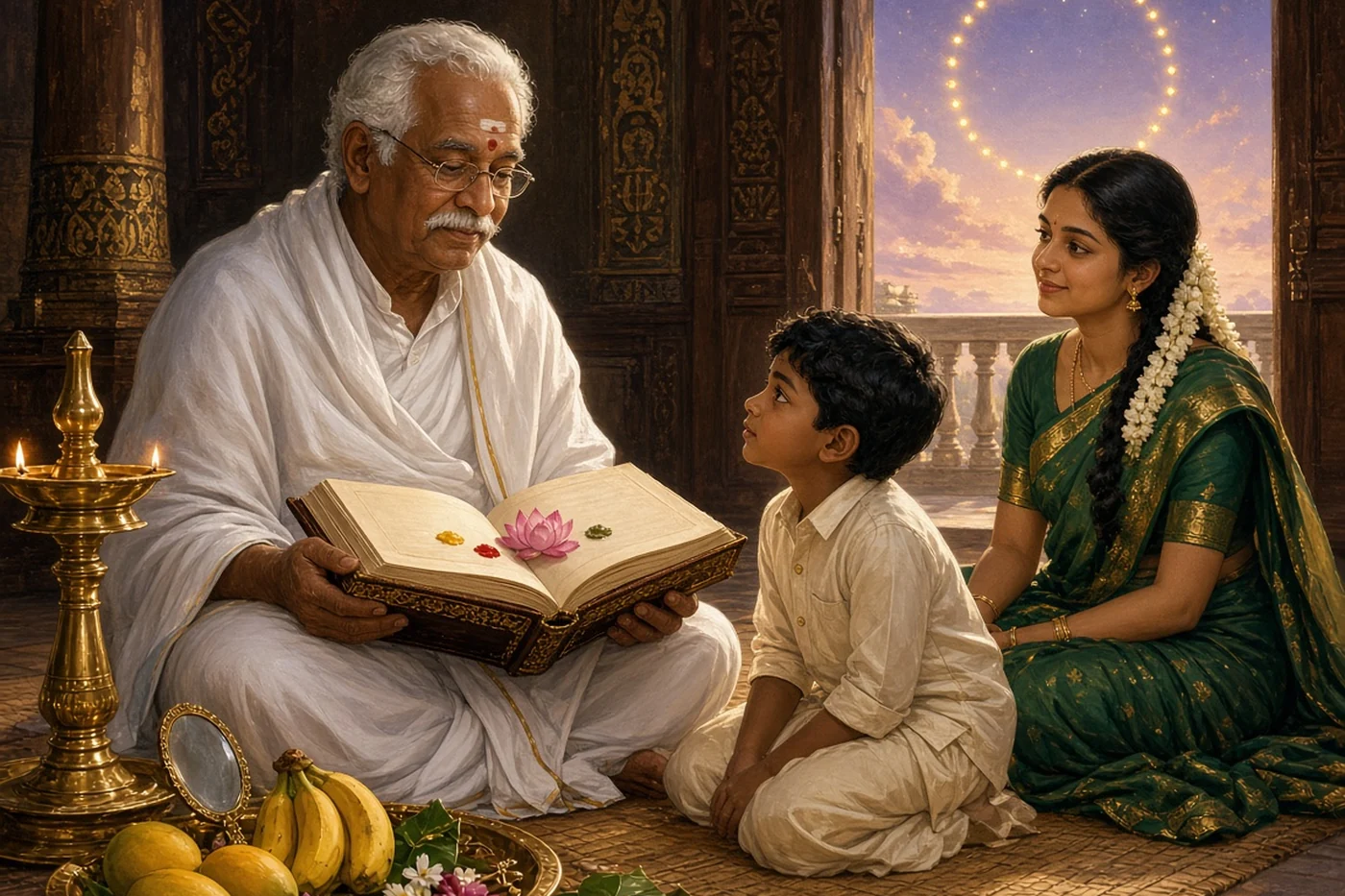
The child's mother says that in her village they told it the other way round. Narada had drunk from a pool after Krishna told him not to, and became a woman, and the sage who married her and the sixty children who died with him were nobody at all: the husband was Kala Purusha, Time in a man's shape, and the children were the years, and Krishna explained it to him afterwards. The grandfather says both are true enough for a morning like this.
Then he reads the year. The rains, by the almanac's reckoning: how many measures will fall and in which months. The harvest. The price of grain and gold. Which rulers rise and which fall. What the year holds for each of the twenty-seven stars, and the house goes quiet while he finds each person's. In Kuching, across the sea, a young priest said the same name to his congregation in 2025, Visuvaasuva, and told a reporter that naming the year was the heart of the whole morning.
Nobody in the room has read the Devi Bhagavata, and nobody needs to. The almanac has done it for them.