Festival · Every Monday of the rainy month, a fast, a pot of water and a bilva leaf for Shiva
Shravan Somvar (the Mondays of Shravan)
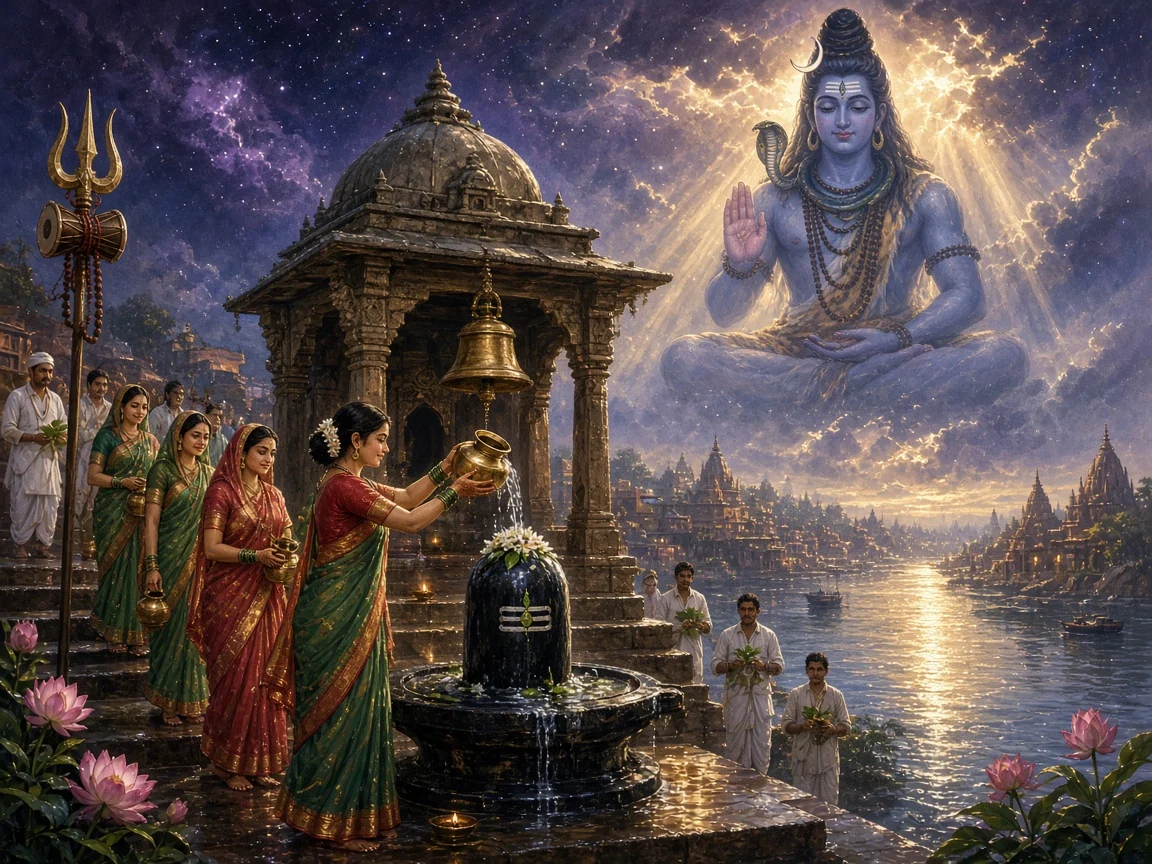
Shravan Somvar is the Monday fast of the month of Shravana, the monsoon month that belongs to Shiva, kept by households across India and Nepal and in every Shiva temple that can hold the crowd. On each Monday of the month the faithful fast, pour water and milk on the linga, lay bilva leaves on it and say Om Namah Shivaya; unmarried girls keep it for a husband like Shiva, wives for their husbands' lives, and many begin the sixteen-Monday vow on the first of them. Because the north counts Shravana from the full moon and Maharashtra, Gujarat and the south from the new moon, the two halves of the country keep different Mondays.
When is Shravan Somvar (the Mondays of Shravan) in 2027? North India: The first Monday of Shravan, is Monday 19 July 2027; it runs 19 July to 17 August 2027. In 2027: Monday 19 July 2027. Every Monday of the month of Shravana, in July and August; the north and Nepal count the month from the day after Guru Purnima, Maharashtra, Gujarat and the south from the new moon a fortnight later.
Also calledShravan SomvarSawan SomvarSawan SomwarShravan MondaysShravani SomvarShravana SomavaraShrawan SombarSolah Somvar
In short
What is Shravan Somvar?
The Monday fast of Shravana, the monsoon month of Shiva. On each Monday of the month devotees fast, pour water and milk on the Shiva linga, offer bilva leaves and say Om Namah Shivaya, and the unmarried keep it for a husband like Shiva.
When are the Shravan Mondays in 2027?
In North India and Nepal on 19 and 26 July and 2, 9 and 16 August 2027. In Maharashtra, Gujarat and the south, where Shravana begins on 3 August, on 9, 16, 23 and 30 August 2027.
Why are the Shravan Mondays different in the north and in Maharashtra?
The north counts its months from full moon to full moon and Maharashtra, Gujarat and the south from new moon to new moon, so the north's Shravana starts about a fortnight earlier. Only the Mondays in the overlap are kept by both.
What is the Solah Somvar vrat?
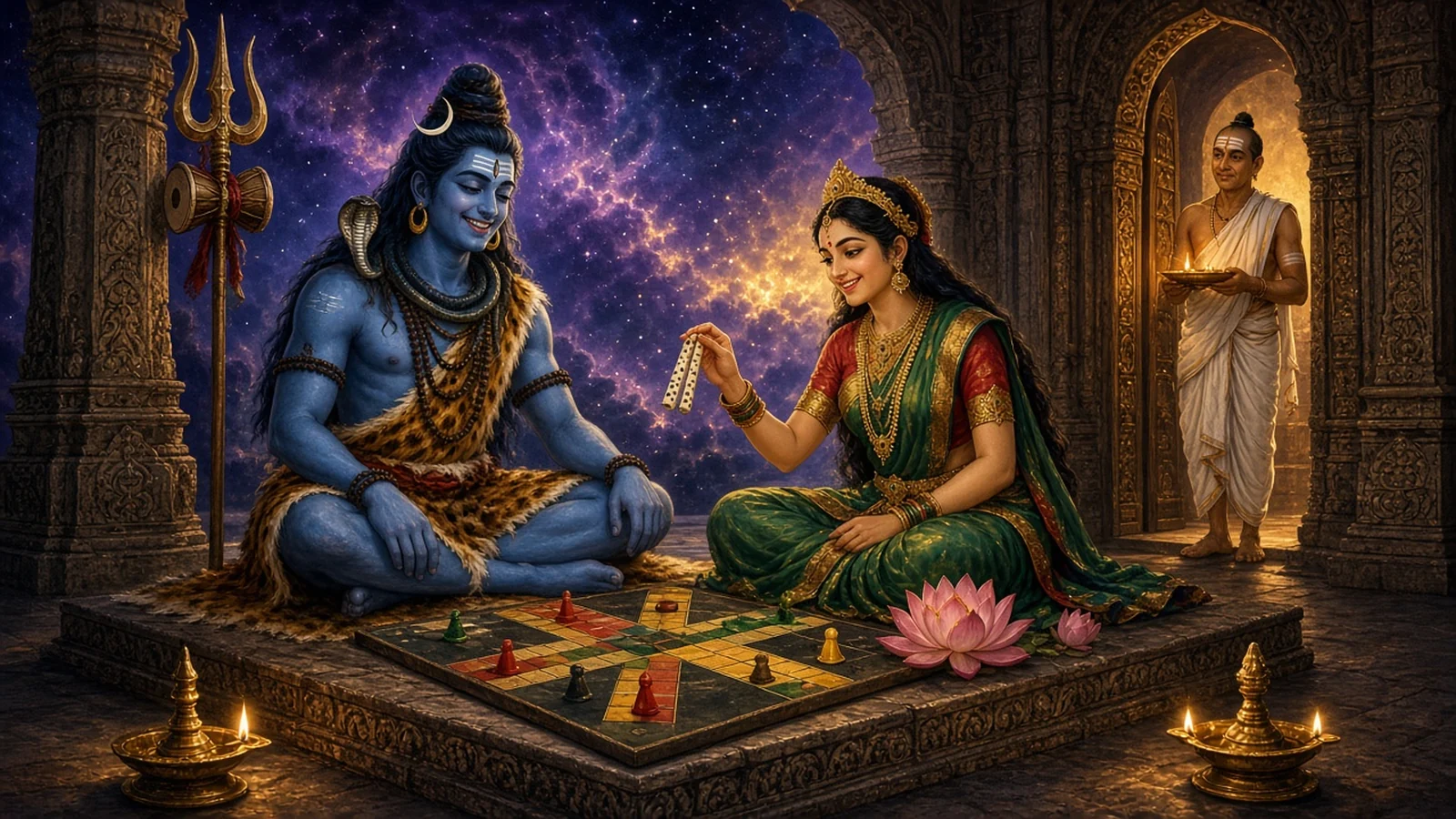
A vow of sixteen Mondays, begun most often on the first Monday of Shravana, with a fast, Shiva's worship and an evening offering of churma of wheat, ghee and jaggery divided into three. It closes on the seventeenth Monday, and its katha tells of a priest Parvati cursed and the apsaras who taught him the cure.
What is the Mahakal sawari?
The procession of Ujjain's Mahakaleshwar on the Mondays of Shravana and Bhadrapada, when the god goes out at four in the afternoon in a silver palanquin as Chandramouleshwar to Ram Ghat on the Shipra, is bathed in its water and carried home; the last is the Shahi Sawari.
Next, in 2027Monday 19 July 2027
19 July to 17 August 2027
Prime godShiva, lord of the Monday
with 2 more
WhereAll India and Nepal; above all Kashi and the Hindi belt, Bengal's Tarakeswar, Deoghar, Ujjain, Maharashtra's jyotirlingas and Kathmandu's Pashupatinath
How longFour or five Mondays in a month; the Solah Somvar vow runs sixteen Mondays from the first, and closes on the seventeenth
Every Monday of the month of Shravana, in July and August; the north and Nepal count the month from the day after Guru Purnima, Maharashtra, Gujarat and the south from the new moon a fortnight later
Why it is kept
Shravan Somvar is a fast with no single shrine. Every Monday of the rainy month, from the lanes of Kashi to the courtyards of Kathmandu, people go without food until evening and walk to the nearest linga with a pot of water, a little milk and a few bilva leaves. The great temples fill to the doors: Vishwanath, Tarakeswar, Baidyanath, Mahakal, Trimbakeshwar, Pashupatinath. But most Mondays are kept in a kitchen and a neighbourhood temple, and closed at dusk with a story read aloud.
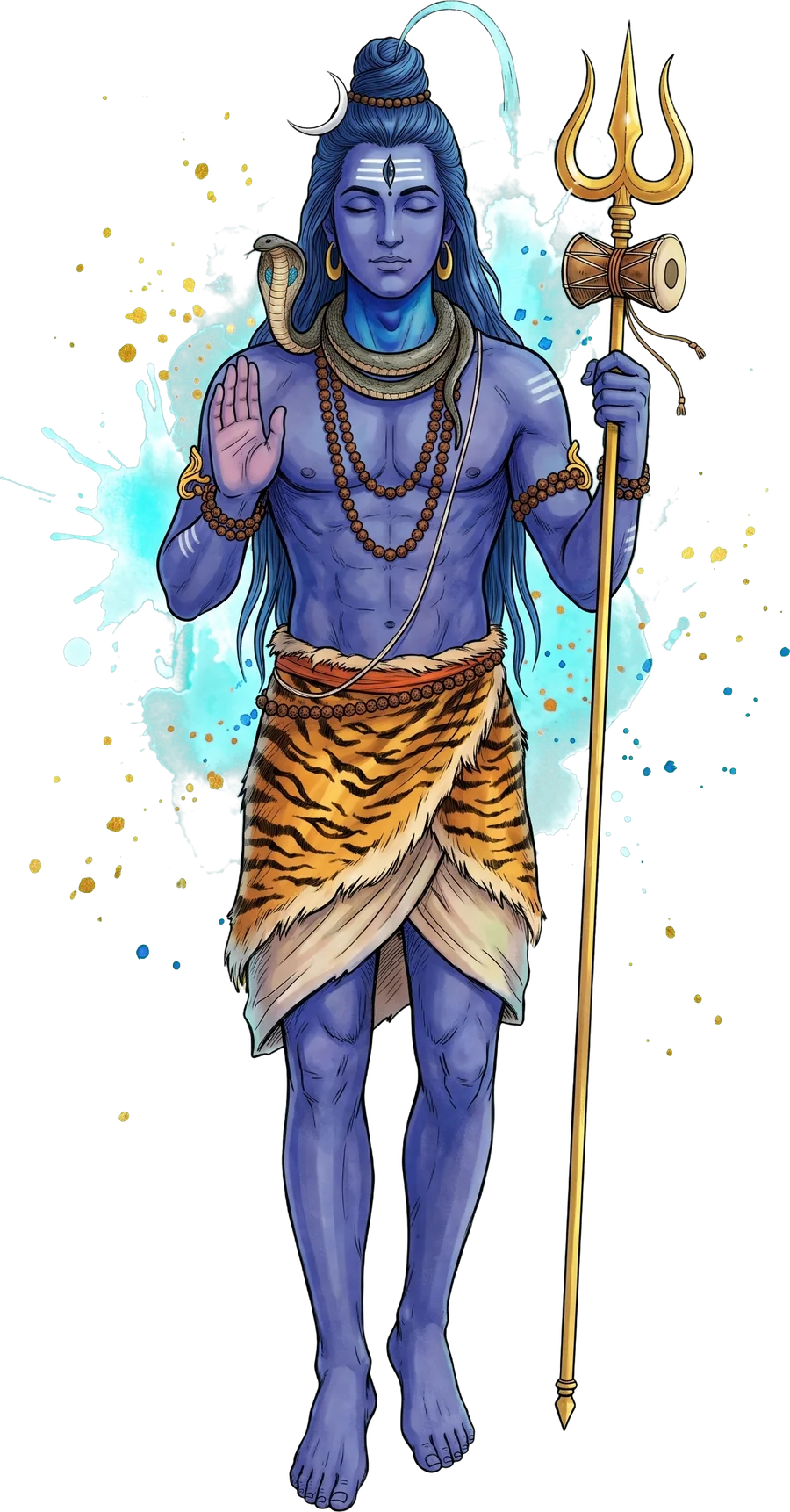
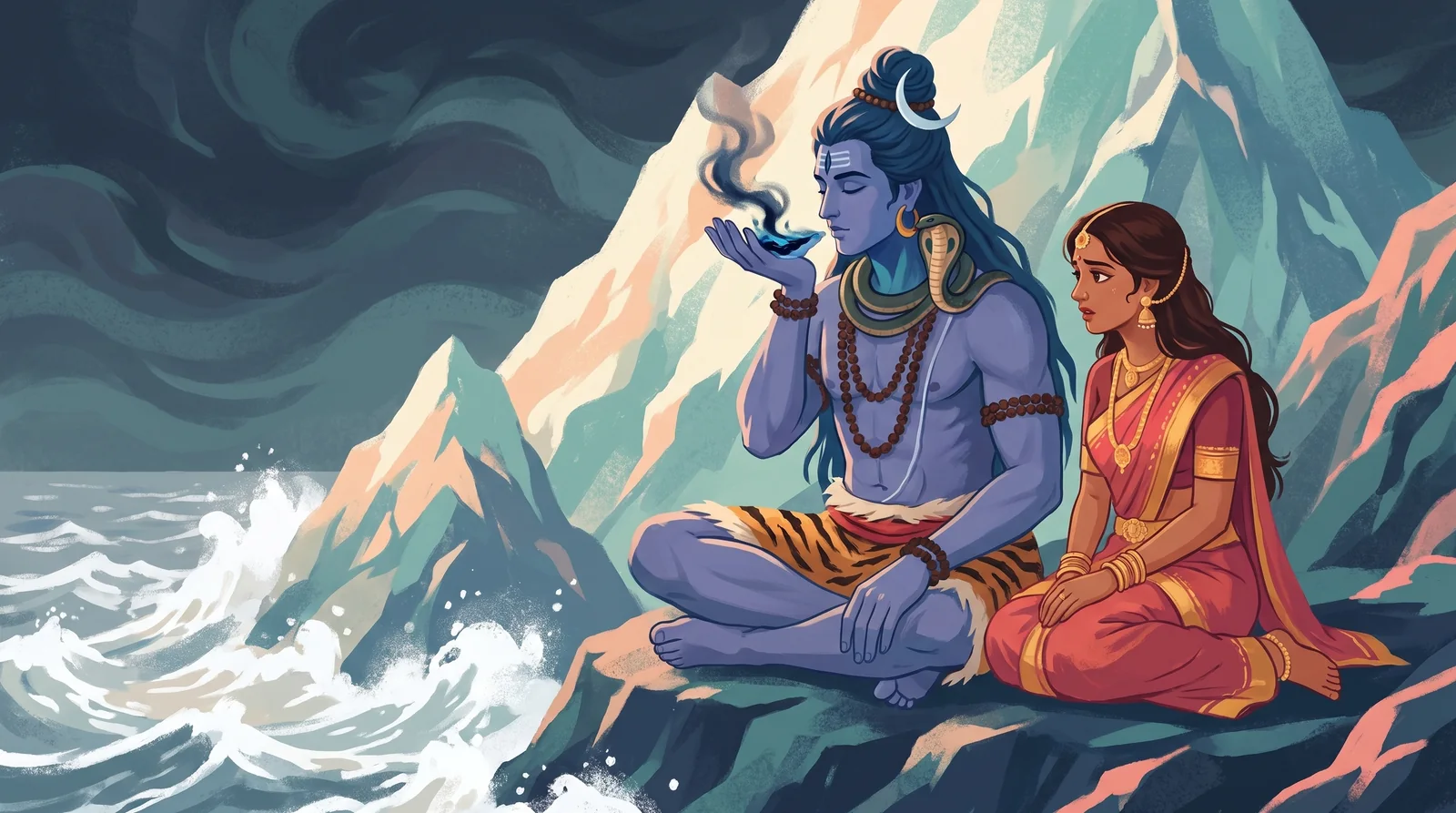
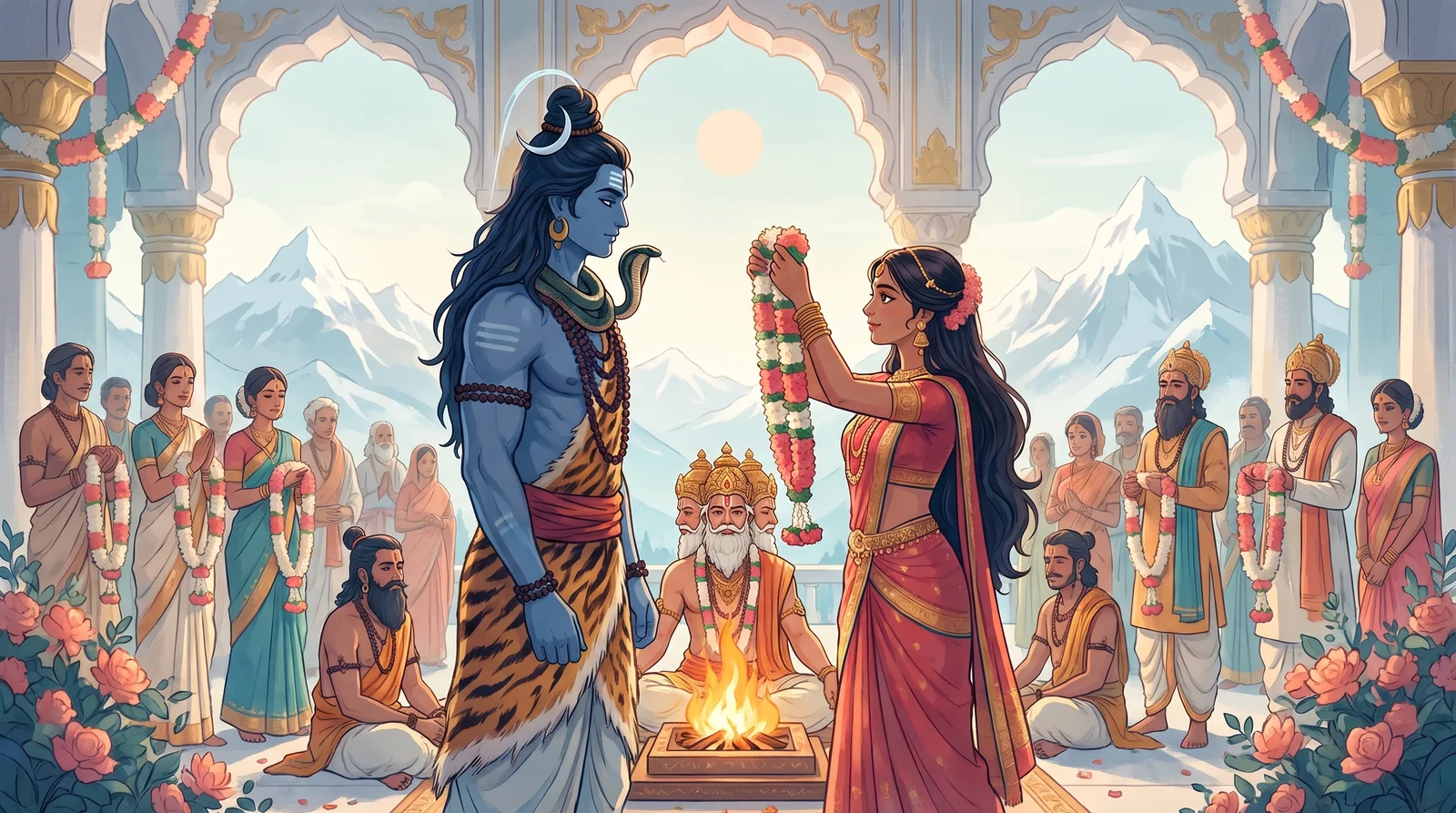
The month is Shiva's, and the tellers give the reason as the poison. When the gods and the asuras churned the ocean, the first thing to rise was the poison that could burn the worlds; Shiva drank it and held it in his throat, which turned blue, and the churning, they say, was in Shravana. The water and milk poured on the linga all month are poured to cool it. The Blue Throat tells the drinking. The tellers add that Parvati fasted through this month to win him, and that is why the girls fast too; How Parvati Won Shiva tells her penance.
Shiva drinks the poison of the churning and holds it in his throat, which turns blue
Monday is his day all year. Its name is Somavara, the moon's day, and the moon sits in his hair; the Skanda Purana's praise of Shravana has him tell Sanatkumara that Monday is his own form, and its vow worth more than the Sunday's. Whoever cannot keep the Mondays of the whole year, it says, may keep the Mondays of Shravana and lose nothing.
On Kailash under the crescent moon, Shiva tells the boy sage Sanatkumara that Monday is his own
The god of every Monday and of the whole month. The tellers say Shravana is his because he drank the poison of the churning in it, and the water poured on his linga each Monday cools it; the Skanda Purana's praise of Shravana has him call Monday his own day and teach its vow to Sanatkumara. At Ujjain he leaves his temple on the Shravan Mondays as Chandramouleshwar, the moon-crowned, and rides to the river.
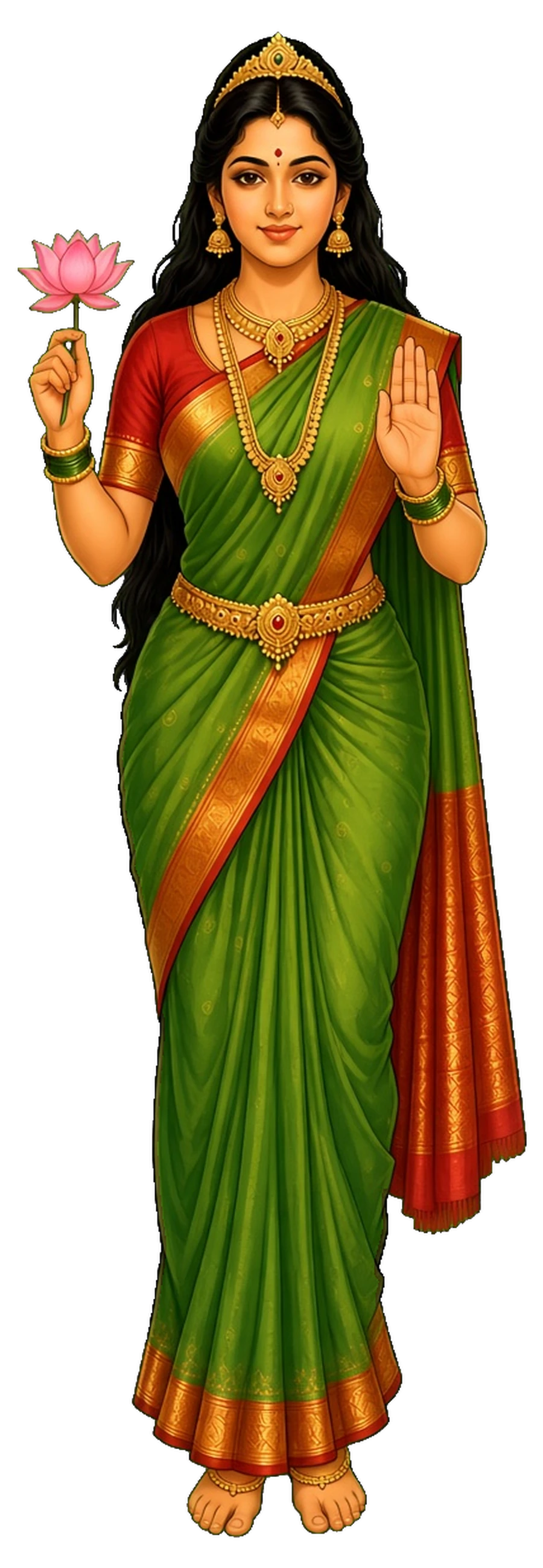
The goddess who fasted in Shravana to win him, the tellers say, so the girls fast as she did. In the Solah Somvar katha she is the one who curses the careless priest and then keeps his vow herself to bring Kartikeya home, and in the Shravan Somvar katha it is her pleading that gives the merchant a son and gives the son back his life. The Tuesdays of the month are hers as Mangala Gauri.
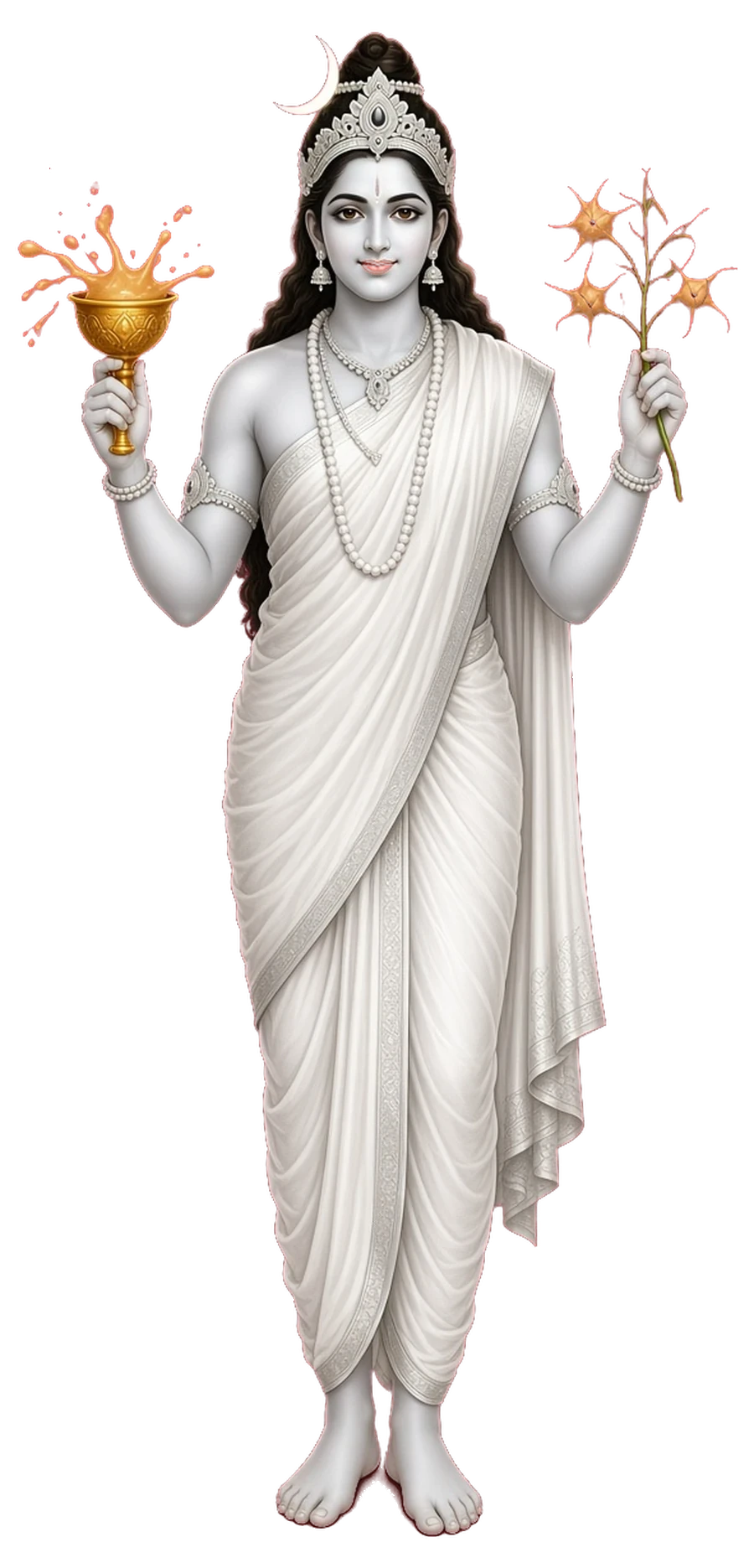
The Monday's own name. Somavara is Soma's day, the moon's, and the Shravana Mahatmya plays on it; Shiva wears the crescent, and at Somnath, the first jyotirlinga, the moon is said to have built his temple after Shiva eased his curse.
Five Mondays
1
The first Monday
Shravana, the first Monday of the dark fortnight (Purnimanta) · Monday 19 July 2027
the sankalpaSolah Somvar beginsKashi's first shringarthe first sawari
In 2027 the north's Shravana begins on a Monday, so the month and the fast start together. Those who will keep the sixteen Mondays take the vow this morning after a bath; the rest fast till evening, or take one meal, or fruit and milk only, and go to the linga with water, milk and bilva leaves. At Kashi Vishwanath the queue forms from midnight; the temple dresses the god differently each Monday of the month, and in 2025 began with the moving image. At Ujjain Mahakal rides out of his temple at four in the afternoon to Ram Ghat on the Shipra for the first of his sawaris. The next day is the first Mangala Gauri Tuesday.
Before dawn at Kashi, the first Monday queue winds up the lane with pots of Ganga water
Shravana, the second Monday of the dark fortnight (Purnimanta) · Monday 26 July 2027
Baidyanath's Mondaythe kanwar road
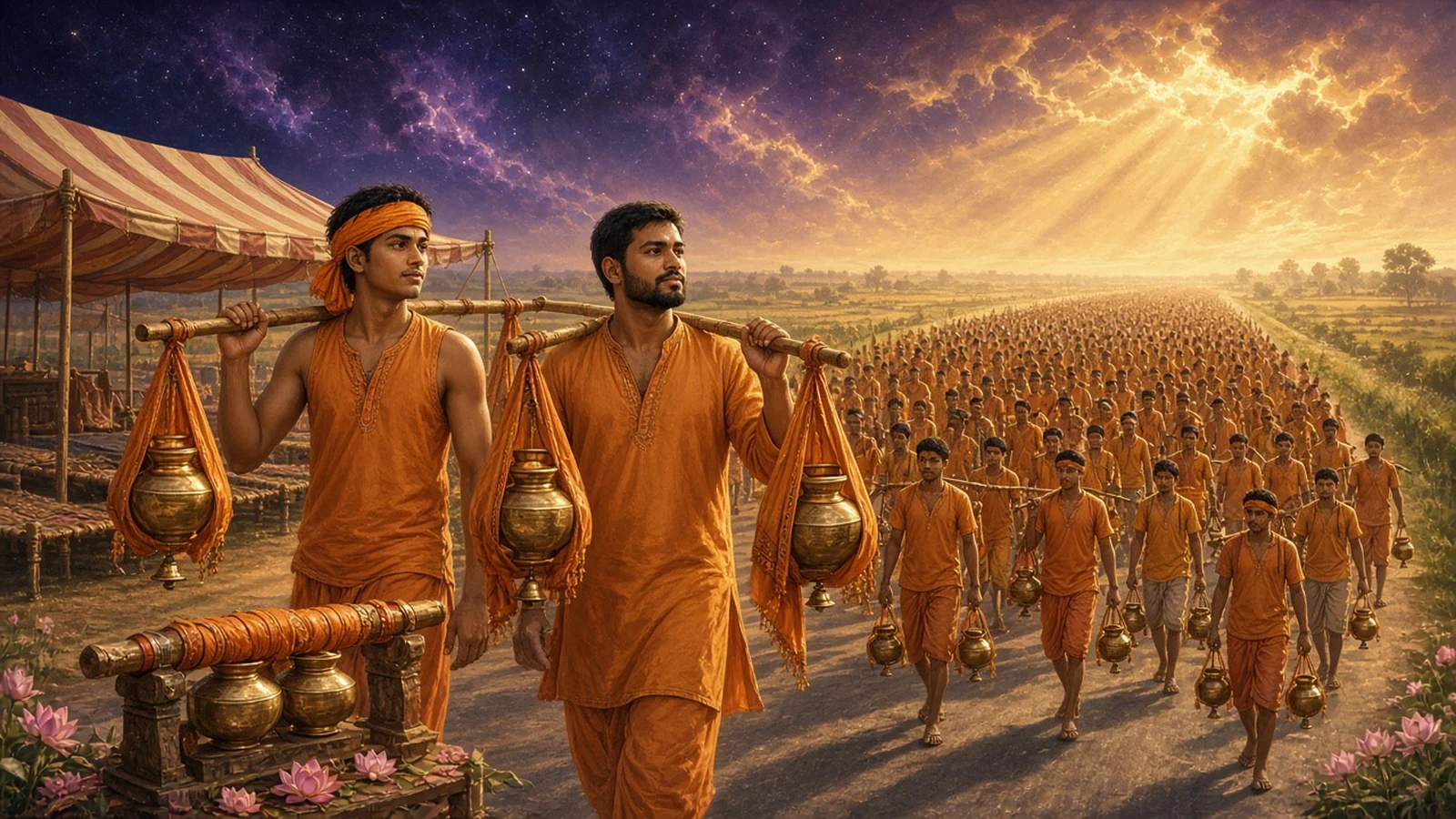
The Mondays are the great days of the Shravani Mela at Deoghar, when the Bol Bam pilgrims walking from Sultanganj crowd Baidyanath in their lakhs, and on the Haridwar road the kanwariyas are a few days from home; Shravan Shivratri falls that Saturday. Varanasi's Gauri-Shankar shringar, the god dressed with the goddess, came on this Monday in 2025. Tarakeswar in Bengal fills again with walkers up from the river at Baidyabati.
Bol Bam pilgrims in saffron reach Baidyanath at Deoghar with their kanwars of Ganga water
The Monday at the turn of the fortnights (Purnimanta) · Monday 2 August 2027
the new moonPashupatinath
The north's Shravana turns from its dark half to its bright one this week, and Hariyali Teej, the women's festival of Parvati's fast, follows on Wednesday. In Kathmandu Nepal's Shrawan, counted by the sun, keeps the same Mondays as the north in 2027, and Pashupatinath fills from dawn, most of all with women in green bangles and henna, the unmarried praying for a husband of their choosing.
Women in red and green, with henna and green bangles, at Pashupatinath on a Shrawan Monday
The first Monday of the bright fortnight in the north; the first of Shravana by the Amanta count · Monday 9 August 2027
the first Shravani SomvarShivamuthBhimashankar
Maharashtra, Gujarat, Goa and the south begin their Shravana on 3 August 2027, so this is their first Monday and the north's fourth, and the whole country fasts on the same day. In Maharashtra and Goa the women give Shiva his shivamuth, a fistful of grain, rice on the first Monday and a different grain each week after. Bhimashankar's jyotirlinga in the Sahyadri, where the Konkan walkers climb up through the ghats in the fog, takes its Monday crowds from here on. Nag Panchami falls three days before.
The shivamuth, a fistful of rice let fall on the linga in a Sahyadri temple in the monsoon fog
The second Monday of the bright fortnight, the last before Shravana Purnima; then the Amanta Mondays of 23 and 30 August · Monday 16 August 2027
the north's last MondayBrahmagiri pradakshinathe Shahi Sawari
The north's last Monday falls on the eve of the full moon, the day of Raksha Bandhan, and Kashi closed its Mondays in 2025 with the rudraksha shringar. For the west it is only the second, and two more follow, on 23 and 30 August 2027. At Trimbakeshwar thousands walk the forty kilometres round Brahmagiri barefoot from Kushavarta through the night before a Shravani Monday, the third above all, in 2027 in the year of the Nashik Kumbh. Ujjain goes on taking Mahakal out every Monday into Bhadrapada, ending with the Shahi Sawari, the royal one, on the longest route of all.
Mahakal's silver face rides through Ujjain to the Shipra in his silver palanquin
Uttar Pradesh, Bihar, Uttarakhand and DelhiThe northern Mondays and Kashi Vishwanath
The north counts Shravana from the full moon, so its Mondays come first. Kashi Vishwanath keeps a different shringar for each of them; in 2025 the moving image, then Gauri-Shankar, then Ardhanarishvara, then rudraksha, with the swing on the full moon, and special and protocol darshan stopped for the month. On the first Monday of 2026 the queue was about three kilometres long by morning, and the city expected a crore of pilgrims over the month. The same morning more than forty thousand Yadavs of Varanasi walked their jalabhishek yatra, about seventeen kilometres from Kedar Ghat by Gauri Kedareshwar, Vishwanath and Trilochan to Lat Bhairav, under the Chandravanshi Gop Seva Samiti; it was the yatra's ninety-fourth year. At Kankhal below Haridwar the queue at Daksha Mahadev begins at three in the morning.
BengalTarakeswar
Bengal's great Shravan Mondays are at Taraknath in Hooghly district. The pilgrims fill their pots at Nimai Tirtha Ghat in Baidyabati, by Sheoraphuli on the Ganga, and walk about thirty-nine kilometres to the temple, to the cry of Bhole Baba paar karega in Hindi; on Monday 3 August 2026 the railway counted about 1.6 lakh pilgrims at Tarakeswar and some 84,000 at Sheoraphuli, and nearly all go home by train. Jawhar Sircar, writing in 2017, says that the walkers were mostly Marwaris in the late 1950s and that the film Jai Baba Taraknath of 1977 brought the Bengalis.
JharkhandBaidyanath's Mondays
At Deoghar the Mondays are the peak of the month-long Shravani Mela, with three or four lakh pilgrims pouring Ganga water carried from Sultanganj on a single Monday against some seventy thousand on other days, in Outlook Traveller's count; the walk has its own page, Kanwar Yatra.
Madhya PradeshMahakal's sawari at Ujjain
Mahakaleshwar opens at half past two on the Shravan Mondays for the panchamrit bath and the ash, and at four in the afternoon the god goes out in a silver palanquin as Chandramouleshwar, with Manmahesh on an elephant behind, through Gudri Chauraha, Bakshi Bazaar and Kaharwadi to Ram Ghat, where he is bathed in Shipra water, and home by Gopal Mandir and Patni Bazaar. In 2026 there were six sawaris from 3 August to 7 September, through the Mondays of Shravana and Bhadrapada, the last the Shahi Sawari; armed police gave the god a guard of honour at the gate, a priest worshipped him at Gopal Mandir for the old Scindia state, and about 7.8 lakh people lined the route of the second.
Maharashtra, Goa and GujaratThe Shravani Somvar of the Amanta month
The west counts Shravana from the new moon and keeps its Shravani Somvar a fortnight after the north. Women offer the shivamuth, a handful of grain for Shiva, a different one each Monday; the Tuesdays are Mangala Gaur, kept by brides for the first five years of marriage, with the women of the family and the neighbourhood called in to sing and dance, and haldi-kumkum and aartis in the evening. At Trimbakeshwar the night before a Shravani Monday is the Brahmagiri pradakshina, about forty kilometres barefoot round the hill from the Kushavarta tank. At Bhimashankar about 2.5 lakh came on the second Monday of 2026, with the doors open soon after five in the morning. Gujarat keeps the same Amanta Mondays.
NepalShrawan Sombar at Pashupatinath
In Nepal Shrawan is the fourth month of the year, and its Mondays, the Shrawan Sombar, fill Pashupatinath and the valley's Shiva temples from early morning, mainly with women. The unmarried fast for a husband of their choice and the married for their families; green, red and yellow are the month's colours, and a girl who wears henna or green bangles to worship Shiva, it is said, will find the husband she hopes for. The papers report the crowds on the first Monday and the last.
Shaivas and every Hindu householdThe Monday's own reason
Monday is Shiva's day all year; the moon is his crown and Somavara, the moon's day, his own form, says the Shravana Mahatmya, which tells those who cannot keep every Monday of the year to keep the Mondays of Shravana and have the same merit. The fast is the family's, not a temple's, and anyone may keep it, with a pot of water at the nearest linga, the five-syllable mantra Om Namah Shivaya, and the katha heard at evening.
WomenThe vows for a husband like Shiva
The month's Mondays are above all a women's vow. Girls fast on them for a husband like Shiva and wives for a husband's long life; the Solah Somvar, the sixteen-Monday vow, is begun on the first of them, and the Tuesdays of the month are kept for Mangala Gauri, Parvati as the bringer of a happy marriage. Nepal's women wear green for it, Maharashtra's brides keep Mangala Gaur for five years, and both the month's kathas turn on a marriage.
The Yadavs of VaranasiA community's first Monday
The Yadavs of Varanasi keep the first Monday of Shravan as their own. Their kalash yatra, begun by Bhola Sardar and Chunni Sardar and in its ninety-fourth year in 2026, sets out from Kedar Ghat at half past seven with Ganga water, bathes Gauri Kedareshwar and Tilbhandeshwar, fills again at Sheetla Ghat, and pours at Kashi Vishwanath, Mahamrityunjay, Trilochan and Omkareshwar before it ends at Lat Bhairav, its men singing and dancing on the road; twenty-one of them are let into Vishwanath's sanctum.
How it is kept
The fast is simple and is kept many ways. Some eat nothing until the evening worship; some keep the old nakta, one meal after dark; many take only fruit and milk. In the morning, after a bath, the faithful go to the linga and pour water, milk or panchamrit over it, lay on the bilva leaf with its three leaflets, add white flowers, dhatura and sandal, and say Om Namah Shivaya or the Mahamrityunjaya. Families who can afford it have a priest perform a Rudrabhishek, the linga bathed in milk, curd, honey, ghee and water in turn. In the evening the katha is read, the merchant's son on the Shravan Mondays, the priest and the dice for those keeping the sixteen Mondays, and the fast is broken.
Milk and water poured on the linga, with bilva leaves, white flowers and dhatura
The vows are the women's. The unmarried keep the Mondays for a husband like Shiva and the married for a husband's long life; the sixteen Mondays, the Solah Somvar, are begun on the first Monday of the month, with churma on the evening plate and an udyapan on the seventeenth. The day after each Monday is Mangala Gauri's, kept by young wives.
At dusk the women hear the katha, with the churma of the sixteen Mondays in three heaps
Then there are the crowds. Kashi opens the doors to queues that start at midnight; Tarakeswar's walkers come up from the Ganga at Baidyabati; Deoghar's Mondays are the peaks of the Shravani Mela, whose walk has its own page, Kanwar Yatra; Ujjain carries its god to the river; Trimbakeshwar walks round its hill in the dark. The two reckonings matter here. The north's Shravana starts the day after Guru Purnima, and Maharashtra's, Gujarat's and the south's a fortnight later at the new moon, so in 2027 the north keeps 19 July to 16 August and the west 9 to 30 August, with two Mondays in common. Nepal counts Shrawan by the sun and in 2027 lands on the north's Mondays.
In the old texts
The churning and the poison are told in the Bhagavata Purana's eighth book, chapter seven; the pages that set the churning in Shravana give no text for it, and the month is the tellers' own. The month's own text is the Shravana Masa Mahatmya, a praise of Shravana that the almanacs credit to the Skanda Purana. As Drik Panchang gives it, Shiva tells Sanatkumara that the Monday vow is begun on the first Monday of the bright half of Shravana and kept on every Monday after, with a bath, white flowers, the five-syllable mantra and a single meal at night, and closed with an image of Shiva and Uma on the bull, a night of songs and a fire offering of bilva leaves; Krishna himself, it says, kept it.
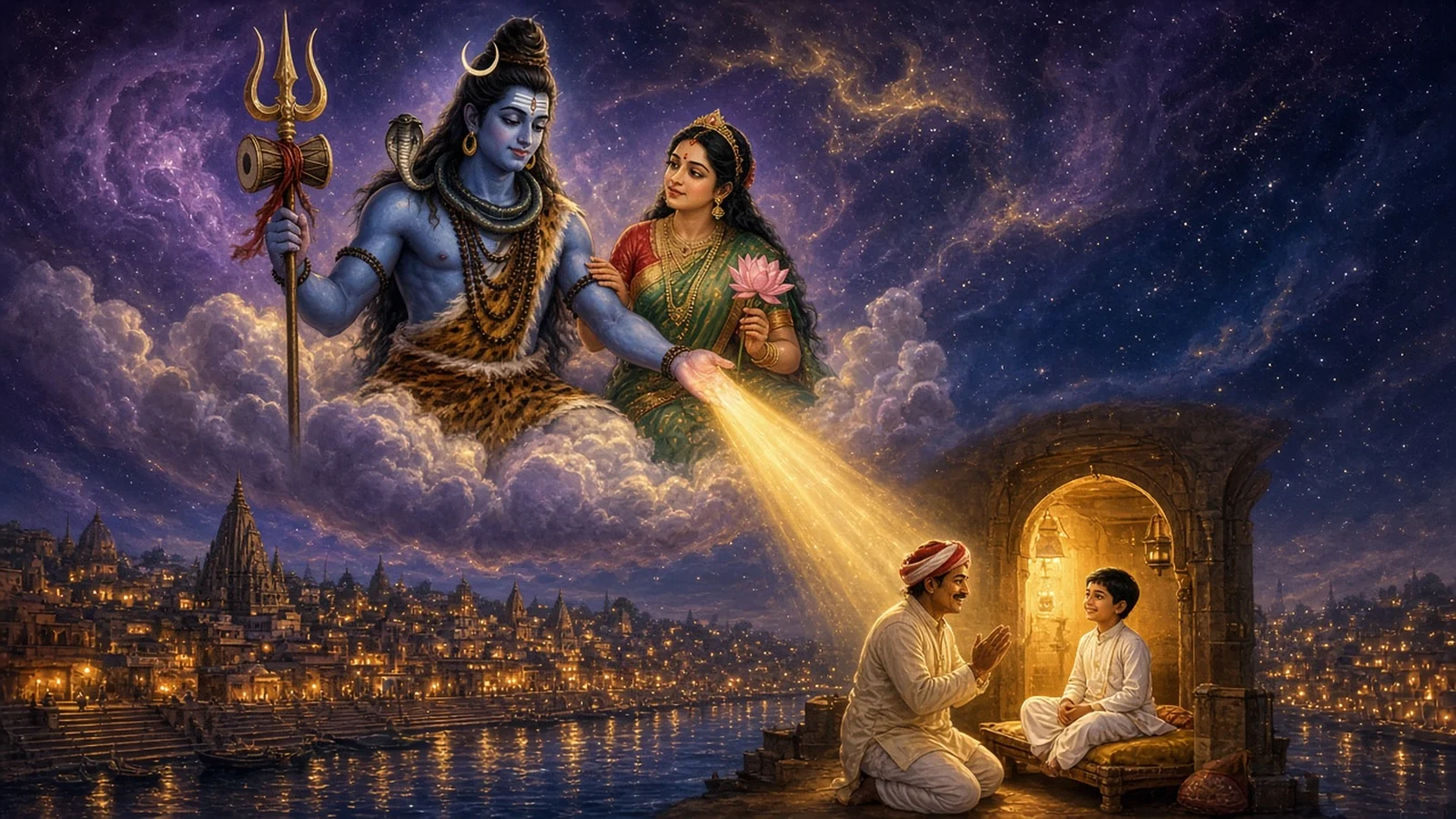
The two stories read on the day are vrat kathas, from the Hindi vow books and the almanac pages, and none of the pages read names a Purana for them. The Sixteen Mondays is the priest, the dice and the apsaras; The Merchant Who Asked for a Son is the boy granted twelve years. The moon who built Somnath after Shiva eased his curse is in The Moon and the Twenty-Seven Sisters.
Where this page comes from. Written by Devalok from the Shravan Somvar and Solah Somvar vrat kathas as the Hindi vow books and the almanac pages print them, the Shravana Masa Mahatmya of the Skanda Purana as Drik Panchang gives it, the Bhagavata Purana (8.7), the Shravan Mondays of Varanasi, Tarakeswar, Deoghar, Ujjain, Trimbakeshwar, Bhimashankar and Kathmandu as the temples, the railways and the press (All India Radio, IANS, Patrika, the Free Press Journal, the Kathmandu Post, Amar Ujala, the Goan) record them, the writing of Jawhar Sircar, and the Drik Panchang calendars for 2027 and 2028, as recorded in the Devalok Lore. Our own words throughout.