As the vrat katha tells it
North India · read on the Mondays of Shravana · 3 min read
There was once a merchant who had everything a town could give a man: money, a good name, a fine house. He had no child. Every Monday he fasted and went to the Shiva temple, and worshipped Shiva and Parvati there with the same care, year after year.
Parvati watched him from Kailash.
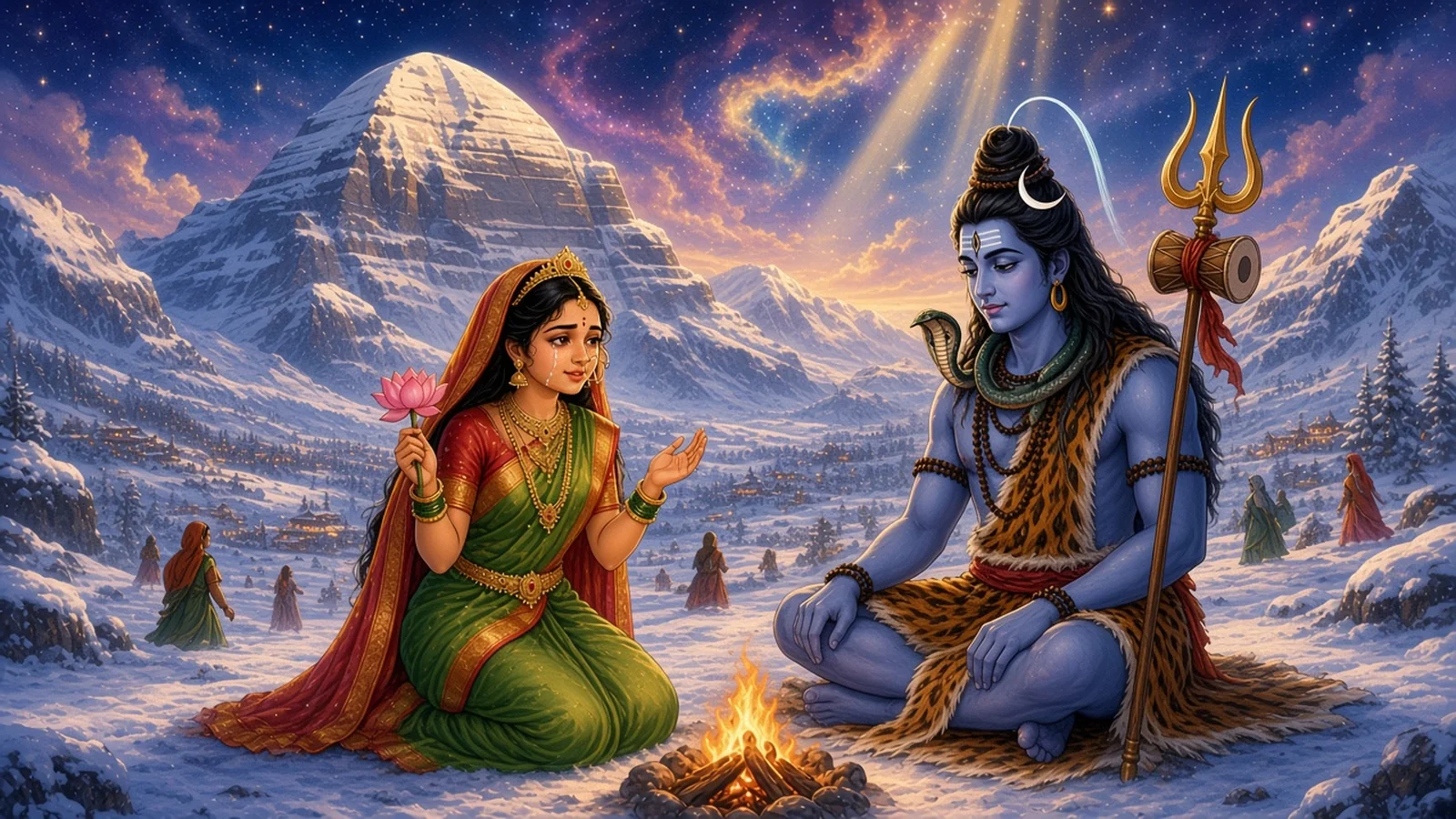
"Look at him," she said to Shiva. "Every Monday, and never once a complaint. Why do you not give him what he wants?"
"Everyone receives the fruit of what they have done," said Shiva. "There is no son in that man's fate."
"Then put one there," said Parvati, and she would not drop it.
At last Shiva gave way. "He shall have a son. But the boy will live twelve years, no more."
The merchant was at the temple and overheard it, the tellers say, and went home happy and frightened at once. A son was born, a beautiful boy. The father told his wife nothing of the twelve years and went on with his Mondays.
When the boy was eleven his mother began to talk of a bride.
"Not yet," said the merchant. "First he goes to Kashi to study." He called his wife's brother, gave him money, and said, "Take him to Kashi. Wherever you halt on the road, hold a yajna and feed the Brahmins before you go on."
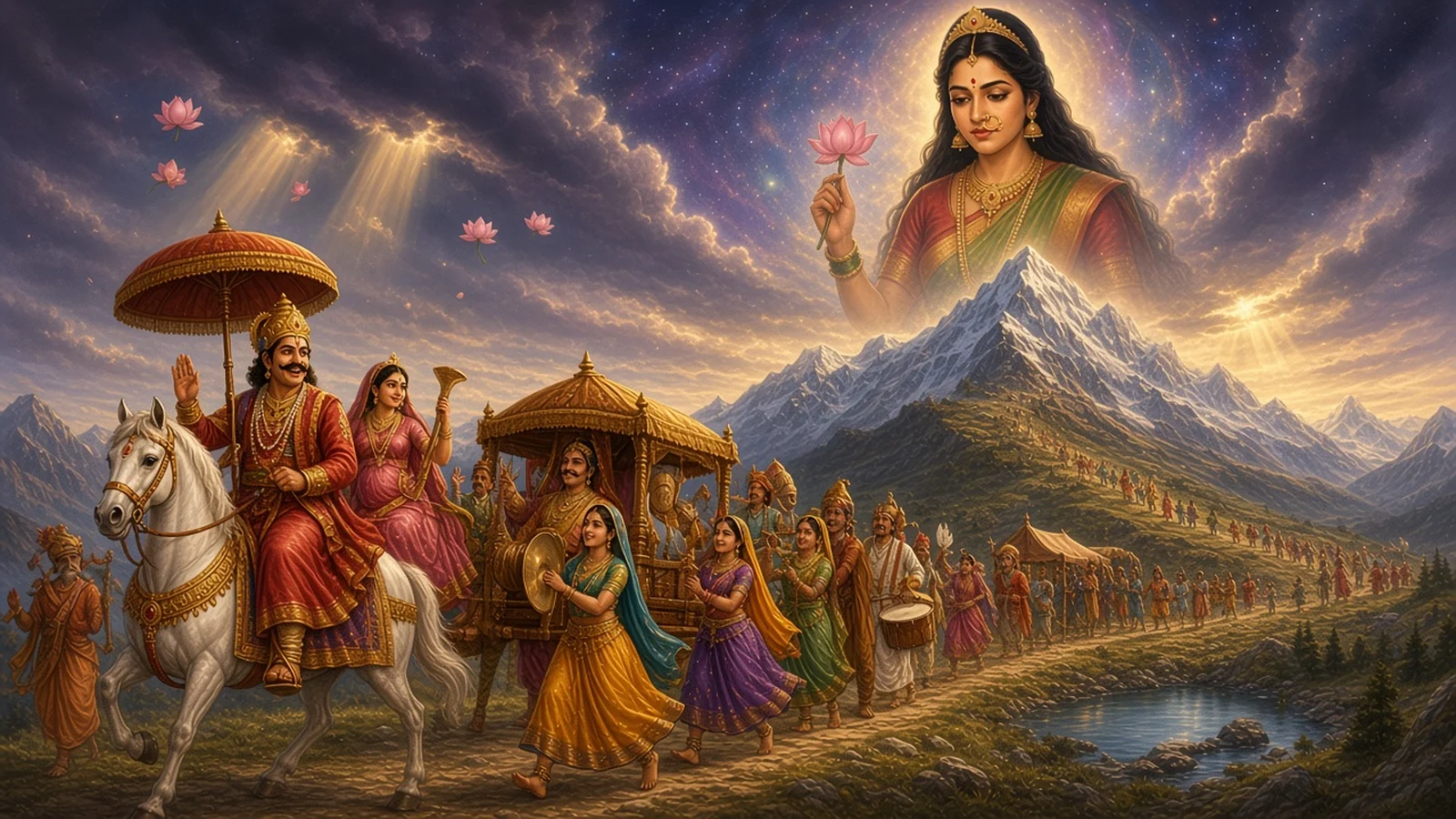
Uncle and nephew set out. On the way they came to a city where a princess was being married that very day, and there was trouble in the bridegroom's party. The prince had only one eye, and his people feared the bride's family would see it. When they saw the merchant's handsome boy, they had an idea.
"Lend us your nephew for the wedding," they said to the uncle. "He sits in the groom's place, the rites are done, and nobody need ever know."
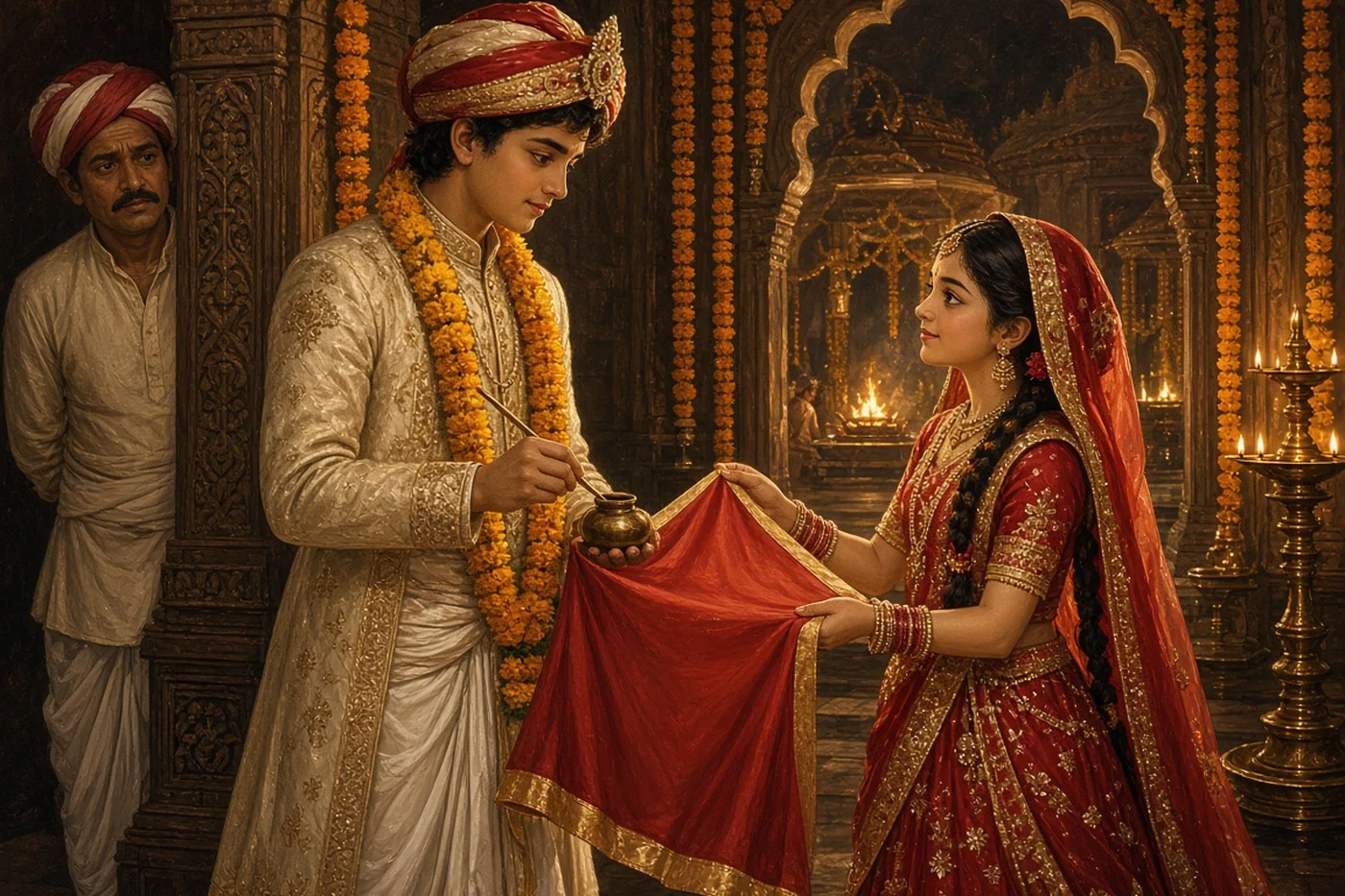
The uncle agreed. The boy was dressed as a bridegroom and married to the princess, but he could not bear to leave her deceived. Before he went, he took the end of her chunari and wrote on it.
You are married to me. The prince they will send you away with has one eye. I am going to Kashi to study.
When the princess read it, she refused to go with the prince, and her father kept her at home. The wedding party went back without a bride, and the boy and his uncle went on to Kashi.
In Kashi they held their yajna. On the day the boy turned twelve he said to his uncle, "I do not feel well," and went to lie down in his room, and there he died.
The uncle found him. He said nothing to anyone. He finished the yajna and fed the Brahmins, as he had promised the boy's father, and only then did he sit down and wail.
Shiva and Parvati were passing over Kashi.
"Who is crying like that?" Parvati asked.
"The merchant's son is dead. His twelve years are over."
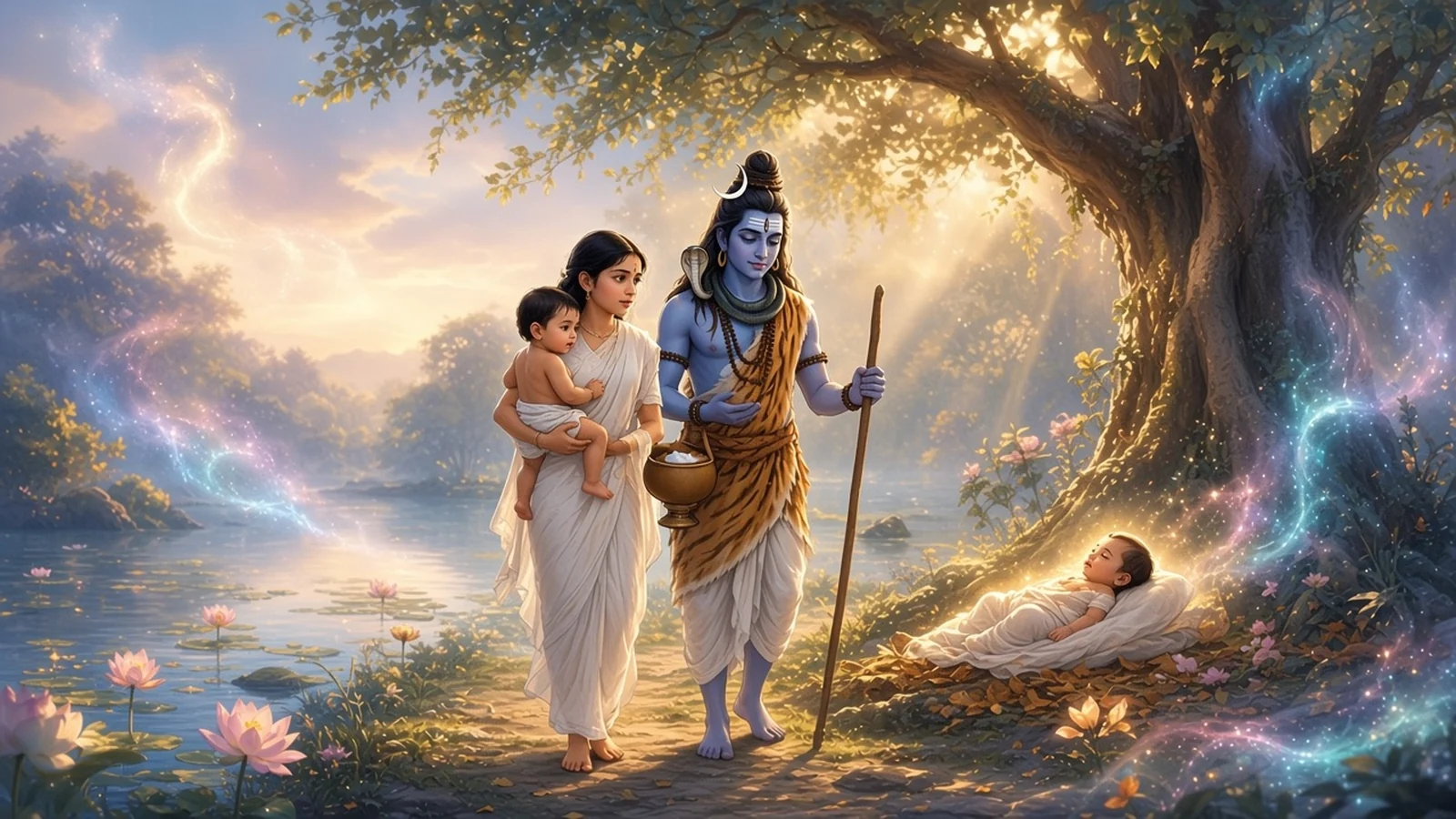
"Give him back," said Parvati. "His parents will not live without him. Give him his life."
"His years were fixed," said Shiva. She asked again, and again, as a mother asks, until he gave the boy his life.
On the way home the uncle and nephew halted in the city of the wedding and held a yajna there too. The king knew his son-in-law at once, took him into the palace, and sent the princess home with him, and much wealth besides. The merchant and his wife had sworn to die if their son did not come back. When they heard he was at the gate, they did not believe it until they saw him with his bride.
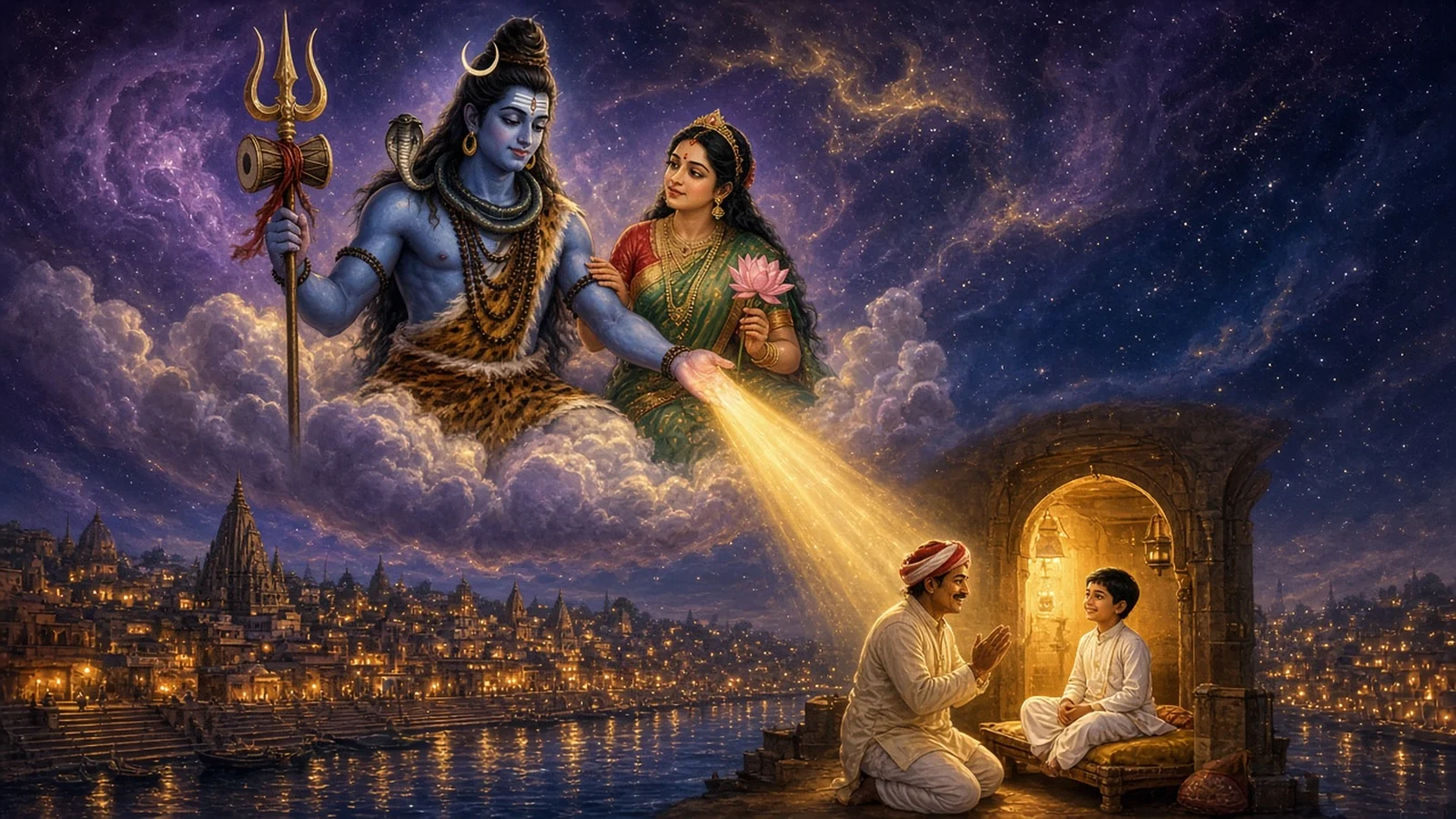
That night Shiva came to the merchant in a dream. "Your Mondays and your listening to this story have given your son a long life," he said. "Whoever keeps the Monday fast and hears this katha will have the same from me."
As a Shravan Monday at Ujjain tells it
Madhya Pradesh · Mahakaleshwar to Ram Ghat on the Shipra · 2 min read
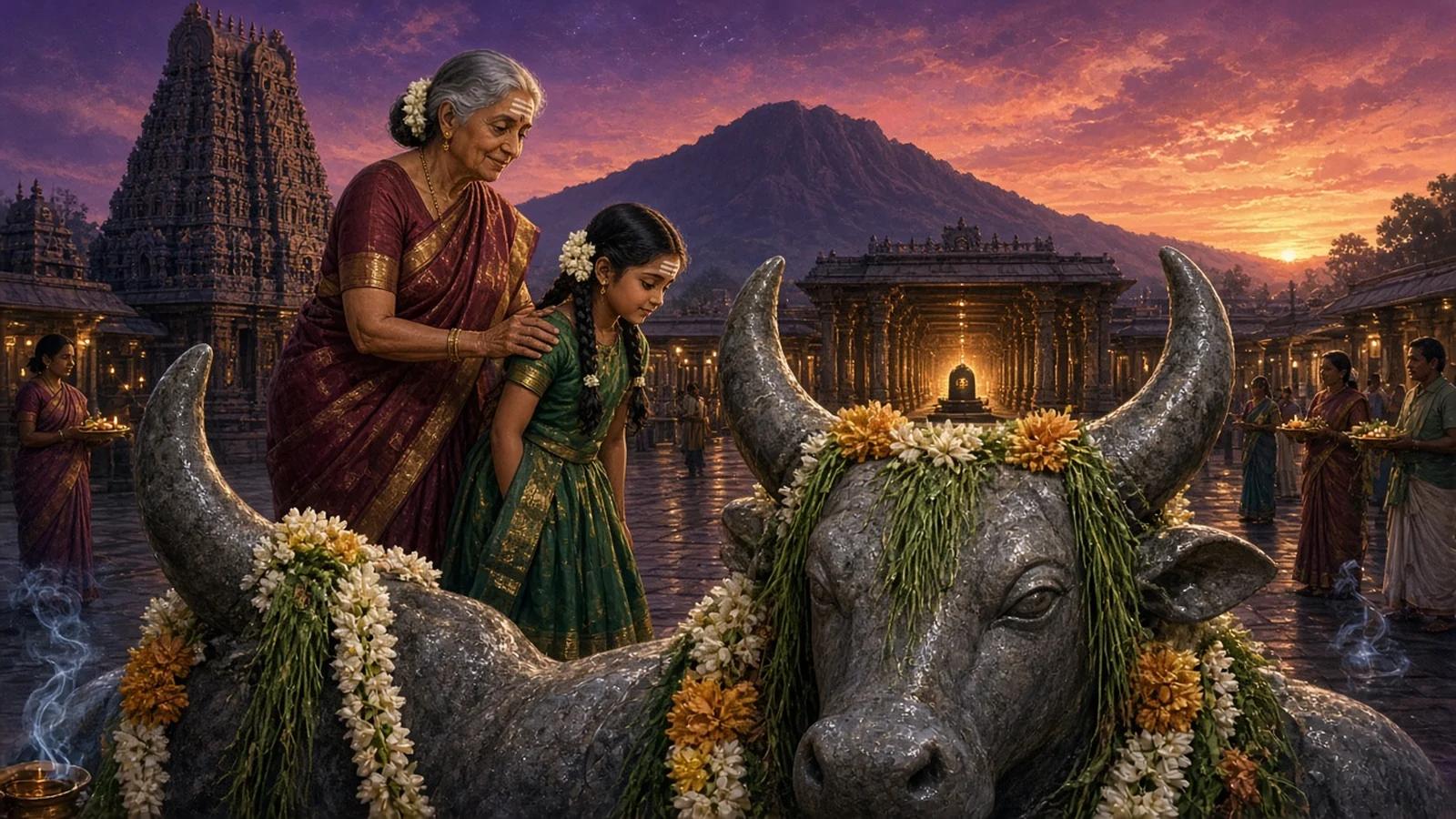
Kamla had read the katha at four that morning in her daughter's house in Ujjain, with a lamp and a brass pot of water, as she had read it on every Monday of every Shravana since her marriage. By then the doors of Mahakaleshwar had been open for an hour and a half. They open at half past two on these Mondays. The god is bathed in panchamrit, decorated with ash, and the queues are out in the lanes by three.
She did not go in. She had come for the afternoon.
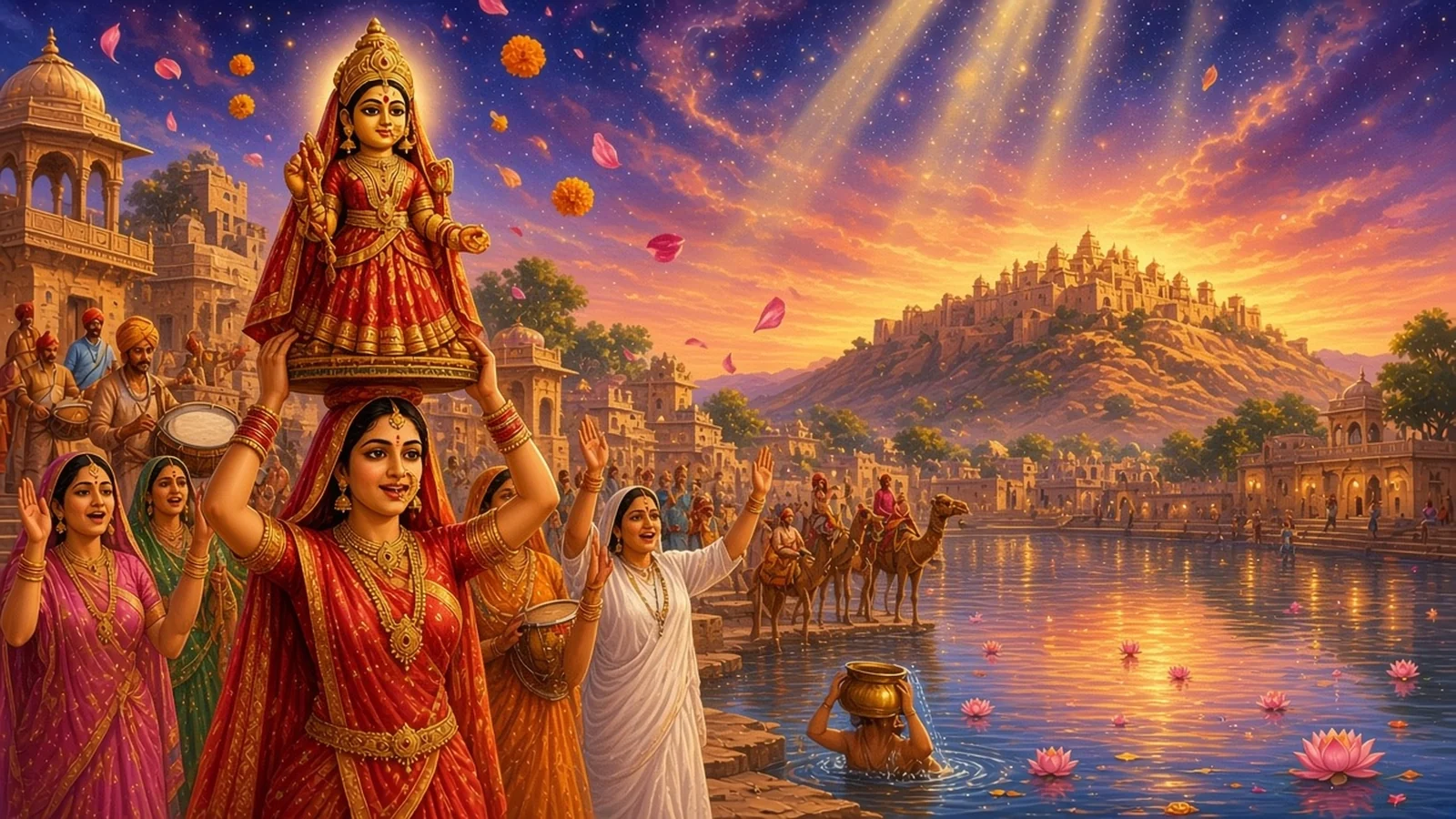
At four the silver palanquin, worshipped first in the temple's Sabha Mandap, came out through the gate with Mahakal in it as Chandramouleshwar, the moon-crowned lord, and behind him on a decorated elephant came Manmahesh. The salute guards stood to attention, the police band played, the mounted squad went ahead, and the lane in front of Kamla became a river of people shouting Har Har Mahadev.
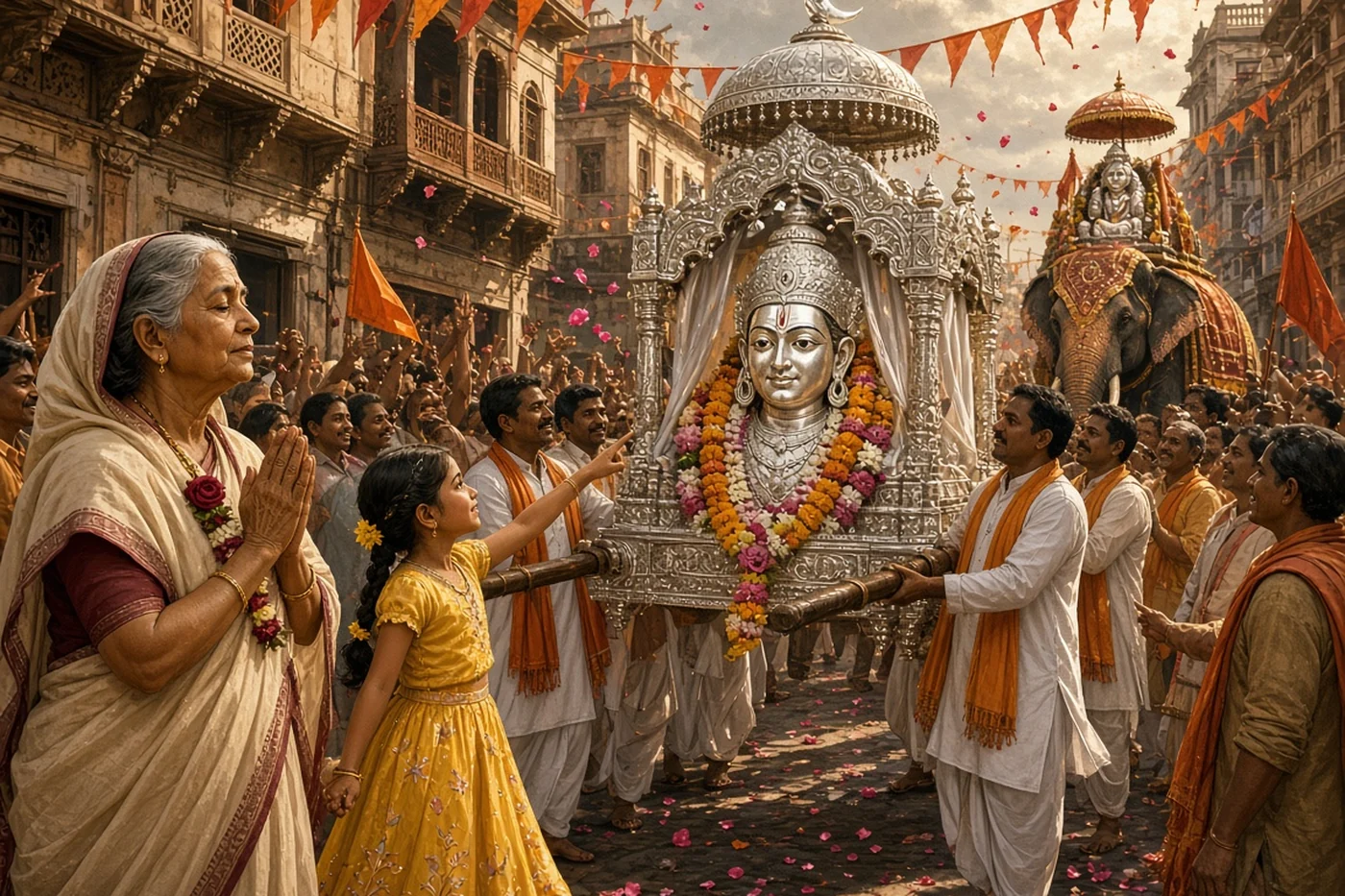
"Where is he going?" asked her granddaughter, who was eight.
"To the river," said Kamla. "Then he comes home."
The procession went by Gudri Chauraha, Bakshi Bazaar and Kaharwadi, down to Ram Ghat on the Shipra, and there the priests bathed the god in river water and waved the lamps before him. Then it turned back by Ramanujkot and Kartik Chowk, Chhatri Chowk, Gopal Mandir and Patni Bazaar, with seventy bhajan groups and the tribal and folk dancers among them. On the first Monday a crowd of young Vedic students chanted at the river. Each Monday after, the procession grows, with another form of Shiva on a chariot.
The sawari goes out on every Monday of Shravana and on into the Mondays of Bhadrapada, six times in 2026, from the first Monday of August to the first of September. The last is the Shahi Sawari, the royal one, which takes the long way home through Sarafa and the old city.
When the palanquin had passed, Kamla broke her fast with a handful of fruit and a glass of milk.