As the vrat katha tells it
North India · read on each of the sixteen Mondays · 3 min read
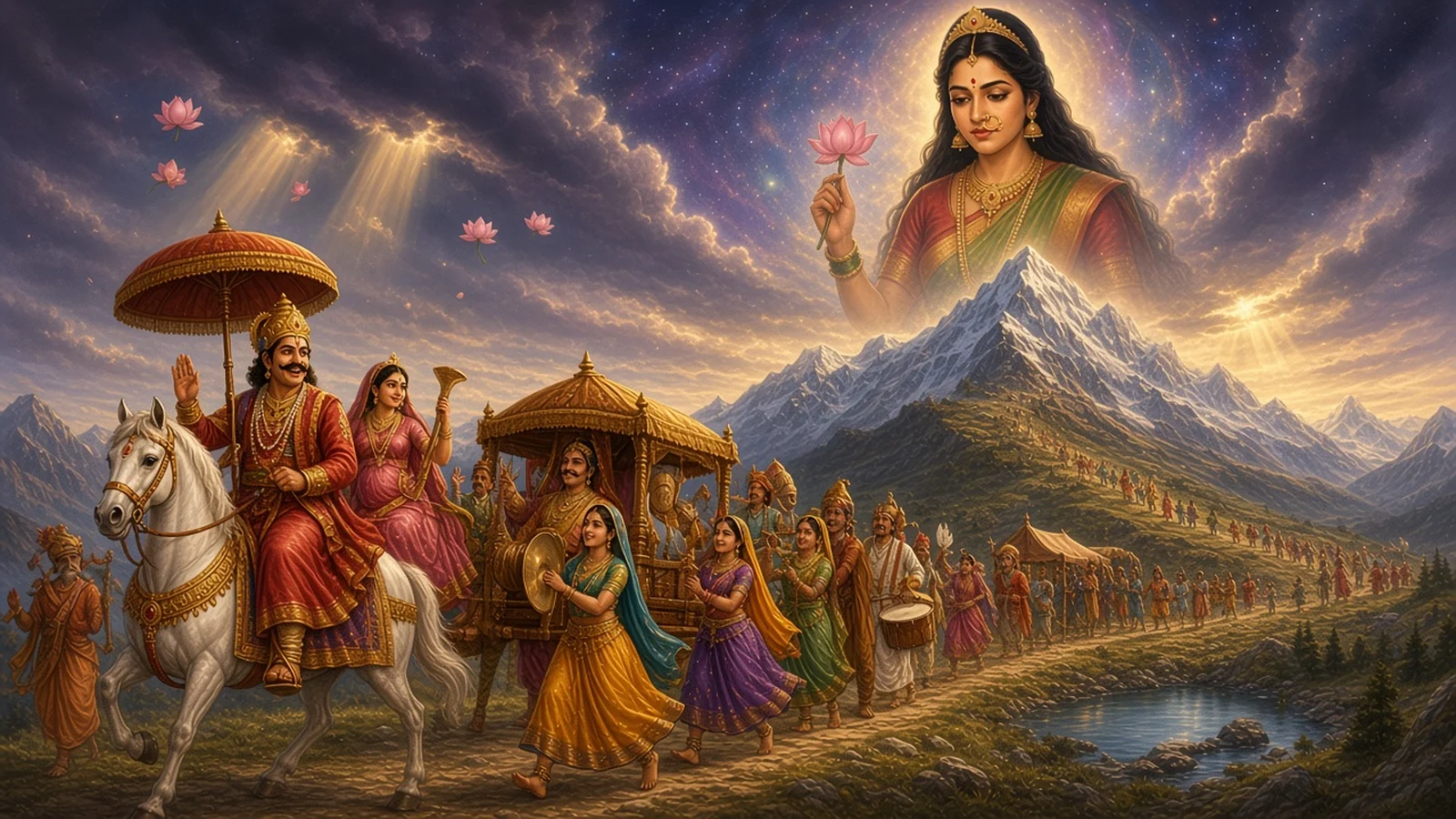
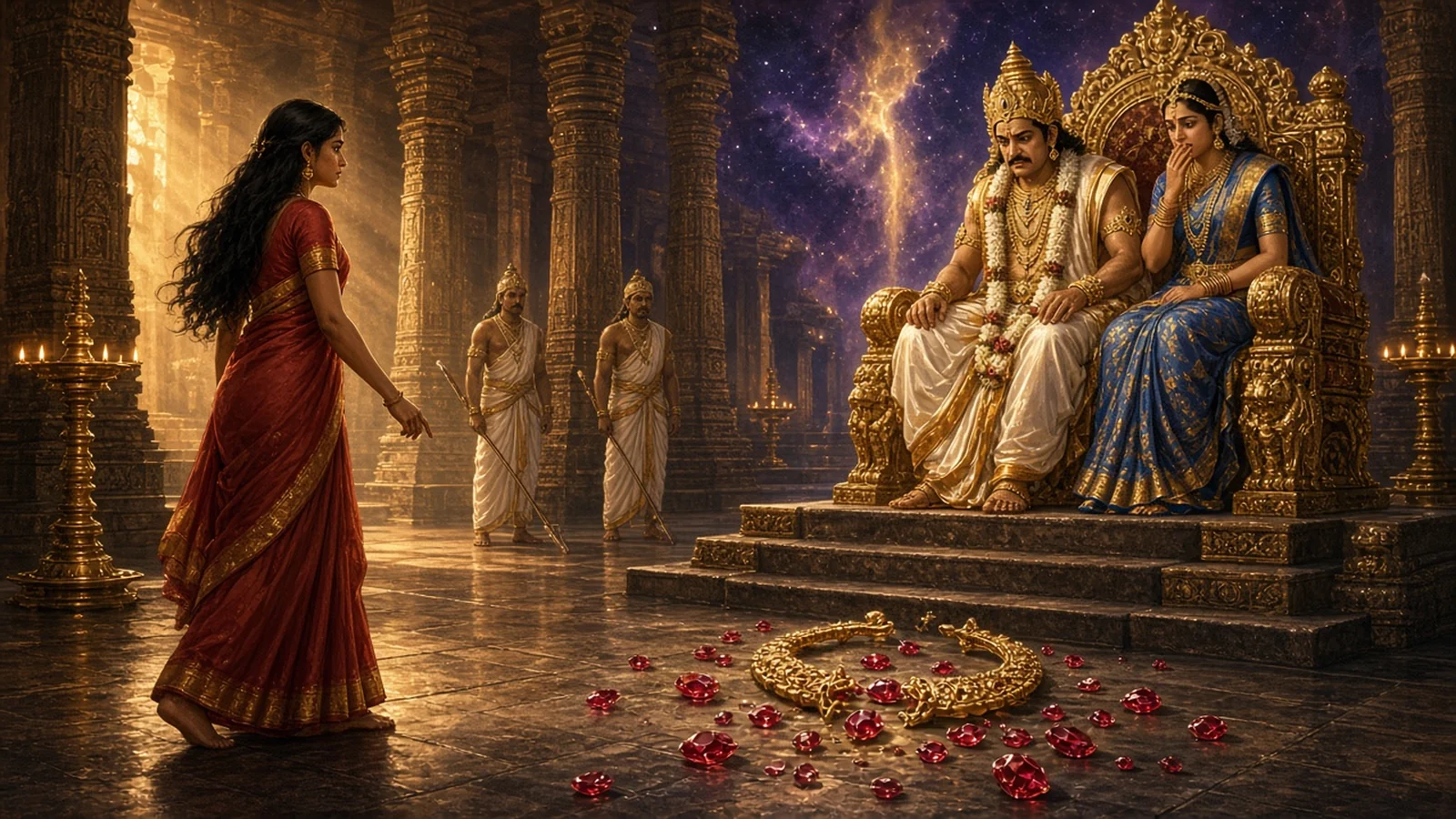
Once, the vow books say, Shiva and Parvati came down from Kailash to walk in the world of mortals, and their wandering brought them to the city of Amravati. The king of that city had built Shiva a temple, tall and fine, and the god liked it so well that the two of them stayed in it for a while.
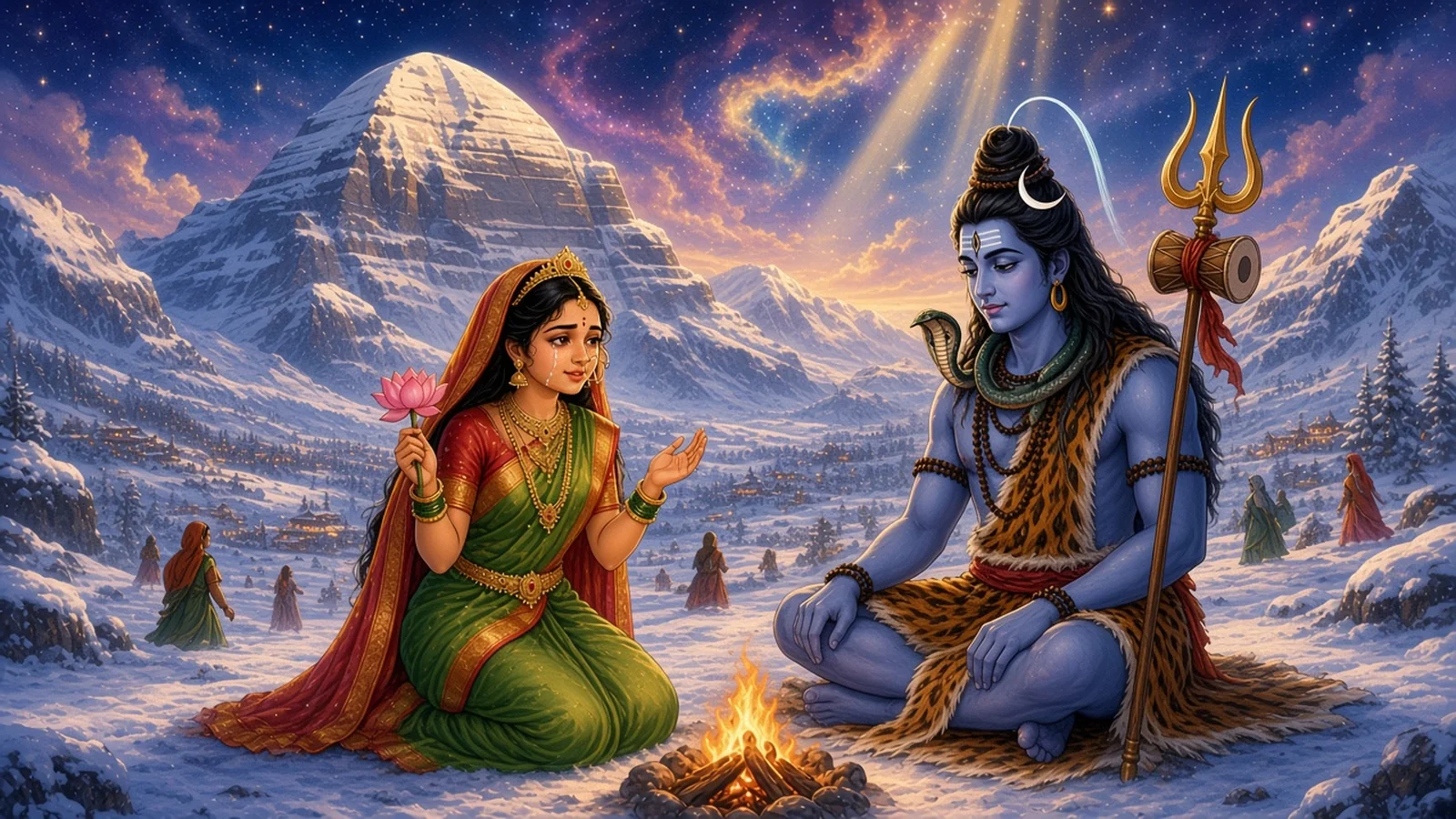
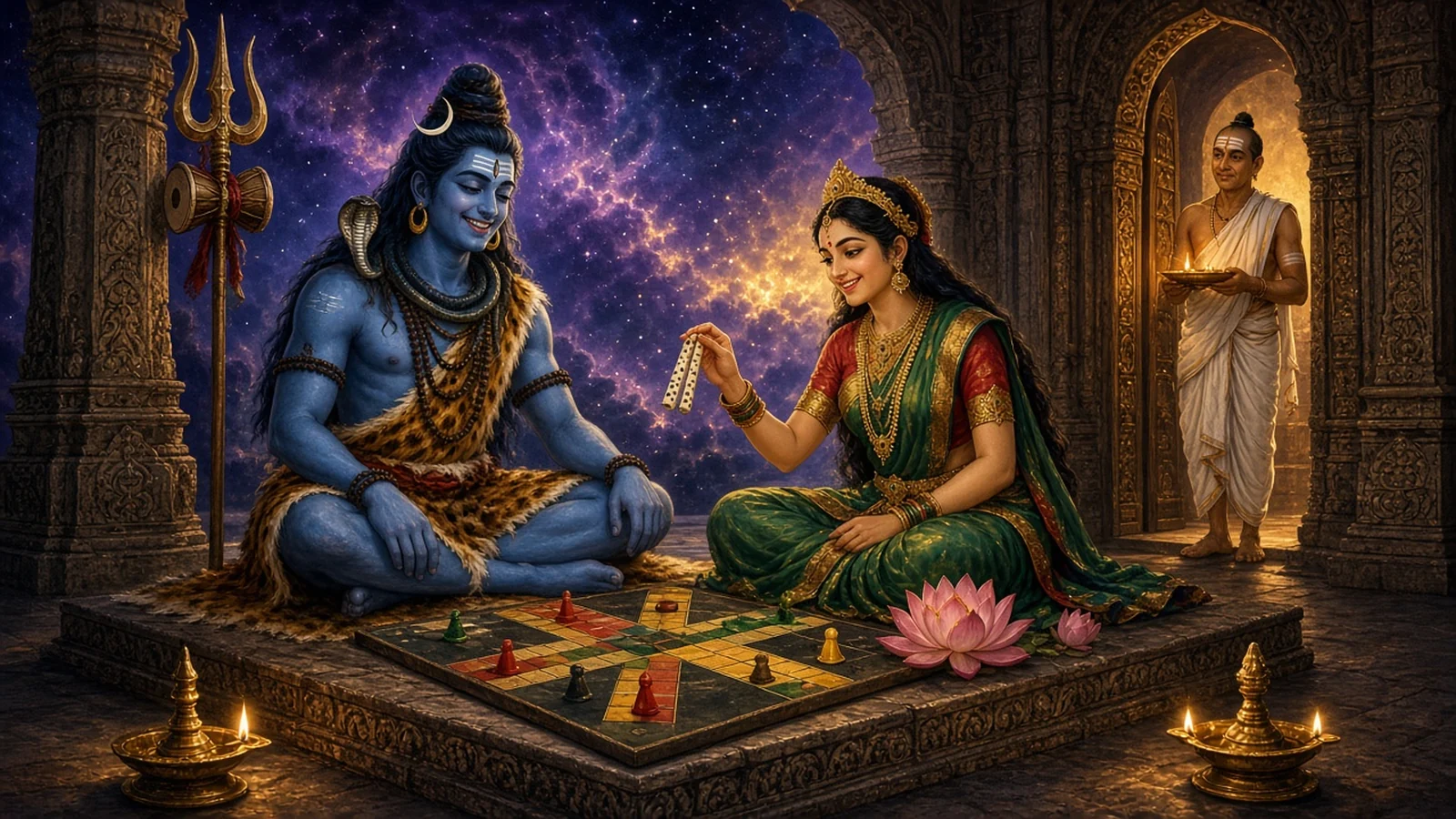
One evening Parvati brought out the board and the dice.
"Play chausar with me," she said. "One game."
Shiva laughed and sat down across from her. As they set out the pieces the priest of the temple came in for the evening worship, and Parvati turned to him.
"You serve here every day. Tell me who is going to win."
The priest hardly stopped to think. "Mahadev, Mother. Nobody beats him at this game."
They played, and Parvati won. She looked at the priest for a long moment, and the game was over in more ways than one.
"You answered without thinking, and you answered falsely, in his own house," she said. "Then carry the falsehood on your skin." The leprosy came on him where he stood, and the god and the goddess went on their way.
A long time passed. One day a company of apsaras came down from heaven to worship at the temple, and found the priest sitting in its shade, covered in sores.
"What happened to you?" one of them asked.
He told them everything: the board, the question, his careless answer and the goddess's anger.
"Then keep the vow of the sixteen Mondays," she said. "Shiva will take this from you."
"I have served him all my life and never heard of it. How is it kept?"
So they taught him. On a Monday he was to fast through the day, and in the evening worship Shiva with sandal paste, unbroken rice, ghee, jaggery, a lamp and bilva leaves. He was to make churma from half a ser of wheat flour, offer it, and divide it into three: one part for the people, one for a cow, one for himself, eaten with a drink of water. Sixteen Mondays of that, and on the seventeenth, churma from five ser of flour, offered and shared with everyone. Then they went back to heaven.
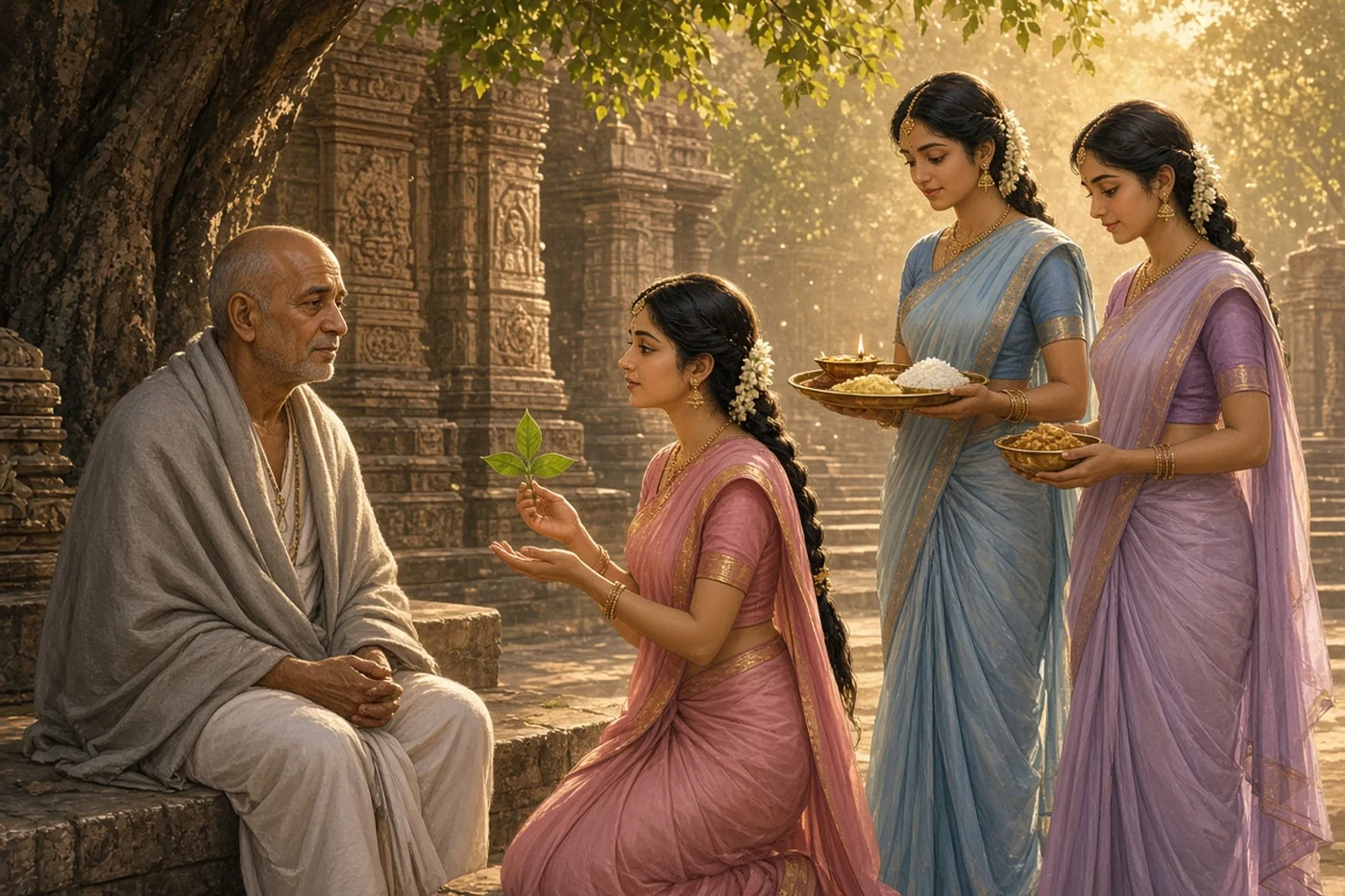
The priest kept the vow to the letter, and when it was done his skin was whole.
When Shiva and Parvati passed that way again, Parvati stopped at the temple door. "You were a leper when we left. Who healed you?"
"The sixteen Mondays, Mother," the priest said, and told her how.
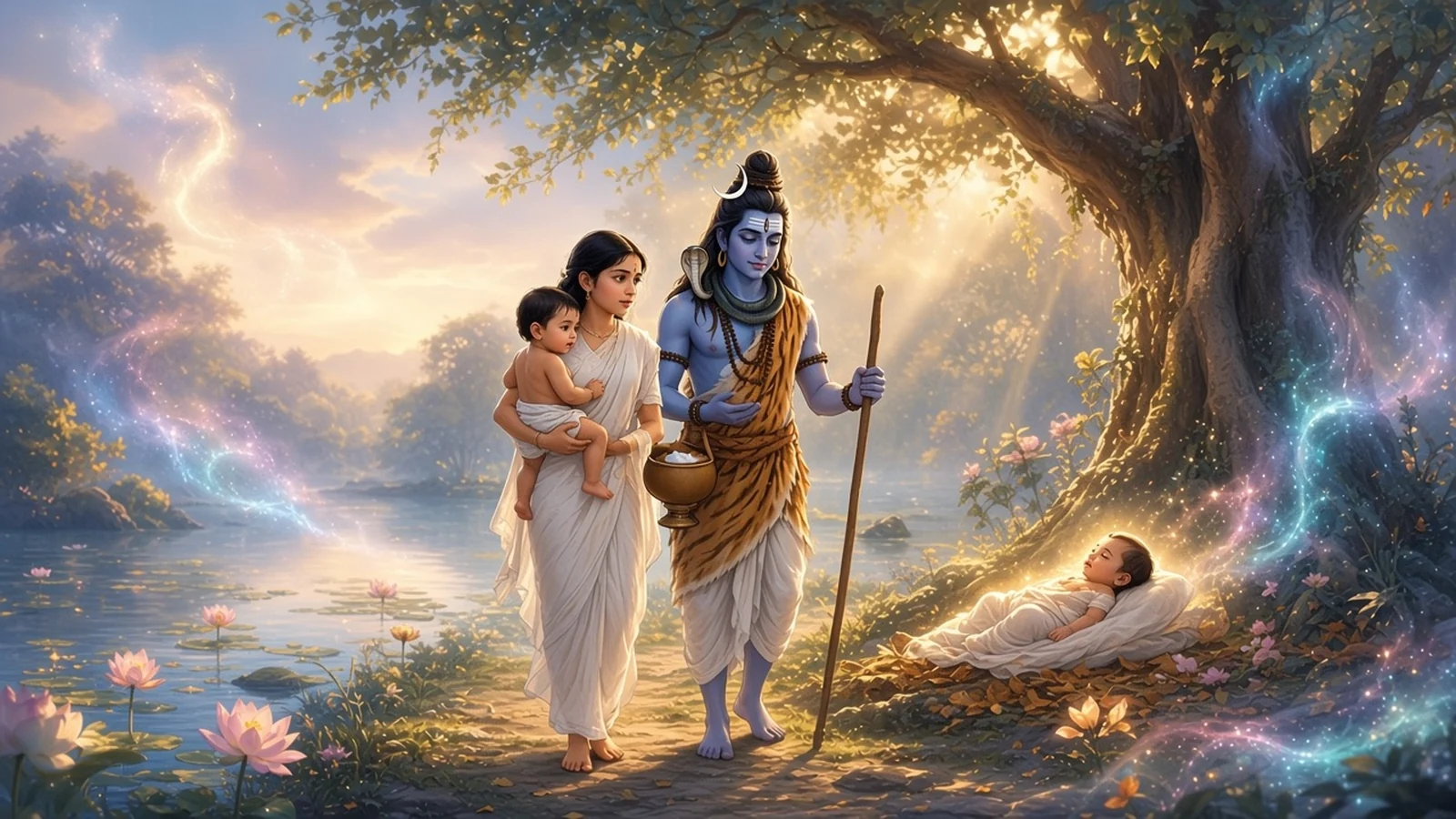
The goddess had a sorrow of her own. Her son Kartikeya had turned away from her and kept far off. She kept the sixteen Mondays, and at the end of them Kartikeya came home and would not leave her side.
"Why does my mind stay at your feet now?" he asked her, and she told him. He kept the vow himself for a Brahmin friend he had lost, and the friend came back.
The friend wanted a wife. He kept the Mondays and went to a far country where a princess was to choose a husband, and her father had declared that she would marry whoever the royal elephant garlanded. The elephant walked down the line of suitors and put its garland round the Brahmin's neck.
"What merit brought you to me?" the princess asked him afterwards.
"Sixteen Mondays," he said. She kept them for a son, and a fine son was born to her. When the boy was grown and heard how he had come, he kept them for a kingdom. Messengers came from a king who wanted him for his daughter, and when that king died the boy ruled in his place, and went on keeping the Mondays on the throne.
As the vow is kept
North India · from the first Monday of Shravana, through sixteen weeks · 2 min read
Most who keep the sixteen Mondays begin on the first Monday of Shravana, the month that is Shiva's, though the vow books also allow Chaitra, Vaishakha, Kartika or Magha. The resolve is made that morning after a bath, and from then on the vow runs for sixteen Mondays without a break.
The girls who keep it are most often unmarried and keep it for a husband like Shiva. Wives keep it for a husband's long life, and some men keep it too, for work, for health or for a debt.
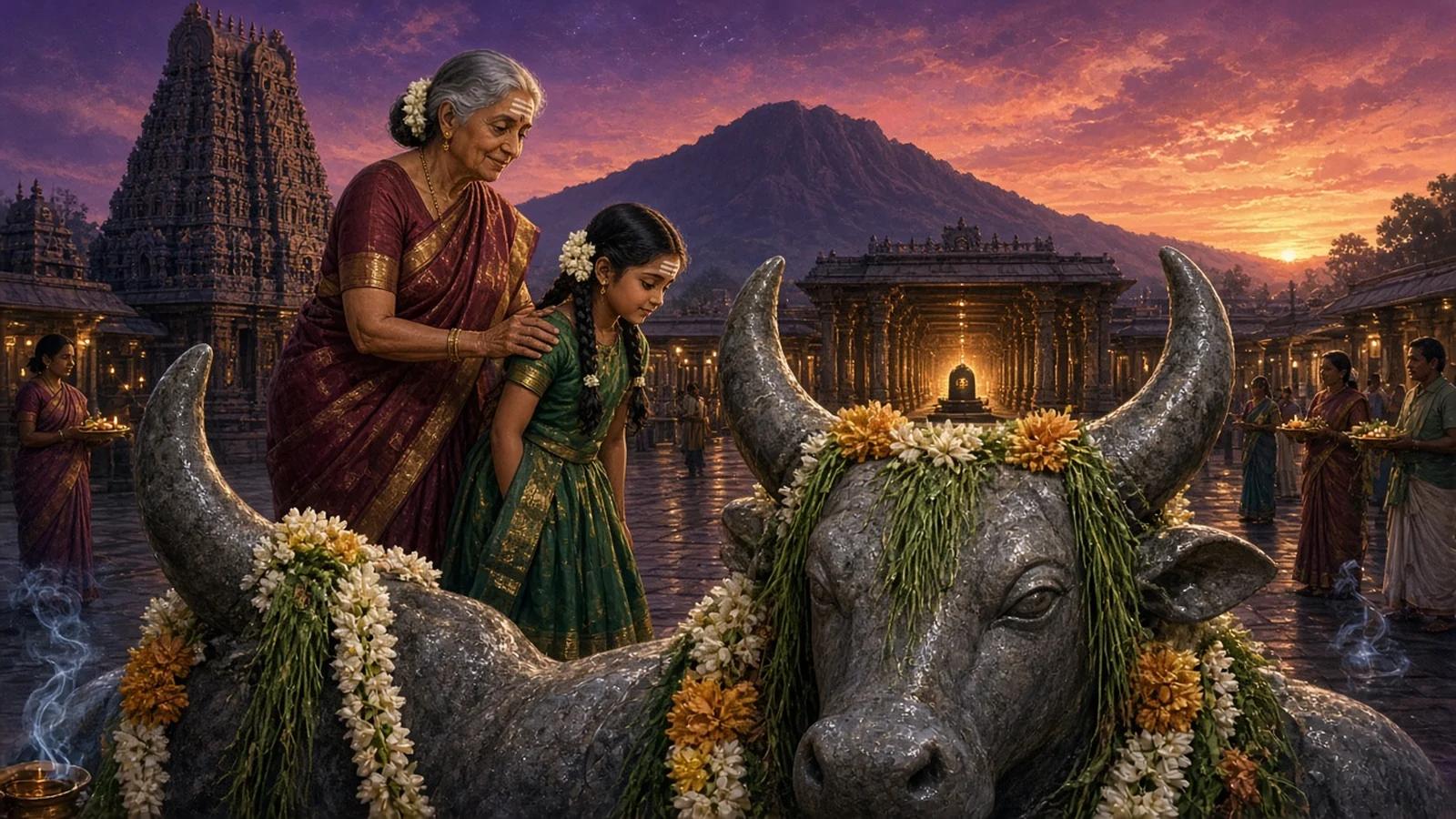
The day is a fast. The strict take no food until the evening worship; others take fruit and milk. At the linga the worshipper pours water and milk, lays bilva leaves on the stone, and offers sandal paste and unbroken rice. The pages warn against a few things on Shiva's stone: the ketaki flower, tulsi, kumkum and sindoor. Parvati is given her own offering, often a red chunari, and Om Namah Shivaya is said over the offering. Then the katha is read, the same story of the priest and the dice every week, all sixteen times.
In the evening comes the churma, the offering that gives the vow its taste. Wheat flour is roasted in ghee and mixed with jaggery, with no salt in it. It is offered to Shiva and divided into three: a share for the god, a share for the household or a cow, and a share that breaks the worshipper's own fast. Some pages add three small clay images of Shiva, shaped for the evening worship.
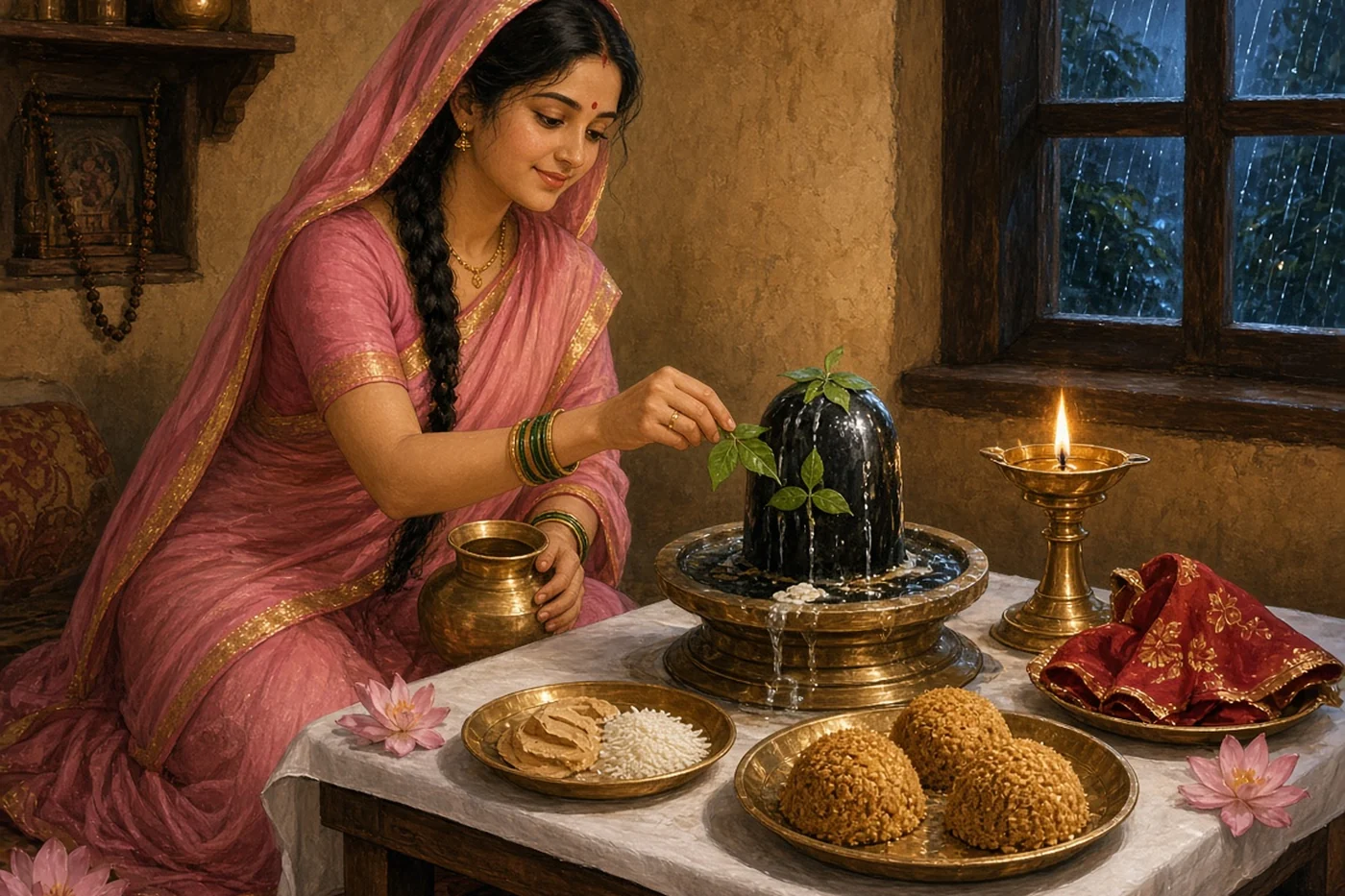
The seventeenth Monday is the udyapan, the closing. The churma is made large, five ser of flour in the old measure, and given to everyone. Families with the means call a priest for a Rudrabhishek or a havan, feed Brahmins and give gifts; others go to the nearest temple, pour panchamrit over the linga, and offer a sacred thread and a dhoti to Shiva and a red chunari and a bride's adornments to Parvati. After that the vow is complete.