Festival · The evening after the god wakes, when every courtyard marries its tulsi to him and the wedding season opens
Tulsi Vivah
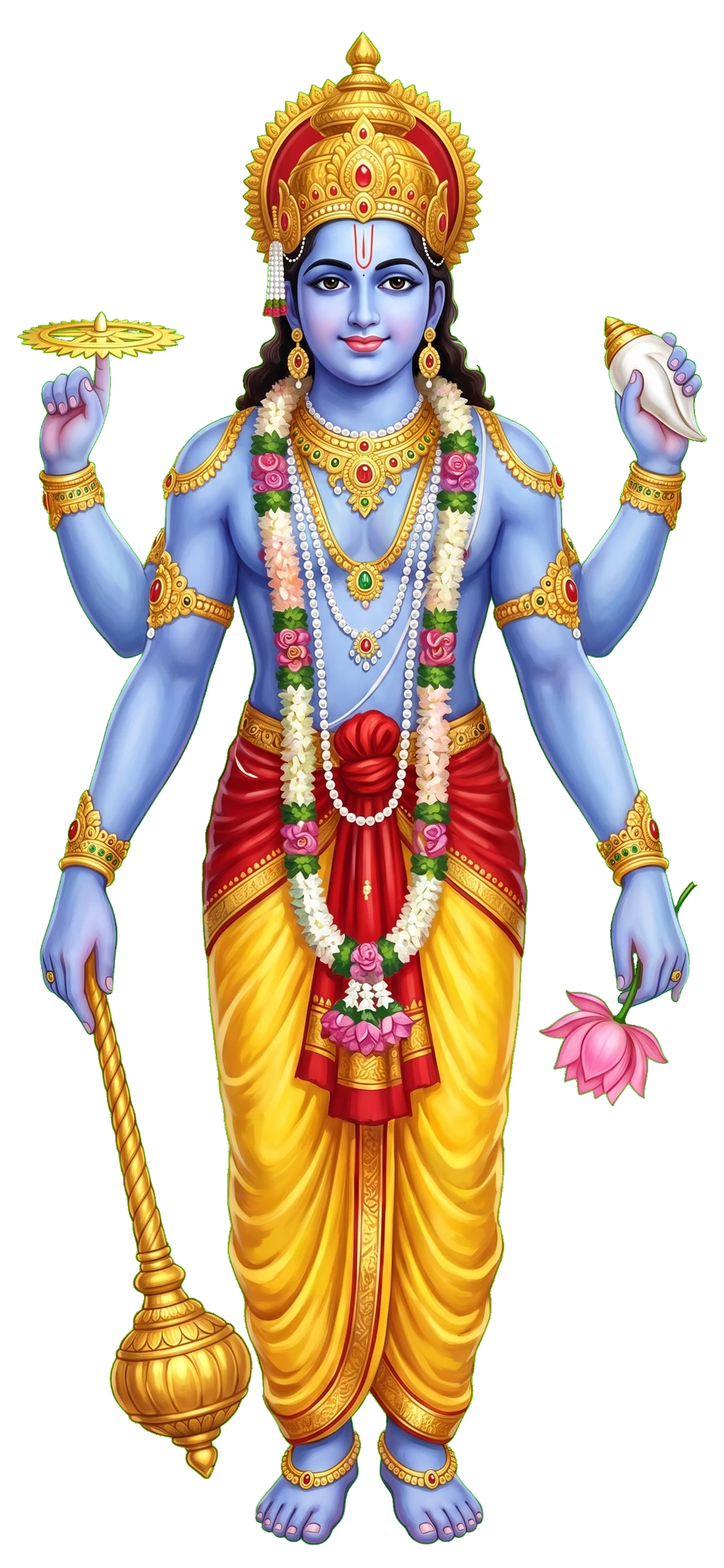
Tulsi Vivah is the wedding of the tulsi plant, the holy basil that grows in a stand in the middle of so many Indian courtyards, to Vishnu, who comes as a black shaligram stone from the Gandaki, a Krishna image or a branch of amla. It is held after the god wakes from his four months of sleep on Prabodhini Ekadashi, most often on the next evening, the bright Dwadashi of Kartik, and may be held on any day up to the Kartik full moon. The plant is dressed as a bride, a cloth is held between her and the stone, the eight wedding verses are sung with a shower of rice, and a couple of the house, often one with no children, gives her away. After it the year's human weddings can begin.
When is Tulsi Vivah in 2026? Tulsi Vivah, the wedding day, is Saturday 21 November 2026; it runs 20 to 24 November 2026. In 2027: Thursday 11 November 2027. Between Prabodhini Ekadashi, the bright eleventh of Kartik, and Kartik Purnima, in November; most houses keep the bright twelfth, the Dwadashi, at dusk.
The ceremonial wedding of the tulsi plant, the holy basil of the courtyard, to Vishnu as a shaligram stone, a Krishna image or an amla branch. It follows the god's waking on Prabodhini Ekadashi in Kartik and opens the season of human weddings after Chaturmas.
When is Tulsi Vivah in 2026?
Saturday 21 November 2026, the bright Dwadashi of Kartik, when the Dwadashi tithi runs from about half past six in the morning to before dawn on the 22nd. Some houses keep it on Prabodhini Ekadashi, 20 November, and it may be held on any evening up to Kartik Purnima on the 24th. In 2027 it falls on Thursday 11 November.
How is Tulsi Vivah performed?
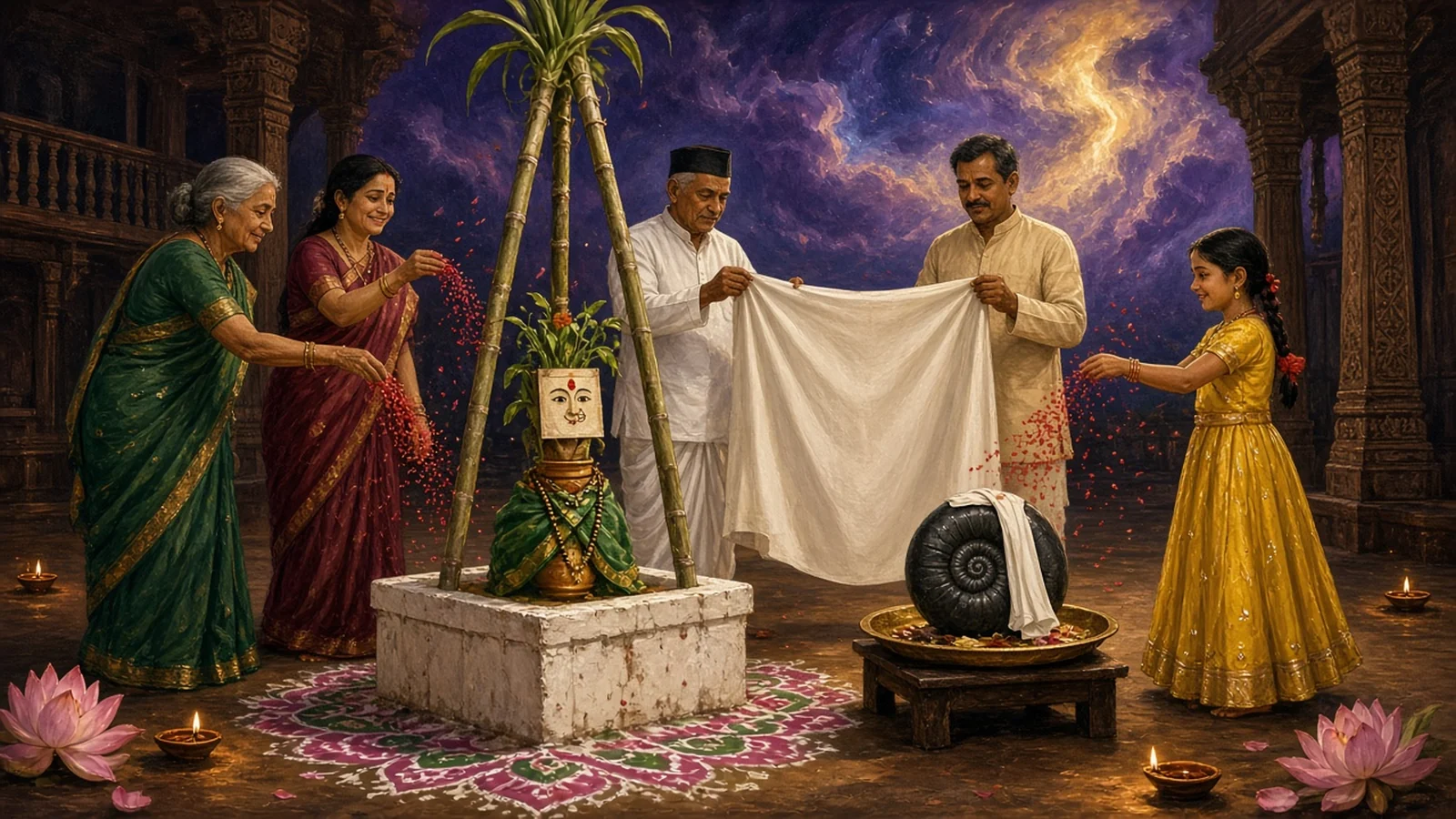
The tulsi is dressed as a bride under a canopy of sugarcane and the groom, usually the family shaligram, is dressed and set beside her. A couple of the house gives the bride away, a cotton thread joins the pair, a cloth is held between them while the eight mangalashtak verses are sung with a shower of rice, and the cloth is lowered at the end.
Why is the tulsi married to Vishnu?
The Padma and Shiva Puranas say Vrinda, deceived by Vishnu in her husband's form, cursed him to become stone and rose from her pyre as the tulsi, whom he took as his bride. The Devi Bhagavata tells it of Tulasi and the Danava Shankhachuda, and makes her body the Gandaki river and Vishnu the shaligram stones in it.
What is a shaligram?
A black stone from the bed of the Kali Gandaki in Mustang, Nepal, an ammonite fossil to the geologist, worshipped as Vishnu himself. Its spiral marks are read as his discus; it is found, given or inherited but never sold, and it is the usual bridegroom at Tulsi Vivah.
Next, in 2026Saturday 21 November 2026
20 to 24 November 2026
Prime godVishnu as the shaligram, the bridegroom
with 3 more
WhereAll India; Maharashtra and Goa, Gujarat, the Hindi belt and Braj, Andhra, Telangana and Karnataka above all, with Nepal and the Vaishnava temples everywhere
How longOne evening in each house, any evening of the five from the Ekadashi to the full moon
Between Prabodhini Ekadashi, the bright eleventh of Kartik, and Kartik Purnima, in November; most houses keep the bright twelfth, the Dwadashi, at dusk
Why it is kept
Tulsi Vivah is the year's first wedding, and the bride is a plant. Across India the holy basil grows in a stand in the middle of the courtyard, watered every morning and given a lamp every evening, and on the evening after Vishnu wakes from his four months of sleep she is married to him. The plant is dressed in a sari, the god comes from the shrine room as a black stone from a Himalayan river or as a small image of Krishna, a cloth is held up between them, and the house sings the same eight verses and throws the same rice it would for a daughter. When the cloth comes down, the season of weddings is open.
The first reason is the waking. Vishnu lies down on the serpent Shesha in Ashadha and the four months of Chaturmas belong to his sleep; no wedding is held until he wakes on Prabodhini Ekadashi, told in The Four Months the God Sleeps. The tulsi's wedding is the first thing the waking god does, and the households wait for it before they fix their own.
Vishnu wakes on the coils of Shesha on the ocean of milk at the end of the four months
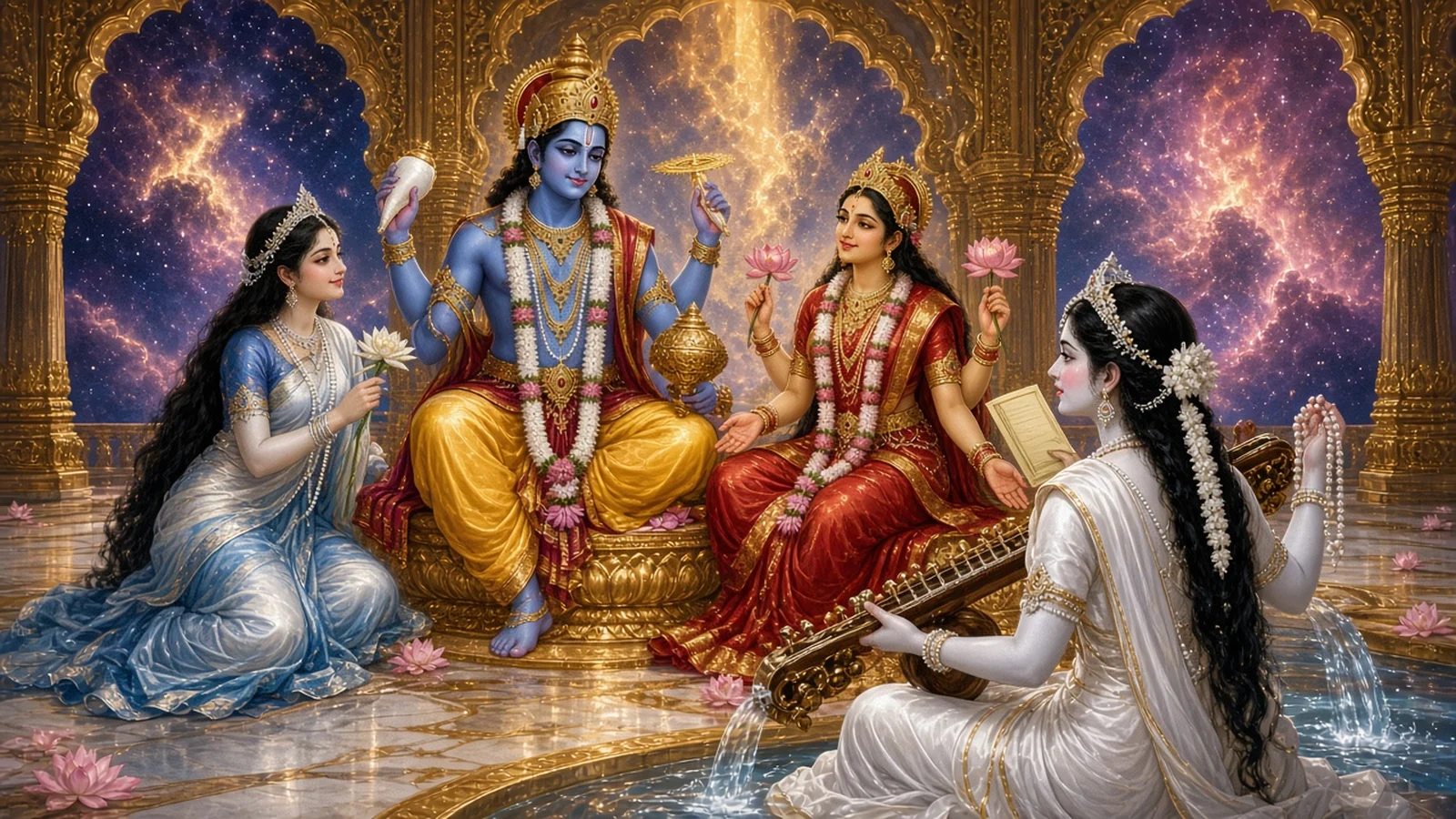
The second reason is a debt. The Padma and Shiva Puranas tell of Vrinda, whose faithfulness made her husband Jalandhara unbeatable until Vishnu came to her wearing his face; she cursed him to become stone, burned on the pyre, and rose as the tulsi, and he took the plant as his bride. That is Vrinda's Curse. The Devi Bhagavata tells the same ending of another woman, Tulasi, a portion of Lakshmi married to the Danava Shankhachuda, and goes further: her body became the river Gandaki and Vishnu the black stones in its bed, the shaligrams that are still the bridegroom in most houses. The Stone from the Gandaki tells her life and the pilgrims who still wade that river. The same Purana gives a second cause for her birth in The Three Wives of Vaikuntha, where Saraswati's curse sends part of Lakshmi down as a tree.
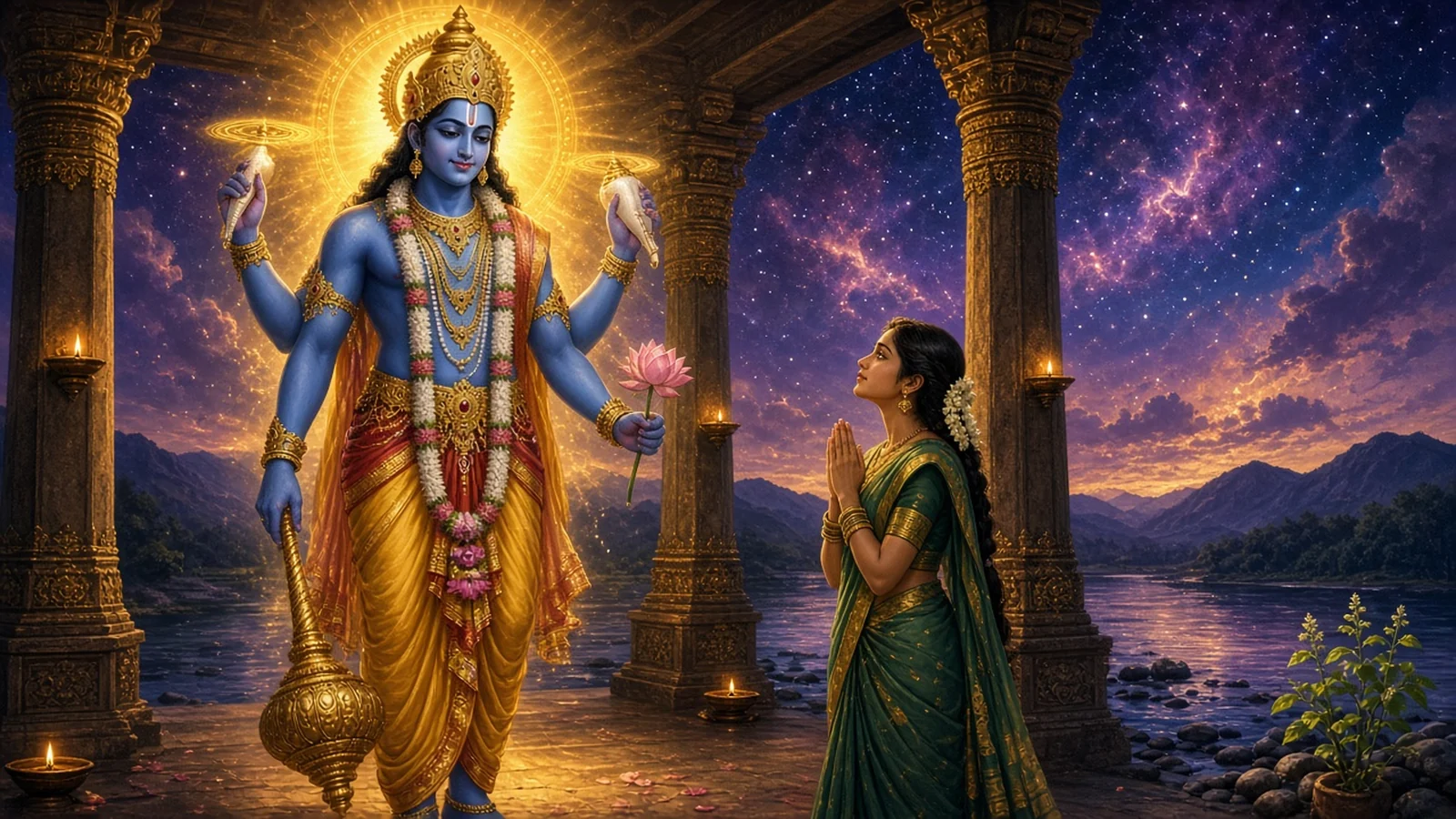
Tulasi joins her hands before Vishnu as he shows himself in golden light by the Gandaki
The third reason is the plant herself. The Padma Purana says Vishnu lives wherever she grows, and the Devi Bhagavata that he is pleased by no flower without her. A plant that holy is not left unmarried.
The groom. He lies down on Shesha in Ashadha and wakes on Prabodhini Ekadashi, and the first thing the households do with the waking god is marry him. In most houses he comes as the black shaligram stone of the Gandaki from the shrine room, worshipped as Vishnu himself; the Devi Bhagavata says he became that stone by Tulasi's curse, and that he is pleased by no flower unless her leaf is with it.
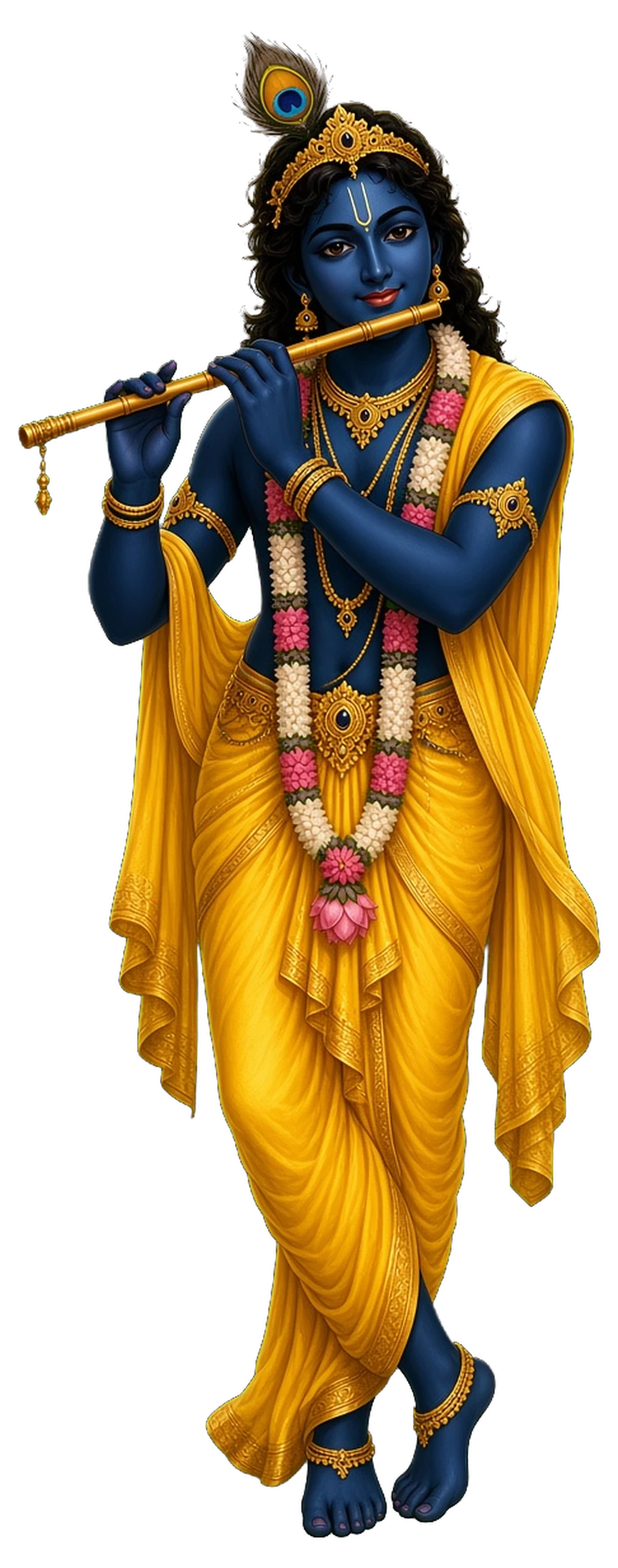
The groom in many homes and temples. Maharashtra and Goa marry the tulsi to a Bal Krishna image as often as to the stone, the north to a brass Krishna or Rama, and the Gaudiya temples keep all of Kartik as the month of Krishna as Damodara.
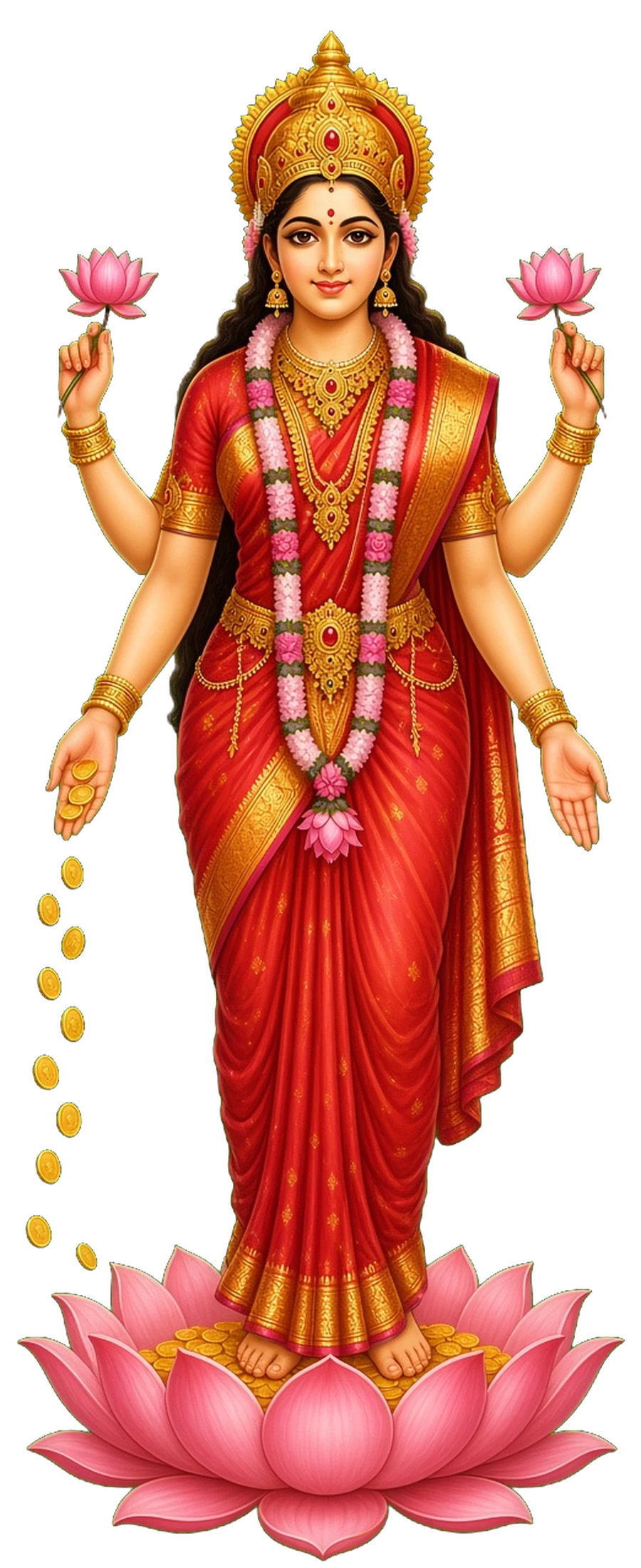
The bride is a portion of Lakshmi in the Devi Bhagavata, born to King Dharmadhvaja on the Kartik full moon, and the encyclopaedias call the plant her avatar; Saraswati's curse in the same book sends part of Lakshmi to earth as the tulsi tree. The women of the house tend her stand every morning and light her lamp every evening.
T
Tulsi (Vrinda)
The bride as the Padma and Shiva Puranas know her, Vrinda, the faithful wife of Jalandhara, deceived by Vishnu in her husband's form, who cursed him to become stone and rose from her pyre as the plant he took as his bride. The courtyard keeps her ending and forgets the war.
From the waking to the wedding
1
Prabodhini Ekadashi, the god wakes
Kartika shukla ekadashi · Friday 20 November 2026
Dev Uthani EkadashiDevutthana EkadashiKartiki EkadashiThulo EkadashiHari Prabodhini
The four months of Chaturmas end. The day is kept with the Ekadashi fast, and in the evening Vishnu and Lakshmi are worshipped and the god is woken with the waking song; the sugarcane harvest begins, and canes are hung in the house until Holi. Some houses marry the tulsi this same evening, and in Saurashtra two Rama temples send their groom Lalji in procession to the bride's village. Pandharpur fills for the Kartiki wari, Pushkar's fair begins and Gujarat walks the Lili Parikrama round Girnar.
The god is woken at dusk with conches, lamps and fresh sugarcane at the household shrine
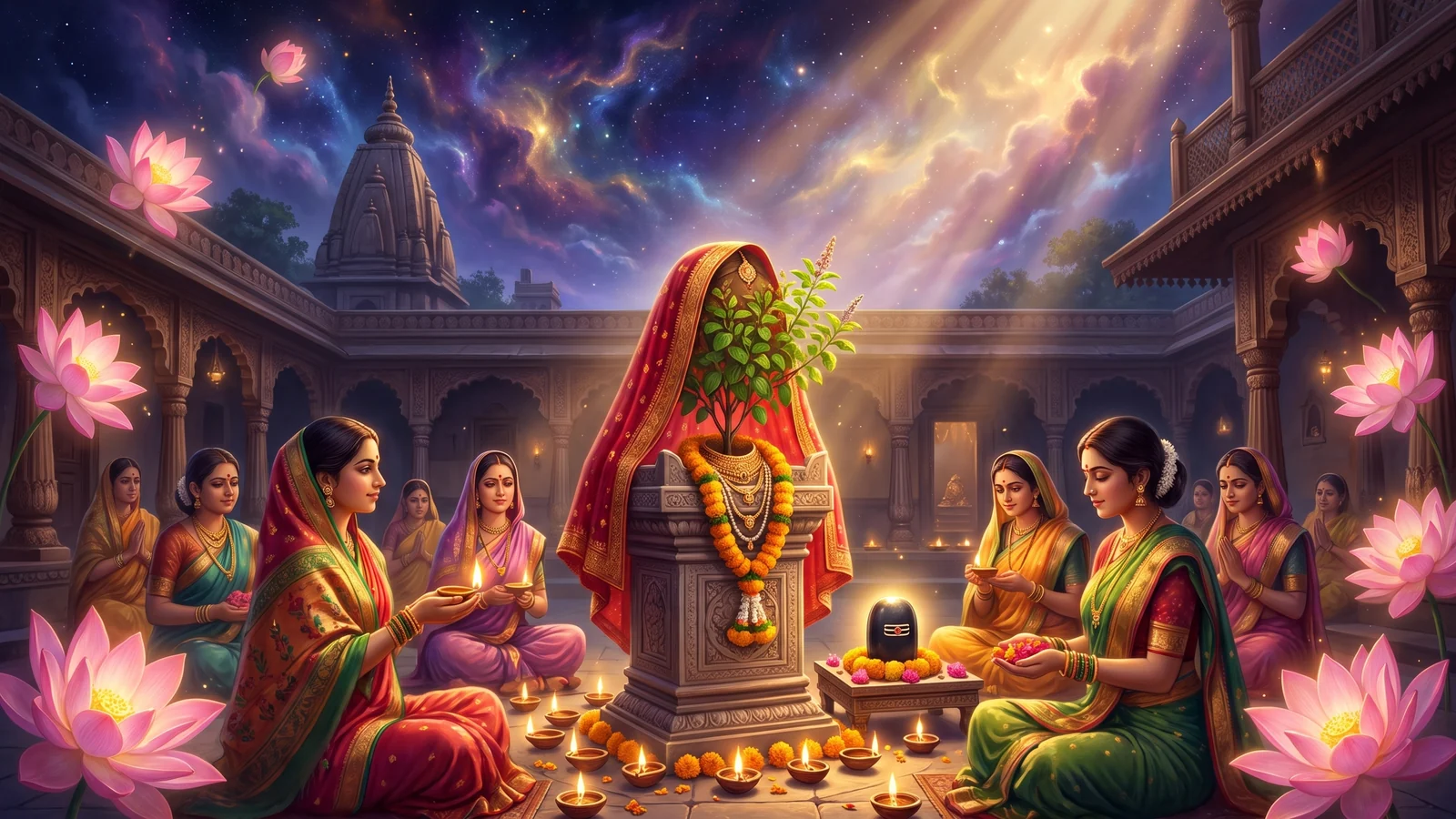
The women of the bride's house fast through the day. The tulsi stand is washed and a rangoli drawn at its foot, four sugarcanes are tied over it for a canopy, and the plant is dressed as a bride with a sari, bangles, turmeric, kumkum and a mangalsutra, sometimes a paper face with a bindi and a nose-ring. The shaligram or a Bal Krishna image comes from the shrine room and is given sandal paste, a dhoti and a sacred thread. A couple of the house, often one with no children, stands as the bride's parents. A cotton thread binds the pair, the antarpat is held up between them, and the eight mangalashtak are sung, each closing with shubh mangal savadhan and a throw of reddened rice; then the cloth comes down and everyone claps. The Telugu country marries the tulsi to an amla branch, and Udupi's Krishna Matha opens its Laksha Deepotsava.
Women dress the tulsi as a bride under four sugarcanes while the shaligram waits on a brass plate
Kartika shukla trayodashi to purnima · Tuesday 24 November 2026
Kartik PurnimaVaikuntha Chaturdashithe end of the Kartik vow
Houses that could not hold the wedding on the Dwadashi hold it on any evening up to the full moon, which is its last day. The Padma Purana's keepers of the Kartik vow raise a canopy of flowers over the tulsi on the fourteenth and on the full moon worship Vishnu and Tulsi together and feed thirty Brahmin couples; the Devi Bhagavata keeps the full moon as Tulsi's birthday. Udupi's lamps burn every night to that full moon, which has its own page, Kartik Purnima.
On the Kartik full moon a canopy of flowers stands over the tulsi, ringed with lamps
The tulsi's wedding is a real wedding in miniature. The stand in the courtyard is washed and given a rangoli, sugarcanes make the mandap, the plant wears a sari and a mangalsutra, and the groom is the family shaligram or a Bal Krishna. The rite is mostly the women's. A childless couple often sponsors it and gives the bride away, and the merit of a kanyadan is said to be theirs. The antarpat is held up, the mangalashtak are sung with rice at every savadhan, the cloth falls and the guests clap. The prasad is puffed rice with pieces of sugarcane, green tamarind, amla and coconut, and in the Goan custom the cane stands for the groom's best man and a tamarind stalk for the bride's friend. No wedding is fixed before the tulsi's.
Gujarat and RajasthanLalji's barat and the Kartik fairs
In two Rama temples of Saurashtra the wedding joins two villages. The bride's temple sends an invitation, and on Prabodhini Ekadashi the image of Vishnu called Lalji leaves the groom's temple in a palanquin with a dancing procession, is met at the bride's village boundary and married to a tulsi planted in a clay pot, given away by couples who hope for a child; bhajans run all night and Lalji takes his bride home in the morning. The same Ekadashi begins Gujarat's Lili Parikrama round Girnar and, in Rajasthan, the Pushkar fair.
The Hindi belt and BrajDev Uthani and the courtyard wedding
Across the north the god's waking and the tulsi's wedding run together. Houses light eleven lamps in the evening, offer sugarcane and amla to the tulsi, puja the shaligram, and after sunset the women perform the wedding, while the lanes fill with crackers and, astrologers permitting, the first human weddings of the season. At Ujjain the day begins with a dip in the Kshipra. In Vrindavan the Radharaman temple keeps the full rite its priests describe, with a fire pit, a golden Narayana and a silver Tulsi and four circuits round the plant, and Kartik is Damodara's month of lamps.
Andhra Pradesh, Telangana and KarnatakaTulasi Kalyanam and Tulasi Habba
The south keeps the Dwadashi, called Utthana or Ksheerabdhi Dwadashi, the day, they say, the churning of the ocean of milk began. In the Telugu houses a branch of the amla tree is set in the tulsi stand as the groom and the bride is worshipped with the sixteen offerings; Karnataka calls the day Tulasi Habba. At Udupi the Krishna Matha opens its Laksha Deepotsava on the Dwadashi, the festival of a lakh of lamps that lights the town every night until the Kartik full moon.
Bengal and the eastThe tulsi platform and the Kartik lamps
In the east the tulsi stands on her raised platform, the tulsi mancha, in the yard, and through Kartik a lamp is lit at her foot every evening; in many villages the month's sky lamp, raised at dusk for Lakshmi, Narayana and the ancestors, is set on the platform itself. Bengali households offer 108 or 1,008 tulsi leaves on a shaligram in times of trouble.
NepalThulo Ekadashi and Muktinath
Nepal calls Prabodhini the Thulo Ekadashi, the greatest Ekadashi of the year. The bridegroom's stones themselves come from Nepal. Pilgrims wade the Kali Gandaki in Mustang, at Kagbeni above all, for the black ammonites, and climb to Muktinath below the Thorong La to bathe under its 108 spouts and have their new shaligrams welcomed.
ISKCON and the Vaishnava temples worldwideTulasi Shaligram Vivah
The Gaudiya temples keep Kartik as Damodara's month, offering lamps to him every evening, and hold the Tulasi Shaligram Vivah in the bright fortnight, the host family walking four times round the plant with the shaligram while the women blow conches; their devotees wear tulsi beads as the mark of initiation.
Vaishnavas of every lineThe bride whose leaf is in every offering
For every Vaishnava house the tulsi is the one plant that must be there. The Padma Purana puts Brahma in her root, Vishnu in her stem and Shiva in her shoot and says want and quarrel leave the house she grows in; the Devi Bhagavata calls her Pushpasara, the best of flowers, without whom the god is pleased by none; Vaishnavas wear her wood as beads and give her water to the dying. Her wedding to the shaligram is the year's reminder of why she is there.
The women of the Kartik vowThe month of the lamp
The women who keep Kartik bathe before dawn, light a lamp under the tulsi every evening and walk round her, and end the month with her wedding and, on the full moon, the vow's last worship. In most houses the wedding is theirs to arrange and theirs to perform.
BuddhistsChumig Gyatsa
At Muktinath, where the pilgrims bring their stones, Tibetan Buddhists venerate the same image as Avalokiteshvara and call the place Chumig Gyatsa, the Hundred Waters, a seat of Padmasambhava.
How it is kept
The day before is the Ekadashi: the fast, the god woken in the evening with conches and the waking song, the first sugarcane cut. The wedding comes on the Dwadashi at dusk in most houses, on the Ekadashi itself in some, and on any evening to the full moon in others.
The women of the house fast until the rite. They wash the tulsi stand and draw a rangoli at its foot, tie four sugarcanes over it for a mandap, and dress the plant in a small sari with bangles, turmeric, kumkum and a mangalsutra, sometimes with a paper face. The groom is dressed with sandal paste, a dhoti and a sacred thread. A couple stands as the bride's parents, often one with no children, for whom giving her away is said to count as giving a daughter. A cotton thread is wound round the pair, the antarpat is held between them, and the mangalashtak are sung, eight verses each ending in the call to be watchful and a throw of reddened rice; then the cloth falls and the guests clap. Puffed rice with sugarcane, green tamarind, amla and coconut is shared, crackers go off in the lane, and the families who have been waiting since Ashadha begin to name wedding dates.
A couple of the house winds a cotton thread round the dressed tulsi and the shaligram
Temples do it on a larger scale. In Saurashtra the groom travels in a palanquin to the bride's village; in the Telugu country the groom is an amla branch; at Udupi the Dwadashi opens a festival of a lakh of lamps; in Vrindavan the Radharaman temple keeps a full Vedic rite with a fire pit and a golden Narayana.
In Saurashtra the groom Lalji rides in a palanquin with a dancing procession to the bride's village
In the old texts
The Padma Purana's Uttara Khanda praises the tulsi in its twenty-third chapter, tells Vrinda and Jalandhara at length (chapters 3 to 18 and 96 to 105), and in chapter 105 has three plants, the dhatri, the malati and the tulsi, grow from seeds sown for the god after Vrinda, and Vishnu go home to Vaikuntha with two of them. Its Kartik vow, chapter 95, ends with a canopy over the tulsi on the fourteenth and Vishnu and Tulsi worshipped together on the full moon, but it holds no marriage: the wedding as a rite belongs to the households and the temples, and the Drik Panchang calendar reads the Purana as placing it on the bright ninth. The Devi Bhagavata's ninth book tells Tulasi's birth, penance and marriage (chapters 17 and 18), Shankhachuda's death (23), the curse, the river and the stones (24) and her worship on the Kartik full moon (25). The Brahma Vaivarta tells the same life, and the Skanda Purana is credited with the worm that carves the shaligram. The mangalashtak are Marathi wedding verses, and every house has its own.
Where this page comes from. Written by Devalok from Tulsi Vivah as Maharashtra, Goa, Saurashtra, Ujjain, the Telugu country, Karnataka and Udupi keep it and as the Wikipedia articles, the Marathi and Indian press and the Radharaman temple's priest describe it, the Padma Purana (Uttara Khanda 23, 95, 105 and 120), the Devi Bhagavata Purana (9.6, 9.17, 9.18 and 9.23 to 25), the Brahma Vaivarta tradition, the shaligram pilgrimage of Mustang as Holly Walters records it, and the Drik Panchang calendar for 2026 and 2027, as recorded in the Devalok Lore. Our own words throughout.